
全球经济复苏

Search documents
上证早知道|摩尔线程,IPO获准注册;免税店政策“升级”,五部门最新发布;超百亿元资金,涌入半导体
Shang Hai Zheng Quan Bao· 2025-10-30 22:55
Group 1 - The China Securities Regulatory Commission approved the initial public offering registration of Moore Threads Technology, aiming to raise 8 billion yuan for its IPO on the Sci-Tech Innovation Board [2][11] - Moore Threads has developed four generations of GPU architecture and offers solutions for intelligent computing across various markets, including government and enterprise sectors [11] - The company is positioned to benefit from the domestic shift towards advanced process technology and the increasing demand for AI chips, indicating a significant market opportunity [11] Group 2 - The Ministry of Finance and other departments announced improvements to the duty-free shop policy, effective from November 1, 2025, to boost consumption and attract foreign visitors [7] - China Duty Free Group, primarily engaged in duty-free retail, is expected to benefit from the expanded product range and increased sales of domestic products in duty-free shops [7] - The recent adjustments to the duty-free shopping policy in Hainan are anticipated to enhance consumer experience and drive growth for domestic brands [7] Group 3 - The semiconductor-themed ETF saw a net subscription of 13.106 billion yuan in October, indicating strong investor interest in the sector [2][23] - Institutional research on the semiconductor industry has surged, with over 1,000 investigations conducted recently, reflecting optimism about advancements in equipment and AI computing power [23] - The domestic semiconductor manufacturing chain is expected to accelerate its self-sufficiency, with a rising domestic production rate anticipated [23] Group 4 - The prices of certain rare earth products have increased, driven by structural demand growth in sectors like electric vehicles and wind power [10] - The demand for neodymium-iron-boron magnets is particularly strong, as they are essential for high-performance electric motors [10] - Companies like Baotou Steel Rare Earth and Northern Rare Earth are positioned to benefit from the integrated development of the rare earth industry [10]
股市面面观|工业金属“接过”涨势 铜铝板块股价齐升
Xin Hua Cai Jing· 2025-10-30 11:45
Core Insights - The industrial metal sector, particularly copper and aluminum, is experiencing strong performance as gold and silver prices stabilize, driven by supply-demand dynamics and geopolitical risks [2][3] Group 1: Copper Market - Copper prices have surged, with LME copper futures reaching a historical high of $11,200 per ton, marking a 25% increase this year [3] - Factors contributing to the rise in copper prices include supply constraints from overseas mines, regional mismatches in inventory and demand due to U.S. tariffs, and increased consumption driven by AI data centers [4] - Analysts predict that copper prices may remain strong due to tight supply and demand balance, despite potential short-term fluctuations [6] Group 2: Aluminum Market - Aluminum prices are also on the rise, with LME aluminum futures hovering around $2,900 per ton, supported by ongoing supply challenges and strong demand from the manufacturing sector [3][5] - The relationship between copper and aluminum prices is significant, with increased copper prices leading to higher aluminum demand as a substitute material [5] - Analysts expect that aluminum demand will grow, with projections indicating a 2.3% increase in global demand by 2026, driven by manufacturing recovery and new industrial applications [6][7] Group 3: Market Outlook - There is a divergence in market expectations regarding future copper prices, with some analysts suggesting a potential pullback due to lagging downstream demand [6] - The overall macroeconomic environment, including the Federal Reserve's monetary policy, is expected to influence commodity prices positively [7] - Despite some pessimism regarding aluminum demand in 2026, forecasts remain optimistic, anticipating growth in both domestic and overseas markets [6][7]





帮主郑重:美联储再降息,中长线布局正当时
Sou Hu Cai Jing· 2025-10-29 23:22
Core Viewpoint - The Federal Reserve's recent decision to cut interest rates by 25 basis points, with two dissenting votes, indicates internal divisions and a cautious approach to monetary policy amidst economic uncertainties [1][3]. Group 1: Federal Reserve Actions - The Federal Reserve has announced a 25 basis point interest rate cut and plans to halt balance sheet reduction in December, which has led to significant market reactions, including a surge in U.S. stock prices and a rise in the dollar [1][3]. - The dissenting votes within the Federal Reserve highlight differing opinions on the appropriateness and extent of the rate cut, suggesting a careful and uncertain approach to future monetary policy [3]. Group 2: Economic Implications - The Federal Reserve has pointed out that government shutdowns are negatively impacting the economy, indicating that internal U.S. issues are contributing to economic pressures [3]. - Despite global economic challenges, the Fed's willingness to lower rates suggests a level of confidence in a potential medium to long-term recovery [3]. Group 3: Investment Strategy - For long-term investors, the focus should remain on sectors like technology, particularly AI and semiconductors, which are less affected by interest rate policies, viewing any market pullbacks as buying opportunities [3]. - Attention should be given to resource assets, particularly oil, as expectations for global economic recovery persist, with Brent crude oil prices expected to rise beyond $65 [3]. - Maintaining liquidity is advised, as the Fed's signals of pausing for assessment may lead to increased market volatility, allowing investors to navigate uncertainties more effectively [3].

永安期货有色早报-20251020
Yong An Qi Huo· 2025-10-20 02:41
Group 1: Report Industry Investment Rating - No information provided in the given content Group 2: Core Viewpoints of the Report - For copper, maintain a callback buying strategy considering the continuous tightness of the mine end and the growth of infrastructure and power demand in Southeast Asia and the Middle East. Pay attention to the support around $10,300 for LME copper, and consider selling put options below $10,000 or gradually building virtual inventories [1]. - For aluminum, the short - term fundamentals are acceptable, and it is recommended to hold at low prices in the long term while keeping an eye on terminal demand [1]. - For zinc, due to the poor domestic fundamentals but the potential opening of the export window, it is advisable to wait and see or focus on short - selling opportunities for LME zinc. Consider gradually taking profits on long - short spreads between domestic and foreign markets and focus on reverse spreads in the far - month contracts. Also, pay attention to the positive spread opportunity between December and February contracts [2]. - For nickel, with weak short - term fundamentals and increasing short - term macro uncertainties, it is recommended to wait and see [5]. - For stainless steel, the fundamentals remain weak, with short - term macro uncertainties and potential price - supporting motives from Indonesian policies [9]. - For lead, it is expected that the domestic and foreign lead prices will maintain a narrow - range oscillation next week, in the range of 17,000 - 17,300, and positive spread opportunities can be considered [11]. - For tin, in the short term, follow the macro sentiment and wait and see. If there is a systematic risk in the macro, the tin price has a large downside space. In the medium - to - long term, hold at low prices close to the cost line [13]. - For industrial silicon, the short - term price is expected to oscillate weakly. In the long term, the price will oscillate at the cycle bottom based on the seasonal marginal cost [14]. - For lithium carbonate, in the short term, supply and demand are both strong with a de - stocking trend. In the long term, the elasticity of the demand side is the key variable for pattern reversal [15]. Group 3: Summary by Metals Copper - Market conditions are dominated by tariff negotiation progress. The impact of this round of tariffs is not higher than that of the Tomb - Sweeping Festival perturbation when LME copper dropped 12% and gold rose 2.6%. There is still room for negotiations, and the progress of the South Korean negotiation should be monitored [1]. - Fundamentally, the smelting reduction is higher than expected, and there is medium - level inventory accumulation this week. The downstream price - fixing quantity and receiving sentiment are acceptable, and the downstream price - fixing psychological price has significantly increased. The copper cable and aluminum cable starts have a significant divergence, and attention should be paid to whether the start stabilizes [1]. Aluminum - The operating capacity remains flat. The production schedule of photovoltaic modules on the demand side has stabilized, and the proportion of molten aluminum in September has significantly rebounded. There is seasonal inventory accumulation for aluminum ingots and bars due to the festival effect, and the de - stocking amplitude after the festival is considerable, with the apparent demand rising [1]. - The global economic recovery signs are emerging, and the Fed's interest - rate cut expectation is strengthened, but the uncertainty of Sino - US economic and trade relations has deepened, resulting in a certain divergence in the trends of domestic and foreign markets [1]. Zinc - The zinc price oscillates this week. On the supply side, domestic TC further decreases, and imported TC further increases. The domestic zinc ore will be marginally tighter from the fourth quarter to the first quarter of next year, while the overseas ore increment in the second quarter has exceeded expectations. In August, China imported 460,000 tons of zinc ore, with a cumulative year - on - year increase of 43%. In October, the smelting side has a slight month - on - month recovery [2]. - On the demand side, domestic demand is seasonally weak and may continue to oscillate weakly after the September peak season. Overseas, the European demand is average, and some smelters face production resistance due to processing fees. Domestically, the social inventory oscillates, and the overseas LME inventory is decreasing, with the visible inventory approaching the lowest level in the past two years [2]. Nickel - On the supply side, the production of pure nickel remains at a high level. On the demand side, it is generally weak, and the premium has been stable recently. In terms of inventory, both domestic and overseas inventories are continuously increasing [5]. - There are continuous disturbances in the Indonesian ore end, and the policy side still has the motivation to support prices. The short - term macro uncertainty has increased [5]. Stainless Steel - On the supply side, the steel mill's production schedule in October has a slight month - on - month increase. On the demand side, it is mainly driven by rigid demand. In terms of cost, the prices of nickel - iron and chrome - iron remain stable. In terms of inventory, the inventory remains at a high level, and the warehouse receipts are stable [9]. Lead - This week, the lead price oscillates slightly at a high level. On the supply side, the scrap volume is weaker year - on - year. The recovery of recycled lead profits is expected to lead to an incremental production of 20,000 - 50,000 tons in October. The macro sentiment combined with the tight supply of waste batteries may drive recyclers to support prices. The concentrate production has increased, and the high smelting profit of primary lead has led to a shortage of concentrates, with the TC quotation declining in a chaotic manner [11]. - On the demand side, the battery start - up rate has increased this week, but the battery finished - product inventory is high. After the National Day stocking, the demand is expected to weaken. The refined - scrap price difference is - 50, and the recycled lead production has gradually started discharging materials [11]. Tin - This week, the tin price oscillates. On the supply side, the ore processing fee is at a low level. Although some scattered orders have tried to raise the quotation, large - scale transactions have not occurred. The maintenance of Yunnan Tin has ended, and the supply has marginally recovered. Overseas, the import from Wa State in August was still low, but the recovery in October is highly expected, with an expected maintenance of over 600 metal tons. The export of Indonesia's PT Timah has resumed in mid - to - late September, and the Indonesian president announced that the tin ingot export will return to normal in 2026 [13]. - On the demand side, there is a slight recovery during the solder peak season, mainly supported by rigid demand at high prices. After the festival, the arrival of goods is slow, and the domestic inventory has slightly decreased. The overseas LME inventory oscillates at a low level [13]. Industrial Silicon - This week, the leading enterprises in Xinjiang continue to resume production, with 35 furnaces in the west and 55 furnaces in the east. Subsequently, the number of operating furnaces in Sichuan and Yunnan will significantly decrease. In the dry season, the overall supply of industrial silicon will decline month - on - month. Considering the maintenance of leading polysilicon enterprises, the supply and demand of industrial silicon in Q4 will be in a balanced and slightly loose state, with a monthly inventory accumulation of 40,000 - 50,000 tons [14]. Lithium Carbonate - This week, the lithium carbonate price oscillates strongly. On the raw material side, the ore end continues to support prices, and holders are reluctant to sell due to the significant reduction of previous inventories, resulting in a tight spot market [15]. - On the lithium salt side, the consumption trend and de - stocking level continue to exceed expectations. With the acceleration of warehouse receipt cancellation this week, the basis of first - tier brands also runs strongly. In the short term, supply and demand are both strong, and there is a de - stocking trend. In October, the de - stocking level is expected to be 8,000 - 10,000 tons. At the end of the year, there are multiple expected games such as the weakening of power demand in the off - season, the sustainability of energy - storage demand, and supply disturbances in Jiangxi [15].
如何应对人民币兑美元小幅波动,省钱又安心
Sou Hu Cai Jing· 2025-10-10 18:10
Core Viewpoint - The current exchange rate of the Chinese Yuan (CNY) against the US Dollar (USD) is relatively stable with minor fluctuations, influenced by global economic recovery and US Federal Reserve monetary policy [1][17]. Exchange Rate Situation - As of October 10, the interbank foreign exchange market reports the CNY to USD exchange rate at 1 USD = 7.1102 CNY, indicating slight volatility [1][17]. - The exchange rate is a reference point for various transactions, and even small differences can accumulate to significant costs for travelers or importers [1][6]. Reasons for Fluctuations - The minor fluctuations in the exchange rate are attributed to two main factors: slow global economic recovery and tight monetary policy from the Federal Reserve [3][17]. - A stronger US economy increases demand for USD, while higher USD interest rates also boost demand for USD assets, leading to a slight depreciation of CNY [3]. Exchange Considerations - When exchanging USD, individuals should consider various factors beyond just the current exchange rate, such as the exchange channel, fees, and annual limits on currency exchange [4][5]. - The difference in exchange rates can be more pronounced for larger amounts, making it essential to plan accordingly [6]. Impact on Daily Life - The USD to CNY exchange rate has direct implications for everyday life, affecting travel costs and the prices of imported goods [8][10]. - A stronger USD can make international travel and purchases more expensive, while a weaker USD can provide more budget flexibility [9]. Strategies for Managing Exchange Rate Fluctuations - To mitigate the impact of exchange rate volatility, it is advisable to plan ahead, monitor exchange rate trends, and consider splitting large exchanges into smaller transactions [11][12]. - Utilizing official channels for exchange rates and considering financial tools for investment purposes can also be beneficial [13][14].

2025年10月大类资产配置月报:全球复苏逻辑强化,超配商品+权益-20251010
ZHESHANG SECURITIES· 2025-10-10 11:25
Quantitative Models and Construction - **Model Name**: Macro Scoring Model **Construction Idea**: The model evaluates macroeconomic factors to provide asset allocation signals, focusing on inflation, monetary policy, and global economic conditions[17][20] **Construction Process**: The model assigns scores to macroeconomic subcategories such as domestic and global inflation, monetary policy, and economic conditions. These scores are aggregated to generate asset-specific macro views. For example: - Domestic inflation: Score = 1 - Global inflation: Score = 0 (downward adjustment this month) - Final macro scores for October: - CSI 800: 3 - 10-year bonds: -2 - S&P 500: 2 - Gold: -1 - Oil: 3 - Copper: 3[20] **Evaluation**: The model maintains a positive outlook on equities and commodities, reflecting stable macroeconomic conditions[17][20] - **Model Name**: US Equity Timing Model **Construction Idea**: The model monitors U.S. economic indicators to assess equity market timing opportunities[21] **Construction Process**: The model uses three dimensions equally weighted: - Economic sentiment - Capital flows - Financial stress The latest composite timing indicator value is 72.3, showing improvement from the previous month[21] **Evaluation**: The model supports a bullish view on U.S. equities due to improved economic sentiment and fundamentals[21] - **Model Name**: Gold Timing Model **Construction Idea**: The model evaluates fiscal and monetary trends to determine gold allocation timing[24] **Construction Process**: The model generates a timing indicator based on fiscal deficit trends and global monetary expansion. Current indicator value: -0.63, signaling caution due to reduced U.S. fiscal deficit expansion[24] **Evaluation**: Despite the cautious signal, the model suggests gold retains strong allocation value under global fiscal expansion trends[24] - **Model Name**: Oil Timing Model **Construction Idea**: The model assesses oil market dynamics, including inventory levels and macroeconomic risks[27][29] **Construction Process**: The model calculates an oil sentiment index based on: - Inventory levels - Dollar strength - Investor expectations - Macro risk levels Current index value: 0.39, down from 0.56 last month[27][29] **Evaluation**: The model adopts a neutral stance on oil due to inventory accumulation and dollar rebound[27][29] --- Model Backtesting Results - **Macro Scoring Model**: - September return: 2.3% - 1-year return: 13.5% - Maximum drawdown: 2.9%[3][31] - **US Equity Timing Model**: - Latest indicator value: 72.3[21] - **Gold Timing Model**: - Latest indicator value: -0.63[24] - **Oil Timing Model**: - Latest sentiment index value: 0.39[27][29] --- Asset Allocation Adjustments - **Optimized Allocation**: - CSI 800: Reduced from 11.9% to 8.7% - S&P 500: Increased from 9.4% to 9.6% - Gold: Reduced from 13.5% to 7.0% - Copper: Reduced from 9.7% to 7.3% - Oil: Reduced from 3.9% to 1.9% - 10-year bonds: Increased from 34.7% to 49.8% - Short-term bonds: Reduced from 16.8% to 15.7%[36]

冠通期货原油2025年四季报:地缘局势扰动下的增产兑现情况
Guan Tong Qi Huo· 2025-09-29 08:26
Report Industry Investment Rating - Not provided in the document Core Viewpoints - The current geopolitical situation is still under control in local areas without significantly impacting crude oil exports. However, events like Israel's attack on Qatar, the deadlock in the Israel-Palestine and Russia-Ukraine ceasefire negotiations, and the unresolved Iranian nuclear issue may disrupt the crude oil market. Special attention should be paid to whether Europe and the United States will impose secondary sanctions on buyers of sensitive crude oil from Russia and Venezuela. If the geopolitical situation escalates and affects crude oil production or transportation, it will stimulate a rapid increase in crude oil prices [6][127]. - On the supply side, OPEC+ is committed to a gradual increase in production to maintain market share, planning to increase production by 137,000 barrels per day in October. Currently, the actual production increase rate is lower than the planned target, but the pace has been accelerating recently. Due to strong power generation demand in the Middle East during the third quarter, the supply shock from OPEC+'s production increase has not yet arrived, and global crude oil inventories have not increased significantly. It should be noted that, except for Saudi Arabia and the UAE, other OPEC+ countries have limited production increase capabilities, and OPEC+'s actual production increase in the fourth quarter will still be lower than the target rate. The actual production fulfillment of OPEC+ in the fourth quarter is a key point closely watched by the market. Additionally, among non-OPEC+ countries, Brazil and Guyana are bringing new production capacities into operation, gradually fulfilling their production increase plans and becoming the main drivers of the global crude oil production increase. The production of US shale oil is flexible, and the current oil price has not led to a decline in US crude oil production. It is expected that non-OPEC+ supply will increase by about 1.4 million barrels per day in 2025 [6][127]. - On the demand side, the peak season for crude oil travel demand ends in the fourth quarter, and Europe and the United States enter the autumn maintenance season in October. Future seasonal demand should focus on winter heating demand. Amid ongoing global trade wars and the transition to new energy sources, special attention should be paid to China-US trade negotiations. Poor non-farm payrolls in the US have raised market concerns, and the slow global economic recovery makes the outlook for crude oil demand pessimistic. The US resumed interest rate cuts in September, and the impact of these cuts on global crude oil demand should be monitored. Overall, the supply and demand of crude oil will weaken in the fourth quarter, with a high probability of inventory accumulation. It is expected that crude oil prices still have room to fall, and the Brent crude oil price is likely to drop below $60 per barrel. Attention should be paid to whether oil-producing countries will implement production cuts in response to the continuous decline in oil prices [6][127]. Summary by Relevant Catalogs Market Review - In September, due to increased sanctions on Iran, considerations by Europe and the United States to further sanction Russia, the impact of Ukrainian drone attacks on Russian crude oil exports, and the continuous increase in freight rates, domestic crude oil contracts performed stronger relative to international crude oil prices [14]. - The current Brent basis is at a normal level [19]. - Recently, the Brent monthly spread has rebounded following the single-sided price, but the rebound strength is relatively weak [27]. - In late August 2025, the non-commercial net long position of WTI continued to decline and is currently at its lowest level since 2011. The net long position of ICE Brent funds is at a neutral level in the past decade. The Shanghai crude oil warehouse receipt quantity has increased slightly since April 2025, with a limited increase range, and is at a low level in recent years [35]. Crude Oil Production - Since 2020, OPEC+ has adhered to production cuts to raise oil prices and maintain fiscal balance. However, non-OPEC+ oil-producing countries such as the US, Brazil, and Guyana have continuously increased their crude oil production, squeezing OPEC+'s market share through exports. In addition, some OPEC+ countries, such as Iraq and Kazakhstan, have consistently exceeded their production quotas. Except for the period at the beginning of the Russia-Ukraine conflict, crude oil prices have mostly been under downward pressure. Facing great fiscal pressure due to the slow global economic recovery, OPEC+ began to gradually relax production cuts in 2025 [40]. - On September 7, OPEC+ announced that, considering the stable global economic outlook and healthy market fundamentals (reflected in low crude oil inventory levels), eight countries decided to adjust their production by 137,000 barrels per day from the additional voluntary production cut of 1.65 million barrels per day announced in April 2023. This adjustment will take effect in October 2025. This 1.65 million barrels per day of production can be partially or fully restored according to market conditions and will be carried out in a gradual manner. The eight OPEC+ countries will hold their next meeting on October 5. On September 8, countries such as Iraq submitted the latest compensation plans, with a cumulative compensation of 4.779 million barrels per day, of which the compensation production in October 2025 is 235,000 barrels per day, alleviating the pressure of increased supply [45]. - According to the latest OPEC monthly report, OPEC's crude oil production in July was revised down by 73,000 barrels per day to 27.47 million barrels per day. In August 2025, its production increased by 478,000 barrels per day month-on-month to 27.948 million barrels per day, a significant year-on-year increase of 1.296 million barrels per day, mainly driven by the production increases in Saudi Arabia, Iraq, and the UAE. In August, OPEC+'s crude oil production was 42.4 million barrels per day, an increase of 509,000 barrels per day month-on-month, indicating an acceleration of production increase [45]. - According to the OPEC monthly report, the production of the eight additional production-cutting OPEC+ countries increased to 32.18 million barrels per day in August, an increase of 1.22 million barrels per day compared to March, which is lower than the production increase target of 1.92 million barrels per day. This means that the supply shock from OPEC+'s production increase has not yet materialized. The main reasons are that the production increases in Iraq and Russia have fallen short of the targets, while Kazakhstan has been overproducing. Among OPEC+ countries, Saudi Arabia and the UAE have theoretical idle production capacities of nearly 2.5 million barrels per day and 1 million barrels per day respectively, with huge production increase potential, while other member countries have limited production increase space [48]. - Attention should also be paid to the changes in the crude oil production of Iran and Venezuela, which are subject to increased US sanctions. According to the OPEC monthly report, Iran's crude oil production in August was 3.218 million barrels per day, a month-on-month decrease of 27,000 barrels per day and a year-on-year decrease of 81,000 barrels per day. Before the US sanctions, Iran's crude oil production was 3.8 million barrels per day. Since February 2025, the US has imposed multiple sanctions on Iranian crude oil-related tankers, traders, ports, and buyers. Iran's crude oil production has been continuously declining slightly since June 2025. Due to the large discount on Iranian crude oil, independent refineries in Shandong still preferentially purchase Iranian crude oil. Venezuela's crude oil production in August was 936,000 barrels per day, a month-on-month increase of 12,000 barrels per day and a year-on-year increase of 60,000 barrels per day. In late July, after the US Treasury Department issued a limited license to Chevron, Venezuela's crude oil and fuel exports in August reached their highest level since November 2024. However, in September, the US deployed warships in the Caribbean Sea near Venezuela under the pretext of "fighting drug trafficking" and carried out military operations. Venezuela held military exercises and protests, and the relationship between the two countries became tense. According to the latest regulations issued by the US, only about half of the crude oil produced by Chevron's joint venture in Venezuela can be exported. Considering that the US imported about 230,000 barrels per day of crude oil from Venezuela in 2024, accounting for 35% of Venezuela's total exports, Venezuela's crude oil exports may be restricted [52]. - The number of US oil rigs did not increase after Trump took office. From April to July 2025, due to the decline in oil prices, US shale oil producers reduced their capital expenditures, and the number of US oil rigs decreased significantly. Since August, it has rebounded slightly. As of September 19, 2025, the number of US oil rigs was 418, 70 less than the same period last year and 65 less than the end of 2024. US crude oil production increased by 19,000 barrels per day to 13.501 million barrels per day in the week ending September 19. Currently, US crude oil production has decreased by 130,000 barrels per day from the record high set in early December last year. Since 2025, US crude oil production has remained around the historical high of 13.5 million barrels per day. Previously, the continuous decline in crude oil prices in April led to a decrease in US crude oil production, but recently, US crude oil production has increased slightly. The current oil price has not led to a decline in US crude oil production. The latest short-term energy outlook from the EIA predicts that US crude oil production will increase by 240,000 and 80,000 barrels per day year-on-year in 2025 and 2026 respectively, reaching 13.44 million and 13.3 million barrels per day, which are slightly revised up by 40,000 barrels per day and 20,000 barrels per day respectively compared to the previous monthly outlook report [55]. - With the gradual commissioning of deep-water projects, Brazil and Guyana have become important drivers of crude oil production growth among non-OPEC+ oil-producing countries. On February 18, 2025, Brazil's Minister of Mines and Energy announced that Brazil officially joined the "OPEC+" alliance. Brazil plans to invest $77 billion from 2025 to 2029, aiming to increase production by 800,000 barrels per day by the end of 2025, reaching an annual production of 3.9 million barrels per day, a year-on-year increase of 500,000 barrels per day, and an additional increase of 220,000 barrels per day in 2026. In July 2025, Brazil's crude oil production had increased to 3.75 million barrels per day. In July 2025, Guyana's crude oil production increased to 670,000 barrels per day. The Yellowtail project in Guyana was put into operation ahead of schedule in early August, and it is expected that production will reach 900,000 barrels per day by the end of the year. According to the plan, the ExxonMobil consortium plans to deploy six FPSOs by 2027, targeting a production capacity of 1.3 million barrels per day in 2027. By 2030, with the full commissioning of eight FPSOs, the total production capacity is expected to reach 1.7 million barrels per day [60]. Crude Oil Demand - China is the world's second-largest crude oil consumer and the largest crude oil importer, with about 70% of its crude oil imported. From January to August, China's cumulative crude oil processing volume was 488.072 million tons, a year-on-year increase of 3.2%, reaching a historical high for the same period. In August, China's crude oil imports increased by 4.85% month-on-month and 0.79% year-on-year. From January to August 2025, the cumulative imports were 376.05 million tons, a year-on-year increase of 2.5% [65]. - According to the weekly data from Longzhong Information, China's domestic crude oil processing volume has been increasing since August. As of the week ending September 19, the domestic crude oil processing volume was 14.8241 million barrels per day, a year-on-year increase of 3.12% and a month-on-month increase of 0.26%. Currently, the domestic crude oil processing volume is only lower than that of the same period in 2023 [70]. - The US PCE and core PCE year-on-year growth rates in August were 2.9% and 3.1% respectively, both in line with expectations. On September 17, the Federal Reserve announced a 25-basis-point cut in the federal funds rate target range to 4.00%-4.25%, the first rate cut since December 2024. The dot plot released along with the policy meeting minutes also showed that Fed officials expect to cut interest rates by another 50 basis points by the end of the year and 25 basis points each year in the next two years [73]. - The US Markit PMI data in September was still above the 50-point threshold, but both manufacturing and service sector activities slowed down. The preliminary US Markit manufacturing PMI in September was 52, the lowest in two months; the preliminary US Markit services PMI was 53.9, the lowest in three months; and the preliminary US Markit composite PMI was 53.6, the lowest in three months. The manufacturing PMIs in the Eurozone and Japan were below the threshold, indicating weak global overall demand recovery. The US Bureau of Labor Statistics reported that the non-farm payrolls in August increased by only 22,000, significantly lower than the market expectation of 75,000, and the unemployment rate rose to 4.3%, in line with market expectations. The non-farm payrolls in June were revised down by 27,000 to -13,000. The poor US non-farm payroll data has raised market concerns [82]. - In August, China's manufacturing PMI was 49.4%, up 0.1 percentage point from the previous month, indicating an improvement in the manufacturing sector's prosperity. The year-on-year actual growth rate of China's industrial added value above designated size in August was 5.2% (all added value growth rates are real growth rates after deducting price factors), down 0.5 percentage points from July and 0.2 percentage points from the same period last year. On a month-on-month basis, the industrial added value above designated size increased by 0.37% in August. From January to August, the year-on-year growth rate of industrial added value above designated size was 6.2%. Among them, the year-on-year growth rate of industrial added value of manufacturing enterprises above designated size was 5.7%, down 0.5 percentage points from July and 0.3 percentage points from the same period last year. In addition, the year-on-year growth rates of social retail sales and cumulative fixed asset investment both decreased compared to July [86]. - From mid-June to August 2025, during the peak season of downstream crude oil demand, the gasoline crack spreads in Europe and the US continued to rise, especially in August, which was significantly stronger than the same period last year. According to seasonal patterns, Americans usually travel during the period from Memorial Day (the last Monday in May) to Labor Day (the first Monday in September), which is the so-called travel peak season. Around October, US refineries will undergo autumn maintenance, and the refinery operating rate will decline from its peak [91]. - The diesel crack spreads in Europe and the US showed a similar trend to the gasoline crack spreads but had a larger year-on-year increase. Due to restrictions on importing Russian diesel and low ARA diesel inventories, in August, Europe's diesel imports from the US and the Middle East increased by 28% year-on-year, significantly driving up the diesel crack spreads in Europe and the US [95]. September Institutional Monthly Report Expectations - Amid slow global economic growth, increasing trade frictions, and energy transition, EIA, IEA, and OPEC have continuously lowered their forecasts for global crude oil demand growth. The three major crude oil research institutions have generally lowered the global crude oil demand growth forecast by about 300,000 barrels per day compared to the initial forecast at the beginning of the year. In the latest September monthly report, the EIA expects the global oil inventory to increase by about 2.1 million barrels per day in the second half of 2025. In addition, the EIA raised the average Brent crude oil price forecast for 2025 from $67.22 per barrel to $67.80 per barrel, but it expects the Brent crude oil price to fall to $59 per barrel in the fourth quarter of 2025. OPEC maintained its forecast for the global crude oil demand growth rate in 2025 at 1.29 million barrels per day and 1.38 million barrels per day. The IEA raised its forecast for global oil supply growth in 2025 by 200,000 barrels per day to 2.7 million barrels per day and its forecast for oil demand growth in 2025 by 60,000 barrels per day to 740,000 barrels per day [99]. US Crude Oil Data - As of the week ending September 19, US crude oil imports increased by 803,000 barrels per day to 6.495 million barrels per day, at a neutral level compared to the same period in previous years; US crude oil exports decreased by 793,000 barrels per day to 4.484 million barrels per day, at a relatively high level compared to the same period in previous years [1
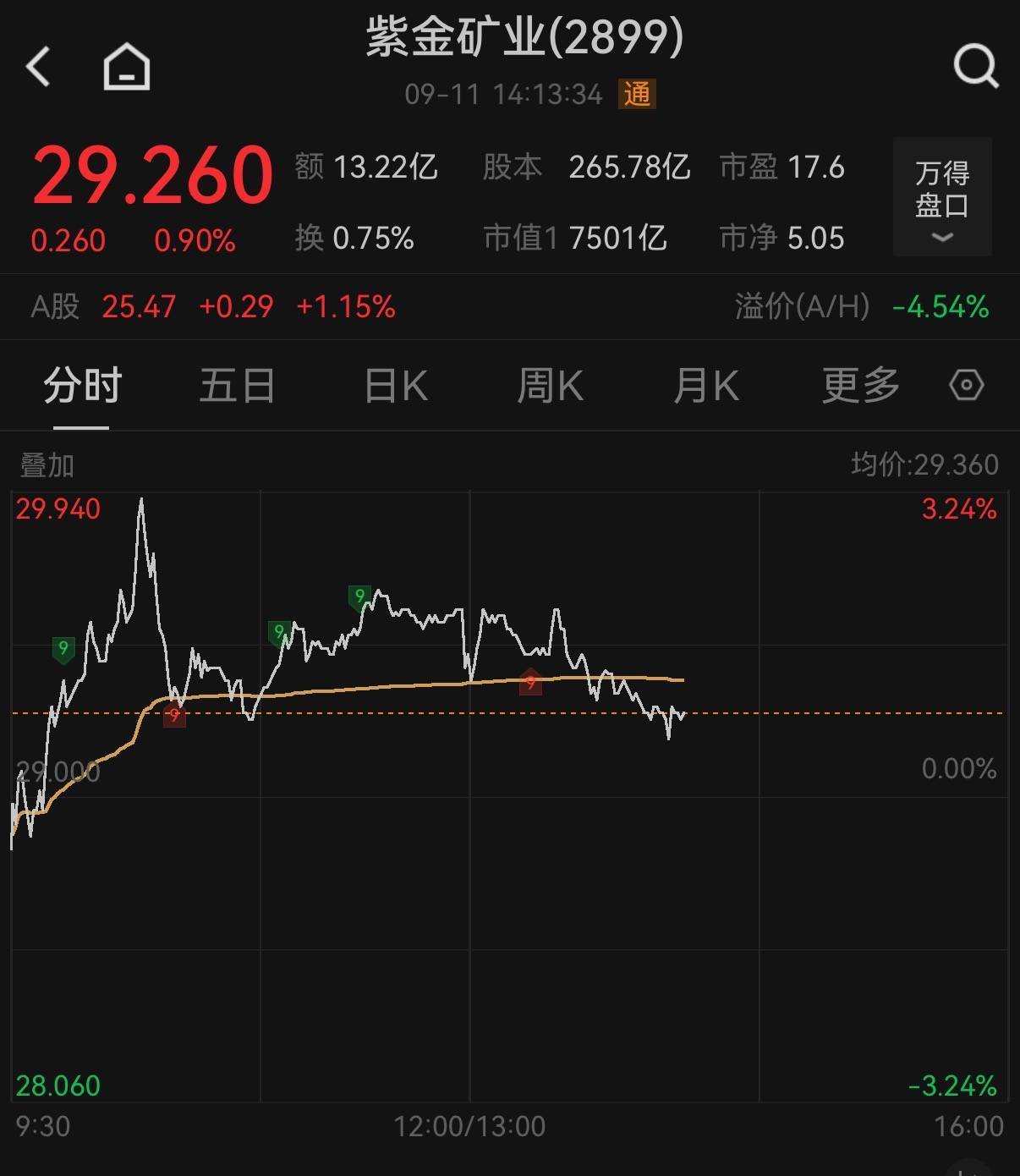
紫金矿业港股股价盘中创新高
Sou Hu Cai Jing· 2025-09-11 07:27
Core Viewpoint - Zijin Mining's stock price reached a record high of 29.94 HKD on September 11, driven by strong performance in gold and copper prices amid global economic recovery expectations and the Federal Reserve's interest rate cut cycle [1] Group 1: Stock Performance - As of 14:13, Zijin Mining's stock rose by 0.9% to 29.26 HKD, equivalent to approximately 26.76 CNY, which is higher than the A-share price, resulting in an AH premium of -4.54% [1] Group 2: Financial Performance - The company's net profit for the first half of 2025 is projected to reach 23.3 billion CNY, representing a year-on-year increase of 54% [1] - Tianfeng Securities anticipates that the company's profitability will improve in the long term due to the simultaneous rise in both copper and gold prices [1]

厦门国贸(600755):业绩短期承压,静待需求改善
Hua Yuan Zheng Quan· 2025-09-01 11:24
Investment Rating - The investment rating for the company is "Buy" (maintained) [6] Core Views - The company's performance is under short-term pressure, awaiting demand improvement [6] - The company reported a revenue of 151.66 billion yuan in the first half of 2025, a year-on-year decrease of 22.31%, and a net profit attributable to shareholders of 0.523 billion yuan, down 37.62% year-on-year [8] - The decline in performance is primarily due to fluctuations in commodity prices and adjustments in business strategy [8] - The company is actively optimizing its business structure and diversifying its service capabilities, which is expected to build a competitive moat [8] - Future growth is anticipated if global economic recovery aligns with increased demand for new energy [8] Financial Summary - Revenue projections for 2025-2027 are 368.72 billion yuan, 393.85 billion yuan, and 413.85 billion yuan respectively, with growth rates of 4.03%, 6.81%, and 5.08% [7] - Net profit attributable to shareholders is projected to be 1.24 billion yuan, 1.58 billion yuan, and 1.89 billion yuan for 2025-2027, with growth rates of 98.17%, 27.47%, and 19.53% respectively [7] - The current price-to-earnings ratio (P/E) is projected to be 10.69, 8.39, and 7.02 for 2025-2027 [7] - The company is considered a leader in the domestic bulk commodity supply chain industry, with long-term growth potential and a favorable valuation [8]

卓郎智能(600545.SH):上半年净亏损2亿元
Ge Long Hui A P P· 2025-08-25 11:51
Core Insights - The company,卓郎智能, reported a decline in operating performance for the first half of 2025, with revenue of 1.67 billion and a net profit attributable to shareholders of -200 million [1] Economic Environment - The global economy continues to show a moderate recovery trend, but the business environment is characterized by complex and differentiated challenges [1] - Economic growth is hindered by insufficient momentum and concurrent policy adjustments, leading to significant regional disparities in development [1] Challenges Faced - The company faces increased uncertainty in customer investments due to factors such as geopolitical conflicts, exchange rate fluctuations, and tariff policies [1] Strategic Response - Despite the severe challenges, the company is actively adapting with a flexible approach, focusing on areas that can create value [1] - The company emphasizes agility, focus, and continuous innovation to transform external challenges into internal development momentum [1]
