
原油供应过剩

Search documents
油价暴跌超4%,不打,只是因为以担心准备不足打的不够狠?
Xin Lang Cai Jing· 2026-01-15 23:21
Core Viewpoint - Oil prices have dropped significantly, with a decline of over 4% as geopolitical tensions ease, particularly regarding Iran, leading to a reduction in market fears and a retreat of prices from recent highs [4][19]. Market Dynamics - WTI crude oil futures closed down by $2.83, a decrease of 4.56%, at $59.19 per barrel; Brent crude oil futures fell by $2.76, down 4.15%, to $63.76 per barrel; INE crude oil futures decreased by 2.34% to 441.80 yuan [6][21]. - The U.S. dollar index rose by 0.17% to 99.35, while the Dow Jones Industrial Average increased by 0.6% to 49,442.44 [21]. Geopolitical Factors - President Trump has postponed military action against Iran, which has alleviated market tensions and contributed to the drop in oil prices. This decision was influenced by reports of reduced violence in Iran and a lack of immediate plans for large-scale executions [4][19]. - Israeli Prime Minister Netanyahu has requested Trump to delay military action to allow Israel more time to prepare for potential retaliation, indicating that geopolitical risks in the region remain unresolved [4][23]. Supply and Demand Outlook - High-frequency data indicates increasing pressure from oversupply in the oil market, suggesting that without geopolitical drivers, oil prices may struggle to maintain strength. If the situation in Iran continues to stabilize, market focus may shift back to oversupply concerns [5][20]. - The combined oil export volume from Venezuela, Iran, and the Black Sea region is projected to reach 4.6 million barrels per day by 2025, accounting for approximately 4.5% of global supply, which is a significant factor for traders [11][26]. Regional Developments - India's imports of Russian oil are reportedly stabilizing or declining due to U.S. pressure, leading to more Russian oil remaining at sea. This follows a significant drop in imports to a three-year low, down about one-third from peak levels [9][24]. - The geopolitical situation in the Middle East, particularly concerning Iran, remains the most significant threat, especially regarding potential disruptions in the Strait of Hormuz, which handles nearly 20% of global oil and gas transport [11][26].


原油日报:原油高开后震荡下行-20260115
Guan Tong Qi Huo· 2026-01-15 11:35
Report Industry Investment Rating - Not provided in the report Core Viewpoint - The report anticipates that crude oil prices will fluctuate due to a supply - surplus situation, geopolitical risks in the Middle East, and uncertainties in global economic data [1] Summary by Relevant Catalogs Market Analysis - On January 4, OPEC+ decided to maintain the production plan set in early November 2025 and suspend production increases in February and March 2026. The next meeting is scheduled for February 1 [1] - During the off - peak season of crude oil demand, EIA data shows that US crude oil inventories have increased more than expected, and gasoline inventories have also risen significantly, leading to an overall increase in oil product inventories. US crude oil production has slightly decreased but remains near the historical high [1][3] - Trump has issued multiple warnings and policies, including threatening to increase tariffs on Indian products if India does not limit Russian oil purchases, and imposing a 25% tariff on countries doing business with Iran. The US has not ruled out military action against Iran, and the geopolitical risk in Iran remains [1] - The crack spread of refined oil products in Europe and the US is low, and the market is still worried about crude oil demand due to the decline in the US ISM manufacturing index [1] - The EIA's January monthly report has raised the degree of crude oil supply surplus in 2026 [1] Futures and Spot Market Conditions - The main crude oil futures contract 2603 fell 0.69% to 446.6 yuan/ton today, with a minimum price of 443.4 yuan/ton and a maximum price of 460.5 yuan/ton. The open interest increased by 2948 to 39575 lots [2] Fundamental Tracking - The IEA monthly report has raised the 2026 WTI crude oil price by 0.79 dollars/barrel to 52.21 dollars/barrel, lowered the 2026 global oil demand forecast from 105.2 million barrels per day to 104.8 million barrels per day, and raised the 2026 global oil production forecast from 107.4 million barrels per day to 107.7 million barrels per day [3] - EIA data on January 14 showed that US crude oil inventories for the week ending January 9 increased by 3.391 million barrels (expected to decrease by 1.702 million barrels), 1.88% higher than the five - year average. Gasoline inventories increased by 8.977 million barrels (expected to increase by 3.565 million barrels), and refined oil inventories decreased by 29,000 barrels (expected to increase by 512,000 barrels). Cushing crude oil inventories increased by 745,000 barrels [3] - OPEC's latest monthly report shows that OPEC's October crude oil production was adjusted down by 21,000 barrels per day to 28.481 million barrels per day. Its November 2025 production decreased by 1000 barrels per day month - on - month to 28.48 million barrels per day, mainly due to production cuts in Iraq and Iran. OPEC+ November crude oil production increased by 43,000 barrels per day month - on - month to 43.06 million barrels per day. US crude oil production for the week of January 9 decreased by 58,000 barrels per day to 13.753 million barrels per day, remaining near the historical high [3] US Crude Oil Product Supply - According to the latest data from the US Energy Agency, the four - week average supply of US crude oil products has increased to 19.98 million barrels per day, a 1.67% increase compared to the same period last year. Gasoline and diesel production have both increased month - on - month, driving a 9.27% month - on - month increase in the single - week supply of US crude oil products [4]
伊朗局势动荡?撑油价,化?春季检修预期对期价有?撑
Zhong Xin Qi Huo· 2026-01-15 01:27
1. Report Industry Investment Rating No relevant content provided. 2. Core Views of the Report - Geopolitical risks from the Iran situation continue to support crude oil prices, and the chemical sector should be viewed with a volatile mindset [2][3][4]. - The chemical sector is currently boosted by the strong trends of coal and oil prices, with limited room for significant adjustments. Even over - valued varieties are likely to trade in a volatile range. Spring maintenance by refineries and chemical enterprises will limit the supply increase, and the positive supply - demand outlook for PX and PTA in the first half of the year still supports futures prices [3]. 3. Summary by Related Catalogs 3.1 Market Outlook - **Crude Oil**: Geopolitical factors are continuously disturbing, and attention should be paid to risks from Iran. The supply pressure persists, but geopolitical premiums may fluctuate, so it is expected to trade in a volatile range [4][9]. - **Asphalt**: The asphalt futures price is in an over - valued range and trading in a volatile manner. In the long - term, the valuation is expected to decline [4][10][11]. - **High - Sulfur Fuel Oil**: The situation between the US and Iran has escalated, leading to a sharp rise in high - sulfur fuel oil. In the long - term, the expected increase in Venezuelan oil production will put pressure on prices, but short - term support comes from the US - Iran conflict [4][10][12]. - **Low - Sulfur Fuel Oil**: The low - sulfur fuel oil futures price is rising in a volatile manner. Although it faces negative factors such as a decline in shipping demand and substitution by green energy, its current low valuation means it will follow crude oil price movements [4][12]. - **Methanol**: The expectation of inventory reduction in coastal areas has been realized, but there is still uncertainty in the overseas macro - environment. Methanol is expected to be stable with a slight upward trend [4][28]. - **Urea**: Regional top - dressing demand provides support, and urea is expected to be stable with a slight upward trend. The market may have a narrow upward exploration in the short - term [4][29][30]. - **Ethylene Glycol**: There are again differences between bulls and bears, and the price lacks directional guidance. It is expected to trade in a range in the short - term, with limited upside due to long - term inventory accumulation pressure [4][22][23]. - **PX**: There is an expectation of a valuation correction. The price is expected to trade in a range in the short - term, with support around 7000 - 7100 [4][14]. - **PTA**: The market lacks new drivers, but cost support remains. It is expected to trade in a range in the short - term, with support around 5000 - 5100 [4][15][16]. - **Short - Fiber**: Demand lacks sustainability, and it is trading in a range. The price will follow the movement of upstream products, with processing fees under some pressure [4][24][25]. - **Bottle Chip**: Supply continues to be compressed, and there is an expectation of processing fee repair. The absolute price will follow raw materials, and the long PR03 short TA03 position can be held [4][26][27]. - **Propylene**: Supply has tightened, and PL is expected to have a cautious rebound [4]. - **PP**: The number of maintenance operations has slightly decreased, and the upside space for PP is limited [4][34]. - **Plastic**: Boosted by raw materials and the macro - environment, plastic is slightly strengthening [4][33]. - **Styrene**: Tight supply - demand and a good commodity market atmosphere have led to a recent strong and volatile trend. It is expected to remain strong and volatile in the short - term if there is no significant increase in supply or major negative news from crude oil [4][20][21]. - **PVC**: Short - term "rush - to - export" activities support the price. In the long - term, the market is under pressure due to concerns about the sustainability of export orders and high inventory [4][36]. - **Caustic Soda**: With a low valuation and weak expectations, caustic soda is trading weakly [4][36][37]. 3.2 Variety Data Monitoring 3.2.1 Energy and Chemical Daily Indicator Monitoring - **Inter - period Spreads**: Data shows the latest values and changes in inter - period spreads for various varieties such as Brent, Dubai, PX, PTA, etc. For example, Brent's M1 - M2 spread is 0.73 with a change of 0.01 [39]. - **Basis and Warehouse Receipts**: Information on the basis and warehouse receipts of different varieties is provided. For instance, the basis of asphalt is - 68 with a change of - 8, and the number of warehouse receipts is 46450 [40]. - **Inter - variety Spreads**: The latest values and changes in inter - variety spreads are presented, like the 1 - month PP - 3MA spread is - 363 with a change of - 199 [42]. 3.2.2 Chemical Basis and Spread Monitoring No specific summarized data was provided in the content, but it involves monitoring the basis and spreads of various chemicals such as methanol, urea, styrene, etc. 3.3 Index Information - **Comprehensive Index**: The commodity index, commodity 20 index, industrial products index, and PPI commodity index all showed positive growth on January 14, 2026 [282]. - **Sector Index**: The energy index on January 14, 2026, had a daily increase of 0.87%, a 5 - day increase of 5.90%, a 1 - month increase of 3.18%, and a year - to - date increase of 3.87% [283].
地缘多点突发且不确定性加强 预计原油震荡运行
Jin Tou Wang· 2026-01-14 06:08
Group 1 - The domestic crude oil futures market showed a strong performance with the main contract opening at 451.2 yuan/ton and reaching a high of 454.0 yuan, reflecting a 2.35% increase [1] - The current trend in the crude oil market is characterized by a volatile upward movement, indicating a strong market performance [2] Group 2 - Zhengxin Futures noted increased geopolitical uncertainties, particularly regarding Venezuela and Iran, leading to significant short-term price fluctuations and a cautious approach to trading [2] - Guantong Futures highlighted the importance of monitoring the Iranian situation and the lack of progress in Russia-Ukraine negotiations, which could impact oil prices [2] - Jianxin Futures pointed out that the gradual lifting of sanctions on Venezuela by the U.S. and the potential for a 3 million barrels per day inventory pressure in Q1 2026 could create bearish signals in the supply side [2]
原油日报:原油震荡上行-20260113
Guan Tong Qi Huo· 2026-01-13 11:34
Report Industry Investment Rating - Not provided Core Viewpoint - The report expects crude oil prices to fluctuate. The current situation shows an oversupply pattern in the crude oil market, but geopolitical factors such as the situation in Iran and the Russia-Ukraine negotiation progress may affect the supply and demand relationship and price trends [1]. Summary by Relevant Catalogs 行情分析 - On January 4, OPEC+ decided to maintain the production plan set in early November 2025 and suspend production increases in February and March 2026. The next meeting will be held on February 1 [1]. - In the off - season of crude oil demand, EIA data shows that U.S. crude oil inventories decreased more than expected, but refined oil inventories increased more than expected, and the overall oil inventories continued to rise. U.S. crude oil production slightly decreased but remained near the historical high, and the number of U.S. rigs continued to rise slightly [1]. - Trump warned that if India does not limit its purchase of Russian oil as required by the U.S., the U.S. may increase tariffs on Indian products. Reliance Industries stated that its Jamnagar refinery has not received any Russian oil in the past three weeks and does not expect Russian crude oil deliveries in January [1]. - The crack spreads of refined oil in Europe and the U.S. are low. The U.S. ISM manufacturing index in December 2025 slightly decreased and has been below 50 for 10 consecutive months. The market is still worried about crude oil demand. Exports from the Middle East have increased, and global floating crude oil inventories are high, resulting in an oversupply situation [1]. - Trump said that Venezuela will transfer 30 - 50 million barrels of oil to the U.S., Chevron is increasing the transportation of Venezuelan crude oil, and the U.S. Energy Secretary declared that the U.S. will "indefinitely" control Venezuelan oil sales. Currently, Venezuela has little impact on global crude oil supply and demand [1]. - The unrest in Iran has continued to escalate, with the domestic Internet cut off. Trump threatened to interfere in Iran again, and the U.S. State Department asked U.S. citizens to leave Iran immediately. Trump also stated that any country doing business with Iran will be subject to a 25% tariff in any business activities with the U.S. [1]. - The Russia - Ukraine negotiation has not made further progress. Trump passed a sanctions bill against Russia, authorizing the imposition of tariffs on countries importing Russian oil [1]. 期现行情 - The main crude oil futures contract 2602 rose 2.27% to 445.6 yuan/ton today, with a minimum price of 432.0 yuan/ton, a maximum price of 445.7 yuan/ton, and the open interest decreased by 2495 to 22556 lots [2]. 基本面跟踪 - The EIA monthly report raised the U.S. crude oil production in the fourth quarter of 2025 by 40,000 barrels per day to 13.86 million barrels per day, raised the non - OPEC+ oil supply by 50,000 barrels per day, and raised the global crude oil production by 300,000 barrels per day. It also lowered the global oil demand in the fourth quarter of 2025 by 90,000 barrels per day [3]. - The IEA raised the global oil demand growth rate in 2025 by 40,000 barrels per day to 830,000 barrels per day, and raised the growth rate in 2026 by 90,000 barrels per day to 860,000 barrels per day. It also lowered the global oil supply growth rate in 2025 by 100,000 barrels per day and in 2026 by 20,000 barrels per day [3]. - OPEC maintained the global oil demand growth rate in 2025 at 1.3 million barrels per day and in 2026 at 1.38 million barrels per day [3]. - On the evening of January 7, EIA data showed that U.S. crude oil inventories for the week ending January 2 decreased by 3.832 million barrels, compared with an expected increase of 447,000 barrels, and were 4.08% lower than the five - year average. Gasoline inventories increased by 7.702 million barrels, and refined oil inventories increased by 5.594 million barrels [3]. - OPEC's latest monthly report showed that OPEC's crude oil production in October 2025 was lowered by 21,000 barrels per day to 28.481 million barrels per day, and its production in November decreased by 1,000 barrels per day to 28.48 million barrels per day, mainly driven by the production reduction in Iraq and Iran [4]. - OPEC+ crude oil production in November increased by 43,000 barrels per day compared with October to 43.06 million barrels per day [4]. - U.S. crude oil production for the week ending January 2 decreased by 16,000 barrels per day to 13.811 million barrels per day, remaining near the historical high [4]. - The four - week average supply of U.S. crude oil products decreased to 19.871 million barrels per day, 1.68% lower than the same period last year. Gasoline weekly demand decreased by 4.59% to 8.17 million barrels per day, and the four - week average demand was 8.688 million barrels per day, 0.49% higher than the same period last year. Diesel weekly demand decreased by 5.45% to 3.195 million barrels per day, and the four - week average demand was 3.629 million barrels per day, 4.25% lower than the same period last year [4].
破64美元后急转直下!美伊冲突引爆原油市场,风险溢价能冲破供应过剩的“天花板”吗?
Sou Hu Cai Jing· 2026-01-13 04:16
Group 1 - The core factor driving the recent rise in oil prices is the escalating geopolitical risk between the US and Iran, with potential military actions being considered by President Trump [1] - The Strait of Hormuz is a critical chokepoint for global energy transport, with an estimated daily oil transport volume of approximately 13 million barrels, accounting for about 31% of global seaborne oil flow by 2025 [1] - Current oil market conditions indicate a trend towards oversupply, with an estimated surplus of about 2.5 million barrels per day in January, potentially exceeding 3 million barrels per day in February and March [1] Group 2 - The transformation of the global energy supply structure is diminishing the premium that traditional geopolitical risks have on oil prices, as the US shale oil revolution and rapid production increases from emerging oil-producing countries like Brazil and Guyana enhance market resilience [2] - The International Energy Agency projects a potential oversupply of up to 3.84 million barrels per day by 2026, indicating significant expectations of surplus [2] - Current market analysis suggests that the oil market is entering a high-volatility phase characterized by a tug-of-war between geopolitical risks and supply-demand fundamentals, with high global oil inventories and weak demand growth acting as a cap on oil price increases [2]
地缘风险只是插曲?高盛再发预警:供应浪潮持续 2026年油价或向下探底
智通财经网· 2026-01-13 02:35
高盛在报告中写道:"全球原油库存不断攀升,且我们预计2026年市场将出现每日230万桶的供应过剩。 这意味着,除非出现大规模供应中断或欧佩克实施减产,否则2026年需通过压低油价来放缓非欧佩克产 油国的供应增速,同时提振需求稳步增长,才能实现市场再平衡。" 高盛预测,布伦特原油和WTI原油今年均价将分别达到每桶56美元和52美元,并于第四季度探底至每桶 54美元和50美元,随后在2027年因需求稳固及非欧佩克国家供应增速放缓而温和回升至每桶58美元和54 美元的平均水平。 高盛分析师特别指出:"我们预计美国政策制定者在中期选举前将倾向于维持强劲能源供应,这将抑制 油价持续上行空间。" 该行同时表示,基于对2040年前原油需求的预期,仍对原油持"长期建设性"态度。部分原因在于,在替 代能源供应有限的背景下,石油化工、航空以及公路运输领域的需求将保持强劲增长。 智通财经APP获悉,高盛分析师在上周日发布的报告中指出,尽管俄罗斯、委内瑞拉和伊朗的地缘政治 风险将持续引发油价震荡,但今年原油供应浪潮将导致市场出现过剩,油价很可能呈现下行趋势。 上周高盛发布的调查显示,在全球市场预期供应过剩的背景下,逾1100名跨资产 ...

油价一夜下跌!今天1月10日调整后,全国加油站92、95汽油最新售价
Sou Hu Cai Jing· 2026-01-10 22:40
Core Viewpoint - The oil prices have remained stable this week, with 92-octane gasoline priced around 6.69 yuan per liter and 95-octane gasoline below 7.21 yuan, reflecting a significant decrease from previous highs [1][2] Price Trends - In 2025, gasoline and diesel prices dropped by over 900 yuan per ton, resulting in savings of approximately 0.7 to 0.8 yuan per liter [1] - The first price adjustment of 2026 was initially expected to increase prices, but instead, it remained unchanged, with a slight increase of 45 yuan per ton noted [1] - The current price adjustment cycle began on January 7 and is expected to conclude on January 20, with a current decrease rate of -1.60% in crude oil prices, potentially leading to a further drop of 80 yuan per ton [1][2] Regional Price Variations - Gasoline prices vary significantly across regions, with 95-octane gasoline priced at 7.14 yuan in Beijing and up to 7.31 yuan in Guangxi, while some areas in the northwest are cheaper, such as Shaanxi at 6.97 yuan [2] - The price for 98-octane gasoline also shows considerable disparity, ranging from 7.72 yuan in Gansu to 9.29 yuan in Guangdong [3] Pricing Mechanism - The pricing mechanism for oil adjustments is based on a ten-working-day cycle, referencing the average prices of Brent, WTI, and Dubai crude oil, with adjustments triggered by fluctuations exceeding 50 yuan per ton [3] - The market sentiment can shift rapidly based on news of increased supply, affecting domestic prices despite the global economic recovery not significantly boosting industrial oil demand [3][6] Future Expectations - The likelihood of a price decrease on January 20 is high, with potential savings of three to four yuan for a full tank, which can accumulate to significant annual savings for frequent drivers [5] - Current global supply remains ample, keeping prices under pressure, and unless a major geopolitical event occurs, prices are expected to continue on a downward trend [6]
刚刚,特朗普称“无论难易”都要得到格陵兰岛!万斯警告欧洲:不配合将 “采取行动”!银价暴涨,油价大涨
Qi Huo Ri Bao· 2026-01-09 23:56
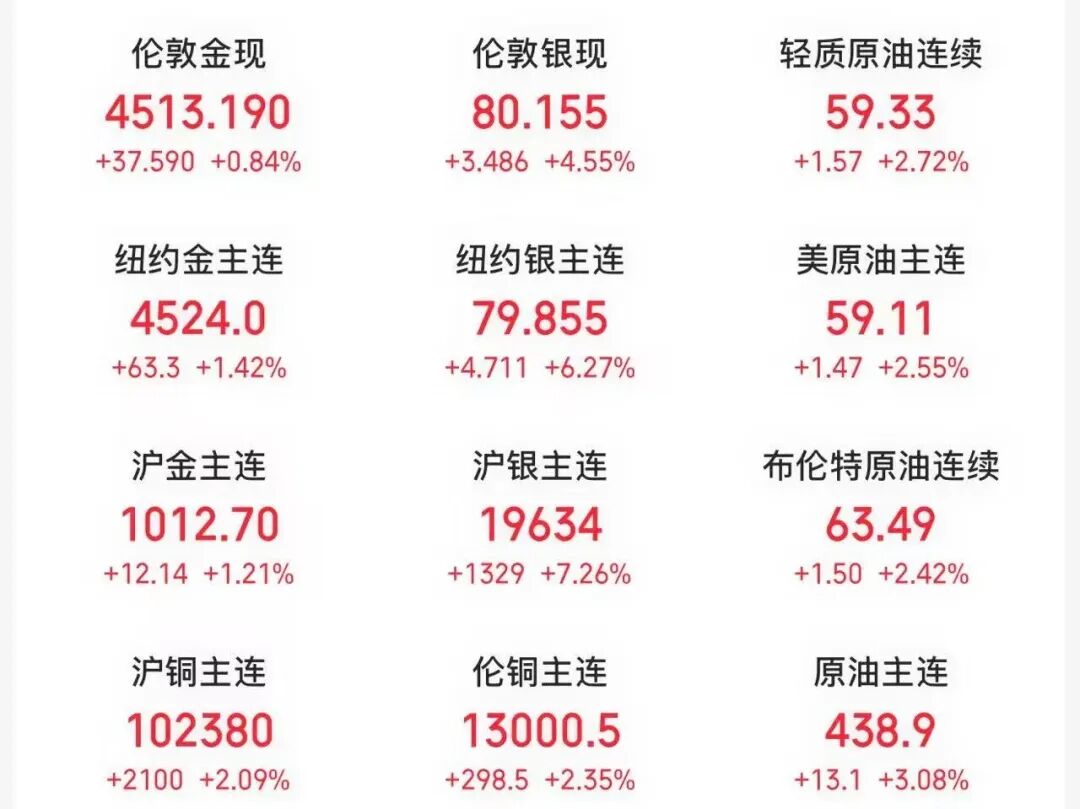
Economic Data - The U.S. non-farm payrolls increased by 50,000 in December 2025, below the expected increase of 70,000 and the previous value of 64,000 [1] - The unemployment rate in the U.S. for December 2025 was reported at 4.4%, better than the expected 4.5% and the previous 4.6% [1] Federal Reserve Outlook - The release of the employment data had minimal impact on the upcoming Federal Reserve meeting, with no expectations for a rate cut in January [1] - The probability of a rate cut in March dropped to 30%, and in April, it fell below 50% [1] - Morgan Stanley predicts rate cuts of 25 basis points in June and September, while Citigroup expects cuts in March, July, and September [1] Commodity Market Reaction - Following the employment data, silver prices surged significantly, with spot silver in London rising by 4.11% and New York silver futures increasing by 6.18% [2] - WTI crude oil futures for February rose by 2.35% to $59.12 per barrel, with a weekly increase of 3.14% [3] - Brent crude oil futures for March increased by 2.18% to $63.34 per barrel, with a weekly rise of 4.26% [3] Geopolitical Factors - U.S. President Trump announced a collaboration with the Venezuelan government regarding an oil tanker, indicating potential changes in U.S. policy to allow oil companies to operate in Venezuela [3] - Trump mentioned that major oil companies would invest at least $100 billion to rebuild Venezuela's oil infrastructure [3] Market Analysis - Analysts suggest that the recent rise in oil prices is primarily a rebound from previous declines, influenced by geopolitical tensions and expectations regarding Venezuelan oil supply [5] - The CBOE Oil Volatility Index (OVX) increased from 28.4% to 35.8%, indicating heightened market volatility [5] - Despite the current price increases, long-term forecasts suggest that oil prices may remain in a downward trend, with Brent crude expected to trade between $59 and $63 per barrel [6] Supply and Demand Dynamics - The global oil market is anticipated to face oversupply issues, with a projected surplus of 3.8 million barrels per day by 2026 [6][7] - The U.S. commercial crude oil inventory decreased by 3.832 million barrels, providing some short-term support for oil prices [5] - The potential return of Russian oil to the market following the resolution of the Ukraine conflict could exert downward pressure on oil prices [7]
原油日报:原油震荡上行-20260109
Guan Tong Qi Huo· 2026-01-09 13:35
Report Summary 1. Report Industry Investment Rating No information provided. 2. Core View of the Report The crude oil market remains in a supply - surplus pattern, with prices in a weak and volatile state. Multiple factors such as OPEC+ production decisions, US production and inventory data, geopolitical situations in the Middle East and South America, and demand trends are influencing the market [1]. 3. Summary by Related Catalogs 3.1 Market Analysis - On January 4, OPEC+ decided to maintain the production plan set in early November 2025, suspending production increases in February and March 2026. The next meeting is scheduled for February 1. During the off - peak demand season, EIA data shows that US crude oil inventories decreased more than expected, but refined oil inventories increased more than expected, leading to a continuous rise in overall oil inventories. US crude oil production slightly decreased but remained near the historical high, and the number of US rigs continued to rise slightly [1]. - Geopolitical events include the UK, France, and Ukraine signing an intention statement to send troops to Ukraine after the cease - fire, with US support. Trump warned to raise tariffs on Indian products if India does not limit Russian oil purchases. Reliance Industries said its refinery has not received Russian oil in the past three weeks and expects no deliveries in January [1]. - The crack spread of refined oil in Europe and the US is low. The US ISM manufacturing index in December 2025 slightly decreased and has been below 50 for 10 consecutive months. The market is still worried about crude oil demand. Middle East exports have increased, and global floating storage of crude oil is high [1]. - The global crude oil market showed signs of digesting the restricted Venezuelan oil exports before New Year's Day. The military action did not damage its key oil facilities, and its production accounts for less than 1% of global supply. The US government wants oil companies to invest in Venezuela, but the industry is cautious. Trump said Venezuela will transfer 30 - 50 million barrels of oil to the US, and Chevron is increasing oil transportation from Venezuela [1]. - The unrest in Iran has been escalating, with internet disruptions. Trump threatened "severe strikes" if there are more deaths. Iran has a large crude oil production, and its situation deserves attention [1]. 3.2 Futures and Spot Market - The main crude oil futures contract 2602 rose 3.52% to 432.7 yuan/ton, with a minimum price of 419.3 yuan/ton and a maximum price of 433.9 yuan/ton. The open interest decreased by 3139 to 29929 lots [2]. 3.3 Fundamental Tracking - EIA's monthly report adjusted up US crude oil production in Q4 2025 by 40,000 barrels per day to 13.86 million barrels per day, non - OPEC+ oil supply by 50,000 barrels per day, and global crude oil production by 300,000 barrels per day. It also adjusted down global oil demand in Q4 2025 by 90,000 barrels per day [3]. - IEA adjusted up the global oil demand growth rate in 2025 by 40,000 barrels per day to 830,000 barrels per day and in 2026 by 90,000 barrels per day to 860,000 barrels per day. It also adjusted down the global oil supply growth rate in 2025 by 100,000 barrels per day and in 2026 by 20,000 barrels per day [3]. - OPEC maintained the global oil demand growth rate in 2025 at 1.3 million barrels per day and in 2026 at 1.38 million barrels per day [3]. - On the evening of January 7, EIA data showed that US crude oil inventories for the week ending January 2 decreased by 3.832 million barrels, compared with an expected increase of 447,000 barrels, and were 4.08% lower than the five - year average. Gasoline inventories increased by 7.702 million barrels (expected: 3.186 million barrels), and refined oil inventories increased by 5.594 million barrels (expected: 2.109 million barrels). Cushing crude oil inventories increased by 728,000 barrels [3]. 3.4 Supply and Demand - OPEC's latest monthly report shows that its October 2025 crude oil production was adjusted down by 21,000 barrels per day to 28.481 million barrels per day, and its November production decreased by 10,000 barrels per day month - on - month to 28.48 million barrels per day, mainly due to production cuts in Iraq and Iran. OPEC+ production in November increased by 43,000 barrels per day month - on - month to 43.06 million barrels per day [4]. - US crude oil production for the week ending January 2 decreased by 16,000 barrels per day to 13.811 million barrels per day, remaining near the historical high [4]. - The four - week average supply of US crude oil products decreased to 19.871 million barrels per day, 1.68% lower than the same period last year. Gasoline weekly demand decreased by 4.59% to 8.17 million barrels per day, with a four - week average demand of 8.688 million barrels per day, 0.49% higher than the same period last year. Diesel weekly demand decreased by 5.45% to 3.195 million barrels per day, with a four - week average demand of 3.629 million barrels per day, 4.25% lower than the same period last year. The decline in gasoline and diesel demand led to a 0.77% week - on - week decrease in the single - week supply of US crude oil products [4][6].