国潮消费

Search documents
聚焦 | “购在中国·2025精品消费月暨2025上海迎进博消费嘉年华”活动今日启幕!
Sou Hu Cai Jing· 2025-11-07 03:40
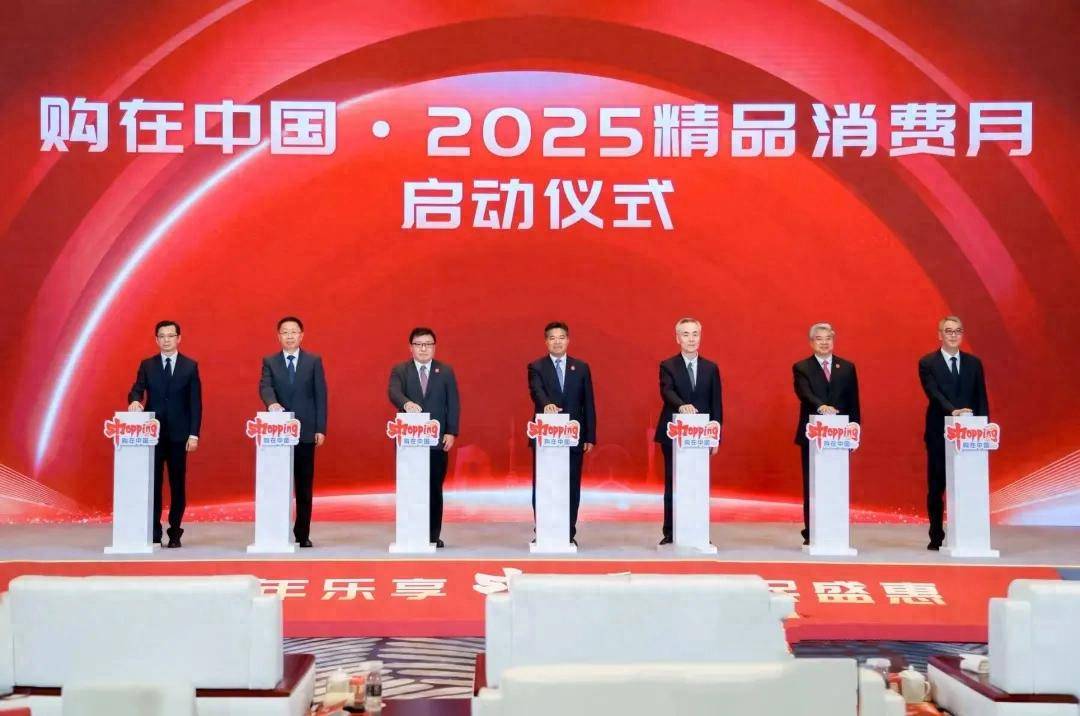
Core Points - The Ministry of Commerce launched the "Buy in China · 2025 Boutique Consumption Month" from November 1 to 30, focusing on four key areas: boutique shopping, exquisite food, exciting tourism, and exquisite performances [1][3] Group 1: Event Overview - The launch ceremony took place in Shanghai, co-hosted by the Ministry of Commerce and several municipal governments, highlighting the collaborative effort to boost consumption [3] - The event aims to leverage the influence of the China International Import Expo (CIIE) and integrate it with the "Double 11" shopping festival to enhance consumer engagement [3] Group 2: Key Activities - "New Trends from CIIE" series will feature the launch of new products from brands like L'Oréal and IKEA, with a focus on creating a vibrant shopping atmosphere in key commercial districts [4] - "Boutique Shopping New Scene" includes the establishment of a tax refund point at the CIIE venue and promotional activities across over 1,600 tax refund stores [5] - "Global Cuisine New Flavors" will promote popular dishes from local restaurants, creating a seamless connection between online and offline dining experiences [6][7] Group 3: E-commerce and Supply Chain - "Cloud Products and Sea Purchases" will focus on e-commerce activities, featuring products from over 30 countries and offering exclusive online promotions [8] - The event will also include a live streaming month, engaging various e-commerce platforms to promote local brands and products [8] Group 4: Tourism and Experience - "Leisure and Travel New Experiences" will introduce special offers for tourists during the CIIE, including free rides on designated buses for attendees [9] - The initiative aims to enhance the overall experience of visitors through themed activities and partnerships with local attractions [9] Group 5: Consumer Insights - The collaboration with Gaode to launch the "Love Shopping Shanghai" consumption list aims to capture the latest consumer trends across five core dimensions: new trends, new scenes, new flavors, new supplies, and new experiences [10]

东莞食品:从“制造”到“智造+文化”的华丽蝶变
Nan Fang Du Shi Bao· 2025-10-27 09:21
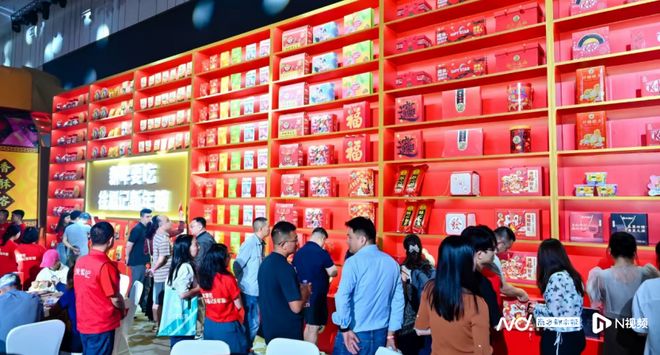
Core Insights - The article discusses the transformation of the food industry in Dongguan, China, highlighting Xu Fu Ji's launch of its 2026 New Year candy products, which aims to cover nearly 500 million Chinese households' festive candy consumption scenarios [1] Group 1: Manufacturing and Quality Upgrade - Dongguan's food enterprises are transitioning from "manufacturing" to "smart manufacturing," leveraging the region's mature industrial chain and precision manufacturing capabilities for technological upgrades [2] - Xu Fu Ji's classic crispy candy has seen a significant improvement in its production process, with the number of sugar layers increasing from 64 to 128, supported by 30 years of craftsmanship and automation across 39 workshops [4][2] - Other companies, like Huamei Foods, have also focused on automation and innovation, extending the shelf life of mooncakes from 7-14 days to 90 days, while introducing healthier options [4][5] Group 2: Cultural Integration - Dongguan food companies are shifting their focus from functional competition to deep cultural value exploration, with Xu Fu Ji's New Year candy series inspired by the Tang Dynasty, incorporating cultural elements into product design [8] - Huamei Foods has invested over 100 million to create the world's first mooncake-themed cultural museum, aiming to educate consumers about the cultural significance of mooncakes and the Mid-Autumn Festival [9][8] - Other brands, like Jiajia Mei, are integrating culture into their products, such as a zongzi gift box that transforms into a family game board, enhancing the festive experience [12] Group 3: Marketing and Consumer Engagement - Dongguan food companies are adopting digital strategies to engage younger consumers, with Xu Fu Ji promoting its brand through activities like the "Send Fortune with a Billion Candies" campaign [13] - Huamei Foods is expanding its presence across various channels, including e-commerce platforms, while Jiajia Mei is leveraging employee-generated content on social media to connect with consumers [15][13] Group 4: Collective Transformation - The transformation of Dongguan's food industry is characterized by a collective effort, with companies like Xu Fu Ji, Huamei Foods, and Jiajia Mei exploring a path of "manufacturing as the foundation, culture as the soul, and digital as the wings" [16] - In 2024, Dongguan's food industry is projected to exceed 100 billion yuan in total output value, with over 2,000 companies collaborating to build a comprehensive quality assurance system from farm to table [18][16]
让5亿中国家庭买到新年糖,徐福记新年糖如何成为年味仪式感?
Zhong Guo Shi Pin Wang· 2025-10-22 09:08
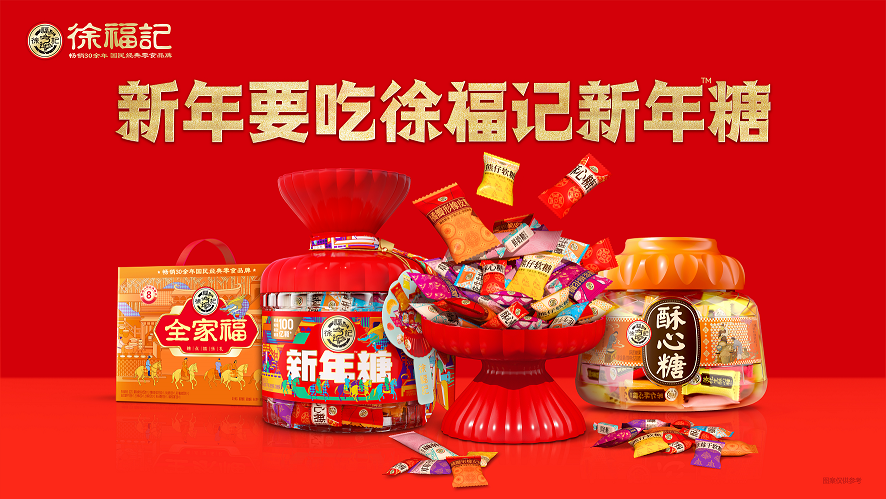
Core Insights - Xu Fu Ji is positioned as a cultural icon for the Chinese New Year candy market, aiming to connect with 500 million Chinese families through its products [3][5] - The company emphasizes emotional connections and cultural resonance in its marketing strategy, moving beyond just selling candy to becoming a symbol of family ties and traditions [3][14] Product Innovation - The 2026 New Year candy series features significant upgrades, including a transformation in the production process of the traditional "Su Xin Tang," increasing the layers from 64 to 128 for a richer taste experience [6] - Packaging design has been enhanced, inspired by traditional Chinese elements, such as the "Treasure Bowl," symbolizing wealth and good fortune [8] Cultural Integration - The new candy series reflects a cultural leap, drawing inspiration from the Tang Dynasty, with designs that resonate with modern aesthetics while maintaining traditional significance [9][11] - Xu Fu Ji's approach aligns with the growing trend of "Guochao" (national trend), with a projected market size exceeding 3 trillion yuan by 2028, indicating a strong consumer preference for culturally infused products [11] Emotional Marketing - The company has upgraded its gift box offerings, focusing on emotional connections and cultural significance, transforming them into experiential gifts rather than just consumables [14][15] - The "Longma Sending Blessings" series emphasizes cultural themes, making the packaging a collectible item that embodies cultural confidence and family memories [15] Marketing Strategy - Xu Fu Ji is actively pursuing a younger audience through innovative marketing strategies, including the "Send Fortune with a Billion Candies" campaign, which has become a hallmark of their New Year promotions [17] - The company is enhancing its digital marketing efforts by collaborating with platforms like Meituan and Douyin, aiming to engage younger consumers through live streaming and social media [19]
天猫双11国货开门红,毛戈平上美强者恒强:——化妆品医美行业周报20251019-20251019
Shenwan Hongyuan Securities· 2025-10-19 13:23
Investment Rating - The report maintains a positive outlook on the cosmetics and medical beauty sector, highlighting strong performance relative to the market [5][6]. Core Insights - The Tmall Double 11 event showcased strong sales for domestic brands, with significant demand for products from brands like Maogeping and Winona, indicating a robust market response [9][10]. - The cosmetics and medical beauty sector is expected to see continued growth, with Q3 performance meeting expectations and Q4 anticipated to benefit from promotional activities [10][11]. - The report emphasizes the importance of online channels, particularly Tmall and Douyin, in driving sales for domestic brands, which are gaining market share against international competitors [24][26]. Summary by Sections Industry Performance - The cosmetics and medical beauty sector outperformed the market from October 10 to October 17, 2025, with the Shenwan Beauty Care Index declining by 2.5%, which is better than the overall market performance [5][6]. - Key stocks in the sector included Jiaheng Jiahu (+35.0%), Yiyi Co. (+18.6%), and Yanjing Co. (+15.6%), while Maogeping (-7.2%) and Shangmei Co. (-5.4%) lagged [6]. Sales and Market Trends - The report notes that the overall retail sales of cosmetics in China reached 291.5 billion yuan in the first eight months of 2025, with a year-on-year growth of 3.3% [10][16]. - The Tmall Double 11 event attracted over 10 million viewers, with domestic brands experiencing sell-out conditions, indicating strong consumer interest and demand [9][10]. Company Highlights - Han Shu, a brand under Shangmei Co., has shown significant improvement in Tmall channel performance, collaborating with popular influencers to enhance sales [9][10]. - The report highlights the strategic partnership of Han Shu with global ambassador Wang Jiaer, aiming to elevate the brand's international presence and market perception [20][21]. Investment Recommendations - The report recommends focusing on brands with strong online sales growth, such as Maogeping, Shangmei Co., and Shanghai Jahwa, while also monitoring companies like Proya and Marubi for potential performance improvements [12][13]. - In the medical beauty segment, the report suggests investing in companies with strong R&D capabilities and product pipelines, recommending Aimeike as a key player [12][13].


潮宏基赴港上市稳步推进 A+H双平台推动全球化战略再进一步
Zheng Quan Shi Bao Wang· 2025-10-13 11:17
Core Viewpoint - Chao Hong Ji's successful application for H-share listing marks a significant step in its dual listing strategy, reflecting its ambition for global expansion amid a favorable market environment for the jewelry industry [1] Group 1: Financial Performance - In the first half of 2025, Chao Hong Ji reported revenue of 4.102 billion yuan, a year-on-year increase of 19.54%, and a net profit of 331 million yuan, up 44.34% [2] - The company's growth is attributed to a combination of long-term accumulation and market opportunities [2] Group 2: Strategic Initiatives - Since 2018, Chao Hong Ji has implemented two key strategic adjustments: optimizing product structure by integrating intangible cultural heritage with gold materials, and transforming its channel model to focus on franchising, with over 80% of stores being franchises [2] - The total number of stores reached nearly 1,600 in the first half of 2025, with a significant increase of 135% in store count in first-tier cities compared to 2022, indicating ongoing channel expansion opportunities [2] Group 3: Brand Development - Chao Hong Ji has built a strong brand moat through the combination of Eastern culture and fashionable design, with products like the flower silk series gaining popularity both domestically and internationally [3] - The company has over 18.2 million members as of the first half of 2025, a 41% increase from 2022, effectively targeting the Z generation through emotional marketing and cultural engagement [3] Group 4: International Expansion and Multi-Brand Strategy - Chao Hong Ji has expanded its overseas presence in Southeast Asia, opening stores in Malaysia, Thailand, and Cambodia, with significant sales performance in these markets [4] - The company has developed a multi-brand strategy, including the main brand focused on "Eastern culture + fashion" and sub-brands targeting different market segments, such as Soufflé for young gifts and "Zhen" for high-net-worth clients [4] - The upcoming IPO will fund overseas expansion, new production facilities, and flagship stores for the "Zhen" brand, enhancing supply chain efficiency and brand image [4]

化妆品医美行业周报:天猫双11下周开幕,抖音国货抢跑-20251012
Shenwan Hongyuan Securities· 2025-10-12 13:42
Investment Rating - The report gives a "Buy" rating for the cosmetics and medical beauty industry, particularly highlighting the potential of specific companies like Water Sheep Co., Ltd. [13] Core Insights - The cosmetics and medical beauty sector has underperformed the market recently, with the Shenwan Beauty Care Index rising by 1.3% from September 29 to October 10, 2025, which is lower than the overall market performance [3][4] - The upcoming Tmall Double 11 event is expected to boost sales, with domestic brands actively participating with competitive discounts [8] - Water Sheep Co., Ltd. is identified as a leading technology-driven beauty company, with stable revenue projections and improving profit margins [9][10] Summary by Sections Industry Performance - The cosmetics and medical beauty sector has shown weaker performance compared to the market, with the Shenwan Cosmetics Index increasing by 1.2%, lagging behind the Shenwan A Index by 0.4 percentage points [3][4] - The top-performing stocks in the sector include Jiaheng Home Care (+35.0%), Yiyi Co., Ltd. (+18.6%), and Yanjing Co., Ltd. (+15.6%) [5] Upcoming Events - Tmall's Double 11 sales event is set to begin on October 15, 2025, with major domestic brands like Proya and Maogeping expected to participate actively [8] Company Focus: Water Sheep Co., Ltd. - Water Sheep Co., Ltd. has a dual business model of proprietary and CP agency brands, with projected revenues stabilizing between 4 to 5 billion yuan from 2021 to 2024 [9] - The company is expected to achieve net profits of 258 million, 331 million, and 398 million yuan for the years 2025, 2026, and 2027, respectively, reflecting significant growth [10][13] Market Trends - The overall retail sales of cosmetics in August 2025 grew by 5.1%, indicating a recovery in consumer demand [17] - The domestic market is seeing a shift in market share, with local brands gaining ground against international competitors [25] E-commerce Insights - Data shows that domestic brands are performing well on platforms like Douyin and Tmall, with significant growth in GMV for brands like Proya and Maogeping [14][15] Company Developments - Proya has filed for an IPO in Hong Kong, with stable revenue growth and a strong online presence [19] - The report highlights the strategic moves of various companies, including partnerships and new product launches, to enhance their market positions [24][23]



新思想引领新征程丨国庆中秋假期掀起消费热潮 彰显中国经济蓬勃活力
Yang Guang Wang· 2025-10-10 02:49
Core Insights - The Chinese economy is showing robust vitality, driven by increased consumer spending during the extended National Day and Mid-Autumn Festival holiday period [1][2][3] Group 1: Consumer Trends - There was a significant increase in domestic travel, with 888 million trips taken during the holiday, an increase of 123 million compared to the previous year [1] - The average daily foot traffic at popular shopping districts rose by 8.8%, while sales increased by 6.0% during the holiday [3] - The demand for smart home appliances surged, indicating a shift in consumer preferences from "cost-effectiveness" to "quality-price ratio" [3][4] Group 2: Tourism and Cultural Experiences - The holiday saw a rise in cultural experiences, with events like concerts and sports games becoming key triggers for travel [1][2] - The number of inbound and outbound travelers reached 16.34 million, with a daily average of 2.04 million, marking an 11.5% increase year-on-year [2] - Unique cultural tourism projects, such as immersive experiences in historical settings, attracted both domestic and foreign tourists [2] Group 3: Retail and Entertainment - The total box office for the National Day film season reached 1.835 billion yuan, with domestic films accounting for 98.93% of the revenue [3] - The retail sector benefited from the holiday, with significant increases in sales at venues that combined food, culture, and local products [2][3] - The popularity of green and intelligent products reflects a growing consumer focus on health, sustainability, and technological advancement [4]
国庆中秋假期,全国重点零售和餐饮企业销售额同比增长2.7%——消费市场人气旺亮点多
Ren Min Ri Bao Hai Wai Ban· 2025-10-10 00:59
Core Insights - The overall consumption market during the National Day and Mid-Autumn Festival holiday showed a robust growth trend, with significant increases in domestic travel and spending [1][2][6] Group 1: Travel and Tourism - During the holiday, 888 million domestic trips were made, with total spending reaching 809 billion yuan, marking an increase of 1.23 billion trips and 108.19 billion yuan compared to the previous year [2] - The trend of long-distance and cross-border travel is evident, with significant growth in air travel for long routes and an increase in international flights due to optimized visa policies [3] - The travel market is experiencing structural changes, with a rise in short, frequent trips and high-quality long trips, as evidenced by a 52% increase in hotel bookings for two or more nights [5] Group 2: Consumer Spending - Key retail and catering enterprises saw a 2.7% year-on-year increase in sales during the holiday, with foot traffic in monitored shopping areas rising by 8.8% [2] - Consumption of green organic food increased by 27.9%, smart home products by 14.3%, and domestic fashion by 14.1%, indicating a shift towards healthier and more innovative consumer preferences [4] - The issuance of over 4.8 billion yuan in consumption subsidies and various promotional activities effectively stimulated consumer spending [6][7] Group 3: Cultural and Entertainment Activities - Over 29,000 cultural and tourism events were held during the holiday, contributing to a vibrant cultural consumption atmosphere [7] - The film industry saw a significant boost, with box office revenues exceeding 1.79 billion yuan during the holiday period [4] - Night tourism gained popularity, with search interest for night tours increasing by over 200%, reflecting a growing trend in nighttime economic activities [4]
长假消费市场人气旺亮点多
Xin Hua She· 2025-10-10 00:35
Core Insights - The sales revenue of key retail and catering enterprises in China increased by 2.7% year-on-year during the National Day and Mid-Autumn Festival holiday period [1] - Foot traffic and sales revenue in 78 monitored pedestrian streets (business districts) rose by 8.8% and 6.0% year-on-year, respectively, from October 1 to 7 [1] - Notable growth was observed in green organic food sales, which surged by 27.9%, smart home products by 14.3%, and domestic fashion by 14.1% during the holiday [1] Retail and Catering Sector - The overall sales revenue of key retail and catering enterprises showed a year-on-year increase of 2.7% during the holiday [1] - The monitored pedestrian streets experienced a significant rise in foot traffic and sales, indicating a robust consumer engagement [1] Consumer Trends - There was a marked increase in the sales of green organic foods, smart home products, and domestic fashion, reflecting changing consumer preferences towards sustainability and local brands [1] - The introduction of low-oil and low-sugar mooncakes was well-received by consumers, highlighting a trend towards healthier food options [1] Entertainment and Sports Consumption - The release of several successful domestic films led to a box office revenue exceeding 1.79 billion yuan during the National Day holiday [1] - Various sports events generated significant viewer interest, with local initiatives combining food, cultural products, and unique merchandise to enhance the viewing experience and extend consumption opportunities [1]
消费市场人气旺亮点多(锐财经)
Ren Min Ri Bao Hai Wai Ban· 2025-10-09 22:47
Core Insights - The overall consumption market in China showed a robust growth trend during the National Day and Mid-Autumn Festival holiday, with 888 million domestic trips and total spending reaching 809 billion CNY, indicating a solid recovery in consumer spending [4][5][9] Group 1: Tourism and Travel Trends - The "Wannan Fish Dragon Festival" in Wuhu City, Anhui Province, activated cultural tourism consumption through immersive experiences, making it a popular choice for visitors [4] - The travel consumption report from Tongcheng Travel highlighted a significant trend towards long-distance domestic and international travel, with increased efficiency due to new transportation routes and optimized visa policies [6] - Data from Tongcheng Travel indicated a 20% year-on-year increase in users booking trips to two or more cities, and a 52% increase in bookings for hotels with stays of two days or more [8] Group 2: Consumer Spending Patterns - Key retail and catering enterprises saw a 2.7% year-on-year increase in sales during the holiday, with foot traffic and sales in monitored pedestrian streets rising by 8.8% and 6.0%, respectively [5] - The consumption of green organic food surged by 27.9%, while smart home products and domestic fashion brands also saw significant growth, reflecting a shift towards healthier and more innovative consumer preferences [7] - The film industry experienced a boom, with box office revenues exceeding 1.79 billion CNY during the holiday period, driven by popular domestic films [7] Group 3: Government Initiatives and Support - Over 4.8 billion CNY in consumer subsidies were distributed during the holiday, alongside more than 29,000 cultural and tourism events organized nationwide [9] - Various regions implemented targeted consumption policies, such as issuing consumption vouchers and promoting local tourism resources, which effectively stimulated consumer spending [9] - Smart management systems were introduced in tourist attractions to enhance visitor experience and operational efficiency, showcasing a blend of technology and service improvement [9]