
市场调整

Search documents
A股:周五大盘怎么走?是大涨还是大跌?我做了一个大胆的预判
Sou Hu Cai Jing· 2025-10-30 17:25
Core Viewpoint - The market is experiencing a significant adjustment after reaching a high point, with the Shanghai Composite Index closing at 3986.90, down 0.73%, indicating a potential turning point for future market direction [1][8]. Technical Analysis - The Shanghai Composite Index peaked at 4025 points, with 3963 points identified as the first support level. A breach of this support could lead to a further decline towards 3936 points, which aligns with the 5-day moving average [2]. Trading Volume and Capital Flow - The trading volume in the Shanghai market approached 580 billion, a 10% increase from previous days, while net outflows of over 60 billion were observed, particularly in the communication equipment and semiconductor sectors. This indicates a significant selling pressure despite high trading activity [4]. Sector Performance - The market displayed a stark contrast, with quantum technology and battery sectors rising, while technology, computing, brokerage, and media sectors faced declines. Defensive sectors like consumer goods and pharmaceuticals showed resilience, suggesting a shift from aggressive to defensive market sentiment [5]. External Environment - The recent interest rate cut by the Federal Reserve did not positively impact the U.S. stock market, which experienced a late-session drop. This negative sentiment is likely to affect the A-share market, especially if the U.S. market continues to decline [6]. Market Structure - The margin trading balance remains high, indicating that leveraged funds have not significantly exited the market. However, if the index continues to weaken, there may be passive selling pressure. Additionally, the end of the month may lead to increased volatility due to institutional rebalancing [7].


AI存在调整风险!木头姐警告:随着明年利率上升,市场将“不寒而栗”
Hua Er Jie Jian Wen· 2025-10-28 09:55
Core Viewpoint - Cathie Wood warns of a potential market adjustment as interest rates may rise next year, leading to a "reality check" for valuations in the AI sector [1][2] Group 1: Market Outlook - Wood predicts a shift in market focus from interest rate cuts to increases, which could trigger significant market reactions [2] - Historical data does not support the notion that innovation is negatively correlated with interest rates, contrary to popular belief [2] - The rise in interest rates could lead to a "reality check" due to the substantial investments in technology, raising concerns about overvaluation [2] Group 2: AI Valuation Perspective - Wood firmly denies the existence of an AI bubble, asserting that the current phase is merely the beginning of a technological revolution [3] - She acknowledges the possibility of market pullbacks but believes that the long-term valuations of major tech companies will remain reasonable [3] - The adoption and transformation of AI within large enterprises will take time, requiring significant restructuring efforts [3]
控制仓位耐心等待
鲁明量化全视角· 2025-10-19 05:35
Group 1 - The market experienced a significant adjustment last week, with the CSI 300 index down by 2.22%, the Shanghai Composite Index down by 1.47%, and the CSI 500 index down by 5.17% [3] - The ongoing China-US trade friction continues to create volatility, with recent economic data from China showing a low-level oscillation in the economy, including a notable drop in exports to Europe [3][4] - The recommendation is to maintain a low position and patiently wait, as the market is expected to continue facing adjustments due to trade conflict news, particularly until the APEC meeting at the end of the month [4] Group 2 - The technical analysis indicates that retail investors' short-term speculation cannot prevent the market's medium-term adjustment, with no new signs of institutional capital entering the market [4] - The main board's performance is expected to be controlled within a 2% decline due to the support from dividend sectors, while the small and medium-sized stocks are experiencing more significant declines [4] - There are no specific industries recommended for short-term momentum or trend models at this time [5]

不出意外,信号已明确,A股迎来最后调整
Sou Hu Cai Jing· 2025-10-18 06:45
Core Viewpoint - The recent decline in A-shares is seen as a signal of the market entering its final adjustment phase, with limited downside potential and a shift of funds from crowded sectors to undervalued areas [1][3]. Market Adjustment - Market adjustments are viewed as a healthy mechanism, necessary for releasing pressure and correcting overvalued assets, similar to how the human body requires breathing [3][5]. - Historical examples illustrate that significant adjustments have previously helped to re-anchor values, such as the 2015 and 2021 market corrections [3]. Investor Sentiment - Market adjustments test investor psychology, highlighting the tendency for individuals to panic sell during downturns and chase prices during upswings [5][9]. - The distinction between price and value is crucial; true investment opportunities arise when stock prices fall significantly below their intrinsic value [5]. Sector Rotation - Recent market behavior shows a rotation from high-growth technology stocks to traditional sectors like banking and insurance, reflecting cyclical patterns [7][9]. - Historical trends indicate that no sector remains perpetually bullish, emphasizing the importance of timing and sector awareness in investment strategies [7]. Investment Strategies - Two recommended strategies in volatile markets include left-side trading during low interest and dollar-cost averaging into index funds to mitigate timing risks [9][11]. - Investors should maintain a consistent investment logic, avoiding contradictory strategies that can lead to confusion and missed opportunities [9]. Market Environment Challenges - The A-share market faces challenges such as misinformation and emotional trading among retail investors, which can lead to erratic price movements [11][13]. - The need for a more robust credit system and improved information filtering capabilities for ordinary investors is highlighted, as they are often swayed by market noise [11]. Current Market Position - Indicators suggest that the market is nearing the end of its adjustment phase, with key sectors like finance and consumer goods at historically low valuations, providing a foundation for potential rebounds [13]. - Prepared investors who maintain cash reserves and are willing to act against the prevailing market sentiment are likely to emerge as winners in the next phase [13].

【投资笔记】进入维持一个半月的回调周期
Sou Hu Cai Jing· 2025-10-17 11:23
Group 1 - The market is experiencing volatility and requires a thorough adjustment to sustain long-term growth [1] - The semiconductor sector is expected to continue its decline, and investors should avoid trying to catch falling stocks [1][2] - The upcoming policy announcements in October and the Federal Reserve's meeting are unlikely to change the market's bottom-seeking process [1] Group 2 - The Shanghai Composite Index has limited downside, with key support levels at the 60-day moving average and the bottom of the trading range [2] - The focus has shifted to the main board, as the growth stocks in the ChiNext index show no signs of recovery [2] - Investors are advised to either remain in cash or hold light positions until the adjustment period concludes, expected around late November or early December [2] Group 3 - A significant upcoming event is the potential end of the Federal Reserve's quantitative tightening (QT), which could greatly impact the capital markets [3] - The market is likely to experience a shift due to the combination of the end of QT and subsequent interest rate cuts [3] Group 4 - The current market correction is viewed as a necessary step for future upward movement, maintaining a slow bull market outlook [4]
闫瑞祥:黄金早盘低点之看延续,欧美短线关注调整
Sou Hu Cai Jing· 2025-10-13 02:25
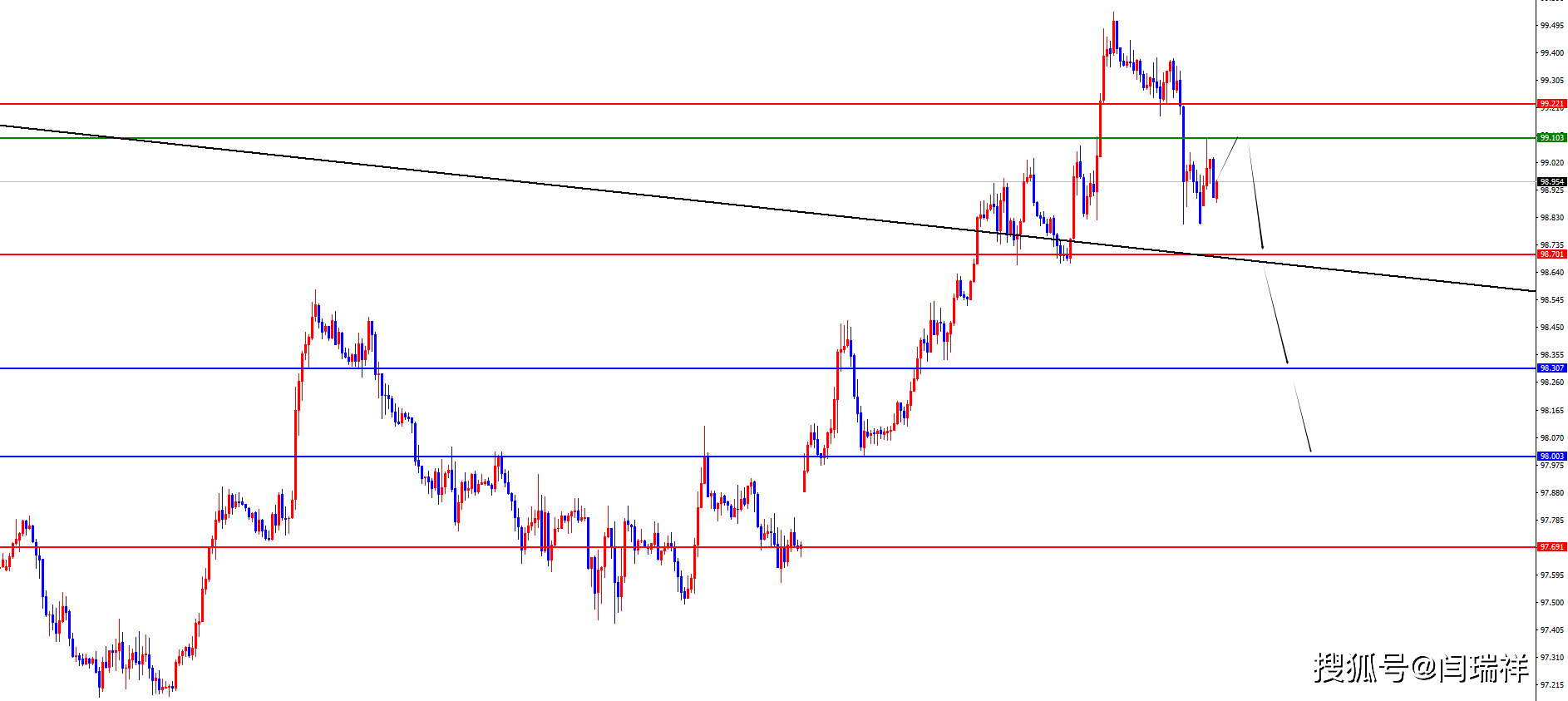
Group 1: US Dollar Index - The US Dollar Index showed a downward trend last Friday, with a high of 99.443 and a low of 98.807, closing at 98.81 [1] - The market experienced pressure during the early session, breaking through the four-hour support level, indicating a short-term bearish outlook [1] - Weekly support is noted at the 98 level, with further attention on mid-term bullish potential [1] Group 2: Gold Market - Gold prices increased last Friday, reaching a high of 4022.72 and a low of 3946.94, closing at 4018.58 [3] - The monthly analysis indicates a critical level at 3130 for long-term bullish sentiment, while the weekly support is at 3585 [3] - Short-term bullish continuation is expected as long as prices remain above the early session low of 4003.76 [5] Group 3: Euro/USD Market - The Euro/USD pair showed an upward trend last Friday, with a low of 1.1553 and a high of 1.1630, closing at 1.1623 [5] - Monthly support is identified at 1.1100, while the weekly support is at 1.1680, indicating a potential bearish outlook in the mid-term [5] - Short-term adjustments are anticipated, with support noted in the 1.1590-1.1600 range [5] Group 4: Upcoming Economic Events - Key economic data to watch includes China's September trade balance and the World Bank and IMF's autumn meetings [7] - The OPEC monthly oil market report is also scheduled for release [7] - Federal Reserve's Powell is set to speak, which may impact market sentiment [7]
10个指标,帮你警惕市场过热!
Sou Hu Cai Jing· 2025-09-29 09:51
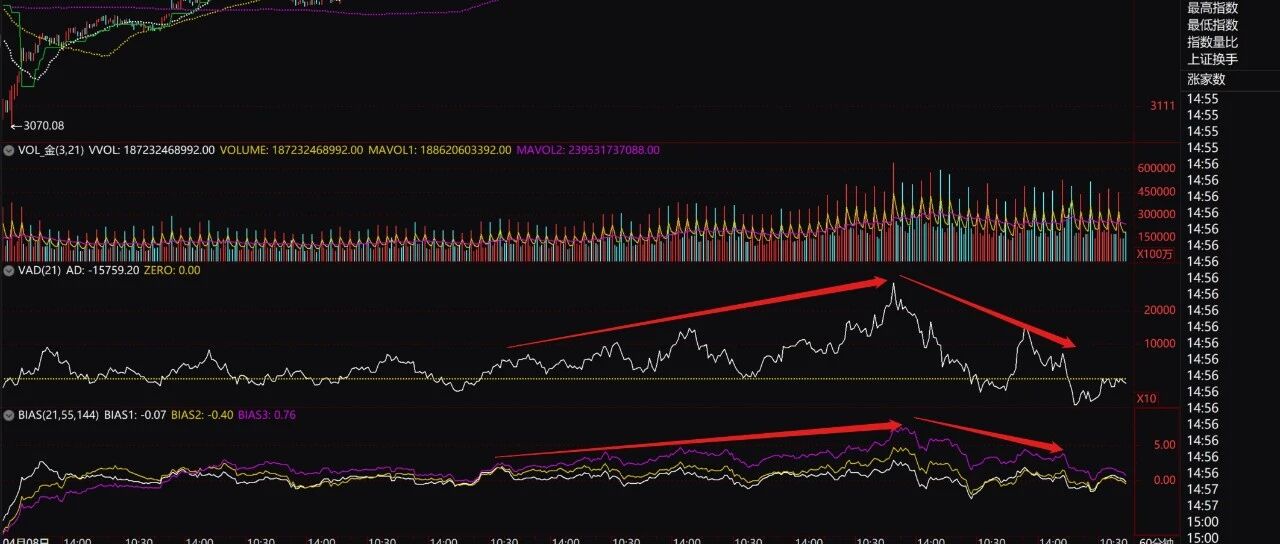
Group 1: Market Activity Indicators - Abnormal trading volume indicates a high level of market activity, with A-share market trading volume exceeding 2 trillion yuan for several consecutive days, suggesting a potentially overheated market [2] - Rapid price increases are observed with major market indices rising significantly, such as the Shanghai Composite Index increasing over 10% in a short period, indicating overly optimistic market sentiment [2] - High turnover rates, particularly exceeding 3%, suggest strong speculative behavior among investors [2] Group 2: Valuation Concerns - Elevated price-to-earnings (PE) ratios, particularly in technology stocks exceeding 50 times, compared to a historical average of around 30 times, indicate potential overvaluation [3] - Price-to-book (PB) ratios above 3 times in certain sectors, while historical averages hover around 2 times, further signal overvaluation risks [3] Group 3: Capital Inflows - Significant foreign capital inflows, especially with large net inflows over consecutive days, may indicate market overheating despite being a positive sign for market attractiveness [3] - Rapid increases in margin financing balances suggest excessive use of leverage by investors, potentially increasing market instability [3] Group 4: Market Sentiment - Extreme optimism among investors, with a widespread belief in continuous market gains, may lead to blind chasing of prices and neglect of risks [4] - Overly positive media coverage, with frequent headlines suggesting a bull market, can mislead investors and exacerbate market overheating [4] Group 5: Sector Disparities - Significant gains in a few sectors, such as technology and new energy, while others remain stagnant, indicate potential bubble risks due to concentrated capital [6] - Rapid shifts in market hotspots, with investors frequently chasing trends, may lead to increased market volatility [6] Group 6: Regulatory Signals - Warnings from regulatory bodies may indicate a need for caution among market participants regarding potential risks [6] - Expectations of policy tightening in response to market overheating could signal an impending adjustment phase [6] Group 7: Technical Indicators - Overbought conditions indicated by Relative Strength Index (RSI) exceeding 70 suggest potential market overheating [6] - Divergence in MACD indicators, where market indices rise but MACD fails to confirm, may indicate weakening upward momentum and adjustment risks [6] Group 8: Signs of Market Bubble - Discrepancies between asset prices and fundamental performance, such as poor company earnings coupled with rising stock prices, suggest bubble conditions [7] - Blind following of market trends by investors, without regard for fundamentals, may further inflate market bubbles [7] Group 9: Post-Market Activity - Increased trading activity outside regular market hours may reflect excessive investor enthusiasm and heightened market sentiment [7] - Rising discussions on social media regarding stock investments, particularly among non-professional investors, may indicate overly optimistic market conditions [7]

市场正在经历一次严肃的调整
猛兽派选股· 2025-09-28 04:30
Market Overview - The market is currently experiencing a serious adjustment, with diminishing profit effects across previously leading sectors, indicating a potential cycle of rebirth after a thorough evaluation [1] - The Shanghai Composite Index is undergoing a horizontal structure after a clear upward trend, with a slight divergence at the 3899.96 point [3] - The CSI A500 index has shown a three-top divergence structure, historically a strong bearish signal [4] - The ChiNext Index also exhibits a three-top divergence, suggesting similar bearish implications [5] Sector Analysis - The leading sector, the network connection and distribution sector, has shown a decline in momentum despite previous highs, indicating a phase of profit-taking [6] - The PCB sector lacks a divergence structure but shows increasing bearish pressure, suggesting potential profit-taking risks [7] - The consumer electronics sector, led by major stocks like Hon Hai Precision Industry and Luxshare Precision, has shown a slight downturn after a strong performance [7] - The lithium battery equipment sector has reached a three-top divergence, indicating a poor risk-reward ratio [8] - The inverter sector, particularly led by Sungrow Power Supply, is nearing its peak performance [10] - The semiconductor equipment sector has not yet shown divergence but is entering a critical phase, suggesting reduced risk-reward expectations [11] - The gaming sector has also reached a divergence stage, with recent leading stocks showing bearish signs [13] - The lithium battery sector is experiencing a three-top divergence, although some companies are seeing performance reversals and increased orders [14] Technical Indicators - The momentum indicators for leading and heavyweight stocks are showing signs of decline, indicating a potential end to the upward trend [15] - The Shanghai Composite Index is expected to have a limited pullback, possibly forming a VCP structure, with optimistic expectations for price consolidation around key moving averages [15]
从杠杆ETF到数字币 美国市场正在“微妙变化”
智通财经网· 2025-09-27 10:37
Core Insights - The U.S. financial market is experiencing a subtle shift despite positive economic data, Federal Reserve rate cuts, and a near-high stock market [1] - Retail investors, previously seen as "latecomers," are now leading a withdrawal from high-risk assets, indicating a cautious sentiment [1][5] Group 1: Market Trends - U.S. leveraged ETFs faced an outflow of approximately $7 billion this month, the highest level recorded since 2019 [1] - The digital currency market saw a loss of about $300 billion in market value, while major U.S. stock indices, including the S&P 500 and Nasdaq 100, recorded their first weekly decline in a month [1] - Retail investors are locking in profits after months of market exuberance, rather than signaling panic [2] Group 2: Institutional Responses - Professional asset management firms are adopting more cautious strategies in response to changing market sentiment [3] - Morgan Stanley's Andrew Slimmon noted that the market is overbought, particularly in speculative stocks, which are nearing bubble territory [4] - Lido Advisors is implementing hedging strategies, such as selling covered call options and buying put spreads for protection during market pullbacks [4] Group 3: Retail Investor Behavior - Retail investors, often labeled as "dumb money," have been leading the market cycle, indicating a potential shift in market dynamics [6] - The withdrawal from the most speculative areas of the market by retail investors may signal increasing market fragility and a quiet recalibration [6]
从杠杆ETF到数字币,美国市场正在“微妙变化”
Hua Er Jie Jian Wen· 2025-09-27 08:05
Core Insights - The U.S. financial market is experiencing a subtle shift despite positive economic data, Federal Reserve rate cuts, and a near-high stock market [1] - Retail investors, previously seen as "dumb money," are leading a withdrawal from high-risk assets, signaling potential market vulnerability [6] Group 1: Market Trends - U.S. leveraged ETFs faced an outflow of approximately $7 billion this month, the highest level recorded since 2019 [1] - The digital currency market saw a loss of about $300 billion in market value, while major U.S. stock indices, including the S&P 500 and Nasdaq 100, recorded their first weekly decline in a month [1] Group 2: Retail Investor Behavior - The recent asset withdrawal is not a panic signal but rather a strategic move by investors to lock in profits after months of market exuberance [2] - For instance, the Direxion Daily Semiconductors Bull 3x Shares (SOXL) fund, despite a 31% increase this month, experienced over $2.3 billion in outflows [2] Group 3: Institutional Response - Professional asset management firms are adopting more cautious strategies in response to changing market sentiment [3] - Morgan Stanley's Andrew Slimmon noted that the market is overbought, particularly in speculative stocks, indicating a dangerous signal [4] - Lido Advisors is implementing hedging strategies, such as selling covered call options and buying put spreads for protection during market corrections [4] Group 4: Signals from Smart Money - The withdrawal led by retail investors may indicate a significant signal for market participants, as they have previously outperformed institutions in timing market movements [6] - The current cautious stance of retail investors could suggest increasing market fragility and the beginning of a quiet recalibration [6]