
微短剧

Search documents
6个省级卫视超高清频道,即将开播
Shang Hai Zheng Quan Bao· 2025-09-25 23:19
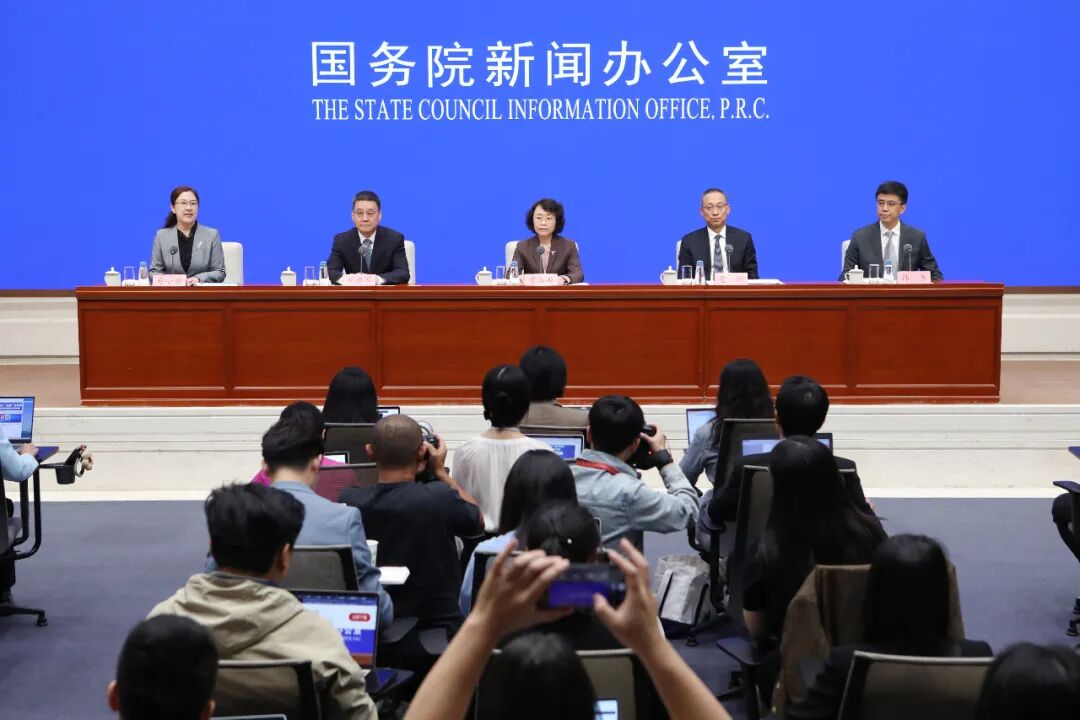
Core Viewpoint - The press conference highlighted the achievements in high-quality development of broadcasting, television, and online audio-visual sectors during the "14th Five-Year Plan" period, emphasizing the integration of culture and technology, and the expansion of ultra-high-definition (UHD) content and services [1][4]. Group 1: User and Content Scale - China has become a major broadcasting and online audio-visual country, with over 1 billion users across various television platforms, and 1.09 billion online audio-visual users [4]. - Since the beginning of the "14th Five-Year Plan," more than 1,500 TV dramas, over 3,500 animated films, and 350,000 hours of documentaries have been produced [4]. - The total revenue of the broadcasting and audio-visual service industry is projected to reach 1.49 trillion yuan in 2024, marking a 61.96% increase compared to the end of the "13th Five-Year Plan" [4]. Group 2: Ultra-High-Definition Development - The government is promoting the comprehensive development of UHD across all broadcasting sectors, integrating content, broadcasting, transmission, terminals, and industry [6]. - Currently, new TV dramas, online dramas, and documentaries are largely produced in UHD, with an increasing proportion of news, sports, and variety shows also adopting UHD standards [6]. Group 3: UHD Channels and Technology - The Central Radio and Television General Station operates two 4K UHD channels, with additional channels launched in various provinces, expanding the national UHD channel matrix [8]. - There are over 280 million UHD set-top boxes in use, and sales of UHD TVs larger than 85 inches have significantly increased [8]. - The establishment of national and industry standards for UHD technology is underway, with plans to release standards for mobile terminal UHD display and video distribution [8]. Group 4: Micro Short Drama Development - The micro short drama sector has rapidly grown, with user numbers reaching 696 million by July this year, and the market expected to exceed 50 billion yuan [10]. - The government is implementing measures to support the healthy development of micro short dramas, including topic guidance and creative support, with 14 provinces already introducing supportive policies [10]. - A management framework for micro short dramas is being established to regulate the industry and address issues such as inappropriate content [10].

传播党的声音、服务人民群众 广播电视和网络视听行业五年成绩单来了
Nan Fang Du Shi Bao· 2025-09-25 17:20
Core Viewpoint - During the "14th Five-Year Plan" period, the broadcasting and television industry in China has achieved significant results in promoting systematic reform and high-quality development, establishing itself as a major player in both broadcasting and online audiovisual sectors [1] Group 1: Industry Development - The broadcasting and television industry has focused on innovation and overcoming challenges, leading to a transformation in user engagement, content creation, and industry scale [1] - The international export scale of audiovisual programs has grown by over 40%, with Chinese audiovisual platforms reaching over 200 countries and regions [8] - The industry has seen a rise in the production of high-quality dramas, documentaries, and animations, reflecting cultural heritage and contemporary themes [13] Group 2: Technological Advancements - The shift towards ultra-high-definition (UHD) content has been significant, with over 280 million UHD set-top boxes deployed for cable and IPTV [16] - Key technologies in the UHD audiovisual field have led to the establishment of 3 national standards and 66 industry standards [16] Group 3: Policy and Regulation - The industry is implementing measures to prevent excessive commercialization and to address issues such as high actor salaries and inappropriate content [5][20] - Policies supporting the development of micro-short dramas have been introduced in 14 provinces, addressing public concerns regarding content quality [20] Group 4: Content Creation and Cultural Impact - The industry is encouraging cultural innovation and creativity among artists, providing a broader space for artistic expression [5] - A variety of programs, including dramas and cultural shows, are being produced to resonate with audiences and enhance cultural dialogue [8][13]

剧集半年报|百纳千成彻底转型营销赛道?剧集业务收入仅剩800万元 占总营收比重已不足10%
Xin Lang Zheng Quan· 2025-09-15 09:00
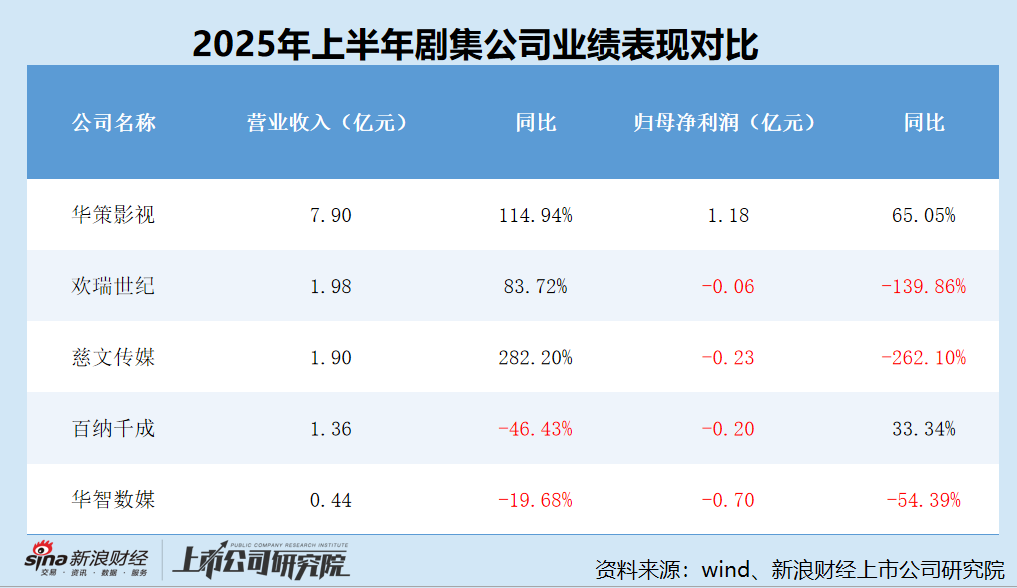
Industry Overview - In the first half of 2025, the number of approved domestic online dramas decreased to 724, down 12.77% from 830 in the same period of 2024, with total episodes dropping to 12,103, a decline of 11.57% [1] - The long video platforms released 271 new series, a reduction of 33 compared to the previous year, while domestic new dramas increased by 7 to 137 [1] - The market is shifting from a "one-hit wonder" model to a "diversified" pattern, with fewer blockbuster hits despite an increase in the number of series [1] Company Performance - As of August 31, 2025, five A-share drama companies reported a combined revenue of 1.358 billion yuan, a year-on-year increase of 62.75%, but a net profit of -1.7822 million yuan, a decline of 106.72% [2] - Huace Film & TV was the only company to achieve growth in both revenue and net profit, with revenue increasing by 114.94% to 790 million yuan, significantly higher than its peers [3] - Baina Qiancheng experienced a dramatic revenue drop of 46.43% to 136 million yuan, while Huace Film & TV's revenue from drama production and distribution reached 524 million yuan, a substantial increase of 153.38% [3] Market Trends - The micro-drama market in China reached a scale of 50.5 billion yuan in 2024, surpassing box office revenues for the first time, and is projected to grow to 63.43 billion yuan in 2025, with a compound annual growth rate of 19.2% [1] - Huace Film & TV's "Guose Fanghua" became a phenomenon with a Douban rating of 7.8, setting a record for Mango TV [5][6] - The short drama business is gaining traction, with Huace Film & TV's short dramas achieving over 2 billion views, while other companies are also exploring this segment [7][8] Financial Health - Huazi Media reported the highest inventory turnover days at 4,615.38 days, indicating liquidity issues, while its accounts receivable turnover days were 966.18 days [10][14] - Ciweng Media's accounts receivable balance reached 564 million yuan, with 70.37% being over two years old, raising concerns about potential under-provisioning for bad debts [12] - The asset-liability ratio for Huazi Media stood at 81.22%, significantly higher than its peers, indicating a challenging financial position [13][14]


剧集半年报|慈文传媒应收账款坏账准备计提比例畸低 减值是否充分、审慎?净利润是否含“水分”?
Xin Lang Zheng Quan· 2025-09-15 08:53
Group 1: Industry Overview - In the first half of 2025, 724 domestic online dramas were approved for release, a decrease of 12.77% compared to 830 in the same period of 2024, with a total of 12,103 episodes, down 11.57% from 13,686 episodes [1] - The market for micro-short dramas in China reached a scale of 505 billion yuan in 2024, surpassing the box office revenue for films for the first time, and is projected to grow to 634.3 billion yuan in 2025 and 856.5 billion yuan by 2027, with a compound annual growth rate of 19.2% [1] Group 2: Company Performance - The total revenue of five A-share drama companies reached 1.358 billion yuan in the first half of 2025, a year-on-year increase of 62.75%, while the net profit attributable to shareholders was -1.7822 million yuan, a decline of 106.72% [2] - Huace Film & TV was the only company to achieve both revenue and net profit growth, with revenue of 790 million yuan, up 114.94%, and a net profit of 118 million yuan, up 65.05% [4][5] - The largest revenue decline was seen in Baona Qiancheng, which reported a 46.43% decrease to 136 million yuan, while its net profit was -20 million yuan, a reduction in losses of 33.34% [5][6] Group 3: Market Dynamics - The concentration of top drama series in the market has decreased, with an increase in the number of series but a reduction in hits, indicating a shift from a "one-star" to a "distributed" market structure [1] - Huace Film & TV's "Guose Fanghua" became a phenomenon with a Douban rating of 7.8, while other companies like Ciweng Media and Baona Qiancheng struggled with lower ratings and viewership [8][9] Group 4: Financial Health - Huace Film & TV's revenue from drama production and copyright distribution reached 524 million yuan, a significant increase of 153.38%, accounting for 66.29% of total revenue [5] - Huazi Media reported the longest inventory turnover days at 4,615.38 days, while its accounts receivable turnover days were 966.18 days, indicating liquidity issues [11][15] - Ciweng Media's accounts receivable balance was 564 million yuan, with 70.37% aged over two years, raising concerns about potential under-provisioning for bad debts [13]
剧集半年报|华智数媒定增募资4亿元偿债加补流 仍无法补全资金缺口 资产负债率遥遥领先
Xin Lang Zheng Quan· 2025-09-15 08:46
Group 1: Industry Overview - In the first half of 2025, the number of approved domestic online dramas decreased to 724, a drop of 12.77% compared to the same period in 2024, with a total of 12,103 episodes, down 11.57% [1] - The long video platforms released 271 new series, a reduction of 33 compared to the previous year, while domestic new dramas increased by 7 to 137 [1] - The market for micro-short dramas reached a scale of 50.5 billion yuan in 2024, surpassing the box office revenue of films for the first time, and is projected to grow to 63.43 billion yuan in 2025, with a compound annual growth rate of 19.2% [1] Group 2: Company Performance - As of August 31, 2025, five A-share drama companies reported a combined revenue of 1.358 billion yuan, a year-on-year increase of 62.75%, but a combined net profit of -1.7822 million yuan, a decline of 106.72% [2] - Huace Film & TV was the only company to achieve both revenue and net profit growth, with revenues of 790 million yuan, up 114.94%, and a net profit of 118 million yuan, up 65.05% [4] - Baina Qiancheng experienced a dramatic decline in its drama business, with revenues dropping 90.17% to 8.0024 million yuan, now accounting for only 5.87% of total revenue [6] Group 3: Financial Metrics - Huace Film & TV's revenue from drama production and distribution reached 524 million yuan, a significant increase of 153.38%, making up 66.29% of total revenue [5] - Baina Qiancheng's marketing and planning services generated 1.11 billion yuan, accounting for 81.60% of total revenue, indicating a successful transition to a marketing-focused business model [6] - Huazi Media reported the highest inventory turnover days at 4,615.38 days, indicating liquidity issues, while its accounts receivable turnover days were 966.18 days [11][15]

剧集半年报|华策影视营收、净利润双增 《国色芳华》成现象级爆款IP 电视剧业务收入同比翻了1.5倍
Xin Lang Zheng Quan· 2025-09-15 08:41
Group 1: Industry Overview - In the first half of 2025, a total of 724 domestic online dramas were approved for release, a decrease of 12.77% compared to 2024, with a total of 12,103 episodes, down 11.57% [1] - The long video platforms released 271 new series, a reduction of 33 compared to the previous year, while domestic new dramas increased by 7 to 137 [1] - The market for micro-short dramas in China reached 50.5 billion yuan in 2024, surpassing the box office revenue of films for the first time, and is projected to grow to 63.43 billion yuan in 2025, with a compound annual growth rate of 19.2% [1] Group 2: Company Performance - As of August 31, 2025, five A-share drama companies reported a combined revenue of 1.358 billion yuan, a year-on-year increase of 62.75%, but a combined net profit of -1.7822 million yuan, a decline of 106.72% [2] - Huace Film & TV was the only company to achieve both revenue and net profit growth, with revenues of 790 million yuan, up 114.94%, and a net profit of 118 million yuan, up 65.05% [4] - Baina Qiancheng experienced a dramatic decline in its drama business, with revenues dropping 90.17% to 8.0024 million yuan, now accounting for only 5.87% of total revenue [6] Group 3: Financial Metrics - Huace Film & TV's revenue from drama production and distribution reached 524 million yuan, a significant increase of 153.38%, making up 66.29% of total revenue [5] - Baina Qiancheng's marketing and planning services generated 1.11 billion yuan, accounting for 81.60% of total revenue, indicating a successful transition to a marketing-focused business model [6] - Huazi Media reported the longest inventory turnover days at 4,615.38 days, while its accounts receivable turnover days were 966.18 days, indicating liquidity challenges [15]
剧集半年报| 欢瑞世纪陷古偶仙侠路径依赖多部剧集积压 “一姐”再度出走成毅“红利”还能吃多久?
Xin Lang Zheng Quan· 2025-09-12 09:34
Group 1: Industry Overview - The number of drama series with distribution licenses in 2025 is projected to be 51, totaling 1,603 episodes, representing increases of 24.39% and 27.73% year-on-year respectively [1] - In the first half of 2025, 126 drama series were launched, an increase of 8 series compared to the same period last year, with online dramas increasing by 17 series and traditional dramas decreasing by 9 series [1] - The average number of episodes per series has decreased by 0.9 episodes year-on-year, with series of 25-39 episodes accounting for over half of the total [1] - The total viewership for dramas reached 55.7 billion, showing a slight decline of approximately 10% year-on-year [1] - The market for micro-short dramas has rapidly grown, with a market size of 505 billion yuan in 2024, expected to reach 634.3 billion yuan in 2025, and 856.5 billion yuan by 2027, with a compound annual growth rate of 19.2% [1] Group 2: Company Financial Performance - Five major drama production and distribution companies reported a combined revenue of 1.358 billion yuan for the first half of 2025, a year-on-year increase of 62.75%, but a combined net profit of -1.7822 million yuan, a decline of 106.72% [2] - The overall trend in the drama industry indicates "increased revenue but decreased profit" [2] - Specifically, Huanyu Century and Ciwen Media saw revenue growth but turned from profit to loss, while Baina Qiancheng's losses narrowed but revenue declined [2] - Only Huace Film & TV achieved both revenue and net profit growth, positioning it as the sole winner in the drama industry [2] Group 3: Huanyu Century's Challenges - Huanyu Century reported a revenue of 198 million yuan in the first half of 2025, a year-on-year increase of 83.72%, but a net profit of -6.3938 million yuan, a decline of 139.86% [3] - The company's film and derivative product business has faced setbacks, with revenue dropping from 454 million yuan in 2022 to 220 million yuan in 2024, and its gross margin fluctuating significantly [3] - The short drama business has seen substantial growth, with revenue increasing by 446.61% to 134 million yuan in the first half of 2025, and gross margin rising by 73.05 percentage points to 78.15% [3] - Huanyu Century holds adaptation rights for over 40 IPs, with several dramas expected to be produced and released starting in 2025 [3] Group 4: Inventory and Production Delays - As of June 30, 2025, Huanyu Century's inventory balance was 857 million yuan, with a provision for inventory impairment of 183 million yuan, resulting in a net inventory value of 673 million yuan, which constitutes 50.19% of current assets [7] - The inventory turnover days reached 2,384 days, indicating significant delays in production and potential inventory impairment pressure [7] - Several dramas, including "Qianxiang" and "Jiaou Tiancheng," are still pending release, contributing to the inventory backlog [6][9] Group 5: Talent Management Issues - Huanyu Century's artist management business saw revenue increase from 77.73 million yuan in 2022 to 164 million yuan in 2024, but revenue declined by 23.69% in the first half of 2025 [14] - The company has faced significant talent departures, leaving only one major artist, Cheng Yi, to carry the company's weight [15][21] - The departure of key artists has raised concerns about the company's reliance on a single talent, potentially increasing operational risks [21]
2025上半年:爱优腾芒,谁赚到钱了?
3 6 Ke· 2025-09-02 23:27
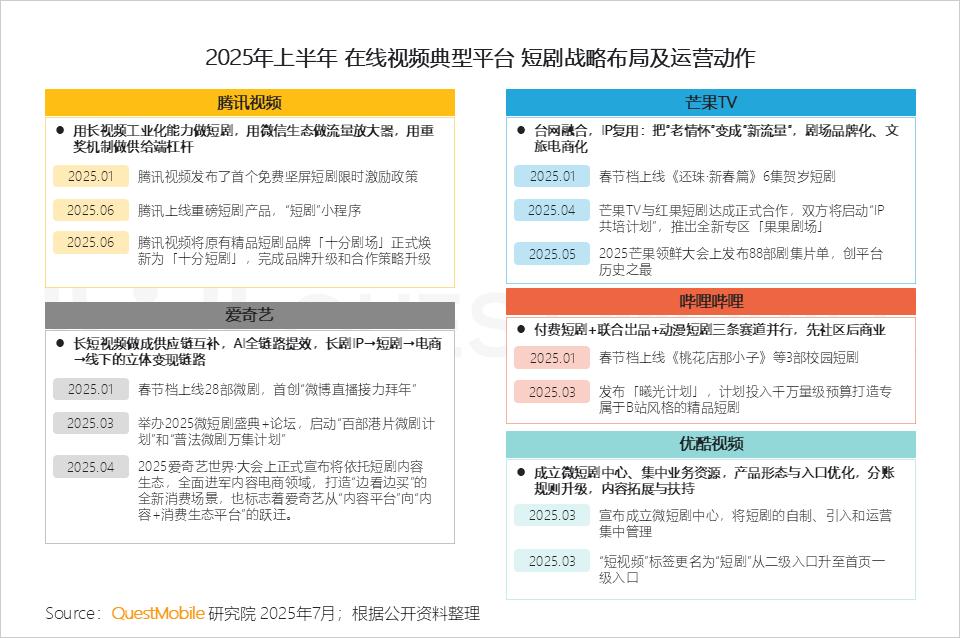
Core Insights - The long video platforms are facing challenges with revenue growth slowing down and profitability becoming more difficult, prompting a shift towards optimizing content costs and exploring new revenue sources like micro-short dramas, AIGC, IP derivatives, and content globalization [37] Industry Overview - Long video platforms are entering a new phase of project reduction and AI efficiency improvements due to stagnation in membership growth and weak advertising revenue [1][5] - The rise of short videos has significantly impacted the user base of long video platforms, with monthly active users (MAU) for Tencent Video, iQIYI, and Youku projected to drop from 5.3 billion, 5.65 billion, and 4.7 billion in August 2018 to 3.63 billion, 3.56 billion, and 2.01 billion by June 2025, respectively [3] Company-Specific Insights iQIYI - iQIYI reported a decline in revenue and net profit in the first two quarters, with major business segments like membership services and online advertising also experiencing downturns, although other income streams showed growth [7] - The platform is focusing on a balanced approach between long and short content, emphasizing high-quality productions to enhance user engagement and attract advertisers [15] - iQIYI's international membership revenue grew by 35% year-on-year, and the company is leveraging AI to reduce costs and enhance efficiency [13] Youku - Youku's strategy centers on content quality, series development, and cross-industry integration, with successful shows like "藏海传" achieving significant viewership and advertising revenue [16][19] - The platform is expanding its talent pool by recruiting notable industry figures to enhance content creation capabilities [19] Tencent Video - Tencent Video reported a paid membership count of 111.4 million, the only platform to disclose such figures, and is focusing on high-quality content to improve viewer retention [22] - The platform is shifting its strategy to prioritize A+ and S+ level projects, aiming to enhance the return on investment and avoid resource wastage [25] Mango TV - Mango TV's revenue for the first half of 2025 was 5.964 billion yuan, a decline of 14.31%, with significant drops in its content e-commerce segment [29][32] - The platform is increasing its investment in content, particularly in short dramas, with a reported 1179 micro-short dramas set to launch, marking a nearly sevenfold increase from the previous year [36]


【私募调研记录】正圆投资调研中文在线
Zheng Quan Zhi Xing· 2025-09-02 00:09
Group 1 - The core viewpoint of the news highlights the recent research conducted by Zhengyuan Investment on a listed company, focusing on the growth potential of Chinese online content platforms, particularly in the short drama sector [1] - Chinese Online has adopted a content strategy based on "emotional resonance + social insight," achieving approximately 600,000 daily active users and over 10 million downloads, with nearly 60% of its revenue coming from English-speaking regions [1] - The company has launched over 2,000 short dramas and collaborates with more than ten overseas production companies, with a team of around 350 people [1] Group 2 - The Chinese short drama market is projected to reach a scale of 50.5 billion yuan in 2024 and is expected to grow to 63.43 billion yuan by 2025, indicating significant growth potential [1] - The overseas short drama market is estimated to have a potential value of up to 100 billion USD, suggesting explosive growth opportunities in the coming three years [1] - Chinese Online plans to leverage its "Zhongwen Xiaoyao" AI model to launch ten fully AI-generated works by the end of September 2025 and enhance return on investment (ROI) through the Xiaoyao Iagent system [1]

张一鸣的“小生意”,堵死爱奇艺的出路
凤凰网财经· 2025-08-26 13:26
Core Viewpoint - iQIYI's Q2 financial report shows a significant decline in revenue and a shift from profit to loss, raising concerns about its future in the competitive short video market [2][3][22]. Group 1: Financial Performance - iQIYI's revenue for Q2 was 66.3 billion, a year-on-year decline of 11%, with a net loss of 1.34 billion compared to a profit of 687 million in the same period last year [22][24]. - Membership service revenue decreased by 9% to 40.9 billion, while online advertising revenue fell by 13% to 12.7 billion [22]. - The company has struggled to maintain cash flow, with a net cash flow from operating activities of only 127 million, down from 4.11 billion year-on-year [24]. Group 2: Competitive Landscape - The rise of the "Hongguo" short video platform, which has seen a user growth rate of 179% and reached 210 million monthly active users, poses a significant threat to iQIYI [4][6]. - "Hongguo" has surpassed Youku in user numbers and is closing in on iQIYI, indicating a potential shift in market leadership [6][7]. - The platform's free model, supported by Douyin, has attracted users away from iQIYI, which relies on a subscription model [36][39]. Group 3: Strategic Focus - iQIYI is focusing on micro-short dramas as a key growth area, but this strategy has not yet yielded positive results in terms of revenue or user engagement [13][20]. - The company has launched initiatives like "Short Drama Hall" and "Micro Drama Hall" to integrate short dramas into its membership system, but these efforts have not significantly boosted membership revenue [16][19]. - iQIYI's approach to short dramas is primarily aimed at quick capital recovery, but the lack of immediate financial returns raises concerns about the effectiveness of this strategy [14][25]. Group 4: Market Trends - The micro-short drama market in China is projected to grow significantly, with estimates reaching 505 billion in 2024, surpassing annual box office revenues for the first time [13]. - iQIYI's competition is intensifying as more platforms, including Douyin and Kuaishou, enter the short drama space, making it increasingly difficult for iQIYI to maintain its market position [41][46]. - The shift in user preferences towards free content and the rapid production of engaging short dramas further complicates iQIYI's ability to attract and retain subscribers [34][36].
