
政策红利

Search documents
2026年中小企业的破局之策:借势而上,向精而生
Sou Hu Cai Jing· 2026-01-02 07:13
Core Insights - The article emphasizes the challenges faced by small and medium-sized enterprises (SMEs) in 2026, including financing difficulties, compliance pressures, and competition from larger companies, while highlighting the importance of focusing on core competencies for sustainable development [1][19]. Group 1: Leveraging Policy Benefits - The issuance of long-term special government bonds is expected to reach 1.3 trillion yuan by the end of 2025, providing crucial funding for the real economy [4]. - SMEs must adopt a methodical approach to benefit from policy incentives, focusing on "precise alignment, early preparation, and compliance implementation" to convert policy benefits into tangible assets [5][6]. - Key changes include reduced application thresholds for funding, expanded support areas, and optimized approval processes, allowing more SMEs to participate in significant national projects [5][6]. Group 2: Product Focus - The market has shifted from "growth driven by trends" to "competition based on core capabilities," necessitating SMEs to concentrate on niche markets and build differentiated advantages [7]. - SMEs should avoid blindly chasing trends and instead focus on their strengths, ensuring that product development aligns with market needs [8]. - Successful product strategies involve identifying specific customer needs and establishing rapid iteration mechanisms to respond to market feedback [8][9]. Group 3: Digital Efficiency - Digital transformation is essential for SMEs, focusing on low-cost, high-impact solutions that address core business pain points [9][10]. - Implementing lightweight digital tools can significantly enhance operational efficiency, such as using sensors for equipment management and no-code platforms for production tracking [10][11]. - Marketing strategies should leverage low-cost digital channels and customer relationship management tools to improve customer acquisition and retention [11][12]. Group 4: Embracing AI - SMEs can utilize lightweight AI solutions to enhance efficiency and reduce costs, with applications in customer service, production data integration, and sales analysis [13][14]. - The article advises SMEs to adopt AI incrementally, focusing on specific business areas to validate effectiveness before broader implementation [14]. Group 5: Financing and Risk Management - Financing remains a significant challenge for SMEs, particularly in the tech sector, necessitating the development of diversified financing strategies [14][15]. - Innovative financing options include intellectual property pledges and collaborative financing models that combine equity investment with bank credit [15][16]. - Effective risk management strategies should address labor shortages and supply chain disruptions, emphasizing flexible workforce solutions and diversified supplier relationships [16][17]. Group 6: Building Resilience - SMEs should focus on strengthening their internal capabilities, including cash flow management and talent acquisition, to ensure long-term sustainability [18]. - Establishing a robust cash flow management system and leveraging government support for financing can help mitigate financial risks [18]. - Building resilience in supply chains through collaboration with larger enterprises and optimizing internal processes is crucial for maintaining operational efficiency [18].


海南自贸港全岛封关首周,政策红利释放带动消费市场活跃
Mei Ri Jing Ji Xin Wen· 2025-12-29 02:45
Group 1: Market Performance - The Hong Kong stock market opened with the Hang Seng Index up by 0.43%, the National Index up by 0.59%, and the Hang Seng Tech Index up by 0.88% [1] - New energy vehicle stocks saw a broad increase, while copper and other non-ferrous metal stocks led the rise in the sector [1] - Semiconductor stocks showed strong performance, while the consumer sector experienced slight fluctuations with the Hong Kong Consumer ETF (513230) showing a small decline [1] Group 2: Hainan Free Trade Port Developments - In the first week of the Hainan Free Trade Port's full closure, policy benefits have stimulated market activity, with impressive data in duty-free shopping and foreign trade [1] - Duty-free shopping figures for the first week reached 1.1 billion yuan, with 775,000 items purchased and 165,000 shoppers, representing year-on-year increases of 54.9%, 11.8%, and 34.1% respectively [1] - The number of newly registered foreign trade enterprises in Hainan increased by 1972, a year-on-year growth of 230%, with over 30,000 new registered customs declaration units for the year, up over 40% [1] - The passenger throughput at Meilan Airport during the first week post-closure increased by 11.8% year-on-year, with significant growth in ticket bookings for the New Year holiday [1] Group 3: Government Initiatives - The Ministry of Finance announced plans to significantly boost consumption in the coming year, implementing special actions to support consumer spending [2] - The government will continue to allocate funds for consumer goods trade-in programs and adjust subsidy ranges and standards [2] Group 4: Related ETFs - Tourism ETF (562510) is positioned to benefit from holiday catalysts and the ice and snow economy [3] - Food and Beverage ETF (515170) is seen as undervalued in the context of boosting domestic demand [3] - Hong Kong Consumer ETF (513230) is linked to e-commerce leaders and new consumption trends [3]
工业有色ETF(560860)强势拉升涨超4%,年内涨幅再创新高!
Xin Lang Cai Jing· 2025-12-26 06:29
MACD金叉信号形成,这些股涨势不错! 华龙证券认为,金属景气度有望维持。铜中期的供应偏紧,市场普遍预期2026年前后,精炼铜将出现供 需关系拐点,随后转入紧缺。需求方面,美国2026年经济增速预期良好,美联储当前"预防性降息"的思 路为软着陆提供多一层保障。在供需关系趋势性转折的节点上,供给提供支撑,需求决定弹性,看好 2026年以铜、铝为代表的工业金属表现。 数据显示,截至2025年11月28日,中证工业有色金属主题指数前十大权重股分别为洛阳钼业、北方稀 土、中国铝业、云铝股份、兴业银锡、华友钴业、铜陵有色、江西铜业、神火股份、西部矿业,前十大 权重股合计占比54.56%。 工业有色ETF(560860)紧密跟踪中证工业有色金属主题指数,覆盖铜、铝、稀土等战略资源龙头,场 外投资者可通过联接(A类:018489;C类:018490)布局顺周期与政策红利共振机遇。 2025年12月26日盘中,有色金属板块涨幅居前,截至 13:53,中证工业有色金属主题指数(H11059)强势 上涨3.94%,成分股江西铜业10cm涨停,金诚信上涨8.76%,中国铝业上涨7.57%,铜陵有色、云南铜业 等个股跟涨。工业有色E ...


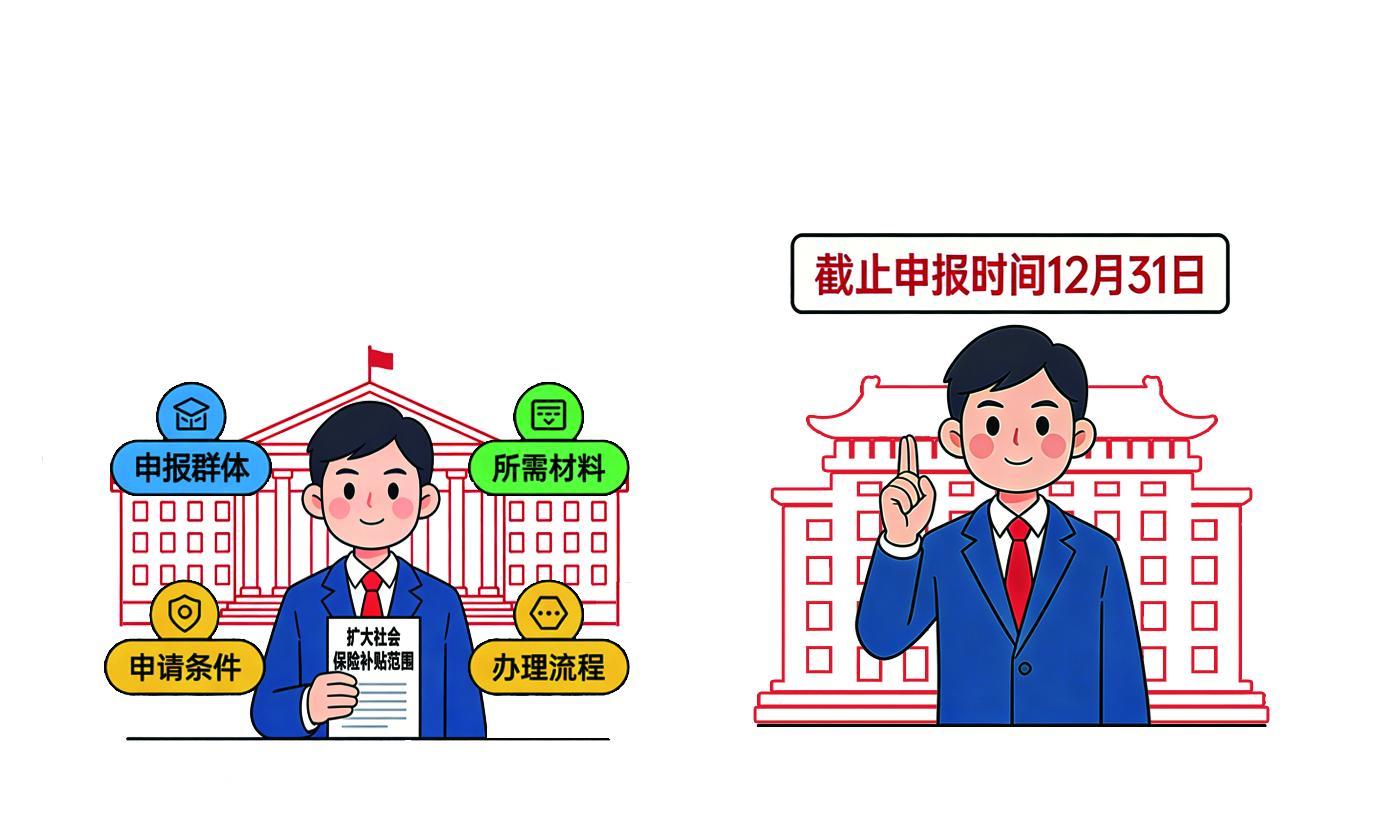
12月31日截止 快来申请重点群体社会保险补贴
Xin Lang Cai Jing· 2025-12-25 17:24
Policy Overview - The Chongqing Human Resources and Social Security Bureau has issued a notification to accelerate the implementation of expanded social insurance subsidy and one-time employment expansion subsidy policies, providing a 25% subsidy on individual social insurance contributions to encourage enterprises to expand employment [2][3] Subsidy Details - The subsidy is targeted at small and medium-sized enterprises in key industries that sign labor contracts for over one year and have made new or continued contributions to basic pension, medical, and unemployment insurance in 2025 [2] - Key industries include manufacturing, information transmission/software and IT services, wholesale and retail, accommodation and catering, leasing and business services, and other services [2] - Key groups eligible for the subsidy include 2025 college graduates, unemployed graduates from 2023 and 2024, individuals registered as unemployed for over six months in 2025, and those monitored for poverty prevention [2] Subsidy Amount - Eligible individuals can receive a monthly subsidy ranging from 115.6 yuan to 577.9 yuan based on their social insurance contribution amounts [2] Application Process - The application deadline for the subsidy is December 31, 2025, with the subsidy period lasting for one year, starting from the month the enterprise makes actual social insurance contributions for the key groups [4] - The subsidy will be disbursed monthly, with the latest payment expected by the end of 2026 [4] Implementation Measures - Chongqing is utilizing big data to establish a dynamic screening mechanism to identify key industries and groups, facilitating a "direct subsidy and quick processing" approach [3] - The policy includes a "one-time certification, subsequent exemption from reporting" system, where enterprises only need to confirm information once, and the system will automatically generate subsidy lists based on monthly insurance data [3] - Local districts are tasked with accurately identifying key groups and ensuring timely insurance contributions and subsidy applications by eligible employees [3][5]
沪指能否冲击8连阳?历史上8连阳仅出现过20余次
Mei Ri Jing Ji Xin Wen· 2025-12-25 07:57
Group 1 - The Shanghai Composite Index has shown a strong performance with a "7 consecutive days of gains," reaching above 3950 points, with a total increase of 3.52% in this period [1] - Recent favorable macroeconomic conditions include the RMB exchange rate breaking 7, further easing of housing purchase restrictions in Beijing, and the central bank continuing its quantitative easing for the 10th consecutive month [1] - The market is currently focused on sectors such as commercial aerospace and robotics, which have seen significant growth [1] Group 2 - In the past two years, the Shanghai Composite Index has recorded eight consecutive days of gains only four times, with the most recent instance in August 2025, where it achieved a 3.47% increase [2] - The largest increase occurred in September 2024, with a remarkable 29.06% rise, driven by a combination of Federal Reserve rate cuts and significant domestic policy shifts [2] - China Galaxy Securities anticipates that the upcoming spring market rally is promising, suggesting a focus on defensive sectors while preparing for policy benefits and industry prosperity expected in 2026 [3] Group 3 - The CSI 300 Index is highlighted as a barometer for the overall A-share market, encompassing key sectors such as finance, technology, and consumer goods, which helps in effectively diversifying investment risks [3] - The lowest fee ETF tracking the CSI 300 Index is the Huaxia CSI 300 ETF (510330.SH), indicating a cost-effective investment option for market participants [3]
2025/12/23:市场主流观点汇总-20251223
Guo Tou Qi Huo· 2025-12-23 10:08
1. Report Industry Investment Rating There is no information provided regarding the report's industry investment rating in the given content. 2. Core Viewpoints - The report aims to objectively reflect the research views of futures and securities companies on various commodity varieties, track hot - spot varieties, analyze market investment sentiment, and summarize investment driving logics [1]. - It presents the closing prices and weekly price changes of different asset classes including commodities, A - shares, overseas stocks, bonds, and foreign exchange as of December 19, 2025. - It summarizes the mainstream strategy views and investment logics of institutions for different commodity sectors, including both bullish and bearish factors [3][4][5][6]. 3. Summary by Relevant Catalogs 3.1 Market Data - **Commodities**: From December 15 to December 19, 2025, commodities like coking coal, PTA, and polysilicon had significant price increases, with coking coal rising 9.00% to 1108.00, PTA rising 5.81% to 4882.00, and polysilicon rising 5.34% to 60245.00. While some commodities such as copper, soybean meal, and corn had price drops, with copper dropping 1.05% to 93180.00, soybean meal dropping 1.26% to 2735.00, and corn dropping 1.84% to 2192.00 [2]. - **A - shares**: The Shanghai - Shenzhen 300 index dropped 0.28% to 4568.18, while the SSE 50 index rose 0.32% to 3004.34, and the CSI 500 index remained unchanged at 7169.55 [2]. - **Overseas Stocks**: The FTSE 100 index rose 2.57% to 9897.42, the French CAC40 index rose 1.03% to 8151.38, while the Hang Seng Index dropped 1.10% to 25690.53, and the Nikkei 225 index dropped 2.61% to 49507.21 [2]. - **Bonds**: The 2 - year Chinese government bond yield increased by 0.38bp to 1.39, the 5 - year yield increased by 0.24bp to 1.61, and the 10 - year yield decreased by 0.44bp to 1.83 [2]. - **Foreign Exchange**: The US dollar index rose 0.32% to 98.71, the US dollar central parity rate dropped 0.12% to 7.06, and the euro - US dollar exchange rate dropped 0.28% to 1.17 [2]. 3.2 Commodity Views 3.2.1 Macro - financial - **Stock Index Futures**: Among 7 institutions' views, 0 are bullish, 0 are bearish, and 7 are neutral. Bullish factors include overseas central bank policies, increased long - term capital allocation after index correction, market attention on tech stocks, and expected policy dividends in 2026. Bearish factors are the decline in M1 growth rate, weakening policy motivation, weak economic momentum, and time - consuming policy implementation [3]. - **Treasury Bond Futures**: Among 7 institutions' views, 3 are bullish, 0 are bearish, and 4 are neutral. Bullish factors are weak fundamentals, central bank liquidity injection, attractive 30 - year bond yields, and potential market repair. Bearish factors are low probability of short - term interest rate cuts, increased influence of trading desks, and concerns about ultra - long bond supply and demand [3]. 3.2.2 Energy - **Crude Oil**: Among 8 institutions' views, 0 are bullish, 5 are bearish, and 3 are neutral. Bullish factors are supply disruptions in Venezuela, decreased US crude and Cushing inventories, increased refinery capacity utilization in China and the US, and strong local refined oil demand. Bearish factors are limited impact of Venezuelan supply disruptions, increasing non - OPEC production, rising floating storage, and expected slowdown in major economies' demand [4]. 3.2.3 Agriculture - **Soybean Meal**: Among 7 institutions' views, 0 are bullish, 3 are bearish, and 4 are neutral. Bullish factors are high US soybean import costs, pre - holiday stocking demand, increased trader restocking, and signs of short - position reduction in futures. Bearish factors are the expected high - yield in South American soybeans, poor performance of domestic soybean auctions, high oil - mill soybean meal inventories, and weak feed - enterprise purchasing [4]. 3.2.4 Non - ferrous Metals - **Copper**: Among 8 institutions' views, 4 are bullish, 0 are bearish, and 4 are neutral. Bullish factors are zero long - term processing fees in 2026, low spot refining fees, rising copper foil production rates, decreased domestic copper concentrate port inventories, and high market attention. Bearish factors are year - end capital shortages, increased social inventories, weak terminal demand in the off - season, and low copper rod production rates [5]. 3.2.5 Chemicals - **Glass**: Among 7 institutions' views, 0 are bullish, 0 are bearish, and 7 are neutral. Bullish factors are potential cold - repair plans in late December, low near - month valuations and high positions, and expected real - estate policy support. Bearish factors are decreased deep - processing order days, slow sales in North and East China, high inventories, and off - season pressure [5]. 3.2.6 Precious Metals - **Gold**: Among 7 institutions' views, 3 are bullish, 0 are bearish, and 4 are neutral. Bullish factors are the rising US unemployment rate in November, lower - than - expected US CPI in November, increased non - commercial net long positions in gold futures, and long - term central - bank gold purchases. Bearish factors are the rapid adjustment of the gold - silver ratio, approaching key resistance levels, and market divergence on the Fed's interest - rate cut schedule [6]. 3.2.7 Black Metals - **Coking Coal**: Among 8 institutions' views, 3 are bullish, 0 are bearish, and 5 are neutral. Bullish factors are the release of supply - side pressure, low valuations, production cuts by some coal mines, increased steel - mill winter - stocking demand, and improved spot - market trading. Bearish factors are high imports from Ganqimaodu Port, decreased steel - mill iron - water production, lower demand from coking plants, and increased total coking - coal inventories [6].
这个板块指数罕见涨停,背后隐藏着一条年度重磅主线!
Sou Hu Cai Jing· 2025-12-22 07:46
Core Viewpoint - The A-share market is experiencing a structural opportunity with significant capital inflow, particularly in the technology and Hainan sectors, indicating a clear direction for investors [1][2]. Market Performance - The total trading volume in the A-share market reached 1.36 trillion, with a daily turnover of 18.619 trillion, reflecting increased investor interest [1]. - The Shanghai Composite Index rose by 0.69% to 3917.36 points, while the Shenzhen Component Index surged by 1.47% to 13332.73 points, and the ChiNext Index increased by 2.23% to 3191.98 points [1]. - In contrast, the Hong Kong market showed minimal movement, with the Hang Seng Index up by only 0.11% [1]. Key Investment Directions - **Technology Growth Sector**: The communication sector led the market with a 4.28% increase, and the electronics sector rose by 2.62%, driven by favorable policies and technological advancements [1][2]. - **Hainan Sector**: The Hainan provincial state-owned enterprise index surged by 10.01%, and the Hainan Free Trade Port index increased by 9.28%, indicating strong market anticipation of policy benefits [2]. Investment Strategy - Investors are advised to focus on sectors with solid policy and technological support, particularly in communications and electronics, while avoiding speculative small-cap stocks [3]. - Long-term outlook remains positive due to continuous foreign capital inflow and government support for technological innovation and consumption recovery [3].
航天智造(300446):双轮驱动打造航天七院优质上市平台
Xin Lang Cai Jing· 2025-12-18 00:35
Core Viewpoint - The company is initiating coverage on Aerospace Intelligent Manufacturing with a "Buy" rating and a target price of 26.00 yuan, based on a 20x PE valuation for 2026, driven by "technological barriers + policy dividends" for growth [1] Group 1: Company Overview - Aerospace Intelligent Manufacturing has undergone a significant asset restructuring, becoming the core listed platform of the Aerospace Seventh Academy by acquiring 100% stakes in Aerospace Energy and Aerospace Molding [1] - The company is expected to achieve revenues of 58.60 billion yuan and 77.81 billion yuan in 2023 and 2024, respectively, representing year-on-year growth of 20.10% and 32.78% [1] - The net profit attributable to shareholders is projected to be 4.23 billion yuan and 7.92 billion yuan for 2023 and 2024, with year-on-year increases of 61.36% and 87.02% [1] Group 2: Automotive Components Business - Aerospace Molding, established in 2000, focuses on the development and production of automotive interior and exterior parts, smart cockpit components, and lightweight engine parts [2] - The company provided components for 10.95 million vehicles in 2023, accounting for 42% of the total passenger car sales in China [2] - The new energy vehicle segment is expected to contribute 72% of new products in 2024, surpassing industry penetration rates, with successful entries into the supply chains of new car manufacturers like NIO and AITO [2] - Revenue for the automotive components business is projected to grow at a CAGR of 20.96% from 2025 to 2027 [2] Group 3: Oil and Gas Equipment Business - Aerospace Energy, founded in 2013, specializes in the research and manufacturing of perforating tools and high-end completion equipment for the oil and gas sector [3] - The company holds over 60% market share in unconventional oil and gas extraction and approximately 35% in conventional oil and gas extraction as of 2021 [3] - The business is expected to benefit from increasing domestic oil and gas production and the development of deep-sea and deep-earth resources, with a projected revenue CAGR of 17.94% from 2025 to 2027 [3] Group 4: Market Perspective - The market underestimates the company's long-term growth potential, particularly in the automotive components sector, which benefits from the electrification, connectivity, and intelligence transformation of downstream customers [4] - The oil and gas equipment business is expected to gain from policy support for deep-sea and deep-earth technologies, leading to increased demand for perforating tools and completion equipment [4] Group 5: Profit Forecast and Valuation - The company is expected to achieve net profits of 9.48 billion yuan, 11.02 billion yuan, and 12.76 billion yuan from 2025 to 2027 [5] - Comparable companies in the automotive and oil and gas sectors have an average PE of 30x for 2026, while Aerospace Intelligent Manufacturing is assigned a target PE of 20x, leading to a target price of 26.00 yuan [5]

华西证券最新研判:消费板块迎政策红利窗口期,这三大主线或成资金新宠
Sou Hu Cai Jing· 2025-12-17 01:09
12月17日,华西证券最新研报指出,当前A股市场正经历结构性切换,在科技板块轮动动能减弱背景 下,消费板块"高低切换"逻辑有望成为跨年行情核心主线。研报建议投资者重点关注三大方向:政策驱 动的消费升级、超跌红利资产修复以及新能源产业链的长期价值。 随着12月市场对科技股追高意愿降温,资金开始寻找新突破口。11月社会消费品零售总额增速放缓至 3.9%,但中央经济工作会议明确将"坚持内需主导"列为2026年首要任务,引发市场对消费刺激政策加码 的强烈预期。华西证券认为,白酒(贵州茅台、五粮液)、家电(美的集团、格力电器)、汽车(比亚 迪、长城汽车)等低位消费蓝筹存在估值修复空间,而跨境电商(小商品城、华凯易佰)等新兴消费领 域或受益政策红利。 尽管11月21日板块集体下挫后尚未完全修复,但华西证券强调,光伏(隆基绿能、TCL中环)、储能 (宁德时代、阳光电源)、新能源汽车等细分领域的基本面支撑依然扎实。随着行业产能出清加速和技 术迭代推进,具备全球竞争力的龙头企业有望率先受益,建议重点关注技术壁垒较高的电池环节和智能 化转型领先的整车企业。 研报提出"核心资产+弹性标的"组合策略:消费板块以食品饮料、家电为底仓, ...

政策红利要击中民生痛点
Xin Hua Ri Bao· 2025-12-16 23:10
□ 孟亚生 近日,南通市崇川区百花苑小区43号楼多个单元同步开工加装电梯,全楼住户即将告别无电梯时代。这 得益于市政府推出老旧小区整栋加装电梯奖励机制,让期盼已久的民生需求落地为实。 老龄化背景下,老旧小区高层老人爬楼难、带娃家庭出行不便,电梯加装成为迫切需求。然而,资金压 力大、邻里协调难、审批流程复杂,让多地加装电梯计划屡屡搁浅。对此,南通市试行电梯整栋加装奖 励机制,将单台电梯基础补贴提升至1.5倍,并建立低楼层住户补偿机制,大幅减轻业主负担的同时有 效化解邻里分歧,使市内老旧小区加装电梯数量从过去单季零星几十台增至160台以上,"梯升"了居民 幸福感。 只有持续聚焦民生痛点优化政策供给,以精准化举措对接需求、以创新性思维拓展空间、以协同化机制 保障落地,才能让政策红利充分释放,让发展成果更多更公平惠及全体人民。 相较于零散加装,整栋同步推进模式优势显著。成片化、规模化的推进方式,有利于统一设计和施工, 简化审批流程,提高加装效率。从成本角度来看,批量推进可享受电梯团购优惠,统一施工降低建设成 本,进一步激发居民参与热情。 整栋加装电梯奖励机制也带动了电梯企业销售量大幅增长,形成"民生改善+产业发展"的 ...