
新能源发展

Search documents
多地“十五五”规划明确发展新型储能,关注储能电池ETF(159566)、新能源ETF易方达(516090)等产品投资价值
Mei Ri Jing Ji Xin Wen· 2025-12-31 06:28
Core Viewpoint - The new energy sector experienced a pullback today, with the Guozheng New Energy Battery Index down by 1.9% and the Zhongzheng New Energy Index down by 0.8%, despite significant net subscriptions for the energy storage ETF [1] Industry Developments - Multiple regions, including Yunnan, Gansu, Qinghai, and Shenzhen, have recently released "14th Five-Year" planning suggestions, emphasizing the scientific and orderly development of new energy storage [1] - The global energy storage market continues to show high prosperity, with domestic energy storage completing a total of 10GW in bidding in November, representing a year-on-year increase of 116%, while North America saw energy storage installations reach 1.67GW in October, up by 122% [1] Investment Insights - Huatai Securities indicates that the "14th Five-Year" plan aims to accelerate the construction of a new energy system, focusing on the development of new energy storage and the construction of smart grids, maintaining a positive outlook on the core themes of new energy development and electrification [1] - The Guozheng New Energy Battery Index consists of 50 stocks related to the new energy generation and energy storage battery industry, with energy storage systems accounting for 65% of the index; the Zhongzheng New Energy Index includes 80 listed companies related to the new energy industry to reflect the overall performance of these securities [1] - The energy storage ETF (159566) and the E Fund New Energy ETF (516090) track the aforementioned indices, providing investors with opportunities to capitalize on the development of new energy storage [1]
多部门发声,2026年要做这些事!
中汽协会数据· 2025-12-30 09:13
Core Viewpoint - The article outlines the key initiatives and policies for 2026, focusing on fiscal policy, employment, consumption, investment, urban development, and technological innovation to stimulate economic growth and improve living standards. Fiscal Policy - In 2026, a more proactive fiscal policy will be implemented, including expanding fiscal spending, optimizing government bond tools, enhancing transfer payment efficiency, and improving expenditure structure [1][2][3] Employment and Income - The government will strengthen basic social security and promote employment and income growth by coordinating various funds to support job retention and entrepreneurship [2][3] Consumption Promotion - Significant efforts will be made to boost consumption, including funding for the replacement of old consumer goods and optimizing subsidy standards [3][4] Investment Stabilization - Measures will be taken to stabilize investment, including increasing the scale of central budget investments and utilizing various government investment funds [4][5] Urban Development - High-quality urban renewal will be prioritized, focusing on community improvements, public space enhancements, and safety projects [6][7] Industry and Technology - The focus will be on enhancing industrial technological innovation capabilities, supporting emerging industries, and promoting AI and other advanced technologies [8][9] Infrastructure Development - The construction of cross-regional and cross-basin transportation channels will be accelerated to support urban integration and rural revitalization [10] Energy Transition - The share of renewable energy will be increased, with significant additions to wind and solar power capacity, and a focus on future energy industries like hydrogen and nuclear energy [11] Healthcare and Social Security - The government aims to improve maternity insurance coverage and ensure direct disbursement of maternity benefits to insured individuals [12] Real Estate Market Stabilization - Policies will be implemented to stabilize the real estate market by utilizing existing housing stock for affordable housing and other social needs [13]


丰元股份:公司目前采用固相法工艺制备磷酸铁锂正极材料
Zheng Quan Ri Bao Wang· 2025-12-29 13:13
Core Viewpoint - The company is currently using solid-phase production technology to manufacture lithium iron phosphate cathode materials and is focused on seizing opportunities in the new energy sector [1] Group 1: Company Strategy - The company will actively monitor the development of various technological routes in the industry [1] - The company aims to deepen customer cooperation and optimize production and supply chain management to reduce costs and increase efficiency [1] - The company is committed to improving its overall operational efficiency and profitability through multiple measures [1]

视频丨创历史新高塔里木油田年发绿电突破20亿度
Xin Lang Cai Jing· 2025-12-28 12:13
转自:央视新闻 记者今天(28日)从中国石油获悉,我国西气东输主力气源地——塔里木油田全年光伏发电量突破20亿度,单日最高发电量超1000万度,创年发电量、日发 电量历史新高,标志着塔克拉玛干沙漠腹地构建起油、气、新能源协同发展新格局。 位于塔克拉玛干沙漠北缘,轮台10万千瓦光伏项目近日全面开工,建成后每年可以发出绿电1.58亿度。目前,塔里木油田已建成尉犁、且末、叶城、伽师、 上库5座大型光伏电站,总装机规模达到260万千瓦。 中国石油塔里木油田新能源事业部经理 梁玉磊:我们的光伏发电量"三年三跨越",从2023年的2.6亿度到2024年的13.4亿度,再到今年突破20亿度,实现了 从无到有、从小到大的跨越式发展。 这些沙漠绿电8%用作油气生产,92%通过"疆电外送"电力通道对外输送。不仅使油田能耗和碳排放强度下降10%以上,还点亮了万家灯火。 来源:央视新闻 编辑:张俊 塔里木油田在塔克拉玛干沙漠腹地油气单井和场站,还建成了239项分布式光伏项目,建成的光伏项目已覆盖10万亩黄沙,实现了能源开发与生态保护的协 同推进。 中国石油塔里木油田新能源事业部执行董事 雷霆:我们通过在流沙上建设光伏板,不仅能在板上 ...

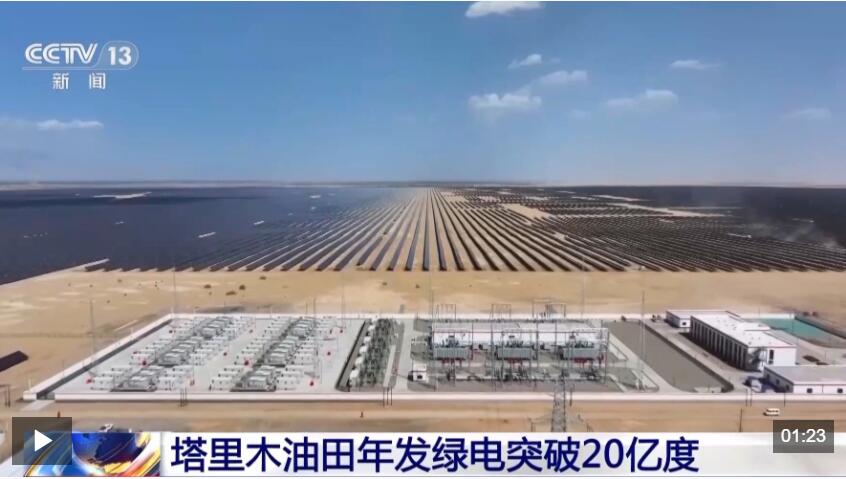
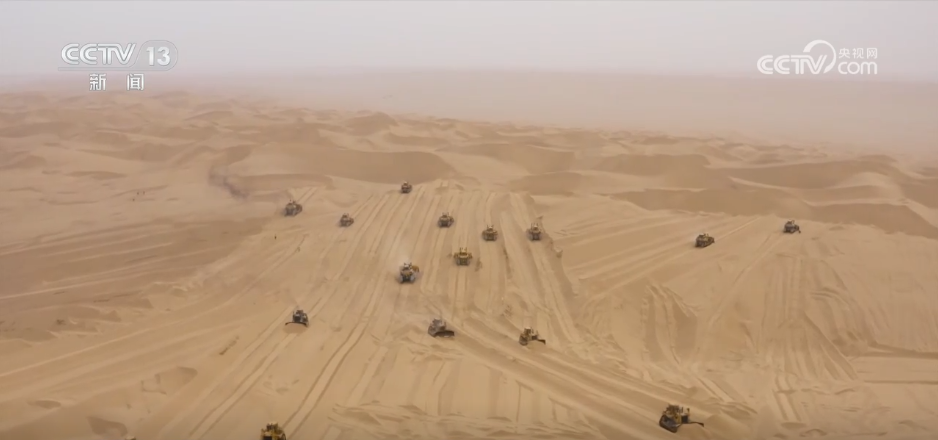
三年三跨越,创新高!流沙上建设光伏板 塔里木油田年发绿电突破20亿度
Yang Shi Wang· 2025-12-28 03:08
央视网消息:记者12月28日从中国石油获悉,我国西气东输主力气源地——塔里木油田全年光伏发电量突破20亿度,单日最高发 电量超1000万度,创年发电量、日发电量历史新高,标志着塔克拉玛干沙漠腹地构建起油、气、新能源协同发展新格局。 中国石油塔里木油田新能源事业部经理 梁玉磊:我们的光伏发电量"三年三跨越",从2023年的2.6亿度到2024年的13.4亿度,再到 今年突破20亿度,实现了从无到有、从小到大的跨越式发展。 塔里木油田在塔克拉玛干沙漠腹地油气单井和场站,还建成了239项分布式光伏项目,建成的光伏项目已覆盖10万亩黄沙,实现 了能源开发与生态保护的协同推进。 中国石油塔里木油田新能源事业部执行董事 雷霆:通过在流沙上建设光伏板,不仅能在板上发电,还降低了风速,营造了阴凉, 在板下铺设滴灌带进行生物治沙,一举多赢。预计到明年,装机将超过400万千瓦。 这些沙漠绿电8%用作油气生产,92%通过"疆电外送"电力通道对外输送,不仅使油田能耗和碳排放强度下降10%以上,还点亮了 万家灯火。 位于塔克拉玛干沙漠北缘,轮台10万千瓦光伏项目近日全面开工,建成后每年可以发出绿电1.58亿度。目前,塔里木油田已建成 ...

【甘快看】甘肃着力构建体现甘肃特色和优势的现代化产业体系
Xin Lang Cai Jing· 2025-12-25 15:18
Core Viewpoint - The Gansu Provincial Committee of the Communist Party of China has approved the recommendations for the 15th Five-Year Plan, focusing on building a modern industrial system and enhancing the province's economic development over the next five years [1][2]. Group 1: Industrial Development - Gansu aims to establish a national regional modern manufacturing base, enhancing its industrial strength through traditional industry upgrades and the promotion of new technologies and products [1][2]. - The province plans to develop several national and provincial advanced manufacturing clusters, focusing on a modern industrial system centered around advanced manufacturing [1]. Group 2: Energy Sector - Gansu will leverage its abundant energy resources to build large-scale wind and solar power bases, improve energy transmission channels, and implement integrated renewable energy development projects [2]. - The province aims to transition from being an energy-rich province to an energy-strong province by expanding its wind, solar, thermal, hydrogen, and energy storage industries [2]. Group 3: Service Industry - Gansu will enhance its service sector by improving the integration of modern services with advanced manufacturing and modern agriculture, aiming for higher quality and diversified service offerings [2]. - The province will implement a plan to double the number of service enterprises, supporting their growth and development [2]. Group 4: Infrastructure Development - Gansu will address infrastructure shortcomings by advancing both traditional and new infrastructure projects, including optimizing the Lanzhou railway hub and developing major highway corridors [3]. - The province aims to establish a modern infrastructure system that is efficient, safe, and environmentally friendly [3].
方正证券:电力行业β偏弱 寻觅结构性α
Zhi Tong Cai Jing· 2025-12-25 01:45
Group 1: Thermal Power - The current year-end electricity price negotiation period is seeing regions like Guangdong, Anhui, Hebei, and Shaanxi implement price difference restriction policies, which are expected to support long-term contract electricity prices for 2026 [1] - The downward pressure on long-term contract electricity prices in 2025 has gained attention from higher authorities, and policies to curb irrational competition are being introduced, which may alleviate the most significant downside risks [1] - The "anti-involution" policy in coal supply is strengthening supply constraints, leading the industry to transition from a phase of "price and volume double decline" to a new stage of "stable prices and increased revenue," potentially driving a revaluation of the sector [1] Group 2: Hydropower - In 2025, hydropower generation in China is expected to stabilize and rebound, with a nearly 30% year-on-year increase in generation during September and October, indicating marginal improvement [2] - As the depreciation of existing units expires and financial costs decrease, the profitability of hydropower companies is anticipated to further improve [2] - Major hydropower companies are characterized by high and sustainable dividend policies, enhancing their defensive attributes and investment value amid an asset scarcity backdrop [2] Group 3: New Energy - The new energy sector is expected to experience a "short-term pressure, long-term positive" trend in 2025, with market price declines in nuclear power suppressing revenue growth [3] - Policy adjustments in regions like Guangdong and the rollback of VAT exemptions for new units are causing structural impacts, but long-term approval acceleration and technological breakthroughs are solidifying growth potential [3] - Wind and solar installations continue to grow significantly, although there are increasing consumption pressures; supportive policies for green electricity consumption and marginal cash flow improvements for some companies are providing support for healthy industry development [3]

从“煤都”到“绿电”基地 大同晋北新能源基地赋能京津冀
Zhong Guo Xin Wen Wang· 2025-12-22 12:56
Core Viewpoint - The energy construction in Datong, Shanxi is experiencing significant progress, with the completion of key projects aimed at enhancing clean energy supply and transforming the energy system in the region [1][2]. Group 1: Traditional Energy Sector - Datong's coal production remains stable at 162 million tons, with 14 intelligent coal mines established, accounting for 85% of advanced capacity [1]. - Nine coal-fired power plants have completed ultra-low emission modifications, contributing to cleaner energy production [1]. - Major coal power projects like Guodian Lake East and the third phase of Tongre are accelerating construction, with the latter expected to generate approximately 9.2 billion kilowatt-hours annually by the end of 2026 [1]. Group 2: Renewable Energy Sector - Datong's installed capacity for renewable energy and new energy has surpassed 10 million kilowatts, making up over 56% of the total installed capacity in Shanxi province [2]. - The construction of the North Jin coal mining subsidence area renewable energy base is progressing, with an expected annual clean electricity supply of about 27 billion kilowatt-hours to the Beijing-Tianjin-Hebei region [2]. - The city leads the province in independent energy storage projects, showcasing comprehensive development in the energy storage sector [2]. Group 3: Infrastructure and Policy Support - Significant breakthroughs have been made in the high-value utilization of coal gangue, providing a "Datong solution" for resource recycling [2]. - Major infrastructure projects like the Hunyuan pumped storage power station and the Dahai Line UHV project are reinforcing Datong's strategic position as a green energy supply base for the Beijing-Tianjin-Hebei area [2]. - A provincial quarterly scheduling and city monthly coordination mechanism has been established to ensure efficient progress on key projects, facilitating a "green channel" for approvals [2].
乾纳智能装备 董事 杜文龙博士:高速物流线在锂电池产业的应用与展望
起点锂电· 2025-12-18 08:22
Core Viewpoint - The article discusses the advancements and applications of high-speed logistics lines in the lithium battery industry, highlighting the technological innovations, industry competition, and the future growth potential of the sector [1][2]. Group 1: Event Overview - The 2025 (10th) Lithium Battery Industry Annual Conference and the Lithium Battery Golden Ding Award Ceremony were held on December 18, 2025, in Shenzhen, with over 800 attendees discussing core topics such as battery technology, materials, and equipment [1]. - The event also celebrated the 10th anniversary of the initiating research institute, focusing on technological breakthroughs and safety challenges in the lithium battery value chain [1]. Group 2: High-Speed Logistics Line Applications - Dr. Du Wenlong from QianNa Intelligent Equipment presented on the application and outlook of high-speed logistics lines in the lithium battery industry, covering technology origins, industry competition, and technical breakthroughs [2][4]. - The presentation outlined the evolution of logistics technologies from traditional belt-driven systems to roller and magnetic levitation systems, emphasizing customized applications in battery production [4]. Group 3: Key Differences in Logistics Lines - High-speed logistics lines differ from traditional ones in maximum speed, precision, and cost control, with current speeds exceeding 0.25 m/s but facing challenges in precision and application costs [5]. - The positioning accuracy of high-speed logistics lines ranges from 0.5 mm to 0.01 mm, showcasing significant advancements in precision [6]. Group 4: Industry Competition Landscape - The lithium battery sector is expected to grow significantly, with storage battery demand increasing as energy storage solutions evolve from smaller mobile batteries to larger systems measured in gigawatts [9]. - The market is segmented, with major players like Meidel and QianNa Intelligent Equipment, the latter being a second-tier competitor, indicating a competitive landscape with various strengths [9]. Group 5: Technical Challenges and Innovations - Existing technical challenges include vibration control in ultra-high-speed scenarios and stability issues in extreme cold conditions for battery transport [11]. - QianNa has four core technological advantages: high-cleanliness and wear-resistant roller transport, modular architecture for shorter production line transformation cycles, digital twin debugging for efficiency, and intelligent energy management for significant energy savings [12]. Group 6: Addressing Industry Pain Points - QianNa has made strides in overcoming efficiency bottlenecks, achieving a 5% increase in production rhythm, a 15% overall efficiency improvement, and a 60% to 200% increase in output within the same timeframe [14]. - The company has also tackled precision bottlenecks to meet high-precision process requirements and cost bottlenecks by reducing overall line costs by 15% and extending equipment depreciation periods from 5 to 8 years [15]. Group 7: Company Growth and Future Plans - QianNa Intelligent Equipment, established on December 26, 2022, has set ambitious growth targets, aiming for a 100% annual increase over five years, with significant order volumes already secured [16]. - The company has achieved substantial milestones, including a projected delivery of 1 billion in orders for the upcoming year, reflecting a strong growth trajectory since its acquisition by the DeMa Group [16].
2025新能源发展大会在甘肃敦煌举办
Zhong Guo Jing Ji Wang· 2025-12-18 06:11
Core Insights - The 2025 New Energy Development Conference was held in Dunhuang, Gansu, focusing on the achievements and future opportunities in the new energy sector during the 14th Five-Year Plan period [1][2] - Gansu province has made significant progress in both traditional industry upgrades and the development of new energy sectors, with a focus on creating a comprehensive industrial chain [1] Group 1: Industry Development - Gansu's new materials industry is projected to reach a value of 130.5 billion yuan by 2024, while the new energy and new energy equipment manufacturing industry is expected to reach 83 billion yuan [1] - The province's installed capacity of new energy reached 77.62 million kilowatts, accounting for 64.1% of the total installed capacity, achieving its 14th Five-Year Plan goals ahead of schedule [1] - Gansu's new energy installed capacity is expected to exceed 80 million kilowatts by the end of this year, which is 3.4 times that of the end of the 13th Five-Year Plan [3] Group 2: Policy and Strategic Initiatives - The province has implemented a series of policy improvements and major project constructions, resulting in five key transformations in the energy sector [2] - These transformations include the shift of new energy from a supplementary power source to a main power source, and the evolution of the equipment manufacturing industry from a fragmented approach to a clustered model [2] - Gansu aims to establish itself as a significant base for new energy and new energy equipment manufacturing in China, with ongoing efforts to enhance resource regulation and grid connectivity [2]