
汇率波动

Search documents
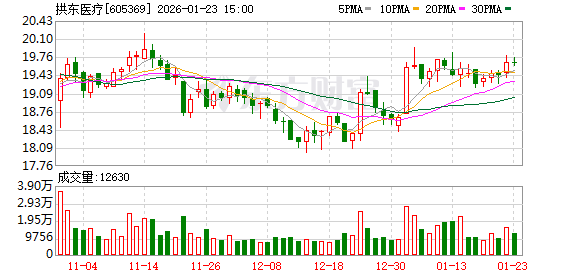
拱东医疗:2025年净利同比预降67.37%-74.36%
Zhong Guo Zheng Quan Bao· 2026-01-23 08:51
Core Viewpoint - Gongdong Medical (605369) has announced a significant decline in its expected net profit for 2025, forecasting a drop of 67.37% to 74.36% year-on-year, with net profit projected between 44 million to 56 million yuan [4]. Financial Performance - The expected non-recurring net profit for 2025 is estimated to be between 54 million to 66 million yuan, reflecting a year-on-year decrease of 60.75% to 67.89% [4]. - As of January 23, the company's price-to-earnings ratio (TTM) is approximately 77.37 to 98.47 times, with a price-to-book ratio (LF) of about 2.52 times and a price-to-sales ratio (TTM) of around 3.85 times [4]. Reasons for Performance Decline - The decline in performance is attributed to several factors: 1. **Goodwill Impairment**: The company has recognized signs of impairment related to goodwill from its acquisition of Trademark Plastics Inc. (TPI), with an estimated impairment amount between 24 million to 30 million yuan due to TPI's operational challenges influenced by international trade policies and shipping cost fluctuations [13]. 2. **Gross Margin Decrease**: The gross margin has been affected by the slowdown in demand for certain products due to U.S. tariff policies and domestic medical procurement policies [14]. 3. **Exchange Rate Fluctuations**: Financial expenses related to exchange rate fluctuations have significantly reduced, contributing to the decline in net profit. Additionally, losses from investments in a controlled entity have impacted non-operating income by approximately 11 million yuan [15].


航空股全线回调 东方航空跌超5% 近期油价、汇率有所波动
Zhi Tong Cai Jing· 2026-01-23 07:32
航空股全线回调,截至发稿,东方航空(00670)跌5.17%,报5.5港元;中国国航(601111)(00753)跌 4.95%,报7.11港元;南方航空(600029)(01055)跌3.11%,报5.92港元;国泰航空(00293)跌1.51%,报 12.42港元。 消息面上,近期油价、汇率波动。据华创证券研报,根据各家航司2025年半年报披露,10%的油价变动 对应三大航年化成本影响约43~51亿,1%汇率波动,对三大航影响在1.3-2.6亿。国泰海通证券近期指, 预计2026年春运需求将保持旺盛;民航将严控干线市场航司增加与增班,春运加班将较为有限;春节拼 假效应将弱于往年,节前节后客流集中或有利航司收益管理。 ...



港股异动 | 航空股全线回调 东方航空(00670)跌超5% 近期油价、汇率有所波动
Zhi Tong Cai Jing· 2026-01-23 07:29
消息面上,近期油价、汇率波动。据华创证券研报,根据各家航司2025年半年报披露,10%的油价变动 对应三大航年化成本影响约43~51亿,1%汇率波动,对三大航影响在1.3-2.6亿。国泰海通证券近期指, 预计2026年春运需求将保持旺盛;民航将严控干线市场航司增加与增班,春运加班将较为有限;春节拼 假效应将弱于往年,节前节后客流集中或有利航司收益管理。 智通财经APP获悉,航空股全线回调,截至发稿,东方航空(00670)跌5.17%,报5.5港元;中国国航 (00753)跌4.95%,报7.11港元;南方航空(01055)跌3.11%,报5.92港元;国泰航空(00293)跌1.51%,报 12.42港元。 ...
海航控股:公司存在一定规模的外币负债
Zheng Quan Ri Bao Wang· 2026-01-22 12:13
证券日报网讯1月22日,海航控股(600221)在互动平台回答投资者提问时表示,公司存在一定规模的 外币负债,汇率波动对公司利润产生影响,人民币升值将增加公司的税前利润;航油成本为公司营业成 本的重要组成部分,航油费用的下降将有效降低公司的运营成本。2025年上半年,公司共运营国内外航 线逾1400条,其中国内航线近1300条,覆盖内陆所有省、自治区和直辖市;国际及地区航线逾170条, 覆盖亚洲、欧洲、北美洲、大洋洲和非洲,通航境外46个城市。 ...

豪江智能:预计2025年归母净利润同比下降74.40%-81.87%
Xin Lang Cai Jing· 2026-01-22 08:48
豪江智能1月22日公告,预计2025年归母净利润850万元-1200万元,同比下降74.40%-81.87%。该公司 称,报告期内,受中美贸易关税影响,公司主营业务毛利率较去年同期有所下滑;同时,为推动公司可 持续发展战略,公司积极推进管理组织变革,加强人才梯队建设,激励核心人员,人工成本(含股份支 付费用)大幅度增加;受汇率波动影响,汇兑损益同比下滑,上述因素致使报告期内公司净利润下滑。 ...
雪榕生物:汇率波动未对公司构成重大影响,将努力从业绩出发为股东创造价值
Sou Hu Cai Jing· 2026-01-22 08:38
Core Viewpoint - The company, Xuerong Biotechnology, stated that the appreciation of the RMB has not significantly impacted its profits from exporting enoki mushrooms, as the majority of its sales are domestic. The company emphasized its commitment to operational standards and management to create value for shareholders despite stock price fluctuations influenced by various factors [1]. Summary by Categories Company Response to Investor Inquiry - The company addressed an investor's question regarding the impact of RMB appreciation on its enoki mushroom export profits, clarifying that the majority of its products are sold domestically, thus minimizing the effect of currency fluctuations [1]. - The company acknowledged the continuous decline in stock prices and indicated that various factors influence market prices, urging investors to be cautious [1]. Commitment to Shareholder Value - The company reaffirmed its dedication to standardized operations and effective management practices, aiming to enhance performance and create value for shareholders [1].

芦哲:中国出口“惧怕”人民币升值吗
Di Yi Cai Jing· 2026-01-22 06:20
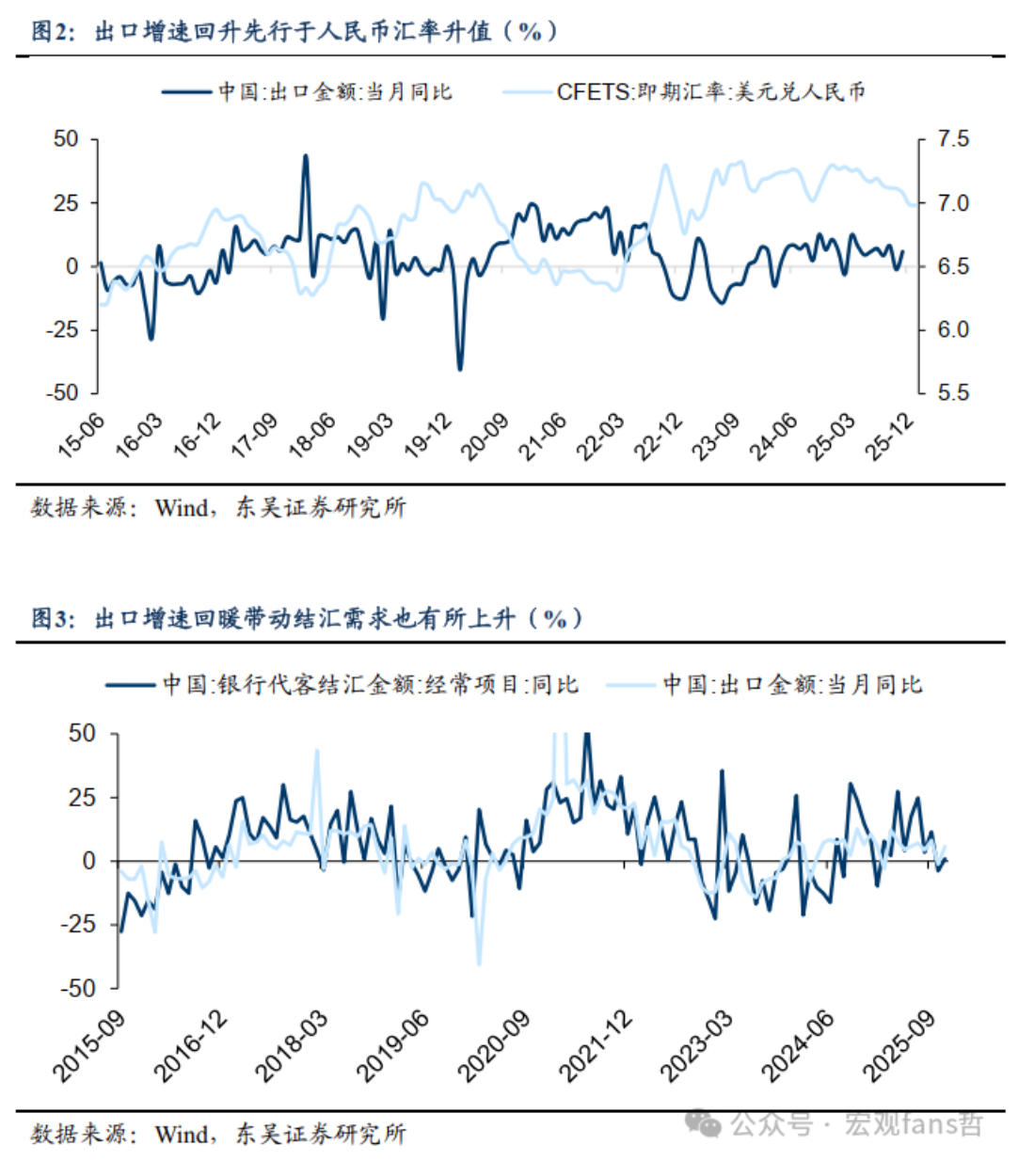
Core Viewpoint - The impact of exchange rates on exports is gradually diminishing due to the optimization of export product structure and the absolute comparative advantage of certain high-end products [1][2]. Group 1: Exchange Rate Trends - By the end of 2025, the RMB is expected to appreciate against the USD, potentially reaching 6.7 to 6.8 by the end of 2026, driven by market forces and policy adjustments [1]. - Since the "8.11 exchange rate reform" in 2015, the correlation between RMB exchange rate movements and export trends has weakened significantly, with a correlation coefficient of only 0.3% from September 2015 to November 2025 [2]. - During the two appreciation cycles since the reform, exports maintained stable growth despite RMB appreciation, indicating that exchange rate changes do not negatively impact export growth [2][3]. Group 2: Export Competitiveness - The actual effective exchange rate of the RMB remains low compared to major economies, providing a price advantage for Chinese exports despite the appreciation of the RMB [5]. - The central bank's refined management of the exchange rate has reduced the impact of exchange rate fluctuations on exports, allowing exporters to adjust pricing and lock in rates [6]. - The competitiveness of Chinese exports has been enhanced due to the continuous upgrading of industrial structure, with technology-intensive products gaining a stronger market position [9][10]. Group 3: Trade Settlement and Currency Internationalization - The proportion of RMB in international trade settlements is increasing, with RMB cross-border payments for goods trade reaching approximately 12.4 trillion yuan in 2024, a 15.9% increase year-on-year [11]. - Significant breakthroughs have been made in RMB settlement for major exports, such as large ships and aircraft, indicating a shift away from the dominance of the USD in trade transactions [12].
格陵兰岛风暴眼:欧元贬值风险远超美元?
Jin Shi Shu Ju· 2026-01-21 06:42
Core Viewpoint - The geopolitical tensions surrounding President Trump's Greenland acquisition plan are impacting currency markets, particularly the euro and the dollar, with analysts predicting potential long-term consequences for European economies [2][3]. Currency Market Impact - The dollar has weakened for two consecutive trading days, with the DXY index dropping 0.8% on Tuesday, leading to a total decline of nearly 10% over the past 12 months [3]. - The euro appreciated by 0.7% against the dollar on Tuesday, marking its largest single-day gain since September 16 [3]. Geopolitical Tensions - Analysts are closely monitoring NATO's internal tensions, with concerns that the alliance could face dissolution if U.S.-European relations deteriorate further [2]. - Trump's threats of tariffs against European nations that oppose U.S. control over Greenland are creating economic pressures on European countries, which are already increasing military spending due to security concerns following the Ukraine conflict [2]. Economic Outlook for Europe - European countries, particularly Germany, which relies heavily on exports, are at greater risk compared to the U.S. if trade relations worsen [3]. - Barclays analysts warn that the Greenland issue poses a more significant threat to the euro than the previous global tariff policies introduced by Trump [4]. Investment Behavior - European investors have significantly increased their holdings in U.S. assets over the past 15 years, driven by the strong performance of the U.S. economy [4]. - Despite potential pressures on the dollar, analysts believe that the underlying strength of the U.S. economy will maintain investor interest in dollar assets [4]. U.S. Debt Holdings - Europe is the largest holder of U.S. debt, with holdings amounting to $8 trillion, which is nearly equal to the total held by the rest of the world combined [5]. - The geopolitical stability of Western alliances is crucial for maintaining this financial relationship, and any fundamental disruption could alter Europe's willingness to hold U.S. assets [5].
ETO Markets 交易平台:欧元为何连涨?美元疲软与德国数据成关键
Sou Hu Cai Jing· 2026-01-21 05:18
Core Viewpoint - The Euro/USD exchange rate has risen for the third consecutive trading day, trading around 1.1730 during the Asian session, primarily due to the weak performance of the US dollar influenced by multiple international relations and trade policy changes [1]. Group 1: International Relations and Trade Policies - Recent statements regarding the US relationship with Greenland have heightened market concerns about international stability [3]. - The threat of new tariffs imposed by the US on certain EU countries has resurfaced, deepening worries about a slowdown in global economic growth [3]. - Discussions surrounding tariffs on French wine indicate that tensions in the trade sector may persist [3]. - The European Parliament plans to suspend the approval of a previously reached US-EU trade agreement, which could introduce new uncertainties in transatlantic trade relations [3]. Group 2: Economic Data and Market Sentiment - The downward pressure on the US dollar is somewhat constrained by recent labor market data, leading to a delay in expectations for a potential interest rate cut by the Federal Reserve until June of next year [3]. - Several Federal Reserve officials have indicated that the central bank is not in a hurry to further ease policies without clear evidence of inflation moving towards the 2% target [3]. - Market risk aversion has increased, yet the Euro has shown relative resilience, supported by strong economic data from Germany [3]. - The German ZEW Economic Sentiment Index surged to 59.6 in January, the highest level since July 2021, significantly above the market expectation of 50, reflecting a degree of optimism about the economic outlook despite uncertainties from US trade policies [3]. Group 3: Future Exchange Rate Influences - The future trajectory of the Euro/USD exchange rate may be influenced by the actual implementation of trade policies and their substantive impact on economic activity [4]. - Further clarity on the monetary policy paths of the US and EU central banks will also shape exchange rate fluctuations [4]. - The strength of economic recovery reflected in data compared to market expectations will be a critical factor [4]. - Developments in geopolitical relations may intermittently affect the exchange rate through market sentiment channels [4].

加纳经济持续走强
Shang Wu Bu Wang Zhan· 2026-01-20 17:21
Core Viewpoint - Ghana's economy continues to show strong growth momentum, with a projected year-on-year growth of 3.8% in October 2025, primarily driven by the services sector [1] Economic Growth Indicators - The monthly economic growth indicators reveal that agriculture grew by 0.9%, industry by 3%, and services by 5.5% [1] - The composite economic activity growth index for the three sectors stands at 112.7, up from 108.6 in the same period last year [1] Sector Contributions - The growth in the services sector is mainly driven by telecommunications, wholesale, and retail trade [1] - Industrial growth is primarily supported by the manufacturing sector [1] - Agricultural growth is largely attributed to the fisheries sector [1] Future Outlook and Recommendations - The sustained upward trend indicates that Ghana's economy is likely to maintain positive growth, especially in the services and industrial sectors [1] - The statistical office encourages the government to continue enhancing industrial productivity and value addition while addressing structural challenges in the agricultural sector to improve its resilience [1]