特朗普关税政策

Search documents
忍不了了!“我们从中国搬到印度,特朗普关税又跟着加过来,怎么猜都是错”
Guan Cha Zhe Wang· 2025-11-03 13:15
Core Points - The U.S. Supreme Court will hear arguments on November 5 regarding the legality of tariffs imposed by former President Trump, with hundreds of small businesses affected by these tariffs opposing them [1][2] - The outcome of the case could impact trillions of dollars in trade and potentially lead to over $100 billion in tax refunds if the court rules against Trump [2][6] - The tariffs, justified by Trump under the International Emergency Economic Powers Act (IEEPA), are claimed to address national security and economic emergencies [2][6] Group 1: Impact on Small Businesses - Rick Woldenberg, a toy manufacturer, has filed a lawsuit against the Trump administration, claiming the tariffs have cost his companies an additional $20-30 million this year compared to $2.3 million last year [1][2] - The lawsuit represents a significant economic conflict, with Woldenberg's experience highlighting the struggles of small businesses that lack the flexibility of larger corporations to absorb tariff costs [5][6] - Many small businesses have formed a coalition called "We Pay the Tariffs" to express their opposition to the tariffs, while larger companies like Walmart and General Motors have not pursued legal action [5][6] Group 2: Legal and Economic Implications - Legal fees for Woldenberg's case have reached millions, but he views them as necessary to challenge the tariffs [6] - Experts suggest that small businesses have a chance of winning the case, as the IEEPA may not grant the president the authority to impose tariffs without congressional approval [6] - If the Supreme Court rules against the tariffs, the Trump administration has indicated it would seek alternative legal avenues to continue imposing tariffs [6][7]


最高法院裁决倒计时!特朗普关税长期存续或成定局?
Jin Shi Shu Ju· 2025-11-03 09:22
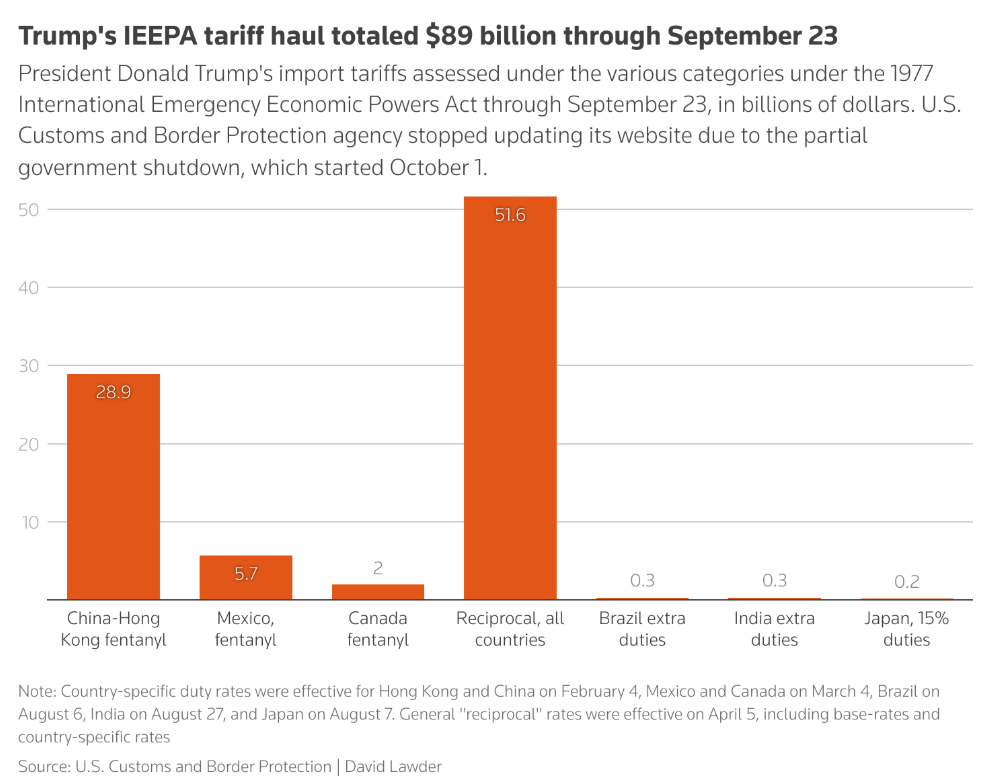
Core Points - The U.S. Supreme Court is set to hear arguments regarding the legality of Trump's global tariffs, which are expected to persist regardless of legal authorization [1][2] - Lower courts have ruled that Trump overstepped his authority by imposing tariffs under the International Emergency Economic Powers Act (IEEPA) [2] - The outcome of the Supreme Court's decision could significantly impact Trump's ability to impose tariffs as a means of punishing countries over non-trade political issues [2] Group 1: Tariff Legislation and Authority - The Supreme Court consists of six conservative and three liberal justices, and has previously supported Trump in major rulings [2] - If the Supreme Court rules against Trump, he may resort to other legal frameworks for imposing tariffs, such as the Trade Act of 1974 and the Tariff Act of 1930 [3] - Trump's administration views tariffs as a cornerstone of economic policy, and businesses should plan accordingly [3] Group 2: Trade Negotiations and Agreements - Trump's tariff policies have reportedly led to significant concessions from major trading partners like Japan and the EU, aimed at reducing the U.S. trade deficit [4] - The U.S. Trade Representative's office has announced final framework trade agreements with Vietnam, Malaysia, Thailand, and Cambodia, locking in tariff rates between 19% and 20% [4] - South Korea has agreed to a $350 billion investment plan in exchange for tariff reductions on automobiles and other goods [4] Group 3: Financial Implications and Revenue - As of September 7, the total import tariffs collected under IEEPA reached $89 billion, contributing to a net customs revenue increase of $118 billion for the fiscal year ending September 30 [8] - The reliance on tariff revenue poses significant political and economic risks, complicating future tariff reductions for any administration [8] - The potential need to refund over $100 billion in tariff revenue could create challenges for the U.S. Customs and Border Protection [8] Group 4: Inflation and Cost Management - Importers have largely absorbed the costs of tariffs, which has limited consumer price increases but has also reduced profit margins [9] - The Oxford Economics Institute estimates that tariffs have increased the Consumer Price Index (CPI) growth rate by 0.4 percentage points, pushing inflation above the Federal Reserve's target [9] - Companies are facing significant cost impacts, with over $35 billion in tariff-related costs disclosed ahead of the third-quarter earnings season [9]
大佬们公开唱反调!
Xin Lang Cai Jing· 2025-10-25 08:01
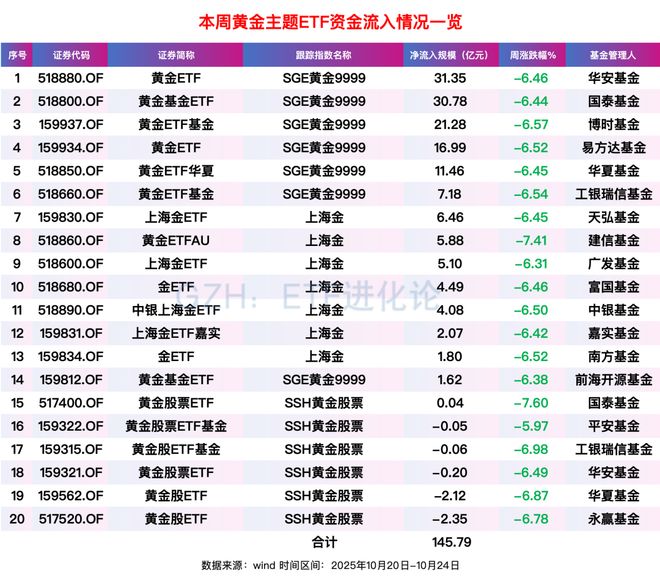
Core Viewpoint - The upcoming Supreme Court ruling on November 5 regarding the legality of tariffs imposed by the Trump administration is seen as a critical test of Trump's economic policies, which could reshape U.S. trade dynamics and have significant implications for the global economy [2][3]. Group 1: Economic Perspectives - Nearly 50 economists, including former Federal Reserve Chairs Bernanke and Yellen, have urged the Supreme Court to overturn the tariffs, arguing that they are based on a fundamental misunderstanding of global economics [4]. - The economists contend that trade deficits are a result of macroeconomic imbalances rather than a security threat, and that tariffs have led to increased costs for American households, raising annual expenses by $2,400 [4][5]. - The potential ruling could require the U.S. government to refund between $750 billion to $1 trillion in tariffs, which would have catastrophic effects on the Treasury and could undermine existing trade agreements [3][4]. Group 2: Market Reactions - Following the release of the U.S. Consumer Price Index (CPI) data, gold prices experienced significant volatility, initially dropping below $4,070 before rising above $4,110, only to decline again [1]. - The CPI data for September showed a year-over-year increase of 3%, which was below expectations, and core inflation rose by only 0.2%, the slowest growth in three months [6][7]. - The release of the CPI data has cleared the way for anticipated interest rate cuts by the Federal Reserve, as indicated by previous comments from Fed Chair Powell [7]. Group 3: Fund Flows and Investment Trends - Despite a historic drop in gold prices, gold funds saw record inflows, attracting $8.7 billion in a week, with total inflows over the past four months reaching $50 billion, surpassing the cumulative inflows of the previous 14 years [10][13]. - In the context of broader market trends, stock funds are projected to attract $693 billion, cash funds $1.1 trillion, and gold funds $108 billion in inflows, marking significant historical records [13][14]. - The ongoing uncertainty surrounding U.S. trade policies has become a central factor in market volatility, challenging investors' asset allocation strategies [14].
IMF与美国财政部意见相反 特朗普关税真能扭转美国赤字危局?
Di Yi Cai Jing· 2025-10-23 10:13
Core Viewpoint - There is a significant divergence between the U.S. Treasury and the International Monetary Fund (IMF) regarding the outlook for the U.S. budget deficit, with the Treasury projecting a decrease while the IMF warns of an expanding deficit [1][3]. Group 1: U.S. Treasury's Perspective - The U.S. Treasury estimates that the budget deficit for FY 2025 will be approximately $1.8 trillion, a reduction of about $41 billion from the previous fiscal year, marking the first annual decline in deficit since the expiration of pandemic relief programs in 2022 [1]. - Treasury Secretary's economic advisor, Joe Lavorgna, attributes the improvement in fiscal conditions to increased revenue from tariffs and a significant slowdown in spending growth [1]. - From April to September, the cumulative deficit was $468 billion, the lowest level since 2019, and nearly 40% lower than the same period last year [2]. Group 2: IMF's Perspective - The IMF argues that current tariff measures are insufficient to meaningfully reduce debt and calls for more actions to address the persistently high deficit [1][3]. - The IMF's World Economic Outlook report predicts that despite later spending cuts and tariff revenues, the U.S. fiscal deficit will further widen compared to previous forecasts [3]. - The IMF warns that under current fiscal policies, U.S. public debt is expected to rise from 122% of GDP in 2024 to 143% by 2030, which is 15 percentage points higher than earlier predictions [3]. Group 3: Government Spending Trends - Government spending growth has slowed, with a mere 0.2% increase in Q2 and a 2.5% decrease in Q3 compared to the previous year [2]. - The Treasury emphasizes that the large tariff policies implemented by the Trump administration are expected to generate $300 billion in revenue this year, potentially rising to $400 billion next year [2]. Group 4: Debt and Interest Payments - The U.S. national debt has surpassed $38 trillion, increasing by $1 trillion in just over two months, marking one of the fastest debt growth periods outside of the pandemic [3][4]. - Interest payments on U.S. debt have reached approximately $1 trillion annually, becoming the fastest-growing item in the federal budget, with projections indicating a rise to $14 trillion over the next decade [4]. Group 5: Structural Challenges - The ongoing government shutdown exacerbates fiscal challenges, with previous shutdowns leading to significant increases in federal spending [4]. - The Treasury warns that the U.S. is on an "unsustainable fiscal path," with current policies deemed unsustainable compared to past economic crises [5].
两位2025年诺贝尔经济学奖得主质疑特朗普关税政策
Sou Hu Cai Jing· 2025-10-14 13:37
Core Points - The 2025 Nobel Prize in Economic Sciences was awarded to Joel Mokyr, Philippe Aghion, and Peter Howitt for their contributions to understanding innovation-driven economic growth [2][3] - The prize is divided into two parts: half awarded to Mokyr for identifying prerequisites for sustained growth through technological advancement, and the other half jointly awarded to Aghion and Howitt for their theory on creative destruction as a means of achieving sustained growth [2][3] Group 1: Innovation and Economic Growth - The Nobel Committee highlighted that the world has experienced unprecedented sustained economic growth over the past two centuries, with the awardees clarifying how innovation serves as a source of economic growth and provides necessary momentum for sustainability [3] - Mokyr's research utilized historical data to reveal that technological advancements have historically occurred in short bursts, but the Industrial Revolution marked the first instance of continuous economic growth, driven by the Enlightenment's promotion of interaction between science and applied technology [4][6] Group 2: Creative Destruction Theory - Aghion and Howitt's theory describes the process of innovation and "business stealing," explaining how the long-term growth rate of the economy is determined by the competition between new and old technologies [6][7] - Their framework formalizes how entrepreneurs innovate and how their actions are influenced by regulatory environments, emphasizing that innovation can lead to the erosion of competitors' profits [6][7] Group 3: Implications of Current Economic Policies - The awarding of the prize coincides with significant fluctuations in trade policies, particularly under Trump's administration, which may hinder innovation by reducing market scale [7][8] - Aghion expressed concerns that trade wars and protectionist policies could obstruct open markets and innovation, emphasizing the importance of green industry innovation and curbing the rise of large tech monopolies for future growth [8]
铝价预计有限 后续保持偏好震荡
Jin Tou Wang· 2025-10-14 07:06
Group 1 - The domestic non-ferrous metal market is experiencing a downturn, with aluminum futures showing slight strength, closing at 20,880.00 CNY/ton, up 0.10% [1] - The macroeconomic environment indicates short-term pressure on the domestic economy, with slowing consumption and investment growth, but there are structural highlights in domestic demand [1] - Future macro policies are expected to maintain a "steady progress" approach, relying on coordinated fiscal and monetary policies to stabilize growth [1] Group 2 - Supply side analysis shows that the upstream industry remains relatively loose, but domestic electrolytic aluminum supply is characterized by limited growth, with new capacity mainly from hydropower aluminum in the southwest [1] - The demand side is experiencing structural differentiation, with weak performance in construction materials dragging down overall consumption, while sectors like aluminum cables and plates are seeing slight recovery due to policy stimulus [1] - Looking ahead, market sentiment is influenced by changes in Trump's tariff policies, with expectations of limited aluminum price fluctuations and a preference for a stable oscillation in prices [2]
特朗普关税收入只是杯水车薪!美债利息黑洞难填,财政赤字1.8万亿美元,美国财政拉警报?
Sou Hu Cai Jing· 2025-10-09 17:05
Core Insights - The article discusses the significant increase in U.S. tariff revenue due to Trump's tariff policies, but highlights that this revenue is insufficient to address the massive federal budget deficit [1][3]. Group 1: U.S. Federal Budget Deficit - The U.S. federal budget deficit for the fiscal year 2025 is projected to reach $1.8 trillion, showing little improvement compared to previous years [3]. - The deficit for the fiscal year 2025 is only $80 billion less than that of 2024, indicating a persistent fiscal challenge [3]. - The Congressional Budget Office (CBO) predicts that the budget deficit will account for approximately 5.9% of GDP in 2025, a slight decrease from 6.4% in the previous fiscal year [9]. Group 2: Revenue and Expenditure - Total U.S. revenue is estimated to increase by $308 billion (6%) in the fiscal year 2025, while total expenditure is expected to rise by $301 billion (4%) [5]. - Tariff revenue is projected to reach $195 billion in 2025, a significant increase from $77 billion in the previous fiscal year [7]. - Interest payments on the national debt have surpassed $1 trillion for the first time, contributing significantly to the rising expenditure [5][7]. Group 3: Corporate Tax Revenue - Corporate tax revenue is expected to decline by 15% in the fiscal year 2025 compared to 2024, largely due to tax reforms allowing larger deductions for certain investments [9]. - The postponement of some tax revenues originally due in 2023 to 2024 has also contributed to the decrease in corporate tax revenue [9]. Group 4: Legal Challenges - U.S. Treasury Secretary Yellen expresses optimism about the growth in tariff revenue, but warns of potential legal challenges that could arise if the Supreme Court rules against Trump's tariff policies [11]. - If the court rules unfavorably, the government may have to refund tariffs collected, potentially amounting to hundreds of billions of dollars, posing a significant risk to the Treasury [12].
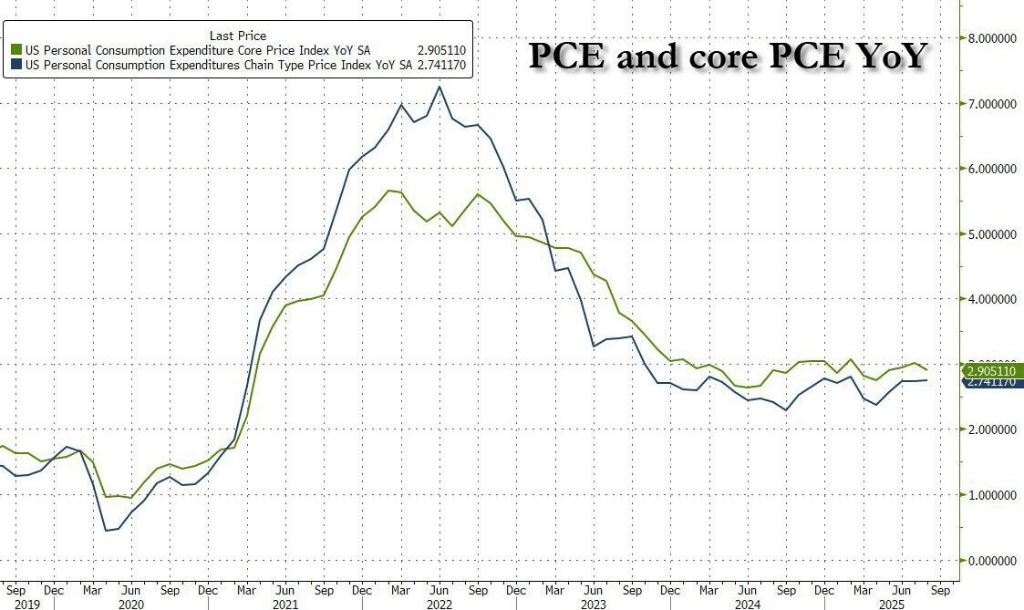
美国8月核心PCE物价指数环比增0.2%符合预期,消费支出温和增长0.4%
Sou Hu Cai Jing· 2025-09-26 13:21
Core Insights - US consumer spending in August showed strong growth for the second consecutive month, increasing by 0.4% after inflation adjustment, surpassing the expected 0.2% [1][2] - The core Personal Consumption Expenditures (PCE) price index rose by 0.2% month-on-month, maintaining a year-on-year increase of 2.9%, significantly above the Federal Reserve's 2% target [1][3][5] Consumer Spending Breakdown - The increase in consumer spending was primarily driven by goods consumption, which rose by 0.7% month-on-month, indicating strong purchasing willingness for non-essential items such as furniture, clothing, and entertainment [2][4] - In contrast, the growth in service spending was more moderate, with indications that high-income consumers continued to spend despite potential price increases due to tariffs [2][6] Inflation and Economic Outlook - Persistent inflation remains a significant challenge for the Federal Reserve, with the core PCE year-on-year growth stabilizing at 2.9%, well above the target [3][5] - The report highlighted that service costs, particularly in financial services, dining, and transportation, were major contributors to overall price increases, while goods prices showed weakness [6][8] Market Reactions - Following the data release, US stock futures showed little volatility, with the Nasdaq 100 futures maintaining a gain of approximately 0.3% [10] - The US dollar index experienced a slight decline, currently reported at 98.33 [10] - The yield on the 10-year US Treasury bond decreased to 4.158%, while spot gold prices increased by about $6, reaching $3755.53 per ounce [14]
Trump tariffs haul over $200B in revenues as Supreme Court weighs challenge to legality
Fox Business· 2025-09-25 17:11
Core Points - The U.S. has generated over $200 billion in tariff revenues in 2025, highlighting the significance of President Trump's trade duties as a major source of government income [1][2] - Tariff revenues reached $31.4 billion in August, the highest monthly total for 2025, with September projected to surpass this figure [1][2] - The total tariff revenue for 2025 is reported at $213.3 billion, with a steady increase from $17.4 billion in April to $29 billion in July [2] Revenue Trends - Tariff revenues increased from $17.4 billion in April to $23.9 billion in May, then to $28 billion in June, and finally reaching $29 billion in July [2] - August's tariff revenue was $31.4 billion, and September's revenue is on track to set a new record [1][2] Economic Impact - American businesses bear the cost of import taxes, which are often passed on to consumers through higher prices [3] - The Supreme Court is set to hear arguments regarding the legality of Trump's tariffs, which are a key component of his economic strategy [3][5] Legal Context - A federal appeals court ruled that Trump exceeded his authority by imposing new tariffs using emergency powers, stating that such powers rest with Congress [6] - The court allowed the tariffs to remain in effect until mid-October, but this ruling does not apply to tariffs on steel and aluminum imports [6][8] Government Position - The White House has defended Trump's tariffs as a legitimate exercise of presidential powers aimed at protecting the economy, expressing confidence in a favorable outcome from the Supreme Court [9]
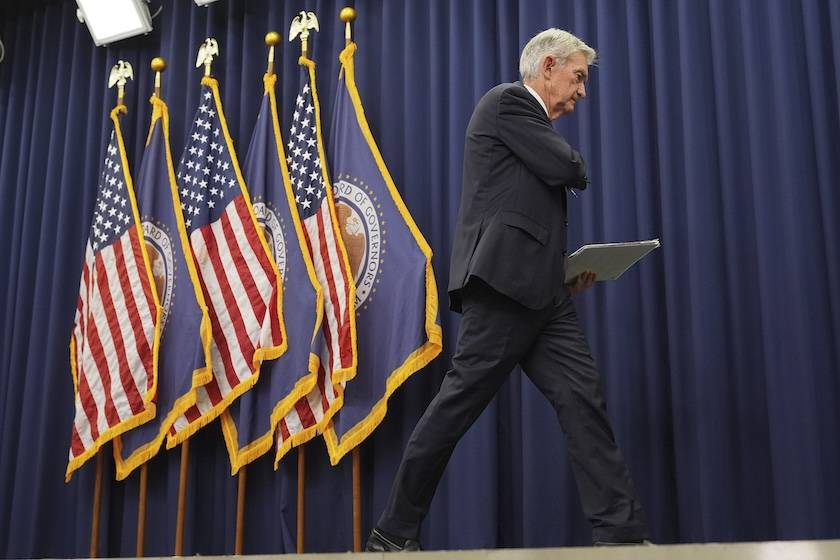
美联储连续降息要来了?特朗普关税政策恐是一大掣肘
Sou Hu Cai Jing· 2025-09-19 09:08
Core Viewpoint - The Federal Reserve has announced a 25 basis point interest rate cut, restarting a rate-cutting cycle that had been paused for nine months, with expectations of two more cuts by the end of the year, although uncertainties remain due to the impact of Trump's tariff policies on inflation [1][2][4] Group 1: Federal Reserve's Rate Decisions - The median of the latest dot plot indicates two more rate cuts of 25 basis points each by the end of the year, an increase from the June dot plot [1] - The Federal Reserve has become more dovish due to deteriorating employment data and the delayed transmission of tariff-induced inflation to consumers, suggesting that inflationary pressures may be temporarily manageable [1][4] - There is significant internal disagreement within the Federal Reserve regarding the pace of future rate cuts, indicating that the policy path remains uncertain and may change based on inflation and employment trends [4] Group 2: Impact of Tariff Policies - The transmission of Trump's tariffs to inflation has not yet fully materialized, primarily due to companies stockpiling imports earlier this year, which has buffered inflation's impact on consumer prices [7] - As inventory is depleted, the inflationary effects of tariffs are expected to rise, suggesting potential upward pressure on inflation in the future [7] Group 3: Independence of the Federal Reserve - Despite political pressure from Trump, the independence of the Federal Reserve is expected to remain intact due to legal protections and the checks and balances inherent in the U.S. political system [6] - The decision-making process of the Federal Reserve is highly professionalized and relies on data, making it difficult for political preferences to dominate outcomes [6] Group 4: Economic Predictions and Monetary Policy - The Federal Reserve has raised its inflation expectations and postponed the timeline for achieving inflation targets to 2028, indicating a belief that inflation may remain stubborn in the medium to long term [7] - If core PCE data significantly exceeds expectations in the coming months, the Federal Reserve may need to shift its focus back to inflation, potentially halting rate cuts [7] - The resumption of the rate-cutting cycle by the Federal Reserve opens up more space for domestic monetary policy adjustments, although the impact is expected to be limited [8]