电动化

Search documents
车手骂上热搜的F1,中国品牌还要烧钱吗
汽车商业评论· 2026-03-14 23:06
Core Viewpoint - The article discusses the evolution and current state of Formula 1 (F1) racing in China, highlighting the increasing popularity and changes in race dynamics due to new regulations introduced for the 2026 season [3][20]. Group 1: F1 Popularity in China - F1's popularity in China has significantly increased since its introduction in 2004, with ticket sales improving dramatically, especially after the entry of Chinese driver Zhou Guanyu in 2024 [3][20]. - The Shanghai F1 race is expected to attract around 230,000 attendees this year, with 14% being international spectators and 74% from other provinces [3]. Group 2: New Regulations and Race Dynamics - The 2026 season introduces a new power unit where electric energy will account for 50% of the power output, along with a significant enhancement in energy recovery systems [7]. - The new rules have led to a more dynamic racing experience, with the Australian Grand Prix witnessing 120 overtakes compared to 45 in the previous year, indicating a more competitive environment [5][10]. Group 3: Driver Reactions to New Rules - Drivers have expressed mixed feelings about the new regulations, with some praising the excitement while others criticize the complexity and energy management required [11][15]. - Max Verstappen described the new rules as chaotic and not in line with traditional F1 racing, emphasizing the need for a balance between excitement and the essence of racing [11][18]. Group 4: Financial Barriers for Chinese Brands - Entering F1 is financially demanding, with new teams facing costs upwards of $200 million just to join, alongside ongoing operational costs that can exceed $300 million annually [25][27]. - Despite the high costs, there is a growing interest among Chinese brands to participate in F1, as it offers significant marketing and technological benefits [29][41]. Group 5: F1's Global Expansion and Cultural Impact - F1 is gaining traction in the U.S., aided by popular media representations and partnerships, such as Apple's exclusive broadcasting deal, which has increased viewership significantly [34][35]. - The cultural relevance of F1 is expanding, with brands like Ford and Cadillac leveraging the sport for marketing, indicating a shift in how automotive companies engage with consumers [39][40].


上市69年来首亏!本田突然“暴雷”:CEO降薪30%,中国销量5年连跪
新浪财经· 2026-03-13 08:47
Core Viewpoint - Honda is facing its darkest hour, forecasting a potential loss of up to 690 billion yen (approximately 29.8 billion RMB) for the fiscal year 2025, marking its first annual loss since its listing in 1957 due to U.S. tariff policies and declining competitiveness in Asian markets [3][5][6]. Group 1: Financial Performance - Honda has adjusted its operating profit forecast from a profit of 550 billion yen to a loss of 270 billion to 570 billion yen, with net profit expectations shifting from 300 billion yen to a net loss of 420 billion to 690 billion yen (approximately 18.1 billion to 29.8 billion RMB) [5][6]. - The company announced that its global sales for 2025 are expected to decline by 7.5% to 3.522 million vehicles, with a significant drop in the Chinese market, where sales are projected to fall by 24% to 645,000 vehicles, marking the fifth consecutive year of decline [12]. Group 2: Market Challenges - In the U.S. market, the cancellation of the $7,500 federal tax credit for electric vehicles by September 30, 2025, is expected to lead to stagnant or declining sales and increased inventory pressure [6]. - In China, Honda's sales have been adversely affected, with February sales down 15% year-on-year to 28,780 vehicles, and cumulative sales for the first two months down 16% [11]. Group 3: Strategic Response - Honda's management, including CEO Toshihiro Mibe and Executive Vice President Noriya Kaihara, will voluntarily forgo 30% of their salaries for three months, while other executives will forgo 20% to reduce costs [3][9]. - The company plans to reassess its resource allocation and strengthen its hybrid vehicle offerings, moving away from pure electric models that have not performed well in the market [9][15].

油价再创新高,柳工挖掘机以节油与电动双轮驱动为客户“减负”
工程机械杂志· 2026-03-13 03:42
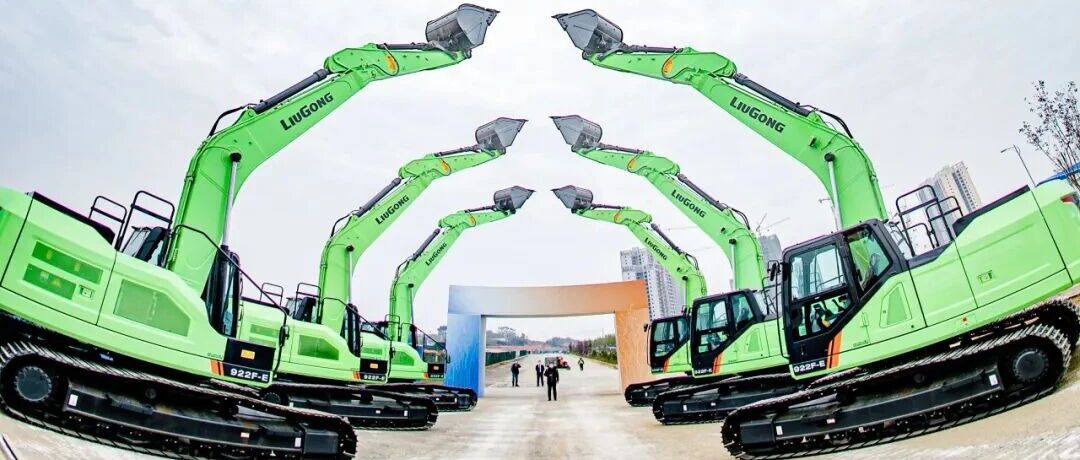
Core Viewpoint - The article emphasizes the rising fuel costs in the construction industry due to recent price hikes in refined oil, highlighting the importance of fuel efficiency and electric machinery as key competitive advantages for companies like LiuGong [1][20]. Group 1: Fuel Price Impact - On March 9, 2026, domestic refined oil prices were raised, with gasoline and diesel increasing by 290 yuan and 280 yuan per ton, respectively, leading to a significant cost pressure on the construction industry [1]. - LiuGong's excavators have established a strong market position through years of fuel-saving technology development, providing comprehensive solutions from fuel efficiency to zero-oil operations amid rising oil prices [1][20]. Group 2: Fuel Efficiency Technology - LiuGong's fuel-saving advantage is attributed to a systematic engineering approach, particularly the self-developed IPC electronic control system, which optimizes hydraulic flow based on operational demands, minimizing energy waste [6]. - The LiuGong 920FMAX+ model can save 2 liters of diesel per hour compared to competitors, ensuring both operational efficiency and minimal fuel consumption in high-intensity work conditions [6]. - The 965F model, designed for mining, utilizes unique DREAM technology to achieve a 10% reduction in fuel consumption, demonstrating high cost-effectiveness by producing 70 tons of output while consuming only 50 tons of fuel [8]. Group 3: Electric Excavators - LiuGong's electric excavators represent a strategic shift towards zero-oil operations, with the company being a pioneer in this field, showcasing its products at international exhibitions [11][12]. - The electric excavators offer significant operational cost reductions of over 40% by eliminating fuel systems and reducing maintenance needs, addressing market pain points amid rising fuel prices [12][14]. - The 922FE electric excavator matches the performance of traditional fuel models while reducing operational costs to one-third, effectively mitigating the impact of fuel price fluctuations [14]. Group 4: Future Outlook - The article suggests that the recent fuel price increases are indicative of broader cost pressures in the industry, with future fluctuations expected due to geopolitical and supply-demand factors [20]. - LiuGong's focus on fuel-saving technologies and electric machinery positions it well to navigate these challenges, reinforcing its competitive edge in a transforming industry [20].

三一集团精准对接北美需求 加速全球化布局
工程机械杂志· 2026-03-13 03:42
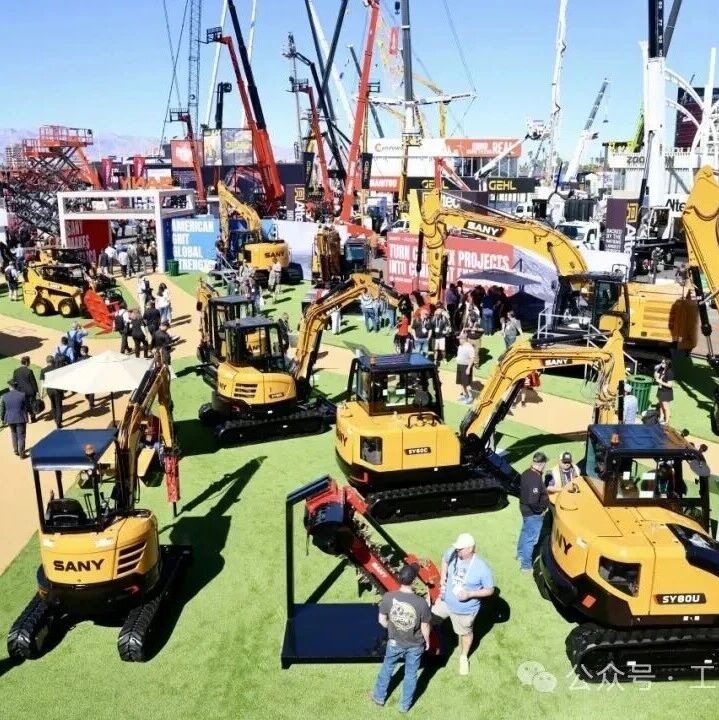
Core Viewpoint - SANY Group showcased its commitment to the North American market by participating in the Las Vegas International Construction Equipment Exhibition with a significant presence, featuring 32 advanced machines and 17 diverse attachments, emphasizing its strategic focus on high-end markets and innovative technology [1][3][4]. Group 1: Exhibition Highlights - SANY Group's exhibition area covered 4,686 square meters, marking a substantial increase from the previous event, positioning it as one of the largest exhibitors [3]. - The showcased products included a full range of machinery such as excavators, pile drivers, loaders, road machinery, cranes, and port machinery, attracting numerous industry professionals and partners [3][4]. - All exhibited equipment was tailored to meet the specific needs of North American customers, including 10 newly developed models designed for the local market [4]. Group 2: Product Features and Innovations - The micro-excavator features a zero-tail swing design, enhancing maneuverability in tight spaces, while the medium excavator offers strong digging performance and precise control [4]. - The cranes are equipped with an intelligent front window system, improving operational safety and comfort, and the new generation of loaders integrates advanced smart functions to significantly boost efficiency and economic performance [4][5]. - SANY's AI service assistant made its debut, providing intelligent diagnostics and interactive fault identification, streamlining equipment maintenance processes [5]. Group 3: Strategic Focus and Market Insights - The North American market is viewed as a high-end benchmark for the global construction machinery industry, and SANY's strategy emphasizes local adaptation and customized solutions to meet stringent industry standards [4][6]. - SANY aims to increase its R&D investment and channel development in North America, enhancing its service system to better align with local demands and improve brand penetration in the high-end market [5][6]. - The company has established a comprehensive competitive advantage through its focus on electrification, intelligence, and internationalization, successfully breaking the long-standing dominance of foreign brands in the high-end construction machinery market [6].

比亚迪发布第二代闪充技术
Mei Ri Shang Bao· 2026-03-11 23:04
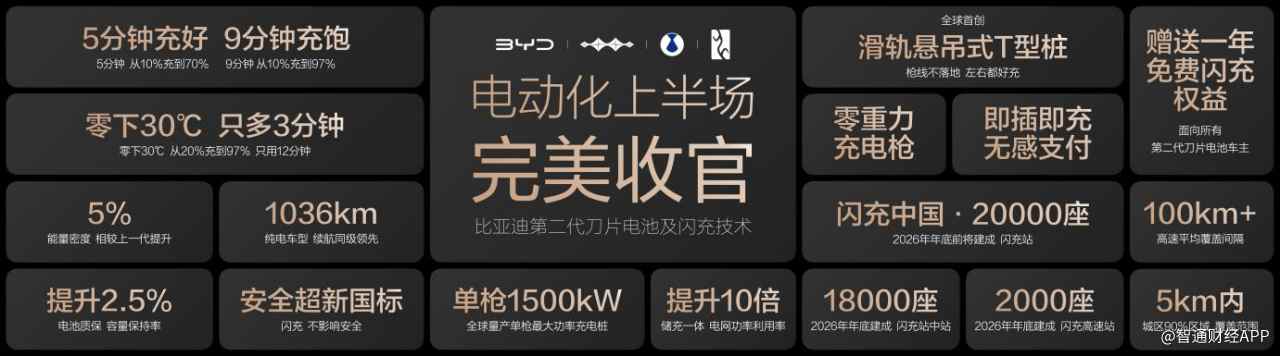
Core Insights - BYD has launched its second-generation blade battery and fast-charging technology, addressing global challenges of slow charging and low-temperature charging difficulties in electric vehicles [1][2] Group 1: Second-Generation Blade Battery - The second-generation blade battery achieves a breakthrough in charging speed, allowing a charge from 10% to 70% in just 5 minutes at room temperature, and to 97% in 9 minutes [1] - In low-temperature environments (down to -30 degrees Celsius), charging to 97% takes only 3 additional minutes compared to room temperature [1] - The energy density of the new battery has improved by over 5% compared to the first generation, with the Tengshi Z9GT model achieving a range of 1,036 kilometers [1] - The optimized cooling system ensures that fast charging has minimal impact on battery lifespan [1] Group 2: Fast Charging Infrastructure - The newly introduced BYD fast charging station has a single-gun charging power of 1,500 kW, the highest in the world for mass production [1] - The design includes a "sliding rail suspension T-type pile" for zero-gravity charging, plug-and-play convenience, and contactless payment, enhancing user-friendliness [1] - BYD plans to construct 20,000 fast charging stations across China by the end of the year, with 18,000 stations built in collaboration with operators and 2,000 designated as fast charging highway stations [1] - The initial phase will see 1,000 fast charging highway stations completed by the May Day holiday [1] Group 3: Strategic Vision - The launch of the second-generation blade battery and fast charging technology signifies a resolution to core pain points in electrification [2] - BYD aims to expand its fast charging stations internationally by the end of 2026, transitioning from "Fast Charging China" to "Fast Charging Planet," supporting global electrification efforts [2]

宁德时代20260309
2026-03-10 10:17
Summary of Conference Call for CATL (Contemporary Amperex Technology Co., Limited) Industry and Company Overview - The conference call pertains to CATL, a leading company in the battery manufacturing industry, particularly focusing on lithium-ion batteries for electric vehicles and energy storage systems. Key Points and Arguments Profit Resilience and Cost Management - The company has established a price linkage mechanism with customers, along with upstream resource layout and economies of scale to mitigate cost pressures. It expects stable net profit per unit in 2025, with most impacts from the reduction in export tax in 2026 being passed on to customers [2][4][5]. Capacity and Production Planning - By the end of 2025, CATL's capacity under construction will exceed 320 GWh, with an increase in CAPEX expected in 2026. The long-term compound annual growth rate (CAGR) for shipments is projected to be between 20% and 30% [2][17]. Overseas Expansion and Policy Impact - The first phase of the 30 GWh project in Hungary is entering the debugging phase. The actual impact of U.S. and European policies is assessed to be limited, providing a competitive advantage as one of the few Chinese companies with overseas production capacity [2][8]. Sodium-ion and New Technologies - The new sodium-ion battery has gained recognition from clients like Changan and is planned for full integration. If lithium prices rise, the application space for sodium batteries will expand. Solid-state batteries are in a leading R&D position, but commercialization challenges remain [2][13][24]. Energy Storage Business Growth - The 587 Ah large cell is leading in mass production, potentially increasing overall lifecycle throughput by nearly 50% and improving the internal rate of return (IRR) for owners by 2-3 percentage points. The increase in system-level product proportion has extended the revenue recognition cycle [2][22]. Financial and Asset Quality - In Q4 2025, impairment provisions were primarily due to old small cell production lines and increased inventory. The impairment ratio has decreased as asset scale expands, with inventory turnover stable at around 80 days [3][18]. Market Outlook and Pricing Strategy - Despite rising lithium carbonate and material prices, the company maintains a stable outlook for profitability in 2026, supported by established price linkage mechanisms and internal cost management strategies. The company is confident in maintaining stable net profit per unit, even with pressures from material price increases and reduced export tax [4][5][6]. Production and Sales Expectations - The company has not adjusted its production plans despite recent market fluctuations. It remains optimistic about the long-term growth prospects of the industry and market, with no clear triggers for plan adjustments observed [10][19]. Inventory and Sales Discrepancies - The difference between production and actual sales is primarily due to logistics and inventory in transit. The stable inventory cycle of around 80 days has been maintained, with the sales of system-level products leading to longer recognition cycles [11][12]. Investment and Expansion Plans - The company plans to increase CAPEX in 2026, with ongoing projects expected to support high capacity utilization and market share growth. The investment decision-making process is rigorous, ensuring reliability in order visibility [19]. Response to Market Changes - The company is actively monitoring changes in overseas policies and market dynamics, particularly in Europe and the U.S. It aims to adapt its strategies accordingly while maintaining a competitive edge in the battery market [8][20]. Future of Sodium-ion Batteries - Sodium-ion batteries are expected to find applications in both energy storage and power scenarios, with structural and technical adjustments based on specific needs. The cost advantages of sodium batteries position them well for future growth [24]. Other Important but Overlooked Content - The company emphasizes the importance of providing optimal system solutions rather than just competing on price, aiming to enhance delivery and operational returns for clients [22][21]. - The company is cautious about potential overcapacity and price wars in the battery market, focusing on quality and technological advantages rather than merely increasing production [17].
电动化上半场完美收官:比亚迪(01211)发布第二代刀片电池及闪充技术
智通财经网· 2026-03-09 10:49
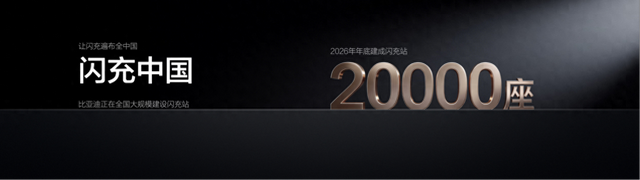
Core Viewpoint - BYD has officially launched its second-generation blade battery and flash charging technology, achieving the fastest charging speed in the world, addressing the issues of slow charging and low-temperature charging difficulties in electric vehicles [1][24]. Group 1: Second-Generation Blade Battery - The second-generation blade battery allows charging from 10% to 70% in just 5 minutes and from 10% to 97% in 9 minutes, even at -30 degrees Celsius, only taking 3 additional minutes compared to normal temperatures [1][6]. - The battery features a "lithium-ion high-speed channel" and an "all-temperature intelligent thermal management system," resulting in lower heat generation and efficient heat dissipation, ensuring that flash charging has minimal impact on battery life [8]. - Compared to the first generation, the energy density of the second-generation blade battery has increased by over 5%, while also achieving a range of 1,036 kilometers for the Tengshi Z9GT vehicle [9]. Group 2: Flash Charging Technology - BYD has developed a new flash charging pile with a single-gun charging power of 1,500 kW, the highest in the world for mass-produced charging piles, which does not harm the power grid [14]. - The flash charging stations will be built across China, with a target of 20,000 stations by the end of the year, ensuring that users can access flash charging services within 5 kilometers in urban areas [18][20]. Group 3: User Benefits and Policies - All owners of vehicles equipped with the second-generation blade battery will enjoy one year of free flash charging at the stations, with no additional charges after the free period [3]. - The warranty policy for the second-generation blade battery has been enhanced, with a 2.5% increase in capacity retention rates compared to the first generation, and a lifetime warranty on the battery cells [11]. Group 4: Strategic Vision - The launch of the "Flash Charging China" strategy aims to make flash charging experiences widely accessible, addressing user pain points associated with traditional charging stations [16]. - BYD's long-term vision includes expanding flash charging stations globally, with plans to establish them overseas by the end of 2026, contributing to the global electric vehicle development [25].
周观点 | 比亚迪发布全新闪充技术 小鹏发布第二代VLA【国联民生汽车 崔琰团队】
汽车琰究· 2026-03-09 05:59
Market Performance - The automotive sector underperformed the market this week, with A-share automotive stocks declining by 2.76%, ranking 16th among Shenwan sub-industries, compared to the CSI 300's decline of 1.07% [2][28]. - Among sub-sectors, passenger cars increased by 0.85%, while automotive services, parts, commercial vehicles, motorcycles, and others decreased by -3.24%, -3.64%, -3.76%, and -3.96% respectively [2][28]. Key Insights - The article suggests focusing on core stocks including Geely Automobile, Xpeng Motors, BYD, Bertel, Top Group, New Spring, Weichai Power, China National Heavy Duty Truck Group H, and Jingu Co. [2][7]. - BYD announced a new generation of blade battery and flash charging technology, achieving the fastest charging speed in global mass production, charging from 10% to 70% in 5 minutes and from 10% to 97% in 9 minutes, showcasing its leadership in electrification [2][7]. Electrification and Smart Technology - Huawei launched a new generation of dual-light path image-level 896-line lidar, marking a significant advancement in perception capabilities [3][7]. - Xpeng Motors introduced its second-generation VLA, eliminating the "language translation" step and enabling direct generation of action commands from visual signals, representing a breakthrough in the industry [3][7]. Policy and Market Recovery - Various local governments have begun implementing 2026 vehicle trade-in subsidies, which are expected to stabilize and boost automotive sales [3][8]. - The weak demand for passenger vehicles in January and February was attributed to delayed subsidy policies and a lack of new model launches, but improvements in these areas are anticipated to support demand recovery in March [3][8]. Investment Recommendations - For passenger vehicles, the article recommends focusing on companies like Geely, Xpeng, and BYD, while suggesting attention to Jianghuai Automobile [4][9]. - In the parts sector, it highlights companies such as Bertel, Xpeng, and Horizon Robotics for their smart technology advancements, and suggests monitoring companies like Qianli Technology and Xiaoma Zhixing [4][9]. - For commercial vehicles, it recommends Weichai Power and China National Heavy Duty Truck Group, driven by trade-in policies and export growth [4][15]. Motorcycle Market - The motorcycle market is seeing growth in mid-to-large displacement models, with companies like Spring Power and Loncin General being recommended as leaders in this segment [5][25].

破局与引领:比亚迪在电动化领域实现新突破
Huan Qiu Shi Bao· 2026-03-09 02:52
Core Viewpoint - BYD's recent launch event emphasized the need for electric vehicles (EVs) to effectively replace traditional gasoline cars, addressing public concerns about range anxiety and charging experiences [1][3]. Group 1: Charging Technology - BYD introduced its second-generation blade battery and flash charging technology, which aims to resolve the "last mile" issue of charging convenience, a significant barrier to EV adoption [3][4]. - The flash charging technology allows for a remarkable charging speed, enabling vehicles to achieve a range of 400 kilometers with just 5 minutes of charging under normal conditions [4][5]. - This technology also addresses charging difficulties in low-temperature environments, ensuring high-power charging capabilities even in extreme cold [4][7]. Group 2: Market Impact - The flash charging technology positions BYD as a global leader in charging power, energy conversion efficiency, and safety, providing a cost-effective and efficient solution for the EV market [7]. - The advancement in charging technology is expected to drive upgrades in global supply chains and technical standards, encouraging faster iterations among battery manufacturers and charging infrastructure providers [7]. - BYD's technology offers new possibilities for EV adoption in underdeveloped regions, where slow charging and unstable power grids have hindered growth [7]. Group 3: National Strategy and Energy Security - The flash charging technology aligns with national strategies for energy security and carbon reduction, supporting the transition from oil dependency to a diversified energy supply system [8]. - By enhancing charging efficiency, BYD's technology accelerates the replacement of gasoline vehicles with electric ones, contributing to the optimization of the energy structure [8][10]. - The company's commitment to using technology to solve industry challenges is seen as a pathway to a cleaner, safer, and more efficient global transportation future [10].
21记者实测比亚迪低温充电 零下20度大唐10分26秒充饱
2 1 Shi Ji Jing Ji Bao Dao· 2026-03-08 15:23
Core Insights - BYD's second-generation blade battery addresses the critical issue of low-temperature charging, which has been a significant challenge in the electric vehicle (EV) sector, particularly in northern regions during winter [2] Group 1: Charging Performance - In a real-world test conducted in Harbin at -20°C, the BYD Tang charged from 20% to 97% in just 10 minutes and 26 seconds, while the Tengshi Z9GT achieved the same charge in 10 minutes and 23 seconds [4] - All ten vehicles tested in the extreme cold environment completed charging within 12 minutes [4] - In Beijing, at 4°C, the charging times improved further, with the Tang charging from 20% to 97% in 10 minutes and 1 second, and the Tengshi Z9GT in 10 minutes and 19 seconds [4] Group 2: Charging Infrastructure - BYD's flash charging station features a unique sliding rail suspension T-type design, achieving a single-gun power output of 1.5 megawatts, which is three times the power of Tesla's current V4 supercharging stations [4] - The advancements in the second-generation blade battery and flash charging technology signify a breakthrough in the electrification field, potentially making charging as convenient as refueling in the near future [4]