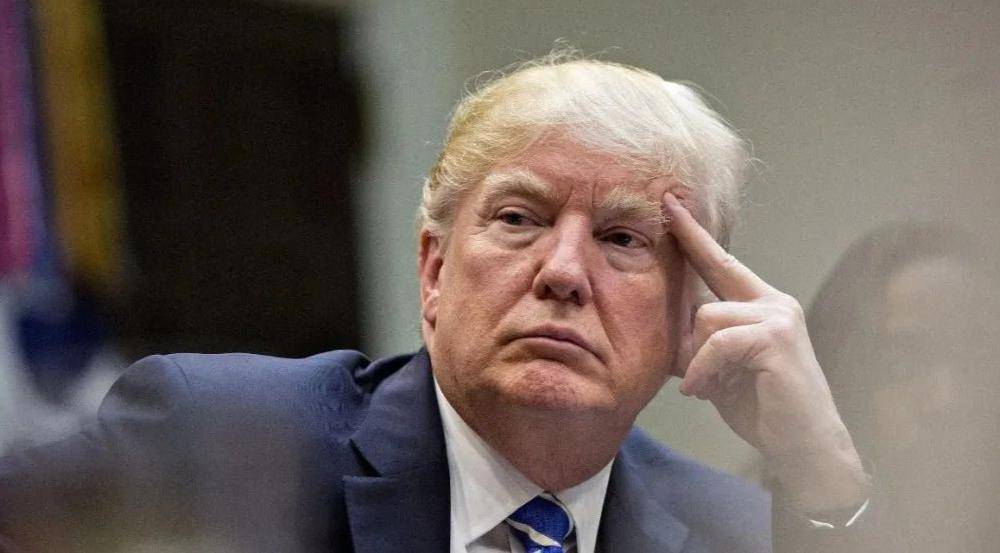
美国降息

Search documents
首开美国历史先河!特朗普宣布解除美联储理事库克职务
Jin Tou Wang· 2025-08-26 03:29
Group 1 - President Trump signed an executive order to dismiss Federal Reserve Governor Lisa Cook, causing a decline in the US dollar and a significant rise in non-US currencies against the dollar [1][2] - Gold prices surged, reaching a two-week high, with spot gold hitting $3,386 per ounce, the highest level since August 11 [1] - Cook's dismissal marks an unprecedented action as she was the first African American woman to serve on the Federal Reserve Board, with Trump citing alleged misconduct in her mortgage dealings [1][2] Group 2 - The accusation against Cook involves declaring two properties as "primary residences," which could allow for lower mortgage rates, aligning with the Trump administration's recent opposition to diversity, equity, and inclusion (DEI) initiatives [2] - Trump's actions indicate an escalation in his efforts to reshape the leadership of the Federal Reserve, as he has previously pressured the Fed to lower interest rates, which officials have resisted due to inflation concerns [2] - Market expectations for a 25 basis point rate cut by the Federal Reserve on September 17 are currently at 83%, with attention turning to the upcoming core PCE price index for further insights on the interest rate path [2]
美国降息下地产链受益标的梳理及深度复盘
2025-08-25 09:13
Summary of Key Points from the Conference Call Industry Overview - The U.S. real estate market is currently experiencing historically low transaction volumes, approximately 4 million units, which is close to levels seen during the financial crisis, indicating a potential demand backlog [1][4] - Despite high interest rates, U.S. housing prices are expected to continue rising from 2023 to 2025, with a 50% increase compared to five years ago, suggesting a healthy real estate cycle [1][6] Company Insights: Home Depot (嘉德宝) - Home Depot's stock has increased 15 times since 2008, with recent financial reports showing a revenue growth of 2.8% and same-store sales growth of 1%, although net profit has slightly declined [1][7] - The company anticipates benefiting from continued interest rate cuts over the next decade, with a slow increase in small residential construction, but overall renovation volumes remain below average [1][8] - Home Depot currently holds over 30% market share in the U.S. home improvement retail sector, with expectations to exceed 40% in the next decade due to market expansion [1][9] Market Dynamics - The U.S. stock market has begun to speculate on real estate recovery stocks, including Home Depot, Lowe's, and Open Door, with Open Door's stock surging 40% following comments on interest rate cuts [1][10] - Companies in the tool chain and outdoor power equipment (OPE) sectors in China and Hong Kong, such as Giant Star Technology and Greebo, are expected to benefit from partnerships with Home Depot, leading to increased orders [1][11] Economic Context - High interest rates have raised concerns about a hard landing for the U.S. economy, but the Federal Reserve believes the impact on the economy and inflation is limited [1][5] - The current 30-year mortgage rate is at 7.3%, with potential for further decline, which could stimulate the housing market [1][3] Future Expectations - The upcoming quarters are expected to see strong performance in the home improvement retail sector, with Home Depot and Lowe's anticipating a 10% increase in procurement for the third quarter [1][12] - Companies are adapting to new tariffs by relocating production to avoid additional costs, with Stanley Black & Decker implementing a 20% price increase to offset impacts [1][13][14] Investment Considerations - Long-term investors are encouraged to consider entering real estate chain-related stocks, as the market is in the early stages of a significant upward cycle, with potential for profit margin recovery as demand increases [1][15]

人民币,大动作
Sou Hu Cai Jing· 2025-08-25 07:53
Group 1 - The People's Bank of China (PBOC) has significantly strengthened the RMB/USD central parity rate by 160 points to 7.1161, marking a new high since November of last year and the largest adjustment since January of this year [1] - Following the announcement, the offshore RMB surged past the 7.16 level, reaching a near one-month high, indicating an unexpectedly aggressive market response [1] - The adjustment is primarily a reaction to the recent decline of the US dollar rather than a signal for a new round of RMB appreciation, as the central parity was only slightly stronger than market expectations [1] Group 2 - The RMB's strength is not uniform against all currencies, as it has weakened against a basket of currencies (CFETS index), suggesting that the RMB is only strong against the USD [1] - In the short term, the PBOC may prefer a slightly stronger RMB to stabilize investor confidence in the stock market and attract foreign investment, while also sending a friendly signal amid ongoing US-China negotiations [1] - Long-term stability of the RMB's strength will depend on two factors: the pace of US interest rate cuts and the internal economic momentum of China, including stock market stability and export recovery [2] Group 3 - A cautionary note is provided that when the market develops a one-sided expectation of "RMB will only appreciate," it often precedes a reversal, as seen in past trends [2]
贝森特想要“美国降息、日本加息”,野村:有可能,但有前提
Hua Er Jie Jian Wen· 2025-08-18 01:08
Core Viewpoint - The U.S. Treasury Secretary's call for aggressive and contrasting monetary policies from the Federal Reserve and the Bank of Japan has caused significant market reactions, highlighting potential contradictions in current market narratives [1] Group 1: U.S. Monetary Policy - The U.S. Treasury Secretary advocates for the Federal Reserve to start cutting rates by 50 basis points in September, with a cumulative reduction of 150 to 175 basis points thereafter [1] - Current market expectations suggest that the Federal Reserve's target rate will not reach 3% until autumn next year, indicating a significant divergence from the Secretary's proposals [1] Group 2: Japanese Monetary Policy - The Secretary recommends that the Bank of Japan should raise interest rates to combat inflation and stabilize the yen [1] - The Japanese economy has shown resilience against U.S. tariffs, with a second-quarter GDP annualized growth rate of 1.0%, surpassing market expectations of 0.4% [3] Group 3: Market Reactions - The Japanese stock market experienced a significant surge, while the yen strengthened due to the dual expectations of U.S. rate cuts and Japanese rate hikes [1] - The market's response reflects a complex and divided sentiment regarding the implications of these contrasting monetary policies [1] Group 4: Feasibility and Risks - The feasibility of simultaneous U.S. rate cuts and Japanese rate hikes depends on key conditions, including the pace of U.S. rate cuts and the stability of Japan's economy and political landscape [2][3] - Political uncertainty in Japan, particularly the potential resignation of Prime Minister Kishida, poses a risk to the Bank of Japan's tightening expectations [4] Group 5: Macro Perspectives - A macro view suggests that the current interest rate scenario, with U.S. rates above 3% and Japanese rates below 1%, is "unnatural" and will likely require correction [6] - Two potential scenarios are identified: one where the Federal Reserve lags behind economic trends, necessitating aggressive rate cuts, and another where the Bank of Japan must accelerate rate hikes to keep pace with inflation [6][7]

下半年全球资产配置主线,美国降息交易全攻略
Hu Xiu· 2025-08-13 23:31
Core Viewpoint - The potential impact of a U.S. interest rate cut on various asset classes such as A-shares, U.S. stocks, gold, and bonds is analyzed, with historical data from the past 25 years being referenced to understand the implications for future investments [1] Group 1 - A historical overview of asset performance following U.S. interest rate cuts over the past 25 years is provided, indicating trends and patterns that may inform current investment strategies [1] - The article discusses how a potential interest rate cut could influence investment decisions in A-shares and U.S. stocks, highlighting the correlation between interest rates and market performance [1] - The impact of interest rate changes on gold and bonds is also examined, suggesting that these assets may respond differently compared to equities [1] Group 2 - Key economic indicators that could influence future interest rate decisions are identified, emphasizing the importance of monitoring these metrics for investment planning [1] - The article raises questions about the timing and magnitude of potential rate cuts, suggesting that market participants should remain vigilant regarding economic developments [1] - The implications of interest rate cuts on investor sentiment and market volatility are discussed, indicating that these factors could significantly affect asset prices [1]
海外市场点评:7月美国CPI,9月降息稳了吗?
Minsheng Securities· 2025-08-13 09:45
Inflation Data Summary - In July, the US CPI increased by 2.7% year-on-year, matching the previous value and slightly below the expected 2.8%[1] - Month-on-month, the CPI rose by 0.2%, consistent with expectations but lower than the previous 0.3%[1] - Core CPI year-on-year rose to 3.1%, exceeding expectations of 3% and up from 2.9% in the prior month[1] Market Reactions and Trends - The underwhelming July CPI data led to a consensus in the market favoring a rate cut in September, with positive responses in both stock and bond markets[2] - Despite some positive signs in imported goods prices, service sector inflation accelerated, indicating ongoing inflationary pressures in the economy[2] Key Influencing Factors - Energy prices fell significantly, with a month-on-month decrease of 1.1%, down from a previous increase of 0.9%[3] - Food prices remained stable, showing no change month-on-month, compared to a previous increase of 0.3%[3] - Core services, particularly in transportation, saw notable increases, with transportation services rising by 0.8% month-on-month[4] Future Outlook - The upcoming non-farm payroll data will be critical in determining the Federal Reserve's stance on interest rates, especially if employment risks materialize[5] - Federal Reserve Chair Powell is expected to maintain a cautious approach, emphasizing data dependency before any rate cut decisions[5]
美国降息之争走向何方
Jing Ji Ri Bao· 2025-08-11 22:05
Core Viewpoint - The ongoing conflict between the U.S. government and the Federal Reserve regarding interest rate cuts has escalated from policy disagreements to a broader struggle over economic governance, impacting global markets. Group 1: Government Pressures for Rate Cuts - The U.S. government is under significant pressure to push for rapid and substantial interest rate cuts due to three main factors: fiscal pressure, political cycle dynamics, and the need to counteract the effects of increased tariffs [1][2]. - The federal government's interest expenditure for the fiscal year 2024 is projected to be approximately $1.1 trillion, with the national debt exceeding $37 trillion as of August 10, indicating a growing fiscal burden that the government hopes to alleviate through lower interest rates [1]. - The urgency for rate cuts is heightened by the upcoming 2026 midterm elections, as the government seeks to stimulate the economy and improve public perception through short-term market gains [1]. Group 2: Federal Reserve's Stance - The Federal Reserve remains resistant to the government's pressures, citing the need for a low inflation environment to justify rate cuts, and expressing concerns that high inflation could lead to a wage-price spiral if cuts are implemented prematurely [2][4]. - The core PCE price index rose by 2.8% year-on-year in June, exceeding expectations, which reinforces the Fed's cautious approach to interest rate adjustments [2]. - The Fed emphasizes its independence and the importance of maintaining data integrity, suggesting that succumbing to political pressure could undermine market trust and lead to adverse long-term effects [2][4]. Group 3: Employment Data and Political Maneuvering - Recent employment data indicates a rise in the unemployment rate and a downward revision of job creation figures, prompting the U.S. government to attempt to influence labor statistics and reshape the Federal Reserve's decision-making body [3][4]. - The dismissal of the Bureau of Labor Statistics head and the push for a new appointee who supports rate cuts reflect the government's strategy to manipulate data to create a rationale for lowering rates [3]. - The potential impact of these political maneuvers on the Federal Reserve's voting structure could influence upcoming decisions on interest rates, although the long-term consequences of undermining data credibility could be detrimental [3][4]. Group 4: Economic Implications and Future Outlook - The standoff between the U.S. government and the Federal Reserve highlights deep-rooted issues in U.S. economic governance, with the government’s push for rate cuts driven by an unsustainable debt-driven growth model [4][5]. - The Federal Reserve may be compelled to lower rates if unemployment rises significantly or consumer spending weakens, while a rebound in inflation due to tariffs could lead to a more cautious approach [4]. - Regardless of the outcome, this ongoing conflict reveals significant fractures in the governance of the U.S. economy, indicating a complex interplay between short-term political objectives and long-term economic stability [5].
德商银行:美国的降息情绪可能会持续
Sou Hu Cai Jing· 2025-08-04 06:30
Core Viewpoint - The sentiment for interest rate cuts in the U.S. is likely to persist, driven by disappointing labor market data and a cautious stance from the Federal Reserve [1] Group 1: Economic Indicators - A disappointing labor market report was released last Friday, contributing to increased expectations for a rate cut by the Federal Reserve in September [1] - The current market pricing reflects an 86% probability of a 25 basis point rate cut in September, according to LSEG data [1] Group 2: Federal Reserve's Stance - The Federal Reserve appears to be more focused on the downside risks to economic growth, despite maintaining a cautiously balanced tone in recent comments [1] - Ongoing price risks from tariffs remain a concern for the Federal Reserve [1]
荷兰国际集团分析师Francesco Pesole表示,美元有望再度上涨,因为即将公布的数据可能不利于美国近期降息
Xin Hua Cai Jing· 2025-07-31 13:43
Core Viewpoint - The dollar is expected to rise again as upcoming data may be unfavorable for recent interest rate cuts in the United States [1] Group 1 - Analyst Francesco Pesole from ING suggests that the dollar's strength is likely to continue [1]
美总统强行要求降息,中美博弈即将分出胜负,美国或要走向没落
Sou Hu Cai Jing· 2025-07-31 07:03
堂堂美国总统特朗普,居然像个"键盘侠"一样,公开在网上狂喷美联储主席鲍威尔,骂人家是"榆木脑袋",就为了逼着降息!这可不象啥小打小闹,背后藏 着的是美国经济的"命门",甚至可能决定中美博弈谁能笑到最后。咱今天就来扒一扒,这场"降息大战"到底咋回事儿。 这不是特朗普第一次"搞事情"。早在2019年,他就公开嚷嚷要解雇鲍威尔,嫌人家加息拖后腿,吓得股市都抖三抖。2020年疫情刚起,他又逼着降息,利率 直接砍到0%,虽说有救市理由,但明眼人都看出这是"政治操作"。到了2024年,眼瞅着中期选举,他又想靠降息和大手笔刺激计划"刷政绩",这套路咱都 看腻了。 降息这事儿,跟咱老百姓有啥关系?说白了,美国降息可能让咱中国也跟着调整利率。比如你贷款买房,利率降1%,一年能省下不少银子!根据央行数 据,国内住户贷款高达84万亿,降息1%就能省8400亿,等于发了个大红包。进口成本也能降,东西便宜了,大家买得起,消费也热乎了。 再看看中美博弈这盘棋。美国要是降息,通胀一爆发,经济可能又得"跪",就像尼克松那会儿。而中国呢?利差一缩小,人民币压力减轻,出口进口都能喘 口气。研究机构彭博社的数据显示,中美利差目前有2.6%,如果美 ...