AI科技

Search documents
缩量震荡,节前避险情绪明显
Sou Hu Cai Jing· 2026-02-12 12:34
Group 1 - The three major indices collectively rose, with the ChiNext Index and the Sci-Tech 50 Index both increasing by over 1%, and the total trading volume in the Shanghai and Shenzhen markets reaching 2.14 trillion yuan, an increase of 157.5 billion yuan compared to the previous trading day [1] - The computing power industry chain experienced a collective surge, with strong performance in computing power leasing concepts, rapid gains in CPO concepts, and afternoon increases in computing power chip concepts, while the liquid cooling server concept was also active [1] - The consumer sector saw a collective decline, with significant drops in the film and television, tourism and hotel, retail, and food and beverage sectors [1] Group 2 - The computing power center sector is gaining attention due to the dual drivers of AI computing demand and policy infrastructure, entering a golden growth cycle characterized by simultaneous increases in volume and price [2] - There is a continuous explosion in global demand for AI large model training and inference, with a surge in demand for 800G/1.6T high-speed optical communication, high-density servers, and advanced liquid cooling systems, leading to rapid growth in the computing power leasing and scheduling markets [2] - The industry is experiencing a high level of prosperity, with a resonance between industry growth and capital preferences, supported by policy implementation, technological iteration, and performance realization, indicating a sustained and explosive growth potential for the computing power center [2]
荣耀前CEO赵明加入千里科技董事会
第一财经· 2026-02-12 08:47
Core Viewpoint - Zhao Ming, the former CEO of Honor, will join the board of Qianli Technology, indicating a strategic partnership aimed at enhancing AI technology development and commercial models [1]. Group 1 - Zhao Ming's role will complement Qianli Technology's chairman, Yin Qi, who focuses on AI technology strategy [1]. - The collaboration aims to create a closed-loop business model for AI [1]. - Qianli Technology has stated that information will be based on official announcements [2].


荣耀前CEO赵明加入千里科技董事会
Di Yi Cai Jing· 2026-02-12 08:33
Core Viewpoint - Former CEO of Honor, Zhao Ming, will join the board of Qianli Technology, indicating a strategic partnership aimed at enhancing AI technology and business models [1] Group 1 - Zhao Ming's role will complement Qianli Technology's chairman, Yin Qi, who is focused on AI technology development [1] - The collaboration aims to create a closed-loop business model for AI [1] - Qianli Technology has stated that further information will be based on official announcements [1]

荣耀前CEO赵明将任千里科技联席董事长
Cai Jing Wang· 2026-02-12 08:33
Group 1 - Former CEO of Honor, Zhao Ming, will join the board of Qianli Technology [1] - Zhao Ming is expected to take on the role of co-chairman at Qianli Technology [1] - Strategic focus for Qianli Technology will involve Zhao Ming advancing the closed-loop strategy for AI business models [1]
荣耀前CEO赵明将于近期加入千里科技董事会
Xin Lang Cai Jing· 2026-02-12 07:53
Core Insights - Former CEO of Honor, Zhao Ming, will join the board of Qianli Technology, potentially taking on the role of co-chairman [1] - Zhao Ming will focus on advancing the closed-loop strategy for AI business models, while the current chairman, Yin Qi, will concentrate on the development strategy of AI technology [1]
为什么说AI科技的“飞轮效应”,是对“脱实向虚”“AI泡沫论”的有力回击?
Mei Ri Jing Ji Xin Wen· 2026-02-12 04:48
Group 1 - The core viewpoint of the articles emphasizes that the current AI industrial revolution, despite facing skepticism similar to past technological shifts, possesses a significant "flywheel effect" that will drive demand for computational resources and indirectly boost employment in traditional industries [1] - Chinese tech giants are leveraging the Spring Festival to promote AI applications to the general public, marking a crucial transition from B2B (business-to-business) to B2C (business-to-consumer) in AI commercialization, occurring earlier than market expectations [1] - The AI revolution is expected to foster a new wave of public innovation, empowering various sectors such as finance, healthcare, and education, which will lead to economic effects and the emergence of new job opportunities [1] Group 2 - Ordinary individuals can capitalize on the current technological trends by investing in related ETFs, such as the Hang Seng Internet ETF (513330.SH) and its connected fund (013172.OF), which provide exposure to major Chinese tech companies involved in the AI industry [2] - These companies, including Alibaba, Tencent, Meituan, Baidu, Xiaomi, and Bilibili, have healthy cash flows and are in the early stages of capital expenditure expansion, benefiting from a comprehensive AI ecosystem that spans chips, models, cloud services, and applications [2] - The advantages gained during the internet era, such as a vast user base, skilled engineers, and algorithmic training, are expected to lead to a new round of value reassessment in the AI era [2]
法媒:世界最大垂直农场,机器人种菜
Huan Qiu Shi Bao· 2026-02-11 22:56
Core Viewpoint - A Singaporean company has established the world's largest vertical indoor farm, capable of producing 2,000 tons of vegetables annually, primarily using automation and robotics [1][2] Group 1: Farm Operations - The vertical farm spans only 2 hectares and employs around 20 human workers to operate [1] - It cultivates 8 types of leafy greens, including lettuce and spinach, with a growth rate twice that of traditional farming [1] - The farm utilizes advanced technologies such as smart lighting, temperature control, and AI to monitor plant growth and detect non-germinating seeds [1] Group 2: Economic Considerations - The operational costs of such automated farms are high, and they consume significant amounts of electricity [2] - The company acknowledges the risk of rising electricity costs potentially jeopardizing the business model, as they cannot significantly increase vegetable prices [2] - In addition to selling vegetables directly, the company aims to market its technology solutions to other regions [2]

港股速报 | 恒指小幅高开 港股调整到位了吗?
Mei Ri Jing Ji Xin Wen· 2026-02-11 02:21
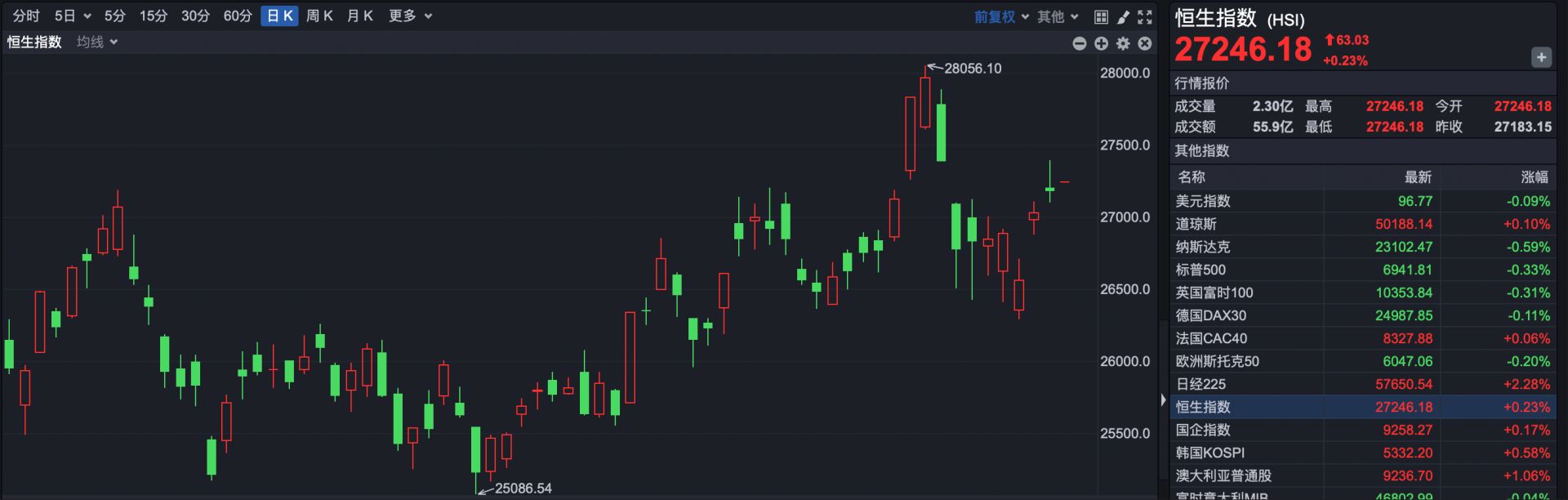
Market Overview - The Hong Kong stock market opened slightly higher on February 11, with the Hang Seng Index at 27,246.18 points, up 63.03 points, a gain of 0.23% [1] - The Hang Seng Tech Index opened at 5,462.70 points, increasing by 11.67 points, a rise of 0.21% [2] Company Focus - The stock of Zhipu AI (HK02513), referred to as the first large model stock, opened over 4% higher and has accumulated a gain of over 60% this week [3] - Zhipu's core competitive advantages include a fully self-developed technology system, leading model performance, an open-source ecosystem, and deep adaptation to domestic computing power. The company has a high proportion of R&D personnel at 74%, with a core team from Tsinghua KEG Laboratory, showcasing strong academic accumulation in natural language processing [5] - The GLM series has rapidly iterated, with GLM-4.7 performing exceptionally well in programming scenarios. The AutoGLM enables AI to autonomously operate smartphones and computer GUIs, marking a new paradigm in agent technology. Multi-modal capabilities cover text-to-image, text-to-video, and visual understanding, with CogView-4 and CogVideoX ranking highly in open-source evaluations. These technological advantages have been translated into practical applications across various sectors, including technology, finance, government, healthcare, and manufacturing [5] Other Company Updates - Shanghai Xiaonanguo (HK03666) saw a decline of over 16% in early trading. The company announced a strategic restructuring, confirming the temporary suspension of operations for 10 of its Shanghai restaurants. It clarified that claims regarding non-refundable deposits and prepaid cards were incorrect, as it is processing refunds for customers [7] - The market showed mixed performance among tech stocks, with Baidu, Kuaishou, and Bilibili rising over 1%, while Tencent fell over 1%. Innovative drug concept stocks were active, with Zai Lab rising over 3%, and automotive stocks also saw some increases, with BYD up over 1% [7] Market Outlook - CICC's latest view indicates that the recent pullback in the Hong Kong stock market is a result of weak fundamentals, concerns over tightening liquidity, and a decline in the attractiveness of Hong Kong's unique market structure. The overall credit cycle is experiencing turbulence, limiting the market index's potential, with the Hang Seng Index expected to range between 28,000 and 29,000 points [8] - In the short term, the market may have overreacted to various factors, including the nomination of Waller as the next Fed chair and concerns over AI bubbles and the collapse of old technology applications. There may be potential for upward correction after a pullback. In the medium term, a 3% to 4% growth in earnings for Hong Kong stocks is anticipated, which could drive the Hang Seng Index higher [8] - CICC suggests that the main investment focus should follow the direction of credit expansion, particularly in AI technology, cyclical sectors, consumption, and dividends, with AI technology and cyclical sectors being the primary focus of current credit expansion [8]
“我不是车企”——聚焦车企新一轮转型
Zhong Guo Qi Che Bao Wang· 2026-02-11 02:10
Core Viewpoint - The automotive industry is undergoing a significant transformation, with companies shifting their focus from traditional vehicle manufacturing to becoming AI technology firms, reflecting a broader trend towards integrating AI into their business models [1][5][10]. Group 1: Company Transformations - Li Auto is restructuring its organization to focus on "embodied intelligence," moving away from its previous identity of creating "mobile homes" and aiming to become one of the top three intelligent companies globally [3][4]. - XPeng Motors has set its sights on becoming an AI technology company, emphasizing its commitment to AI and autonomous driving as core components of its future strategy [3][4]. - Chery Automobile is transitioning from "Technology Chery" to a "Global AI Technology Company," showcasing its AI strategy and technological advancements [4][5]. Group 2: Industry Trends - The shift towards AI technology is not limited to new car manufacturers; traditional automakers are also accelerating their transformations, with companies like Geely integrating AI into their operations [4][5]. - The automotive market is experiencing intense competition, with over 160 brands in China, leading to a need for differentiation through AI technology to avoid price wars and product homogenization [7][8]. - The trend of transitioning to AI technology companies is becoming a survival strategy for automakers, as the traditional automotive business model faces challenges from rising costs and market saturation [10][11]. Group 3: Strategic Implications - The integration of AI into automotive products is seen as essential for creating competitive advantages and enhancing user experiences, with AI-driven innovations becoming a standard expectation in the industry [9][12]. - Companies are recognizing that the future of automotive value lies in software and AI technology rather than hardware, necessitating a shift in focus to maintain relevance in the evolving market [11][12]. - The transition to AI technology firms is viewed as a critical step for automakers to enhance their market positioning and adapt to the changing landscape of the automotive industry [13][14]. Group 4: Future Directions - The development of a "smart ecosystem" is a key goal for automotive companies, aiming to integrate vehicles with smart home and office technologies to provide seamless user experiences [15][16]. - The future automotive landscape will see companies not only manufacturing vehicles but also leveraging AI to create intelligent, interconnected platforms that meet evolving consumer needs [16].



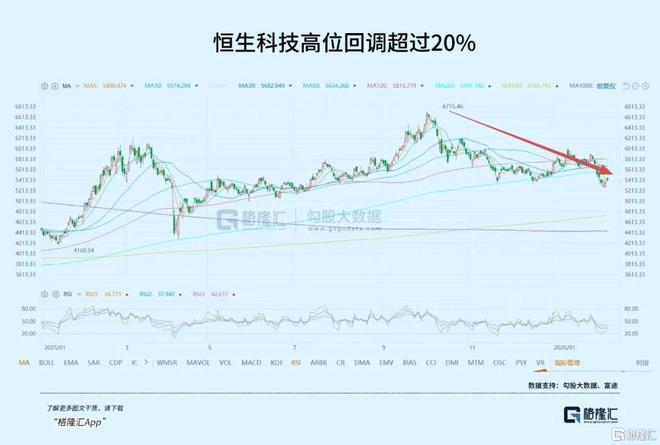
深度折价50%!引爆在即?
Ge Long Hui· 2026-02-09 12:32
Group 1 - The article discusses the recent rebound of the Hong Kong stock market, particularly in the technology sector, following a strong performance in the US stock market [3][4]. - The rebound is attributed to technical factors and reflects the resilience of the Hang Seng Technology Index, which is currently trading at a significant discount compared to the Nasdaq [5][9]. - The article highlights the potential for a substantial rebound in the Hong Kong tech sector, drawing parallels to last year's surge in Chinese tech stocks driven by valuation increases [6][12]. Group 2 - The current price-to-earnings (PE) ratio for the Nasdaq is 40 times, while the Hang Seng Technology Index stands at only 21 times, indicating a deep discount [9][12]. - The article suggests that narrowing the valuation gap between the Hang Seng Technology Index and the Nasdaq could lead to a 30% increase in stock prices, which would be significant for investors [13]. - Factors supporting this potential valuation increase include the rapid advancement of Chinese AI technology and the strong financial positions of major tech companies [14][15]. Group 3 - The article identifies key catalysts for potential valuation increases, including the resolution of macroeconomic uncertainties and improved foreign investment sentiment towards Chinese assets [23][24]. - It also mentions the easing of competitive pressures in certain industries, which could enhance profitability expectations for companies [26][28]. - The overall sentiment is that the Hang Seng Technology Index is in a position for upward movement, given the accumulation of positive factors and the current state of the market [28][31].