
AI算力需求

Search documents
“算力金属”伦锡月涨超过11%,行业协会发文倡议保持理性谨慎
2 1 Shi Ji Jing Ji Bao Dao· 2025-12-23 11:12
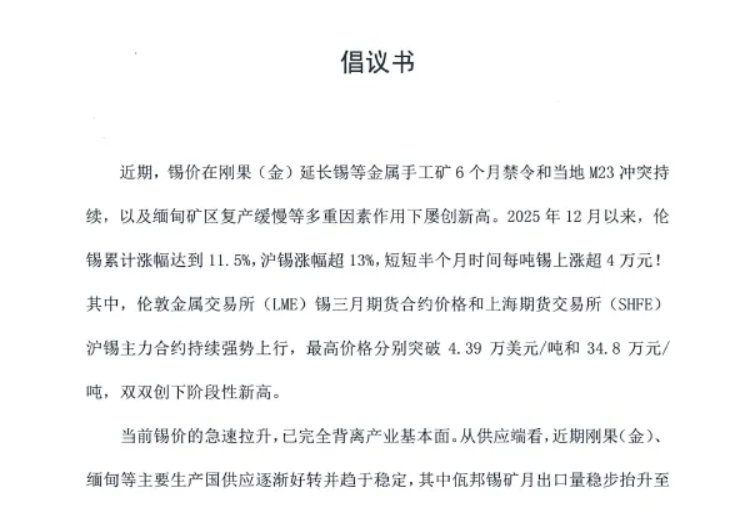
Core Viewpoint - The recent surge in tin prices, driven by supply constraints and geopolitical factors, has raised concerns within the industry, particularly affecting downstream companies that rely on tin for production [1][7]. Group 1: Price Trends and Market Dynamics - Tin prices have reached new highs, with LME tin increasing by 11.5% and SHFE tin by over 13% since December 2025, with a rise of over 40,000 yuan per ton in just half a month [3][5]. - The price of LME three-month tin futures and SHFE main contracts have both surpassed significant thresholds, reaching 43,900 USD per ton and 348,000 yuan per ton, respectively [5]. - The tin industry is experiencing a supply surplus of approximately 10,000 tons, with the recent price increase attributed more to market sentiment and capital flows rather than fundamental supply-demand dynamics [7]. Group 2: Supply and Demand Factors - Supply from major producing countries like the Democratic Republic of Congo and Myanmar is stabilizing, with domestic tin smelting capacity also being fully utilized, resulting in a production increase of 6.2% year-on-year [6]. - Despite growth in emerging sectors such as photovoltaics and automotive electronics, traditional demand remains stable, with global tin consumption expected to grow by nearly 3% in 2025, slightly below production growth [6]. Group 3: Impact on Industry Players - The rapid price increase has created significant pressure on downstream tin-consuming industries, such as solder, tinplate, and chemicals, leading to challenges in fulfilling long-term contracts and maintaining product quality [4][21]. - Companies like Yunnan Tin Company (000960), Huaxi Nonferrous Metals (600301), and Xingye Silver Tin (000426) are positioned differently within the market, with varying degrees of exposure to price fluctuations and potential earnings volatility [13]. - As of December 23, 2025, the stock prices of these companies have reflected the anticipated earnings growth due to rising tin prices, with annual increases of 103%, 127%, and 218% respectively [19]. Group 4: Industry Recommendations - The tin industry association has called for a rational and cautious approach from all market participants to avoid speculative behavior and to guide prices back to a reasonable range, emphasizing the need for a stable market mechanism [21].


优迅股份登陆科创板 国产光通信芯片加速崛起
Zhong Guo Jing Ying Bao· 2025-12-20 14:31
Core Viewpoint - Yuxun Technology Co., Ltd. has successfully listed on the Shanghai Stock Exchange's Sci-Tech Innovation Board, marking a significant milestone in the domestic optical communication chip industry and indicating progress in the localization of optical communication chips in China [1][2]. Company Overview - Yuxun Technology, established in 2003, focuses on the design and mass production of high-speed transceiver circuits and chips for optical communication, being one of the early Fabless manufacturers in this niche [2]. - The company raised 1.033 billion yuan through its IPO, with an initial share price of 51.66 yuan, and its market capitalization reached 18.456 billion yuan on the first trading day [1]. Market Dynamics - The global optical communication chip market is projected to grow from approximately $3.5 billion in 2024 to over $11 billion by 2030, driven by the demand for AI model training [4]. - In China, the optical chip market is expected to reach around 15 billion yuan in 2024, with continued rapid growth anticipated [4]. Competitive Landscape - The domestic optical communication chip market is characterized by a competition between international leaders and local companies, with U.S., Japanese, and European firms maintaining significant technological advantages in high-end optical chips [5][6]. - Yuxun Technology, along with other domestic firms like Guangxun Technology and Yuanjie Technology, is rapidly advancing to close the gap in high-end optical chip production [5]. Industry Trends - The demand for high-performance optical chips is increasing due to the growth of 5G networks, data center upgrades, and the explosion of AI computing needs [4][5]. - Despite the growth in domestic optical module manufacturing, there remains a reliance on imported high-end chips, particularly in the 25G and above segment [3][6]. Financial Performance - The A-share optical communication sector is performing well, with over half of the listed companies reporting profit growth, indicating a high level of market activity and demand [6].
VCSEL、EML、硅光、TFLN及Micro LED系列光芯片集成技术,谁将主导未来高速光互联赛道
势银芯链· 2025-12-12 02:31
Core Viewpoint - The rapid increase in AI computing demand is driving the adoption of optical modules, particularly 800G optical modules, as the mainstream configuration for AI data centers. The global optical module market is projected to reach $23.5 billion by 2025, with significant growth in both 800G and 1.6T modules [1]. Market Overview - The global shipment of 800G modules is expected to reach approximately 8 million units in 2024 and increase to around 20 million units in 2025. The shipment of 1.6T modules is projected to grow from 2.7 million units in 2024 to 4.2 million units in 2025 [1]. - The global optical chip market is anticipated to exceed $11 billion by 2030, with a compound annual growth rate (CAGR) of over 20%. However, the domestic production rate of high-speed optical chips (25G and above) in China remains low, indicating significant room for market substitution [1]. Technology Insights - Current optical chips primarily utilize EML (Electro-absorption Modulated Laser) and VCSEL (Vertical-Cavity Surface-Emitting Laser) technologies. EML offers advantages such as low cost, low frequency chirp, high modulation speed, and long-distance transmission, but has high manufacturing costs due to stringent production requirements [2][3]. - VCSEL is the mainstream optical chip for multi-module applications, characterized by its symmetrical circular light beam and low divergence angle, which facilitates efficient coupling to optical fibers. However, long-wavelength VCSELs face challenges in power output and manufacturing complexity [3][4]. Future Trends - As data centers transition to 400G/800G and higher speeds, the demand for more complex and power-hungry driving circuits and signal processing will increase, raising technical barriers. This has spurred the development of new optical chip integration technologies, including silicon photonic chips, thin-film lithium niobate chips, and Micro LED photonic chips [4][5]. - Silicon photonic integration is emerging as a key technology, leveraging existing CMOS processes to develop and integrate optical devices. It is expected to capture a market share of around 60% by 2030, up from approximately 30% in 2025 [5]. - Thin-film lithium niobate (TFLN) technology is recognized for its potential in modern photonics, offering ultra-wide bandwidth and low power consumption, making it suitable for harsh environments and high-speed optical modules [7][8]. - Micro LED technology, while primarily used in display applications, is being explored for optical communication, though it faces challenges in commercial viability due to technical bottlenecks [9][10].

爆SK海力士评估美股ADR上市
Sou Hu Cai Jing· 2025-12-10 01:41
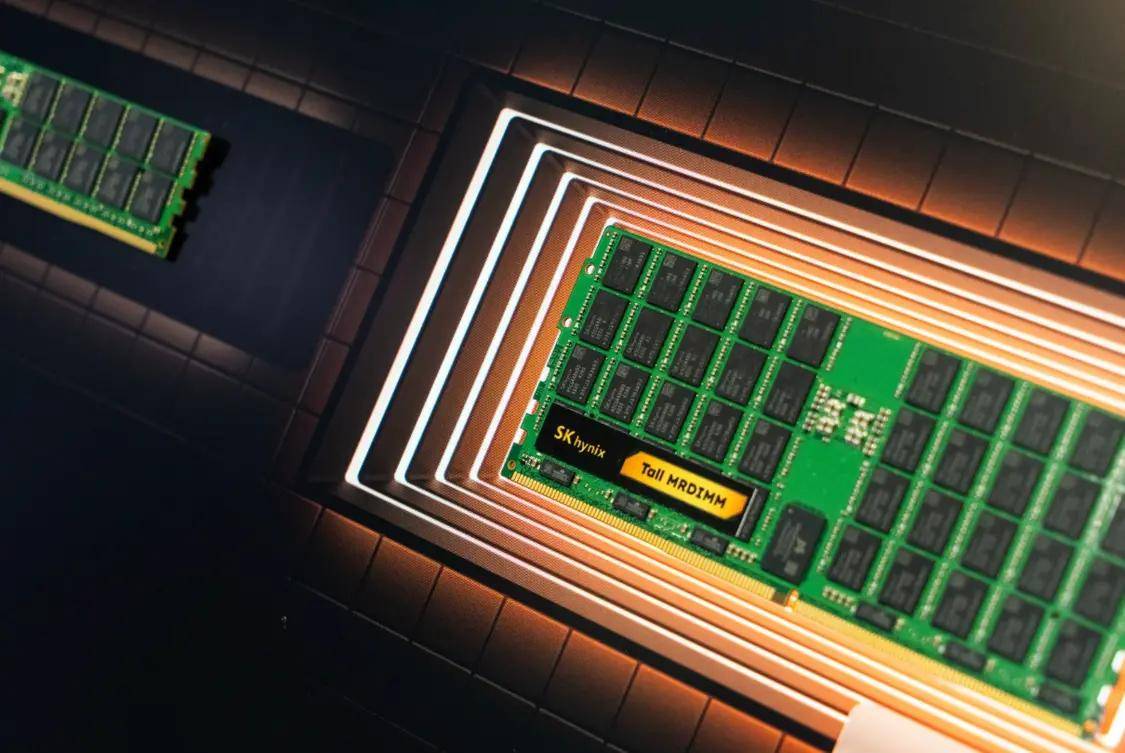
Core Viewpoint - SK Hynix is evaluating a significant capital operation, considering a potential listing on the New York Stock Exchange through American Depositary Receipts (ADR), aiming to address valuation gaps with U.S. peers like Micron Technology and expand international financing and investor reach [1][3]. Group 1: Company Actions - SK Hynix has submitted regulatory documents indicating a systematic assessment of various measures to enhance corporate value, including the feasibility of launching an ADR listing, while emphasizing that all proposals are still under discussion and no final decision has been made [3]. - The company has reportedly received formal proposals from multiple international investment banks, with an initial plan to offer approximately 2.4% of its circulating shares (around 17.4 million shares) for the ADR listing, which is expected to facilitate quicker access to the U.S. capital market ecosystem and reduce listing barriers and compliance costs [3]. Group 2: Market Reaction - Following the listing rumors, SK Hynix's stock price surged by 6.1% on Monday, marking the largest single-day increase since mid-November [4]. - The Korean exchange issued a risk warning, advising investors to remain cautious and to rationally assess the gap between market expectations and the company's actual progress [4]. Group 3: Industry Context - The evaluation for a U.S. listing comes at a critical time for the semiconductor industry, coinciding with a surge in AI computing demand and a rebound in memory prices [4]. - If the listing plan is realized, it could optimize the company's equity structure and valuation system, while injecting capital for technological research, capacity expansion, and global layout [4]. - The ongoing details of the plan, U.S. regulatory approvals, and changes in industry competition will influence the pace of this capital operation [4].
英伟达中国门 徒上市即巅峰:摩尔线程的国产替代能走多远?
3 6 Ke· 2025-12-09 00:43
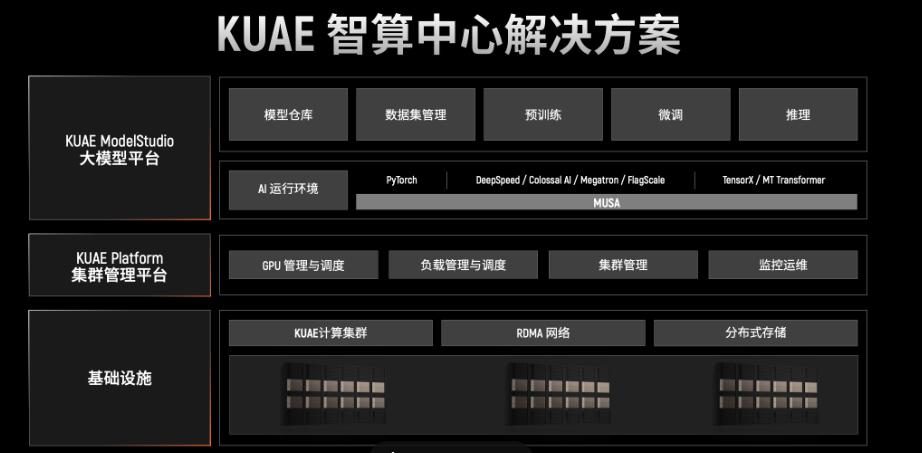
Core Viewpoint - Moores Threads has emerged as the "king of new stocks" in the A-share market, with its stock price soaring 468.78% on the first day of trading, reaching a market capitalization of over 300 billion yuan [1][2]. Company Overview - Founded by Zhang Jianzhong, a former Nvidia executive, Moores Threads aims to create a "full-function GPU" that integrates graphics rendering, AI computing, and scientific computing [2][3]. - The company has assembled a team of top talents from Nvidia, focusing on a unique technology route with its self-developed MUSA architecture [3][5]. Financial Performance - Moores Threads has experienced rapid growth since its establishment, securing significant financing and launching its first full-function GPU in 2021 [5][6]. - The company is projected to achieve revenues of 438 million yuan in 2024, earning the title of "Beijing unicorn" [6]. Market Position and Competition - Moores Threads is positioned as the "first domestic GPU stock," with its IPO application submitted in June 2025 and listing completed in December 2025 [7]. - The company faces significant competition from Nvidia and other established players, with notable gaps in technology and market presence [11][12]. Technology and Product Development - The MUSA architecture allows for compatibility with Nvidia's CUDA ecosystem, which is crucial for reducing developer migration costs [9][10]. - Moores Threads has developed a range of products, including the "Chunxiao" chip and gaming graphics card MTTS80, targeting various market segments [6][12]. Long-term Opportunities - The company aims to build a "full-scenario computing fusion ecosystem," positioning itself as a comprehensive computing platform in the domestic GPU market [17][19]. - With the increasing demand for integrated AI and graphics capabilities, Moores Threads is well-positioned to capitalize on emerging trends in AI, digital twins, and smart manufacturing [19][21]. Future Projections - The company plans to achieve profitability by 2027, similar to the trajectory of its competitor, Cambricon [11][14]. - Long-term goals include establishing a complete autonomous "Chinese GPU ecosystem" and becoming a global leader in full-function GPU supply [22].


行业比较周跟踪:A股估值及行业中观景气跟踪周报-20251207
Shenwan Hongyuan Securities· 2025-12-07 11:56
Valuation Summary - The overall valuation of A-shares as of December 5, 2025, shows the CSI All Share (excluding ST) PE at 21.1 times and PB at 1.8 times, positioned at the historical 77% and 39% percentiles respectively [2] - The Shanghai Stock Exchange 50 PE is at 11.9 times and PB at 1.3 times, at the historical 63% and 42% percentiles [2] - The CSI 300 PE is at 14 times and PB at 1.5 times, at the historical 62% and 32% percentiles [2] - The CSI 500 PE is at 32.4 times and PB at 2.2 times, at the historical 60% and 43% percentiles [2] - The CSI 1000 PE is at 46.5 times and PB at 2.4 times, at the historical 66% and 44% percentiles [2] - The National Index 2000 PE is at 59.5 times and PB at 2.6 times, at the historical 76% and 60% percentiles [2] - The ChiNext Index PE is at 39.8 times and PB at 5.1 times, at the historical 32% and 57% percentiles [2] - The Sci-Tech 50 PE is at 149.6 times and PB at 5.9 times, at the historical 95% and 62% percentiles [2] - The ChiNext Index/CSI 300 PE is at 2.8 times and PB at 3.5 times, at the historical 20% and 57% percentiles [2] Industry Valuation Comparison - Industries with PE valuations above the historical 85th percentile include Real Estate, Retail, Chemical Pharmaceuticals, and IT Services [2] - Industries with PB valuations above the historical 85th percentile include Electronics (Semiconductors) and Communications [2] - The Medical Services industry has both PE and PB valuations below the historical 15th percentile [2] Industry Sentiment Tracking New Energy - In the photovoltaic sector, prices continue to show weakness, with upstream polysilicon futures down 1.6% and spot prices stable [3] - Battery materials like cobalt and nickel saw increases of 2.2% and 0.4% respectively, while lithium hexafluorophosphate rose by 3.0% [3] Real Estate Chain - The price of rebar increased by 1.8%, while iron ore prices fell by 0.3% [3] - The national cement price index decreased by 0.4%, and glass prices showed mixed trends with a 0.7% increase in spot prices [3] Consumer Sector - The average price of live pigs increased by 0.1%, while wholesale pork prices decreased by 0.8% [3] - The wholesale price index for liquor saw a slight decrease of 0.06% [3] Midstream Manufacturing - Excavator sales in November 2025 increased by 13.9% year-on-year, with domestic sales up by 9.1% [3] Technology TMT - China's semiconductor sales in October 2025 grew by 18.5% year-on-year, with global semiconductor sales up by 27.2% [3] Cyclical Industries - The copper price increased by 4.4%, while Brent crude oil futures rose by 1.1% to $63.86 per barrel [3]
ETO Markets 外汇:甲骨文CDS飙升至危机高位,海量发债引爆警报
Sou Hu Cai Jing· 2025-12-03 09:51
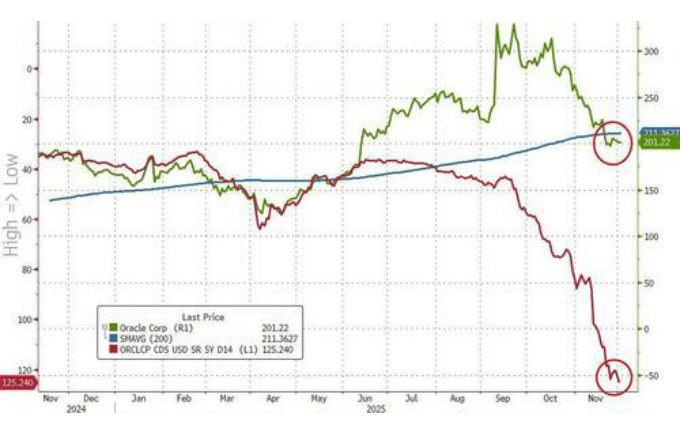
Group 1 - The core concern is that the surge in generative AI, driven by companies like Oracle, is leading to increased credit risk in the market, as indicated by the rising credit default swap (CDS) rates [2][3] - Oracle's 5-year CDS reached 128 basis points, the highest since March 2009, reflecting a significant increase of over two times since June [2] - Oracle's low credit rating of "BBB" amidst high debt levels makes it a focal point for market anxiety, with its CDS volume surging to approximately $5 billion, a 25-fold increase year-on-year [3] Group 2 - Concerns arise over Oracle's ability to sustain its debt issuance and investment cycle, as management hinted at potential revenue from AI but did not clarify cash flow projections [4] - Analysts predict that if Oracle raises an additional $20 billion to $30 billion in debt next year, its CDS could approach 200-250 basis points, nearing historical highs from the 2008 financial crisis [4] - The supply of investment-grade bonds is expected to reach a record $2.1 trillion by 2026, with technology and utility sectors dominating, leading to higher risk premiums for investors [6] Group 3 - The "winner-takes-all" nature of the AI race raises concerns about asymmetric returns for bondholders, who may face declining credit quality while missing out on equity-like returns [6] - Historical comparisons are made to the healthcare sector, which managed to stabilize spreads despite high leverage, but the uncertainty surrounding AI infrastructure returns poses a greater risk [6] - The current CDS pricing serves as a warning signal, indicating that the market is beginning to reprice AI-related debt amid concerns over future cash flows and potential risks [7]

半导体强势领跑2025年A股市场:行业指数大涨36%,十强亮相
和讯· 2025-12-03 09:10
Core Viewpoint - The semiconductor sector has emerged as one of the most dynamic segments in the A-share market since 2025, driven by surging AI computing demand, accelerated domestic supply chain autonomy, and a global semiconductor cycle recovery, marking a critical window for high-quality development in China's semiconductor industry [2]. Group 1: Market Performance - The semiconductor sector's structure in 2025 shows that the midstream and upstream segments are leading, with the Semiconductor Equipment Index rising approximately 47% and the National Gold Semiconductor Equipment 20 Index increasing by about 62%, reflecting strong market expectations for domestic semiconductor equipment replacement [3]. - The digital chip design sector also performed well, with the Shenwan Digital Chip Design Index increasing by around 56%, serving as a core driver for the sector's upward movement [3]. Group 2: Individual Company Performance - Companies focusing on core technology breakthroughs, such as Saiwei Electronics and Chipone Technology, achieved over 180% growth, indicating sustained market optimism in areas like analog chips, IP licensing, and consumer-grade storage [4]. - In terms of trading activity, companies like Cambrian-U, SMIC, and Haiguang Information dominated the market with a combined trading volume exceeding 4.1 trillion yuan, highlighting institutional and market interest in domestic AI chips and advanced manufacturing processes [4]. Group 3: Semiconductor Company Value Rankings - The "2025 China Semiconductor Listed Company Value List" was released, ranking companies based on a comprehensive study of 181 listed firms, focusing on research innovation, financial health, growth potential, and market performance [5]. - The report indicates that companies like Haiguang Information, Cambrian, and others are leading in investment value, showcasing the sector's potential [5]. Group 4: Detailed Analysis of Semiconductor Companies - The analysis of 181 listed semiconductor companies revealed that firms like Haiguang Information, Zhongwei Company, and Guoli Microelectronics are in the high-scoring group for research innovation, indicating significant breakthroughs in key technology areas such as CPU/GPU, EDA, and etching equipment [10]. - Financial health scores for companies like SMIC and Cambrian reflect stable business models and strong cash flow, essential for maintaining strategic resilience amid increasing industry competition [11]. - Companies such as Cambrian and Guoli Microelectronics show strong growth potential, indicating that sectors like AI chips and EDA are becoming focal points for capital and capacity deployment [11]. Group 5: Sector Performance Comparison - The semiconductor sector has demonstrated the strongest overall competitiveness, with an average score leading all segments, while the hardware equipment sector follows closely due to China's robust supply chain and production capabilities [16]. - The semiconductor industry, supported by policy and capital, exhibits the highest comprehensive value creation potential among various sectors [17].




超跌反弹时,债市波段有何规律
2025-12-01 00:49
Summary of Key Points from the Conference Call Industry Overview - The conference call primarily discusses the bond market dynamics, particularly focusing on the fourth quarter trends and potential investment opportunities in various types of bonds [1][2][3]. Core Insights and Arguments 1. **Market Characteristics**: The bond market in Q4 is characterized by a "weak early, strong late" pattern, with limited support for significant interest rate increases due to conservative institutional behavior [2][3]. 2. **Investment Opportunities**: There is a potential for a rebound in the bond market, particularly around the 1.85 support level, with short-term opportunities in high-rated credit bonds and perpetual bonds [1][5]. 3. **Historical Context**: Historical data suggests that the current market conditions present a chance for a rebound rather than a trend reversal, with economic data and issuance volumes having minimal impact on the bond market [2][3]. 4. **Technical Indicators**: The 30-year and 10-year government bond yield spread is nearing a bottom, indicating limited further downside potential. The technical patterns in government bond futures require confirmation through volume and price indicators [4][6]. 5. **Market Sentiment**: Recent announcements regarding government bond transactions and new public offering regulations are stabilizing market sentiment, although they are not expected to significantly enhance it [8]. Important but Overlooked Content 1. **Credit Bond Dynamics**: The supply of convertible bonds is expected to remain tight in 2025, with a projected issuance of over 2 billion, which may lead to a scarcity of convertible bonds and a shift in valuation logic towards equity-like characteristics [11][14]. 2. **ETF Market Challenges**: The narrowing of excess spreads in the Sci-Tech bond market is attributed to valuation adjustments rather than market rumors, with the growth of Sci-Tech ETFs facing challenges due to high foundational investor ratios and limited expansion potential [9][10]. 3. **Investment Strategy Recommendations**: For credit products like city investment bonds and Sci-Tech products, a focus on trading strategies rather than simple allocations is advised, utilizing price differences and arbitrage opportunities to enhance returns [12]. 4. **Future Market Indicators**: Key indicators to monitor include absolute and relative yield levels, particularly the 1.85 support level and the yield spread between 30-year and 10-year bonds, as well as the technical patterns in government bond futures [6][7]. Conclusion The bond market is currently experiencing a phase of potential rebound rather than a trend reversal, with specific investment opportunities in high-rated credit bonds and perpetual bonds. Monitoring key technical indicators and market sentiment will be crucial for navigating the upcoming months.
证券研究报告、晨会聚焦:金工吴先兴:12月A股指数调样会带来哪些投资机会-20251130
ZHONGTAI SECURITIES· 2025-11-30 12:54
Group 1: Investment Opportunities in A-Share Index Adjustment - The upcoming December index adjustment is expected to create significant investment opportunities, particularly for stocks with a positive impact coefficient above 2, such as Tapa Group, Jiangzhong Pharmaceutical, and Zhengbang Technology [3][4] - The report highlights the importance of focusing on stocks that are newly added to major indices, with particular attention to Guangqi Technology and Zhongtian Technology, which are expected to experience substantial liquidity changes [4] - The passive fund outflows from stocks like Zhongji Xuchuang and Xinyi Sheng are projected to be limited due to their strong liquidity, despite their weights being reduced in various indices [4][5] Group 2: Animation and Film Industry Insights - The film industry is experiencing a recovery, with total box office revenue expected to exceed 50 billion yuan, driven by high-quality imported films and a resurgence in audience engagement [6][7] - The market is shifting towards high-quality content, with a notable increase in the contribution of narrative films to box office performance, indicating a growing demand for deep content [7] - Regulatory policies are expected to support the film industry, with initiatives aimed at expanding the understanding of mainstream themes and enhancing the supply of animated films and imported content [7][8] Group 3: Public REITs Market Development - The introduction of commercial real estate REITs marks a significant shift in China's public REITs market, moving from a focus solely on infrastructure to a dual focus on infrastructure and commercial real estate [8][9] - The potential market size for commercial real estate REITs is estimated to be between 800 billion and 1.5 trillion yuan, indicating a substantial opportunity for asset securitization in the commercial property sector [9][10] - The development of commercial real estate REITs is expected to enhance the liquidity and operational efficiency of the real estate market, addressing long-standing challenges in asset management [10][11]