美元指数

Search documents
美元指数今年以来跌超9%
Sou Hu Cai Jing· 2025-12-18 15:35
本报记者 韩昱 近期,美元指数再次呈现出走弱态势。 陕西巨丰投资资讯有限责任公司高级投资顾问朱华雷也对记者分析,近期美元指数走弱,主要是因为美 联储的再度降息。12月11日,美联储完成年内第三次降息,将利率下调25个基点。利率的下降直接导致 美债收益率走低,美元资产的吸引力削弱,直接拖累美元指数下行。 拉长时间看,截至12月17日收盘,美元指数年内下行幅度已达到9.30%。 2026年美元指数将走出怎样的行情?明明认为,明年美元指数偏弱运行的趋势或将延续。基本面方面, 美国就业市场持续走弱,经济动能也正在放缓。 "11月下旬以来,美国披露的经济数据明显走弱,叠加美联储官员释放鸽派信号,推动市场对于美联储 降息预期再度升温,美元指数前期的反弹态势告一段落并转为持续下行。"中信证券首席经济学家明明 在接受《证券日报》记者采访时表示。 如明明所述,近期美国发布的一系列经济数据均呈现出走弱态势。比如,美国劳工部公布的最新数据显 示,美国11月份非农新增就业6.4万人,略高于预期,但失业率意外升至4.6%,创2021年9月份以来新 高。同时,10月份就业大幅下修10.5万人,8月份至9月份合计下修3.3万人;11月份薪 ...
人民币对美元即期汇率升至7.04,创14个多月新高
Sou Hu Cai Jing· 2025-12-18 08:01
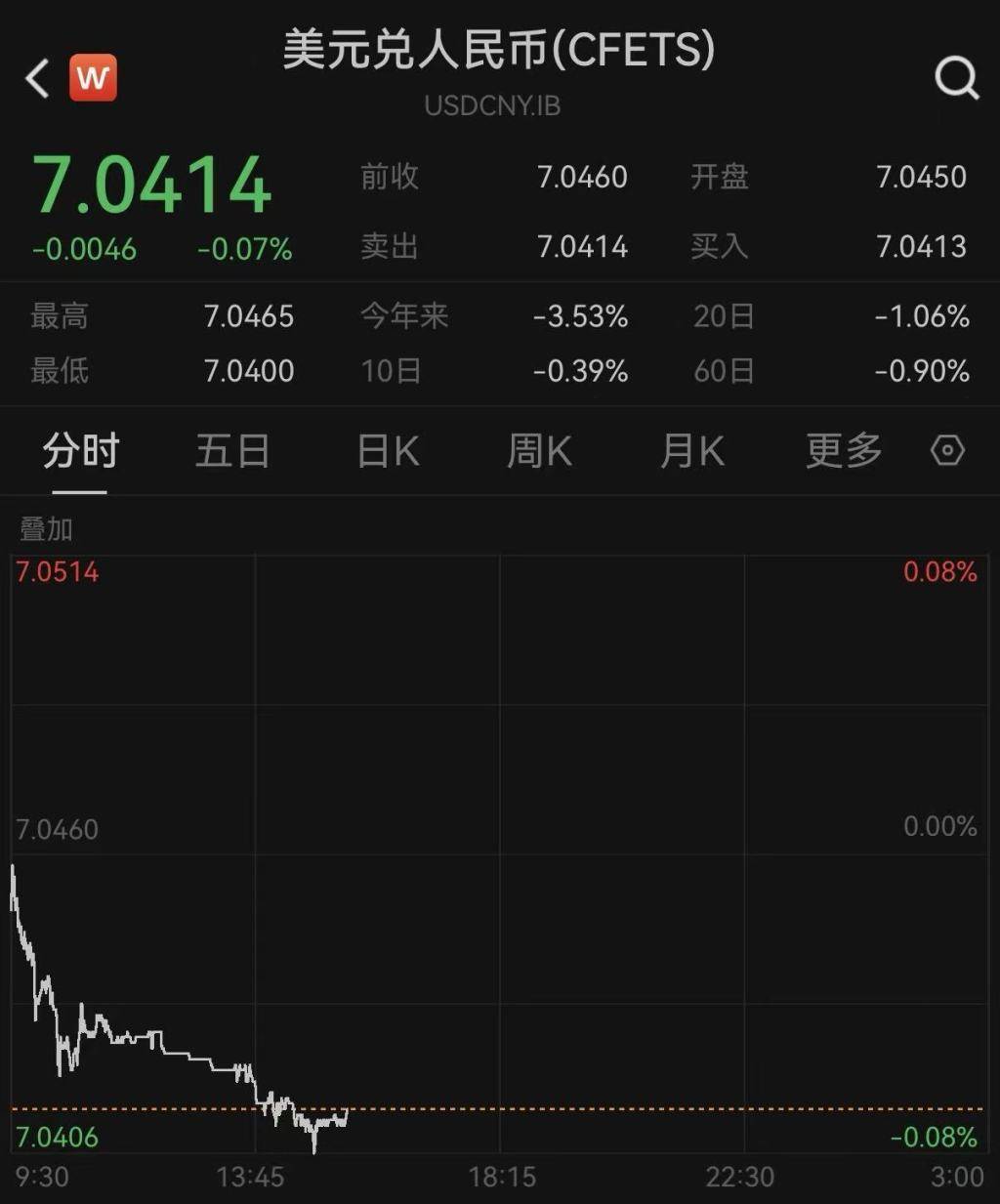
时隔一个交易日,人民币对美元即期汇率再度刷新逾14个月新高。 12月18日,人民币对美元即期汇率开盘报7.0450,盘中最高升至7.0400,突破前期高点(12月16日盘中最高升至7.0410),创下2024年10月以来的 14个多月新高。 | < W | | | 美元兑人民币(CFETS) | | Q | | --- | --- | --- | --- | --- | --- | | USDCNY.IB | | | | | | | 7.0414 | | 前收 | 7.0460 | 开盘 | 7.0450 | | -0.0046 | -0.07% | 英出 | 7.0414 | 买入 | 7.0413 | | 最高 | 7.0465 | 今年来 | -3.53% | 20日 | -1.06% | | 最低 | 7.0400 | 10日 | -0.39% | 60日 | -0.90% | | 分时 | 五日 | 日K | 周K | 月K | 更多 ◎ | | 叠加 7.0514 | | | | | 0.08% | | 7.0460 | | | | | 0.00% | | 7.0406 | | | | | -0. ...

年度跌宕创纪录,美元这一年发生了什么?
Ren Min Ri Bao Hai Wai Ban· 2025-12-18 02:52
Group 1 - The US dollar index has been on a downward trend since the beginning of the year, with a 10.8% drop in the first half, marking the largest decline since 1973 [1] - The decline in the dollar index reflects a shift in global investor attitudes towards dollar assets, indicating a gradual erosion of the dollar's "privileged halo" as a dominant and safe-haven asset [1][2] - Predictions suggest that the dollar index will continue to decline, with major banks forecasting a further drop of about 3% by the end of 2026 [3][4] Group 2 - The attractiveness of US dollar assets has diminished, with significant sell-offs in US Treasury bonds following the introduction of "reciprocal tariffs" in April 2025, leading to a loss of investor confidence [3][5] - The US labor market's weakness and rising unemployment rates are contributing to the bearish outlook on the dollar, with the unemployment rate reaching 4.6% in November, the highest since October 2021 [4][5] - Political factors are also influencing the independence of the Federal Reserve's monetary policy, raising concerns about potential aggressive easing measures that could further weaken the dollar [5][6] Group 3 - The dollar's status as the world's dominant currency is facing unprecedented challenges, with its share in global foreign exchange reserves dropping to 56.32%, the lowest in 30 years [7] - Experts highlight that the decline of the dollar's dominance could lead to increased instability in the global economy and financial markets, as investors seek to hedge against currency risks [6][7] - The long-term outlook suggests a shift towards a more diversified currency system, with potential growth for other international currencies and assets like gold [9][10]
市场对CPI“冷却”? 金价高位震荡微跌
Jin Tou Wang· 2025-12-18 02:13
【要闻速递】 在过去三年中,月度消费者价格指数(CPI)一直是美国股票交易员关注的焦点。然而,最近投资者对 即将公布的11月通胀数据的态度发生了显著变化。他们不再像以前那样紧张不安地等待数据公布,而是 以一种相对漠然的态度面对。 这种市场情绪的转变有其合理之处。首先,美联储近期似乎更关注劳动力市场的疲软信号,而非通胀率 的小幅波动。其次,原定于12月10日发布的11月CPI报告因政府停摆而推迟至周四出炉,这导致市场对 该数据的可靠性产生了疑虑。此外,由于缺少10月的数据,这份CPI报告无法全面反映整体通胀情况。 尽管存在这些不确定性因素,但大多数分析师仍预计11月的CPI同比涨幅将保持在3%左右,这与市场预 期相符。然而,如果数据出现大幅超出或低于预期的情况,可能会对市场产生一定影响。例如,若数据 达到3.5%,可能会让交易员措手不及;反之,若数据大幅好于预期——比如2.7%或更低——则可能被 视为积极意外。 除了经济基本面因素外,政治因素也在一定程度上影响了市场对CPI数据的关注程度。随着美联储主席 鲍威尔的任期将于明年5月结束,其继任者预计将采取更加宽松的货币政策以迎合美国总统特朗普的要 求。这使得一些交 ...
人民币大涨!重回“6时代”?
Sou Hu Cai Jing· 2025-12-18 01:51
(来源:船务资讯) 来源:市场资讯 近期外汇市场上,人民币对美元汇率表现强势,呈现持续升值态势。12月16日,在岸与离岸人民币对美 元汇率双双走强,均突破7.05关口。其中,离岸人民币汇率盘中最高升至7.0358,在岸人民币汇率盘中 最高触及7.0417,两者均创下自2024年10月8日以来的新高,市场关注点逐渐聚焦于人民币能否进一步 逼近乃至突破"7.0"这一重要心理关口。 近期走强的主要原因 政策层面的引导也为汇率稳健运行奠定了基础。市场观察到,尽管人民币市场汇率快速上升,但央行每 日设定的人民币中间价调整幅度相对温和。这表明当前政策方向旨在维持汇率在合理均衡水平上的基本 稳定,允许市场力量驱动人民币适度升值,同时避免形成单边的升值或贬值预期。从全年整体表现来 看,人民币汇率走出了渐进升值的轨迹,截至12月15日,离岸人民币年内累计升值幅度约为4%。 市场关注点与短期展望 随着人民币汇率不断接近"7.0"关口,市场对其后续走势讨论热烈。综合机构观点来看,在年底结汇需 求支撑、美元偏弱以及稳健的汇率政策共同作用下,人民币短期内大概率将维持偏强运行格局。存在观 点认为,在季节性因素影响下,汇率阶段性突破"7. ...
格林大华期货早盘提示:贵金属-20251218
Ge Lin Qi Huo· 2025-12-18 01:44
Report Summary 1) Report Industry Investment Rating - The report gives a bullish rating for gold and silver in the non-ferrous and precious metals sector [1] 2) Core Viewpoints - Precious metals are short - term strong, and long - position holders should continue to hold [1] 3) Summary by Related Content Market Performance - COMEX gold futures rose 0.90% to $4371.40 per ounce, and COMEX silver futures rose 4.92% to $66.44 per ounce. Shanghai gold closed up 0.53% at 982.48 yuan per gram, and Shanghai silver rose 3.93% to 15,594 yuan per kilogram [1] Important Information - As of December 17, the holdings of the world's largest gold ETF, SPDR Gold Trust, increased by 0.86 tons to 1052.54 tons. The holdings of the world's largest silver ETF, iShares Silver Trust, remained unchanged at 16018.29 tons [1] - According to CME's "FedWatch", the probability of the Fed cutting interest rates by 25 basis points in January next year is 24.4%, and the probability of keeping interest rates unchanged is 75.6%. By March next year, the probability of a cumulative 25 - basis - point rate cut is 44.4%, the probability of keeping interest rates unchanged is 46%, and the probability of a cumulative 50 - basis - point rate cut is 9.5% [1] - The eurozone's November CPI increased 2.1% year - on - year (expected 2.2%, previous value 2.1%); November CPI decreased 0.3% month - on - month (expected 0.3% decrease) [1] - US media reported that the US and Russia will hold talks on the Russia - Ukraine conflict in Miami this weekend [1] Market Logic - The seasonally adjusted non - farm payrolls in the US increased by 64,000 in November, higher than expected. In October, non - farm employment decreased by 105,000 month - on - month (market expected a decrease of 25,000). The US unemployment rate in November was 4.6%, the highest in four years. After the release of the non - farm data, the market's expectation of a Fed rate cut in January next year changed little [1] - On December 17, the US dollar index rose and then fell, finally closing up 0.18% at 98.40. The silver inventory of the Shanghai Gold Exchange has been falling for the past three months, and the COMEX silver inventory has been decreasing since October. Tight silver supply has driven silver prices to rise continuously. On December 17, COMEX gold rose slightly, and COMEX silver rose sharply to a new high [1] Trading Strategy - Precious metals are short - term strong, and long - position holders should continue to hold [1]
美元这一年(环球热点)
Ren Min Ri Bao Hai Wai Ban· 2025-12-17 22:49
Core Viewpoint - The US dollar index has been on a downward trend since the beginning of the year, with a 10.8% drop in the first half, marking the largest decline since 1973, reflecting a shift in global investor attitudes towards dollar assets [2][3]. Group 1: Dollar Index Trends - The dollar index, which measures the dollar against six major currencies, has seen a decline of approximately 6.5% since the end of last year, with predictions that 2025 could be the worst year for the dollar since 2017 [3]. - The Bloomberg dollar spot index has dropped nearly 8% this year, marking the largest annual decline in nearly nine years [3]. - Analysts predict that the dollar index will continue to decline, with expectations of a further drop of about 3% by the end of 2026 [4]. Group 2: Economic Factors Influencing the Dollar - The decline in the dollar index is attributed to a combination of factors, including a weakening US labor market, with the unemployment rate rising to 4.6%, the highest level since October 2021 [6]. - The Federal Reserve's monetary policy is under scrutiny, as the need for a more accommodative stance conflicts with persistent inflation pressures [6][7]. - The US government's fiscal situation, characterized by record deficits and rising debt, has led to a downgrade in the country's credit rating, further impacting confidence in the dollar [7]. Group 3: Global Implications of Dollar Weakness - The decline of the dollar index may alleviate currency depreciation pressures faced by emerging markets, allowing for more autonomous monetary policies [8]. - A weaker dollar could lead to higher prices for commodities priced in dollars, while also increasing liquidity in the global market, potentially driving capital towards emerging markets [8]. - The International Monetary Fund (IMF) reports a decrease in the dollar's share of global foreign exchange reserves, dropping from 57.79% to 56.32%, the lowest in 30 years [9][10]. Group 4: Future Outlook - Experts caution against concluding that the dollar is in absolute decline, noting that potential for a rebound exists if inflation rises or economic data improves [11]. - The evolving global trade and financial order may lead to a reduced reliance on the dollar, with other currencies potentially gaining prominence [11].
人民币对美元汇率再创新高 机构预计2026年有望保持双向波动
Sou Hu Cai Jing· 2025-12-17 15:08
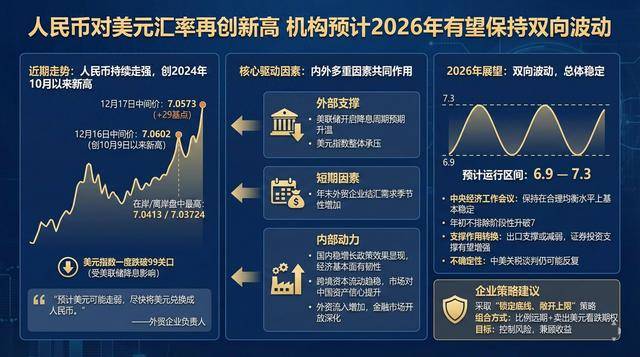
Core Viewpoint - The recent strengthening of the RMB against the USD is attributed to multiple internal and external factors, including expectations of a US interest rate cut and seasonal demand for currency exchange among export enterprises [2][3]. Group 1: Currency Exchange and Market Dynamics - Dongguan Xile Toy Co., Ltd. has reduced its USD holdings and is quickly converting USD to RMB after export transactions due to expectations of a weaker USD [2]. - On December 17, the RMB's central parity rate against the USD was reported at 7.0573, an increase of 29 basis points from the previous trading day [2]. - The RMB's onshore and offshore rates reached new highs since October 2024, with the onshore rate peaking at 7.0413 and the offshore rate at 7.03724 [2]. Group 2: Economic Factors Influencing RMB Strength - The market's anticipation of the Federal Reserve's interest rate cuts has placed downward pressure on the USD index, providing support for non-USD currencies, including the RMB [3]. - Domestic policies aimed at stabilizing growth are showing positive effects, enhancing confidence in Chinese assets and stabilizing cross-border capital flows [3]. - Seasonal increases in foreign trade enterprises' demand for currency exchange have also contributed to the short-term rise in RMB demand [3]. Group 3: Future Outlook on RMB Exchange Rate - Analysts predict that the RMB may continue to appreciate against the USD, with potential for the exchange rate to temporarily exceed 7 due to seasonal demand [4]. - By 2026, the RMB's exchange rate is expected to exhibit two-way fluctuations while maintaining overall stability, with a projected central rate increase of 2%-3% compared to 2025 [4]. - Companies are advised to adopt strategies that lock in exchange rates while allowing for potential gains from RMB appreciation and fluctuations [4].
山金期货贵金属策略报告-20251217
Shan Jin Qi Huo· 2025-12-17 11:09
投资咨询系列报告 山金期货贵金属策略报告 更新时间:2025年12月17日16时33分 一、黄金 报告导读: 今日贵金属震荡偏强,沪金主力收涨0.42%,沪银主力收涨5.05%,铂金主力收涨7%,钯金主力收涨涨6.99%。逻辑:①核心逻 辑,短期避险方面,贸易战避险消退,地缘异动风险仍在;美国就业走弱通胀温和,降息预期放缓。②避险属性方面,美欧考虑停 火后向乌克兰提供安全保护,德总理称必要时可对俄军动武。中美经贸磋商成果共识公布。中东等地缘异动风险仍存。③货币属性 方面,美国11月就业反弹超预期,失业率升至四年高位。美联储在重重分歧中下调利率,暗示将暂停行动明年或仅降息一次。鲍 威尔指出,美联储的利率政策已处于良好位置,可以应对未来经济走势,但他拒绝就近期是否会再次降息提供指引。目前市场预期 美联储26年1月不降息概率维持在80%附近,下次降息或到4月。美元指数和美债收益率震荡偏弱;④商品属性方面,白银受到供 应偏紧支撑。铂金氢能产业铂基催化剂需求预期强劲。钯金短期需求仍有韧性,长期面临燃油车市场结构性压力。CRB商品指数震 荡偏弱,人民币升值利空内价格。⑤预计贵金属短期金弱银强,铂钯上行,中期高位震荡,长期 ...
港股异动 | 黄金股午后上扬 大摩预计降息将持续 黄金有望继续获宏观层面支持
Zhi Tong Cai Jing· 2025-12-17 06:25
消息面上,12月美联储议息会议如期降息25bp,但联储内部对于后续降息节奏的分歧较大,本次利率决 议共有三个反对票,联储理事米兰认为应降息50bp,两位地方联储主席主张不降息。大摩最新研究报告 指出,预计降息将持续,美元指数将重新走弱。大摩认为,黄金有望继续获得宏观层面的支持,到2026 年第四季度金价或将达到每盎司4,800美元。 智通财经APP获悉,黄金股午后上扬,截至发稿,赤峰黄金(06693)涨3.83%,报31.46港元;山东黄金 (01787)涨3.48%,报3.49港元;灵宝黄金(03330)涨2.9%,报18.08港元;紫金矿业(02899)涨2.73%,报 33.94港元。 华安基金认为,展望后市,美联储仍处于降息大周期,若鸽派主席任选,美联储降息节奏或更加激进, 有望利好黄金。宽货币之外,美国也处于宽财政阶段,美债偿本付息压力下的信用风险延续,全球央行 持续购买黄金以分散外汇储备。货币财政双宽松的趋势下,仍看好黄金中长期配置价值。 ...