
新能源转型

Search documents
一汽解放(000800) - 000800一汽解放投资者关系管理信息20250825
2025-08-25 11:38
Group 1: Company Overview - In the first half of 2025, the company maintained the leading market share in the domestic heavy-duty truck sector, achieving revenue of 28.079 billion yuan, a decrease of 23.00% year-on-year; net profit attributable to the parent company was 0.20 billion yuan, down 96.12% year-on-year [2] - The overseas market, excluding Eastern Europe, saw significant growth in Southeast Asia, West Asia, and Northwest Africa [2] - The company is focusing on enhancing after-market services and financial growth points to improve revenue generation capabilities, with a quarter-on-quarter increase in gross margin [2] Group 2: Policy Impact and Market Trends - The "old-for-new" policy is expected to generate additional orders, primarily for the replacement of National IV vehicles, and will also boost demand for natural gas heavy-duty trucks [3] - Sales of natural gas heavy-duty trucks are influenced by oil and gas price fluctuations, with an anticipated increase in demand supported by upcoming policies [3] - The company reported a year-on-year sales increase starting in July, indicating a positive trend [3] Group 3: New Energy Business - The new energy business experienced significant year-on-year growth, entering a critical phase of market penetration, with single-unit contributions expected to improve as market demand expands [3] - The focus is shifting from price to product quality among customers, particularly in the medium to long-distance transportation sector [3] Group 4: International Business Expansion - The company achieved rapid sales growth in Africa, Southeast Asia, and Latin America, with a balanced development of overseas exports [4] - Future strategies include accelerating market entry into potential regions, focusing on state-owned enterprises involved in the "Belt and Road" initiative, and enhancing service and financial support for overseas operations [4] Group 5: After-Market Services - The after-market business is anticipated to provide new revenue streams, leveraging the large existing vehicle base in the domestic market [5] - The company aims to offer more parts and services to ensure safe and economical vehicle usage, potentially enhancing profit levels [5] Group 6: Pricing Strategy - In response to the "anti-involution" initiative proposed in May 2025, the company is committed to high-quality development and has maintained a high cost-performance product positioning since early 2025 [6] - The company is focusing on quality improvement and additional services rather than price competition to protect user rights [6]

华为拿下红旗
盐财经· 2025-08-25 09:41
Core Viewpoint - The collaboration between Hongqi and Huawei is expected to enhance Hongqi's market position and product offerings, particularly in the high-end vehicle segment, leveraging Huawei's technology solutions [4][10][20]. Group 1: Collaboration Details - Hongqi and Huawei will launch a new model in 2024 that incorporates Huawei's full-stack solutions, including advanced driving and smart cabin technologies [4][6]. - The first model from this collaboration is the "Hongqi 9 Series," although the specific type (sedan, SUV, or MPV) remains unclear [6]. - This partnership is seen as a strategic move for Hongqi to improve its market presence, especially given its current reliance on lower-priced models [10][12]. Group 2: Market Position and Challenges - Despite being positioned as a high-end brand, Hongqi's main sales come from lower-priced models, indicating a disconnect between brand perception and market performance [10][12]. - In 2024, Hongqi's electric vehicle sales accounted for only 28% of total sales, highlighting challenges in its transition to electric mobility [12]. - The reliance on the ride-hailing market for sales has limited Hongqi's brand premium, suggesting that without its historical significance, it might struggle to differentiate itself from competitors [15][16][17]. Group 3: Industry Trends - All eight major state-owned car manufacturers in China have adopted Huawei's intelligent vehicle solutions, indicating a growing trend towards collaboration with Huawei in the automotive sector [25][26]. - The competitive landscape among domestic car manufacturers is intensifying as they all seek to leverage Huawei's technology to gain market advantages [41][42]. - There are indications that more car manufacturers are considering partnerships with Huawei, reflecting a shift in the industry dynamics [42][43].

日系车为何不赚钱了?
Hu Xiu· 2025-08-25 07:50
Core Viewpoint - Japanese automakers are experiencing significant profit declines in the first quarter of the fiscal year 2025, with all three major companies facing various levels of financial pressure due to external factors such as U.S. tariffs and internal challenges in adapting to market trends. Group 1: Financial Performance - Toyota reported a decrease in operating profit by 11% to 1.17 trillion yen, and net profit fell by 37% to 841.4 billion yen despite an increase in sales and revenue [2] - Honda's net profit was halved, with sales revenue at 5.34 trillion yen, down 1.2%, and operating profit decreased by 49.6% to 244.17 billion yen [3] - Nissan faced the worst situation, reporting a revenue of 2.7069 trillion yen, down from 2.9984 trillion yen, and a net loss of 115.7 billion yen compared to a net profit of 28.6 billion yen in the previous year [4] Group 2: Impact of U.S. Tariffs - The decline in profits for the Japanese automakers is largely attributed to the U.S. government's tariff measures, which increased tariffs on Japanese imports to 25% from 2.5% [4] - Toyota expects the tariffs to reduce its operating profit by 1.4 trillion yen for the fiscal year, with a reduction of 450 billion yen in the first quarter [5] - Honda indicated that the U.S. tariff policy led to a decrease of approximately 125 billion yen in its operating profit for the first fiscal quarter [5] Group 3: Market Challenges - The seven major Japanese automakers anticipate a combined operating profit reduction of about 2.67 trillion yen for the fiscal year 2025, which is over 30% of their previous year's operating profit [6] - The appreciation of the yen is also expected to significantly impact profits, with Toyota estimating a reduction of 725 billion yen due to currency fluctuations [6] - Japanese automakers are lagging in the electric vehicle sector, facing increasing competition in the Chinese market, which is the largest automotive market globally [7][8] Group 4: Sales Performance in China - Japanese brands' retail market share in China was 12.9% in July, remaining flat year-on-year but halved from peak levels, indicating a decline in brand influence [9] - Honda and Nissan continued to see sales declines in China, with Honda's sales down 24.2% to 315,200 units and Nissan's down approximately 17.6% to 279,600 units [10] - In contrast, Toyota's sales in China increased by 6.8% to 837,700 units, marking its first year-on-year growth in four years, attributed to government incentives and strong sales of hybrid and new electric models [11][12] Group 5: Strategic Adjustments - To adapt to market changes, Toyota is increasing its investment in electric vehicles in China, including establishing a wholly-owned electric vehicle and battery company [13] - Nissan launched its first self-developed electric model, the N7, in China, achieving significant sales shortly after its release [13] - Honda announced a significant reduction in its planned investment for electric vehicles, cutting it from 10 trillion yen to 7 trillion yen due to poor market response to its new electric models [13]


(活力中国调研行)“绿”动草原钢城——包头新能源转型进行时
Zhong Guo Xin Wen Wang· 2025-08-25 03:25
Core Insights - Baotou, an old industrial city, is undergoing a green transformation with over 50% of its new energy installed capacity as of July 2023, and a cumulative energy intensity reduction of approximately 35% during the first four years of the 14th Five-Year Plan [1][2] Group 1: Energy Transition - The integration of source, grid, load, and storage has allowed most of Baotou's new energy electricity to be market-consumed, with key enterprises expected to fully consume their generated new energy by mid-2025 [1] - Baotou has launched the country's first pure green hydrogen industrialization project and the steel industry's first CCUS full industrial chain demonstration project, setting benchmarks for carbon reduction in high-energy-consuming industries [1] Group 2: Technological Innovation - Local enterprises in Baotou have achieved a reduction of 2.18 million tons in carbon emissions through green electricity certification by the British Standards Institution (BSI), with annual energy savings from projects like Baogang's waste pressure and gas power generation reaching around 450,000 tons of standard coal [1] - The region's GDP has significantly increased while achieving a cumulative energy intensity reduction of approximately 35% during the first four years of the 14th Five-Year Plan, exceeding the planned targets [1] Group 3: Industrial Development - A complete industrial chain from crystalline silicon materials to wind power equipment has been established in Baotou, with 14 energy storage stations under construction and the Meidai pumped storage power station with a total installed capacity of 1.2 million kilowatts already underway [2] - The transformation of Baotou illustrates the synergy between traditional industries and the new energy wave, marking the beginning of a green narrative for the region [2]
(投资中国)看好中国市场潜力 罗克韦尔自动化深耕智能制造与新能源领域
Zhong Guo Xin Wen Wang· 2025-08-25 03:20
Group 1 - Rockwell Automation is a global leader in industrial automation, information technology, and digital transformation, having entered the Chinese market in 1988 and achieved rapid development [1][3] - The company identifies three key advantages for investing in China: a robust energy network, advanced computing infrastructure, and comprehensive industrial application scenarios [1][3] - The Chinese government's significant investment in sustainability and ESG (Environmental, Social, and Governance) initiatives aligns with Rockwell Automation's strategic direction, particularly in promoting its "Climate Lighthouse" initiative [2] Group 2 - Rockwell Automation views China as a crucial market, focusing on smart manufacturing and the transition to renewable energy as key areas for future investment [3] - The company expresses a willingness to collaborate with Chinese enterprises to expand globally, promoting Chinese manufacturing and brands [2] - In Shanxi, the company plans to concentrate on the transformation of the renewable energy industry, particularly engaging with local photovoltaic companies [2]

东风私有化岚图将上市,如何成为部分股民意外之喜?
Sou Hu Cai Jing· 2025-08-24 13:18
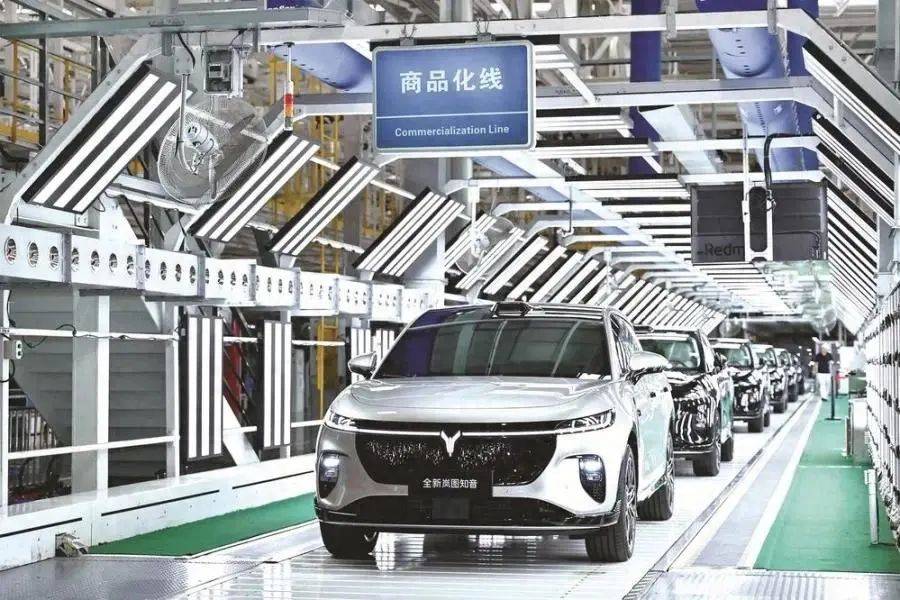
Core Viewpoint - Dongfeng Group is undergoing a capital restructuring through a combination of "introduction listing + privatization," with its high-end electric vehicle brand, Lantu Motors, set to list on the Hong Kong Stock Exchange while Dongfeng Group itself will delist [1][3]. Group 1: Capital Restructuring - The capital operation is characterized as a "share distribution + absorption merger" model, where Dongfeng Group will distribute 79.67% of its stake in Lantu Motors to all shareholders, followed by Lantu's introduction listing on the exchange [3]. - The privatization process involves Dongfeng's wholly-owned subsidiary in mainland China paying equity compensation to the controlling shareholder and cash compensation to minority shareholders, achieving 100% control of Dongfeng Group [3]. - The "introduction listing" method allows for a quicker process without new share issuance, thus avoiding dilution of existing shareholders' equity [3]. Group 2: Valuation Challenges - Dongfeng Group's privatization is primarily due to long-term valuation imbalances in the Hong Kong stock market, with a market capitalization of only HKD 39.12 billion and a price-to-book (PB) ratio of 0.25, indicating severe undervaluation [4]. - The company has not conducted any equity refinancing since its listing, losing the financing function of its H-share platform, which has not reflected its transition to new energy and high-growth sectors like Lantu [4][5]. Group 3: Industry Context - Many traditional automakers listed in Hong Kong face similar valuation challenges, with a stark contrast between market perceptions of traditional manufacturing and recognition of new production capabilities in China [5]. - Dongfeng's profit structure has been significantly impacted by industry changes, with a reported profit from joint ventures dropping from approximately CNY 11.88 billion in 2022 to CNY 513 million in 2023 [5][6]. Group 4: Lantu Motors' Growth - In contrast to Dongfeng Group's struggles, Lantu Motors has shown strong growth, delivering 85,000 vehicles in 2024, a 70% increase year-on-year, and achieving a cumulative sales volume of 68,263 vehicles in the first seven months of 2025, an 88% increase [8][9]. - Lantu's financial performance is improving, with a reduction in net losses from CNY 1.472 billion in 2023 to CNY 18 million in 2024, nearing profitability [8][9]. - The CEO of Lantu has expressed a goal to achieve profitability by the end of 2025, supported by a robust patent portfolio and strategic partnerships with technology giants like Huawei [9]. Group 5: Strategic Implications - Dongfeng's capital operation serves as a model for large automotive groups navigating the new energy transition, allowing for a more flexible and efficient resource integration post-privatization [10]. - Following its listing, Lantu will have a clearer positioning in the global market, with plans to launch three new models in the second half of 2025 and expand into the Middle East [10]. - Lantu's independent listing will provide a dedicated financing platform to support high R&D investments and global expansion efforts [10].

东风集团股份发布重大公告 将推动子公司岚图汽车港股上市
Zheng Quan Ri Bao Zhi Sheng· 2025-08-23 03:36
Core Viewpoint - Dongfeng Motor Group Co., Ltd. is adopting an innovative model of "Lantu listing + group delisting" to respond to industry changes and optimize capital operations, which serves as a reference for traditional automakers [1][2] Group 1: Listing and Delisting Process - Dongfeng Group will distribute 79.67% of its stake in Lantu Automotive to all shareholders before Lantu's introduction listing on the Hong Kong Stock Exchange [2] - The transaction involves a combination of "equity distribution + absorption merger," where Dongfeng's subsidiary will pay equity consideration to the controlling shareholder and cash consideration to minority shareholders [2] - The overall acquisition price is set at HKD 10.85 per share, with cash consideration of HKD 6.68 per share and equity consideration of HKD 4.17 per share [2] Group 2: Shareholder Benefits - The dual option of "cash + equity" provides certainty for small shareholders and activates value realization, with Lantu's listing expected to enhance value creation [2][3] - The approach balances the revaluation of state-owned assets and shareholder interests, offering insights into optimizing shareholder returns and stabilizing investor confidence [3] Group 3: Strategic Focus on New Energy - The operation demonstrates a resource allocation strategy focused on new energy transformation, encouraging traditional automakers to concentrate resources on developing new energy [4] - Dongfeng Group's low valuation has hindered its ability to conduct equity refinancing, with a market cap of HKD 39.12 billion and a price-to-book ratio of only 0.25 [4] - The complexity of asset types within Dongfeng Group has made it difficult for investors to fully recognize its potential investment value [4] Group 4: Lantu Automotive Performance - Lantu Automotive, as a high-end smart new energy brand, has shown strong growth, delivering 85,697 vehicles in 2024, a year-on-year increase of approximately 70% [5] - Lantu has achieved over 10,000 monthly sales for five consecutive months, with July's deliveries exceeding 12,000 vehicles [6] - The successful launch of the Lantu FREE+ model, which secured 11,583 orders within 15 minutes, highlights its market potential [6]
东风集团深夜重大公告!股价1小时暴涨超90%
Di Yi Cai Jing Zi Xun· 2025-08-23 02:00
Core Viewpoint - Dongfeng Group's subsidiary, Lantu Automotive, will go public in Hong Kong through an introduction listing, while Dongfeng Group will simultaneously complete its privatization and delisting [2][4]. Group 1: Transaction Details - The overall acquisition price for Lantu Automotive is set at HKD 10.85 per share, comprising a cash consideration of HKD 6.68 per share and an equity consideration of HKD 4.17 per share [2]. - Following the announcement, Dongfeng Group's ADR surged by 91.45%, reaching USD 62.22 [2][3]. Group 2: Reasons for Privatization - The reasons for Dongfeng Group's privatization include the low valuation of its stock, which has diminished its financing capabilities, and the need for internal restructuring to facilitate its transition towards new energy [3][4]. - The privatization aims to push Lantu into the capital market and enable further internal integration [3]. Group 3: Market Context - The transaction employs a "share distribution + absorption merger" model, differing from previous privatizations of state-owned enterprises in Hong Kong [4]. - Dongfeng Group's total market value as of July 31, 2025, is HKD 39.12 billion, with a price-to-book (PB) ratio of only 0.25, indicating a significant undervaluation [5]. Group 4: Financial Performance - In the first half of the year, Dongfeng Group sold approximately 824,000 vehicles, a year-on-year decrease of 14.7%, with a revenue of CNY 54.533 billion, up 6.6% [5]. - Lantu Automotive is projected to deliver over 80,000 vehicles in 2024, representing a year-on-year growth of about 70% [5].

东风集团深夜重大公告!股价1小时暴涨超90%
第一财经· 2025-08-23 01:43
Core Viewpoint - Dongfeng Group's subsidiary, Lantu Automotive, will go public in Hong Kong through an introduction listing, while Dongfeng Group will simultaneously complete its privatization and delisting. The overall acquisition price is set at HKD 10.85 per share, comprising HKD 6.68 in cash and HKD 4.17 in equity for Lantu shares [3][6]. Group 1 - The stock price of Dongfeng Group's ADR surged by 91.45% to USD 62.22 following the announcement [4]. - Dongfeng Group's decision to privatize is driven by two main reasons: the low valuation of its stock, which has hindered its financing capabilities, and the need to facilitate internal restructuring and integration as it transitions towards new energy [6][7]. - The privatization process involves a two-step approach: first, distributing 79.67% of Lantu's shares to all shareholders, followed by Lantu's introduction listing on the Hong Kong Stock Exchange [6]. Group 2 - Dongfeng Group's valuation has been under pressure, with a market capitalization of HKD 39.12 billion and a price-to-book (PB) ratio of only 0.25, indicating a significant undervaluation [7]. - In the first half of 2025, Dongfeng Group sold approximately 824,000 vehicles, a year-on-year decrease of 14.7%, while achieving a revenue of HKD 54.53 billion, a 6.6% increase from the previous year [7]. - Lantu Automotive is expected to deliver over 80,000 vehicles in 2024, marking a year-on-year growth of about 70%, with consistent monthly sales exceeding 10,000 units since the beginning of 2025 [7].

财报“透视”:日系车企三强的喜与忧
Zhong Guo Jing Ying Bao· 2025-08-22 21:13
Core Viewpoint - The Japanese automotive industry, particularly the "Big Three" (Toyota, Honda, Nissan), is facing significant profit contraction due to U.S. tariff pressures and the transition to electric vehicles, despite some revenue growth [1][2][3]. Financial Performance - Toyota's net profit for Q1 of FY2025 decreased by 36.9% to 841.4 billion yen (approximately 40.7 billion RMB), while operating profit fell by 11% to 1.17 trillion yen (approximately 56.6 billion RMB) [1][3]. - Honda's net profit dropped by 50.2% to 170.4 billion yen (approximately 8.24 billion RMB), with operating profit down by 49.6% to 244.2 billion yen (approximately 11.89 billion RMB) [1][4]. - Nissan reported a loss of 79.1 billion yen (approximately 3.83 billion RMB) in operating profit, a significant decline from a profit of 1 billion yen (approximately 48.1 million RMB) in the previous year [5]. Impact of U.S. Tariffs - The U.S. government's imposition of a 25% tariff on imported vehicles and additional tariffs on core components has severely impacted the profitability of Japanese automakers [4][7]. - Toyota estimated a loss of 450 billion yen (approximately 21.8 billion RMB) in operating profit due to tariffs for Q1, with an annual forecast of 1.4 trillion yen (approximately 67.7 billion RMB) [3][4]. - Honda also projected a loss of 450 billion yen (approximately 21.8 billion RMB) in operating profit for FY2025 due to U.S. tariffs [4]. Market Performance in China - Despite challenges in the U.S. market, Toyota's sales in China increased by 6.8% to 837,700 units in the first half of the year, marking its first year-on-year growth in nearly four years [8][11]. - Nissan's sales in China rose by 21.8% in July, driven by the success of its new electric model, the N7 [9][10]. - Honda's performance in China lagged behind, with a 14.75% decline in July sales, reflecting struggles in both traditional fuel and new energy vehicle segments [10][11]. Strategic Responses - Toyota is focusing on local partnerships and expanding its hybrid and electric vehicle offerings in China to adapt to market demands [8][11]. - Nissan plans to invest 10 billion RMB in electric vehicle development in China and aims to launch 10 new electric models over the next two years [6][9]. - Honda is attempting to strengthen its position in the electric vehicle market with new product launches, although initial sales have been underwhelming [10][11].