
逆周期调节

Search documents
逆周期调节或增加,震荡略偏多
Ning Zheng Qi Huo· 2025-11-03 10:45
二十届四中全会开完以后,人民币汇率升值,股市突破长期震 荡区间,股债跷跷板利空债市。但是央行公告称,为保持银行体系 流动性充裕,10 月 27 日将以固定数量、利率招标、多重价位中标 方式开展 9000 亿元 MLF 操作,期限为 1 年期。由于 10 月有 7000 亿元 MLF 到期,本月央行 MLF 净投放将达到 2000 亿元,为央行连 续第 8 个月对 MLF 加量续做。流动性和股债跷跷板共同作用,使得 债市操作难度加大。央行行长潘功胜在《国务院关于金融工作情况 的报告》中表示,下一步将落实落细适度宽松的货币政策,执行好 各项已出台货币政策措施,持续释放政策效能,研究储备新的政策 举措。巩固资本市场向好势头,健全稳市机制。 2025 金融街论坛年会开幕,央行行长潘功胜、金融监管总局局 长李云泽、证监会主席吴清重磅发声。潘功胜表示,央行将继续坚 持支持性的货币政策立场,恢复公开市场国债买卖操作。公开市场 买卖国债,有利于控制远端债市利率,进一步减弱股债跷跷板对债 市的影响,有效控制住利率和资金成本,从而有效进行对实体经济 赋能,增加逆周期调节力度。 逆周期调节或增加,震荡略偏多 摘 要: 宁证期货期货 ...
10月PMI数据点评:制造业承压,仍需政策支撑
LIANCHU SECURITIES· 2025-11-03 07:13
Report Summary 1) Report Industry Investment Rating The document does not mention the report industry investment rating. 2) Core View of the Report The report analyzes the October 2025 PMI data, indicating that the manufacturing industry is under pressure and the economy still needs policy support. The manufacturing PMI has declined, with structural pressures intensifying, while the service industry has a mild uptick and the construction industry remains sluggish. Future economic improvement requires the implementation of policies such as anti - involution and expanding domestic demand [1][6]. 3) Summary by Related Catalogs Manufacturing Industry - **Overall Situation**: In October, the manufacturing PMI was 49.0%, down 0.8 percentage points from the previous month, falling below the boom - bust line for seven consecutive months, showing a weakening overall manufacturing industry due to factors like reduced working days, trade frictions, and high inventory [1]. - **Structural Pressures**: All four major sub - indicators of the manufacturing PMI declined. The production index dropped to 49.7%, the new order index to 48.8%, the raw material inventory to 47.3%, and the employment index to 48.3%, indicating weakness in production, demand, and employment [2]. - **Enterprise Scale**: The PMIs of large, medium, and small enterprises were 49.9%, 48.7%, and 47.1% respectively, all in the contraction range. Large enterprises entered the contraction range for the first time in the second half of the year, and small and medium - sized enterprises have been below the boom - bust line for many months [2]. - **Demand Side**: External demand contracted significantly, with the new export order index dropping 1.9 percentage points to 45.9% and the import index falling 1.3 percentage points to 46.8%. Domestic demand was relatively stable, and the domestic market's support for demand increased [3]. - **Industry Categories**: New - energy - related industries had better prosperity, while basic raw material industries were weak. The production index of equipment manufacturing, high - tech manufacturing, and consumer goods manufacturing decreased but remained in the expansion range, while the production index of basic raw material industries dropped below 48% [3]. - **PMI Quantity - Price Sub - Index**: The PMI quantity - price (ex - factory price index) sub - index weakened, reflecting the pressure of demand contraction and poor cost transmission. It may continue the contraction trend in the short term [5]. Service Industry - The service industry PMI was 50.2%, up 0.1 percentage points from the previous month, hovering around the boom - bust line for many months. Consumer service industries recovered significantly, while production - related service industries fell into the contraction range [5]. Construction Industry - The construction industry PMI was 49.1%, down 0.2 percentage points from the previous value, remaining in the contraction range for three consecutive months. The decline of the real estate market and the slowdown of infrastructure investment were the main reasons for the industry's downturn, but infrastructure - related construction activities showed signs of acceleration [5]. Future Outlook - Economic recovery requires policy support. The implementation of anti - involution and domestic - demand - expansion policies in the fourth quarter will help improve the economy. The injection of new policy - based financial tools, the early use of part of the 2026 fiscal budget, and the "15th Five - Year Plan" will provide impetus for the manufacturing industry [6].
宁证期货今日早评-20251103
Ning Zheng Qi Huo· 2025-11-03 02:07
Key Points of the Research Report Report Industry Investment Ratings - No specific industry investment ratings are provided in the report. Core Views - The report provides short - term evaluations of various commodities including metals, energy, agricultural products, and financial products, with expectations of price trends such as oscillation, weakening, or strengthening based on their respective fundamentals and market conditions [1][3][4] Summary by Commodity Metals - **螺纹钢 (Rebar)**: Fundamentals continue to improve, but inventory is still relatively high year - on - year. With the approaching end of the peak season, demand expectations are cautious. After a short - term macro sentiment cools, the futures price is expected to be under pressure. However, there is cost support and potential policy benefits, so there is a rebound drive after a weak adjustment [1] - **黄金 (Gold)**: There are differences in the Fed's decision on another interest rate cut, increasing market volatility. Although the US government shutdown has reduced the risk - aversion sentiment, the buying power of gold remains strong. In the short term, the downside space is limited, and it may oscillate at a high level in the medium term [1] - **焦煤 (Coking Coal)**: Supply is affected by frequent inspections, mine production cuts, and other factors, with limited increase. Demand remains stable, and the upstream coal mines have reduced their inventories to a low level in recent years. The coking coal spot market is stable and slightly strong, and the price is expected to oscillate in the short term [3] - **铁矿石 (Iron Ore)**: Supply has short - term disturbances, and demand has decreased significantly due to environmental protection and profit factors. The fundamentals have slightly weakened, but the overall pressure is not obvious. After the macro factors are realized, the market may turn to fundamental trading, and the price is expected to oscillate in the short term [4] - **白银 (Silver)**: Positive information from China - US talks and the better - than - expected economic recovery in the Eurozone have increased risk appetite and boosted silver. It is expected to oscillate upwards with limited downside space [7] Agricultural Products - **生猪 (Live Pigs)**: In early November, the market supply of pigs is becoming more abundant, and the enthusiasm for second - fattening has weakened. Terminal consumption has not been significantly boosted. The price of live pigs is expected to decline slowly, and the main contract LH2601 is under short - term downward pressure [5] - **菜粕 (Rapeseed Meal)**: Supply is rigidly short, and coastal oil mills have low inventories, reducing the risk of price decline. The domestic rapeseed crushing has basically stagnated, and the oil mill operating rate is low. It is recommended to buy at low prices [6] - **棕榈油 (Palm Oil)**: Affected by rapeseed oil, the futures price has broken through the previous low. Although domestic spot demand has been released, terminal consumption has not improved, and future arrivals are expected to be large. The price is expected to continue to oscillate weakly in the short term [6][7] Energy - **原油 (Crude Oil)**: OPEC + will continue to increase production in December, and the market will be under pressure for the rest of the year. The oversupply pressure will be slightly relieved in the first quarter of next year. It should be treated with a weak - oscillation view [11] - **沥青 (Bitumen)**: The capacity utilization rate has increased, the cost support has weakened, and the peak - season demand is not strong, increasing the downward pressure. The overall trend is weak - oscillation [12] Financial Products - **长期国债 (Long - term Treasury Bonds)**: The PMI data shows increased economic downward pressure, and counter - cyclical adjustment needs to be intensified. The open - market trading of treasury bonds is likely to lower interest rates, which is a positive factor for the bond market. Due to liquidity easing and the stock - bond seesaw effect, the bond market is expected to oscillate slightly upwards in the medium term [7] Chemicals - **甲醇 (Methanol)**: Domestic methanol production is at a high level, downstream demand is stable, and port inventories fluctuate slightly. The inland market is weak, and the port basis is weak. The 01 contract is expected to oscillate weakly in the short term, with resistance at 2210 [8] - **纯碱 (Soda Ash)**: The float glass industry is stable with decreasing inventory. The domestic soda ash market is stable, with high - level supply and low - level demand. The 01 contract is expected to oscillate in the short term, with resistance at 1240 [9] - **聚丙烯 (Polypropylene)**: Supply pressure has been slightly relieved due to concentrated equipment maintenance, and commercial inventories have decreased. Demand has slightly increased, but the market trading atmosphere has slowed down. The cost support is strong. The PP 01 contract is expected to oscillate in the short term, with resistance at 6620 [10] Rubber - **橡胶 (Rubber)**: In November, the overall shipment pressure remains high, and some enterprises have plans to reduce production or conduct maintenance, which will limit the increase in capacity utilization. However, China's rubber inventories have continued to decline, providing medium - term support. The downward space of rubber prices may be limited [13]
5000亿已投放又来2000亿扩投资,四季度政策加力稳增长
2 1 Shi Ji Jing Ji Bao Dao· 2025-10-31 13:16
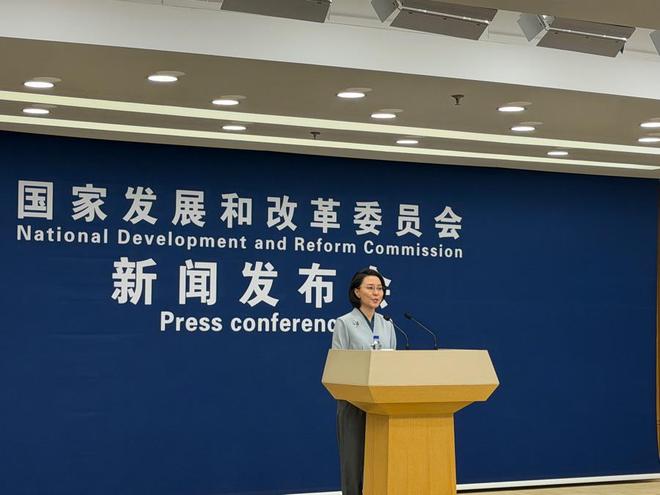
Core Points - The National Development and Reform Commission (NDRC) announced the completion of the 500 billion yuan new policy financial tool, supporting 2,300 projects with a total investment of approximately 7 trillion yuan [1][4][5] - The additional 200 billion yuan in special bonds is aimed at supporting local investment projects, marking a significant push for investment in the fourth quarter [3][8] - The overall economic growth in the first three quarters was 5.2%, laying a solid foundation for achieving the annual growth target of around 5% [3][8] Investment and Financial Tools - The new policy financial tool focuses on technology innovation, consumption upgrades, and foreign trade stability, while also considering traditional infrastructure [4][5] - The three policy banks have allocated funds as follows: 250 billion yuan by the China Development Bank, 150 billion yuan by the Agricultural Development Bank of China, and 100 billion yuan by the Export-Import Bank of China [5][6] - The funds are primarily used to supplement project capital, with a maximum of 50% of total capital [4][5] Sector Focus - Key investment areas include digital economy, artificial intelligence, consumer infrastructure, and urban renewal projects [4][5][6] - Specific projects supported include investments in semiconductor manufacturing and smart driving systems, indicating a strong focus on high-tech industries [6] Economic Indicators - The construction industry showed signs of recovery, with the new orders index rising to 45.9%, indicating a positive trend in demand [6][7] - The business activity expectation index for the construction sector increased to 56.0%, suggesting improved confidence among businesses [6][7] Policy Coordination - The NDRC emphasized the need for coordinated fiscal and monetary policies to stabilize and boost investment [8][9] - The central government is expected to implement further measures to support consumption and stabilize the real estate market, which remains a critical area of concern [9][10]

景气分化延续,动能有所减弱
Tebon Securities· 2025-10-31 12:03
Economic Overview - October PMI data indicates a renewed weakening of economic recovery momentum, with manufacturing PMI dropping to 49.0%, down 0.8 percentage points from the previous month and below the seasonal norm[3] - Non-manufacturing PMI slightly increased to 50.1%, up 0.1 percentage points, primarily driven by holiday consumption and seasonal service industry demand[3] - Overall, the composite PMI fell to 50.0%, a decrease of 0.6 percentage points, reflecting a continued divergence in economic conditions between sectors[3] Manufacturing Sector Insights - Manufacturing PMI at 49.0% indicates a return to low levels for the year, with large enterprises at 49.9%, medium enterprises at 48.7%, and small enterprises at 47.1%, showing increased operational pressure across all sizes[3] - Key sub-indices show production index at 49.7% (down 2.2 percentage points), new orders index at 48.8% (down 0.9 percentage points), and employment index at 48.3% (down 0.2 percentage points), indicating a significant decline in production and demand[3] - Industries such as food processing and automotive show stronger supply and demand, while textiles and chemicals remain below the prosperity line, indicating weak sector performance[3] Non-Manufacturing Sector Insights - Non-manufacturing PMI at 50.1% suggests moderate expansion, with construction PMI at 49.1% and service PMI at 50.2%, indicating a mixed performance across sectors[4] - New orders index for non-manufacturing remains weak at 46.0%, reflecting limited short-term demand recovery potential[4] - Employment index for non-manufacturing at 45.2% indicates ongoing labor market pressures, with business activity expectations index rising to 56.1%, suggesting optimism for future operations[4] Policy and Future Outlook - Short-term economic improvement is expected to require stronger policy support, with a focus on the effectiveness of financial tools and special bond allocations in Q4[3] - The upcoming "14th Five-Year Plan" is anticipated to influence medium to long-term policy direction, making 2026's economic performance critical for future strategies[3] - Risks include potential export weakness, real estate market downturns, and insufficient policy momentum[4]
蓝佛安:统筹生财、聚财、用财之道,有力有效实施积极的财政政策
Zheng Quan Shi Bao Wang· 2025-10-31 06:58
Core Viewpoint - The article emphasizes the importance of implementing proactive fiscal policies to support China's economic development and modernization efforts, as outlined in the 15th Five-Year Plan [2][3]. Fiscal Policy Implementation - The Ministry of Finance aims to utilize fiscal policy as a primary tool for macroeconomic regulation, focusing on budget, taxation, government bonds, and transfer payments to stabilize economic cycles and optimize structure [3][4]. - The government will avoid excessive stimulus and instead target key areas to ensure stable economic growth and structural reform [3][4]. Economic Performance - From 2021 to 2024, China's average economic growth rate is projected to be 5.5%, with over 12 million new urban jobs created annually [4]. - Public budget expenditures during the 14th Five-Year Plan period are expected to exceed 136 trillion yuan, supporting various national strategies for high-quality development [4]. Challenges and Responses - The article highlights the complex domestic and international challenges facing fiscal policy, including geopolitical tensions and economic uncertainties [6][7]. - It stresses the need for effective fiscal management to enhance policy effectiveness and adapt to changing circumstances [7]. Key Focus Areas - The government will prioritize expanding domestic demand, supporting technological self-reliance, and improving public welfare [11][12]. - Emphasis will be placed on rural revitalization, urban development, and regional coordination to enhance modernization efforts [12]. Fiscal Management and Reform - The article advocates for deepening fiscal reforms and enhancing regulatory oversight to improve fiscal governance [13]. - It calls for measures to mitigate local government debt risks and ensure sustainable fiscal development [13].
蓝佛安最新发文!详解“十五五”时期落实积极财政政策六大重要举措
券商中国· 2025-10-31 06:44
Core Viewpoint - The article emphasizes the importance of implementing proactive fiscal policies to support China's economic and social development during the "15th Five-Year Plan" period, as outlined by the Central Committee of the Communist Party of China [1][5]. Summary by Sections Implementation of Proactive Fiscal Policies - The article discusses the necessity of adapting fiscal policies to current economic conditions, focusing on targeted support for key areas and weak links to ensure stable economic growth and structural optimization [2][3]. Achievements of Proactive Fiscal Policies - Significant outcomes from proactive fiscal policies include an average economic growth rate of 5.5% from 2021 to 2024 and the creation of over 12 million urban jobs annually. Public budget expenditures are projected to exceed 136 trillion yuan during the "14th Five-Year Plan" period, with over 70% allocated to social welfare [3][4]. Key Tasks for the "15th Five-Year Plan" Period - The article outlines several key tasks for the upcoming period, including enhancing the effectiveness of fiscal policies, focusing on people's livelihoods, and ensuring that fiscal management aligns with the overall national strategy [5][6]. Coordination of Fiscal Policies - Emphasis is placed on the need for coordination between supply-side and demand-side management, as well as the importance of reforming fiscal tools to improve policy effectiveness [4][7]. Domestic Demand Expansion - The article highlights the strategy of expanding domestic demand as a fundamental approach to economic stability, advocating for increased investment in public services and infrastructure [9][10]. Support for Technological Advancement - There is a strong focus on supporting technological self-reliance and innovation, with an emphasis on increasing investment in key technological areas and fostering the integration of technology and industry [10][11]. Social Welfare and Employment - The article stresses the importance of prioritizing employment and social welfare, aiming to enhance the quality of education, healthcare, and social security systems to improve overall living standards [10][11]. Regional Development and Integration - The need for promoting urban-rural integration and regional development is discussed, with strategies to enhance agricultural productivity and improve public services in rural areas [10][11]. Fiscal Management and Debt Risk - The article calls for improved fiscal management practices to mitigate local government debt risks, emphasizing the importance of sustainable fiscal policies and effective debt management [11][12].

财政部详解“十五五”时期落实积极财政政策六大重要举措
Zheng Quan Shi Bao· 2025-10-31 06:32
Core Viewpoint - The article emphasizes the importance of implementing proactive fiscal policies during the "15th Five-Year Plan" period to support China's modernization and national rejuvenation efforts, as outlined by the Central Committee of the Communist Party of China [2][3]. Summary by Sections Implementation of Proactive Fiscal Policies - The Ministry of Finance aims to effectively implement proactive fiscal policies by integrating reform and innovation, ensuring comprehensive execution of the Central Committee's directives, and providing strong financial support for national development [2][3]. Achievements of Proactive Fiscal Policies - The effectiveness of proactive fiscal policies has been evident, with an average economic growth rate of 5.5% from 2021 to 2024 and over 12 million new urban jobs created annually. Public budget expenditures are projected to exceed 136 trillion yuan during the "14th Five-Year Plan" period, significantly supporting key national strategies [4][5]. Key Strategies for the "15th Five-Year Plan" Period - The Ministry of Finance outlines several key strategies, including: 1. Expanding domestic demand and supporting the construction of a robust domestic market through tax adjustments and social security enhancements [11]. 2. Promoting high-level technological self-reliance and accelerating the development of new productive forces by increasing investment in key technologies [12]. 3. Ensuring high-quality development while improving people's livelihoods, focusing on employment and social security [12]. 4. Advancing urban-rural integration and regional development to optimize economic growth spaces [13]. 5. Enhancing fiscal governance through reforms and regulatory measures to improve management efficiency [13]. 6. Preventing and mitigating local government debt risks to ensure sustainable fiscal development [14]. Challenges and Responses - The article highlights the complex domestic and international challenges facing fiscal policy, including geopolitical tensions and economic uncertainties. It stresses the need for effective responses to these challenges to enhance fiscal policy effectiveness and macroeconomic management [6][7].
财政部详解“十五五”时期落实积极财政政策六大重要举措
证券时报· 2025-10-31 06:05
Core Viewpoint - The article emphasizes the importance of implementing proactive fiscal policies to support China's economic and social development during the "15th Five-Year Plan" period, as outlined by the Central Committee of the Communist Party of China [1][6]. Summary by Sections Implementation of Proactive Fiscal Policies - The article discusses the necessity of adapting fiscal policies to the changing economic landscape, focusing on targeted support for key areas and weak links to ensure stable economic growth [2][3]. Achievements of Proactive Fiscal Policies - Significant outcomes from proactive fiscal policies include an average economic growth rate of 5.5% from 2021 to 2024 and the creation of over 12 million urban jobs annually. Public budget expenditures are projected to exceed 136 trillion yuan during the "14th Five-Year Plan" period, with over 70% allocated to social welfare [4]. Understanding the Current Fiscal Landscape - The article highlights the complex domestic and international challenges facing fiscal policy, including geopolitical tensions and structural changes within the economy. It stresses the need for effective fiscal management to enhance policy effectiveness and support high-quality development [7][8]. Key Focus Areas for Fiscal Policy - The article outlines several key areas for fiscal policy focus: - Ensuring the Party's leadership in fiscal matters [7]. - Prioritizing public welfare and addressing the needs of the populace [8]. - Balancing market efficiency with government intervention [9]. - Enhancing domestic economic circulation and addressing structural issues [9]. - Integrating development and security in fiscal governance [9]. - Optimizing fiscal spending to maximize policy effectiveness [10]. Strategic Measures for Fiscal Policy - The article details strategic measures to be taken, including: - Expanding domestic demand and supporting the construction of a robust domestic market [12]. - Promoting technological self-reliance and innovation [13]. - Ensuring high-quality development while improving living standards [13]. - Advancing urban-rural integration and regional development [14]. - Reforming fiscal management to enhance governance efficiency [14]. - Mitigating local government debt risks to ensure sustainable fiscal development [15].

未来五年继续实施积极财政政策|解读“十五五”
Di Yi Cai Jing· 2025-10-29 09:57
Core Insights - The "15th Five-Year Plan" emphasizes the role of proactive fiscal policy and enhancing fiscal sustainability as a response to complex domestic and international situations [1][2][3] Fiscal Policy - The plan indicates a continuation of expansionary fiscal policies, highlighting the need for fiscal measures to support economic development during the transition period [3][4] - The shift in focus to proactive fiscal policy reflects the urgent need for counter-cyclical adjustments to stabilize the economy and foster new growth drivers [2][3] Fiscal Sustainability - The emphasis on enhancing fiscal sustainability is crucial for ensuring fiscal security, fulfilling government functions, and achieving national development goals [5][6] - Current fiscal challenges include insufficient effective demand and prominent fiscal revenue-expenditure contradictions, necessitating a focus on sustainable fiscal practices [5][6] Government Debt Management - The total government debt is projected to reach 92.6 trillion yuan by the end of 2024, with a debt-to-GDP ratio of 68.7%, indicating manageable risk levels [5] - Future strategies to enhance fiscal sustainability include stabilizing the macro tax burden and optimizing tax policies to ensure long-term fiscal health [5][6] Tax Policy Adjustments - The plan suggests maintaining a reasonable macro tax burden, with current levels around 13% of GDP, potentially rising to approximately 15% [6] - Actions taken include the removal of certain tax exemptions and the expansion of tax bases, indicating a shift towards a more robust tax system [6]