资产配置

Search documents
规模破8000亿!债券ETF扩容领跑ETF市场,指数化投资成新趋势
证券时报· 2026-01-09 09:02
Core Viewpoint - The bond ETF market has significantly expanded over the past year, surpassing 800 billion yuan, indicating a shift towards more transparent and efficient index-based investment strategies in the bond sector [1][3]. Group 1: Market Expansion - The total scale of bond ETFs reached 829.02 billion yuan by December 31, 2025, marking an increase of 655.05 billion yuan since the beginning of the year, the highest growth among all ETF categories [3]. - There are currently 53 bond ETFs in the market, accounting for 3.78% of all ETFs, with their net asset value rising to 13.77% of the total ETF market [3]. - The expansion of bond ETFs is primarily driven by the introduction of benchmark market-making credit bond ETFs and sci-tech bond ETFs, both of which were launched for the first time in 2025 [3][4]. Group 2: Product Specifics - In the sci-tech bond ETF segment, the CSI AAA Technology Innovation Company Bond Index has 16 ETFs tracking it, with a total management scale of 280.75 billion yuan by the end of 2025 [4]. - The Shanghai AAA Technology Innovation Company Bond Index has 6 ETFs linked to it, totaling 67.39 billion yuan, while the Shenzhen AAA Technology Innovation Company Bond Index has 2 ETFs with a combined scale of 7.19 billion yuan [4]. - For benchmark market-making credit bond ETFs, the Shanghai Benchmark Market-Making Corporate Bond Index has a total management scale of 79.86 billion yuan, while the Shenzhen counterpart reached 47.56 billion yuan by year-end [4]. Group 3: Indexation and Investment Value - The ongoing expansion of bond ETFs signifies a transition from traditional, less standardized investment methods to more transparent and efficient index-based approaches [6]. - Bond ETFs are becoming essential tools for connecting capital with the bond market, moving beyond their previous role as supplementary instruments [6]. - Compared to traditional bond funds, bond ETFs offer advantages in trading mechanisms, transparency, and portfolio stability, making them attractive for medium to long-term capital allocation [6][7].

2026年格隆汇“下注中国”十大核心资产之黄金ETF(518880)
格隆汇APP· 2026-01-09 08:33
Core Insights - The article highlights that the Gold ETF (518880) has been selected as a core asset in the physical asset category for the 2026 "Betting on China" list, reflecting its significance in the current investment landscape [2][3]. Selection Logic and Analysis - In 2025, global financial market volatility increased, leading to a historic bull market for gold, with London spot gold prices rising over 67% to exceed $4,400 per ounce, marking it as the best-performing asset class globally [3]. - The demand for gold as a "credit hedge tool" has intensified due to the emphasis on asset safety and wealth preservation in the 14th Five-Year Plan, showcasing gold's triple attributes of anti-inflation, risk aversion, and asset allocation [3]. - The domestic Gold ETF market surged from 73 billion yuan to 236.1 billion yuan in 2025, a 223% increase, effectively meeting market demand for risk aversion and asset allocation [3]. Competitive Barriers - The unique asset attributes of gold create an irreplaceable advantage, as it is the only asset class that combines commodity, financial, and currency properties, making it a core tool for hedging credit risk [7]. - Gold ETFs offer superior liquidity and convenience, with an average daily trading volume exceeding 5 billion yuan in 2025, allowing investors to enter and exit the market quickly [7]. - The management fee for Gold ETFs is generally below 0.5%, significantly lower than that of actively managed funds and physical gold, reducing the entry barrier for investors [7]. Supply and Demand Dynamics - Global gold reserves are limited to 59,000 tons, with current mining rates only sustainable for 19 years, providing long-term support for gold prices [8]. - In 2025, central banks net purchased 244 tons of gold, continuing a trend of over 1,000 tons for four consecutive years, driven by both central bank purchases and investment demand [8]. Industry Trends - The ongoing global liquidity easing cycle, initiated by the Federal Reserve in September 2025, is expected to continue into 2026, significantly lowering the opportunity cost of holding gold [11]. - Geopolitical uncertainties, such as the ongoing Russia-Ukraine conflict and rising tensions in the Middle East, have increased demand for gold as a safe-haven asset [11]. - The demand for gold is further supported by the need for risk diversification among investors, as gold has a low correlation with stocks and bonds, making it an effective stabilizer in investment portfolios [12]. Investment Value Analysis - Gold's anti-inflation property serves as a hedge against currency depreciation, with a projected inflation rate of 4.5% in the U.S. for 2025, making gold a classic tool for preserving asset value [14]. - Gold's unique characteristics make it a "ultimate safe asset" in extreme scenarios, outperforming other safe-haven assets during market turmoil [14]. - Including Gold ETFs in investment portfolios can enhance overall returns, especially during economic downturns, where average returns on gold have been significantly higher than domestic stocks and bonds [15]. 2026 Investment Outlook - The core logic supporting gold's price increase—liquidity easing, weakened dollar credit, central bank purchases, and geopolitical risks—remains unchanged for 2026, suggesting a continued upward trend in gold prices [16]. - Predictions indicate that COMEX gold prices may reach between $4,750 and $4,900 per ounce in 2026, with potential to challenge $5,200 per ounce [16]. - The Gold ETF (518880) is positioned to benefit directly from rising gold prices, offering substantial asset appreciation opportunities for investors [16]. Conclusion - The Gold ETF (518880) is recognized as a composite core asset that transcends ordinary investment categories, providing hedging against inflation, risk aversion, and asset optimization [19]. - Investing in Gold ETFs represents a strategic opportunity to capitalize on the ongoing trends of global liquidity easing, credit system restructuring, and asset allocation upgrades in 2026 [19].

2026,资管人的钱该往哪里投?——第十九届HED中国峰会·深圳即将开幕
Zhong Jin Zai Xian· 2026-01-09 03:07
Core Insights - The year 2026 marks the beginning of the "14th Five-Year Plan" and is seen as a pivotal moment for China's asset management industry, facing new opportunities amid ongoing international volatility and the transformative impact of AI on investment research [2] - The upcoming HED China Summit aims to address critical questions regarding policy direction, low interest rate challenges, and the potential disruption caused by AI in asset allocation decisions [2] Group 1: Macro Outlook - Dongwu Securities' Chief Economist, Lu Zhe, will provide an in-depth analysis of the "New Cycle of the 14th Five-Year Plan: Asset Allocation Outlook," covering growth and structural targets, fiscal and monetary policy coordination, and trends in exchange rates and commodities [4] - A roundtable discussion featuring experts from major banks will combine macro policy guidance with wealth management experience, offering strategic insights for the industry [4] Group 2: Practical Strategies - The summit will focus on actionable solutions to asset allocation challenges in a low-interest-rate environment, with presentations on global macroeconomic trends and multi-asset strategies [5] - Insights into the futures asset management sector and its investment strategies for 2026 will be shared by industry leaders [6] Group 3: Quantitative Focus - A dedicated forum on "The Next Phase of Chinese Quantitative Strategies" will address key concerns in the quantitative field, including innovations in quantitative stock strategies and the development of cross-border funds [7] - Discussions will also focus on the opportunities for institutional funds in quantitative stock strategies, facilitating connections between quantitative firms and mainstream investors [7] Group 4: Efficient Collaboration - The summit emphasizes practical outcomes by facilitating high-efficiency business connections between mainstream institutional investors and private fund managers through tailored networking opportunities [8] Group 5: Industry Recognition - The "19th Jiefu Honor Night" awards ceremony will recognize outstanding contributions in asset management, insurance, and banking, serving as a benchmark for excellence in the industry [9] - The summit aims to create a high-level exchange platform for industry elites to address challenges and seize opportunities, contributing to the high-quality development of the asset management sector in 2026 [9]

债筑底股增强 2026年您需要了解的投资平衡术
Jin Rong Jie· 2026-01-09 00:26
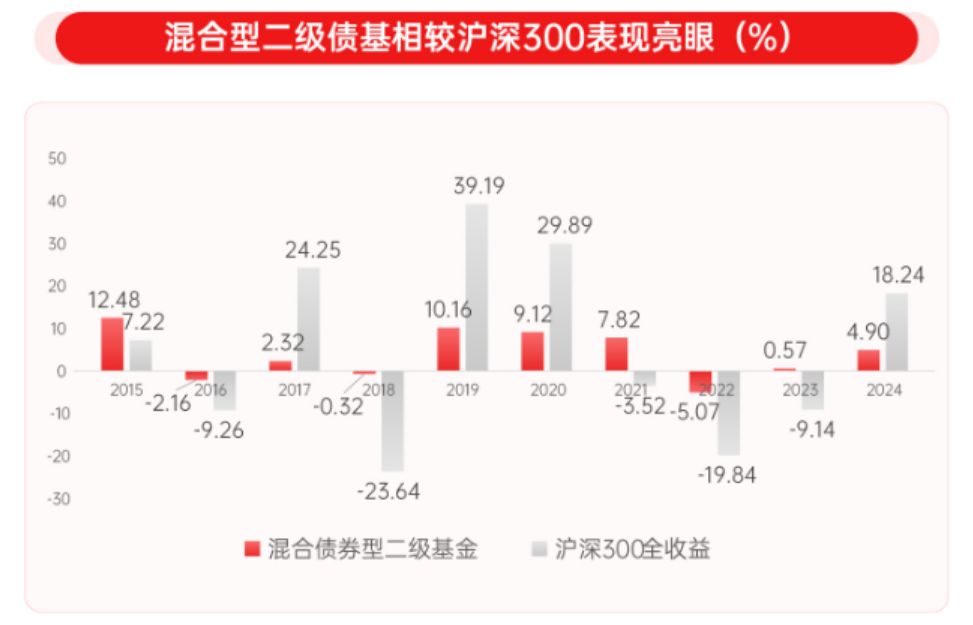
Core Viewpoint - The evolving market environment is prompting investors to reassess asset allocation strategies as they seek a balance between yield and volatility control, with a focus on flexible investment products that combine stability and growth [1] Group 1: Investment Strategy - The secondary bond fund strategy focuses on investing primarily in fixed income securities while allocating no more than 20% to equities, aiming to enhance returns and achieve long-term stability [2] - Over the past decade, the average return of secondary bond funds reached 50.16%, with returns increasing over longer holding periods [4] Group 2: Product Features - The "Hui Tian Fu Dual Enjoy Return Bond Fund" stands out among secondary bond funds, achieving a 1-year growth of 11.44%, significantly outperforming its benchmark of 4.77% [7] - The fund allows investment in Hong Kong stocks, utilizing up to 50% of its equity allocation for this purpose, thereby enhancing potential returns [11] - Managed by experienced fund managers, the fund aims for a synergistic effect through combined expertise [11] - The fund prioritizes absolute returns with a focus on stable assets, selecting high-quality credit bonds while controlling credit risk [13] - It offers flexible liquidity with no lock-in period, allowing investors to redeem shares easily [15] Group 3: Market Context - As the market approaches 2026, the importance of finding products that balance returns and investor experience is emphasized, suggesting that a stable investment approach may be more beneficial than chasing short-term trends [15]
“最后一公里”的变革:基金代销巨头转向长期主义
Zhong Guo Zheng Quan Bao· 2026-01-08 23:39
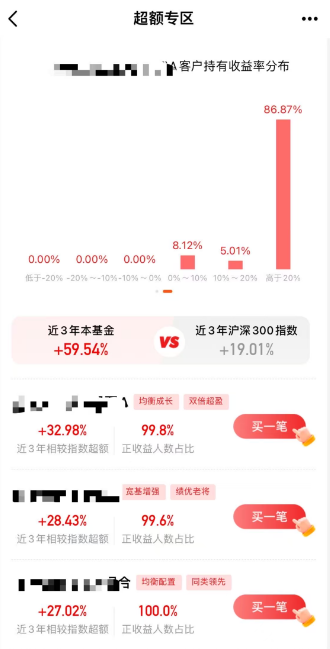
Core Insights - The public fund industry in China is experiencing a significant transformation, driven by regulatory changes aimed at reducing fees and promoting long-term investment strategies [1][4][6] - Internet distribution channels are becoming crucial in connecting investors with public fund products, emphasizing the need for transparency and improved investor experience [1][2] Regulatory Changes - The implementation of the "Regulations on the Management of Sales Fees for Publicly Raised Securities Investment Funds" has led to a reduction in subscription fees and sales service fees, aiming to lower investor costs and enhance market order [4] - New regulations are expected to shift the competitive landscape among institutions, encouraging a focus on long-term client retention rather than short-term trading incentives [4] Sales Strategy Evolution - Fund sales platforms are shifting their focus from short-term performance metrics to long-term investment indicators, such as three-year performance and risk-adjusted returns [2][3] - Major platforms like Ant Fund and Tiantian Fund are introducing new data presentation methods to enhance transparency and assist investors in making informed decisions [2][3] Risk Management - There is a growing emphasis on aligning fund products with investors' risk tolerance, with platforms showcasing historical volatility and performance metrics to better inform potential buyers [3] - The introduction of features that highlight real investor experiences and returns aims to create a more realistic understanding of fund performance [3] Market Trends - Sales institutions are expected to increase their focus on equity funds, aligning with policy directions that encourage long-term capital market support [5] - The shift from a sales-driven model to a service and performance-driven approach is anticipated to reduce reliance on low-risk, high-volume sales strategies [5] Long-term Investment Focus - The fund sales ecosystem is transitioning towards a long-term investment philosophy, with a focus on investor satisfaction and sustainable growth in fund holdings [6] - Companies are adopting new metrics for evaluating success, prioritizing user retention and profitability over sales volume [6] - Data indicates that users of certain fund products have experienced significantly higher returns compared to non-participants, reinforcing the benefits of a long-term investment approach [6]
“最后一公里”的变革: 基金代销巨头转向长期主义
Zhong Guo Zheng Quan Bao· 2026-01-08 22:12
Core Insights - The public fund industry in China is experiencing a significant transformation, driven by regulatory changes aimed at reducing fees and promoting long-term investment strategies [1][4][6] - Internet distribution channels are becoming crucial in connecting investors with public fund products, emphasizing the need for transparency and improved investor experience [1][2] Group 1: Regulatory Changes - The implementation of the "Regulations on the Management of Sales Fees for Publicly Raised Securities Investment Funds" aims to lower subscription and service fees, guiding the industry back to long-term investment principles [1][4] - New regulations restrict the commission structure, encouraging institutions to focus on retaining clients through enhanced service rather than frequent trading [4] Group 2: Changes in Sales Practices - Fund sales platforms are shifting their focus from short-term performance metrics to long-term indicators, such as three-year performance and risk-adjusted returns, to better inform investor decisions [2][3] - Platforms like Ant Fund and Tiantian Fund are introducing new data dimensions to enhance transparency and assist investors in making informed choices [2][3] Group 3: Emphasis on Risk Management - The sales process is increasingly incorporating risk adaptation, with platforms showcasing historical volatility to align products with investors' risk tolerance [3] - The introduction of features that highlight real investor performance aims to connect product value directly with investor satisfaction [3] Group 4: Future Trends - The industry is expected to see a shift towards equity fund sales, aligning with policy directions to support long-term capital market funding [5] - A transformation from sales-driven to service-driven models is anticipated, reducing reliance on low-risk volume sales strategies [5][6] Group 5: Long-term Investment Focus - The sales ecosystem is evolving to prioritize long-term performance over short-term gains, with a focus on investor experience and satisfaction [6] - Data indicates that users of Ant Fund's "Gold Selection" equity funds have a higher probability of achieving positive returns compared to non-"Gold Selection" users, highlighting the benefits of long-term holding [6]
基金代销巨头转向长期主义
Zhong Guo Zheng Quan Bao· 2026-01-08 20:50
Core Insights - The public fund industry in China is undergoing a significant transformation, focusing on long-term investment and enhancing investor experience through regulatory changes and new sales strategies [1][4][6] Group 1: Regulatory Changes - The implementation of the "Regulations on the Management of Sales Fees for Publicly Raised Securities Investment Funds" aims to lower subscription fees and sales service fees, guiding the industry back to long-term investment [1][4] - The new regulations restrict the proportion of client maintenance fees, which is expected to shift the competitive logic among institutions towards retaining clients for the long term [4] Group 2: Changes in Sales Strategies - Internet platforms for fund distribution are shifting their focus from short-term performance metrics to long-term indicators, such as "three-year returns" and "positive returns over three years" [2][6] - Major platforms like Ant Fund and Tiantian Fund are introducing new data presentation dimensions to enhance transparency and assist investors in making informed decisions [2][3] Group 3: Emphasis on Investor Experience - The sales process is evolving to highlight real investor experiences, with platforms showcasing metrics like user profitability and average returns to connect product value with investor satisfaction [3][4] - The focus is shifting from merely selling products to providing comprehensive services that enhance the overall investment experience [6] Group 4: Future Outlook - The industry is expected to prioritize sustainable growth in asset retention, with a shift towards a sales ecosystem centered on long-term investment principles [6] - By 2026, platforms aim to enhance user retention and profitability metrics while reducing the emphasis on sales volume, creating a new assessment framework focused on investor satisfaction [6]
每日钉一下(不同资产大类,投资难度有什么不同?)
银行螺丝钉· 2026-01-08 14:22
Group 1 - The article introduces the concept of bond index funds, highlighting that most investors are familiar with stock index funds but less so with bond index funds [2] - A free course is offered to educate investors on how to invest in bond index funds, including course notes and mind maps for efficient learning [2] Group 2 - Different asset classes present varying levels of investment difficulty, with money market funds being the easiest due to their minimal volatility [6] - Bond funds are slightly more complex, experiencing some volatility, with potential fluctuations of 3%-5% in extreme situations, but generally manageable [8] - Stock funds carry higher risks, with historical downturns of 30%-50% in bear markets, indicating significant volatility compared to bond funds [9][11] - Equity investments are the most challenging, often involving investments in unlisted companies with high failure rates, where only a few successful projects can recover losses from many failures [13]

蚂蚁、天天、京东金融,亮出新打法
Zhong Guo Zheng Quan Bao· 2026-01-08 14:13
Core Viewpoint - The public fund industry in China has reached a new high of 37 trillion yuan, prompting a significant transformation in fund sales strategies, with a shift from short-term performance metrics to a focus on long-term investment indicators [1][6]. Group 1: Changes in Fund Sales Platforms - Leading internet fund distribution platforms have altered their sales interfaces to emphasize metrics such as volatility, excess returns, and investor participation, moving away from short-term performance rankings [1][2]. - The new sales strategies include showcasing long-term performance indicators like "three-year returns" and "three-year positive returns," which replace previous short-term metrics [2][6]. - Platforms like Ant Fund and Tiantian Fund have introduced features that present data transparently, including performance benchmarks and investor returns, to enhance the decision-making process for investors [2][3]. Group 2: Emphasis on Investor Experience - The introduction of "buyer showcases" allows investors to see real profitability metrics, linking product value directly to investor experiences [3][5]. - Ant Fund has upgraded its tools to promote asset allocation strategies, encouraging investors to diversify their portfolios rather than focusing on single fund selections [5][6]. Group 3: Regulatory Changes and Industry Impact - The implementation of new regulations aimed at reducing fund sales costs is expected to reshape the competitive landscape of the public fund market, pushing institutions to focus on long-term client retention rather than short-term trading incentives [6][7]. - The reduction of sales commissions and fees will compel fund companies to innovate in product offerings and research, moving away from reliance on high commissions for growth [6][7]. - The industry is transitioning from a sales-driven model to a service-oriented approach, emphasizing sustainable growth and long-term returns [7].
黄金、白银再跳水,金银比跌至10年新低
21世纪经济报道· 2026-01-08 12:53
Core Viewpoint - The article discusses the recent decline in gold and silver prices, highlighting the significant drop in the gold-silver ratio, which is an important indicator of economic conditions and asset allocation strategies [1][2][4]. Price Movements - As of January 8, gold prices fell to $4413 per ounce, a decrease of 0.96%, while silver prices dropped to $74.6 per ounce, down 4.76% [1][2]. - The gold-silver ratio has fallen below 60, currently around 59, marking a significant decline from a high of 103 in April 2025 [2][4]. Historical Context - The last time the gold-silver ratio fell below 60 was in September 2010, and it reached a low of below 40 in 2011 before recovering [2]. - Historically, the gold-silver ratio has been a key indicator of macroeconomic cycles, often rising during economic crises and falling during recoveries [6][8]. Economic Indicators - The gold-silver ratio is correlated with the Juglar cycle, which describes medium-term investment and capacity fluctuations, indicating economic volatility [3][8]. - A higher gold-silver ratio suggests that gold may be overvalued, while a lower ratio indicates that silver may be undervalued [4][12]. Investment Strategies - The article emphasizes the importance of the gold-silver ratio in asset allocation, suggesting that investors can optimize returns by adjusting their holdings based on this ratio [11][12]. - Wealth management institutions are increasingly focusing on precious metal investment products, indicating a growing interest in gold and silver as core assets [11]. Future Outlook - Analysts predict that the gold-silver ratio will likely oscillate within a range of 40 to 80, moving away from its previous high levels [11][14]. - The current economic environment, characterized by a shift towards new production capacities and policies, is expected to influence silver demand significantly [8][9].