
国产替代

Search documents
中芯国际(688981):四季度营收超公司指引
Orient Securities· 2026-02-12 13:39
Investment Rating - The report maintains a "Buy" rating for the company with a target price of 150.27 CNY [4][11] Core Insights - The company reported Q4 revenue of 2.49 billion USD, exceeding guidance with a quarter-on-quarter growth of 12.8% and a year-on-year growth of 4.5% [10] - The company is expected to benefit from the ongoing domestic substitution in the supply chain, with a projected 18% year-on-year revenue growth from Chinese customers in 2025 [10] - The company is focusing on increasing the proportion of high-value-added products, with a 1.5% quarter-on-quarter growth in wafer revenue in Q4 [10] Financial Forecasts - The forecasted net profit attributable to the parent company for 2025-2027 is 5.04 billion, 6.74 billion, and 8.04 billion CNY respectively, with adjustments made to gross margin and expense ratios [4][11] - Revenue projections for 2023-2027 are 45.25 billion, 57.80 billion, 67.31 billion, 78.96 billion, and 90.36 billion CNY, reflecting a year-on-year growth of -9%, 28%, 16%, 17%, and 14% respectively [6][14] - The gross margin is expected to improve from 21.9% in 2023 to 23.2% in 2026 and 2027 [6][14]

鼎阳科技股价创新高,业绩增长与国产替代成核心动力
Jing Ji Guan Cha Wang· 2026-02-12 12:24
Company Performance - The stock price of Dingyang Technology (688112) has shown strong performance, with a year-to-date increase of 13.08% and a 60-day increase of 16.33%, reaching a peak of 42.50 yuan on February 12 [1] - The Q3 2025 report indicates a revenue growth of 21.67% year-on-year to 431 million yuan, and a net profit attributable to shareholders growth of 21.49% year-on-year to 111 million yuan [1] - Sales of high-end products (priced above 30,000 yuan) increased by 46.53%, and the average price of main products rose by 10.11%, driven by the high-end strategy [1] - Revenue from domestic high-resolution digital oscilloscopes and RF microwave products grew by 95.40% and 80.10% respectively, becoming core growth drivers [1] Industry Environment - The electronic testing and measurement instrument industry benefits from the trends of AI computing power construction and self-controllability [1] - Dingyang Technology is one of the few companies in China that can fully cover the four main product categories, with technological breakthroughs such as the 2GHz oscilloscope and 26.5GHz spectrum analyzer filling domestic gaps and aligning with localization demands [1] Market Activity - On February 12, the net inflow of main funds was 1.209 million yuan, with recent trading activity showing increased turnover rate and transaction volume [2] - The number of shareholders increased by 39.69% compared to the previous period, indicating heightened market attention, which, along with improved sector sentiment, contributed to the stock price increase [2]

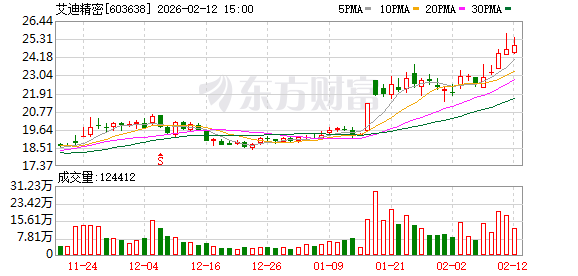
艾迪精密:公司硬质合金业务专注于中高端市场
Zheng Quan Ri Bao· 2026-02-12 12:16
Core Viewpoint - The company focuses on the mid-to-high-end market for hard alloy tools, with strong customized R&D capabilities, particularly in the steel tool sector, achieving a leading position domestically, especially for bearing steel processing scenarios [2] Group 1: Company Strategy and Market Position - The company aims to replace Japanese imported tools, helping clients improve efficiency and reduce costs [2] - By 2025, the company's tool production capacity is expected to reach 7 million pieces, with a potential to exceed 20 million pieces by 2026 [2] - The tungsten price, currently at a high level, supports price increases for tool products in the industry [2] Group 2: Industry Trends and Competitive Landscape - The tool industry is entering a phase of accelerated domestic substitution, with market share concentrating on companies with stronger cost transmission capabilities and technological advantages [2] - The company maintains a raw material inventory of 2-3 months for its tool division, allowing for cost transfer through distributors and guiding end customers to stock up [2]


“AI双子星”荣登C位,159363、589520携手狂飙!机构:春季行情值得期待,建议关注科技+周期主线!
Xin Lang Cai Jing· 2026-02-12 12:00
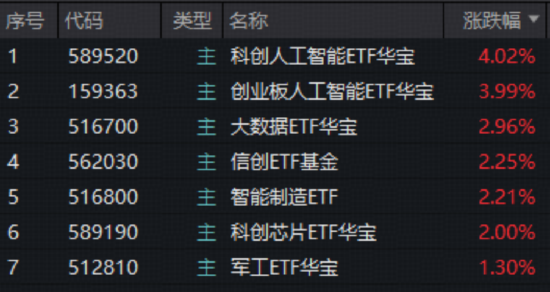
Core Viewpoint - The market is experiencing strong trading enthusiasm ahead of the Spring Festival, with significant movements in the AI sector driven by multiple favorable catalysts [1][2]. Group 1: AI Sector Developments - The State-owned Assets Supervision and Administration Commission (SASAC) is promoting central enterprises to expand effective investment in computing power and advance the synergy between computing power and electricity [1]. - Zhipu AI has launched its new flagship model GLM-5 and increased the subscription price for its AI programming package, while other companies like Deepseek and ByteDance are also releasing new products [1]. - Meta has announced a $10 billion investment to build data centers, indicating strong growth prospects in the AI and cloud computing markets [1][2]. Group 2: Market Performance - The Shanghai Composite Index showed slight fluctuations, while the Shenzhen Component Index and the ChiNext Index performed strongly, with the ChiNext Index leading with over a 1.3% increase [1]. - The total trading volume in the Shanghai, Shenzhen, and Beijing markets reached 2.16 trillion yuan, an increase of 159.8 billion yuan compared to the previous day [1]. Group 3: ETF Performance - The Huabao Science and Technology Innovation Artificial Intelligence ETF (589520) surged by 4.02%, while the Huabao Entrepreneurship Board Artificial Intelligence ETF (159363) rose by 3.99% [3]. - The Huabao Big Data ETF (516700) increased by nearly 3%, marking a six-day winning streak [2][3]. Group 4: Semiconductor and Chip Industry - The GLM-5 model has achieved deep adaptation with major domestic chip platforms, showcasing advancements in domestic chip capabilities [7]. - The semiconductor industry is experiencing a high growth cycle, with significant increases in sales and profits reported by companies like Jingchen Co., which expects a revenue of 6.793 billion yuan in 2025, a 14.63% year-on-year increase [11]. - The global semiconductor sales in January 2026 saw a year-on-year growth of 37.1%, continuing a trend of positive growth for 26 consecutive months [11]. Group 5: Military and Aerospace Sector - The military sector is witnessing a surge in activity, with the Huabao Military ETF (512810) rising by 1.3% as various companies report strong performance [16]. - Recent developments in commercial aerospace, including successful tests of reusable rockets and new aircraft orders, indicate a robust growth trajectory for the industry [17].


中芯国际(688981):2025年四季度业绩点评:4Q25营收超预期,扩产坚定推进下折旧压力待消化
EBSCN· 2026-02-12 11:51
Investment Rating - The report maintains a "Buy" rating for both A-shares and H-shares of the company [1]. Core Insights - The company's revenue for Q4 2025 exceeded expectations, reaching $2.489 billion, a year-over-year increase of 12.8% and a quarter-over-quarter increase of 4.5%, surpassing the previous guidance range of $2.38 to $2.43 billion [4]. - The gross margin for Q4 2025 was 19.2%, slightly below market expectations of 20%, primarily due to rising depreciation costs [4]. - The net profit for Q4 2025 was $203 million, a decline of 24.9% year-over-year and 35.5% quarter-over-quarter [4]. - For the full year 2025, the company achieved a record revenue of $9.327 billion, a year-over-year increase of 16.2%, with a gross margin of 21% [4]. Revenue Breakdown - In Q4 2025, the revenue breakdown by application showed that consumer electronics accounted for 47.3% of wafer revenue, with a quarter-over-quarter increase of 3.9 percentage points [5]. - The revenue from 12-inch wafers constituted 77.2% of wafer revenue, with a year-over-year decrease of 3.4 percentage points [5]. - Geographically, revenue distribution in Q4 2025 was 87.6% from China, 10.3% from the U.S., and 2.1% from Europe and Asia [5]. Demand and Capacity Insights - The demand for AI and automotive sectors is driving incremental growth, while the supply tightness in consumer electronics storage is expected to improve by the second half of 2026 [6]. - The company maintained a high utilization rate of 95.7% in Q4 2025, with guidance indicating stability for Q1 2026 [7]. - Capital expenditure for Q4 2025 was $2.41 billion, with expectations for 2026 to remain consistent with 2025 levels [7]. Profit Forecast and Valuation - The profit forecast for 2026-2027 has been cautiously adjusted downward, with expected net profits of $1.08 billion and $1.25 billion for 2026 and 2027, respectively [8]. - The current stock price corresponds to a price-to-book ratio of 3.2x for H-shares and 5.7x for A-shares for the years 2026-2027 [8]. - Despite short-term profit pressures, the core growth logic of benefiting from AI demand and domestic substitution trends remains strong [9].
内存紧缺,被压了三年价的供应商替车企扛住第一波冲击
晚点Auto· 2026-02-12 11:37
Core Viewpoint - The demand for memory chips, driven by AI training and inference, has surged over the past two years, leading to price increases and supply shortages that are impacting the automotive supply chain. The shortage is expected to persist for one to two years, with limited space for domestic alternatives [3][4]. Group 1: Supply Chain Dynamics - The automotive industry is facing a significant supply gap of approximately 30% for memory chips, with suppliers unable to meet the demand from multiple clients simultaneously [5]. - Major memory manufacturers like SK Hynix, Samsung, and Micron have shifted their production focus from traditional DRAM to higher-margin HBM chips due to strong AI demand, resulting in a price increase of over 300% for DDR5 and over 150% for DDR4 since September 2025 [9][10]. - The automotive sector accounts for less than 10% of the global DRAM market, and memory chips only represent about 1% of the total BOM cost for vehicles, leading manufacturers to prioritize higher-paying clients [9][10]. Group 2: Competitive Landscape - Companies that secured memory chip capacity in advance are gaining a competitive edge, as they can protect their clients and navigate the crisis more effectively [5][11]. - Some leading automotive companies have begun switching suppliers to secure stable pricing and supply commitments, but this process is complicated by the need for certification and testing [11]. - The reliance on suppliers for inventory and negotiations means that automotive companies are at a disadvantage during supply crises, as suppliers prioritize clients willing to share cost burdens [11]. Group 3: Future Implications - The ongoing memory supply crisis is likely to lead automotive companies to make more strategic decisions regarding memory configurations in their products, potentially reducing specifications for lower-tier models and freezing certain software functionalities [12]. - Domestic manufacturers like Changxin Storage and Yangtze Memory Technologies are expanding their DRAM production, but the delivery timelines have extended significantly, indicating limited immediate relief for the automotive sector [12].


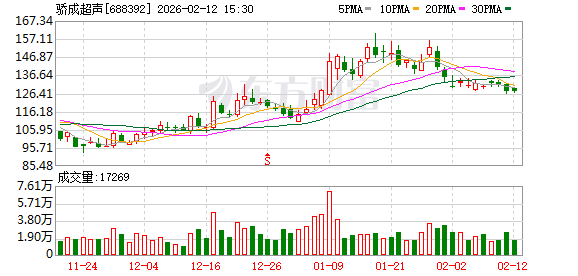
骄成超声:公司超声波扫描显微镜可广泛应用于新能源电池、半导体晶圆等工件的内部缺陷检测
Zheng Quan Ri Bao· 2026-02-12 11:37
Core Viewpoint - The company, Jiao Cheng Ultrasonic, is leveraging its advanced ultrasonic scanning microscope technology to tap into opportunities in various high-tech sectors, particularly benefiting from the growth in the semiconductor equipment industry and supportive policies [2] Group 1: Product Applications - The ultrasonic scanning microscope can be widely applied for internal defect detection in various components such as new energy batteries, semiconductor wafers, chips, 2.5D/3D packaging, IGBT power modules, electronic components, liquid cooling plates, diamond composite sheets, and ceramic substrates [2] Group 2: Market Strategy - The company is actively enhancing its product market promotion and aims to benefit from the improving industry conditions and the domestic substitution trend in downstream sectors [2]

对话独角兽 | 英韧科技深耕国产存储:自主技术破局,AI 存力抢先机
Di Yi Cai Jing· 2026-02-12 11:04
Core Insights - Yingrun Technology has developed a series of products tailored for various AI scenarios and is proactively advancing PCIe 6.0 controller research to meet the future demands of high-density AI data center deployments [1][6] - The global storage chip market is experiencing structural expansion opportunities driven by explosive data growth due to AI technology, while also entering a critical phase of domestic substitution [1][4] - Despite progress in technology and products, domestic storage enterprises face multiple challenges in scaling production and achieving profitability [7] Company Overview - Yingrun Technology, established in 2017, focuses on independent research and innovation in storage technology, with core products including SSD controllers, solid-state drives, and various storage system solutions [1][3] - The company has launched 10 controller chips, covering consumer, industrial, and enterprise markets, achieving full-stack coverage from SATA to PCIe 5.0 in the enterprise SSD sector, with a maximum single-disk capacity of 64TB [3][4] Supply Chain Strategy - Yingrun Technology has adopted a strategy of deep integration with domestic supply chains, collaborating with upstream and downstream companies, including Yangtze Memory Technologies, to benefit from the increasing proportion of domestic chip procurement [4][6] - In 2024, the domestic module manufacturers' procurement ratio of domestic chips exceeded 55%, enhancing supply chain stability and mitigating geopolitical risks [4] Technological Development - The company is addressing the new requirements for storage performance, latency, and durability driven by AI applications by launching the "Dongting" series AI SSDs, featuring a flagship product with a random write latency as low as 4μs and a 4K random write performance of 1600K IOPS [6][7] - Yingrun Technology is exploring advanced process technologies and has laid out plans for PCIe 6.0 controller development to meet future AI data center needs [1][6] Industry Challenges - The domestic storage industry still faces technical shortcomings, with the yield rate of domestic DDR5 storage chips at approximately 65%, significantly lower than Samsung's 85% [5] - The transition from laboratory to mass production and from mass production to profitability presents significant challenges, particularly in high-reliability AI storage scenarios [7] - Achieving compatibility and long-term reliability in the enterprise storage market remains a barrier for domestic products to enter core data centers [7]

2026年超80亿美元资本开支不减 中芯国际必须“留在牌桌上”
Mei Ri Jing Ji Xin Wen· 2026-02-12 10:52
Core Viewpoint - SMIC reported a record revenue of 67.3 billion yuan for 2025, marking a 16.5% year-on-year increase, but the net profit of approximately 5 billion yuan remains below the peak levels of 2022, indicating that net profit does not fully reflect the company's operational status in the current semiconductor landscape transitioning towards AI [1][2]. Group 1: Financial Performance - The EBITDA metric is more indicative of SMIC's operational strength than net profit, especially during a period of significant capital expenditure [1]. - SMIC's capital expenditure for 2025 is projected to be as high as $8.1 billion, representing over 80% of its annual revenue, which is among the highest in the global integrated circuit foundry industry [1][2]. - The company anticipates maintaining capital expenditure above $8 billion in 2026, indicating a consistent investment strategy [1]. Group 2: Industry Dynamics - The semiconductor industry is experiencing a paradigm shift from consumer electronics to AI-driven demand, leading to a significant increase in the need for computing power [2]. - The growth engine for the foundry industry has shifted from linear growth based on smartphone and PC shipments to exponential growth driven by AI computing needs [2]. - SMIC's capital expenditure is seen as a strategic move to secure a position in the competitive landscape dominated by major players like TSMC, which plans to spend over $40 billion in 2025 and up to $50 billion in 2026 [3]. Group 3: Strategic Positioning - The current low profit margins are a result of SMIC's strategic choice to invest heavily in capacity expansion, which is essential for capturing future AI chip orders [2][3]. - The competition in AI capacity is likened to an arms race, where SMIC's capital investments are necessary to avoid losing market share to larger competitors [3]. - The future success of SMIC will depend on its ability to deploy advanced processes and sufficient production capacity rather than short-term profit figures [3].
每经热评|2026年超80亿美元资本开支不减 中芯国际必须“留在牌桌上”
Mei Ri Jing Ji Xin Wen· 2026-02-12 10:51
Core Viewpoint - SMIC reported a record revenue of 67.3 billion yuan for 2025, marking a 16.5% year-on-year increase, but the net profit of approximately 5 billion yuan remains below the peak levels of 2022, indicating that net profit does not fully reflect the company's operational status in the current semiconductor landscape transitioning towards AI [1][2]. Group 1: Financial Performance - The EBITDA metric is more indicative of SMIC's operational strength than net profit, as the company is currently in a capital-intensive phase with significant investments in expansion [1][2]. - SMIC's capital expenditure for 2025 is projected to be as high as 8.1 billion USD, representing over 80% of its annual revenue, which is among the highest ratios in the global integrated circuit foundry industry [1][2]. Group 2: Industry Dynamics - The semiconductor industry is experiencing a paradigm shift from consumer electronics to AI-driven demand, leading to a surge in requirements for computing power, which SMIC is strategically positioned to meet through its high capital investments [2][3]. - The competition for AI capacity has intensified globally, with industry leaders like TSMC planning capital expenditures exceeding 40 billion USD in 2025 and potentially reaching 50 billion USD in 2026, highlighting the aggressive investment landscape [3]. - SMIC's capital expenditure is viewed as a necessary strategic positioning to capture future AI chip orders, emphasizing the importance of having advanced processes and sufficient capacity in the evolving market [3].