
电动化

Search documents
隆鑫通用 | 2025Q3:业绩超预期 无极品牌量利共振【民生汽车 崔琰团队】
汽车琰究· 2025-10-17 13:58
Core Viewpoint - The company is expected to achieve significant growth in net profit and operating income in the first three quarters of 2025, driven by strong performance in various business segments and the expansion of the Wujie brand [2][3][6]. Financial Performance - The company forecasts a net profit attributable to shareholders of 1.52 to 1.62 billion yuan for the first three quarters of 2025, representing a year-on-year increase of 69.1% to 80.3% [2]. - The expected non-net profit is projected to be between 1.48 to 1.58 billion yuan, with a year-on-year growth of 75.7% to 87.5% [2]. - For Q3 2025, the net profit is estimated at 500 million yuan, a year-on-year increase of 60.5% but a quarter-on-quarter decrease of 12.5% [3]. Business Growth Drivers - The growth is primarily driven by the Wujie brand, which saw a 22.1% increase in sales of large-displacement motorcycles (over 250cc) in July and August, totaling 28,000 units [3]. - The all-terrain vehicle segment also contributed positively, with sales of 6,000 units in the same period, marking a 40.7% increase [3]. - The three-wheeler and general machinery businesses are also experiencing growth, alongside continuous optimization of the Wujie product lineup [3]. Brand and Market Expansion - The Wujie brand achieved a revenue of 1.98 billion yuan in the first half of 2025, reflecting a year-on-year growth of 30.2%, with exports accounting for 1.19 billion yuan, a significant increase of 83.3% [4]. - The number of domestic sales outlets for the Wujie brand reached 1,053, while overseas outlets totaled 1,292, with a notable increase in Europe [4]. - The brand's visibility in overseas markets has improved, with a total exposure of 9.27 million times, up 70.85% year-on-year [4]. Global Market Performance - Sales of large-displacement motorcycles for the Wujie brand reached 108,000 units in 2024 and 68,000 units in the first half of 2025, with year-on-year increases of 43.1% and 32.8%, respectively [5]. - Export sales for these motorcycles were 51,000 units in 2024 and 48,000 units in the first half of 2025, showing increases of 24.8% and 69.4% [5]. - The Wujie brand has made significant inroads in the European market, with sales in Spain reaching 12,000 units, a year-on-year increase of 83.9%, and in Italy, sales increased by 69.4% [5]. Future Projections - The company anticipates revenues of 20.16 billion yuan in 2025, 23.41 billion yuan in 2026, and 27.05 billion yuan in 2027, with corresponding net profits of 1.98 billion yuan, 2.32 billion yuan, and 2.71 billion yuan [6][8]. - The earnings per share (EPS) are projected to be 0.96 yuan in 2025, 1.13 yuan in 2026, and 1.32 yuan in 2027, with price-to-earnings (PE) ratios of 14, 12, and 11, respectively [6][8].


卡车新势力为何集体沉寂?
Zhong Guo Qi Che Bao Wang· 2025-10-17 09:49
Core Insights - The domestic new energy commercial vehicle market has maintained a high operating status, with new energy heavy trucks showing a remarkable year-on-year growth of 180% [2] - Despite the booming market, new entrants in the truck sector have collectively captured less than 4% market share, highlighting the challenges faced by these "disruptors" [2][8] - The industry is transitioning from a capital-driven model to a value-driven phase, emphasizing the need for sustainable business practices [2][11] Market Dynamics - The new energy truck market has seen explosive growth, with heavy truck sales surpassing 10,000 units for the first time, reflecting a nearly threefold year-on-year increase [3] - Traditional truck manufacturers are actively expanding their new energy product lines to maintain their market dominance, while new entrants aim to disrupt the market through technological innovations [3][9] - The competition is characterized by a clear divide between traditional giants and new players, with the former leveraging their established advantages [4][9] Challenges for New Entrants - New energy truck startups face significant barriers, including high production costs, lack of manufacturing experience, and challenges in achieving scale [11][12] - Many new entrants are still in the "small batch trial production" phase, with only a few achieving stable deliveries [8] - The market share of new energy truck startups remains low, with only 3.25% as of July, indicating a stagnation in growth compared to the overall market [8] Competitive Landscape - Traditional truck manufacturers and cross-industry participants have shown strong competitive capabilities, capturing the majority of the new energy truck market [9] - Leading companies like FAW Jiefang and China National Heavy Duty Truck Group have reported sales exceeding 15,000 units, demonstrating robust growth [9] - The market is increasingly concentrated among top players, further squeezing the survival space for new entrants [9] Strategic Directions - New energy truck companies must focus on understanding the core needs of users and adapting their offerings accordingly to succeed in a competitive landscape [15][16] - A shift from merely selling vehicles to providing comprehensive lifecycle solutions is essential for new entrants to enhance their market position [17] - The industry is undergoing a value reconstruction, pushing companies to concentrate on core competencies and long-term viability rather than short-term gains [17]

乘联分会:9月份皮卡市场销售4.6万辆 同比降1.9%
Zhi Tong Cai Jing· 2025-10-17 09:30
Core Insights - The wholesale sales of pickup trucks in September 2025 reached 46,000 units, showing a year-on-year decline of 1.9% but a month-on-month increase of 14.6%, indicating a stable market position within the last five years [1] - For the first nine months of 2025, the pickup truck market sales totaled 432,000 units, reflecting an 11.2% increase compared to the same period in 2024 [1] Group 1: Market Performance - The leading position in the pickup truck market is maintained by Great Wall Motors, with stable performance both domestically and internationally [1] - The main regions for pickup truck demand are the Southwest and Northwest, accounting for 44.4% of total demand in September 2025 [1] - The sales of new energy pickups in September 2025 reached 4,000 units, marking a significant year-on-year growth of 104% and a month-on-month increase of 31% [2] Group 2: Export and New Energy Segment - Cumulative exports of pickups in 2024 reached 244,000 units, representing an 85% growth [2] - In the first nine months of 2025, pickup truck exports totaled 228,000 units, showing a year-on-year increase of 28% [2] - The new energy pickup market is expected to grow rapidly to meet domestic and international demand, with significant contributions from brands like Geely and BYD [2]
构建精准化监管体系,为汽车行业发展注入新动能
2 1 Shi Ji Jing Ji Bao Dao· 2025-10-16 22:15
Group 1 - The core viewpoint of the articles emphasizes the need for effective policies to enhance the quality and reasonable growth of China's automotive industry, which is a pillar of the national economy and faces increasing internal and external challenges [1][2][3] - The recently released "Automotive Industry Stabilization Growth Work Plan (2025-2026)" aims for annual vehicle sales of approximately 32.3 million units by 2025, with a target of 15.5 million units for new energy vehicles, reflecting a 20% year-on-year growth [1] - The automotive industry is undergoing a transformation towards electrification, intelligence, and connectivity, necessitating new safety standards and regulatory frameworks to address emerging risks and challenges [1][2] Group 2 - The industry faces issues of disorderly competition, leading some companies to compromise on research and development and product quality, which could harm consumer rights [2] - Revised "Road Motor Vehicle Production Enterprise Access Review Requirements" and "Road Motor Vehicle Product Access Review Requirements" aim to raise the entry barriers for production enterprises and products, focusing on cybersecurity and data security [2] - The "Three-Year Doubling Action Plan for Electric Vehicle Charging Infrastructure Services (2025-2027)" targets the establishment of 28 million charging facilities by the end of 2027, significantly enhancing charging capacity to support over 80 million electric vehicles [3]
从价格战到价值战 汽车产业增长逻辑发生质变
Zheng Quan Shi Bao· 2025-10-16 18:48
Core Insights - In September, China's automotive industry achieved a historic milestone with production and sales exceeding 3 million vehicles, marking a significant shift in growth logic from quantity to quality [1][3] - The Ministry of Industry and Information Technology, along with eight other departments, released the "Automotive Industry Stabilization Growth Work Plan (2025-2026)," initiating a transformation towards effective quality enhancement [1][4] - The industry is transitioning from a "price war" to a "value war," focusing on technological innovation, brand elevation, and international cooperation [1][2] Consumption Expansion - September saw a record high in automotive consumption, with production reaching 327.6 million vehicles and sales at 322.6 million, representing year-on-year increases of 17.1% and 14.9% respectively [3] - The "trade-in" policy is expected to drive over 12 million vehicles for subsidies, boosting new car sales by approximately 1.7 trillion yuan [3] - In the first nine months, production and sales exceeded 24 million vehicles, with a year-on-year growth of 13.3% and 12.9% respectively, while new energy vehicle sales reached 46.1% of total new car sales [3][4] Technological Advancement - The automotive industry is a key driver of the new technological revolution, with recent regulations promoting upgrades in battery capacity and hybrid systems [6][7] - The focus is shifting towards smart and electric vehicles, with companies like BYD and Geely enhancing their intelligent driving features in lower-priced models [7] - The "Work Plan" emphasizes technological innovation to stimulate consumer demand, targeting breakthroughs in critical technologies such as automotive chips and AI [7][8] International Expansion - Chinese automotive companies are increasingly participating in international markets, with 116 exhibitors at the Munich International Motor Show, the highest number from any country outside Germany [9] - In the first nine months, exports reached 4.95 million vehicles, a 14.8% increase year-on-year, with new energy vehicle exports growing by 89.4% [9][10] - The "Work Plan" prioritizes export growth and aims to enhance international cooperation, with projections indicating that domestic automotive sales could reach around 28 million during the 14th Five-Year Plan [10][11]
春风动力20251016
2025-10-16 15:11
Summary of Conference Call for Chufeng Power (2025) Company Overview - **Company**: Chufeng Power - **Industry**: All-terrain vehicles (ATVs) and two-wheeled vehicles Key Financial Performance - **Total Revenue**: 148.96 billion CNY, up 30.10% year-on-year [2][3][4] - **Net Profit**: 14.15 billion CNY, up 30.89% year-on-year [2][3] - **Q3 Revenue**: 50.41 billion CNY, down 10.05% quarter-on-quarter [4] - **Q3 Net Profit**: 4.13 billion CNY, down 29.64% quarter-on-quarter [4] Product Performance - **ATV Sales**: 150,500 units, revenue of 70.53 billion CNY, up 29.93% year-on-year [2][5] - **Fuel Two-Wheelers**: 216,200 units, revenue of 48.62 billion CNY, up 2.83% year-on-year [2][5] - **Electric Two-Wheelers**: 443,600 units, revenue of 15.57 billion CNY, up 450.89% year-on-year [2][5] Market Dynamics - **US Market Impact**: High tariffs on ATVs have pressured profit margins, particularly for the Advantage Pro model [2][6][8] - **Production Strategy**: The Mexican factory is stabilizing production of Advantage Pro, with an output of approximately 1,500 units per month [2][10][11] - **Sales Strategy**: The company is monitoring competitors closely to adjust pricing strategies in response to market conditions [2][12] Margins and Costs - **Overall Gross Margin**: Declined due to lower margins in the US and increased sales of lower-margin products [2][8] - **Q3 Gross Margin**: Close to breakeven but still under pressure from competition and pricing wars in the electric vehicle market [3][17] Future Outlook - **New Product Launches**: Z10 and ROV models are scheduled for release in early 2026, with production bases in China, Mexico, and Thailand [3][13] - **Market Expansion**: Plans to deepen market presence in electric and smart vehicle sectors while optimizing the supply chain to mitigate tariff impacts [3][47] - **Production Capacity**: Future production targets for the Mexican factory are not yet defined, but there is an expectation of increased output [3][13][40] Regional Performance - **US vs Non-US Sales**: The US market for electric vehicles saw a decline due to seasonal factors, while non-US regions performed well [3][14][15] - **Two-Wheeler Market**: Strong performance in overseas markets, particularly in the US, but domestic sales have declined significantly [3][16] Challenges and Strategies - **Tariff and Trade Issues**: The company is actively addressing challenges posed by tariffs and trade agreements, particularly the USMCA [9][18][30] - **Localization Efforts**: Increasing local production to meet USMCA requirements while maintaining market share [9][27][39] Conclusion Chufeng Power is navigating a complex market environment with significant growth in revenue and profit year-on-year, despite facing challenges from tariffs and competition. The company is focused on optimizing production, expanding its product lineup, and enhancing its market presence to ensure long-term profitability and shareholder value.

新能源工程机械首个“A+H”:三一重工通过港股聆讯
高工锂电· 2025-10-16 08:59
Group 1 - Sany Heavy Industry plans to raise approximately $1.5 billion (around 10.7 billion yuan) through its IPO in Hong Kong, with over 40 new energy products expected to launch in 2024 [4] - The electricization rate in the engineering machinery sector is accelerating, with electric loaders seeing a sales increase of 172.8% year-on-year, reaching a penetration rate of 21.5% [4][5] - By 2030, the overall electricization penetration rate in China's engineering machinery industry is projected to exceed 50% [4] Group 2 - Sany Heavy Industry has partnered with CATL to launch a specialized electric mixer truck designed for specific operational conditions, enhancing battery performance [5] - In the first half of this year, Sany Heavy Industry sold 12,915 new energy heavy trucks, accounting for 16.2% of its total sales [5] - The Ministry of Industry and Information Technology's announcements indicate that Sany Heavy Industry consistently ranks among the top in new vehicle applications [6] Group 3 - The sales of new energy heavy trucks in China reached approximately 79,000 units in the first half of 2025, driving a 230% year-on-year increase in battery installation capacity to about 31.7 GWh [6] - Sany Heavy Industry collaborates with various battery suppliers, including CATL and Guoxuan High-Tech, to enhance the range and performance of its new energy heavy trucks [7] Group 4 - Sany Heavy Industry is exploring new battery technologies, including semi-solid and sodium batteries, with successful trials of sodium batteries in heavy-duty commercial vehicles [8] - The electric heavy truck segment is expected to experience a third wave of electrification, with diverse battery technologies being integrated [9]

降价减少、促销平缓!9月车市格局微变:上汽夺得第一,新势力纯电车型销量占比超七成
Mei Ri Jing Ji Xin Wen· 2025-10-15 12:07
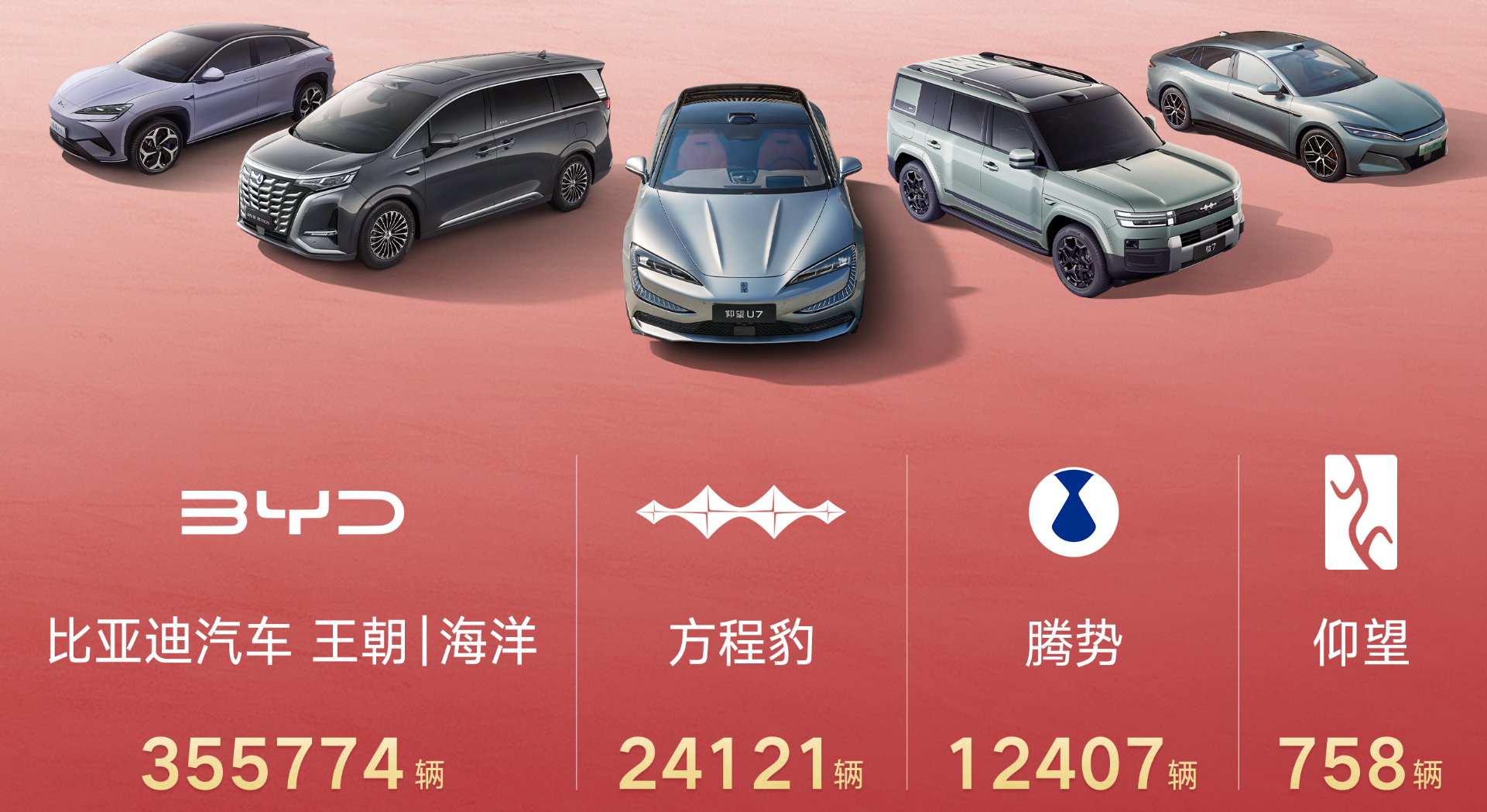
Core Insights - The automotive market in September 2025 experienced both month-on-month and year-on-year growth, with retail sales reaching 2.241 million units, a 6.3% increase year-on-year and an 11.0% increase month-on-month [1] - The overall retail sales for the year reached 17.005 million units, marking a 9.2% year-on-year increase, setting a new historical peak [1] - The market is shifting towards a more stable operation characterized by reduced price competition and moderate promotions, driven by a wave against "involution" [1] Domestic Brands Performance - Domestic brands captured 66.9% of the market share in September, with retail sales of 1.5 million units, reflecting a 13% year-on-year increase and a 12.9% month-on-month increase [2] - From January to September, the market share of domestic brands was 64.8%, up 5.9 percentage points from the previous year [2] - The penetration rate of new energy vehicles (NEVs) among domestic brands reached 78.1%, solidifying their position as a sales engine [2] - BYD, while still leading domestic brands, saw a 5.52% year-on-year decline in September sales, totaling 396,200 units, ending an 18-month growth streak [2][4] Key Competitors in Domestic Market - Geely and Chery are gaining traction in the NEV market, with Geely reporting sales of 273,100 units in September, a 35.24% year-on-year increase [4] - Chery, which went public in Hong Kong in September, achieved sales of 255,600 units, a year-on-year increase of 8.90% [4] - Changan and Great Wall Motors also reported significant growth, with Changan's sales at 266,300 units (up 24.92% year-on-year) and Great Wall's at over 133,600 units (up 23.29% year-on-year) [5] Joint Venture and Luxury Brands - Joint venture brands faced challenges, with retail sales of 490,000 units in September, down 6% year-on-year, despite a 4% month-on-month increase [6] - Luxury brands sold 240,000 units, down 1% year-on-year, but up 16% month-on-month, with a NEV penetration rate of 40% [6] - Volkswagen's joint ventures showed mixed results, with SAIC Volkswagen achieving a record high of 94,100 units sold, while FAW-Volkswagen experienced a year-on-year decline [6] New Energy Vehicle Market Dynamics - The new energy vehicle segment is seeing a shift, with the penetration of pure electric vehicles increasing significantly [12] - The new energy vehicle market is characterized by a growing share of small and high-end electric vehicles, driven by declining battery costs and the introduction of new models [12] - The market share of independent new energy brands reached 12.5%, up 1.2 percentage points year-on-year, with brands like Deep Blue and Zeekr performing well [12] Emerging Players in the Market - New energy vehicle startups are showing strong performance, with Leap Motor leading the segment with approximately 66,700 units delivered in September, a 97% year-on-year increase [8] - Xiaopeng and Xiaomi both surpassed 40,000 units in monthly sales, marking a significant milestone for the new energy vehicle sector [11] - Overall, the new energy vehicle startups achieved a retail market share of 20.2% in September, up 3.4 percentage points year-on-year [11]
杨青:深化与北欧合作 发挥汽车产业规模创新优势
Ren Min Wang· 2025-10-15 05:45
Core Viewpoint - The 2025 China-Nordic Economic and Trade Cooperation Forum emphasizes new opportunities for economic cooperation, particularly in the automotive industry, which is rapidly evolving towards electrification, intelligence, and connectivity [1][2]. Group 1: Company Initiatives - Dongfeng Motor Corporation, rooted in Hubei, is accelerating its transformation and upgrading by developing a full range of intelligent connected new energy vehicle brands and products, with over 50 models currently available [1]. - The company plans to enhance its strategic layout in Northern Europe and Europe, focusing on product launches, brand promotion, and local construction to provide high-quality products and services to Northern European customers [1][2]. Group 2: Recommendations for Growth - The company suggests three key strategies for promoting its brand: participating in top auto shows, sports events, cultural activities, and public welfare projects to increase brand awareness [2]. - There is a call for continuous improvement in infrastructure, particularly in accelerating the construction of charging facilities and supporting compatibility upgrades for charging standards [2]. - The company advocates for promoting mutual recognition cooperation, including product standards and battery tracking systems, to optimize market access channels [2].

汽车最旺的一个9月,产销双超300万辆,行业稳增长政策加力
Di Yi Cai Jing· 2025-10-14 13:23
Core Insights - The Chinese automotive industry has shown robust growth in the first nine months of 2023, with production and sales reaching 24.33 million and 24.36 million vehicles, respectively, marking year-on-year increases of 13.3% and 12.9% [1][2] - The introduction of policies such as the vehicle trade-in program has significantly stimulated consumer demand, leading to a notable increase in new energy vehicle (NEV) sales, which accounted for 46.1% of total new car sales [2][3] - The Ministry of Industry and Information Technology has released a plan aimed at stabilizing growth in the automotive sector, targeting a total vehicle sales volume of approximately 32.3 million units by 2025, with NEV sales projected to reach around 15.5 million units [4][5] Production and Sales Performance - In September 2023, automotive production and sales exceeded 3 million units for the first time in history, with production at 3.276 million and sales at 3.226 million, reflecting year-on-year growth of 17.1% and 14.9%, respectively [1][2] - NEV production and sales in September reached 1.617 million and 1.604 million units, with year-on-year growth of 23.7% and 24.6%, respectively, contributing to 49.7% of total new car sales [2][3] Export Trends - Automotive exports for the first nine months totaled 4.95 million units, representing a year-on-year increase of 14.8%, with NEV exports alone reaching 1.758 million units, a remarkable growth of 89.4% [2][3] Policy Impact - The vehicle trade-in policy is expected to result in over 12 million vehicles being replaced, generating approximately 1.7 trillion yuan in new car sales [3] - The new policies are not only boosting automotive consumption but also enhancing overall consumer confidence in the economy [3] Future Projections - The automotive industry aims to achieve a sales target of around 32.3 million vehicles in 2025, with a growth rate of approximately 3%, while NEV sales are expected to grow by about 20% [4][5] - The plan includes measures to expand domestic consumption, improve supply quality, and enhance the development environment, with over 15 specific initiatives outlined [5][6] Industry Challenges and Governance - The plan addresses issues such as price competition and misleading advertising, emphasizing the need for regulatory measures to ensure healthy competition within the industry [6] - Recent revisions to vehicle production and product admission requirements aim to enhance product quality and safety, adapting to the evolving landscape of the automotive industry [7]