
关税战

Search documents
美股期货持平,欧股走弱,日股与日元同步走低,黄金跌至3400美元下方
Hua Er Jie Jian Wen· 2025-07-22 07:53
8月1日贸易谈判截止日期临近,投资者对贸易关税的担忧重新抬头,市场质疑当前美股创纪录涨势的可持续性,同时等待本周特斯 拉、谷歌等大型科技公司财报,以寻找企业在关税压力下表现的线索。 加密货币市场继续分化,比特币涨0.2%至11.7万美元上方,以太坊跌1.9%至3685.85美元。 纯碱期货主力合约触及涨停,涨幅8%,报1375元/吨。 22日周二,亚太股指多数承压,MSCI亚洲股指下跌0.4%,日本股市与日元同步走低。美股期货基本持平,欧洲股指期货走弱。美元 指数小幅走强。此外,黄金、原油价格走低,比特币突破11.7万美元。 以下为核心资产走势: 标普500期货基本持平,纳指100指数期货跌约0.1%。 欧股开盘下跌,泛欧股指跌超0.2%,德股跌超0.3%。 MSCI亚洲股指下跌0.4%,日经225指数收跌0.1%。 日元兑美元跌超0.3%。美元指数涨超0.1%。欧元兑美元跌约0.1%。美元兑离岸人民币基本持平。 美债价格小幅上涨,基准10年期美债收益率基本持平。 现货黄金跌超0.3%,现货白银短线转涨,现基本持平。 美油跌约0.9%,布油跌约0.7%。 | ■ US 30 | 44,344.50 | 44, ...




摩根资管:料美联储下半年只减息一次 仍建议投资股债比例维持6:4
Zhi Tong Cai Jing· 2025-07-22 07:07
不过,他预期,香港房地产市场会处于整固状态,但商铺租金未必会有太大改善。 许长泰仍建议投资股债比例维持6:4,美股方面偏好大型股,不建议投资中型股,因为大型企业资金充 裕,若市场利率高企,将增加中型企业融资成本。他还建议投资者投资美股时,可同时买入期权,因为 一旦股票下跌可在期权中收息作抵销。他亦看好欧洲股市,但当中不建议投资奢侈品股。 摩根资产管理亚太区首席市场策略师许长泰预期,美联储下周不会减息,而9月减息的机会亦不大,料 最早要到10月份才有机会减息、甚至可能要推迟至12月或2026年才减。许长泰预期,美联储下半年只减 息一次,幅度为25点子。他估计,即使8月1日后,美国向多个国家或地区加征关税,美股虽料仍会波 动,但波幅不会如4月初公布"解放日"后般大。另外,许长泰仍建议投资股债比例维持6:4. 他估计,美联储迟迟未减息,除因忧虑关税战会推高美国通胀外,美国经济数据不算差亦是因为之一, 市场正关注6-7月份通胀会否受到关税影响而上升。此外,他亦忧虑美国总统特朗普不断挑战美联储的 独立性,会令美国债息持续高企。 他表示,美元汇价由1月至今已贬值11%,美汇在过去10年平均两年半有调整,料美元于未来2-3 ...
线下研讨会报名(上海场)| 关税战背景下中国企业并购的机遇和挑战
Refinitiv路孚特· 2025-07-22 05:33
Core Viewpoint - Since 2025, the global trade landscape has undergone profound changes, with tariff wars and geopolitical factors significantly impacting Chinese companies' "going out" strategy, particularly in the context of overseas mergers and acquisitions (M&A) [1] Group 1: Challenges and Opportunities in Cross-Border M&A - Despite numerous challenges, opportunities remain in cross-border M&A projects that exhibit industrial synergy, technological complementarity, and market expansion potential [1] - The London Stock Exchange Group (LSEG) has initiated a series of offline seminars to discuss and exchange views on these topics with experts from various fields [1] Group 2: Event Information - An upcoming seminar in Shanghai on August 5, 2025, will focus on the challenges and potential opportunities faced by Chinese companies in the M&A process [2][3] - The agenda includes multiple thematic discussions, such as a review of the Chinese M&A market in the first half of the year and considerations regarding Chinese companies' overseas M&A [2][3] Group 3: Expert Speakers - The event will feature prominent speakers, including Xiang Chen, who has nearly 15 years of experience in overseas investment and cross-border M&A, having led numerous projects across various regions and industries [4] - Other experts include Luo Xingguo, a professor with extensive research in financial derivatives and risk management, and Feng Kai, a senior data manager specializing in M&A data [5][8]
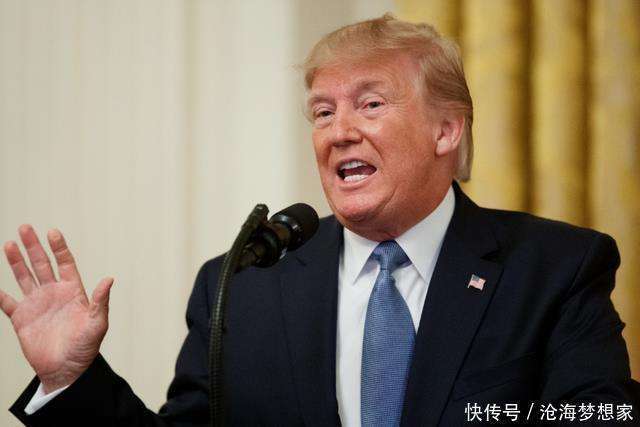
美国威胁给俄加100%关税,实则想把中印也拉下水,可俄方根本不怕
Sou Hu Cai Jing· 2025-07-22 04:51
前言: 美国最近对俄罗斯发出公开威胁,计划对其实施高达100%的关税。而中国和印度在这场风波中也意外 被卷入。然而,真正让西方感到恐惧的是,俄罗斯对此威胁并毫不畏惧。这究竟是什么原因呢? 早前,特朗普曾明确表示,如果俄乌冲突在50天内没有得到解决,他将对俄罗斯施加100%的关税。这 一赤裸裸的威胁反映出特朗普耐心的彻底耗尽。在他竞选之时,承诺要迅速解决俄乌危机,如今却依然 没有任何进展,这让他面子大失,尽管他努力进行斡旋,却收效甚微。渐渐地,特朗普失去了耐心,最 终决定用关税作为威胁,希望迫使俄罗斯做出妥协。然而,对于俄罗斯来说,这样的威胁毫无威慑力。 之所以俄罗斯对此并不畏惧,可以归结为三个方面的原因。首先,自俄乌冲突爆发以来,美西方国家对 俄罗斯的制裁已经超过万项。尽管初期对其经济造成了一定的冲击,但如今俄罗斯的经济不仅逐渐恢 复,甚至实现了增长,展现出强大的韧性。其次,即使美国真的实施了100%的关税,对俄罗斯的影响 也将微乎其微。俄罗斯的能源出口已经形成了新的市场模式,尽管欧洲市场高呼抵制,但实际上,他们 依然依赖俄罗斯的石油和天然气。即使关税增加,欧洲国家也会继续秘密购买俄罗斯的能源,从而不会 对其 ...
巴西总统:若特朗普不改变想法 双方或将打响“关税战”
news flash· 2025-07-22 03:01
Core Viewpoint - Brazilian President Lula expressed concerns over the 50% tariff imposed by the U.S. on Brazilian products, indicating potential for a trade war if negotiations do not yield results [1] Group 1: Trade Relations - Lula stated that Brazilian Vice President and Minister of Development, Industry, and Trade, Alckmin, is negotiating with the U.S. alongside the Brazilian Foreign Ministry [1] - The President criticized the rationale behind the tariffs, arguing that it is inappropriate to use judicial rulings to threaten any party involved [1] - Lula highlighted that the U.S. President Trump lacks understanding of the trade surplus situation, noting that Brazil has faced a trade deficit of $410 billion with the U.S. over the past 15 years [1]
金属周报 | 当反内卷遇上关税战:铜的“政策红利”与黄金的“避险溢价”
对冲研投· 2025-07-21 12:09
Group 1 - The overall macroeconomic environment last week was neutral to slightly positive, with Trump initially pressuring Powell and rumors of his potential dismissal, which led to a temporary rebound in copper prices before being denied by Trump [1][3] - Inflation data met expectations, reflecting the impact of tariffs on inflation, which caused the market to reduce expectations for interest rate cuts later this year, putting pressure on prices [1][3] - Gold prices showed a strong performance, supported by market resilience and expectations of potential interest rate cuts, despite ongoing tariff risks [4][50] Group 2 - Last week, COMEX gold fell by 0.44% and silver by 1.66%, while SHFE gold and silver rose by 0.45% and 2.58% respectively [2] - The copper market saw a slight rebound, with SHFE copper prices returning above 79,000 yuan/ton, driven by positive sentiment from urban renewal meetings and expectations of further measures against "involution" [6][49] - The copper concentrate TC weekly index was -43.20 USD/ton, showing a slight increase, with the market remaining relatively stable [8] Group 3 - The COMEX copper price curve shifted upward, maintaining a contango structure, while COMEX copper inventories exceeded 240,000 tons, indicating potential for further accumulation [6] - The domestic market for electrolytic copper saw a slight increase in inventory, with total stocks at 144,400 tons, reflecting limited demand from downstream processing enterprises [14] - The processing fees for 8mm refined copper rods increased, particularly in East China, although overall demand remains limited due to seasonal factors [16] Group 4 - The gold and silver prices fluctuated at high levels, with COMEX gold trading between 3,314 and 3,389 USD/oz, and silver between 37.6 and 39.6 USD/oz [19] - COMEX gold inventory increased by approximately 445,000 ounces to 37.19 million ounces, while silver inventory rose by about 232,000 ounces to 49.724 million ounces [35] - The SPDR gold ETF holdings decreased by 4 tons to 944 tons, while SLV silver ETF holdings fell by 100 tons to 14,658 tons, indicating a shift in market sentiment [40]

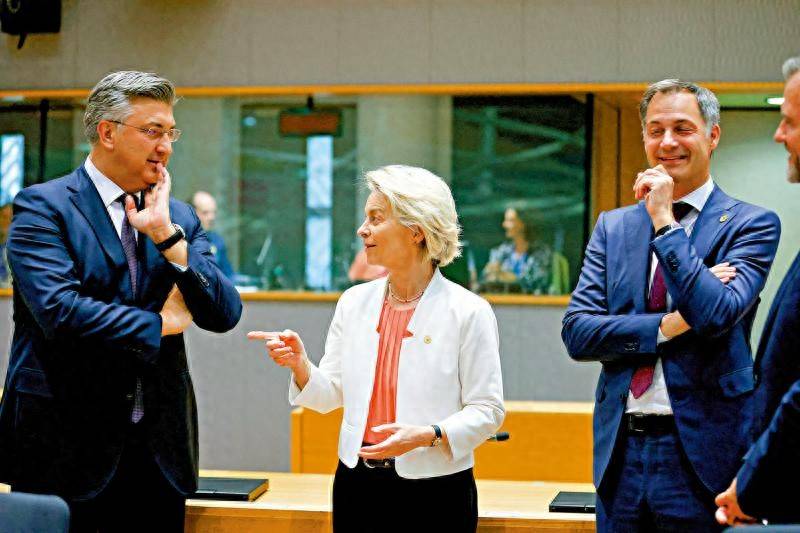
美国不死心,坚持推动关税战,欧盟已醒悟?冯德莱恩计划访问中国
Sou Hu Cai Jing· 2025-07-21 10:58
中国和欧盟在经贸领域有着密切的合作,实际上中国和欧盟之前有签署投资协定,但是欧洲议会却搁置了相关的协议。中国和欧盟在经济上有很大的互补, 欧盟许多企业在中国有投资,从而可以在中国市场获得巨大的利益,如今中国企业也已经在欧盟国家投资,尤其是在新能源汽车领域,中国已经领先欧盟, 为此中国企业在欧盟的投资,已经可以带动欧盟相关产业的发展。随着中国的崛起,欧盟已经越来越需要中国的支持,但是在美国的作梗之下,欧盟还有不 同的声音。 在美国坚持对欧盟加征30%关税的时候,冯德莱恩访问中国,无疑是给了美国一个警告,实际上欧盟产品在中国也是拥有一定的优势,如果欧盟企业在中国 扩大投资,会给欧盟带来更多的利益,包括通过技术合作,显然对于欧盟经济的发展可以提供支持。中国的崛起,已经带动了东南亚国家的发展,显然欧盟 也看得到中国的带动作用,欧盟原本对美国还是有很大的幻想,但是美国给予欧盟30%的关税,着实让欧盟感到了痛苦,为此欧盟是会有调整的。 名义上美国还是世界上最大的经济体,不过如果从实际购买力来看,美国已经不是最大的经济体,美国的优势在于使用美元,美元是国际贸易的主要支付货 币,为此美国可以通过美元购买廉价的商品,但是也是因 ...
美股期货小幅上涨,欧股基本持平,日元、黄金走高
Hua Er Jie Jian Wen· 2025-07-21 09:20
Market Overview - US stock futures rose slightly, while European stocks remained flat as the market awaited clarity on US-EU tariff negotiations [1][7] - Japanese ruling coalition suffered significant losses, leading to political uncertainty that temporarily boosted the yen but pressured Japanese stocks [1][17] - Gold prices increased slightly, while oil prices experienced a minor decline [1][18] Currency Movements - The Japanese yen appreciated over 0.6% against the US dollar, while the US dollar index fell by more than 0.2% [4][13] - The euro and Swiss franc also saw gains, rising over 0.2% [4] Bond Market - US Treasury yields fell for the fourth consecutive day, with the benchmark 10-year yield decreasing by approximately 3 basis points [5][10] Commodity Prices - Spot gold rose by over 0.4%, and spot silver increased by more than 0.6% [6] - Crude oil prices declined, with WTI down over 0.2% and Brent down over 0.4% [6] Company-Specific News - Stellantis NV reported a loss of €2.3 billion (approximately $2.7 billion) in the first half of the year, primarily due to restructuring costs, declining sales, and the impact of US tariffs [8]

商务部一出手就是王炸,美欧最想要的东西,中国即日起列入管制
Sou Hu Cai Jing· 2025-07-21 08:40
Core Viewpoint - The article discusses China's recent adjustments to its export control regulations, particularly in response to the ongoing trade tensions with the United States and the European Union, indicating a strategic shift to strengthen its position in the global market [1][4]. Group 1: Export Control Adjustments - The Ministry of Commerce and the Ministry of Science and Technology in China released a new "Catalog of Technologies Prohibited and Restricted from Export," which includes new restrictions on battery cathode material preparation technology and modifications to existing restrictions on non-ferrous metal metallurgy technology [1][4]. - A clear distinction has been made regarding technologies that are prohibited from export and those that are restricted, which require permission for export [4]. Group 2: Strategic Implications - China's adjustments signal its readiness for a prolonged trade conflict, as the U.S. and Western countries have faced significant impacts from China's export controls, leading to a preliminary trade framework agreement between China and the U.S. [5]. - The necessity for China to prepare for a comprehensive trade agreement with the U.S. is emphasized, as many details remain to be negotiated, and external pressures from the U.S. on other countries to isolate China could pose risks [7][9]. Group 3: Diplomatic Efforts - China's Foreign Minister Wang Yi has been actively visiting Europe and ASEAN countries, which are crucial trade partners, to strengthen alliances amid the trade tensions [9]. - Despite the EU's initial response to the U.S. tariffs, it is anticipated that they may ultimately compromise, while China is encouraged to pursue one-on-one cooperation with individual EU member states [10]. Group 4: Strategic Resource Management - By tightening export controls on battery technology, China aims to leverage its position in negotiations with Europe, particularly in the electric vehicle sector, while also countering Western supply chain restructuring efforts [12]. - The article highlights the potential vulnerability of the U.S. and Europe regarding lithium resources, suggesting that China's technology export restrictions could undermine the so-called "critical mineral alliance" [12].
宏观点评:6月经济的边际变化值得关注-20250721
Minmetals Securities· 2025-07-21 07:44
Overseas Macro - The global manufacturing PMI index in June recorded 50.3%, returning to the expansion zone, indicating a recovery in global manufacturing activity[1] - The impact of the tariff war on the economy is weakening, with concerns about high tariffs gradually diminishing as the U.S. continues tariff negotiations with various countries[1] - U.S. inflation is expected to continue rising in the coming months due to the transmission effects of tariffs, which will reduce the likelihood of interest rate cuts by the Federal Reserve[1][19] Domestic Macro - In Q2, China's GDP grew by 5.2% year-on-year, exceeding the annual growth target of 5%[2] - However, nominal GDP growth in Q2 was only 3.9%, a significant decline of 0.6 percentage points from Q1, marking the lowest growth rate in 2023[2] - In June, retail sales growth fell to 4.8%, a decrease of 1.6 percentage points from May, indicating weakening consumer demand[2][26] - Fixed asset investment growth in June was only 0.5%, down 2.4 percentage points from May, the lowest since 2022[2][28] - Exports in June increased by 5.8% year-on-year, but the decline in exports to the U.S. was still significant at 16.1%[2][31] Policy and Market Outlook - Global macro policy certainty is gradually increasing, with expectations for new policies to be introduced in the latter part of Q3 to support economic growth[3][38] - The stock market has seen significant increases in China, the U.S., and Japan, while oil prices have declined due to easing geopolitical tensions in the Middle East[3][40] - The overall economic pressure in China may increase in the second half of the year, necessitating attention to the effectiveness of incremental policies[2][35]