
中国经济增长

Search documents
国家统计局:下阶段要实施更加积极有为的宏观政策 持续扩大内需、优化供给
Sou Hu Cai Jing· 2025-12-15 04:17
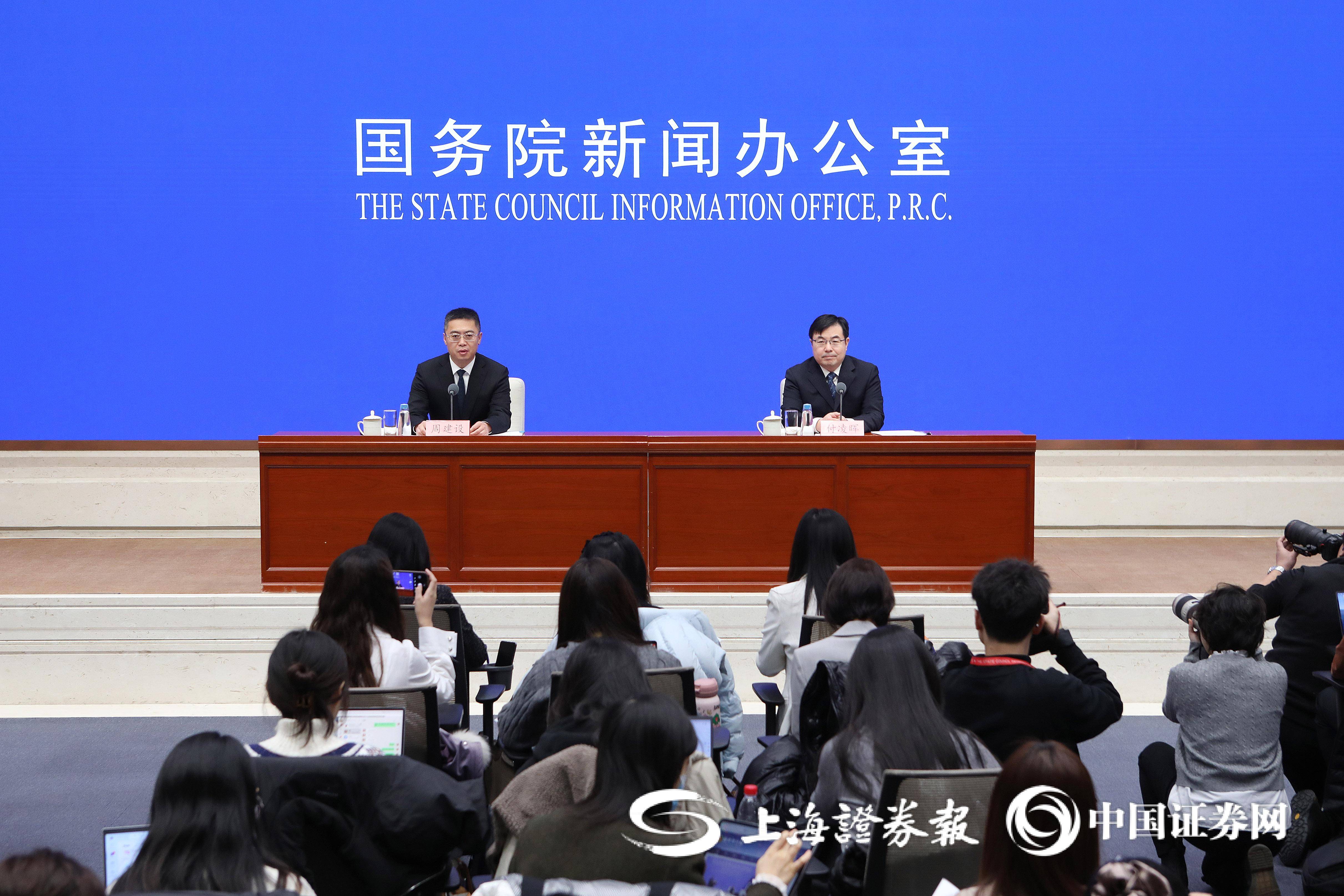
国家统计局新闻发言人、总经济师、国民经济综合统计司司长付凌晖12月15日在国新办新闻发布会上表示,近期,主要国际组织纷纷上调对中国经济增长预 期,也表明国际社会对中国经济发展的信心。付凌晖表示,下阶段,要贯彻落实好中央经济工作会议精神,实施更加积极有为的宏观政策,持续扩大内需、 优化供给,着力稳就业、稳企业、稳市场、稳预期,推动经济实现质的有效提升和量的合理增长,为"十五五"开好局、起好步打下坚实基础。 F = = = = 1-15-12 r the state the states of the station of the station of the station of the station of the station of the station of the station of the station of the station of the states of the state t a local the state n a status and the state the last be a 1872 and and Harry the first the state the sta ...

外资加速流入中国
2 1 Shi Ji Jing Ji Bao Dao· 2025-12-14 23:31
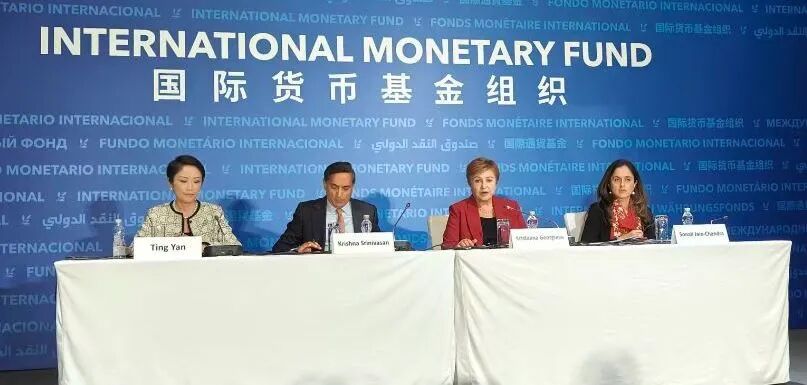
Economic Growth Forecasts - The International Monetary Fund (IMF) raised China's GDP growth forecast for 2025 by 0.2 percentage points to 5%, attributing this adjustment to macroeconomic policy measures [2] - The World Bank increased its 2025 growth prediction for China by 0.4 percentage points to 4.9%, citing supportive fiscal and monetary policies as well as diversified export markets [2] - Goldman Sachs revised its GDP growth forecast for China in 2025 from 4.9% to 5.0% and also raised projections for 2026 and 2027 [3] - Deutsche Bank adjusted its 2025 economic growth forecast for China to 5.0% [4] - Standard Chartered Bank increased its 2026 GDP growth forecast for China from 4.3% to 4.6% [5] Resilience and Structural Changes - China's economic resilience is recognized, with significant contributions from technology innovation and integration of tech policies with industrial development [5] - The Chinese economy is expected to rely more on domestic demand in the coming years, supported by structural reforms in the social security system [2][6] - There is a notable increase in overseas investment interest in Chinese assets, with institutional investors and retail investors showing signs of increased market participation [7] Investment Opportunities - The Asian markets, including China, are expected to provide attractive diversification and rebalancing investment opportunities in 2026, supported by policy benefits and improving fundamentals [8] - The upcoming "15th Five-Year Plan" is anticipated to focus on high-quality growth and a shift towards a consumption-driven economic model [9] - The financial system in China, particularly non-bank financial institutions, is expected to play a larger role in promoting consumer spending [9] Future Economic Outlook - The Chinese economy is projected to maintain steady growth, with internal demand expected to increase further and external demand remaining robust due to a stable US economy and AI investments [10] - Key areas for infrastructure investment are expected to include underground utilities, green transition projects, and AI computing centers [10]
外资加速流入中国
21世纪经济报道· 2025-12-14 23:29
Core Viewpoint - Recent reports from the IMF, World Bank, and various global financial institutions have raised their growth forecasts for the Chinese economy, highlighting its resilience and effective policy measures despite complex internal and external environments [2][3]. Group 1: Economic Growth Forecasts - The IMF has increased its 2025 growth forecast for China by 0.2 percentage points to 5%, attributing this to macro policy measures [2]. - The World Bank has raised its 2025 growth prediction by 0.4 percentage points to 4.9%, citing proactive fiscal policies and diversified export markets as key factors [2]. - Goldman Sachs has adjusted its GDP growth forecast for China in 2025 from 4.9% to 5.0%, with similar upward adjustments for 2026 and 2027 [3]. - Deutsche Bank has also raised its 2025 growth forecast to 5.0% [3]. - Standard Chartered has increased its 2026 GDP growth forecast from 4.3% to 4.6% [3]. Group 2: Structural Support and Investment Sentiment - Morgan Stanley's chief strategist noted that the Chinese stock market has shown resilience due to structural support, including government commitment to economic stability and technological breakthroughs [4]. - There is a notable increase in overseas investment interest in Chinese assets, with institutional investors and retail investors showing signs of increased market participation [6]. - In a recent investment strategy conference, many overseas investors expressed strong interest in returning to China, particularly in the context of diversified asset allocation [6]. Group 3: Future Economic Strategies - The "14th Five-Year Plan" has shown significant results, and the upcoming "15th Five-Year Plan" aims to continue promoting high-quality development and a consumption-driven growth model [10]. - The World Bank emphasizes the role of non-bank financial institutions in enhancing consumer spending and improving market transparency to support economic growth [11]. - Structural reforms are deemed essential to stimulate domestic demand and achieve a sustainable and high-quality development trajectory [11].

社评:国际资本为何纷纷“加仓中国”
Sou Hu Cai Jing· 2025-12-14 16:30
Group 1 - The core viewpoint of the articles emphasizes the significant return of international capital to the Chinese market, particularly in the artificial intelligence sector, reflecting a strong interest in China's economic prospects and stability [1][2][4] - The Chinese government is actively promoting policies to support the development of the artificial intelligence industry, indicating a commitment to enhancing its attractiveness to global resources [1][2] - The International Monetary Fund (IMF) and World Bank have raised their economic growth forecasts for China, highlighting the country's resilience in exports and stable domestic demand [2][3] Group 2 - China's comprehensive advantages in economic development, including a complete industrial system and strong supporting capabilities, enable rapid innovation and market application of new technologies [3][4] - The global interest in Chinese assets reflects a broader judgment on China's future growth potential amidst a fragile global economic recovery [4] - China's strategy of greater openness and deeper reforms is seen as a long-term commitment to economic growth, aiming to create win-win scenarios through cooperation [4]
世界银行为什么上调中国经济增速预期
Zheng Quan Ri Bao· 2025-12-14 16:15
世界银行12月11日发布了最新一期中国经济简报,相较上期简报,其将2025年中国经济增速预期上调了 0.4个百分点。而截至目前,已有多个国际组织和知名金融机构上调了2025年中国经济增速预期。 在笔者看来,这是对中国经济"政策托底有力、增长韧性凸显、转型升级提速"的认可。面对复杂多变的 外部环境,中国通过政策协同发力、内外需求互补、创新动能突破,走出了稳健增长曲线。这份"上调 共识",体现了国际组织和知名机构对中国经济基本面与发展潜力的充分认可。 首先,更加积极的财政政策与适度宽松的货币政策精准配合,为经济复苏注入稳定动力,成为国际组 织、机构上调对中国经济预期的首要依据。 财政政策的"发力见效",正在为经济增长夯实底盘。超长期特别国债的落地发行,为重大项目和重大工 程提供了稳定资金支持;专项债投向领域持续扩围,从传统基建延伸至新基建、保障性住房等领域,既 补短板又拉动上下游产业链需求。与此同时,设备更新与消费品以旧换新政策精准发力,从工业领域的 高端装备升级,到消费端的汽车、家电换新,相关消费潜力进一步激活。 货币政策的"精准滴灌",为实体经济送上"及时雨"。年内降息降准灵活高效,稳步释放市场流动性,有 效 ...
中方谈多家国际机构上调中国经济增速预期:“看好中国”日益成各方共识
Zhong Guo Xin Wen Wang· 2025-12-12 08:23
Group 1 - The core viewpoint is that multiple international institutions have raised their economic growth forecasts for China, indicating a growing consensus on the positive outlook for the Chinese economy [1][2] - The World Bank, IMF, and ADB have adjusted their 2025 growth forecasts for China by 0.4, 0.2, and 0.1 percentage points respectively, highlighting China's resilience despite global challenges [1] - The recent Central Economic Work Conference has outlined key tasks for the upcoming year, focusing on domestic demand, strong domestic market construction, and promoting win-win cooperation through openness [1] Group 2 - China's new productive forces are expected to flourish, with advancements in high-end, intelligent, and green manufacturing, leading to a global leadership role in innovation and sustainable development [2] - The country is committed to deepening high-level openness and expanding institutional openness, which will enhance reform and development through a multilateral trade system [2] - In an uncertain global environment, China is positioned as a significant source of certainty and will continue to be a vital engine for global growth, inviting other countries to benefit from its large market [2]
国际媒体关注中央经济工作会议:中国韧性、中国增长、中国机遇
Zhong Guo Xin Wen Wang· 2025-12-12 08:03
国际媒体关注中央经济工作会议:中国韧性、中国增长、中国机遇 中新网12月12日电 12月10日至11日,中央经济工作会议在北京举行。国际媒体对此高度关注,称会议 为2026年中国经济工作指明方向。多家外媒认为,2025年以来,中国经济展现出显著韧性。 路透社指出,中央经济工作会议是中国制定年度财政政策议程和目标的重要会议,这次会议针对2026年 工作。美国《华尔街日报》称,中国领导层为这个世界第二大经济体,敲定了2026年经济工作的优先事 项。 《华尔街日报》报道指出,2025年以来,中国出口经受住了美国关税政策等外部冲击,经济增长远好于 预期。全球市场都在关注中国年度最高级别的中央经济工作会议,寻找有关中国2026年经济继续稳定增 长的线索。 美国有线电视新闻网(CNN)表示,中国这场会议吸引世界目光,经济学家与企业界将尤为关注中国下一 个五年经济蓝图的相关信号,这将指导中国未来五年的发展战略和优先事项。 新加坡《联合早报》对中国此次中央经济工作会议的内容进行了详细介绍。报道关注到,会议呼吁坚持 内需主导,清理消费领域的不合理限制,以释放服务消费潜力。 《华尔街日报》报道称,中国将深入实施提振消费专项行动, ...
多家国际机构上调今年中国经济增速预期
Sou Hu Cai Jing· 2025-12-11 14:37
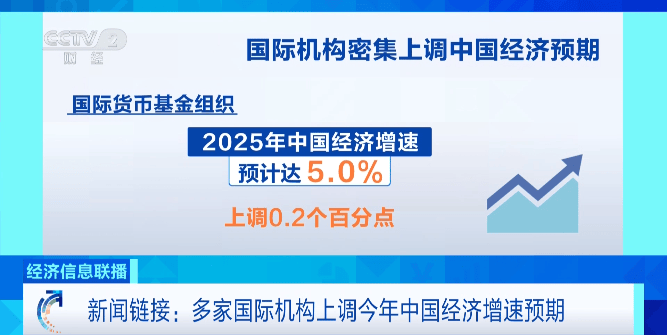
12月10日,亚洲开发银行发布《2025年亚洲发展展望》报告,将今年中国经济增速预期上调0.1个百分 点。同一天,国际货币基金组织表示,今年中国经济增速将达到5%,较此前的预期上调0.2个百分点。 此前,经济合作与发展组织在2日发布的《经济展望报告》中,将中国今年经济增速预期上调0.1个百分 点至5%,这也是经合组织今年内第三次上调对中国经济增速的预期。其他金融机构方面,高盛将今年 中国经济增速预期从4.9%上调至5.0%,并对未来两年增速预期进行了更大幅度的上调。 这些机构普遍认为,中国经济坚实的基本面、充足的政策工具和结构性升级将维持其增长势头。此外, 今年中国出口的强劲表现,也展示出中国应对外部环境不确定性的底气。德意志银行的调查显示,中国 消费者的信心近期有所上升,特别是在服务领域增加支出的意愿增强。 (央视财经《经济信息联播》)近日,包括亚洲开发银行、国际货币基金组织在内的多家国际组织和机 构,也密集上调了2025年中国经济增速预期。主要依据包括中国宏观政策实施有力、经济韧性突出以及 结构性改革持续推进等。 德意志银行中国区首席经济学家 熊奕:我们在和中外企业以及投资人的交流中也感受到,整体上大家 ...
中央经济工作会议释信号:这三件事,不做!
Sou Hu Cai Jing· 2025-12-11 12:12
中央经济工作会议12月10日至11日在北京举行。对于明年的经济政策,大家不仅关心"要做什么",也想 知道"不做什么"。从会议释放的信号看,有三件事已经明确不会做。 第一,不会"松油门" "更好统筹国内经济工作和国际经贸斗争""更好统筹发展和安全""实施更加积极有为的宏观政策"...... 与几天前的中央政治局会议类似,此次中央经济工作会议也用了许多"比较级",且部署更细,方向更明 晰: ——政策力度,不减。 更加积极的财政政策、适度宽松的货币政策将延续,效果突出的"两新""两重"政策将优化实施。"发挥 存量政策和增量政策集成效应",从会议这一表述看,在既有政策落地见效的基础上,还会根据形势变 化推出新工具,解决新问题。 ——政策质量,会升。 把该做的事坚持下去,把定下来的事做到底——中国经济的韧性和动力在"长期主义"里不断积累、显 现。 也正是基于这种可预期性,世界银行、国际货币基金组织(IMF)、亚洲开发银行等国际机构近日密集 上调中国经济增速预测。 IMF总裁格奥尔基耶娃判断,中国在稳定而有力的政策支持下,有望保持强劲增长,未来几年对全球增 长的贡献率仍将维持在约30%。 第三,不会"单打独斗" 此次中央 ...
中国经济增长前景连获国际“信任票”
Zhong Guo Xin Wen Wang· 2025-12-11 09:43
Group 1 - Multiple authoritative institutions have raised their economic growth forecasts for China for the next two years, indicating optimism about the economic outlook [1] - The World Bank has increased its 2025 growth forecast for China by 0.4 percentage points, attributing this to more proactive fiscal policies and moderately loose monetary policies supporting domestic consumption and investment [1] - The International Monetary Fund (IMF) has also raised its 2025 growth forecast for China to 5%, up by 0.2 percentage points, citing effective macroeconomic stimulus measures and lower-than-expected tariffs on exports [1] Group 2 - Goldman Sachs projects that China's export volume will grow by 5% to 6% annually in the coming years, contributing to overall economic expansion [2] - Deutsche Bank reports that major projects under the "14th Five-Year Plan" will provide strong support for infrastructure investment, with a rebound in investment growth contributing to GDP in 2026 [2] - Morgan Stanley's chief economist for China notes that timely policy adjustments have boosted market confidence and increased foreign interest in Chinese assets, predicting a steady accumulation trend in foreign investments in Chinese stocks by 2026 [2] Group 3 - China's macroeconomic data has shown a recovery this year, with GDP growth of 5.2% year-on-year in the first three quarters, ranking among the top in major economies [3] - China's foreign trade has maintained growth for ten consecutive months, supported by proactive measures in response to external pressures [3] - Investment in high-tech sectors has been growing rapidly, with significant expansions in new energy, new materials, and artificial intelligence, contributing to stable economic performance [3] Group 4 - The World Bank emphasizes that future economic growth in China will increasingly rely on domestic demand, necessitating structural reforms in the social security system and creating a more predictable business environment [4] - The IMF highlights the need for China to transition to a consumption-driven growth model and suggests more robust policy measures to support this transition [4] - The upcoming Central Economic Work Conference will serve as an important indicator of China's economic policy direction for the coming year, particularly in navigating complex domestic and international challenges [4]