中美贸易协议

Search documents
建筑材料行业跟踪周报:未来一年全球贸易形势有望稳定,关注出口产业链-20251103
Soochow Securities· 2025-11-03 03:36
Investment Rating - The report maintains an "Overweight" rating for the building materials industry [1] Core Views - The global trade situation is expected to stabilize over the next year, with a focus on exports [1] - The construction materials sector has shown a positive performance, with a weekly increase of 1.29%, outperforming the Shanghai and Shenzhen 300 Index [4] - The report highlights the importance of the U.S.-China trade agreement in shaping future trade stability [4] Summary by Sections 1. Bulk Building Materials Fundamentals and High-Frequency Data - **Cement**: The national average price for high-standard cement is 351.7 RMB/ton, up by 3.5 RMB/ton from last week, but down by 65.2 RMB/ton compared to the same period in 2024. The average cement inventory ratio is 69.6%, up by 1.8 percentage points from last week [13][14][22] - **Glass**: The average price for float glass is 1202.7 RMB/ton, down by 41.0 RMB/ton from last week and down by 126.0 RMB/ton year-on-year. The inventory of float glass stands at 62 million heavy boxes, down by 470,000 boxes from last week [48][50] - **Fiberglass**: The market price for non-alkali fiberglass remains stable, with mainstream prices ranging from 3250 to 3700 RMB/ton [46] 2. Industry Dynamics Tracking - The report notes a rebound in new orders and business activity expectations in the construction sector, linked to recent policy financial support [4] - The report recommends focusing on export-oriented industries, particularly in the fiberglass sector, and companies involved in home decoration consumption [4] 3. Weekly Market Review and Sector Valuation - The report indicates that the cement market is experiencing a slight increase in prices, particularly in the southwestern region, while demand is expected to weaken as northern regions enter winter [13][14] - The report emphasizes the importance of maintaining supply discipline within the cement industry, which is expected to lead to better profitability compared to the previous year [4][13]




11.2黄金下周大行情来袭会怎么走?
Sou Hu Cai Jing· 2025-11-02 09:38
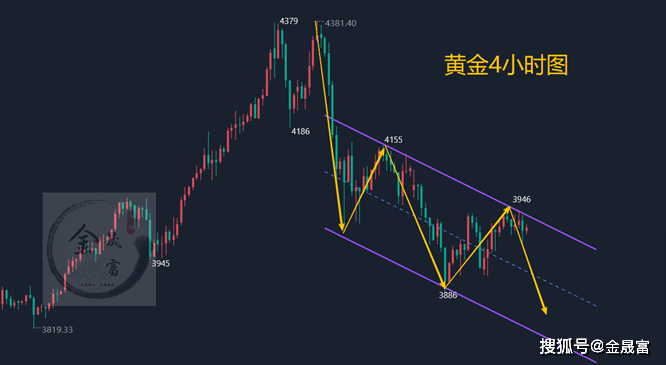
Group 1 - The core viewpoint of the articles revolves around the fluctuating gold prices influenced by various economic factors, including U.S. Federal Reserve policies and geopolitical tensions [1][2][3]. - Recent adjustments in gold prices are attributed to profit-taking by investors and optimistic expectations regarding a potential U.S.-China trade agreement [2][3]. - The Federal Reserve's recent interest rate cut of 25 basis points has led to a decrease in the market's expectations for further rate cuts in December, impacting gold prices [2][3]. Group 2 - The World Gold Council reported a 3% year-on-year increase in global gold demand, reaching 1,313 tons, driven primarily by a surge in investment demand [2]. - Technical analysis indicates that gold is currently trading below several moving averages, suggesting a bearish trend in the short term [5][6]. - Key resistance levels for gold are identified at 4010-4020, while support is seen at 3915-3885, indicating potential trading strategies for the upcoming week [6][3].

金荣中国:现货黄金继续震荡,目前暂交投于4018美元附近
Sou Hu Cai Jing· 2025-10-31 18:12
Fundamental Analysis - Gold prices experienced significant volatility, closing at approximately $4024.18 per ounce after a sharp recovery from an initial drop to $3915, marking a daily increase of about 2.4%, the largest since the recent peak on October 20 [1] - The Federal Reserve's decision to cut interest rates by 25 basis points to a target range of 3.75%-4.0% has contributed to the renewed interest in gold, as low interest rates and economic uncertainty create a favorable environment for non-yielding assets [1] - The U.S. dollar index rose by 0.38% to 99.51, with a peak of 99.72, the highest since August 1, yet this strength did not suppress safe-haven buying in gold, indicating heightened market sensitivity to uncertainty [1] Trade Developments - President Trump announced a reduction of tariffs on China from 57% to 47% in exchange for increased purchases of U.S. soybeans and enhanced cooperation on rare earth exports, which briefly boosted the stock market before a quick retreat [2] - The overall sentiment remains cautious as the trade agreement appears to be more of a temporary truce rather than a comprehensive resolution, contributing to mixed market reactions [2] Market Sentiment - The combination of the Fed's rate cut, uncertainty surrounding the December meeting, and the lack of substantial progress in U.S.-China trade negotiations has created a complex environment that favors gold while pressuring stock markets [2] - The S&P 500 index fell by 0.99%, and the Nasdaq dropped by 1.57%, reflecting the negative impact of these factors on equity markets [1] Technical Analysis - On the daily chart, gold prices are facing potential short-term pullback risks, with the $3900 level being a critical support point that traders should monitor [4] - The price action has shown a struggle to maintain levels above $4030, indicating a possible consolidation phase around $4010, with traders advised to watch for resistance near $4020/4045 and support at $3985/3920 [4]

铜冠金源期货商品日报-20251031
Tong Guan Jin Yuan Qi Huo· 2025-10-31 02:22
1. Report Industry Investment Rating No relevant content provided. 2. Core Views of the Report - After the Sino-US negotiations concluded, the market's trading expectations were realized, and risk appetite significantly contracted. In the short - term, the market faces adjustment risks due to capital realization pressure, but in the long - run, it is still cost - effective to buy on dips. [2][3] - The prices of precious metals may fluctuate in the short - term; copper, aluminum, and other base metals are expected to maintain high - level range - bound oscillations; zinc, lead, and tin prices are in adjustment phases; industrial silicon is expected to be strongly range - bound; lithium carbonate prices may fluctuate widely; nickel prices are at the lower end of the range, awaiting new upward drivers; and the prices of soda ash and glass are expected to be weak. [4][6][8][12][14][16][17][19][22][24] - Steel prices are expected to be range - bound, iron ore prices will oscillate, soybean and rapeseed meal prices will be strongly range - bound, and palm oil prices will be weakly range - bound. [26][27][28][30] 3. Summary by Related Catalogs 3.1 Macro - Overseas: After the Sino - US summit, the average tariff faced by China decreased by 10%, and the Sino - US game entered a stage of truce. The Nasdaq fell about 1%, the gold price rebounded over 2% to the $4000 mark, the US dollar index rose to 99.5, the 10Y US Treasury yield fluctuated slightly, copper prices dropped over 2%, and oil prices remained flat. [2] - Domestic: The A - share market rose and then fell, with nearly 4100 stocks closing lower and the trading volume reaching 2.46 trillion. The lithium battery and shipping sectors led the gains, while the ChiNext and STAR Market sectors led the losses. In the medium - to - long - term, it is still cost - effective to buy on dips. The bond market priced in all negative factors, and short - and long - term interest rates both declined. [3] 3.2 Precious Metals - International gold and silver prices rebounded slightly. COMEX gold futures rose 0.94% to $4038.30 per ounce, and COMEX silver futures rose 1.71% to $48.73 per ounce. The market has doubts about the actual effect of the Sino - US trade agreement, and precious metals prices may oscillate in the short - term. [4][5] 3.3 Copper - The Shanghai copper main contract was strongly range - bound, and LME copper pulled back at night. The Sino - US trade situation eased, but the path of global central banks turning to easing is uncertain. Fundamentally, overseas mine disruptions continue, and non - US inventory is low. Short - term copper prices are expected to maintain high - level range - bound oscillations. [6][7] 3.4 Aluminum - The Shanghai aluminum main contract closed at 21280 yuan/ton, down 0.07%. The market continues to digest the Fed's interest - rate cut decision. The Sino - US trade agreement is optimistic, but there are supply disturbances overseas and environmental restrictions on some downstream industries in the north. Aluminum prices are in high - level range - bound oscillations. [8][9][10] 3.5 Alumina - The alumina futures main contract closed at 2791 yuan/ton, down 1.1%. The supply side is basically stable this week, the spot market trading is light, and the impact of environmental restriction news on the market is limited. Attention should be paid to the expansion of maintenance and production - reduction capacity. [11] 3.6 Zinc - The Shanghai zinc main contract was range - bound, and LME zinc oscillated weakly. The market digested Powell's hawkish remarks, and zinc prices adjusted. The supply in November is expected to remain high, with limited increase, and consumption is entering the off - peak season. Zinc prices are affected by macro and market sentiment in the short - term. [12][13] 3.7 Lead - The Shanghai lead main contract oscillated narrowly. The supply side changed little, demand marginally weakened, and social inventory continued to decline but at a slower pace. The lead market shows a pattern of strong reality and weak expectation, and prices are expected to maintain high - level narrow - range oscillations. [14][15] 3.8 Tin - The Shanghai tin main contract oscillated weakly. The market lowered the expectation of the Fed's interest - rate cut in December, and the supply - demand pattern is weak. Tin prices are expected to adjust at a high level, but supply - side disturbances will limit the downward adjustment space. [16] 3.9 Industrial Silicon - Industrial silicon was strongly range - bound. The supply side is stable, with Xinjiang's operating rate rising and Sichuan and Yunnan's output falling after the dry season. The demand side has mixed signals. The social inventory decreased slightly last week, and the futures price is expected to continue to be strongly range - bound. [17][18] 3.10 Lithium Carbonate - Lithium carbonate prices fluctuated widely, and spot prices rose. The new energy vehicle industry has mixed demand signals. With the increase in positions and trading volume, the long - short contradiction is intensifying, and it is advisable to wait and see. [19][20][21] 3.11 Nickel - Nickel prices oscillated weakly. The Sino - US high - level meeting reached multiple consensuses, but the fundamental supply pressure is strong. Nickel prices are at the lower end of the range, with limited room for a deep decline, waiting for upward drivers. [22][23] 3.12 Soda Ash and Glass - The soda ash main contract oscillated weakly, and the glass main contract also showed a weak trend. Glass production is stable, but there is supply pressure. The downstream has structural differentiation, and the prices of soda ash and glass are expected to be weak, with attention paid to previous lows for support. [24][25] 3.13 Steel (Rebar and Hot - Rolled Coil) - Steel futures oscillated and rebounded. Steel production and apparent demand increased, and inventory decreased. In the short - term, the pressure eased, but with the cold weather, the supply - demand situation will turn weak. Steel prices are expected to be range - bound. [26] 3.14 Iron Ore - Iron ore futures oscillated and rebounded. Steel production increased, and steel mills actively purchased raw materials. Supply pressure was partially relieved, and port inventory decreased. After the macro - level positive factors were realized, iron ore prices are expected to oscillate. [27] 3.15 Soybean and Rapeseed Meal - Soybean and rapeseed meal futures rose. The drought in US soybean - growing areas eased, and the soybean production forecast in Brazil's Paraná state increased. China has resumed purchasing US soybeans, and short - term soybean and rapeseed meal prices are expected to be strongly range - bound. [28][29] 3.16 Palm Oil - Palm oil futures fell slightly. After the Sino - US high - level meeting, the market digested Powell's hawkish remarks. The current driving news is scarce, and palm oil prices are expected to be weakly range - bound. [30] 3.17 Metal Trading Data - The trading data of various metals, including SHFE copper, LME copper, SHFE aluminum, etc., are provided, showing closing prices, price changes, trading volumes, and open interests. [31] 3.18 Industrial Data - The industrial data of metals such as copper, nickel, zinc, etc., including contract prices, warehouse receipts, inventory, spot premiums, and price ratios, are presented, along with their changes over time. [32][34][35]
宝城期货豆类油脂早报-20251030
Bao Cheng Qi Huo· 2025-10-30 02:10
1. Report Industry Investment Rating - The report does not provide an overall industry investment rating. 2. Report's Core View - The overall trend of the agricultural products futures in the commodity market is weak, with most varieties showing a weak - oscillatory pattern. The market situation of each variety is affected by multiple factors, and the future market trend is uncertain, lacking a clear direction [5][6][7][8]. 3. Summary According to Related Catalogs 3.1. Bean Meal (M) - **Price Trend**: Short - term, medium - term, and intraday views are all oscillatory and weak. The future trend will depend on Sino - US relations, import arrival rhythm, oil mill start - up rhythm, and inventory pressure [5][6]. - **Core Logic**: Driven by the expectation of China resuming soybean purchases from the US, the far - month US soybean contract rose to the $11 mark and then fell back. Before the market direction is determined by details of the Sino - US trade agreement, South American weather, and China's actual purchase rhythm, the market is in a game state. In the short term, the cost - driven logic of the bean meal market replaces the supply logic, and the bean meal futures price faces a risk of decline after approaching the upper limit of the oscillatory range [5]. 3.2. Soybean Oil (Y) - **Price Trend**: Short - term, medium - term, and intraday views are all oscillatory and weak. The future trend is affected by Sino - US relations, US biofuel policies, US soybean oil inventory, domestic soybean cost support, supply rhythm, and oil mill inventory [6][7]. - **Core Logic**: The weakness in the oil market continues, with soybean oil being relatively resistant to decline. The spot price is also falling. The arrival volume of raw soybeans remains high, the oil mill start - up rate continues to increase, and the soybean oil inventory has reached 1.2503 million tons, a year - on - year increase of 10.26%, hitting a new high in the same period in the past five years. On the demand side, catering consumption is weak and downstream procurement is cautious, resulting in a sluggish market. In the process of supply - demand re - balance, the pattern of strong meal and weak oil continues, and the soybean oil futures price will continue to oscillate weakly [7]. 3.3. Palm Oil (P) - **Price Trend**: Short - term view is weak, medium - term view is oscillatory, and intraday view is oscillatory and weak. The future trend is influenced by biodiesel attributes, Malaysian palm oil production and exports, Indonesian exports, main - producing countries' tariff policies, domestic arrival and inventory, and substitution demand [6][8]. - **Core Logic**: The main pressure on the palm oil market comes from the expected 10% year - on - year increase in Indonesia's palm oil production in 2025 to about 56 - 57 million tons, and the weak exports of Malaysian palm oil also drag down the international palm oil futures price. The domestic market is focused on the possible meetings between Chinese, US, and Canadian leaders during the APEC Summit. The palm oil futures price has fallen below the lower limit of the previous oscillatory range and will continue to be weak [8].
《农产品》日报-20251029
Guang Fa Qi Huo· 2025-10-29 02:29
Report Summary 1. Industry Investment Ratings No industry investment ratings are provided in the reports. 2. Core Views - **Fats and Oils Industry**: Malaysian palm oil futures are under pressure due to concerns about increased production, slower exports, and potential inventory growth. Domestic palm oil futures are in a volatile adjustment, with the price breaking below 9,000 yuan and potentially finding support at 8,900 yuan. For soybean oil, the market is optimistic about a potential Sino - US trade agreement, which may support prices from the cost side. However, overall demand is weak, and the basis quote is expected to remain stable [1]. - **Meal Industry**: Sino - US relations are warming, increasing the expectation of Chinese purchases of US soybeans. Brazilian soybean exports to China remain high, and the cost of domestic soybean imports is supported. Although domestic soybean and soybean meal inventories are high, the cost support is strengthening, and the domestic soybean meal trend is expected to be strong [2]. - **Pig Industry**: The recent rebound in pig prices is mainly due to secondary fattening. Market demand has improved, and the supply - demand game has tightened in the short term. However, in the medium term, the slaughter volume will continue to increase in November and December, and there may be a new round of pressure around the Winter Solstice. It is advisable to wait for the spot price to stabilize before entering the reverse spread [5]. - **Corn Industry**: In the Northeast, supply is sufficient, and prices are stable. In North China, farmers' selling enthusiasm decreases as prices fall, and prices have rebounded locally. Overall, due to a bumper harvest, there is still selling pressure on corn, and prices will remain weak. Demand is mainly for rigid needs, and the futures market is also weak [8]. - **Sugar Industry**: Brazil's gasoline price cut dashed the expectation of a lower sugar - making ratio, and the sugar supply outlook is loose. As the Northern Hemisphere's sugar - crushing season begins, the market is focusing on India and Thailand. Domestic sugar prices are relatively low, and the current bottom - shock pattern may continue [12]. - **Cotton Industry**: The downstream textile enterprises' profits and cash flows have improved, and the demand for cotton raw materials is resilient. The rising cost of new cotton provides strong support, but there is also hedging pressure. In the short term, cotton prices may fluctuate within a range [13]. - **Egg Industry**: The supply of eggs is sufficient due to high laying - hen inventories, high egg - laying rates, and increased egg weights. Demand may increase first and then decrease this week. Egg prices may rise slightly in the short term but may decline slightly in the second half of the week due to strong supply and weak demand [16]. 3. Summary by Directory Fats and Oils Industry - **Soybean Oil**: The price of Jiangsu Grade - 1 soybean oil on October 28 was 8,450 yuan, down 30 yuan from the previous day, a decrease of 0.35%. The basis of Y2601 was 268 yuan, up 22 yuan or 8.94% [1]. - **Palm Oil**: The price of 24 - degree palm oil in Guangdong on October 28 was 8,900 yuan, down 130 yuan from the previous day, a decrease of 1.44%. The basis of P2601 was - 58 yuan, up 12 yuan or 17.14% [1]. - **Rapeseed Oil**: The price of Jiangsu Grade - 3 rapeseed oil on October 28 was 10,000 yuan, down 50 yuan from the previous day, a decrease of 0.50%. The basis of OI601 was 270 yuan, down 32 yuan or 10.60% [1]. Meal Industry - **Soybean Meal**: The price of Jiangsu soybean meal on October 29 was 2,970 yuan, up 10 yuan or 0.34%. The basis of M2601 was - 117.86% [2]. - **Rapeseed Meal**: The price of Jiangsu rapeseed meal on October 29 was 2,440 yuan, up 30 yuan or 1.24%. The basis of RM2601 was - 41.33% [2]. - **Soybean**: The price of Harbin soybeans on October 29 was 3,900 yuan, unchanged from the previous day. The basis of the main soybean - 1 contract was - 215 yuan, a decrease of 21.47% [2]. Pig Industry - **Futures**: On October 29, the price of the main pig contract was 12,160 yuan/ton, down 170 yuan or 1.38%. The basis of the main contract was 520 yuan, up 400 yuan or 333.33% [5]. - **Spot**: The average price of live pigs in Henan on October 29 was 12,680 yuan/ton, up 230 yuan from the previous day [5]. Corn Industry - **Corn**: On October 29, the price of Corn 2601 was 2,123 yuan, up 11 yuan or 0.52%. The basis was 17 yuan, down 11 yuan or 39.29% [8]. - **Corn Starch**: The price of Corn Starch 2601 on October 29 was 2,424 yuan, down 1 yuan or - 0.04%. The basis was 86 yuan, up 1 yuan or 1.18% [8]. Sugar Industry - **Futures**: On October 29, the price of Sugar 2601 was 5,483 yuan/ton, up 38 yuan or 0.70%. The price of ICE raw sugar was 14.39 cents/pound, down 0.08 cents or - 0.55% [12]. - **Spot**: The price of sugar in Nanning on October 29 was 5,750 yuan/ton, unchanged from the previous day. The basis of Nanning was 332 yuan, down 19 yuan or - 5.41% [12]. Cotton Industry - **Futures**: On October 29, the price of Cotton 2605 was 13,570 yuan/ton, down 5 yuan or - 0.04%. The price of ICE US cotton was 65.05 cents/pound, up 0.40 cents or 0.62% [13]. - **Spot**: The price of Xinjiang 3128B cotton on October 29 was 14,651 yuan/ton, down 39 yuan or - 0.27%. The basis of 3128B - 01 contract was 1,081 yuan, down 34 yuan or - 3.05% [13]. Egg Industry - **Futures**: On October 29, the price of the Egg 11 contract was 2,866 yuan/500KG, down 22 yuan or - 1.78%. The price of the Egg 01 contract was 3,304 yuan/500KG, down 23 yuan or - 0.69% [16]. - **Spot**: The price of eggs in the production area on October 29 was 3.00 yuan/jin, down 0.01 yuan or - 0.43%. The basis was - 118 yuan/500KG, up 22 yuan or 18.60% [16].
金价单日暴跌3%失守四千 避险潮落空头掌局
Jin Tou Wang· 2025-10-29 02:08
Group 1 - The core viewpoint of the news is that the recent decline in gold prices is attributed to improved market sentiment and progress in US-China trade talks, which have reduced the demand for gold as a safe-haven asset [2][4] - On October 27, gold prices fell significantly, closing down $131.28, or 3.19%, at $3981.37 per ounce, with a low of $3971.63 per ounce, marking a three-week low [2][4] - The International Monetary Fund (IMF) forecasts that Asian economies will show resilience, with expected growth rates of 4.5% and 4.1% in 2025 and 2026, respectively, contributing around 60% to global economic growth [2][3] Group 2 - The IMF emphasizes the importance of emerging economies like China, Indonesia, and India in stimulating consumption and stabilizing real estate to unlock growth potential [3] - The IMF suggests that regional cooperation mechanisms such as APEC and RCEP are crucial for enhancing economic stability and resilience in Asia [3] - Technical analysis indicates that gold prices are currently below key moving averages, with the 20-period SMA at $4085 per ounce and the 100-period SMA at $4109 per ounce, suggesting a bearish outlook unless these levels are breached [4][6]
宝城期货豆类油脂早报-20251029
Bao Cheng Qi Huo· 2025-10-29 01:53
Report Summary 1) Report Industry Investment Rating No specific industry investment rating is provided in the report. 2) Core Views - The overall view for the agricultural commodity futures sector is a mix of weak - side oscillations and no clear trends in the short - to - medium term for most of the main varieties [5][6][7]. - For the short - to - medium term, the market trends of these varieties will be affected by factors such as Sino - US relations, import and supply rhythms, policies, and inventory levels [6]. 3) Summary by Variety **Soybean Meal (M)** - **Views**: Short - term: oscillatory; Medium - term: oscillatory; Intraday: oscillatory and weak. The reference view is oscillatory and weak [5][6]. - **Core Logic**: Driven by the expectation of China resuming US soybean purchases, the far - month contracts of US soybeans fell after hitting the $11 mark. The future market trend depends on details of the Sino - US trade agreement, South American weather, and China's actual purchase rhythm. The cost - driven logic has replaced the supply logic in the short - term soybean meal market, and there is a risk of decline after the futures price rebounds close to the upper limit of the oscillation range [5]. **Palm Oil (P)** - **Views**: Short - term: weak; Medium - term: oscillatory; Intraday: oscillatory and weak. The reference view is oscillatory and weak [6][7]. - **Core Logic**: The overall weakness in the oil market is due to high inventory pressure and weak demand. Malaysian palm oil futures have fallen for three consecutive days, hitting a near - four - week low. The core contradiction in the palm oil market is the significant inventory pressure in Malaysia and weak domestic demand. The macro - level positive of eased Sino - US economic and trade relations cannot reverse the weak fundamentals. The short - term market shows a pattern of strong meal and weak oil, and palm oil futures prices remain under pressure [7]. **Soybean Oil (Y)** - **Views**: Short - term: oscillatory; Medium - term: oscillatory; Intraday: oscillatory and weak. The reference view is oscillatory and weak [6]. - **Core Logic**: Influenced by Sino - US relations, US biofuel policies, US soybean oil inventory, domestic soybean cost support, supply rhythm, and oil refinery inventory [6].
FPG财盛国际:黄金遭猛烈抛售 金价暴跌131美元 如何交易?
Sou Hu Cai Jing· 2025-10-28 02:15
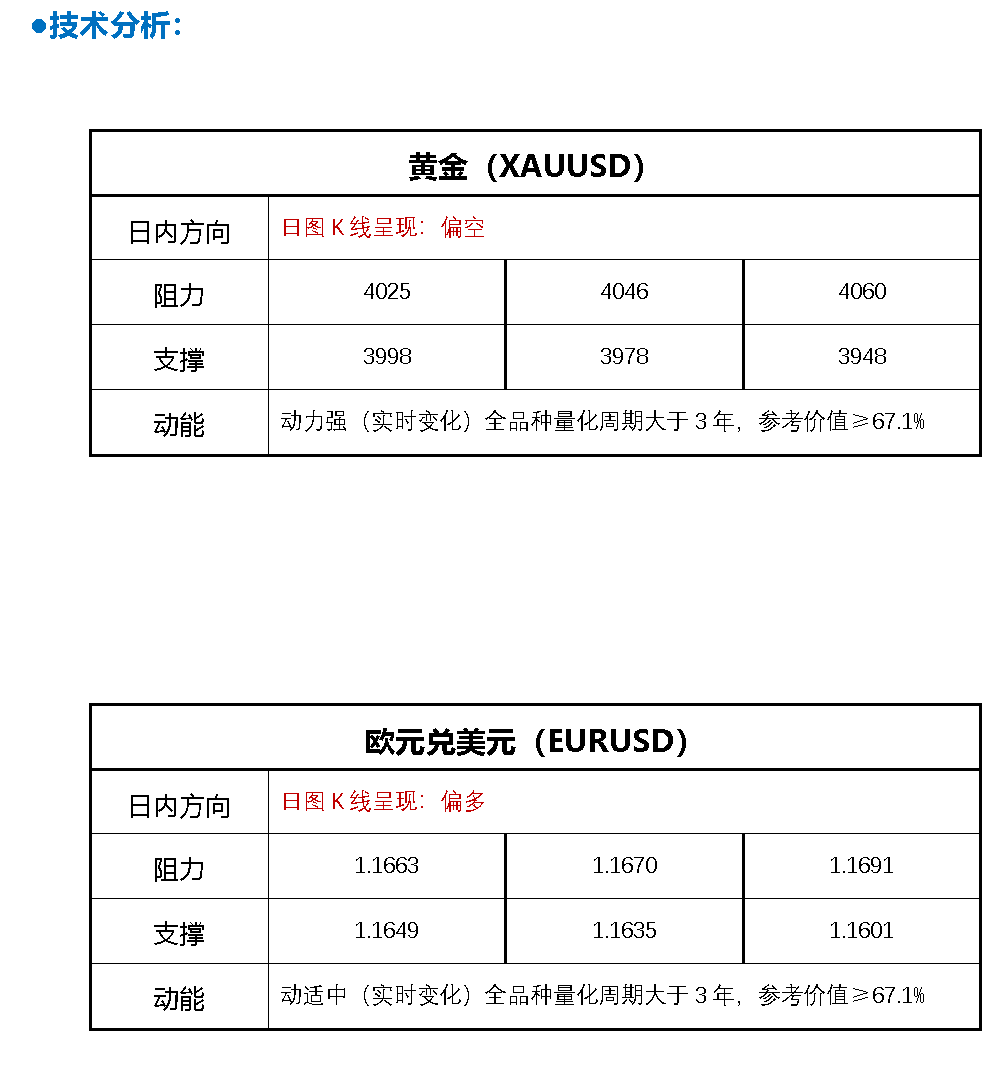
Group 1 - The core viewpoint of the article indicates that the easing of tensions in the US-China trade war has led to improved risk appetite, resulting in gold prices dropping below $4000 per ounce for the first time since mid-October, reaching a low of $3971 per ounce [1] - The US Treasury Secretary stated that a "very substantial framework agreement" was reached during the two-day talks in Kuala Lumpur, and the US is "no longer considering" imposing a 100% tariff on China [1] - Market expectations suggest a 97% probability of a 25 basis point rate cut by the Federal Reserve this week, which typically benefits gold as it does not yield interest [2] Group 2 - FPG analyst Felix noted that aside from technical selling, gold is declining further due to the fading trade tensions that previously drove prices from $3800 to $4400 per ounce in the first three weeks of October [3] - The Relative Strength Index (RSI) remains bullish but is about to turn bearish, with gold prices likely to consolidate in the $3900-$4000 per ounce range [3] - The discussions in Malaysia led to preliminary agreements on issues such as export controls and fentanyl, renewing market optimism regarding a US-China trade agreement, which may have contributed to the recent drop in gold prices [3] Group 3 - FPG analyst Chad pointed out that with gold closing below $4000 per ounce, short sellers may target the October 9 low of $3944 per ounce, and if that level is breached, the next target would be the October low of $3899 per ounce [4] - If gold rebounds and stays above $4000 per ounce, the next resistance level would be $4100, followed by the October 22 high of $4161 per ounce [4] Group 4 - Current market indicators for gold (XAUUSD) show a bearish daily direction with resistance levels at $4025, $4046, and $4060, while support levels are at $3998, $3978, and $3948 [5]
US stocks rally as trade optimism between Washington and Beijing lifts markets
Invezz· 2025-10-27 13:53
Core Viewpoint - US stocks experienced a rise due to easing trade tensions between the United States and China, which improved investor sentiment and led to a broad market rally [1] Group 1: Market Reaction - The easing of trade tensions has positively influenced investor sentiment, contributing to the upward movement in US stock markets [1] - Progress toward a potential trade agreement between the US and China has been indicated by officials from both nations, which is expected to further support market performance [1] Group 2: Upcoming Events - A significant meeting is anticipated between President Donald Trump and Chinese President Xi Jinping later this week, which could be pivotal for future trade relations [1]