促进消费

Search documents
大会背后的投资主线
Xin Lang Ji Jin· 2025-11-03 05:36
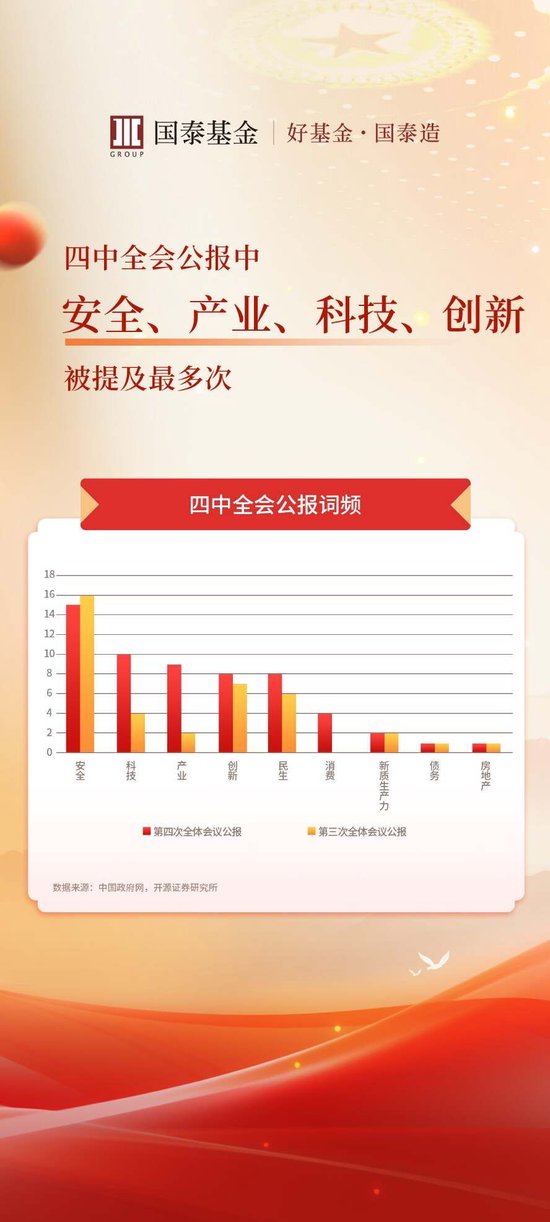
Group 1 - The Fourth Plenary Session has concluded, providing positive policy signals that inject strong confidence and stable expectations into the A-share market, leading to a significant market rally [1] - The Shanghai Composite Index reached a ten-year high and successfully crossed the historical 4000-point mark shortly after the session [1] - Market fluctuations intensified around the 4000-point level, prompting questions about future market directions, which may be answered by historical trends [1] Group 2 - The most frequently mentioned keywords in the conference communiqué include "security" (15 times), "technology" (10 times), and "industry" (9 times), indicating a shift in policy focus [3] - Historical trends show that since 2010, the frequency of terms like "high-quality development," "technological innovation," and "promoting consumption" has been on the rise, reflecting a more diversified and comprehensive economic development goal [6] - The changes in policy keywords suggest a continued emphasis on security, innovation, and livelihood, while significantly strengthening the focus on technology, industry, and consumption, highlighting high-quality development and new productive forces [8] Group 3 - Historical data indicates that the release of the communiqué typically has a positive impact on the market, with major indices showing a high probability of rising after the announcement [10] - The small-cap style significantly outperformed large-cap stocks in the month following the communiqué release, with the ChiNext Index showing particularly notable average gains [10] - The technology sector has contributed over half of the gains in the Shanghai Composite Index during the current market rally, indicating a shift from reliance on traditional sectors like finance and real estate to a focus on technological innovation and efficiency [13][14] Group 4 - Future investment strategies may focus on two main lines: balanced allocation and technology self-sufficiency, with specific ETFs and funds recommended for investment [14]

【快讯】每日快讯(2025年10月29日)
乘联分会· 2025-10-29 10:15
Domestic News - The 15th Five-Year Plan emphasizes boosting consumption, enhancing public service spending, and removing unreasonable restrictions on consumption such as those related to automobiles and housing [7] - China and ASEAN have agreed to consider each other's standards when formulating their own, particularly in the fields of new energy vehicles and electronics [8] - The upcoming 8th China International Import Expo will introduce new themes including automotive and cultural tourism, showcasing 461 new products and technologies [9] - Shenzhen has announced the cessation of its automobile replacement subsidy policy after reaching its budget limit for 2025 [10] - Changan Automobile has launched a purchase tax subsidy plan across all its brands to alleviate consumer concerns regarding tax benefits [11][12] - Aion, in collaboration with JD.com, is set to launch the Aion UT super model targeting the 100,000 yuan market [13] - Xiaomi has established a new department focused on the next-generation technology architecture for its electric vehicles, directly reporting to Lei Jun [14] - Seres has published a patent for torque control methods to prevent vehicle instability during high-speed driving [15] International News - In September, European car sales increased by 11% to 1.24 million units, with Tesla's registrations down by 19% and BYD's up by 272% [16] - Thailand's new car sales surged by 24% year-on-year in September, reaching 48,350 units [17] - Stellantis has partnered with NVIDIA, Uber, and Foxconn to explore the development of L4 autonomous vehicles for ride-hailing services [18] - Lucid Motors and NVIDIA are collaborating to launch the first L4 autonomous electric vehicles, leveraging NVIDIA's advanced driving technology [19] Commercial Vehicles - The cold chain logistics market in China has shown steady growth, with a total demand of 11.73 million tons in Q3, up 4.49% year-on-year [20][23] - The National Development and Reform Commission has introduced a 20% subsidy for green methanol projects, marking a significant step in supporting clean fuel technologies [21] - Guangso Future is collaborating with Serbia to develop a new ecosystem for electric trucks, focusing on autonomous commercial vehicle technology [22] - GAC's Lingcheng showcased its multi-energy route technology at the Greater Bay Area Commercial Vehicle Conference, emphasizing the integration of various energy sources [25]

核心CPI温和上涨,消费向好积极信号
Xin Jing Bao· 2025-10-20 10:39
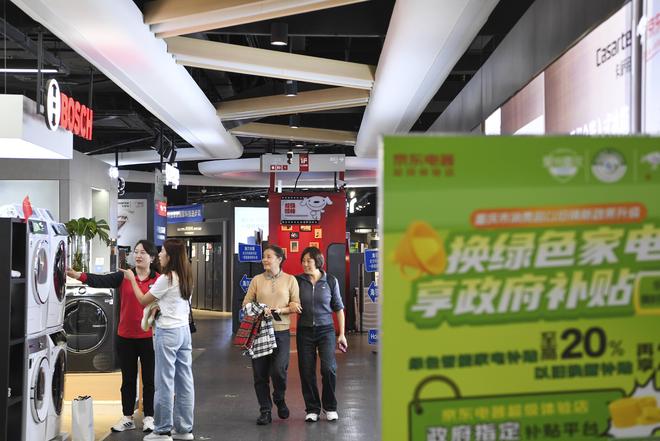
Core Viewpoint - The latest economic data from the National Bureau of Statistics indicates a slight year-on-year decline of 0.1% in the Consumer Price Index (CPI) for the first three quarters of the year, while the core CPI, excluding food and energy, rose by 0.6%, reflecting the effectiveness of policies aimed at expanding domestic demand and promoting consumption [1] Group 1: Economic Growth and Consumption - Final consumption expenditure contributed 53.5% to economic growth in the first three quarters, an increase of 9.0 percentage points compared to the previous year, highlighting its role as a key driver of economic growth [1] - Consumption is identified as one of the "three drivers" of economic growth, playing a crucial role in stabilizing growth and improving livelihoods, with insufficient consumer demand being a core issue in the current macroeconomic landscape [1] Group 2: Policy Measures to Boost Consumption - The "Special Action Plan to Boost Consumption" introduced in March outlines 30 key tasks across eight areas, including actions to increase residents' income and improve service consumption [2] - The government has allocated 300 billion yuan in special long-term bonds to support consumption, particularly through trade-in programs, resulting in double-digit growth in retail sales of home appliances and audio-visual equipment [2] Group 3: Financial Policies and Consumer Behavior - The central bank has implemented personal consumption loan interest subsidy policies, effectively reducing credit costs for residents and businesses, thereby stimulating consumption potential [3] - Service retail sales grew by 5.2% year-on-year in the first three quarters, outpacing goods retail sales, indicating a shift towards service consumption [3] Group 4: Future Challenges and Coordination - There is a need to solidify the foundation for consumption recovery, focusing on improving residents' income and optimizing income distribution to enhance consumption levels [3] - Emphasizing the importance of coordinated and consistent policy measures to maximize the effectiveness of consumption-boosting strategies for sustainable economic development [4]
核心CPI温和上涨,消费向好积极信号 | 新京报快评
Xin Jing Bao· 2025-10-20 10:39
Core Insights - The article highlights the effectiveness of proactive fiscal policies in stimulating consumer demand in China, with a focus on the positive impact of the "trade-in" policy on household consumption [2][3]. Economic Data Summary - In the first three quarters of this year, China's Consumer Price Index (CPI) decreased by 0.1% year-on-year, while the core CPI, excluding food and energy, increased by 0.6%, with a notable rise of 1.0% in September, marking the first return to a 1% increase in nearly 19 months [2]. - Final consumption expenditure contributed 53.5% to economic growth, an increase of 9.0 percentage points compared to the previous year, reinforcing its role as a key driver of economic growth [2]. Policy Measures - The "Special Action Plan to Boost Consumption" was introduced in March, outlining 30 key tasks across eight areas, including income enhancement and service consumption improvement [3]. - The government allocated 300 billion yuan in special long-term bonds to support the trade-in policy, which has led to double-digit growth in retail sales of household appliances and audio-visual equipment [3]. Retail Performance - Retail sales of household appliances and audio-visual equipment increased by 4.4% year-on-year in the first three quarters, with a significant jump of 20.5% in September, marking a 17.1 percentage point acceleration from August [3][4]. - The smart home appliance sector saw growth rates exceeding 30% [4]. Automotive Sector - The automotive market is becoming increasingly active, with over 8.3 million trade-in applications submitted by September 10, averaging more than 30,000 applications per day [4]. Financial Policies - The central bank has implemented personal consumption loan interest subsidies and service industry loan interest subsidies, effectively reducing credit costs for residents and businesses, thereby stimulating consumption potential [4]. - Service retail sales grew by 5.2% year-on-year in the first three quarters, outpacing goods retail sales by 0.6 percentage points [4]. Future Considerations - Improving residents' income and optimizing income distribution are crucial for boosting consumption levels [5]. - Enhancing consumer expectations is also a key focus, as it significantly influences consumption decisions [5]. - A coordinated policy framework is essential to maximize the effectiveness of measures aimed at expanding domestic demand and promoting consumption [5].
邮储银行河南省分行:特色活动助力金秋消费
Huan Qiu Wang· 2025-10-15 10:15
Core Insights - Postal Savings Bank of China Henan Branch launched various promotional activities across multiple sectors including dining, tourism, retail, travel, and utility payments to meet diverse consumer needs and stimulate local economic growth [1][2] Group 1: Promotional Activities - The bank organized a themed event at Luoyang Zhongzhou Wanda Plaza, combining interactive games with consumer discounts to enhance the holiday experience for residents and tourists [1] - In the retail sector, the bank collaborated with major shopping centers, chain brands, and online platforms to offer discounts such as "full reduction" and "installment discounts" [1] - For dining, customers can access a combination of surprise offers from well-known restaurant brands through the bank's mobile banking apps [1] Group 2: Travel and Utility Payment Initiatives - To address holiday travel needs, the bank introduced online booking discounts and fuel reduction activities for credit card users at designated stations [2] - In the utility payment sector, the bank focused on essential daily expenses by offering discounts for payments made via credit cards for water, electricity, gas, and cable TV [2] Group 3: Future Plans - The bank aims to continuously upgrade and innovate its products and services to align with consumer demands and local economic development priorities [2] - There is a commitment to deepen customer benefits and expand coverage in sectors such as travel, entertainment, and home decoration, enhancing the role of finance in promoting consumption and supporting economic development [2]

4大问题不解决,老百姓怎敢消费?只有对症下药才能促进消费
Sou Hu Cai Jing· 2025-10-13 19:07
Core Viewpoint - The global economic downturn has led to weak consumer demand, significantly impacting China's export business, and the long-term sustainable growth of the Chinese economy relies on domestic consumer demand [1][3]. Group 1: Current Economic Challenges - The release of pandemic restrictions has not resulted in a surge in consumer spending, with demand remaining weak, particularly for mid to high-end consumer goods [3][5]. - Despite a rise in bank deposits, there is a growing concern about whether lowering bank deposit rates to zero could effectively stimulate consumer spending [3][5]. Group 2: Underlying Issues Affecting Consumer Demand - The primary challenge is that income growth is not keeping pace with rising prices, leading to increased living costs that restrict actual consumption capacity [6][7]. - High housing prices continue to suppress consumer demand, with the cost of purchasing a home in second and third-tier cities still exceeding 1.5 million yuan, limiting disposable income for other expenditures [9]. - A lack of security and rising concerns about future uncertainties lead residents to prioritize savings over spending, even if deposit rates are reduced [9][10]. - The widening wealth gap exacerbates the low consumer demand, with a small wealthy population having their consumption needs met while the majority face significant limitations in their spending capacity [10].

更好服务实体经济 我国推出5000亿元新型政策性金融工具
Yang Shi Wang· 2025-10-07 00:04
Core Viewpoint - The establishment of new policy-based financial instruments aims to enhance financial services for the real economy and promote effective investment, with a total scale of 500 billion yuan allocated for project capital supplementation [1] Group 1 - The new policy-based financial instruments will focus on supporting technological innovation, promoting consumption, and stabilizing foreign trade [1] - The initiative is part of efforts to ensure stable and healthy economic development [1]
上市公司多维发力促进消费
Zheng Quan Ri Bao· 2025-09-11 16:13
Group 1 - The consumption market is improving due to policies aimed at boosting consumption and expanding domestic demand, prompting companies to innovate in business models, market expansion, and product upgrades [1] - The tourism sector is evolving as consumer demand shifts from basic sightseeing to high-quality and diverse experiences, requiring new approaches from industry players [1] - Anhui Jiuhua Mountain Tourism Development Co., Ltd. is accelerating the development of tourism products and enhancing brand reputation to strengthen core competitiveness and performance [1] Group 2 - Wangfujing Group is focusing on the "first store" economy, introducing nearly 1,000 new brands in the first half of 2025, including 160 first-store brands [2] - The company employs a "one store, one strategy" approach to ensure that each new store enhances project uniqueness and stimulates consumer engagement through experiential content [2] - Wangfujing is optimizing its business layout to meet the growing demand for service consumption and is expanding into lower-tier markets while innovating consumer experiences [2] Group 3 - The company plans to respond to national policies by accelerating transformation, controlling costs, and enhancing operational quality [3] - Wangfujing aims to optimize various business formats, including outlet, shopping center, department store, and duty-free operations, to improve performance and market scale [3] - The focus will be on reducing costs and enhancing efficiency to lay a foundation for high-quality future development [3]

多领域活力数据折射经济强大韧性与潜力
Yang Shi Wang· 2025-09-08 00:53
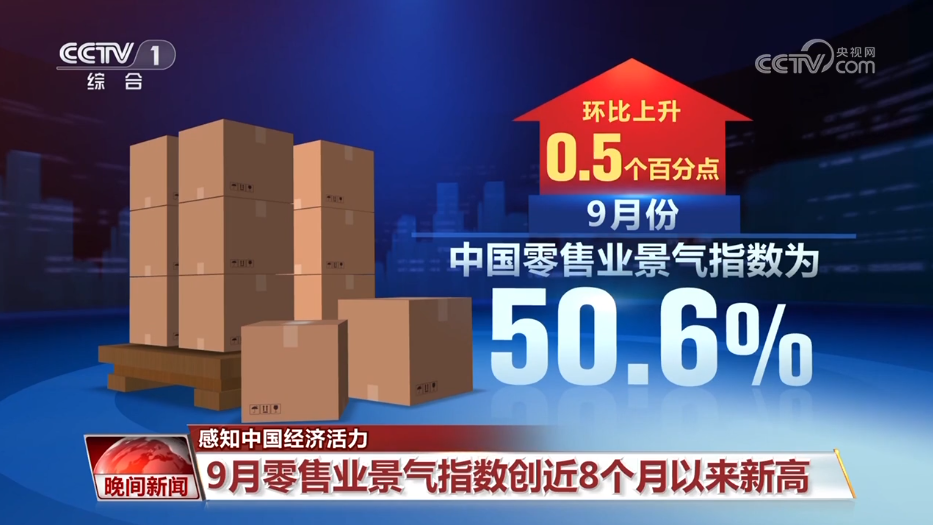
Retail Industry - In September, China's retail industry prosperity index reached 50.6%, an increase of 0.5 percentage points month-on-month, marking the highest level in eight months, indicating a clear improvement in the retail sector's development trend [3] Logistics and Transportation - In August, 15 new international air cargo routes were opened nationwide, with over 30 round-trip flights added weekly. A total of 152 new international air cargo routes were established in the first eight months of the year, with over 300 round-trip flights added weekly [6] - The road logistics freight rate index for August was reported at 105.1 points, reflecting a month-on-month increase of 0.01% and a year-on-year increase of 0.8%, indicating an active road logistics market supported by good growth in production and consumption [8] Light Industry - In the first seven months of the year, China's light industry showed steady performance, with a total revenue exceeding 13 trillion yuan, and the added value of large-scale light industry increased by 6.7% year-on-year [10][12] - The retail sales of 11 categories of light industrial products reached 4.9 trillion yuan from January to July, a year-on-year increase of 11.4%, accounting for 17.4% of total social retail sales [10] - Light industrial exports amounted to 535.75 billion USD in the first seven months, representing 25.1% of the national total, with 11 out of 21 major categories showing growth [12] Foreign Investment - In Guangdong, the number of newly established foreign-funded enterprises increased by 32.7% year-on-year, totaling 17,000 in the first seven months, indicating a sustained attraction for foreign investment [12][15] - Actual foreign investment in Guangdong reached 65.67 billion yuan in the first seven months, an increase of 8.2% year-on-year, with the manufacturing sector accounting for 29.1% of the total [15] Trade and Economic Zones - The comprehensive bonded zones and bonded logistics parks have contributed to one-fifth of the national import and export value, despite occupying less than one-twentieth of the country's land area [18] - Since the beginning of the "14th Five-Year Plan," 19 new customs special supervision areas have been added, bringing the total to 174, achieving nationwide coverage and becoming new high grounds for China's opening-up [18]
七夕新风景!长沙县集体婚礼倡新风,良缘市集精准撬动消费热
Sou Hu Cai Jing· 2025-08-29 18:48
Group 1 - The event "Romantic Starsha: 'Basket' of Love" integrated "StarBA" elements into a collective wedding ceremony, promoting civilized marriage customs with ten couples participating [1][3] - The event aimed to promote traditional culture, establish healthy views on love and marriage, and encourage correct marriage perspectives while enhancing wedding intentions [3] - The "Romantic Starsha: Good Fate Market" gathered 16 units to provide one-stop wedding services, significantly boosting consumer enthusiasm and resulting in nearly ten wedding banquet bookings within three days [5] Group 2 - The collective wedding and market event is an innovative practice that combines wedding celebrations, cultural tourism, and consumption, enhancing social harmony and economic development [7] - The marriage registration center reported a significant increase in service efficiency, with 116 couples registering for marriage on the event day [5]