
债务货币化

Search documents
每日投行/机构观点梳理(2025-08-14)
Jin Shi Shu Ju· 2025-08-14 11:30
Group 1 - Deutsche Bank analysts indicate that Trump's attacks on U.S. institutions pose a threat to the dollar's outlook, particularly criticizing the Federal Reserve and the Bureau of Labor Statistics [1] - Bank of America suggests that dissenting opinions within the Federal Reserve will become more common, leading to uncertainty regarding interest rate decisions, with expectations for a 25 basis point cut supported by upcoming data [1][3] - Mizuho Securities notes that the debate within the Fed is intensifying, with no clear majority for either hawkish or dovish positions, focusing on whether rate cuts are justified to support a weak labor market [1][3] Group 2 - CICC predicts that the U.S. may enter a phase of fiscal dominance and monetary cooperation, leading to a long-term depreciation of the dollar and increased opportunities in non-U.S. markets [2] - CICC also highlights a sustained explosion in demand for AI inference computing power in the second half of the year, driven by the enhancement of large model capabilities and diverse application scenarios [2] - Galaxy Securities emphasizes that the market has already priced in expectations for a September rate cut, but confirms that more data is needed to determine the Fed's decision [3] Group 3 - CITIC Securities expresses strong confidence in the value of core assets in China's battery sector, anticipating improved performance due to supply-demand dynamics and cost reductions [5] - CITIC Jinshi reports that the competition and iteration of AI large models continue, suggesting sustained high levels of investment in computing power [6] - CITIC Jinshi also notes that the rare earth industry is entering a traditional consumption peak season, with rising demand and prices expected to benefit the sector [7]
【UNFX 课堂】美联储报告引爆 “危险话题”黄金价值或被严重低估
Sou Hu Cai Jing· 2025-08-11 04:26
Group 1 - The core viewpoint of the articles revolves around the re-evaluation of gold's value in the context of rising U.S. federal debt and interest payments, which poses systemic risks to the economy [1][2] - Recent trends show that despite a significant rise in real interest rates, gold prices have increased by over 4% in the past 45 days, indicating a break from traditional pricing models [1][2] - The latest Federal Reserve report highlights the uncertainty surrounding the trajectory of U.S. federal debt, particularly emphasizing the escalating burden of interest payments [1][2] Group 2 - Key indicators of debt risk include public debt as a percentage of GDP, currently near 100%, which increases repayment pressure and constrains government spending [2] - Interest payments as a percentage of GDP are expected to rise significantly over the next decade, potentially leading to more borrowing to service existing debt [2] - Concerns from Goldman Sachs regarding the long-term fiscal path being "unsustainable" could undermine confidence in sovereign debt and fiat currency systems [2] Group 3 - The notion of "gold price re-evaluation" is emerging, questioning whether current gold prices accurately reflect the inherent risks of a heavily indebted dollar system [2] - Historical context shows that during the last significant gold price re-evaluation (1970-80), U.S. macro debt levels rose from 140% to over 170%, while current levels exceed 304% [2] - Prominent investors like Stanley Druckenmiller and Ray Dalio are reassessing their gold allocations, viewing it as a hedge against inflation and a vote against excessive national credit expansion [2] Group 4 - For ordinary investors, the implications are profound, emphasizing the importance of gold as a "non-debt asset" in an era of rising debt [3] - Investors are encouraged to look beyond short-term fluctuations and focus on the macroeconomic shifts driving gold prices [3] - The volatility in the gold market presents opportunities for long-term positioning, as significant adjustments often signal favorable entry points [3]
宏观视角看汇率
2025-07-25 00:52
Summary of Key Points from Conference Call Industry Overview - The discussion revolves around the macroeconomic perspective on exchange rates, particularly focusing on the US dollar, euro, and Chinese yuan [2][3][4]. Core Insights and Arguments 1. **Divergent Views on US Dollar**: There is a split within the US government regarding the dollar's strength. White House advisors advocate for a weaker dollar to enhance trade, while the Treasury Secretary emphasizes a strong dollar to attract capital [2][4][9]. 2. **Challenges in Exchange Rate Prediction**: Predicting exchange rates is complex due to multiple influencing factors. Even authoritative bodies like the IMF struggle to provide accurate forecasts [2][5][10][11]. 3. **Impact of Capital Flows**: Recent trends show that capital flows significantly influence exchange rates, with foreign exchange trading volumes far exceeding international trade volumes [2][8][14]. 4. **US Trade Deficit and Dollar Stability**: Despite a long-term trade deficit, the influx of foreign investment has prevented systemic depreciation of the dollar [2][15]. 5. **Foreign Investment in US Assets**: In 2023-2024, foreign investments accounted for 70% of net purchases in US equities, supporting the dollar despite high fiscal and trade deficits [2][15]. 6. **Potential for Yuan Strengthening**: The accumulation of $1.7 trillion in unconverted funds by Chinese exporters may lead to a stronger yuan, especially in the context of US debt monetization [2][17]. 7. **Market Reactions to Dollar Depreciation**: A weaker dollar is expected to benefit A-shares and Hong Kong stocks, enhancing risk appetite and liquidity in these markets [2][19]. 8. **Long-term Outlook for Global Markets**: The expectation of increased fiscal spending in the US and Europe may boost global demand and investment, positively impacting stock markets and commodities [2][19]. Additional Important Content 1. **Complex Interactions Among Currencies**: The interplay between major currencies is intricate, with recent trends showing the yuan's rise, the dollar's rebound, and the euro's slight weakening [3][7]. 2. **The Role of Theoretical Perspectives**: Different economic theories (e.g., classical vs. Keynesian) provide varying insights into the factors influencing exchange rates, highlighting the need for a comprehensive approach [10][11]. 3. **Current Trends in Currency Behavior**: The yuan's recent appreciation against the dollar is not indicative of a clear upward trend, as market dynamics remain complex and influenced by various factors [22][23]. 4. **Implications for Exports**: The yuan's appreciation against the dollar has a limited negative impact on overall exports, supported by adjustments in a basket of currencies [20][23]. 5. **Future of US Debt and Monetary Policy**: The US may adopt measures to manage increasing debt levels, potentially leading to a sustained pressure on the dollar in the medium to long term [18][19]. This summary encapsulates the key points discussed in the conference call, providing insights into the current state and future outlook of the currency markets and their implications for various stakeholders.
中金:宏观视角看汇率
中金点睛· 2025-07-25 00:47
Core Viewpoint - Recent fluctuations in major currency exchange rates, particularly the depreciation of the US dollar and appreciation of the euro, have drawn significant market attention. The recent rebound of the dollar index and the "catch-up" of the RMB against the dollar are noteworthy trends [1][4]. Group 1: Currency Exchange Rate Analysis - Historical data indicates that predicting exchange rate movements is challenging due to numerous influencing factors, including unilateral, bilateral, and multilateral elements [1]. - A comparison of the IMF's assessments of the US dollar's real effective exchange rate (REER) over the past 20 years reveals a notable divergence from actual changes in the dollar's REER [1]. - The RMB's exchange rate has shown volatility, with a significant reversal in trends observed in late 2013, despite market consensus predicting a shift to the "5 era" for the RMB against the dollar [1]. Group 2: Theoretical Frameworks - To better assess exchange rates, it is essential to move beyond mainstream analytical frameworks and adopt a new perspective that incorporates both neoclassical and post-Keynesian views [1]. - Neoclassical economics emphasizes the current account as the primary determinant of exchange rates, while post-Keynesian economics focuses on capital flows as the fundamental force affecting exchange rates [1]. - The increasing significance of capital flows and the volatility of foreign exchange transactions suggest that post-Keynesian thinking aligns more closely with current realities [1]. Group 3: US Dollar Dynamics - The divergence in views between White House economic advisor Milan, who believes the dollar is overvalued, and Treasury Secretary Basent, who aims to maintain a strong dollar, highlights differing perspectives on the dollar's role in the economy [2]. - The US has maintained a relatively stable current account deficit, but uncertainties surrounding Trump's trade policies have diminished the attractiveness of dollar assets, contributing to a decline in the dollar's value [2]. - Since the beginning of the year, the dollar index has dropped by over 10%, influenced by unpredictable trade policies and rising concerns over fiscal deficits [2]. Group 4: Tariff Policies and Economic Pressure - Trump's recent tariff announcements, which include high tariffs on key industries, could push the overall effective tariff rate in the US above 20%, adding pressure to the economy and inflation [3]. - The trend of debt monetization in the US is becoming more apparent, with projected budget deficits remaining high at around 6.5%-7% in the coming years [3]. - Increasing signs of fiscal intervention in monetary policy, as indicated by recent criticisms of the Federal Reserve, suggest a potential shift towards a more accommodative monetary policy environment [3]. Group 5: RMB Exchange Rate Trends - The RMB has appreciated against the dollar by 1.7% since the beginning of the year, but has depreciated by 8.9% against the euro during the same period [4]. - A comprehensive index of the RMB against a basket of currencies shows a cumulative depreciation of 5.3% since the start of the year, indicating that the RMB's appreciation against the dollar is primarily driven by dollar-specific factors [4]. - The RMB's exchange rate remains crucial for exports, as fluctuations against a basket of currencies can partially offset the impacts of tariff changes [4]. Group 6: Future Outlook - The RMB's exchange rate has been largely "passive" thus far, but future movements will depend on factors such as US-China relations and domestic economic conditions [5]. - If China's economic growth stabilizes and market confidence improves, a potential appreciation of the RMB against the dollar may continue in the short term [5].


美元霸权:现状评估、维系机制与对策建议
Guo Ji Jin Rong Bao· 2025-06-23 23:08
Group 1 - The current status of US dollar hegemony is facing unprecedented challenges, with a significant decline in its share of global foreign exchange reserves from 71% in 1999 to 57.4% in Q1 2024, marking a historical low [4][5][6] - Emerging markets, particularly Brazil and India, are actively reducing their dollar reserves, with Brazil and China agreeing to conduct trade settlements in local currencies, indicating a shift towards de-dollarization [4][5][6] - The dollar's share in international trade settlements has also shown a slight decline, with its current share at 49.08%, while the euro and yuan are gaining ground [12][13] Group 2 - The US federal debt has surpassed $36 trillion, with a debt-to-GDP ratio of 124%-125%, the highest since World War II, raising concerns about the sustainability of dollar hegemony [16][17][19] - The US is employing unconventional debt monetization strategies, including the introduction of century bonds and inflation-linked bonds, to maintain the attractiveness of dollar assets [40][41] - The Federal Reserve's aggressive monetary policy, including a cumulative rate hike of 500 basis points since March 2022, has led to significant global financial repercussions, exacerbating the trend of de-dollarization [21][22][24] Group 3 - The "de-dollarization" process has accelerated, with over 110 countries actively participating in initiatives to reduce reliance on the dollar, particularly following geopolitical tensions such as the Ukraine crisis [27][28] - Various regions are adopting different strategies for de-dollarization, with BRICS countries establishing local currency settlement systems and Southeast Asian nations planning to reduce dollar settlements in regional trade [28][29] - The challenges to de-dollarization include the high conversion costs associated with the dollar's established network effects and the depth of the US debt market, which remains unmatched by non-US markets [29][30]
美国欠的36万亿美元国债可能要炸了
Sou Hu Cai Jing· 2025-06-05 09:09
Group 1 - The U.S. national debt has reached $36 trillion, creating significant financial pressure, with monthly interest payments of $890 billion against a revenue of $389 billion [1] - The U.S. Treasury has approved a new debt issuance plan of $1.2 trillion for the last quarter, despite claims of strong creditworthiness [2] - Global central banks are increasingly wary of U.S. debt, with countries like Brazil and South Africa exploring alternative currencies and financial arrangements [2][3] Group 2 - China has strategically reduced its holdings of U.S. debt by $480 billion over the past 18 months and increased its gold reserves to 16% of its foreign exchange reserves [3] - The CIPS system in China is processing 4.8 trillion yuan in cross-border transactions daily, indicating a shift away from the SWIFT system [3] - The potential for a coordinated sell-off of U.S. debt by global markets poses a significant risk to the U.S. financial system, with fears of a debt crisis escalating [3]
国际黄金延续回调 地缘紧张局势暂缓
Jin Tou Wang· 2025-05-27 02:54
Group 1 - The international gold price is experiencing a slight decline, currently at $3337.92 per ounce, with a decrease of 0.14% [1] - Market participants are advised to pay attention to various U.S. economic indicators, including April durable goods orders, March FHFA house price index, May consumer confidence index, and May Dallas Fed business activity index, with expectations of a mixed impact on the market [1] Group 2 - President Trump has extended the deadline for imposing a 50% tariff on EU goods to July 9, temporarily easing geopolitical tensions [2] - Concerns over the increasing U.S. deficit have intensified following Moody's downgrade of the U.S. sovereign credit rating and the House's approval of Trump's high-tax spending bill, potentially increasing the deficit by nearly $4 trillion [2] - The 30-year U.S. Treasury yield has surged to 5.14%, raising fears of debt monetization and inflation, making gold more attractive compared to traditional U.S. assets [2] Group 3 - Despite a recent pullback, gold prices are expected to trend upward due to ongoing geopolitical risks, tariff policies, and concerns over the U.S. budget [3] - Citigroup has raised its 0-3 month gold price target to $3500 per ounce, while UBS maintains a bullish outlook, anticipating gold will test the $3500 level again [3] - With the market remaining above $3310 and strong safe-haven demand, traders are advised to maintain a bullish stance and look for entry points driven by news headlines [3]
黄金投资逻辑生变:国内金价“破千”VS国际金价反弹,如何投资?
Sou Hu Cai Jing· 2025-05-16 07:53
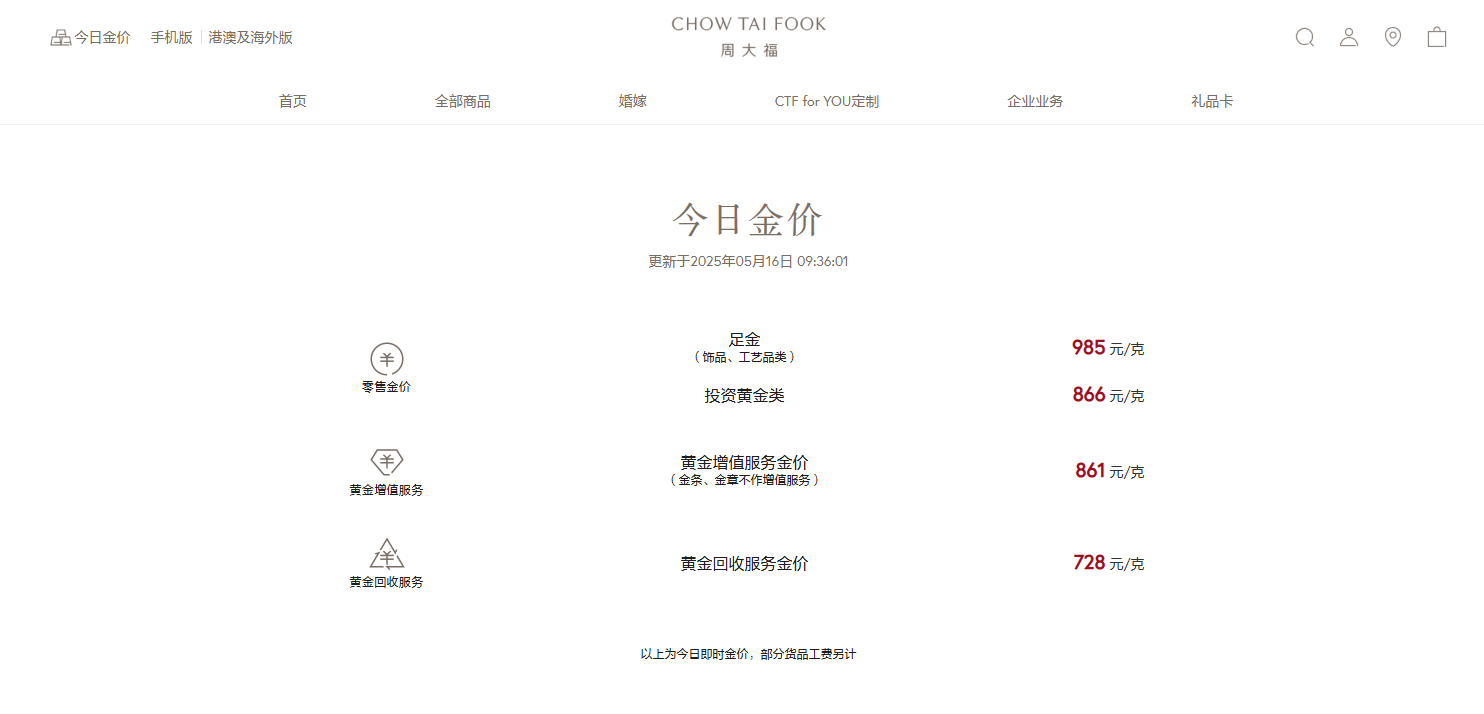
Core Viewpoint - The gold market is experiencing a divergence, with domestic jewelry gold prices falling below 1,000 yuan per gram while international gold prices are rebounding after significant fluctuations. This situation is influenced by both short-term factors such as geopolitical tensions and trade negotiations, as well as long-term trends related to the restructuring of the global monetary system [1]. Domestic Gold Prices - As of May 16, domestic jewelry gold prices from brands like Chow Sang Sang and Chow Tai Fook have dropped to a range of 978-995 yuan per gram, representing a decline of over 10% from the April peak [1]. - The decline in domestic prices is attributed to three main pressures: 1. Easing trade tensions reducing safe-haven demand as progress in US-China tariff negotiations boosts market risk appetite, leading funds to shift from gold to equities [2]. 2. Hawkish signals from the Federal Reserve suppressing gold prices, with the US dollar index rising to 100.63 following stronger-than-expected April non-farm payroll data, delaying interest rate cuts [2]. 3. Increased technical selling pressure after gold prices fell below the critical support level of 3,300 USD, triggering programmatic stop-losses [2]. International Gold Prices - The London gold price rebounded to 3,226 USD per ounce on May 15, recovering approximately 3% from the low in April [3]. Support Factors for International Gold Prices - The rebound in international gold prices is supported by several factors: 1. Central bank purchases, with global central banks net buying 244 tons of gold in Q1 2025, and China increasing its holdings for six consecutive months [5]. 2. Rising expectations of stagflation, as persistent inflation in the US coexists with economic slowdown, enhancing gold's appeal as an anti-inflation asset [5]. 3. Ongoing geopolitical risks, particularly in the Middle East, maintaining a "crisis premium" for gold [5]. Negative Influences on Gold Prices - The gold market faces challenges from: 1. Rising real interest rate risks if the Federal Reserve resumes rate hikes due to inflation rebound, increasing the opportunity cost of holding gold [6]. 2. Dollar liquidity disturbances caused by the Fed's balance sheet reduction, potentially weakening short-term demand for gold as a "liquidity safe haven" [6]. Positive Influences on Gold Prices - The restructuring of the monetary system and debt risks are creating favorable conditions for gold: 1. Accelerating de-dollarization, with the dollar's share in global central bank reserves dropping to 58%, increasing demand for gold as a non-sovereign asset [7]. 2. Concerns over debt monetization, as US federal debt surpasses 35 trillion USD, undermining the credibility of credit money and reinforcing gold's monetary attributes [7]. 3. Policy uncertainty premiums due to the volatility of Trump's tariff policies, positioning gold as a tool for hedging tail risks [7]. Long-term Outlook for Gold - The perception of gold's safe-haven attributes is shifting: 1. In the short term, gold prices are subject to high volatility due to Federal Reserve policies and easing geopolitical tensions [8]. 2. In the long term, trends such as global debt expansion, diversification of the monetary system, and central bank gold purchases continue to support gold's strategic allocation value [8]. Multi-faceted Role of Gold - Gold serves multiple roles: 1. As a hedge against geopolitical risks and systemic financial crises, though liquidity risks must be monitored [9]. 2. As an anti-inflation asset, performing well in stagflation environments, but should be combined with other assets like oil and agricultural products for effective hedging [9]. 3. As a substitute currency, particularly during periods of weakened dollar credibility, forming a "new hedging combination" with cryptocurrencies like Bitcoin [9]. Investment Strategy Principles - Three key principles for gold investment strategy: 1. Diversification: Avoid single bets on gold and construct a "core + satellite" portfolio combining stocks, bonds, and cash [10]. 2. Tool adaptation: For rigid demand (weddings, gifts), choose low-cost, low-premium physical gold bars or bank-stored gold; for long-term allocation, consider gold ETFs (high liquidity) and mining stocks (leverage effect); for short-term trading, focus on arbitrage opportunities between COMEX gold futures and domestic T+D [13]. 3. Dynamic rebalancing: Adjust positions based on Federal Reserve policy signals (e.g., dot plot) and geopolitical events (e.g., tariff adjustments) to avoid emotional trading [13].
黄金财富的底层逻辑:为什么说这一轮黄金牛市是百年未有之变局?
Sou Hu Cai Jing· 2025-05-16 05:37
Core Viewpoint - The article discusses the transformation of gold from a commodity to a quasi-currency, driven by global economic shifts and increasing demand for gold as a strategic reserve amid a changing financial landscape [1][5][13]. Group 1: Historical Context of Gold - The history of gold is marked by significant events that reflect crises in the credit system, such as the decoupling of the dollar from gold in 1971, which initiated the first major bull market for gold [3][5]. - The second bull market for gold began after the 9/11 attacks, as global financial instability led to a significant increase in gold prices, demonstrating its role as a "crisis barometer" [4][5]. Group 2: Current Economic Landscape - The current economic environment is characterized by a long-term decline in the Kondratiev wave, with rising sovereign debt levels in countries like Japan and Italy, and the U.S. facing unprecedented debt monetization challenges [6][7]. - The shift in global power dynamics, with China and the U.S. holding significant shares of global GDP, is contributing to the erosion of the dollar's dominance as a single global currency [6][7]. Group 3: Demand for Gold - In 2023, emerging market central banks accounted for 82% of global gold purchases, a significant increase from 2018, indicating a growing demand for gold as part of a "de-dollarization" strategy [7][9]. - Predictions suggest that gold prices could exceed $4,000 per ounce by 2028, driven by ongoing geopolitical tensions and high debt levels [7][9]. Group 4: Investment Strategies - Investors are advised to adopt a contrarian approach, recognizing that market downturns can present buying opportunities, as evidenced by historical data showing an average 18% increase in gold prices within six months after significant dips [9][11]. - Following central bank strategies, particularly China's continuous gold accumulation over 21 months, is recommended for investors to effectively build their positions in gold [9][11]. Group 5: Future Considerations - The potential end of the current gold bull market may hinge on three transformative events: a U.S. energy revolution, breakthroughs in artificial intelligence, or a restructured global governance system leading to a new super-sovereign currency [13][15]. - Legislative changes, such as Texas's recent law recognizing gold and silver as legal tender, reflect a growing distrust in the dollar and signify a potential shift in monetary policy [13][15].
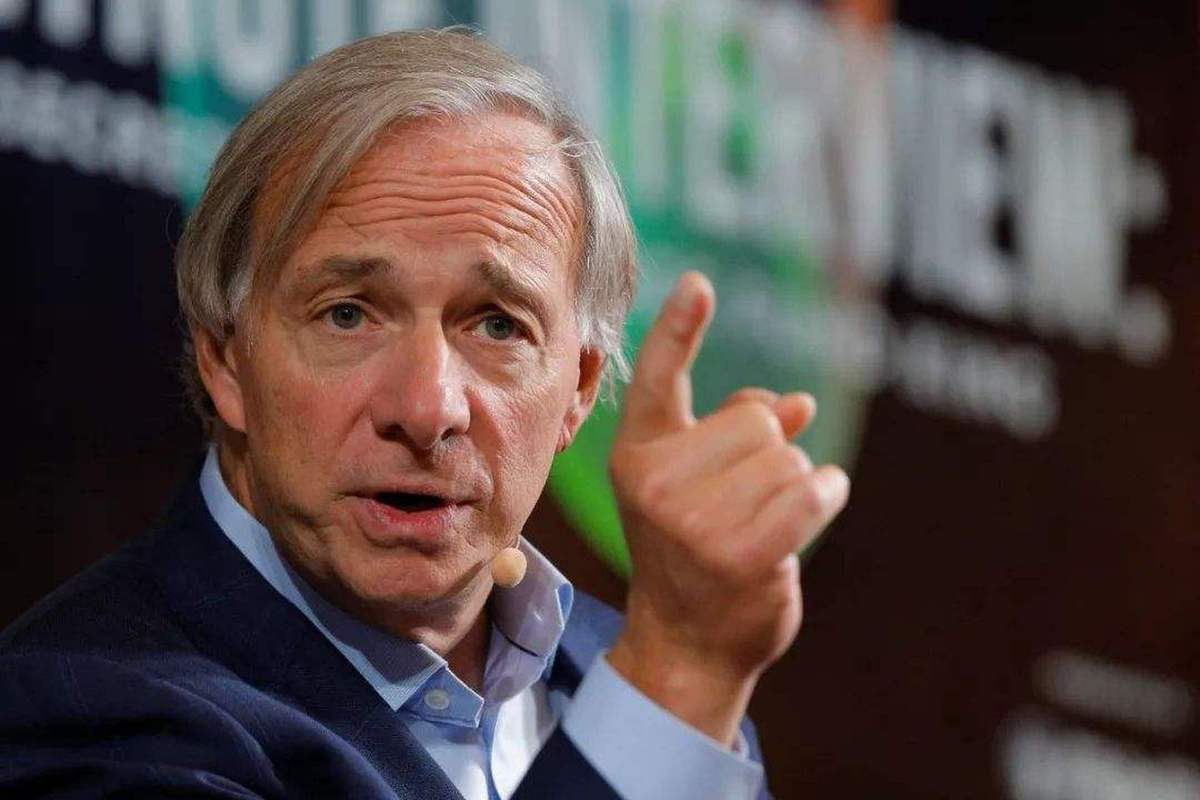
达利欧:“交易的艺术”与“背后的力量”
Hua Er Jie Jian Wen· 2025-05-15 01:02
Core Viewpoint - The article discusses the fundamental forces driving the current shifts in international order, emphasizing the need for countries, particularly the U.S., to adopt effective strategies in response to these changes [1][2]. Group 1: Fundamental Forces - Five core forces are identified as driving global dynamics: debt monetization, domestic wealth and value gaps, international order/disorder, natural disasters, and technological advancements [3][6][11]. - Debt/monetary forces shape market and economic directions, influencing the monetary order [4][7]. - Domestic wealth and value gaps are creating political order challenges, leading to the rise of populism and authoritarian leadership, which threaten democracy and the rule of law [8]. - International order is characterized by a lack of a single dominant power, increasing unilateral decisions, and rising conflicts, with a shift from multilateralism to bilateral agreements [9]. - Natural disasters are worsening, causing significant economic losses, and countries' adaptability will be crucial [10]. - Human creativity, particularly through technological innovation, can lead to both significant benefits and potential disasters [11]. Group 2: Current Strategies and Implications - Current strategies include tariff designs to enhance tax revenue and competitive advantages for domestic companies, attracting foreign investment, and optimizing global investment layouts [12]. - The management of government debt and fiscal deficits is critical, with the ability to reduce the fiscal deficit to 3% of GDP being a pivotal factor for debt and currency value [7][12]. - The approach to handling these critical states will determine whether the situation is managed effectively or leads to instability [13].