
全栈自研

Search documents
现金流转正就算“闯关成功”了吗?不,蔚来的复苏才刚刚开始
首席商业评论· 2025-11-28 04:08
Core Viewpoint - NIO has reported its best gross margin in three years, positive operating cash flow, and a significant increase in delivery volume, indicating a potential turning point for the company after years of losses [2][4]. Financial Performance - NIO delivered 87,071 vehicles in Q3, a year-on-year increase of 40.8% and a quarter-on-quarter increase of 20.8%, achieving record-high delivery and revenue of 21.79 billion yuan, up 16.7% year-on-year [7][10]. - The gross margin for Q3 reached 13.9%, with vehicle gross margin at 14.7%, both marking a three-year high [10][15]. - The company reported a net loss of 34.8 billion yuan in Q3 2025, a reduction of 31.2% year-on-year, indicating a narrowing of losses [14][15]. Operational Efficiency - NIO's "efficiency revolution" has begun to show results, with improvements in operational efficiency and cost management contributing to the positive financial indicators [6][12]. - The company achieved positive operating cash flow for the first time, with cash reserves increasing to 36.7 billion yuan, reflecting better inventory control and capital management [12][14]. Strategic Initiatives - NIO's multi-brand strategy has created a product matrix covering price ranges from 100,000 to 800,000 yuan, with significant contributions from its three brands: NIO, Ladao, and Firefly [10][22]. - The company is focusing on self-research and development to build long-term technological barriers, although this requires substantial ongoing investment [23][25]. Challenges Ahead - Despite recent improvements, NIO still faces significant challenges, including high fixed costs and ongoing losses, which could hinder its path to profitability [14][20]. - The reliance on vehicle structure and pricing for gross margin levels poses a risk if competitive pressures or material costs increase [12][20]. - NIO's ambitious growth targets for Q4, including a delivery forecast of 120,000 to 125,000 vehicles, will test its operational capacity and market conditions [30][34].


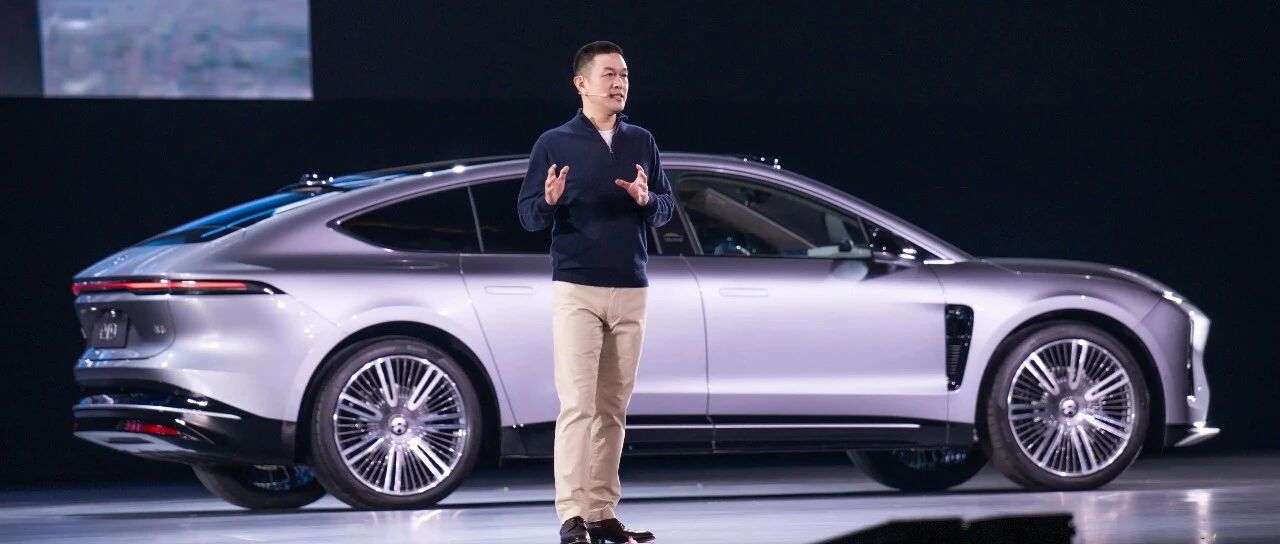
李想的三个选择
创业邦· 2025-11-28 03:56
Core Viewpoint - The article discusses the strategic direction of Li Auto, emphasizing its transition towards becoming a "bodily intelligent robot" rather than just an electric vehicle manufacturer, highlighting the importance of organizational agility and self-developed AI systems for future competitiveness [6][10][42]. Group 1: Strategic Choices - Li Auto's strategic framework consists of three main choices: returning to a startup organizational model, redefining products as bodily intelligent robots, and building a complete, self-developed AI system [10][18][24]. - The emphasis on returning to a startup model aims to enhance user-centric decision-making and responsiveness, countering the "big company disease" that can slow down innovation [20][18]. - The product definition shift towards bodily intelligent robots signifies a move beyond traditional electric vehicles and smart terminals, aiming to create vehicles that actively serve and understand user needs [22][23]. Group 2: Product and Technology Development - Li Auto plans to upgrade its range of extended-range electric vehicles (EREVs) significantly by 2026, focusing on a "boutique route" and enhancing core user experiences [34][35]. - The company has achieved over 100,000 cumulative orders for its pure electric models, indicating strong market acceptance and the ability to create popular products [36]. - Li Auto is set to introduce its self-developed M100 chip in 2026, which will enhance its AI capabilities and provide a competitive edge by allowing for deep customization of its AI systems [37][40]. Group 3: Market Position and Future Outlook - The year 2026 is identified as a critical testing point for Li Auto, where the company will face a more competitive market environment as policies tighten and product quality becomes paramount [31][32]. - Li Auto holds two key advantages: a robust EREV product line and a solid foundation in the pure electric vehicle market, positioning it well for future growth [33][36]. - The company's significant cash reserves and increased R&D investment signal its commitment to long-term strategic goals, aiming to surpass its previous product advantages by 2026 [42].


李斌盈利的底气:乐道越卖越多,“蔚来”越卖越少?
阿尔法工场研究院· 2025-11-28 00:07
Core Viewpoint - NIO is experiencing a paradox where the price of its vehicles has decreased, yet its revenue and sales figures have increased, indicating a shift in strategy towards more affordable models while facing challenges in maintaining its premium brand image [2][5][10]. Financial Performance - In the first three quarters of the year, NIO reported a cumulative loss of approximately 15.2 billion RMB, with a third-quarter loss of 3.48 billion RMB, which is a year-on-year reduction of 31.2% [5]. - NIO achieved a record high in several metrics during the third quarter, delivering 87,000 vehicles, a year-on-year increase of 40.8%, and generating revenue of 21.79 billion RMB, up 16.7% year-on-year [5]. - The gross margin for vehicles improved to 14.7%, marking a three-year high [5]. Sales Dynamics - The sales of NIO's premium brand vehicles have declined, with the NIO brand delivering 36,928 vehicles in Q3 2025, which is over 10,000 fewer than the previous quarter and approximately 24,000 fewer than the same quarter in 2024 [9]. - In contrast, the sales of the new brand, "Ledo," have been on the rise, with deliveries increasing from 832 units at launch to 37,656 units in Q3 2025, surpassing NIO's brand sales for the first time [7][9]. Pricing Strategy - NIO has implemented significant price reductions, with the new ES8's price dropping from a range of 498,000-598,000 RMB to 416,800-456,800 RMB, a decrease of 80,000-140,000 RMB [11]. - The pricing strategy shift reflects a change in leadership's attitude towards maintaining competitiveness in the market, moving from a stance of "never lowering prices" to prioritizing survival [12][14]. Research and Development - NIO's R&D expenses have significantly decreased, with Q3 spending at 2.391 billion RMB, down 28% year-on-year and 20.5% quarter-on-quarter [16]. - The reduction in R&D spending is attributed to organizational optimization and a decrease in phase development investments, raising concerns about the company's cash flow and financial health [17]. Financial Health - As of Q3 2025, NIO's cash and cash equivalents have halved to 9.27 billion RMB from 19.33 billion RMB at the end of 2024, indicating severe cash flow constraints [17]. - The company's debt ratio remains high at 89.21%, with a current ratio of 0.94 and a quick ratio of 0.83, suggesting limited short-term solvency [22][23]. Strategic Outlook - NIO's future profitability goals are under pressure due to ongoing losses, high debt levels, and the need for substantial investments in infrastructure, such as battery swap stations [24]. - The company is transitioning from reliance on external funding to achieving self-sustainability, emphasizing the importance of stabilizing operations and improving product competitiveness [24].

奇瑞智驾自研:大卓智能的沉浮往事
雷峰网· 2025-11-26 06:29
Group 1 - The core narrative of the article revolves around the evolution of Chery's autonomous driving strategy, highlighting the rise and fall of Dazhuo Intelligent, which was initially seen as a key player in Chery's self-research ambitions [4][6] - Chery's approach to autonomous driving has shifted from "fully controllable" to "fully self-researched," with Dazhuo Intelligent representing a significant milestone in this transition [5][10] - The partnership with Bosch and WeRide has positioned Chery as a leading player in the domestic autonomous driving sector, despite the absence of Dazhuo Intelligent [5][6] Group 2 - Dazhuo Intelligent was founded with the aim of developing autonomous driving technologies, but faced challenges in establishing a viable business model and securing necessary resources [8][14] - The initial strategy of Dazhuo Intelligent included targeting both low-level integrated machine markets and L4 commercial vehicle markets, but the vast scope led to difficulties in execution [11][12] - Internal conflicts arose regarding the financial responsibilities and operational independence of Dazhuo Intelligent, leading to tensions with Chery's commercial vehicle division [16][28] Group 3 - The leadership of Dazhuo Intelligent underwent changes, with the appointment of CTO Cao Guangzhi, who brought significant technical expertise from Tesla, signaling a renewed focus on self-research [19][21] - Despite initial successes, Dazhuo Intelligent struggled with internal processes and budget constraints imposed by Chery, which hindered its ability to recruit talent and accelerate development [25][27] - The integration of Dazhuo Intelligent into Chery's broader strategy culminated in its eventual dissolution, as Chery sought to streamline its autonomous driving efforts and collaborate more closely with external suppliers [41][43] Group 4 - Chery's decision to merge Dazhuo Intelligent with its other technology divisions reflects a strategic pivot towards leveraging external partnerships while maintaining a focus on core competencies [41][44] - The launch of the "Falcon" autonomous driving system marks a new chapter for Chery, emphasizing collaboration with established suppliers like Horizon and Momenta, thereby enhancing its competitive positioning in the market [35][44] - The article concludes with a recognition of Chery's ability to adapt and evolve its autonomous driving narrative, moving from a self-research focus to a more integrated approach with external partners [44]
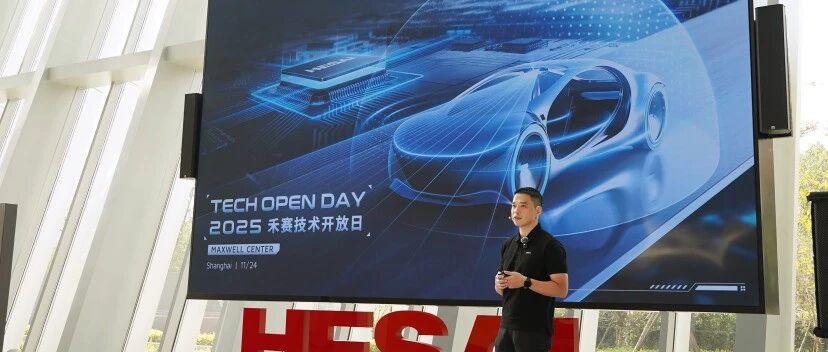
禾赛科技发布自研RISC-V激光雷达主控芯片费米C500,256线ATX升级焕新
IPO早知道· 2025-11-25 10:34
Core Viewpoint - HeSai Technology has officially launched the Fermi C500 chip based on RISC-V architecture and the updated ATX laser radar, which is set to begin mass production in April 2026 with over 4 million orders already secured [2][11]. Group 1: Product Development - The Fermi C500 chip completes HeSai's fourth-generation chip platform, integrating MCU, FPGA, and ADC into a single chip, ensuring supply chain security and technological independence [4]. - The ATX laser radar has been updated to include the Fermi C500 chip, featuring 256 lines and a maximum range of 230 meters, with a point frequency of 3,840,000 points per second, doubling the performance of the previous generation [9][11]. Group 2: Market Position and Achievements - HeSai is the only company in the industry to have fully self-developed all seven key components of laser radar, including laser drivers and digital signal processors [6]. - By November 2025, HeSai had delivered 185 million self-developed chips and achieved AEC-Q automotive certification for 16 chip models, ranking first globally [7]. Group 3: Industry Trends and Customer Base - The penetration rate of laser radar in new energy passenger vehicles has reached 20%, with one in five new cars equipped with it as standard [12]. - HeSai has secured partnerships with leading automotive manufacturers, including top European brands and major Chinese automakers, for the 2026 model year, ensuring 100% standardization of laser radar in their vehicles [12].

毫末智行停工停薪,百亿智驾独角兽倒下了?
阿尔法工场研究院· 2025-11-25 00:06
Core Viewpoint - The sudden operational halt of Haomo Zhixing highlights the critical issue of technological lag in the autonomous driving industry, leading to severe financial and operational consequences for the company [4][12][20]. Company Overview - Haomo Zhixing, established in November 2019 as a subsidiary of Great Wall Motors, was once a promising player in the autonomous driving sector, achieving a valuation exceeding $1 billion and securing significant orders for its HPilot system [4][10][11]. - The company has faced a rapid decline, with its accounts frozen, employee salaries halted, and difficulties in issuing employment certificates [5][18]. Operational Challenges - The operational crisis has affected approximately 300 to 400 employees, with many facing non-renewal of contracts and unpaid salaries for October and November [7][17]. - The company was unable to deliver a satisfactory "no-map" solution for its autonomous driving technology, leading to Great Wall Motors seeking external suppliers for critical projects [14][15]. Financial Decline - Haomo Zhixing's financial troubles began to surface in November 2024, with a 30% reduction in workforce and a wave of executive departures in mid-2025 [17][18]. - The company has struggled with commercialization and financing, resulting in a reliance on a single client, Great Wall Motors, which poses significant risks [15][20]. Industry Context - The autonomous driving industry is transitioning from a phase of rapid growth to a "survival of the fittest" stage, where companies must establish sustainable business models and technological competitiveness to avoid being eliminated from the market [20][21]. - As technology matures, the focus of competition is shifting from basic technological capabilities to the integration of these technologies to create unique user experiences [20][21].

广州车展丨理想汽车发布智驾新功能,强化全栈自研布局
Xin Lang Cai Jing· 2025-11-21 14:22
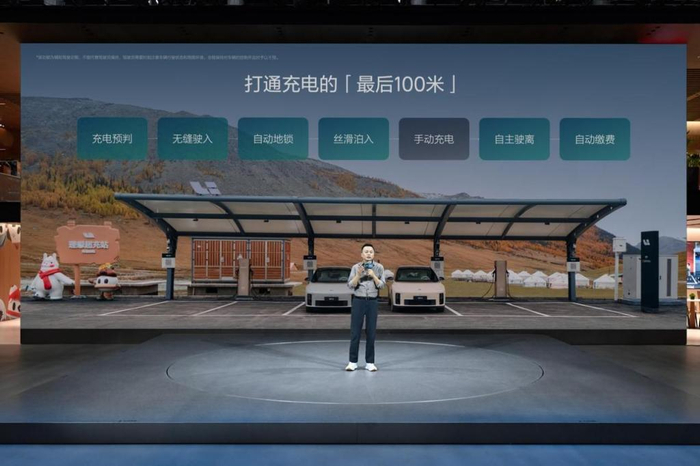
Core Insights - Li Auto showcased advancements in driver assistance technology and OTA upgrade plans at the Guangzhou Auto Show, introducing innovative features like VLA charging and defensive AES automatic emergency steering to strengthen its market position [1][5] Group 1: Technological Advancements - The VLA driver model, released in August 2025, has accumulated over 312 million kilometers of driving distance, enhancing its spatial understanding and cloud-based capabilities [3] - The VLA charging feature allows vehicles to autonomously navigate to charging stations, find available charging spots, park, and make payments, with plans to cover over 1,400 Li Auto supercharging stations by January 2026 and over 2,900 by March [3] - Li Auto's active safety system has reportedly prevented potential collision accidents 11.31 million times and extreme accidents over 14,000 times, with the upcoming defensive AES feature enhancing safety measures against complex hazards [3][4] Group 2: OTA Upgrades and Features - Future OTA upgrades will enhance the smart space and smart electric platform, introducing personalized features like art frames and pet modes, along with applications for speed-based KFC orders and music [4] - The range-extended models will receive a winter smart charging preheating feature, with further optimization of charging planning logic [4] - The VLA driver model is expected to continue evolving through reinforcement learning, improving experiences in complex traffic scenarios [4] Group 3: Market Competition - Li Auto faces increasing competition from brands like Huawei and Leap Motor, which are showcasing higher computing power in smart driving hardware and longer-range extended products, indicating a shift in industry competition from basic availability to performance [5]
观车 · 论势 || 小鹏“自证”背后:车企竞争已驶入多维新赛道
Zhong Guo Qi Che Bao Wang· 2025-11-19 01:45
Core Insights - The event surrounding the unveiling of the IRON humanoid robot by XPeng Motors has transcended technical debates, evolving into a broader discussion about trust, technology, and the future of the automotive industry [1][5] - XPeng's efforts to validate the IRON robot reflect a significant shift in the automotive sector, moving from traditional competition focused on hardware to a comprehensive transformation towards building future transportation ecosystems [1][4] Industry Transformation - The automotive market has shifted from hardware-centric competition, exemplified by brands like Volkswagen and Toyota, to a landscape where electric and intelligent vehicles dominate, allowing new entrants to redefine competition [2][3] - XPeng's product matrix, including the X9 range-extended vehicle and the IRON robot, showcases a cross-disciplinary approach that integrates AI and sensor technologies, indicating a move towards a holistic mobility service provider model [2][3] Technological Integration - The underlying logic of automotive companies venturing into robotics is based on decades of technological accumulation in areas such as intelligent control and multi-sensor integration, which align with the core needs of humanoid robots [3] - XPeng's commitment to full-stack self-research, from AI chip design to material development for the IRON robot, exemplifies a high level of control and innovation, enabling precise coordination of the robot's movements [3] Competitive Landscape - The trend of multi-dimensional strategies in the automotive industry is not unique to XPeng; other companies like Hyundai and Chery are also integrating robotics into their operations, indicating a collective industry shift [4] - The future competitiveness of automotive companies will hinge on their ability to create a complete ecosystem that combines hardware, software, and service scenarios, moving beyond mere vehicle sales [4][5] Conclusion - The process of validating the IRON robot serves as a metaphor for the automotive industry's broader transformation, emphasizing the need for innovation and adaptability in the face of skepticism [5]

小鹏Q3业绩会实录:明年计划推出乘用车Robotaxi有人驾驶的L4模式
Xin Lang Ke Ji· 2025-11-18 01:29
Core Insights - Xiaopeng Motors reported Q3 2025 total revenue of 20.38 billion yuan, a year-on-year increase of 101.8% and a quarter-on-quarter increase of 11.5% [1] - The net loss for the quarter was 380 million yuan, down from 1.81 billion yuan in the same period last year and 480 million yuan in the previous quarter [1] - Adjusted net loss, excluding U.S. GAAP, was 150 million yuan, compared to 1.53 billion yuan a year ago and 390 million yuan in the last quarter [1] Financial Performance - Total revenue reached 20.38 billion yuan, marking a significant year-on-year growth of 101.8% and a quarter-on-quarter growth of 11.5% [1] - The net loss for the third quarter was 380 million yuan, a notable improvement from the previous year's loss of 1.81 billion yuan and a reduction from the last quarter's loss of 480 million yuan [1] - Adjusted net loss was reported at 150 million yuan, significantly lower than the 1.53 billion yuan loss in the same quarter last year and the 390 million yuan loss in the previous quarter [1] Strategic Developments - The company is focusing on "physical AI" research and development, aiming to redefine automotive technology through a combination of AI and physical integration [3][4] - Xiaopeng Motors is collaborating with Volkswagen, with revenue from this partnership expected to start reflecting in Q4 2025 [5][6] - The company anticipates that technology collaboration revenue will remain consistent with Q3 levels in Q4 and expects similar revenue for the entirety of 2026 [6] Robotics and Future Plans - Xiaopeng Motors aims to achieve a sales target of 1 million robots by 2030, with a focus on humanoid robots that integrate seamlessly into daily life [7][10] - The company is currently in the process of preparing for mass production of its IRON robot, with significant challenges still to be addressed [9][10] - Future applications for robots are expected to expand beyond current commercial uses, potentially entering household environments within five years [10] Vehicle Development - The company plans to launch four new models in 2026, including both pure electric and extended-range versions, targeting various market segments [14][16] - Xiaopeng Motors is also expanding its international market presence, with plans to introduce new models in overseas markets [14][19] - The company has initiated local production in Indonesia and Austria to support its international growth strategy [19]
全文|小鹏Q3业绩会实录:明年计划推出乘用车Robotaxi有人驾驶的L4模式
Xin Lang Ke Ji· 2025-11-18 00:41
Core Insights - Xiaopeng Motors reported Q3 2025 total revenue of 20.38 billion yuan, a year-on-year increase of 101.8% and a quarter-on-quarter increase of 11.5% [1] - The net loss for the quarter was 380 million yuan, down from a net loss of 1.81 billion yuan in the same period last year and 480 million yuan in the previous quarter [1] - Adjusted net loss, not in accordance with US GAAP, was 150 million yuan, compared to 1.53 billion yuan in the same period last year and 390 million yuan in the previous quarter [1] Financial Performance - Total revenue for Q3 2025 reached 20.38 billion yuan, marking a significant growth of 101.8% year-on-year and 11.5% quarter-on-quarter [1] - The company reported a net loss of 380 million yuan, a notable improvement from the previous year's loss of 1.81 billion yuan and a reduction from the last quarter's loss of 480 million yuan [1] - Adjusted net loss was 150 million yuan, significantly lower than the 1.53 billion yuan loss in the same quarter last year and the 390 million yuan loss in the previous quarter [1] Strategic Developments - Xiaopeng Motors is focusing on "physical AI" research and development, aiming to redefine technological advancements in the automotive industry [2][3] - The company plans to enhance its competitive advantage in "physical AI" through a combination of full-stack self-research and cross-domain integration [3] - The partnership with Volkswagen for the Turing chip is expected to generate revenue starting in Q4 2025, with significant growth anticipated as joint vehicle development progresses [4][5][6] Robotics and Future Outlook - Xiaopeng Motors aims to achieve a sales target of 1 million robots by 2030, with a focus on humanoid robots that integrate seamlessly into daily life [7][8] - The company is working on overcoming challenges related to the mass production of its IRON robot, with expectations for a new generation of robots to enter production soon [9][10] - The anticipated commercialization of robots is expected to expand into various applications, including industrial and household settings within five years [10][11] Product Launches and Market Expansion - Xiaopeng Motors plans to launch four new models in 2026, including both pure electric and extended-range versions, targeting different market segments [13][14] - The company is expanding its international presence with local production facilities in Indonesia and Austria, aiming to increase production capacity and support overseas growth [16][17] - The introduction of super extended-range models is expected to significantly drive sales growth in the upcoming year [15]