Workflow
全球流动性宽松
icon
Search documents
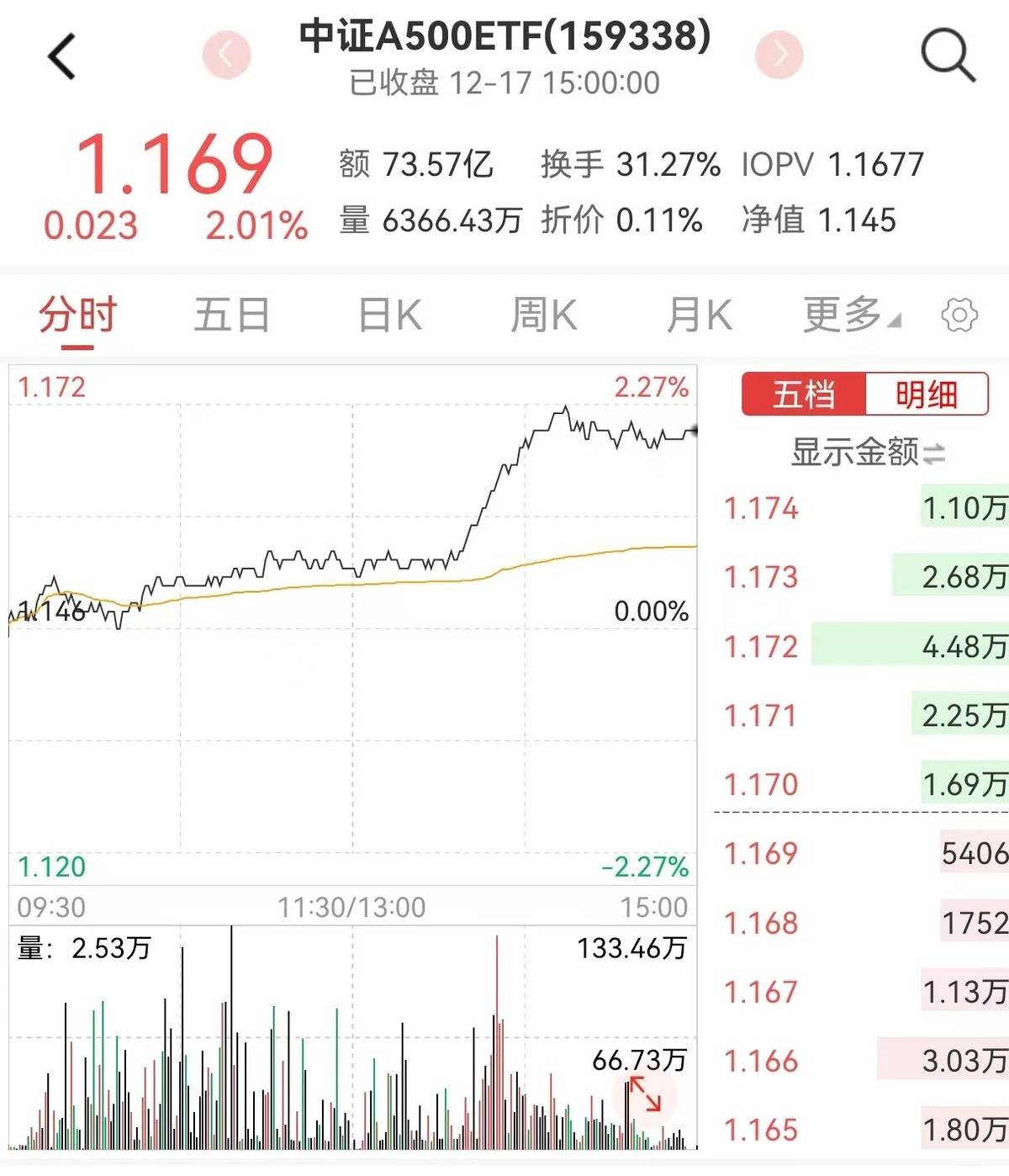
市场早盘震荡反弹,中证A500指数上涨1.72%,4只中证A500相关ETF成交额超30亿元
Mei Ri Jing Ji Xin Wen· 2025-10-09 06:52
Market Overview - The market experienced a rebound in early trading, with the Shanghai Composite Index rising over 1% and the CSI A500 Index increasing by 1.72% [1] - The chip industry chain saw significant activity, while the film and cinema sector faced substantial declines [1] ETF Performance - As of the morning close, ETFs tracking the CSI A500 Index rose by more than 1%, with 12 related ETFs having transaction volumes exceeding 100 million yuan and 4 surpassing 3 billion yuan [1] - Specific transaction volumes for A500 ETFs included 4.013 billion yuan, 3.513 billion yuan, 3.048 billion yuan, and 3.034 billion yuan respectively [1] Future Outlook - Analysts suggest that the A-share market is likely to maintain a trend of steady upward movement, supported by stable economic fundamentals, continuous inflow of new capital, global liquidity easing, and improved China-U.S. relations [1]
机构策略:A股有望继续维持震荡向上的大趋势
Group 1 - The AI industry is experiencing significant developments both domestically and internationally, with a recovery in profit growth for domestic industrial enterprises [1] - A-shares are expected to maintain a steady performance post-holiday, supported by the "14th Five-Year Plan" policy expectations and ongoing upward trends since September 24 [1] - The global AI competition is entering a new phase, shifting investment focus from individual key segments to comprehensive computing power infrastructure and ecosystem development [1] Group 2 - Global equity assets saw a broad increase during the National Day holiday, with Japanese and Korean markets leading the gains, while U.S. stocks reached new highs [2] - Domestic indicators such as the September PMI showed marginal recovery, and travel data during the holiday reached historical highs, indicating a positive trend in consumer sectors like dining and real estate [2] - OpenAI's release of Sora 2 and partnerships with various companies are accelerating AI investment and application deployment [2]
华泰证券:节后建议继续围绕主线中相对低位品种布局
Core Viewpoint - The report from Huatai Securities highlights a global rally in equity assets during the National Day holiday, with significant movements in various markets and suggests a positive outlook based on recent economic indicators and developments in AI technology [1] Domestic Developments - The September PMI showed a marginal recovery, indicating improved economic activity - Travel data during the holiday reached a historical high, with notable performance in outbound tourism - High-frequency data in sectors such as dining, cinema, and real estate also showed signs of recovery [1][1][1] Overseas Developments - Increased risk aversion due to the U.S. government shutdown and the Japanese elections, leading to a rise in gold prices - Expectations for interest rate cuts by the Federal Reserve and fiscal expansion in Japan have strengthened the narrative of global liquidity easing [1][1][1] Industry Developments - OpenAI launched Sora2 and announced collaborations with multiple companies, accelerating AI investment and application deployment - The post-holiday period is expected to see a positive impact on risk appetite due to calendar effects and new information from the holiday [1][1][1]
中信建投:预计10月市场仍将震荡向上 预计市场有望围绕三季报展开
Sou Hu Cai Jing· 2025-10-08 12:36
Core Viewpoint - The report from CITIC Securities indicates a gradual improvement in economic data, with industrial enterprise profits showing a year-on-year increase, suggesting a positive trend in the market outlook for October [1] Economic Data - In August, the cumulative year-on-year growth of industrial enterprise profits rose from -1.7% to 0.9% [1] - The profit margin in August increased by 0.1 percentage points to 5.2%, with a year-on-year decline narrowing by 2.8 percentage points [1] - Structural improvements were noted in cyclical, manufacturing, and technology sectors, with initial positive effects from anti-involution policies [1] Consumer Trends - Despite improvements, consumer spending remains under pressure, indicating a need for further stimulus measures [1] - It is anticipated that related consumption-promoting policies may be intensified in the fourth quarter [1] Global Economic Context - The Federal Reserve lowered interest rates in September, contributing to increased global liquidity [1] - The combination of economic improvement, liquidity easing, and sustained high-risk appetite is expected to lead to a bullish market trend in October [1] Investment Recommendations - Investors are advised to focus on three key areas: 1. Companies with strong third-quarter performance showing signs of recovery 2. Cyclical sectors benefiting from the implementation of anti-involution policies 3. High-growth industries that exceed expectations in industry trends [1]
国庆假期之前的这轮股市上涨,真正的原因,该去怎么理解?
Sou Hu Cai Jing· 2025-10-02 19:48
Group 1 - A-shares experienced an unexpected rise before the National Day holiday, with the ChiNext Index increasing by 2.74% and the Shenzhen Component Index rising over 2% on September 29, leading to over 3,500 stocks in the market gaining [1][3] - The core reason for this market behavior was the significant improvement in industrial profits, with August data showing a year-on-year increase of 20.4%, reversing the previous decline of 1.5% in July, marking a new high in growth rate [3][10] - The expectation of global liquidity easing due to the Federal Reserve's interest rate cuts, with a probability exceeding 90% in September, also contributed positively to the A-share market, particularly benefiting growth sectors [3][6] Group 2 - The policy environment is supportive, with long-term special government bonds directed towards consumption recovery, technological upgrades, and infrastructure, enhancing market expectations for defensive sectors [5][6] - On September 29, brokerage stocks surged, with the sector index rising by 4.4%, driven by expectations of high growth in brokerage firms' Q3 performance and a prior significant price correction [6][10] - The electronics sector saw a notable increase of 3.86%, with semiconductor companies like SMIC reporting over 90% capacity utilization and Longi Green Energy achieving a 20.1% revenue growth, indicating an early recovery in the industry [7][11] Group 3 - The consumer sector, particularly high-end products like Moutai and Wuliangye, showed resilience, with tourism and hotel orders increasing by over 40% year-on-year, supported by policies promoting consumption upgrades [7][10] - Gold prices benefited from a weaker dollar and heightened risk aversion due to geopolitical tensions, with the dollar index hitting a six-month low amid expectations of Fed rate cuts [8][10] - Despite the market's positive performance, there was a significant increase in share reduction plans among listed companies, with 428 companies disclosing such plans in September, totaling 12.045 billion yuan, a 79.32% month-on-month increase [10][13] Group 4 - The manufacturing sector showed strong profit growth, with equipment manufacturing profits increasing by 7.2% in the first eight months, contributing significantly to overall industrial profit growth [11][13] - The cost situation for enterprises improved, with costs per 100 yuan of revenue decreasing by 0.20 yuan year-on-year, marking the first decrease since July 2025 [13] - A significant net inflow of capital was observed in the week leading up to the holiday, with 19 sectors receiving a total of 149.134 billion yuan in net inflows, particularly in electronics, power equipment, and computing [13][14]
全球流动性宽松开启!A股能否接住国际资本?顶层已有重要考量
Sou Hu Cai Jing· 2025-10-01 07:25
Group 1 - The current market has formed a dual circulation mechanism of sentiment and liquidity, indicating a weaker direct correlation between short-term market trends and economic fundamentals, with more emphasis on upward expectations and capital flow [2] - As investors observe market increases due to capital inflow, they tend to participate actively, leading to a broader trend of reallocating household savings to the capital market [4] - The capital market's development pace must align with long-term strategies, especially during the real estate market adjustment period, to avoid excessive short-term growth that could hinder future potential [4] Group 2 - The strategic development of the capital market is crucial for mitigating debt risks, stimulating effective demand, and enhancing asset valuations in the short term, while also positioning the country favorably in global competition for high-quality economic development in the long term [5] - China's industrial capacity is projected to account for 35% of global capacity by 2024, necessitating the expansion into overseas markets due to insufficient domestic consumption [7] - The need for innovation in original fields is critical for maintaining global competitive advantages, improving living standards, and creating employment opportunities, with the capital market playing a vital role in providing financing channels and fostering a virtuous cycle of innovation and development [7]
中信期货晨报:国内商品期货多数下跌,能源化工普遍下跌-20250924
Zhong Xin Qi Huo· 2025-09-24 07:22
1. Report Industry Investment Rating - Not provided in the given content 2. Core Views of the Report - Overseas Fed's policy shift may lead to global liquidity easing, opening up space for China's reserve - requirement ratio and interest - rate cuts. The market is still dominated by liquidity - easing trades. The next Fed meeting is on October 29, and the market expects a 25 - bps rate cut. Attention should be paid to the US September non - farm and inflation data in early - mid October. The transmission of Fed's preventive rate cuts to the US real economy takes about 2 - 3 months [6]. - China's economic growth slowed in Q3. There is an expectation that the funds from existing growth - stabilizing policies will be in place faster, and attention should be paid to the implementation of 500 billion yuan in financial policy tools and new directions in the "14th Five - Year Plan". Investment data slowed significantly from July to August, especially infrastructure investment. There is a risk that infrastructure funds in Q4 may fall short of expectations. However, the GDP growth rates in Q3 and Q4 are expected to be 4.9% and 4.7% respectively, and the annual 5% target can still be achieved [6]. - After the policies at home and abroad are settled, risk assets may experience a short - term adjustment. In the next 1 - 2 quarters, global loose liquidity and fiscal leverage - driven economic recovery expectations will support risk assets. In the medium - term from Q4 this year to H1 next year, the expected performance order is equities > commodities > bonds. In Q4, the stock market is expected to be volatile, domestic commodities depend on policies, overseas commodities such as gold and non - ferrous metals are favored, the weak US dollar trend continues but with a slower slope. Domestic bonds' allocation value increases after the interest - rate rise, and they should be evenly allocated with equities in Q4. Gold is for long - term strategic allocation, and rate cuts are the main logic in Q4 [6]. 3. Summary by Relevant Catalogs 3.1 Macro Highlights - **Overseas Macro**: After the Fed's policy shift, a new round of global liquidity easing is expected. The Fed's independence risk may increase the potential for future rate cuts. Attention should be paid to the US economic data before the next Fed meeting [6]. - **Domestic Macro**: China's economic growth slowed in Q3. There are risks in infrastructure investment in Q4, but the annual GDP target can still be achieved. The probability of the implementation of existing funds and new policies in Q4 will increase if investment and exports continue to decline in September [6]. - **Asset Views**: In the medium - term, equities are expected to perform better than commodities and bonds. In Q4, the stock market is volatile, domestic commodities depend on policies, overseas gold and non - ferrous metals are favored, and bonds' allocation value increases. Gold is for long - term strategic investment [6]. 3.2 View Highlights 3.2.1 Financial - **Stock Index Futures**: Use a dumbbell structure to deal with market divergence. The short - term judgment is "oscillating" due to the attenuation of incremental funds [7]. - **Stock Index Options**: Continue the hedging and defensive strategy. The short - term judgment is "oscillating" considering the possible deterioration of option market liquidity [7]. - **Treasury Bond Futures**: The stock - bond seesaw may continue in the short term. The short - term judgment is "oscillating" with concerns about unexpected changes in tariffs, supply, and monetary easing [7]. 3.2.2 Precious Metals - **Gold/Silver**: Driven by dovish expectations, prices are rising. The short - term judgment is "oscillating and rising", and attention should be paid to the US fundamentals, Fed's monetary policy, and global equity market trends [7]. 3.2.3 Shipping - **Container Shipping to Europe**: The peak season in Q3 has passed, and there is no upward driving force. The short - term judgment is "oscillating", and attention should be paid to the rate of freight - rate decline in September [7]. 3.2.4 Black Building Materials - **Steel Products**: Demand recovery is slow, and there are continuous policy disturbances. The short - term judgment is "oscillating", and attention should be paid to the progress of special - bond issuance, steel exports, and iron - water production [7]. - **Iron Ore**: Shipments have decreased, and port inventories have increased. The short - term judgment is "oscillating", and attention should be paid to overseas mine production and shipments, domestic iron - water production, weather, port inventories, and policy dynamics [7]. - **Coke**: The fundamentals are healthy, and the spot price is stable. The short - term judgment is "oscillating", and attention should be paid to steel - mill production, coking costs, and macro sentiment [7]. - **Coking Coal**: Spot transactions are good, and the futures price has a slight correction. The short - term judgment is "oscillating", and attention should be paid to steel - mill production, coal - mine safety inspections, and macro sentiment [7]. - **Silicon Iron**: Supply - demand drivers are limited, and the futures price has fallen from a high level. The short - term judgment is "oscillating", and attention should be paid to raw material costs and steel procurement [7]. - **Manganese Silicon**: Supply - demand expectations are pessimistic, and the price is under pressure. The short - term judgment is "oscillating", and attention should be paid to cost prices and overseas quotes [7]. - **Glass**: Futures and spot inventories have increased significantly, and mid - stream restocking is coming to an end. The short - term judgment is "oscillating", and attention should be paid to spot sales [7]. - **Soda Ash**: Inventory has been continuously transferred, and upstream inventory has decreased significantly. The short - term judgment is "oscillating", and attention should be paid to soda - ash inventory [7]. 3.2.5 Non - Ferrous Metals and New Materials - **Copper**: There are new disturbances in copper - ore supply, and the copper price is oscillating strongly. The short - term judgment is "oscillating and rising", and attention should be paid to supply disturbances, domestic policies, Fed's policy, domestic demand recovery, and economic recession risks [7]. - **Alumina**: The spot market is weak, and inventory is accumulating. The alumina price is under pressure. The short - term judgment is "oscillating", and attention should be paid to ore production recovery, electrolytic - aluminum production recovery, and extreme market trends [7]. - **Aluminum**: Inventory continues to accumulate, and the aluminum price is oscillating. The short - term judgment is "oscillating", and attention should be paid to macro risks, supply disturbances, and demand shortfalls [7]. - **Zinc**: Inventory continues to accumulate, and the zinc price is oscillating. The short - term judgment is "oscillating", and attention should be paid to macro risks and zinc - ore supply recovery [7]. - **Lead**: Supply of recycled lead has decreased, and the lead price is rising. The short - term judgment is "oscillating and rising", and attention should be paid to supply - side disturbances and battery exports [7]. - **Nickel**: Indonesia has cracked down on illegal mining, and the nickel price is oscillating widely. The short - term judgment is "oscillating", and attention should be paid to macro and geopolitical risks, Indonesian policies, and supply - chain issues [7]. - **Stainless Steel**: Cost support is strong, and the stainless - steel futures price has risen significantly. The short - term judgment is "oscillating", and attention should be paid to Indonesian policies and demand growth [7]. - **Tin**: The resumption of production in Wa State is slower than expected, and the tin price is oscillating at a high level. The short - term judgment is "oscillating", and attention should be paid to the resumption of production and demand improvement in Wa State [7]. - **Industrial Silicon**: Supply is increasing, suppressing the silicon price. The short - term judgment is "oscillating", and attention should be paid to supply - side production cuts and photovoltaic installation [7]. - **Lithium Carbonate**: Fundamental drivers are weak, and the price is oscillating. The short - term judgment is "oscillating", and attention should be paid to demand, supply disturbances, and technological breakthroughs [7]. 3.2.6 Energy and Chemicals - **Crude Oil/LPG**: Supply pressure continues, and there are geopolitical disturbances. The short - term judgment for crude oil is "oscillating and falling", and for LPG is "oscillating", with attention to OPEC+ policies and Middle - East geopolitics [9]. - **Asphalt**: The futures price is under pressure at the 3500 level. The short - term judgment is "oscillating and falling", and attention should be paid to sanctions and supply disturbances [9]. - **High - Sulfur Fuel Oil**: The fuel - oil futures price is weakly oscillating. The short - term judgment is "oscillating and falling", and attention should be paid to geopolitics and crude - oil prices [9]. - **Low - Sulfur Fuel Oil**: It follows the weak trend of crude oil. The short - term judgment is "oscillating and falling", and attention should be paid to crude - oil prices [9]. - **Methanol**: Affected by olefins and port inventory, the short - term judgment is "oscillating", and attention should be paid to macro - energy and upstream - downstream device dynamics [9]. - **Urea**: The price is under cost pressure, and there is a risk of an emotional rebound. The short - term judgment is "oscillating", and attention should be paid to export policies and the seventh Indian tender [9]. - **Ethylene Glycol**: Market sentiment is affected by future inventory accumulation. The short - term judgment is "oscillating", and attention should be paid to coal and oil prices, port inventory, and device operations [9]. - **PX**: Due to postponed device maintenance and capacity expansion, the supply - demand balance has weakened. The short - term judgment is "oscillating", and attention should be paid to crude - oil price fluctuations, macro changes, and demand during the peak season [9]. - **PTA**: Low processing fees lead to more production cuts. The short - term supply - demand situation has improved, but the long - term oversupply remains. The short - term judgment is "oscillating", and attention should be paid to crude - oil price fluctuations, macro changes, and demand during the peak season [9]. - **Short - Fiber**: Terminal orders have improved slightly, but high supply poses risks. The short - term judgment is "oscillating", and attention should be paid to downstream yarn - mill purchases and peak - season demand [9]. - **Bottle Chips**: There is short - term replenishment, but long - term demand recovery is uncertain. The short - term judgment is "oscillating", and attention should be paid to production - cut targets and terminal demand [9]. - **Propylene**: The price difference with PP oscillates between 500 - 550. The short - term judgment is "oscillating", and attention should be paid to oil prices and domestic macro - economy [9]. - **PP**: There may be support at the previous low. The short - term judgment is "oscillating", and attention should be paid to oil prices and domestic and overseas macro - economies [9]. - **Plastic**: Maintenance support is limited, and the price is falling. The short - term judgment is "oscillating", and attention should be paid to oil prices and domestic and overseas macro - economies [9]. - **Styrene**: Market sentiment has improved, and attention should be paid to policy details. The short - term judgment is "oscillating", and attention should be paid to oil prices, macro policies, and device operations [9]. - **PVC**: There is a situation of weak reality and strong expectation. The short - term judgment is "oscillating", and attention should be paid to expectations, costs, and supply [9]. - **Caustic Soda**: There are expectations of alumina production resumption, and the caustic - soda price is rising. The short - term judgment is "oscillating", and attention should be paid to market sentiment, production, and demand [9]. 3.2.7 Agriculture - **Oils and Fats**: The expected production of Malaysian palm oil in September has decreased month - on - month. The short - term judgment is "oscillating", and attention should be paid to US soybean weather and Malaysian palm - oil supply - demand data [9]. - **Protein Meal**: There is pre - holiday restocking, and the futures price has rebounded from the lower end of the range. The short - term judgment is "oscillating and rising", and attention should be paid to US soybean weather, domestic demand, and trade relations [9]. - **Corn/Starch**: Farmers are more willing to sell, and the futures price has broken through the previous low. The short - term judgment is "oscillating", and attention should be paid to demand, macro - economy, and weather [9]. - **Pigs**: Supply and demand are loose, and the price is weak. The short - term judgment is "oscillating and falling", and attention should be paid to farming sentiment, epidemics, and policies [9]. - **Rubber**: There is positive sentiment from data correction, and attention should be paid to its sustainability. The short - term judgment is "oscillating", and attention should be paid to production - area weather, raw - material prices, and macro - changes [9]. - **Synthetic Rubber**: The futures price is oscillating within a range. The short - term judgment is "oscillating", and attention should be paid to crude - oil price fluctuations [9]. - **Cotton**: The cotton price has adjusted downward in advance due to expectations of a new - crop supply increase. The short - term judgment is "oscillating", and attention should be paid to demand and inventory [9]. - **Sugar**: The fundamentals have not improved, and the sugar price is looking for support. The short - term judgment is "oscillating", and attention should be paid to imports [9]. - **Pulp**: The spot market is weak, and the pulp price is oscillating. The short - term judgment is "oscillating", and attention should be paid to macro - economic changes and US dollar - based quotes [9]. - **Offset Printing Paper**: The price is oscillating narrowly. The short - term judgment is "oscillating", and attention should be paid to production - sales, education policies, and paper - mill operations [9]. - **Logs**: The futures price is fluctuating narrowly. The short - term judgment is "oscillating", and attention should be paid to shipments and dispatches [9].
中信期货晨报:国内商品期货涨跌互现,贵金属普遍上涨-20250923
Zhong Xin Qi Huo· 2025-09-23 03:54
Report Title - Domestic commodity futures showed mixed trends, with precious metals generally rising - CITIC Futures Morning Report 20250923 [1] Report Industry Investment Rating - Not provided in the content Core Viewpoints - After the overseas Federal Reserve's decision, a new round of global liquidity easing is expected, opening up policy space for China's reserve requirement ratio and interest rate cuts. The market is still dominated by liquidity easing trading, and the risk of the Fed's independence may increase the potential elasticity of future interest rate cuts. Attention should be paid to the actual transmission to the US fundamentals after the rate cuts. The next FOMC meeting is on October 29, and the market is fully expecting a 25bps rate cut. The US September non - farm payrolls and inflation data to be released in early - mid October should be monitored. Historically, it takes about 2 - 3 months for the Fed's preventive rate cuts to impact the US real economy [8]. - In the third quarter, China's economic growth slowed down continuously. The funds from existing pro - growth policies are expected to be in place more quickly. Attention should be paid to the implementation of 500 billion yuan in financial policy tools and new directions in the "15th Five - Year Plan". Investment data from July to August slowed down significantly, especially infrastructure investment. In addition to seasonal factors, the increasing proportion of "debt - resolution" funds may lead to insufficient infrastructure funds in the fourth quarter. However, the GDP growth rates in the third and fourth quarters are expected to be 4.9% and 4.7% respectively, and combined with the 5.3% growth rate in the first half of the year, the annual target of 5% can still be achieved. If investment and exports continue to decline in September, the probability of the implementation of existing funds and incremental policies in the fourth quarter will increase [8]. - After the domestic and overseas uncertainties are resolved, risk assets may experience a short - term adjustment. However, in the next 1 - 2 quarters, the global loose liquidity and the economic recovery expected driven by fiscal leverage will support risk assets. In the medium - term from the fourth quarter to the first half of next year, the expected performance is equities > commodities > bonds. In the short - term of the fourth quarter, the stock market is expected to be volatile, domestic commodities depend on policies, overseas commodities such as gold and non - ferrous metals are favored, and the weak US dollar trend will continue but at a slower pace. In addition, after the rise of domestic interest rates, the allocation value of bonds increases, and bonds should be allocated evenly with equities in the fourth quarter. Gold is a long - term strategic allocation, and interest rate cuts are the main logic in the fourth quarter, with the risk of premature trading of the recovery expectation [8]. Summary by Directory 1. Macro Highlights - **Overseas Macro**: The Fed's decision will lead to global liquidity easing and create policy space for China. The market is dominated by liquidity easing trading, and the Fed's independence risk may affect future rate cuts. The next FOMC meeting is on October 29, and the market expects a 25bps rate cut. Monitor the US September non - farm payrolls and inflation data. Historically, it takes 2 - 3 months for rate cuts to impact the US real economy [8]. - **Domestic Macro**: In Q3, China's economic growth slowed. Existing pro - growth policy funds are expected to be in place faster. Pay attention to 500 billion yuan in financial policy tools and new "15th Five - Year Plan" directions. July - August investment data slowed, especially infrastructure investment. "Debt - resolution" funds may lead to insufficient Q4 infrastructure funds. Q3 and Q4 GDP growth rates are expected to be 4.9% and 4.7% respectively, and the annual 5% target can be achieved. If September investment and exports decline, the probability of policy implementation in Q4 will increase [8]. - **Asset Views**: After uncertainties are resolved, risk assets may adjust in the short - term. In the next 1 - 2 quarters, risk assets will be supported by global liquidity and fiscal leverage. Medium - term (Q4 to H1 next year): equities > commodities > bonds. Short - term in Q4: stock market volatile, domestic commodities depend on policies, overseas gold and non - ferrous metals favored, weak US dollar continues but at a slower pace. Domestic bonds' allocation value increases after interest rate rise, and should be evenly allocated with equities in Q4. Gold is a long - term strategic allocation, with interest rate cuts as the main Q4 logic and the risk of premature recovery trading [8]. 2. Viewpoint Highlights Financial Sector - **Stock Index Futures**: Use a dumbbell structure to deal with market divergence. The short - term outlook is volatile due to the attenuation of incremental funds [9]. - **Stock Index Options**: Continue the hedging and defensive strategy. The short - term outlook is volatile due to the deterioration of options market liquidity [9]. - **Treasury Bond Futures**: The stock - bond seesaw may continue in the short - term. The short - term outlook is volatile, and attention should be paid to unexpected changes in tariffs, supply, and monetary easing [9]. Precious Metals - **Gold/Silver**: The dovish expectations are driving the price up. The short - term outlook is a volatile upward trend, and attention should be paid to the US fundamentals, Fed's monetary policy, and the global equity market trends [9]. Shipping - **Container Shipping to Europe**: The peak season in Q3 has ended, and there is a lack of upward momentum due to loading pressure. The short - term outlook is volatile, and attention should be paid to the rate of freight decline in September [9]. Black Building Materials - **Steel Products**: The return of peak - season demand has improved the fundamentals marginally. The short - term outlook is volatile, and attention should be paid to the progress of special bond issuance, steel exports, and hot metal production [9]. - **Iron Ore**: Hot metal production has slightly increased, and inventory has remained stable overall. The short - term outlook is volatile, and attention should be paid to overseas mine production and shipment, domestic hot metal production, weather, port inventory changes, and policy dynamics [9]. - **Coke**: The second round of price cuts has been implemented, and downstream restocking has begun. The short - term outlook is volatile, and attention should be paid to steel mill production, coking costs, and macro sentiment [9]. - **Coking Coal**: Supply has increased slightly, and the futures and spot prices have rebounded in tandem. The short - term outlook is volatile, and attention should be paid to steel mill production, coal mine safety inspections, and macro sentiment [9]. - **Silicon Ferroalloy**: The decline in the peak - season futures market is limited, but there is still downward pressure in the medium - term. The short - term outlook is volatile, and attention should be paid to raw material costs and steel procurement [9]. - **Manganese Ferroalloy**: The peak - season expectations support the futures market, but the supply - demand outlook is still pessimistic. The short - term outlook is volatile, and attention should be paid to cost prices and overseas quotes [9]. - **Glass**: Supply disruptions are awaited, and demand has improved slightly. The short - term outlook is volatile, and attention should be paid to spot sales [9]. - **Soda Ash**: Demand has increased month - on - month, but supply is still growing. The short - term outlook is volatile, and attention should be paid to soda ash inventory [9]. Non - Ferrous Metals and New Materials - **Copper**: Supply disruptions in copper mines have occurred, and the copper price is expected to fluctuate strongly. The short - term outlook is a volatile upward trend, and attention should be paid to supply disruptions, unexpected domestic policies, less - dovish Fed than expected, and less - than - expected domestic demand recovery [9]. - **Alumina**: The spot market has weakened, and inventory has accumulated. The alumina price is under pressure. The short - term outlook is volatile, and attention should be paid to unexpected delays in ore production resumption, unexpected over - recovery of electrolytic aluminum production, and extreme market trends [9]. - **Aluminum**: Inventory has continued to accumulate, and the aluminum price is expected to fluctuate. The short - term outlook is volatile, and attention should be paid to macro risks, supply disruptions, and less - than - expected demand [9]. - **Zinc**: Inventory has continued to accumulate, and the zinc price is expected to fluctuate. The short - term outlook is volatile, and attention should be paid to macro risks and unexpected increases in zinc ore supply [9]. - **Lead**: The supply of secondary lead has decreased, and the lead price is expected to fluctuate upward. The short - term outlook is a volatile upward trend, and attention should be paid to supply - side disruptions and slowdown in battery exports [9]. - **Nickel**: Indonesia has cracked down on illegal mining, and the nickel price is expected to fluctuate widely. The short - term outlook is volatile, and attention should be paid to unexpected macro and geopolitical changes, Indonesian policy risks, and unexpected supply shortages [9]. - **Stainless Steel**: Cost support is strong, and the stainless - steel futures market has risen significantly. The short - term outlook is volatile, and attention should be paid to Indonesian policy risks and unexpected demand growth [9]. - **Tin**: The resumption of production in Wa State is slower than expected, and the tin price is expected to fluctuate at a high level. The short - term outlook is volatile, and attention should be paid to the expected resumption of production in Wa State and changes in demand expectations [9]. - **Industrial Silicon**: Supply has continued to increase, suppressing the upward space of the silicon price. The short - term outlook is volatile, and attention should be paid to unexpected supply cuts and unexpected photovoltaic installations [9]. Energy and Chemicals - **Crude Oil**: Supply pressure continues, and geopolitical disturbances still exist. The short - term outlook is a volatile downward trend, and attention should be paid to OPEC+ production policies and the geopolitical situation in the Middle East [11]. - **LPG**: The valuation has been restored, and attention should be paid to cost - side guidance. The short - term outlook is volatile, and attention should be paid to the cost of crude oil and overseas propane [11]. - **Asphalt**: The futures price is running below the 3500 pressure level. The short - term outlook is a volatile downward trend, and attention should be paid to sanctions and supply disruptions [11]. - **High - Sulfur Fuel Oil**: Geopolitical disturbances have not had a significant impact, and the fuel oil futures price has weakened. The short - term outlook is a volatile downward trend, and attention should be paid to geopolitics and crude oil prices [11]. - **Low - Sulfur Fuel Oil**: Low - sulfur fuel oil is following the weakening trend of crude oil. The short - term outlook is a volatile downward trend, and attention should be paid to crude oil prices [11]. - **Methanol**: Olefins and port inventory are dragging down the market, and there is still a large contradiction between near - and far - month contracts. The short - term outlook is volatile, and attention should be paid to macro - energy factors and the dynamics of upstream and downstream devices [11]. - **Urea**: The price is under pressure along the cost line, and there is a risk of an over - reaction in sentiment. The short - term outlook is volatile, and attention should be paid to whether the urea export window will be extended, quota adjustments, and the authenticity of the seventh Indian tender [11]. - **Ethylene Glycol**: The market sentiment is greatly affected by the expected future inventory build - up, and the willingness to hold positions is low. The short - term outlook is volatile, and attention should be paid to coal and oil price fluctuations, port inventory trends, and device implementation [11]. - **PX**: The postponement of device maintenance and capacity expansion have weakened the supply - demand balance, and the high valuation is being corrected. The short - term outlook is volatile, and attention should be paid to significant crude oil price fluctuations, macro - level changes, and less - than - expected peak - season demand [11]. - **PTA**: Low processing fees have increased the willingness of enterprises to cut production and conduct maintenance. Although short - term supply - demand conditions have improved, the long - term oversupply situation cannot be reversed. The short - term outlook is volatile, and attention should be paid to significant crude oil price fluctuations, macro - level changes, and less - than - expected peak - season demand [11]. - **Short - Fiber**: Terminal orders have improved marginally, but the improvement is limited, and high supply poses potential risks. The short - term outlook is volatile, and attention should be paid to the purchasing rhythm of downstream yarn mills and the quality of peak - season demand [11]. - **Bottle - Grade PET**: There is short - term concentrated replenishment, but the medium - to - long - term demand rebound height is uncertain, and profits are fluctuating. The short - term outlook is volatile, and attention should be paid to the implementation of bottle - grade PET enterprises' production - cut targets and terminal demand [11]. - **Propylene**: The price difference between propylene and PP is oscillating in the range of 500 - 550. The short - term outlook is volatile, and attention should be paid to oil prices and the domestic macro - situation [11]. - **PP**: There may be support near the previous low, and PP is expected to fluctuate. The short - term outlook is volatile, and attention should be paid to oil prices and domestic and overseas macro - situations [11]. - **Plastic**: The support from maintenance is limited, and plastic is expected to decline. The short - term outlook is volatile, and attention should be paid to oil prices and domestic and overseas macro - situations [11]. - **Styrene**: The commodity sentiment has improved, and attention should be paid to the implementation of policy details. The short - term outlook is volatile, and attention should be paid to oil prices, macro - policies, and device dynamics [11]. - **PVC**: There is a situation of weak reality and strong expectation, and PVC is expected to fluctuate. The short - term outlook is volatile, and attention should be paid to expectations, costs, and supply [11]. - **Caustic Soda**: The expectation of alumina production resumption has increased, and caustic soda prices have rebounded. The short - term outlook is volatile, and attention should be paid to market sentiment, production start - up, and demand [11]. Agriculture - **Oils and Fats**: The expected month - on - month decline in Malaysian palm oil production in September. Attention should be paid to the effectiveness of the support level for oils and fats. The short - term outlook is volatile, and attention should be paid to US soybean weather and Malaysian palm oil production and demand data [11]. - **Protein Meal**: Downstream price - fixing for pre - holiday stocking has led to a rebound at the lower end of the trading range. The short - term outlook is a volatile upward trend, and attention should be paid to US soybean weather, domestic demand, macro - factors, and Sino - US and Sino - Canada trade frictions [11]. - **Corn/Starch**: The support at 2150 is strong, and the short - term market may fluctuate. The short - term outlook is volatile, and attention should be paid to demand, macro - factors, and weather [11]. - **Hogs**: Supply is sufficient, and prices are weak. The short - term outlook is a volatile downward trend, and attention should be paid to breeding sentiment, epidemics, and policies [11]. - **Rubber**: The sentiment is bearish, and rubber prices have declined significantly. The short - term outlook is volatile, and attention should be paid to weather in production areas, raw material prices, and macro - changes [11]. - **Synthetic Rubber**: The weakness of natural rubber has dragged down synthetic rubber. The short - term outlook is volatile, and attention should be paid to significant crude oil price fluctuations [11]. - **Cotton**: Attention should be paid to demand and inventory. The short - term outlook is volatile [11]. - **Sugar**: Imports have increased month - on - month, and sugar prices have continued to decline. The short - term outlook is volatile, and attention should be paid to imports [11]. - **Pulp**: There is no obvious driving force for a breakthrough, and pulp is expected to maintain a volatile trend. The short - term outlook is volatile, and attention should be paid to macro - economic changes and fluctuations in US dollar - based quotes [11]. - **Offset Paper**: The trading volume is low, and offset paper is expected to fluctuate within a narrow range. The short - term outlook is volatile, and attention should be paid to sales, education policies, and paper mill production dynamics [11]. - **Logs**: The commodity market has adjusted, and logs are expected to decline. The short - term outlook is volatile, and attention should be paid to shipping volume and shipment volume [11].
徽商期货:黄金价格重心将继续上移
Qi Huo Ri Bao· 2025-09-23 01:00
Group 1: Federal Reserve Rate Decision - The Federal Reserve lowered the federal funds rate by 25 basis points to a target range of 4.00%-4.25%, marking the first rate cut since December of the previous year, with a total reduction of 125 basis points in the current easing cycle [2] - The median of the latest dot plot indicates an additional 50 basis points of potential cuts by 2025, aligning with market expectations [2] - The Fed's statement highlighted a slowdown in the labor market and a rise in inflation, with Chairman Powell adopting a somewhat hawkish tone, indicating that the next steps in monetary policy remain unclear [2] Group 2: Economic and Market Implications - The U.S. economy is experiencing a slowdown, and the expectation of further rate cuts is putting pressure on the dollar [3] - The total U.S. federal debt has reached $36.2 trillion, with public holdings at $28.95 trillion, raising concerns about the sustainability of U.S. government debt [3] - Despite a resilient consumer sector, the labor market is showing signs of cooling, prompting the Fed to adopt a "risk management" approach to rate cuts [2] Group 3: Gold Market Dynamics - Global gold demand increased by 3% year-on-year in Q2 2025, reaching 1249 tons, with a significant 45% rise in value to $132 billion [4] - Central banks remain a crucial pillar of gold demand, with official reserves increasing by 166 tons in Q2, reflecting a long-term strategic approach to optimize foreign exchange reserves [4] - Geopolitical uncertainties and expectations of continued Fed rate cuts are driving strong investment demand for gold, despite high prices suppressing jewelry consumption [4]
周期掘金正当时 基金经理纵论攻守道与价值锚
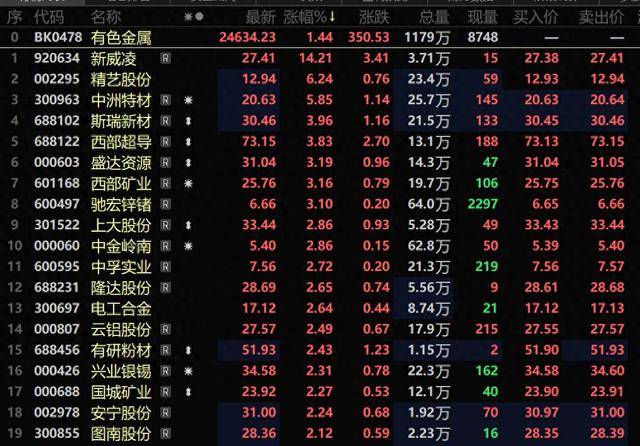
Core Viewpoint - The cyclical sectors, particularly non-ferrous metals, have shown strong performance in 2023 due to supply-side constraints, expectations of global liquidity easing, and domestic "anti-involution" policies driving demand [7][8]. Factors Driving Cyclical Stock Performance - Domestic economic recovery and potential global monetary easing have positively impacted cyclical assets [8]. - Supply-side constraints and industrial cycle expectations have led to strong performance in non-ferrous metals like copper and aluminum [8]. - Strategic small metal varieties, such as rare earths, have seen optimistic market expectations due to policy and supply-side reductions [8]. - Traditional industries like coal, steel, and chemicals have benefited from the "anti-involution" policy, resulting in structural rebounds [8][11]. Valuation and Market Sentiment - Despite significant price increases in non-ferrous metals, valuations remain reasonable, with some stocks still undervalued [12][13]. - The recovery in company earnings has provided a solid foundation for stock price increases, with overall valuations still within a reasonable range [12][13]. - The cyclical industry is in a recovery phase, with many companies experiencing high growth rates from a low base, but not yet at peak profitability [14][15]. Investment Strategy and Focus - The investment strategy is leaning towards a pro-cyclical approach, focusing on sectors with strong demand logic [17]. - Key sectors for investment include industrial metals, small metals, and precious metals, with traditional cyclical leaders also being prioritized [17]. - A balanced approach of defensive and offensive strategies is recommended, with a focus on stocks that have strong fundamentals and reasonable valuations [17][18]. Challenges Ahead - Potential challenges for the cyclical industry include demand-side risks, particularly in sectors like copper and aluminum, which are closely tied to economic expectations [19]. - The recovery pace of midstream industries like steel and chemicals may lag behind due to their dependence on the real estate market and overall demand [19].