
内循环

Search documents
A股投资策略周报:本轮中美关税复盘及市场影响预判-20251012
CMS· 2025-10-12 08:35
Core Insights - The recent escalation of the US-China supply chain and tariff conflict is a continuation of trade frictions since 2018, and it is not a new negative factor for the A-share market. Historical experience shows that such shocks often create phase low points and investment opportunities [2][6][10] - Compared to the tariff shock in April this year, the current market has more favorable conditions, including investor expectations of tariff threats and stronger market resilience due to key resistance levels being surpassed [4][10] - Short-term adjustments are inevitable, but the market still shows resilience, with the potential for new highs after the shock ends. This adjustment may serve as an opportunity to optimize the investment structure [2][10] Industry and Company Analysis - The classic response strategy to the US-China conflict emphasizes self-sufficiency and domestic circulation, suggesting a focus on sectors with relatively low positions and marginal improvements, such as military industry, semiconductors, software self-sufficiency, new consumption, and non-ferrous metals [2][10] - The current market sentiment is bolstered by a stronger willingness of residents to invest, increased protective actions from important institutional investors, and accelerated trends in new industries like artificial intelligence and semiconductors, which provide long-term value during corrections [4][10] - The average guarantee ratio in the market has significantly improved from 261% in April to 287%, enhancing the market's ability to withstand downturns despite a larger scale of financing [4][9][10] - The recent market dynamics indicate that sectors such as gold, copper, cobalt, photovoltaic batteries, lithium battery equipment, wind power, semiconductors, and automotive are experiencing improvements or high levels of prosperity [4][10]
“反内卷”,从修复家庭账本开始
经济观察报· 2025-10-08 07:03
Core Viewpoint - The article emphasizes the need for income distribution reform and welfare system construction to alleviate household financial risks, thereby stimulating real consumption and investment willingness as a fundamental path for economic growth [4][6][24]. Group 1: Economic Challenges and Reforms - The concept of "anti-involution" signifies a restructuring attempt of institutional design and social ecology, addressing issues like low-level competition and unfair practices [4][6]. - Current economic challenges in China include low consumer willingness and insufficient investment motivation, necessitating a focus on household financial stability and risk resilience [5][6][12]. - The historical reliance on export-driven growth has suppressed wage and consumption growth, leading to a conservative consumption trend and limited domestic demand [7][11][24]. Group 2: Historical Context and Economic Development - The analysis framework includes three historical long cycles: globalization, hegemonic shifts, and technological revolutions, which collectively influence economic dynamics [7][8]. - China's reform and opening-up coincided with a global shift from protectionism to market forces, allowing it to integrate into the global production system and achieve rapid growth [8][9]. - The export-oriented growth model has led to wage suppression and inadequate social security, creating structural liabilities that are now evident in the face of external shocks [11][12]. Group 3: The Role of Welfare State - Establishing a welfare state is crucial for addressing the challenges posed by the technological revolution, particularly the impact of artificial intelligence on labor distribution [17][24]. - The welfare state aims to reduce the risk burden on residents, encouraging consumption and fostering a robust domestic market [24][25]. - Without a welfare state, sustaining consumer spending becomes difficult, which in turn affects the strength of the domestic market and China's position in international economic governance [25]. Group 4: Real Estate and Economic Growth - The relationship between real estate and economic growth is undergoing a transformation, with diminishing returns on investment in the real estate sector [18][19]. - The current economic environment necessitates a reevaluation of resource allocation, particularly in light of the limited fiscal space and rising local government debt [20][21]. - The shift away from real estate as a primary growth driver could allow for more strategic investments in emerging industries, enhancing overall economic resilience [19][20]. Group 5: Regional Disparities and Open Market - Addressing regional disparities is essential for further opening up the market and achieving common prosperity, as balanced regional development supports higher levels of external engagement [21][22]. - The article suggests that fostering investment in underdeveloped regions through new special economic zones could effectively address wealth distribution issues [22][23]. - The dual focus on internal circulation and market openness is vital for navigating the complexities of the current global economic landscape [23][24].


化工行业运行指标跟踪-2025年7-8月数据 | 投研报告
Zhong Guo Neng Yuan Wang· 2025-09-18 01:49
Group 1 - The core viewpoint of the report indicates that the chemical industry is approaching the end of its current cycle, with a focus on demand recovery in 2024, particularly in infrastructure and exports, while the real estate cycle continues to decline [1][4] - From the demand side, infrastructure and export are expected to remain robust in 2024, with consumption showing resilience after two years of recovery [1][3] - On the supply side, global chemical capital growth is projected to turn negative in 2024, while domestic construction projects are seeing a rapid decline in growth, nearing a bottom by Q2 2024 [1][3] Group 2 - The report outlines various industry indicators, including valuation metrics, price indices, supply-side metrics, import/export contributions, downstream industry performance, and global macroeconomic indicators [2] - Specific recommendations for investment opportunities include sectors such as refrigerants, phosphates, amino acids, and organic silicon, with suggested companies for each sector [4][5] - The report emphasizes the need for companies to adapt to changing global trade dynamics, focusing on both internal production capabilities and external market opportunities [5]



“反内卷”,从修复家庭账本开始——经济学家高柏谈增长的体感
Sou Hu Cai Jing· 2025-09-12 11:14
Group 1 - The concept of "anti-involution" is becoming a key term in institutional reform, indicating a restructuring attempt of institutional design and social ecology [2] - The current economic challenges in China are linked to a long-term reliance on export-driven growth, which has suppressed wage and consumption growth [3][4] - The need for income distribution reform and welfare system construction is emphasized as a fundamental path to alleviate household financial risks and stimulate real consumption and investment [4][5] Group 2 - The historical context of China's economic development is analyzed through the lens of three long historical cycles: globalization, hegemonic shifts, and technological revolutions [5][6] - The transition from an export-oriented model to a supply-side driven domestic demand model has created a complex relationship between real estate and macroeconomic growth [16][17] - The current economic environment is characterized by a shift in the relationship between real estate and economic growth, with a decreasing reliance on real estate as a primary driver of economic expansion [16][18] Group 3 - The establishment of a welfare state is deemed essential for supporting consumer spending and creating a robust domestic market, which is crucial for China's position in the international political economy [21][22] - The challenges posed by the rise of artificial intelligence and its impact on labor markets necessitate a reevaluation of income distribution mechanisms [13][14] - The need for balanced regional development is highlighted as a prerequisite for further opening up the market and achieving common prosperity [18][19]

2025年Q2移动互联网行业数据研究报告
Sou Hu Cai Jing· 2025-08-29 15:08
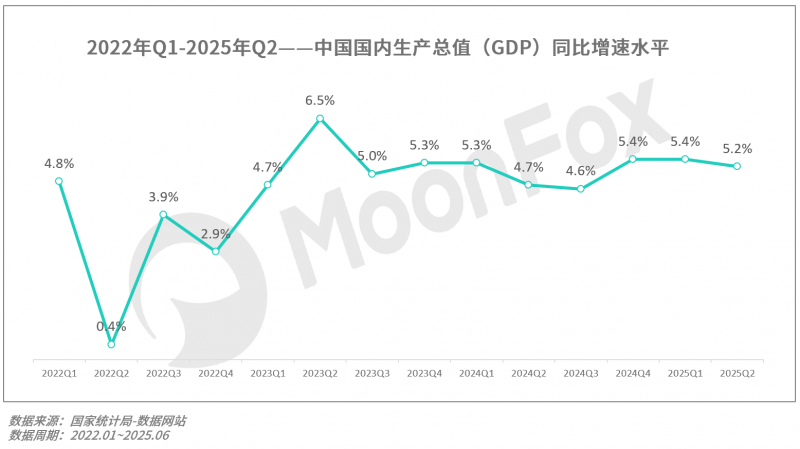
Macro Insights - The Chinese mobile internet industry continued its growth in Q2 2025, supported by a stable macroeconomic environment and ongoing policy support, with GDP growth of 5.2% year-on-year and 1.1% quarter-on-quarter [1][4] - The retail sales of consumer goods reached 24.55 trillion yuan, growing by 5.0%, with online retail sales amounting to 7.43 trillion yuan, a year-on-year increase of 8.5% [4][49] - The investment in high-tech industries showed remarkable growth, with information services, aircraft manufacturing, and computer equipment manufacturing increasing by 37.4%, 26.3%, and 21.5% respectively [4] Policy Changes - The central government emphasized stabilizing employment, businesses, and market expectations, implementing a series of policies to boost domestic demand and support economic recovery [9][11] - Key policies included the introduction of the "Private Economy Promotion Law" and measures to enhance consumer confidence and spending [10][11] Investment and Financing - The total social financing scale increased to 22.83 trillion yuan in the first half of 2025, with a notable rise in loans to the real economy [13][15] - The IPO market showed signs of recovery, with over 359 IPO applications in Q2, reflecting a significant increase compared to previous quarters [16] Mobile Traffic Overview - As of June 2025, the number of internet users in China reached 1.123 billion, with an internet penetration rate of 79.7% [18] - The average daily usage time of mobile devices approached 6 hours, indicating a growing reliance on mobile technology [18] Segment Market Insights E-commerce - The 6.18 shopping festival became a normalized event, with online retail sales exceeding 3.81 trillion yuan in Q2 2025 [49][51] - The "old-for-new" policy significantly boosted sales in the 3C digital product category, with sales surpassing 750 billion yuan [49][50] Food Delivery - The food delivery market saw intensified competition, with JD.com entering the space and implementing aggressive subsidy strategies [54][55] - JD's food delivery service achieved over 1 million daily orders within 40 days of launch, indicating rapid market penetration [55] Gaming - The gaming market maintained growth, with mobile games generating 1.253 trillion yuan in revenue in the first half of 2025, a year-on-year increase of 16.55% [64] - New game releases in Q2 included several successful titles, with some achieving over 1 billion yuan in revenue in their first month [66][67] Short Dramas - The short drama market continued to grow, with various platforms actively investing in new content and leveraging AI technology for production [72]
化工行业运行指标跟踪:2025年6月数据
Tianfeng Securities· 2025-08-19 09:45
Investment Rating - The industry investment rating is maintained at "Neutral" [2] Core Viewpoints - The current cycle may be nearing its end, with expectations for demand recovery. Infrastructure and export demand are expected to remain robust in 2024, while the real estate cycle continues to decline. The consumer market has shown resilience after two years of recovery [4][5] - Supply-side pressures remain significant, with global chemical capital growth expected to turn negative in 2024. Domestic construction projects are seeing a rapid decline, but fixed asset investment continues to grow at over 15% [4] - The chemical industry is entering a replenishment phase after a year of destocking, with inventory growth turning positive by Q3 2024. However, the overall price and profit levels in the chemical industry are expected to face pressure throughout the year [4] Summary by Sections Industry Valuation and Economic Indicators - The report tracks various indicators including the chemical industry's comprehensive prosperity index and industrial added value [3] - Price indicators such as PPI, PPIRM, and CCPI are monitored, along with supply-side metrics like capacity utilization and fixed asset investment [3] Demand and Supply Dynamics - Demand stability is sought in industries led by supply logic, such as refrigerants and phosphates, with specific companies recommended for investment [7] - Conversely, industries with stable supply but driven by demand logic include MDI and explosives, with key companies highlighted [7] Global Market Trends - The report notes a shift in global investment and trade patterns due to rising protectionism and geopolitical tensions, emphasizing the need for regional cooperation and stability [7] - Investment opportunities are identified in both domestic and international markets, focusing on new production capabilities and breakthroughs in material science [7] Price Trends and Economic Performance - The chemical product price index (CCPI) has shown fluctuations, with a notable decline of approximately 6.9% from January to April 2025 [14] - The PPI for chemical raw materials and products has also experienced a downward trend, with June 2025 figures showing a year-on-year decrease of 6.1% [16]
关于恢复征收国债增值税、反内卷和供给侧改革
Hu Xiu· 2025-08-02 07:32
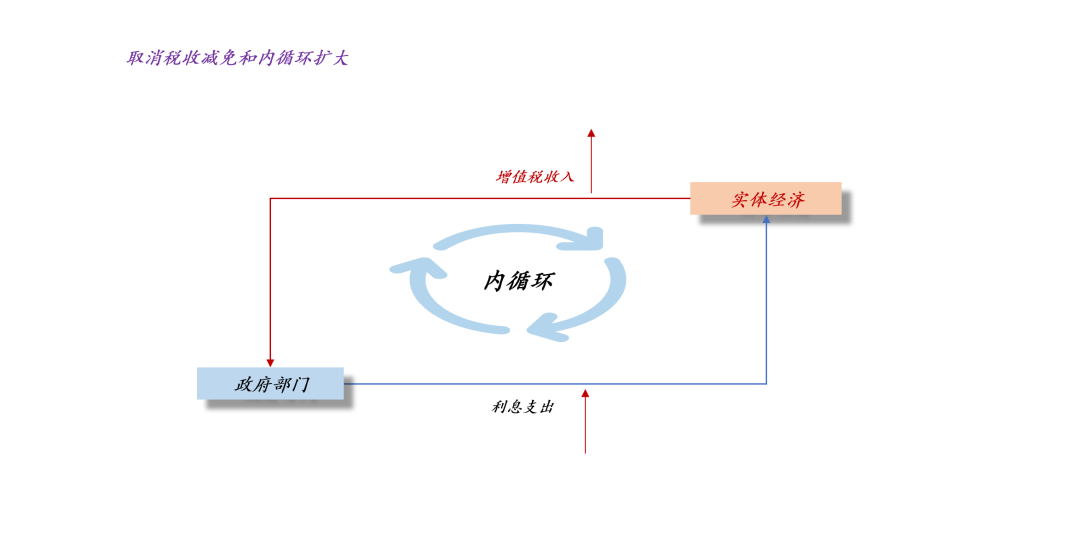
Group 1 - The announcement from the regulatory authority indicates that starting from August 8, 2025, interest income from newly issued government bonds, local government bonds, and financial bonds will be subject to value-added tax, while those issued before this date will continue to be exempt until maturity [1][2]. - Investors express confusion over the policy, noting that the removal of tax exemptions will increase the new issuance rates of government bonds, thereby raising government interest expenses, while simultaneously increasing government VAT revenue, leading to a perceived net effect of zero [2][3]. - The article emphasizes the importance of the economic process, suggesting that the dynamics of economic activities are more significant than the static outcomes [4][6]. Group 2 - The policy is viewed as a means to expand the internal economic cycle, with both tax revenue and interest expenses increasing from the government's perspective, and interest income and tax expenditures rising from the perspective of the real economy [6][12]. - Two significant economic concepts are introduced: the neutrality of money and Ricardian equivalence, which explore whether changes in nominal amounts affect real economic outcomes [7][11]. - The article argues that in reality, neither monetary policy nor fiscal policy is neutral, as market participants often lack the rationality and foresight assumed in economic theories [14][12]. Group 3 - The restoration of VAT on government bond interest signals a potential increase in the likelihood of canceling other tax exemptions and social subsidies, particularly the 25% income tax on government bonds [29][40]. - The discussion highlights that the factors contributing to long-term low CPI are systemic and multifaceted, with fiscal policies playing a significant role [25][26]. - The article suggests that the government has two options regarding bond interest: to either keep it low to suppress domestic prices and stimulate exports or to raise it to enhance nominal prices and expand the internal cycle [27][28].
国家发展改革委部署下半年九方面工作
Xin Hua She· 2025-07-31 14:27
Core Points - The National Development and Reform Commission (NDRC) has outlined nine key areas of focus for the second half of the year to ensure the completion of annual targets and the "14th Five-Year Plan" tasks [1] - NDRC Director Zheng Zhaojie emphasized the importance of stabilizing employment, businesses, markets, and expectations while enhancing both domestic and international economic cycles [1] Summary by Categories Economic Analysis and Planning - Focus on analyzing and assessing major changes, important indicators, and significant issues [1] - Ensure the completion of the "14th Five-Year Plan" [1] Investment and Consumption - Increase efforts to stabilize investment and promote consumption [1] Production Capacity - Cultivate and strengthen new types of productive forces based on local conditions [1] Market Development - Advance the construction of a unified national market [1] International Trade - Expand high-level opening up to the outside world [1] Environmental Initiatives - Promote green and low-carbon development through comprehensive carbon emission control [1] Regional Development - Advance coordinated development between urban and rural areas [1] Risk Management - Strengthen comprehensive planning and balance across various sectors [1] Employment and Supply Chain Security - Focus on stabilizing employment, maintaining the safety of food, energy, and industrial supply chains, and ensuring energy supply during peak seasons [1]
制造业PMI低于荣枯线 国常会部署贴息政策促消费
Di Yi Cai Jing· 2025-07-31 13:51
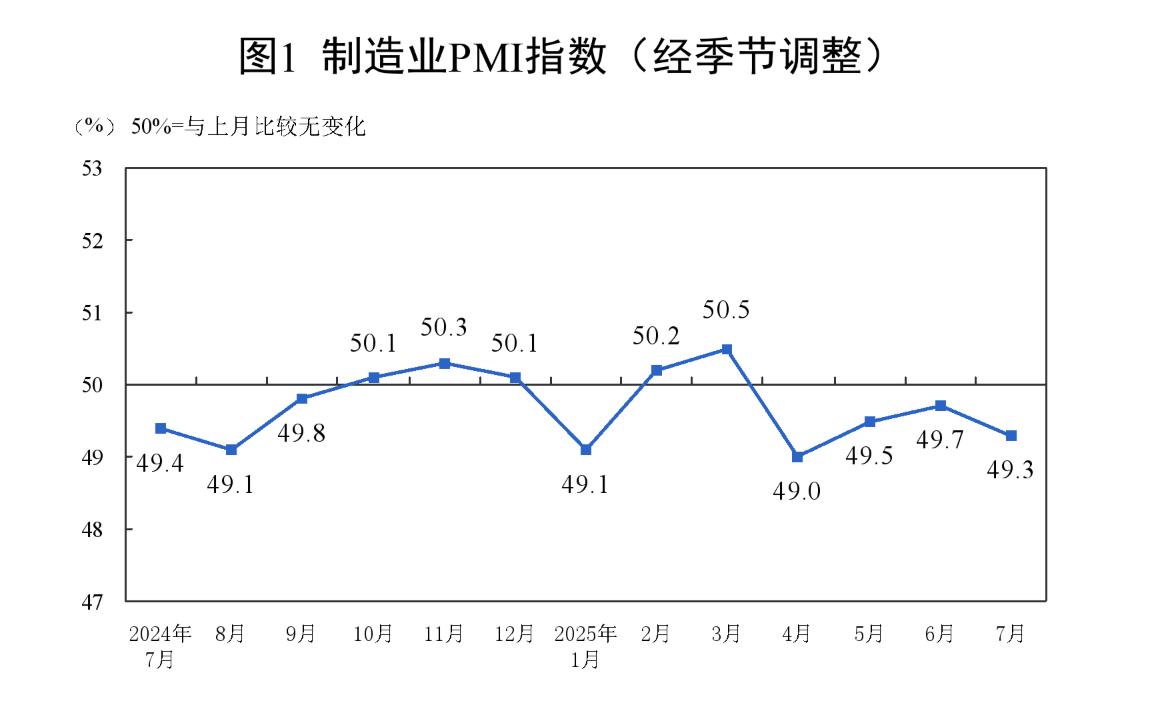
Economic Overview - The Central Political Bureau emphasized the need to enhance macroeconomic policy effectiveness and stimulate internal economic growth [1] - The State Council reiterated the implementation of personal consumption loan interest subsidy policies to better stimulate consumption potential [1][7] Manufacturing Sector - The manufacturing Purchasing Managers' Index (PMI) for July was reported at 49.3%, a decrease of 0.4 percentage points from the previous month, marking the fourth consecutive month below the growth threshold [1][4] - The new orders index for manufacturing fell to 49.4%, down 0.8 percentage points, indicating a contraction in market demand [6] - Despite the decline in demand, the production index remained at 50.5%, indicating continued expansion in manufacturing activities [6] Price Trends - The manufacturing raw material purchase price index rose to 51.5%, an increase of 3.1 percentage points, indicating a recovery in raw material prices [6] - The ex-factory price index increased to 48.3%, up 2.1 percentage points, marking the second-highest point this year [6] Business Confidence - The production and business activity expectation index rose to 52.6%, reflecting increased confidence among manufacturing enterprises regarding market development [8] - Large enterprises maintained a PMI of 50.3%, while medium-sized enterprises improved to 49.5%, indicating a mixed outlook across different enterprise sizes [8] Non-Manufacturing Sector - The non-manufacturing business activity index was reported at 50.1%, a decrease of 0.4 percentage points, but still within the expansion range [10] - The construction business activity index fell to 50.6%, influenced by seasonal weather conditions, while infrastructure-related activities continued to show robust growth [10] Consumer Behavior - The summer consumption effect began to show, with retail and postal service indices rising above 50%, indicating strong consumer spending intentions [11] - However, the accommodation and catering sectors remained below 50%, suggesting that summer consumption has not yet significantly impacted these areas [11][12] Policy Implications - The Central Political Bureau's meeting highlighted the importance of releasing internal demand potential and implementing consumption-boosting actions [12] - The focus on service consumption is expected to play a crucial role in meeting public needs and driving consumption industry upgrades [12]
国家发展改革委:加大力度稳投资促消费,拓展投资增量,破除“内卷式”竞争
Xin Hua Cai Jing· 2025-07-31 12:54
Core Viewpoint - The National Development and Reform Commission (NDRC) emphasizes the need for effective implementation of the central government's decisions to stabilize employment, businesses, and market expectations while promoting high-quality economic development in the second half of the year [1][2]. Group 1: Economic Stability and Development - The NDRC aims to focus on major changes, important indicators, and significant issues to analyze the current economic situation, with a particular emphasis on stabilizing employment and expanding domestic demand [1]. - There is a commitment to solidify the completion of the 14th Five-Year Plan and to prepare for the 15th Five-Year Plan by evaluating current progress and aligning with central government directives [1][2]. Group 2: Investment and Consumption - The NDRC plans to enhance investment and promote consumption by expanding investment increments and managing government projects throughout their lifecycle [2]. - There is a focus on stimulating private investment and implementing policies to improve quality and efficiency in construction projects [2]. Group 3: Innovation and Market Development - The NDRC encourages the cultivation of new productive forces, particularly through the "Artificial Intelligence +" initiative and the development of the low-altitude economy [2]. - Efforts will be made to advance the construction of a unified national market and reform bidding and investment attraction practices to promote healthy development of the private economy [2]. Group 4: Green Development and Urban-Rural Coordination - The NDRC is committed to promoting green and low-carbon development through a comprehensive transition to dual control of energy consumption and carbon emissions [4]. - There will be a focus on regional and urban-rural coordinated development, including urban renewal and rural revitalization initiatives [4]. Group 5: Employment and Social Welfare - The NDRC emphasizes the importance of stabilizing employment and ensuring the safety of key sectors such as food, energy, and supply chains [4]. - There is a commitment to enhancing public welfare services and ensuring the supply and price stability of essential goods for the population [4].