制造业转型升级

Search documents
前三季度全省制造业销售收入同比增4.9%政策红利直达,赋能企业“三化”转型
Xin Hua Ri Bao· 2025-10-24 23:14
Group 1: Economic Growth and Manufacturing Support - The province has implemented structural tax reduction policies to support technological innovation and manufacturing development, resulting in a 4.9% year-on-year increase in manufacturing sales revenue in the first three quarters, accounting for 44.1% of total sales revenue, an increase of 0.9 percentage points from the previous year [1] - Tax reductions and refunds for manufacturing support policies reached 182.5 billion yuan from January to August, contributing to a positive development trend in the manufacturing sector [1] Group 2: High-tech Manufacturing Growth - High-tech manufacturing sales revenue increased by 9.1% year-on-year in the first three quarters, making up 18.3% of total manufacturing sales, up 0.7 percentage points from the previous year [2] - A company in the textile sector has successfully developed high-strength polyester products that meet new product standards, achieving significant energy and water savings through innovative manufacturing processes [2] Group 3: Pharmaceutical Industry Advancements - A pharmaceutical company has made significant strides in R&D, obtaining 32 invention patents and multiple drug registration approvals, with plans to produce 0.5 billion innovative drugs and 5.212 billion generic drugs annually, projected to generate 1.2 billion yuan in taxable sales [3] Group 4: Intelligent Manufacturing Transformation - A biopharmaceutical company has implemented an intelligent control system in its production facility, enhancing production capacity and receiving positive feedback from international quality audits, leading to strategic partnerships [4] - Manufacturing enterprises have increased their investment in digital services by 10.5% year-on-year, accelerating the upgrade of the intelligent manufacturing sector [4] Group 5: Investment in Digitalization - A hydraulic company has invested nearly 650 million yuan in intelligent production lines and automation projects, achieving a 30% increase in production efficiency and capturing over 60% of the domestic market share for hydraulic steering systems [5] Group 6: Green Manufacturing Initiatives - A latex product manufacturer has focused on improving manufacturing processes through collaboration with research institutions, resulting in the development of eco-friendly products that meet high standards [6] - The province's high-energy-consuming manufacturing sector has decreased to 20.1% of total manufacturing, a reduction of 1.5 percentage points from the previous year, indicating a shift towards greener practices [7]
9月社会用电量同比增长4.5%
Shang Hai Zheng Quan Bao· 2025-10-23 09:07
Core Insights - In September, China's total electricity consumption reached 888.6 billion kWh, a year-on-year increase of 4.5% [1] - From January to September, total electricity consumption accumulated to 7,767.5 billion kWh, with a year-on-year growth of 4.6% [1] - The third quarter saw significant growth in electricity consumption, with a total of 2.9 trillion kWh, marking a new phase in energy consumption scale for China's economic development [1] Group 1: Electricity Consumption by Sector - In September, the first industry consumed 12.9 billion kWh, up 7.3% year-on-year; the second industry consumed 5,705 billion kWh, up 5.7%; the third industry consumed 1,765 billion kWh, up 6.3%; while urban and rural residential electricity consumption fell by 2.6% to 128.7 billion kWh [1] - The second industry's electricity consumption for the first three quarters was 4.91 trillion kWh, a year-on-year increase of 3.4%, with a notable recovery in the third quarter, growing by 5.1% [2] - The manufacturing sector's electricity consumption in the third quarter increased by 5.2%, with 17 provinces reporting growth rates exceeding 5% [2] Group 2: Growth Drivers - The growth in the second industry's electricity consumption was driven by a series of government policies aimed at stabilizing growth, particularly in sectors like electronics, automotive, and steel [2] - High-tech and equipment manufacturing sectors saw a significant increase in electricity consumption, with a 9.5% year-on-year growth in the third quarter, surpassing the average growth rate of the manufacturing sector [3] - The third industry's electricity consumption grew by 8.3% in the third quarter, supported by rapid development in new energy vehicles and infrastructure [4] Group 3: Residential Electricity Consumption - The average temperature in the third quarter was historically high, leading to a record residential electricity consumption exceeding 500 billion kWh [5] - Residential electricity consumption for the first three quarters increased by 5.6%, with a 6.4% increase in the third quarter [5] - Several provinces, including Tibet and Ningxia, reported residential electricity consumption growth exceeding 10% due to higher average temperatures [5]
人工智能推动制造业转型升级,广东计划这么做
Di Yi Cai Jing· 2025-10-22 12:44
Core Insights - Guangdong Province is implementing a comprehensive action plan to enhance the integration of artificial intelligence (AI) in the manufacturing sector, focusing on digital transformation and intelligent upgrades across various industries [2][3][4]. Group 1: Policy Measures - The "Action Plan" outlines 16 policy measures aimed at promoting the deep application of AI in key local industries such as consumer electronics, automotive, apparel, and biomedicine [2]. - Support tools like "model vouchers," "computing power vouchers," and "training vouchers" are introduced to encourage local governments to assist enterprises in purchasing industrial model services and provide financial support [2][3]. Group 2: Investment and Financial Support - The Guangdong Advanced Manufacturing Fund has a cumulative subscription scale of approximately 70 billion, with 52 investment projects identified [4]. - The provincial government plans to invest over 20 billion in AI-related projects by 2027, aiming to drive the scale of related industries to exceed 100 billion [4][5]. Group 3: Industry Development - Guangdong aims to create benchmarks for AI applications and promote a "chain-based transformation" in the manufacturing sector, enhancing the intelligence of supply chains through collaborative procurement and manufacturing [3]. - The province has over 1,600 core AI enterprises, forming a comprehensive industrial chain that includes major players like Huawei and Tencent, which are driving the development of industrial AI models [6].
工业保持较快增长,三季度工业增加值同比增长5.8%|快讯
Hua Xia Shi Bao· 2025-10-20 03:11
Group 1 - The industrial sector showed a strong growth trend in Q3, with an increase of 5.8% year-on-year, contributing 1.7 percentage points to economic growth [2] - The modern service industries, including information transmission, software, and IT services, as well as leasing and business services, experienced rapid growth, with value-added increasing by 11.7% and 8.6% respectively, contributing a total of 0.9 percentage points to economic growth [2] - The financial sector also performed well, with a year-on-year increase of 5.2% in value-added, contributing 0.4 percentage points to economic growth [2] Group 2 - In the first three quarters, industrial production maintained stable growth, with a year-on-year increase of 6.1% in industrial value-added, contributing 1.8 percentage points to economic growth [2] - The manufacturing sector outperformed the overall industrial growth, with a value-added increase of 6.5% [2] - Notably, the transformation and upgrading of the manufacturing sector accelerated, with value-added in equipment manufacturing and high-tech manufacturing increasing by 9.7% and 9.6% respectively, surpassing the overall industrial growth by 3.5 and 3.4 percentage points [2] Group 3 - The automotive manufacturing sector, as well as railway, shipbuilding, aerospace, and other transportation equipment manufacturing, maintained double-digit growth in investment year-on-year [3] - Driven by continuous innovation investment, several domestic general large models have reached international advanced levels, and significant breakthroughs have been achieved in various technology fields [3] - According to the World Intellectual Property Organization, China's innovation index is expected to enter the global top ten by 2025, with 24 innovation clusters ranked among the global top 100, maintaining the highest number for three consecutive years [3]


能科科技:通过募投项目提升当前核心业务竞争力,为未来前沿业务进行技术储备与产业布局
Zheng Quan Shi Bao Wang· 2025-10-15 12:03
Core Viewpoint - Nengke Technology plans to raise up to 1 billion yuan through a private placement of A-shares to enhance its capabilities in industrial AI and software development, aligning with national policies on AI and manufacturing upgrades [1][2][4] Group 1: Investment and Projects - The fundraising will support the development of three major projects: "Lingqing" Industrial AI Empowerment Platform, "Lingzhu" Industrial Software AI Toolset, and "Lingzhi" Embodied Intelligent AI Training and Inference Platform [1][2][3] - The "Lingqing" project aims to build an AI middle platform and domain-specific models for manufacturing, covering various industrial sectors [2][3] - The "Lingzhu" project focuses on integrating AI capabilities into industrial software, leveraging the company's decade-long experience in software development [2][3] Group 2: Strategic Intent and Market Position - The projects are designed to enhance the competitiveness of the company's core business and prepare for future technological advancements and industry positioning [2][3] - Nengke Technology emphasizes the importance of AI in the industrial sector, which is seen as a critical area for the application of AI technologies [3][4] - The company aims to develop autonomous and controllable industrial software, responding to global competition and export restrictions in the industrial software sector [4]

主动应变市场多元化见效 中国外贸稳中向好“面貌”清晰、抗压能力显现
Yang Shi Wang· 2025-10-14 07:49
Core Insights - China's goods trade imports and exports increased by 4% year-on-year in the first three quarters of 2025, with a notable acceleration in growth rate [1] - In September, the import and export growth reached 8%, marking the highest monthly growth rate of the year [1] - Despite global economic challenges, China's foreign trade shows a clear trend of stability and resilience [1] Group 1: Export Performance - China's exports of mechanical and electrical products reached 12.07 trillion yuan, growing by 9.6% and accounting for 60.5% of total exports [4] - High-tech products, including electronic information and advanced equipment, saw strong export growth [4] - The overall performance of China's foreign trade reflects strong resilience, driven by the steady expansion and upgrading of the manufacturing sector [6] Group 2: Market Diversification - Chinese exporters are actively exploring new markets in Asia, Africa, and Latin America as the share of exports to the U.S. declines [9] - The strategic shift towards emerging markets has resulted in record-high exports to India, Africa, and Southeast Asia [9] - Market diversification and targeted domestic support are key strategies for maintaining export growth momentum [9] Group 3: Impact of Tariffs - Despite facing U.S. tariff pressures, China's export performance remains robust, indicating limited overall impact from the trade conflict [12] - This resilient trade performance supports China's economic development and strengthens its position in U.S.-China trade negotiations [12]
推动制造业转型走深走实
Sou Hu Cai Jing· 2025-10-14 01:51
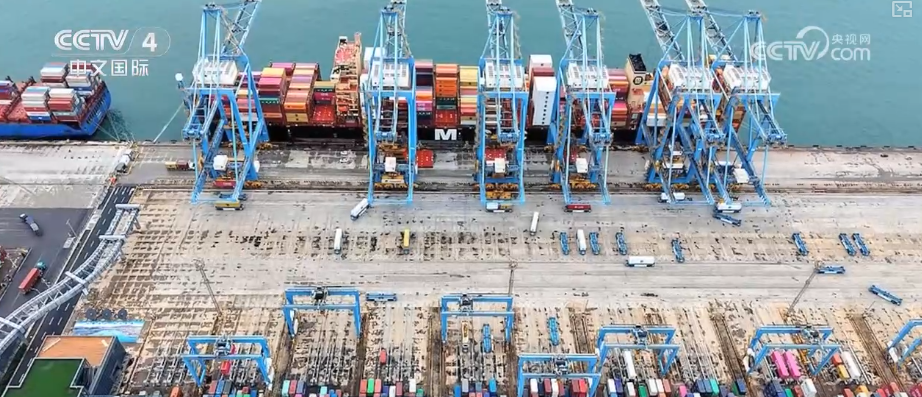
Core Viewpoint - The Chinese manufacturing industry is crucial for the national economy and is undergoing significant transformation towards high-end, intelligent, green, and integrated development, contributing over 30% to global manufacturing growth during the "14th Five-Year Plan" period [1][2][3]. Group 1: Manufacturing Industry Development - The manufacturing sector is the backbone of the national economy, essential for economic stability, transformation, and improving people's lives [2][4]. - From 2020 to 2024, China's total industrial output value is expected to increase from 31.3 trillion yuan to 40.5 trillion yuan, with manufacturing output rising from 26.6 trillion yuan to 33.6 trillion yuan, maintaining a global share of approximately 30% [3]. - The innovation investment in manufacturing has steadily increased, with R&D expenses of large-scale manufacturing enterprises accounting for over 1.6% of revenue, and over 75% of national R&D funding coming from manufacturing [3]. Group 2: Factors Driving Transformation - The transformation of the manufacturing industry is supported by various favorable factors, including strong governmental policies aimed at promoting high-quality development [4][5]. - The integration of digital technologies and the real economy is crucial, with enterprises leveraging AI and big data for comprehensive upgrades across manufacturing processes [4][6]. - Despite progress, challenges remain, such as gaps in innovation capabilities compared to leading manufacturing nations and the need for improved standardization in the transformation process [4][7]. Group 3: Strategic Focus Areas for Future Development - To accelerate the transformation of the manufacturing industry, three key areas should be prioritized: enhancing technological innovation, improving policy environments, and optimizing industrial systems [5][6][8]. - Strengthening technological innovation involves increasing R&D investments and integrating digital and green technologies across all manufacturing processes [6]. - Creating a supportive policy environment includes establishing comprehensive policy frameworks that guide infrastructure, technological innovation, and market development towards manufacturing [7]. - Promoting the integration of advanced manufacturing with modern service industries can enhance competitiveness and foster new growth drivers for the manufacturing sector [8].
2025年9月贸易数据解读:各类短期因素叠加,9月进出口增速大幅上行
Dong Fang Jin Cheng· 2025-10-13 06:03
Export Performance - In September 2025, exports increased by 8.3% year-on-year, up 3.9 percentage points from August, exceeding market expectations[2] - Exports to the US fell by 27.0%, but the decline was narrower by 6.1 percentage points compared to August[5] - Chip exports rose by 32.7% and automobile exports increased by 10.9%, indicating strong growth in high-tech and new energy sectors[4] Import Trends - Imports grew by 7.4% year-on-year in September, a significant increase of 6.1 percentage points from the previous month[9] - The increase in imports was partly due to more working days in September compared to the previous year, influenced by the timing of the Mid-Autumn Festival[9] - Major imports like iron ore saw a 13.4% increase, while crude oil imports decreased by 7.4%[10] Trade Diversification - Exports to the EU and ASEAN grew by 14.2% and 15.6% respectively, showing a shift towards diversified trade relationships[5] - The "Belt and Road" economies saw a 17.2% increase in exports, indicating resilience against US trade tensions[5] Future Outlook - October is expected to see a significant decline in export growth, potentially leading to negative year-on-year growth due to high base effects from September[6] - The ongoing trade tensions and increased tariffs from the US may further impact export dynamics in the coming months[7] - Domestic policies aimed at boosting consumption and stabilizing foreign trade are anticipated to support import growth in the fourth quarter[11]
淄博凉了?记者实探:烧烤店“下午5点就排队,凌晨2点才收摊”
Mei Ri Jing Ji Xin Wen· 2025-10-04 14:04
Core Insights - The article discusses the transformation of the city of Zibo from a "internet celebrity city" driven by its barbecue culture to a more sustainable and diversified urban development model focusing on long-term growth and industrial upgrades [2][6][24] Group 1: Tourism and Cultural Development - Zibo has successfully leveraged its "internet celebrity" status to boost tourism, with significant increases in visitor numbers and retail sales, particularly in the hospitality and dining sectors [10][14] - The city aims to diversify its tourism offerings beyond barbecue, focusing on cultural and historical attractions to create a more sustainable tourism model [11][14] - Zibo's government has shifted its focus from short-term tourism spikes to long-term cultural and tourism development, establishing a new command center for high-quality development in the cultural tourism sector [11][14] Group 2: Economic and Industrial Transformation - Zibo is transitioning from a reliance on its barbecue fame to a focus on industrial upgrades and new economic drivers, including the development of a pre-prepared food industry and modernization of traditional sectors [20][21] - The city has set ambitious economic goals, aiming for a GDP exceeding 700 billion yuan and a significant increase in high-tech enterprises by 2026 [22][23] - Zibo's strategic shift includes attracting talent and investment to support its industrial transformation, with initiatives aimed at bringing in university graduates and fostering innovation [22][23] Group 3: Government Strategy and Urban Resilience - The local government has adopted a proactive approach to manage the "internet celebrity" phenomenon, ensuring that the benefits of increased visibility translate into lasting economic and cultural assets [25][26] - Zibo's experience highlights the importance of maintaining strategic focus and resilience in urban development, avoiding over-reliance on transient trends [24][25] - The city is recognized for its effective governance and community engagement, which have been crucial in navigating the challenges of transitioning from a temporary tourism boom to sustainable growth [10][25]
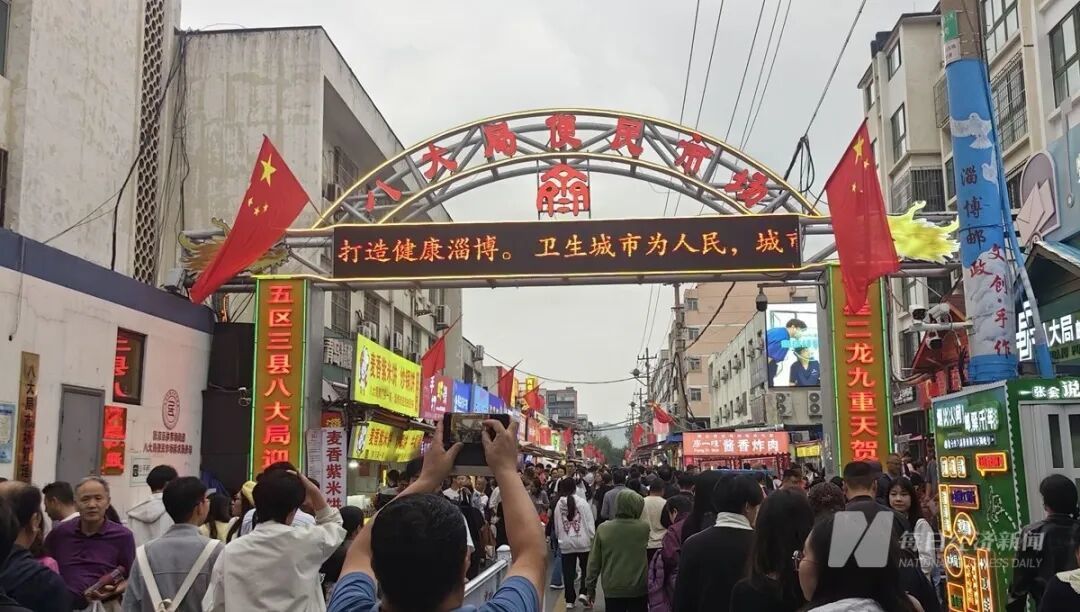
淄博凉了?记者实探:烧烤店“下午5点就排队,凌晨2点才收摊”,博物馆被挤爆!当地:已实现从“网红”到“长红”关键一步
Mei Ri Jing Ji Xin Wen· 2025-10-04 12:53
Core Insights - The article discusses the transformation of the city of Zibo from a "viral city" driven by its barbecue culture to a more sustainable and diversified urban identity, focusing on long-term development strategies rather than short-term trends [2][20]. Group 1: Zibo's Viral Phenomenon - Zibo became a phenomenon in early 2023 due to its barbecue culture, attracting significant attention and visitors [2][5]. - The city has experienced fluctuations in its popularity, with discussions about its status as a "viral city" becoming common [2][6]. - Despite concerns about declining interest, Zibo has maintained a steady flow of visitors during peak seasons, indicating a resilient tourism sector [5][11]. Group 2: Strategic Shift in Development - Zibo's government has shifted its focus from short-term viral trends to long-term industrial and cultural development, emphasizing "new quality productivity" and manufacturing upgrades [2][10]. - The city has established a "high-quality development command" to enhance its cultural and tourism sectors, reflecting a strategic pivot from merely capitalizing on barbecue fame to fostering a broader cultural identity [9][10]. - The local government aims to transform the influx of visitors into sustained interest in the city's diverse offerings, moving beyond the barbecue label [11][12]. Group 3: Economic Impact and Growth - In 2023, Zibo's retail sales of consumer goods increased by 9.6%, with significant growth in the accommodation and catering sectors, indicating a positive economic impact from the viral phenomenon [6][10]. - The city has set ambitious tourism goals, aiming to attract 65 million visitors and achieve over 64 billion yuan in tourism revenue by 2026 [10][18]. - Zibo's industrial transformation is evident, with the contribution of its four key industries rising from 48.9% to 59.8% of the city's industrial output from 2021 to 2024 [17][18]. Group 4: Talent Attraction and Future Prospects - Zibo has implemented policies to attract young talent, successfully bringing in over 40,000 graduates annually, which supports its industrial and economic transformation [18][19]. - The city has established a clear development goal to achieve a GDP of over 700 billion yuan and to join the "trillion GDP club" within the next decade [19][20]. - Zibo's approach to leveraging its viral status as a catalyst for broader economic and cultural development serves as a model for other cities [20][21].