去杠杆

Search documents
1919已连续三年盈利 预计2025年突破140亿元交易规模
Zheng Quan Ri Bao Wang· 2025-12-26 06:09
Core Viewpoint - 1919 has shown consistent profitability over the past three years despite industry challenges, with strategic decisions leading to significant changes in its business model and financial health [1][2]. Financial Performance - In 2023, 1919 reported a net profit of 51.35 million yuan, with projections of 48.12 million yuan for 2024, and continued profitability expected in 2025, although the financial statements for that year have not yet been audited [1]. - The overall transaction scale of 1919 increased from 11.579 billion yuan in 2023 to a projected 12.089 billion yuan in 2024, with a target to exceed 14 billion yuan in 2025 [1]. Strategic Decisions - The company made a decisive move in early 2023 to relinquish most of its premium liquor distribution rights, initiating a three-year inventory reduction strategy that helped avoid losses from declining liquor prices and significantly reduced financial costs associated with liquor procurement [1]. - 1919 has transitioned from a heavy asset model to a franchise model, increasing the number of stores from 1,500 to 3,000, while reducing its debt ratio from 92% three years ago to below 20% currently [2].
2025:出口热,生活冷
3 6 Ke· 2025-12-23 10:06
Economic Overview - The Chinese economy in 2025 shows a clear trend of strong external demand and export growth, while internal demand remains weak, particularly in real estate and fixed asset investment, leading to continued pressure on consumption [1][3] Internal vs External Demand - The balance between internal and external demand is crucial for determining the economic direction, with final consumption contributing 2.8 percentage points to GDP, capital formation contributing 0.9 percentage points, and net exports contributing 1.5 percentage points [2] Employment and Consumer Sentiment - A significant portion of the population feels pessimistic about employment, with 57.4% of respondents in a survey expressing concerns about job prospects, leading to a low consumer sentiment index of 25.8 [4] - Retail sales growth remains weak, with a year-on-year increase of only 1.3% in November, influenced by high base effects from the previous year and a shift in consumer behavior towards saving rather than spending [4] Real Estate Market Dynamics - The real estate market shows a divergence between first-tier cities, which have seen relatively stable prices, and lower-tier cities, which have experienced significant declines. However, by late 2025, this divergence is expected to narrow [5] - New home and second-hand home prices in major cities have declined, with notable drops in Beijing, Shanghai, Guangzhou, and Shenzhen [5] Investment Trends - Fixed asset investment has decreased by 2.6% year-on-year, heavily influenced by a 15.9% drop in real estate investment. Private investment has also declined by 5.3% [13] - Government and state-owned enterprise investments are becoming the primary drivers of new investments, with social financing growing by 8.5% year-on-year [13] Export Performance - Exports are experiencing a structural transformation, with machinery and electronics exports accounting for 60.9% of total exports, growing by 8.8%, while labor-intensive product exports have decreased [11] - Trade with the U.S. has declined by 16.9%, while trade with ASEAN countries has increased by 8.5%, indicating a shift in trade dynamics [12] Sectoral Disparities - New industries supported by national policies are showing stable income and development expectations, but their ability to create jobs is limited due to automation [6] - Traditional sectors, such as new energy vehicles, are facing challenges from price wars, limiting their ability to provide substantial employment opportunities [7] Consumer Behavior - Consumer spending is characterized by a decline in large durable goods, while basic and discretionary spending remains stable but under price pressure [10] - The trend of "emotional consumption" is evident, with increased travel and entertainment participation but lower average spending per outing [10] Government Debt and Real Estate Risks - The real estate sector faces significant risks, including asset-liability risks from falling prices and systemic pressures on local finances due to shrinking land revenue [15] - Government debt is increasing, with a year-on-year growth of 18.8%, while public budget revenues are only growing by 0.8%, indicating ongoing fiscal pressures [16]


资管巨头阿波罗开启“避险模式”:囤现金、去杠杆,坐等“坏事发生”?
Hua Er Jie Jian Wen· 2025-12-22 06:50
Core Viewpoint - Apollo Global Management is adopting aggressive defensive measures, including cash accumulation, reducing leverage, and selling high-risk debt assets, in preparation for potential market turmoil [1][2][3] Group 1: Strategic Shift - Apollo's CEO Marc Rowan emphasized the importance of building the "best possible balance sheet" to ensure profitability during challenging credit and equity market conditions [1] - The company is transitioning from aggressive investments to a conservative defensive posture, focusing on cleaning up its balance sheet and maintaining a "cash is king" strategy [1][3] - This strategic shift is seen as a significant change within the industry, given Apollo's substantial presence in the financial market [3] Group 2: Asset Management - Apollo is specifically reducing exposure to high-risk areas, particularly in technology loans susceptible to disruption from artificial intelligence [4] - The company is also retreating from the credit derivatives market, citing unattractive returns in low-rated loan portfolios, particularly collateralized loan obligations (CLOs) [5] - Apollo's insurance subsidiary, Athene, is building liquidity by purchasing hundreds of billions in government bonds and plans to cut its CLO risk exposure by about half to $20 billion [5][6] Group 3: Leverage and Hedging - Apollo's flagship fund, Apollo Debt Solutions, has a net debt-to-equity ratio of 0.58, indicating a lower leverage compared to competitors [6] - The company has increased hedging positions against floating-rate debt to protect profitability amid potential interest rate declines [6] Group 4: Regulatory Concerns - Rowan expressed concerns about systemic risks arising from regulatory arbitrage, particularly in the insurance market, where private capital groups are expanding without adequate oversight [7] - He criticized the practice of transferring assets to offshore jurisdictions like the Cayman Islands, warning of potential contagion risks in the event of defaults [7] Group 5: Market Conditions - Apollo's defensive measures come at a time when the private credit market, valued over $2 trillion, is experiencing significant challenges, including rising default rates and declining investor confidence [8][9] - The market is facing a "clearing moment," with notable declines in stock prices for major players like FS KKR Capital and BlackRock's BDC, despite the S&P 500's overall increase [8][9]

日本加息,没有“黑天鹅”
虎嗅APP· 2025-12-19 14:37
Core Viewpoint - The article discusses the significant impact of Japan's anticipated interest rate hike on global capital markets, particularly focusing on the implications for risk assets and the "yen carry trade" [4][7]. Group 1: Impact of Japan's Interest Rate Hike - Japan is expected to raise its policy interest rate from 0.50% to 0.75%, marking a 25 basis point increase, which has led to increased market anxiety and a decline in global risk assets [4][7]. - The long-standing low-interest environment in Japan has made the yen a key source of low-cost funding for global investments, particularly in high-risk assets like U.S. tech stocks and cryptocurrencies [8][9]. - An increase in borrowing costs for yen will pressure highly leveraged positions, potentially leading to forced deleveraging and selling of risk assets, starting with U.S. Treasuries and high-leverage derivatives [10][12]. Group 2: Market Reactions and Predictions - The likelihood of a market shock similar to July 2024 is considered low, as the current rate hike is largely anticipated by the market [15]. - If the Bank of Japan signals a more hawkish stance or raises rates by 50 basis points, it could exert short-term pressure on risk assets, including stocks and cryptocurrencies, while U.S. Treasury yields may rise initially [15][16]. - The medium to long-term outlook for assets like U.S. stocks and A-shares will depend on liquidity conditions and economic fundamentals, with potential risks of stagflation in the U.S. economy [16].

Cogent Communications (NasdaqGS:CCOI) Conference Transcript
2025-12-09 20:22
Cogent Communications Conference Call Summary Company Overview - **Company**: Cogent Communications (NasdaqGS:CCOI) - **Date**: December 09, 2025 Key Points Dividend Reduction - Cogent reduced its dividend by 98% to $0.02 per share due to increased leverage from the Sprint acquisition and negative revenue growth from that business [2][3] - The company had grown its dividend for 52 consecutive quarters prior to this reduction [2] Financial Performance - EBITDA has grown for nine consecutive quarters post-Sprint acquisition, despite a 2.4% average decline in top-line revenue [3][4] - EBITDA margin improved from approximately 1% post-acquisition to 20%, with potential to reach 30% when including T-Mobile subsidy payments [4] - Capital expenditures (CapEx) decreased by $20 million sequentially, stabilizing around $100 million annually [4] Wavelength Revenue Growth - Wavelength revenue, which constitutes about 4% of total revenues, grew 93% year-over-year and 14% sequentially [4][5] - Investors expected a faster growth rate in wavelength revenue [5] Deleveraging Strategies - Cogent plans to improve its leverage profile through EBITDA growth and divesting surplus assets, including 24 identified data centers [6][9] - The company has a total of 186 data centers and aims to monetize excess fiber and IP address space [9][11] - Cogent owns approximately 38 million IPv4 addresses, with a leasing income projected to increase from $12 million in 2022 to over $70 million by the end of 2025 [12] Market Position and Sales Strategy - The company has seen a shift in its sales mix, with 79% of sales being 100 gig wavelengths, compared to the market average of 40% [22] - Cogent's average revenue per user (ARPU) for wavelengths is around $2,000, with potential increases as the mix shifts towards higher capacity waves [25] Legacy Business Performance - The legacy Cogent business accounts for 70% of revenue, with the Netcentric segment growing at about 8% year-over-year [26][27] - The acquired Sprint business is declining at approximately 24% year-over-year, primarily affecting off-net corporate segments [29][30] Investor Misunderstandings - Investors may misunderstand the complexity of accounting related to the Sprint acquisition and the distinction between revenue growth from acquired versus organically growing customer bases [31][32] - The wavelength business is new for Cogent, and growth may not be as rapid as anticipated due to the broader market dynamics [32] Additional Insights - The company has paused its buyback program to avoid signaling that all capital is being used for buybacks instead of dividends [3] - There is a significant surplus of dark fiber and IP addresses that Cogent plans to monetize, with ongoing negotiations for sales and leases [10][12] - The company is exploring wholesale agreements for IP addresses to accelerate revenue generation [14][18] This summary encapsulates the key discussions and insights from the Cogent Communications conference call, highlighting the company's financial strategies, market positioning, and growth opportunities.

万达 购回一座万达广场
Shang Hai Zheng Quan Bao· 2025-12-03 09:25
Core Viewpoint - Wanda Group has repurchased a Wanda Plaza after selling multiple properties, indicating a strategic shift towards asset management and operational control [1][5]. Group 1: Company Changes - On December 2, 2025, Yantai Zhifu Wanda Plaza Co., Ltd. underwent a change in ownership, with Shanghai Wanda Ruichi Enterprise Management Co., Ltd. becoming the sole controlling shareholder [1][2]. - The previous shareholders, Kunhua (Tianjin) Equity Investment Partnership and Kunyuanchengxing (Xiamen) Investment Management Consulting Co., Ltd., have exited the shareholder structure [1][2]. - The management team has also been adjusted in line with this ownership change [1]. Group 2: Strategic Direction - The repurchase aligns with Wanda Group's long-term strategy of promoting a light asset model, which has been a focus for the company in recent years [5]. - The estimated value of each sold Wanda Plaza was approximately 1.5 billion yuan [2]. Group 3: Operational Scale - As of the end of 2024, Wanda Commercial Management has opened 513 Wanda Plazas across China, with a total commercial operating area of 70.9 million square meters and an annual foot traffic exceeding 5.2 billion visitors [3]. - The Yantai Zhifu Wanda Plaza Co., Ltd. was initially fully controlled by Wanda Commercial Management and focuses on developing large commercial complexes [3].

政治局会议:坚定做好去杠杆工作 把握好力度和节奏
Mei Ri Jing Ji Xin Wen· 2025-11-24 04:09
Core Insights - The Central Political Bureau of the Communist Party of China held a meeting on July 31 to analyze the current economic situation and outline economic work for the second half of the year, emphasizing the need to combine financial risk prevention with better service to the real economy [1][5] - The meeting reiterated the commitment to "de-leveraging" while ensuring the pace and intensity are appropriate to avoid harming the real economy [1][5] Economic Policy - The meeting concluded that major macroeconomic indicators are within a reasonable range, with ongoing structural optimization and initial success in financial risk prevention [2] - It was emphasized that fiscal policy should play a larger role in expanding domestic demand and structural adjustments, while monetary policy should remain prudent and flexible [2][4] Financial Stability - The meeting highlighted the importance of maintaining financial stability as part of six key economic and financial stability tasks, indicating a strong focus on "stable finance" [5] - Analysts noted that the current decline in social financing growth, particularly in off-balance-sheet trust and entrusted loans, poses a significant risk to the economy [5] Reform and Opening Up - The meeting called for continued reform and opening up, including significant measures to expand market access and promote the Belt and Road Initiative [6] - It was suggested that reforms should include enhancing direct financing, improving the fiscal and tax system, and accelerating state-owned enterprise reforms [6]

瑞银中国首席经济学家汪涛:地方融资应做到“堵后门”和“开前门”并举
Mei Ri Jing Ji Xin Wen· 2025-11-24 04:09
Core Viewpoint - The infrastructure investment in China has shown a year-on-year growth of 7.3% in the first half of 2018, but the growth rate has decreased by 2.1 percentage points compared to the first five months of the year. There is a need for local governments to increase the issuance of debt and special bonds to avoid hidden financing methods while controlling local government debt [1][2]. Group 1: Financing Situation - The tightening of financing platforms and local government financing has led to a noticeable decline in infrastructure investment growth. Although bank loan growth remains strong, off-balance-sheet and entrusted loans have decreased, indicating a tighter control in line with deleveraging measures [2]. - The control of local government debt is deemed necessary to reduce financial risks, but it is essential to balance this with the normal financing needs of local governments, especially for infrastructure projects [2]. Group 2: Measures for Increasing Debt Issuance - To effectively "open the front door" for financing, it is suggested to narrow the channels for shadow credit and expand financing sources for local governments. The issuance of corporate bonds and local government bonds, including special bonds, is expected to increase in the second half of the year [3]. - The approved scale for new local government bonds this year is 2.18 trillion yuan, with only over 300 billion yuan issued by mid-year, indicating significant room for increased issuance [3].
买股卖币大不同,美国散户抄底现象明显,比特币首次跌破成本线
Sou Hu Cai Jing· 2025-11-23 18:00
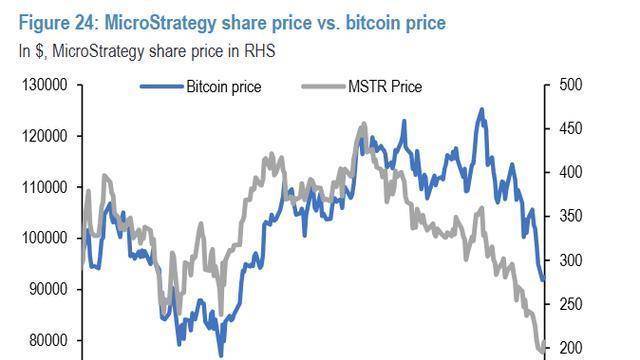
Core Viewpoint - The article highlights a significant divergence in the behavior of retail investors in the U.S., with a strong preference for buying stocks while simultaneously selling off cryptocurrencies, particularly Bitcoin and Ethereum ETFs, indicating a shift in market sentiment and capital flow [1][3][6]. Group 1: Retail Investor Behavior - Retail investors are actively buying stock ETFs, with a net inflow of approximately $96 billion by November 18, suggesting a bullish sentiment towards equities [1][3]. - In contrast, retail investors sold around $4 billion worth of Bitcoin and Ethereum ETFs in November, marking a record monthly sell-off [3][6]. - The preference for stocks over cryptocurrencies is evident, as retail investors have consistently sold crypto ETFs while buying stocks in recent months [6][11]. Group 2: Bitcoin Market Dynamics - Bitcoin's price has fallen below the estimated production cost of approximately $94,000 for the first time since July 2020, indicating a lack of support from mining costs [3][6]. - The decline in Bitcoin's price is attributed to non-native investors, particularly retail investors selling off their holdings after a period of deleveraging in the crypto market [3][6]. Group 3: MicroStrategy's Position - MicroStrategy, a company heavily invested in Bitcoin, has seen its stock underperform relative to Bitcoin, with a significant narrowing of its valuation premium [6][9]. - A critical decision by MSCI on January 15, 2024, regarding the potential removal of MicroStrategy from its indices could trigger substantial passive selling, estimated at around $2.8 billion, with total potential outflows reaching $8.8 billion if other index providers follow suit [8][9][11]. - The market is sensitive to the MSCI decision, as removal could impact MicroStrategy's liquidity and increase future financing costs, further eroding its valuation premium [11].
比特币跌破八万,行情大变,抄底机会还是风险?
Sou Hu Cai Jing· 2025-11-21 19:14
Core Viewpoint - Bitcoin experienced a significant price drop from a historical high of $126,272.76 on October 6 to below $90,000 by November 18, leading to a market sentiment shift from extreme greed to extreme fear [1][3]. Market Dynamics - The cryptocurrency market saw a total market cap decline of over $1.2 trillion within six weeks, indicating a more severe downturn than anticipated [3]. - The Crypto Fear Greed Index fell to 13, a level often associated with short-term market bottoms, prompting traders to closely monitor future movements [3]. Institutional Behavior - A key factor in the market decline was the withdrawal of institutional buyers, with over $25 billion flowing into Bitcoin ETFs earlier in the year, but these large buyers have recently retreated [5]. - The lack of support from ETF allocators and corporate finance departments has contributed to the market's vulnerability [5]. Leverage and Market Pressure - Deleveraging actions have spread throughout the market, with significant reductions in open interest for Ethereum and smaller altcoins, indicating a rapid exit of leveraged funds [7]. - The decline in open interest for smaller tokens like Solana has been particularly pronounced, with some holdings dropping by over 50% [7]. Price Support Levels - Bitcoin is facing critical support at $93,000; if this level is breached, the next significant support could be around $78,000, which may attract remaining sell orders [8]. - Historical volatility patterns suggest that while Bitcoin has experienced severe price corrections in the past, the current situation may reflect a structural change rather than a cyclical bear market [8]. Market Sentiment and Future Outlook - The current market turmoil is influenced by four main factors: the movement of institutional funds, macroeconomic interest rate expectations, options expiration, and the overall sentiment in the cryptocurrency space [8]. - The upcoming weeks will be crucial in determining whether Bitcoin can stabilize, with institutional fund movements and macroeconomic conditions playing a pivotal role [8].