
生产成本

Search documents
YANCOAL AUS(03668) - 2025 Q4 - Earnings Call Transcript
2026-02-26 02:02
Financial Data and Key Metrics Changes - In 2025, the company achieved revenue of almost AUD 6 billion, a decrease of 13% from the previous year due to lower average realized coal prices [20] - Operating EBITDA was over AUD 1.4 billion with a margin of 24%, reflecting the company's ability to maintain profitability despite weak coal prices [5][20] - Profit after tax was AUD 440 million, translating to AUD 0.33 per share, with a total dividend payout of AUD 243 million, representing a 55% payout ratio [5][24] Business Line Data and Key Metrics Changes - ROM coal production reached 67 million tons, a 7% increase from 2024, while attributable salable coal production was 38.6 million tons, up 5% compared to the previous year [4][10] - Cash operating costs were AUD 92 per ton, a reduction of AUD 1 per ton from the first half of 2025 and lower than 2024 costs [4][12] Market Data and Key Metrics Changes - The overall realized coal price was AUD 146 per ton, down 17% from 2024, influenced by strong supply and weak demand conditions in international thermal coal markets [16] - Revenue from Japan increased due to a higher proportion of metallurgical coal sales, while revenue and volumes from China decreased as domestic supply was utilized more [15][17] Company Strategy and Development Direction - The company aims to maintain operational momentum into 2026, with increased attributable salable production guidance of 36.5 million to 40.5 million tons [24] - A focus on sustainability is evident, with plans to develop a climate transition plan in 2026 and initiatives like the Sustainability Digital Data Platform launched in Q3 2025 [7][8] Management's Comments on Operating Environment and Future Outlook - Management acknowledged the challenges posed by inflationary pressures on operating and capital expenditures but expressed confidence in offsetting these through productivity initiatives [32] - The company remains optimistic about the coal market, noting potential supply shortfalls in the coming years due to approval and financing challenges for new mines [18][19] Other Important Information - The company retains a strong balance sheet with AUD 2.1 billion in cash and no external debt as of December 31 [6] - Safety performance improved, with a TRIFR statistic below the industry average, emphasizing the company's commitment to workforce safety [7] Q&A Session Summary Question: Production cadence expectations for 2026 - Management expects a lower production figure in Q1 2026, with more consistent production in subsequent quarters [30] Question: Measures to address cost inflation - The company has increased cost guidance to reflect expected inflationary pressures and will continue to target productivity initiatives to offset these costs [32] Question: Outlook for coal prices with potential production cuts in Indonesia - Management noted that the market reacted to comments about production cuts in Indonesia, but no concrete policy changes have been confirmed yet [34] Question: Foreign exchange losses due to US dollar holdings - The company highlighted the volatility of the Australian dollar and its impact on foreign exchange losses, particularly with US dollar working capital [41] Question: Demand for 6,000 kcal coal in traditional markets - Demand for higher quality coal remains stable, particularly in Japan, with a focus on security of supply [52] Question: M&A opportunities and balance sheet management - The company is evaluating opportunities to enhance shareholder value while maintaining a strong financial position [58]
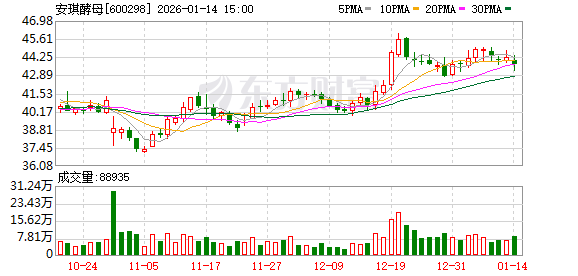
安琪酵母:糖蜜是公司的主要原材料,价格下降会降低生产成本
Zheng Quan Ri Bao· 2026-01-14 13:41
Core Viewpoint - The company emphasizes that while a decrease in molasses prices can lower production costs, it may also lead to increased competition and affect product pricing, highlighting the need for stable raw material prices for sustainable development [2] Group 1: Company Insights - Molasses is identified as the main raw material for the company, and its price fluctuations directly impact production costs [2] - The company prefers molasses prices to remain within a reasonable and stable range to ensure a sustainable supply of raw materials [2] Group 2: Industry Implications - A decline in molasses prices could attract new competitors, intensifying market competition [2] - Maintaining a healthy competitive environment is crucial for the long-term and stable development of the industry [2]


国泰君安期货能源化工:聚乙烯:单体小幅反弹,供应仍有压力
Guo Tai Jun An Qi Huo· 2025-12-07 07:44
1. Report Industry Investment Rating No relevant content provided. 2. Core Viewpoints of the Report - This week, the valuation of PE decreased slightly, the monomer rebounded slightly, and there were expectations of increased supply and decreased demand. The cost - side support for PE was average, and the market supply - demand pattern was not optimistic. Q4 might gradually enter a pattern of increased supply and decreased demand, putting pressure on prices [6]. - The raw material - end crude oil fluctuated weakly, and the Northeast Asian ethylene rebounded by $5. The weighted profits of oil - based, coal - based, ethylene, and ethane were compressed, but no supply elasticity was observed. The downstream demand from the agricultural film and packaging film industries provided some support, but considering the decline in agricultural film production and the increasing supply - side pressure at the end of the year, the market situation was not favorable [6]. - The base difference weakened slightly, the monthly difference fluctuated at a low level, and the warehouse receipts decreased at a high level as the base difference strengthened periodically. The production profits of different production methods showed different trends, with oil - based and coal - based profits at relatively low levels [6]. 3. Summary According to the Directory 3.1 Viewpoint Overview - **Supply** - The total effective capacity growth rate was 16%, and the domestic production growth rate was 18% in the first half of the year. The overall supply was loose, and the PE total start - up rate was 84.1% (- 0.4%). The subsequent supply was expected to decrease slightly, but overall, it would remain in a loose state. The import volume might increase significantly at the end of 2025 and the beginning of 2026 [6]. - **Demand** - The start - up rate of the agricultural film industry continued to decline, and the demand for packaging films had a short - term increase but was not strong enough to support the market. The start - up rates of other downstream industries were expected to decline slightly, and the demand for raw materials was expected to decrease [6]. - **Viewpoint** - The cost - side support for PE was general, and the supply - demand pattern was not optimistic. The supply pressure would gradually increase at the end of the year, and the inventory removal was not smooth. The market was expected to enter a pattern of increased supply and decreased demand in Q4, with prices under pressure [6]. - **Valuation** - The base difference weakened slightly, the monthly difference fluctuated at a low level, and the warehouse receipts decreased at a high level as the base difference strengthened periodically. The production profits of different production methods were compressed to varying degrees [6]. - **Strategy** - For single - side trading, it was recommended to short on rebounds. The upper pressure level for the 01 contract was 6900, and the lower support level was 6600. Cross - period and cross - variety trading were not recommended for the time being [6]. 3.2 Polyethylene Spread and Profit - **Price Spread** - The futures price decreased, the basis in East and South China was relatively strong, while that in North China first weakened and then strengthened slightly after the Friday's decline in the futures price. The monthly difference fluctuated at a low level, and the warehouse receipts decreased as the basis strengthened [9][13]. - **External Price** - The CIF price in China decreased by $5 - 10. The price in the US stopped falling and stabilized, the low - pressure injection molding was weak, the LD in Europe recovered, and the high - pressure in Southeast Asia had a relatively high price ratio [20]. - **Import Profit** - The import window was compressed, the non - standard import profit was at a neutral level compared to the same period in previous years, and the LD import profit was at a relatively high level within the year. The US inventory clearance pressure was relieved, and the subsequent import volume might remain high at the beginning of the year, but new import orders were relatively cautious [27]. - **Non - Standard Price Spread** - The non - standard price spread of HD film was relatively high due to tight supply, which might attract some petrochemical plants to switch production, and supply pressure might be realized in the middle and late November. The LD price spread started to weaken month - on - month [30]. - **Upstream Price** - Crude oil fluctuated at a low level, naphtha was flat, ethylene continued to rebound, and coal prices were relatively strong [35]. - **Production Profit** - The overall production profit was compressed, especially in the monomer segment. The profits of MTO and ethylene - purchasing processes decreased slightly [41]. 3.3 Polyethylene Supply and Demand - **New Capacity** - From the end of 2024 to the first half of 2025, the standard products were intensively put into production, with a nominal capacity growth rate of 19.2% and an effective capacity growth rate of 16.7%. Before the 2605 contract, the capacity addition was limited [45]. - **Existing Start - up** - From the end of 2024 to the first half of 2025, the capacity base increased, the total supply increased significantly, the start - up rate was at a neutral level, and the maintenance volume was temporarily the same as the previous year [46]. - **Standard Product Supply** - The LLDPE capacity was intensively put into production, the production ratio was at a neutral level, and the supply was expected to increase in December as the maintenance scale decreased compared to November [51]. - **Maintenance Plan** - The subsequent maintenance scale was expected to decline, and the monthly maintenance volume in Q4 was temporarily lower than the same period last year [53]. - **Import and Export** - The domestic production increased significantly, and the import volume was at a low level compared to the same period. The import volume might increase at the end of 2025 and the beginning of 2026. The import of standard products was at a low level, and the import of LD was the same as last year. The Middle East sources from Saudi Arabia and the UAE increased slightly in October [56][59][62]. - **Inventory** - The supply gradually recovered, the upstream actively reduced inventory, and some downstream enterprises placed orders at low prices. The inventory of standard and non - standard products at factories continued to decline, and the middle and downstream mainly consumed their previous inventories [64][69]. - **Downstream Demand** - The start - up rate of the agricultural film industry continued to decline, the packaging film industry's start - up rate was the same as the previous year, the raw material procurement enthusiasm was limited, the profit was at a high level, and the orders were slightly lower than the same period. The demand for PE pipes improved slightly in Q4, and the raw material inventory was slightly lower than the same period. Overall, the downstream demand showed signs of marginal decline [71][78][84][87].
买股卖币大不同,美国散户抄底现象明显,比特币首次跌破成本线
Sou Hu Cai Jing· 2025-11-23 18:00
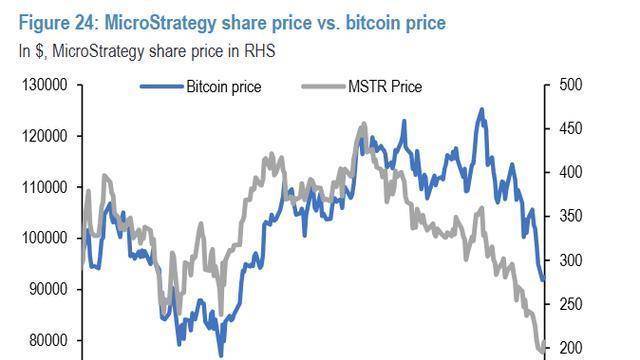
Core Viewpoint - The article highlights a significant divergence in the behavior of retail investors in the U.S., with a strong preference for buying stocks while simultaneously selling off cryptocurrencies, particularly Bitcoin and Ethereum ETFs, indicating a shift in market sentiment and capital flow [1][3][6]. Group 1: Retail Investor Behavior - Retail investors are actively buying stock ETFs, with a net inflow of approximately $96 billion by November 18, suggesting a bullish sentiment towards equities [1][3]. - In contrast, retail investors sold around $4 billion worth of Bitcoin and Ethereum ETFs in November, marking a record monthly sell-off [3][6]. - The preference for stocks over cryptocurrencies is evident, as retail investors have consistently sold crypto ETFs while buying stocks in recent months [6][11]. Group 2: Bitcoin Market Dynamics - Bitcoin's price has fallen below the estimated production cost of approximately $94,000 for the first time since July 2020, indicating a lack of support from mining costs [3][6]. - The decline in Bitcoin's price is attributed to non-native investors, particularly retail investors selling off their holdings after a period of deleveraging in the crypto market [3][6]. Group 3: MicroStrategy's Position - MicroStrategy, a company heavily invested in Bitcoin, has seen its stock underperform relative to Bitcoin, with a significant narrowing of its valuation premium [6][9]. - A critical decision by MSCI on January 15, 2024, regarding the potential removal of MicroStrategy from its indices could trigger substantial passive selling, estimated at around $2.8 billion, with total potential outflows reaching $8.8 billion if other index providers follow suit [8][9][11]. - The market is sensitive to the MSCI decision, as removal could impact MicroStrategy's liquidity and increase future financing costs, further eroding its valuation premium [11].
有色金属海外季报:MIN2025Q3锂精矿权益产量环比减少5%至13.7万吨,权益锂精矿出货量环比增长5%至14.2万吨
HUAXI Securities· 2025-11-04 05:31
Investment Rating - The report recommends a "Buy" rating for the industry, predicting that the industry index will outperform the Shanghai Composite Index by 10% or more during the forecast period [4]. Core Insights - In Q3 2025, the lithium concentrate production from two operational projects decreased by 5% to 137,000 tons, while the sales volume increased by 5% to 142,000 tons. The average selling price for lithium concentrate was $849 per ton, reflecting a 31% increase quarter-on-quarter [1]. - The recovery rates and capacity optimization projects at Mt Marion and Wodgina have been successfully completed, with Wodgina achieving an average recovery rate of 67% [1]. - The report highlights significant improvements in production and sales volumes for lithium concentrate, with Mt Marion's production increasing by 18% quarter-on-quarter and 7% year-on-year, while Wodgina's production also showed positive growth [2][5]. Summary by Sections Lithium Mining - **Overall Performance**: In Q3 2025, the total lithium concentrate production was 137,000 tons, with a weighted average selling price of $849 per ton, up 31% from the previous quarter [1]. - **Mt Marion**: The total material moved decreased by 46%, while ore mined increased by 58%. The average recovery rate was 59%, and the average selling price was $797 per ton, up 31% quarter-on-quarter [2]. - **Wodgina**: The total material moved decreased by 12%, with ore mined increasing by 15%. The average selling price for lithium concentrate was $881 per ton, reflecting a 31% increase [3][5]. Iron Ore - **Onslow Iron**: The quarterly production was 8.445 million tons, a 37% increase quarter-on-quarter, with an average selling price of $92 per ton [7]. - **Pilbara Hub**: The quarterly production was 2.419 million tons, a 12% decrease quarter-on-quarter, with an average selling price of $87 per ton [8]. Financial Overview - As of September 30, 2025, the company's liquidity and net debt remained stable at 1.1 billion AUD and 5.4 billion AUD, respectively. The capital expenditure for the quarter was approximately 400 million AUD, consistent with previous expectations [12].
瑞达期货纯苯产业日报-20251009
Rui Da Qi Huo· 2025-10-09 12:03
Report Industry Investment Rating - No relevant information provided Core Viewpoints - In October, domestic pure benzene supply is expected to increase. The impact of maintenance of petroleum benzene plants is expected to decline, and the operating load of North China hydrobenzene plants has gradually recovered to a neutral level after the end of production restrictions in early September, with stable operation expected in the future. New plants for downstream styrene, caprolactam, and phenol are planned to be put into operation, with the converted production capacity higher than that of pure benzene, indicating a medium - to long - term improvement in supply - demand trends. However, large - scale styrene plants are still in the maintenance cycle, limiting the growth space of pure benzene demand. Recently, international oil prices have fallen and rebounded due to factors such as OPEC's slight increase in production, concerns about economic growth caused by the U.S. government shutdown, and the intensification of the Russia - Ukraine conflict. In the short term, the domestic pure benzene supply - demand situation is difficult to improve. Technically, BZ2603 has broken below the lower Bollinger Band, and the MACD green bar has widened, but the single - day K - line has a long lower shadow. Pay attention to the support near 5682 [2]. Summary by Relevant Catalogs Futures Market - The closing price of the pure benzene futures main contract is 5763 yuan/ton, down 37 yuan; the settlement price is 5732 yuan/ton, down 69 yuan. The trading volume is 5189 lots, down 394 lots; the open interest is 12994 lots, up 615 lots. The mainstream price in the East China market is 5860 yuan/ton, down 20 yuan; the mainstream price in the North China market is 5870 yuan/ton, unchanged; the mainstream price in the Northeast region is 5700 yuan/ton, down 102 yuan [2]. Spot Market - The mainstream price of hydrobenzene in Jiangsu is 5825 yuan/ton, down 100 yuan; the mainstream price in Shanxi is 5740 yuan/ton, unchanged. The FOB intermediate price of pure benzene in South Korea is 699 US dollars/ton, up 5 US dollars; the CFR intermediate price of pure benzene in China is 709.5 US dollars/ton, up 2 US dollars [2]. Upstream Situation - The spot price of Brent DTD crude oil is 68.38 US dollars/barrel, up 1.05 US dollars; the CFR intermediate price of naphtha in Japan is 583.75 US dollars/ton, down 1.5 US dollars [2]. Industry Situation - The capacity utilization rate of pure benzene is 78.14%, up 0.13 percentage points; the weekly output is 45.7 tons, up 0.16 tons. The port inventory at the end of the week is 10.6 tons, down 0.1 tons. The production cost is 5327.8 yuan/ton, down 118.2 yuan/ton, and the production profit is 737 yuan/ton, up 76 yuan/ton [2]. Downstream Situation - The total styrene operating rate is 73.24%, down 0.2 percentage points; the caprolactam capacity utilization rate is 95.72%, up 6.41 percentage points; the phenol capacity utilization rate is 78.54%, down 0.46 percentage points; the aniline capacity utilization rate is 69.24%, down 0.1 percentage points; the adipic acid capacity utilization rate is 64.3%, up 2 percentage points [2]. Industry News - From September 19th to 25th, the pure benzene capacity utilization rate increased by 1.22% to 79.27% week - on - week, and the hydrobenzene capacity utilization rate increased by 4.05% to 63.99% week - on - week. The weighted operating rate of pure benzene downstream decreased by 1.24% to 76.37% week - on - week. As of October 9th, the total commercial inventory of pure benzene in Jiangsu port samples was 9.1 tons, a week - on - week decrease of 33.7%. From September 19th to 25th, the profit of petroleum benzene was 419 yuan/ton, a week - on - week decrease of 6 yuan/ton [2].

瑞达期货纯苯产业日报-20250820
Rui Da Qi Huo· 2025-08-20 09:11
Group 1: Report Summary - The short - term supply of pure benzene in China is expected to exceed demand, putting pressure on prices; in the medium - to - long - term, the supply - demand contradiction may improve as new downstream capacity in August is higher than that of pure benzene [2] - The supply of crude oil exceeds demand, and international oil prices are expected to fluctuate weakly due to positive signals from Russia - Ukraine peace talks [2] - Technically, for BZ2603, attention should be paid to the support around 6100 and the pressure around 6300 [2] Group 2: Market Data Futures Market - The closing price of the main pure benzene contract is 6205 yuan/ton, up 23 yuan; the settlement price is 6177 yuan/ton, down 13 yuan [2] - The trading volume of the main pure benzene contract is 11282 lots, up 7924 lots; the open interest is 13106 lots, down 877 lots [2] Spot Market - The mainstream price of pure benzene in the East China market is 6250 yuan/ton, unchanged; in the South China market, it is 6095 yuan/ton, down 5 yuan [2] - The FOB mid - price of pure benzene in South Korea is 732 US dollars/ton, unchanged; the CFR mid - price of pure benzene in China is 746.5 US dollars/ton, unchanged [2] Upstream Situation - The spot price of Brent DTD crude oil is 67.6 US dollars/barrel, unchanged; the CFR mid - price of naphtha in Japan is 574.5 US dollars/ton, up 3.75 US dollars [2] Industry Situation - The capacity utilization rate of pure benzene is 78.14%, up 0.13%; the weekly output is 44.52 tons, down 0.08 tons [2] - The port inventory of pure benzene is 14.6 tons, down 1.7 tons; the production cost is 5327.8 yuan/ton, down 118.2 yuan [2] - The production profit of pure benzene is 737 yuan/ton, up 76 yuan [2] Downstream Situation - The开工率 of styrene is 78.18%, up 0.45%; the capacity utilization rate of caprolactam is 95.72%, up 6.41% [2] - The capacity utilization rate of phenol is 78.54%, down 0.46%; the capacity utilization rate of aniline is 69.24%, down 0.1% [2] - The capacity utilization rate of adipic acid is 64.3%, up 2% [2] Group 3: Industry News - China will comprehensively rectify the petrochemical and refining industries, phasing out small facilities and upgrading backward capacity while directing investment towards advanced materials [2] - From August 8 - 14, the profit of petroleum benzene in China was 689 yuan/ton, up 113 yuan/ton; the BZ2603 fluctuated widely and closed at 6205 yuan/ton [2] - As of August 18, the commercial inventory of pure benzene in Jiangsu ports was 14.4 tons, down 1.37% [2]
立华股份上半年增收不增利 下半年盈利有望好转
Zheng Quan Ri Bao Wang· 2025-08-19 03:00
Core Viewpoint - Jiangsu Lihua Food Group Co., Ltd. reported a decline in net profit for the first half of 2025, despite a revenue increase, indicating challenges in the poultry sector while the pork segment showed significant growth [1][2]. Company Performance - In the first half of 2025, the company achieved operating revenue of 8.353 billion yuan, a year-on-year increase of 7.02%, but the net profit attributable to shareholders was 149 million yuan, a decline of 74.10% [1]. - The sales revenue from yellow feathered chickens was 6.335 billion yuan, down 6.76% year-on-year, while pork revenue reached 1.947 billion yuan, up 117.65% [1]. - The gross margin for yellow feathered chicken was 6.21%, while for pork it was 22.46% [1]. Industry Analysis - The yellow feathered chicken market experienced a "drop-rise-drop" price trend, with prices at historically low levels, leading to overall poor profitability in the poultry farming sector during the first half of 2025 [2]. - The company anticipates improved performance in the chicken business in the second half of the year due to higher traditional consumption and increased demand from holidays and tourism [2]. - The pork segment saw a significant increase in sales, with 949,600 pigs sold, a year-on-year increase of 118.35%, attributed to improved capacity utilization and increased stocking [2][3]. Cost and Pricing Trends - The complete cost of chicken production fell below 11 yuan/kg, while pork production costs were at 12.8 yuan/kg due to a decrease in feed raw material prices [3]. - Analysts predict that the yellow feathered chicken prices may enter an upward cycle in the second half of the year, driven by increased demand from school meals and holiday preparations [3].

瑞达期货纯苯产业日报-20250818
Rui Da Qi Huo· 2025-08-18 09:42
Report Industry Investment Rating - Not provided in the content Core Viewpoints - In the short term, the situation of supply exceeding demand for domestic pure benzene is expected to continue, putting pressure on prices; in the long - term, the new production capacity of pure benzene downstream in August is higher than that of pure benzene, and the supply - demand contradiction may improve. The supply - demand situation of crude oil continues to be supply - dominant, and international oil prices are expected to fluctuate weakly. Technically, BZ2603 should pay attention to the support around 6100 and the resistance around 6300 [2] Summary by Relevant Catalogs Futures Market - The main closing price of pure benzene is 6186 yuan/ton, down 3 yuan; the main settlement price is 6171 yuan/ton, down 17 yuan. The main trading volume is 5030 lots, up 759 lots; the main open interest is 14110 lots, down 588 lots [2] Spot Market - The mainstream prices of pure benzene in East China, North China, South China, and Northeast China are 6100 - 6150 yuan/ton, 6130 - 6120 yuan/ton respectively, with different changes. The mainstream prices of hydrogenated benzene in Jiangsu and Shanxi are 6250 yuan/ton (down 75 yuan) and 6050 yuan/ton (unchanged) respectively. The spot price of pure benzene in South Korea's FOB middle price is 734 US dollars/ton, up 1 US dollar; the CIF middle price in China is 748.5 US dollars/ton, unchanged [2] Upstream Situation - The spot price of Brent DTD crude oil is 67.97 US dollars/barrel, down 0.61 US dollars; the CFR middle price of naphtha in Japan is 572.5 US dollars/ton, up 1.5 US dollars [2] Industry Situation - The capacity utilization rate of pure benzene is 78.14%, up 0.13%; the weekly output is 44.52 tons, down 0.08 tons. The port inventory of pure benzene is 14.6 tons, down 1.7 tons; the production cost is 5327.8 yuan/ton, down 118.2 yuan; the production profit is 737 yuan/ton, up 76 yuan [2] Downstream Situation - The开工率 of styrene is 78.18%, up 0.45%; the capacity utilization rates of caprolactam, phenol, aniline, and adipic acid are 95.72% (up 6.41%), 78.54% (down 0.46%), 69.24% (down 0.1%), and 64.3% (up 2%) respectively [2] Industry News - From August 8th to 14th, the profit of PetroChina's benzene was 689 yuan/ton, up 113 yuan/ton from last week. As of August 18th, the total commercial inventory of pure benzene ports in Jiangsu was 14.4 tons, down 1.37% from the previous period [2]
瑞达期货纯苯产业日报-20250814
Rui Da Qi Huo· 2025-08-14 10:48
Report Summary 1. Report Industry Investment Rating No relevant content provided. 2. Core View of the Report - Supply of pure benzene is expected to increase on a month - on - month basis, but the small number of imported cargo arrivals may partially offset the domestic increase. Consumption of pure benzene is likely to rise on a month - on - month basis as the overhaul devices of the five major downstream industries of pure benzene restart intensively. In the long - term, there is an improving trend in the supply - demand of pure benzene, and the spot supply - demand gap may gradually shrink. Recently, international oil prices are weakly volatile, and technically, BZ2603 should focus on the support around 6100 [2]. 3. Summary by Relevant Catalogs Futures Market - The closing price of the main contract of pure benzene was 6179 yuan/ton, down 58 yuan; the settlement price was 6210 yuan/ton, down 40 yuan. The trading volume was 2318 lots, and the open interest was 14833 lots. The mainstream prices of pure benzene in different domestic markets varied, with some rising and some falling [2]. Spot Market - The spot price of pure benzene in South Korea's FOB intermediate price was 734 dollars/ton, down 6 dollars; the CFR intermediate price in China was 750.5 dollars/ton, down 4 dollars [2]. Upstream Situation - The spot price of Brent DTD crude oil was 66.97 dollars/barrel, down 0.64 dollars; the CFR intermediate price of naphtha in Japan was 563.5 dollars/ton, down 6.5 dollars [2]. Industry Situation - The capacity utilization rate of pure benzene was 78.14%, up 0.13 percentage points; the weekly output was 44.6 tons, up 1.03 tons. The port inventory was 16.3 tons, down 0.7 tons. The production cost was 5327.8 yuan/ton, down 118.2 yuan; the production profit was 737 yuan/ton, up 76 yuan [2]. Downstream Situation - The operating rates of downstream products of pure benzene varied. For example, the operating rate of styrene was 77.73%, down 1.19 percentage points; the capacity utilization rate of caprolactam was 95.72%, up 6.41 percentage points [2]. Industry News - From August 1st to 7th, the profit of PetroChina's benzene was 576 yuan/ton, down 67 yuan/ton compared with last week. As of August 11th, the commercial inventory of pure benzene ports in Jiangsu was 14.6 tons, down 10.43% from the previous period. BZ2603 fell 1.14% to close at 6179 yuan/ton. The capacity utilization rate of petroleum benzene increased by 0.21% to 78.79%, while that of hydrogenated benzene decreased by 3.29% to 59.66%. The weighted operating rate of downstream products of pure benzene decreased by 1.22% to 76.74%. The inventory of pure benzene in East China ports decreased by 10.43% to 14.6 tons [2].