
就业市场

Search documents
美国经济:就业走弱
Zhao Yin Guo Ji· 2026-01-12 02:18
Employment Data - In December, the U.S. added 50,000 non-farm jobs, below the market expectation of 70,000[6] - The October and November employment figures were revised down by a total of 76,000[6] - Private sector job growth fell significantly from 50,000 in November to 37,000 in December[6] Unemployment Rate - The unemployment rate decreased to 4.4% in December, better than the expected 4.5%[6] - November's unemployment rate was revised slightly down to 4.54%[6] - Labor force participation rate declined to 62.4%, influenced by retirements and reduced labor supply[6] Sector Performance - Job losses in the goods-producing sector totaled 21,000 in December, with construction and manufacturing losing 11,000 and 8,000 jobs respectively[6] - Service sector jobs increased from 32,000 in November to 58,000 in December, primarily in leisure and hospitality, and education and healthcare[6] Federal Reserve Outlook - The Federal Reserve is expected to cut rates by 25 basis points once in June, largely as a political statement with the new chair[6] - Economic growth is anticipated to rebound in the first half of the year due to tax cuts, despite inflation pressures from commodity prices[6] - In the second half, economic growth may slow again, with inflation potentially rising due to stabilizing oil and rent prices[6]
AI Has Replaced Entry-Level Jobs but These Graduate Careers Continue to Thrive
Investopedia· 2026-01-11 13:00
Core Insights - The labor market is currently slow, with tariffs and the rise of AI impacting hiring capabilities, leading many recent graduates to consider graduate school as a viable option for better job prospects [2][6] - Certain graduate degree programs, particularly in mental health counseling and law, are projected to have high demand and job openings in the coming years, making them attractive for graduates [3][8] Group 1: Labor Market Conditions - The labor market has been sluggish in adding new workers, with tariffs affecting companies' hiring abilities [2] - The presence of AI is significantly impacting entry-level job availability, causing many recent graduates to feel unprepared for the evolving workforce [6] Group 2: Graduate School Trends - Graduate school is becoming a more appealing option for recent college graduates due to the stagnant job market, with law school admissions reaching the highest levels in over a decade [4][6] - Graduate degrees are associated with higher-paying job opportunities compared to those with only a bachelor's degree, and they can also delay student loan repayments [7] Group 3: Employment Projections - The Bureau of Labor Statistics indicates that mental health counselors, substance abuse counselors, and lawyers will see a high demand for jobs in the next several years [3][8] - As of September 2025, the unemployment rate for recent college graduates was 5.8%, higher than the overall unemployment rate of 4.1% for all workers [5]


【环球财经】宏观数据提振人气 纽约股市三大股指9日均上涨
Xin Hua Cai Jing· 2026-01-10 02:08
Group 1 - The New York stock market indices opened higher on January 9, 2025, with the Dow Jones Industrial Average rising by 237.96 points to close at 49,504.07, a gain of 0.48% [1] - The S&P 500 index increased by 44.82 points to close at 6,966.28, reflecting a rise of 0.65%, while the Nasdaq Composite Index rose by 191.331 points to close at 23,671.346, marking an increase of 0.82% [1] - Among the S&P 500 sectors, nine out of eleven sectors saw gains, with the materials and utilities sectors leading with increases of 1.80% and 1.24%, respectively [1] Group 2 - The U.S. Labor Department reported that 50,000 non-farm jobs were added in December 2025, below the market consensus of 55,000, with previous months' job additions revised downwards [1] - The unemployment rate for December 2025 was reported at 4.4%, a slight decrease from the revised rate of 4.5% in the previous month [1] Group 3 - The preliminary consumer confidence index for January 2025 was reported at 54, surpassing the previous month's 52.9 and the market consensus of 53.5, marking the highest level since September 2025 [2] - Consumer inflation expectations for one year remained stable at 4.2%, the lowest since January 2025, while the five-year inflation expectation rose from 3.2% to 3.4% [2] Group 4 - D.R. Horton, a major U.S. homebuilder, saw its stock price increase by 7.8% following President Trump's announcement to request Fannie Mae and Freddie Mac to purchase mortgage bonds to lower interest rates [3]

U.S. Hiring Continues at Modest Pace, but Weaknesses Are Evident
Nytimes· 2026-01-09 16:53
Core Insights - The unemployment rate decreased in December, indicating a potential improvement in the labor market [1] - Job growth throughout 2025 was reported to be the lowest in five years, suggesting underlying weaknesses in employment trends [1] Employment Trends - The decline in the unemployment rate may not fully reflect the overall job market health due to the low job growth figures [1] - The job growth rate for 2025 indicates a significant slowdown, which could impact economic forecasts and consumer confidence [1]

生产率高涨,或是就业市场遇冷的另一重注解
Xin Lang Cai Jing· 2026-01-09 14:42
Core Insights - The significant rise in productivity is a key factor in understanding the current trends in the U.S. economy [1][4] - Companies are heavily investing in artificial intelligence while slowing down hiring, leading to the fastest productivity growth in two years [1][4] - The GDP growth is no longer reliant on a large labor input, allowing economic growth without increased labor effort [1][4] Productivity and Economic Growth - The annualized growth rate of output per hour for U.S. workers reached 4.9% in the third quarter, matching the peak level of 2023 [1][4] - Over the past six months, the average productivity increase has been 4.5%, which is considered "unquestionably good news" [1][4] Employment and Labor Market Dynamics - Despite a GDP growth rate of 4.3%, job growth remains weak [5][6] - Companies are signaling a halt in hiring while still achieving business growth, indicating a potential economic and social dilemma [7] - The productivity gains may exacerbate the weakness in the job market, widening the K-shaped economic divide [7] - The trend of companies achieving growth while reducing staff may become a new norm if AI efficiency leads to lower labor costs and higher profits [7] Economic Outlook - The continuous support of productivity for economic growth suggests that previous recession predictions may not materialize [7] - However, there is concern that American workers are being marginalized as companies limit new hiring to control costs [7]
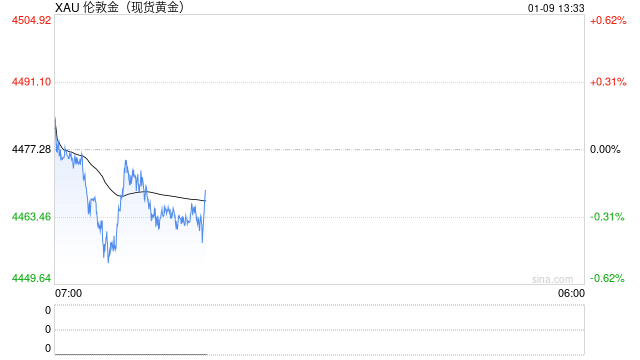
12月非农揭晓在即!黄金高位震荡,日元维持弱势
Xin Lang Cai Jing· 2026-01-09 05:35
Core Viewpoint - The upcoming U.S. non-farm payroll report for December is expected to shift market focus back to economic data and interest rate outlooks, following a period of geopolitical concerns [2][17]. Employment Data Summary - The U.S. job market shows signs of weakness, with November job openings dropping to 7.15 million, the lowest in 14 months, resulting in a ratio of 0.91 job openings per unemployed person, the lowest since March 2021 [3][17]. - The ADP report indicates that 41,000 private sector jobs were added in December, which is above the previous value but slightly below expectations, with four instances of negative growth since June [3][17]. - Initial jobless claims rose slightly to 208,000, up from 200,000, although the four-week average has significantly decreased [3][17]. Market Expectations - The market anticipates an addition of 60,000 jobs in the upcoming non-farm report, down from a previous value of 64,000, with the unemployment rate expected to decrease from 4.6% to 4.5% [3][17]. - Hourly wage growth is projected to rise to 3.6% [3][17]. Federal Reserve Perspective - The Federal Reserve acknowledges the downward risks in the job market, maintaining a forecast for one rate cut this year, although there are significant divisions among market participants [5][19]. - The interest rate market is leaning towards a more dovish stance, betting on two rate cuts this year, with an 86% probability that the January meeting will not result in a rate change [5][19]. Market Reactions - Traders are adopting a cautious approach ahead of the non-farm report, with both stock markets and precious metals slowing their upward momentum [5][19]. - If the employment data falls short of expectations, it could heighten rate cut anticipations, benefiting risk assets like stocks and cryptocurrencies, while gold and silver may aim for historical highs [5][19]. - Conversely, a strong report could lead to a rebound in the U.S. dollar index [5][19].
美联储巴尔金:密切关注裁员情况,以寻找当前低招聘、低解雇就业市场发生变化的迹象。
Sou Hu Cai Jing· 2026-01-06 14:26
Group 1 - The Federal Reserve, represented by Barkin, is closely monitoring layoffs to identify changes in the current low hiring and low firing employment market [1]
美联储12月会议纪要显示降息意见分歧加大:一季度降息预期下降
Haitong Securities International· 2026-01-05 15:21
Rate Decision Insights - The Federal Reserve's December FOMC minutes revealed a significant internal split, with a 9-3 vote to cut the federal funds rate by 25 basis points to a target range of 3.5%-3.75%[1] - The dissenting votes included two members advocating for no change and one member calling for a more aggressive 50 basis point cut[1] - The majority favored the rate cut due to increased downside risks to employment and stable inflation risks, suggesting further cuts may be appropriate if inflation trends downward[2] Economic Conditions - Overall PCE inflation and core PCE inflation both stood at 2.8%, with goods inflation influenced by tariffs and service inflation showing signs of moderation[2] - The unemployment rate increased slightly to 4.4%, indicating a softening labor market, while hiring activity remained weak[2] Market Expectations - Prior to the meeting, options markets anticipated a 25 basis point cut and projected two additional cuts in 2026[2] - Following the release of the minutes, equity markets experienced a slight decline, with traders increasing bets on a potential rate cut in April[4] Future Policy Guidance - All participants agreed that future policy decisions will depend on incoming data and evolving economic conditions, with no predetermined path[9] - The uncertainty surrounding the selection of the next Fed Chair adds additional variables to the Fed's independence and future policy direction[10]
美联储政策分歧下的加密市场:美国政府比特币资产达307亿美元
Sou Hu Cai Jing· 2026-01-05 02:29
Group 1: Federal Reserve Policy - The Federal Reserve is balancing the need to control inflation while maintaining low interest rates to support a weak job market, facing pressure from President Trump for more aggressive rate cuts [2] - On December 10, the Federal Reserve lowered the federal funds rate target range by 25 basis points to between 3.50% and 3.75%, with a vote of 9 in favor and 3 against, marking the highest number of dissenting votes since 2019 [2] - The minutes from the December meeting indicate a growing divide among Federal Reserve officials regarding future monetary policy expectations [2] Group 2: Economic Outlook - Philadelphia Federal Reserve Bank President Anna Paulson expects inflation to gradually ease, with economic growth projected around 2% this year, suggesting that a moderate adjustment to the federal funds rate may be appropriate later in the year [3] - Paulson expressed a cautious optimism regarding inflation and emphasized the need to understand the factors driving economic growth and employment decline [3] - Despite pressures, the labor market is under strain but has not collapsed, with a broad slowdown attributed to both supply and demand factors [3] Group 3: Liquidity Operations - On December 31, the Federal Reserve provided $74.6 billion in short-term loans through the Standing Repo Facility, setting a new record for daily usage of this tool [4] - This liquidity operation is seen as a response to year-end cash tightness among banks, similar to individuals needing cash for monthly expenses [4] - Despite the liquidity injection, the performance of the cryptocurrency market, particularly Bitcoin, remained largely unaffected, with Bitcoin prices hovering around $90,000 [4] Group 4: Government Cryptocurrency Holdings - The U.S. government currently holds approximately $30.73 billion in cryptocurrency, including 328,372 BTC valued at about $29.58 billion [5] - The government’s holdings of Bitcoin are primarily from law enforcement seizures rather than for investment purposes, focusing on legal compliance rather than market appreciation [6] - High Bitcoin prices could complicate the government's ability to dispose of these assets, as public scrutiny and potential accusations of market manipulation may arise [6]

对话野村发达市场首席经济学家:美联储动态变化或将更剧烈
2 1 Shi Ji Jing Ji Bao Dao· 2025-12-31 12:42
Group 1 - The Federal Reserve is facing a rare conflict between its dual mandate of achieving "full employment" and "price stability," a situation not seen since the stagflation of the 1970s [1] - There is a notable division within the Federal Reserve, with some officials advocating for a more aggressive stance while others support a more dovish approach [1] - The December dot plot indicates a split among Federal Reserve officials, with 7 members favoring no changes in 2026 and 8 members supporting at least two rate cuts [1] Group 2 - Some Federal Reserve officials expect inflation caused by tariffs to peak in the first quarter of next year before declining, while others are concerned about persistently high inflation [2] - Nomura forecasts that the U.S. economy will remain resilient in 2026, with real GDP expected to grow by 2.4% [2] - The unemployment rate is projected to decrease to 4.0% by the end of the year, supported by easing labor supply pressures and accelerated AI-driven business investments [2] - Despite anticipated relief from tariff-induced inflation, core services inflation is expected to keep the Federal Reserve cautious, leading to rate cuts in June and September 2026 [2]