智驾

Search documents
李书福豪赌印奇
Xin Lang Cai Jing· 2025-10-19 11:02
Core Insights - 千里科技 has made significant moves recently, including a listing application on the Hong Kong Stock Exchange and a substantial investment from Mercedes-Benz, indicating a strong push into the smart driving sector [1][2] - The company has transformed from "ST力帆" to "千里科技" after restructuring and the involvement of key figures like 印奇, leading to a nearly 100% increase in market value within a year [1] - Despite its growth, 千里科技's main revenue still comes from traditional automotive and motorcycle businesses, with smart driving initiatives yet to generate income [1] Company Developments - 千里科技 submitted its application for a main board listing on the Hong Kong Stock Exchange on October 16, revealing nearly 700 pages of documentation that outline the company's challenges and future prospects [2] - The company has seen its market capitalization nearly double in the past year, driven by the integration of AI and smart driving concepts [1] Industry Context - The smart driving market is becoming increasingly competitive, with leading players like 华为, Momenta, 地平线, and 大疆 dominating the landscape [1] - 千里科技's heavy reliance on 吉利 for customer and supplier relationships raises questions about its ability to compete effectively in this crowded market [1]

李书福“豪赌”印奇
Di Yi Cai Jing· 2025-10-19 10:17
Core Viewpoint - Qianli Technology (千里科技) has gained significant attention in the market due to its recent developments, including a substantial investment from Mercedes-Benz and a planned listing on the Hong Kong Stock Exchange, despite its high valuation and ongoing challenges in the smart driving sector [1][2]. Group 1: Company Transformation - Qianli Technology has undergone a transformation from "ST Lifan," which faced judicial restructuring, to "Lifan Technology" after the acquisition by Geely, and finally to "Qianli Technology" under the leadership of AI entrepreneur Yin Qi [1][4]. - The company’s market value has nearly doubled within a year after Yin Qi's involvement, driven by concepts like smart driving and "AI + car" [1]. Group 2: Financial Performance - As of the first half of this year, Qianli Technology's main business remains in automotive and motorcycle sectors, with smart driving and Robotaxi services not yet contributing any revenue [4][8]. - In the first half of this year, 33.2% of Qianli Technology's revenue came from Geely, while 29.7% of its procurement was from Geely [3][4]. - The automotive segment accounted for 62.71% of total revenue, while the motorcycle segment contributed over 30% [4]. Group 3: Strategic Partnerships - Qianli Technology heavily relies on Geely as both its largest supplier and customer, with expectations to provide smart driving solutions to Geely's affiliated companies [3][4]. - The integration of Geely's smart driving business into Qianli Technology indicates a significant strategic alignment, with Geely's chairman expressing strong support for Yin Qi [5][6]. Group 4: Industry Challenges - The smart driving industry is highly competitive, with major players like Huawei and Momenta dominating the market, raising questions about Qianli Technology's ability to compete effectively [1][7]. - The company faces challenges in leveraging its AI expertise to deliver competitive smart driving solutions, especially given Geely's past criticisms of its smart driving capabilities [7]. Group 5: Financial Pressures - Qianli Technology's R&D expenses are projected to increase significantly, with amounts of 0.9 billion, 2.1 billion, and 4.1 billion for the years 2022, 2023, and 2024 respectively, indicating a growing financial burden [8]. - The company reported a total revenue of 41.84 billion with a year-on-year growth of 40% for the first half of 2025, but faced a significant drop in net profit due to increased R&D costs and asset impairment losses [8][9].
零跑曹力:后续产品将用自研高阶智能,不会搭载华为乾崑智驾
Guo Ji Jin Rong Bao· 2025-10-17 09:29
Core Viewpoint - The company, Leap Motor, has significantly invested in intelligent driving technology over the past two years, narrowing the gap with leading competitors and anticipating a breakthrough in higher-level intelligence in the coming year [2]. Group 1 - Leap Motor's Senior Vice President, Cao Li, responded to rumors about collaborating with Huawei on the development of advanced driving technology, stating that the company will continue to use its self-developed high-level intelligent driving in future products [2]. - The company predicts that the next year will mark a significant turning point for higher-level intelligent driving technology [2].


浙商早知道-20251016
ZHESHANG SECURITIES· 2025-10-15 23:30
Market Overview - The Shanghai Composite Index rose by 1.2%, the CSI 300 increased by 1.5%, the STAR 50 gained 1.4%, the CSI 1000 was up by 1.5%, the ChiNext Index surged by 2.4%, and the Hang Seng Index climbed by 1.8% [5][4] - The best-performing sectors included power equipment (+2.7%), automotive (+2.4%), electronics (+2.3%), pharmaceutical and biotechnology (+2.1%), and retail (+1.9%). The worst-performing sectors were steel (-0.2%), oil and petrochemicals (-0.1%), agriculture, forestry, animal husbandry, and fishery (+0.0%), real estate (+0.1%), and defense and military industry (+0.2%) [5][4] - The total trading volume in the Shanghai and Shenzhen markets was 20,729 billion, with a net outflow of 5.44 billion HKD from southbound funds [5][4] Automotive Industry Insights - The automotive sector report emphasizes three main investment opportunities: robotics, bus exports, and intelligent driving [6] - The market perception of technological advancements and potential profit growth in the automotive sector is considered insufficient [6] - Key drivers include significant changes in the robotics industry, strong bus export volumes, and rapid advancements in applications for autonomous vehicles [6] Agriculture, Forestry, Animal Husbandry, and Fishery Insights - The core viewpoint is that pig farming and cattle breeding remain the main focus, with an emphasis on capturing post-cycle opportunities [7] - The report notes a continuous decline in pig prices, a gradual reversal in the beef cycle, and persistent low milk prices [7] - Key drivers include rising pig prices due to policy shifts towards "anti-involution" and increasing beef prices as traditional demand peaks in Q4 [7] Macro Economic Insights - The macroeconomic report highlights a significant increase in exports to Africa, driven by Chinese companies seeking new markets amid US trade tensions [8] - The report suggests that the high growth in exports may be a result of "export grabbing" [8] - The potential for industrial layout in African economies is noted as a key differentiator from market expectations [8] Fixed Income and Credit Bond Insights - The fixed income report indicates that the positive spread between rental yields and risk-free rates could provide guidance for housing prices, with 2027 expected to be a critical year for identifying the bottom of the real estate market [9] - The report anticipates a "L-shaped" bottoming out of the real estate market rather than a V-shaped rebound, highlighting significant structural differentiation [9] - Key drivers include the rental return rate as a critical reference for when housing prices may bottom out, with expectations for rental yields to reach near a decade-high by the end of 2027 [9]
实测中国版“FSD”,看十次不如自己开一次
Hu Xiu· 2025-10-09 02:07
Group 1 - The article discusses the low adoption rate of intelligent driving technology in China, with 90% of the population reportedly having never used it [1] - Concerns among potential users include fears of accidents and the perception that the technology may drive too slowly, potentially causing delays [1] - The article aims to evaluate the performance of China's version of "FSD" (Full Self-Driving) through practical testing [1]
新华网视评|靠“智驾神器”,无异于“智障行为”
Xin Hua She· 2025-10-05 03:28
Core Points - A recent incident in Hangzhou, Zhejiang, where a man used a "smart driving device" while intoxicated has raised significant concerns about road safety and the misuse of driving assistance technologies [1][2] - The man modified his vehicle's steering system with a device that deceives the car's driver assistance system, allowing the vehicle to operate without human control while he was asleep in the passenger seat [1] - The incident highlights the dangers of such devices, which are designed to bypass safety features, and the legal repercussions that can follow, including a conviction for dangerous driving and a fine of 4,000 yuan [1] Industry Implications - The use of "smart driving devices" poses a serious threat to road safety, as they can mislead both the vehicle's systems and the legal framework surrounding driving responsibilities [2] - Current technology does not support fully autonomous driving, and reliance on deceptive devices can lead to severe consequences, both legally and in terms of public safety [2] - The incident serves as a reminder of the importance of adhering to legal standards and maintaining driving responsibility, emphasizing that such devices should not be considered a substitute for safe driving practices [2]

靠“智驾神器” 无异于“智障行为”
Xin Hua Wang· 2025-10-02 01:23
Group 1 - A recent incident in Hangzhou, Zhejiang, where a man drove under the influence using a device called "smart driving tool," has raised significant concerns about road safety [1] - The device, which can deceive the vehicle's steering wheel detection system, allowed the man to sleep in the passenger seat while the car operated autonomously, leading to dangerous situations [1] - The man was ultimately convicted of dangerous driving, receiving a sentence of one month and fifteen days in detention, along with a fine of 4,000 yuan [1] Group 2 - The use of "smart driving tools" is considered a serious violation of safe driving practices, as highlighted by the Ministry of Public Security's Road Traffic Safety Research Center, which stated that such devices can lead to severe legal consequences and liability in case of accidents [2] - The current technological capabilities do not support fully autonomous driving, and while these tools may trick sensors, they cannot evade legal repercussions or the inherent dangers of impaired driving [2]
爽过华为理想,中国智驾的大赢家出现了
3 6 Ke· 2025-09-26 08:37
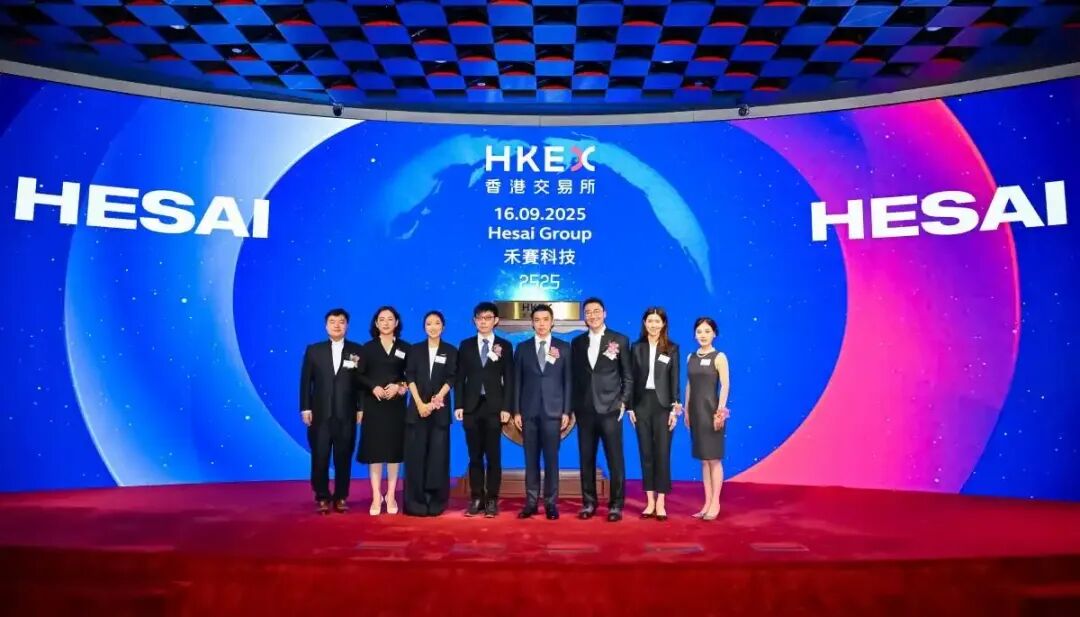
Core Insights - The article argues that the real winner in China's intelligent driving sector is Hesai Technology, rather than major car manufacturers like Huawei or Li Auto [1][2]. Group 1: Market Position and Performance - Hesai Technology is the leading supplier of LiDAR components, holding a 33% market share in China's automotive LiDAR installations as of the first half of 2025, with 284,000 units shipped [2][3]. - The company went public on the Hong Kong Stock Exchange on September 16, 2025, becoming the first LiDAR company to have a dual listing in both the U.S. and Hong Kong, with a market capitalization of HKD 36.3 billion on its first trading day [3]. - In Q2 2025, Hesai reported revenue of CNY 710 million, a year-on-year increase of 53.9%, and achieved a net profit of CNY 44.1 million, marking it as the first publicly listed LiDAR company to achieve quarterly profitability [5]. Group 2: Historical Context and Challenges - Founded in 2014, Hesai initially struggled in a niche market, facing financial difficulties until it pivoted to the passenger vehicle LiDAR sector [6][7]. - The company experienced four consecutive years of losses from 2019 to 2022, and its stock price fell by over 85% after its NASDAQ listing in February 2023 [7]. Group 3: Market Dynamics and Consumer Perception - The demand for LiDAR has surged due to the increasing complexity of urban driving scenarios, with Hesai's AT128 model being competitively priced at around USD 350, making it a popular choice among manufacturers [8][10]. - A survey indicated that 59% of car owners believe LiDAR is safer than pure vision systems, reflecting a growing consumer preference for LiDAR technology [11]. - Hesai's products are marketed as high-resolution, with the latest "True 800-line" LiDAR offering superior clarity and detection capabilities, which aligns with consumer needs in complex driving environments [13][14]. Group 4: Competitive Landscape - Despite Hesai's success, some companies, notably Tesla and XPeng, have adopted a vision-based approach, arguing that visual systems can achieve similar or superior performance without the complexity of integrating LiDAR [19][24]. - XPeng has shifted from being a proponent of LiDAR to exploring a vision-only strategy, indicating a significant change in the competitive landscape [22][24]. Group 5: Future Outlook - Hesai's sales momentum is strong, with a projected annual shipment of 1.2 to 1.5 million units, reflecting a year-on-year increase of 238% in the first half of 2025 [33]. - The company has secured contracts with 24 global OEMs and a significant order from a leading U.S. Robotaxi firm, further solidifying its market position [33].
研报掘金|中金:首予曹操出行“跑赢行业”评级以及目标价70港元 智驾开拓上行空间
Ge Long Hui· 2025-09-22 07:59
Core Viewpoint - CICC initiates coverage on Cao Cao Mobility with an "outperform industry" rating and a target price of HKD 70, highlighting the potential for growth in autonomous driving [1] Industry Summary - The ride-hailing industry is entering a phase of standardization and maturity, with unmet demand in lower-tier markets. The combination of cost reductions in new energy vehicles and the aggregation of platform traffic is expected to drive steady growth in the industry, with a projected high single-digit growth rate from 2024 to 2026 [1] Company Summary - Cao Cao Mobility is building a differentiated advantage through customized vehicles, leveraging Geely's supply chain to manage a fleet of over 50,000 vehicles. This strategy reduces acquisition and service costs, lowering the total cost of ownership (TCO) for drivers, while the battery swap model enhances driver income and increases hourly wages and retention [1] - The company possesses a comprehensive Robotaxi ecosystem that integrates R&D, manufacturing, and operations through collaboration with Geely Group. Additionally, Cao Cao Mobility has an established dispatch network that can support business initiation and data accumulation through a hybrid model [1] - While the market perceives that small to medium-sized ride-hailing platforms struggle to achieve profitability, CICC believes that with ample supply, platforms can reduce driver and passenger subsidies and enhance efficiency to optimize user experience (UE) [1]
蔚来ES8预售爆了?买旗舰SUV的都是哪些人?
车fans· 2025-09-05 00:30
Core Viewpoint - The launch of the new ES8 has significantly increased foot traffic in stores, with many customers expressing interest and needing to queue to experience the vehicle [1] Group 1: Customer Demographics and Preferences - The primary buyers of the ES8 are family users, who previously found some of NIO's offerings lacking but now appreciate the brand and battery swap technology [2] - Customers are particularly interested in the intelligent driving features, as past performance in this area has not been impressive [2] - The ES8's pricing strategy is expected to influence other models, with potential price adjustments anticipated after the initial sales period [3][7] Group 2: Market Competition and Pricing Strategy - The ES8's pre-sale price is lower than expected, with the final price likely to be below 400,000 yuan, indicating a return to normal pricing for NIO's flagship SUV [3] - The ES8 is expected to impact competitors like the AITO M8 and L9, as customers may shift their preferences based on the new pricing and features [4][5] - The competitive landscape for mid-to-large SUVs is intensifying, with various brands vying for market share, and the ES8's pricing is seen as a catalyst for potential price adjustments across the board [6][7] Group 3: Consumer Behavior and Market Trends - The ES8's pricing has caused some potential buyers to delay their purchase decisions, indicating a shift in consumer sentiment and expectations in the market [4] - Customers in the 400,000 yuan price range prioritize brand recognition and social value, which are becoming increasingly important in their purchasing decisions [5][6] - The market for mid-to-large SUVs is characterized by a diverse range of options, with consumers focusing on brand, safety, comfort, and personalized needs [6]