贸易摩擦

Search documents
高频数据扫描:外部政策扰动与国内流动性
Bank of China Securities· 2026-01-25 08:51
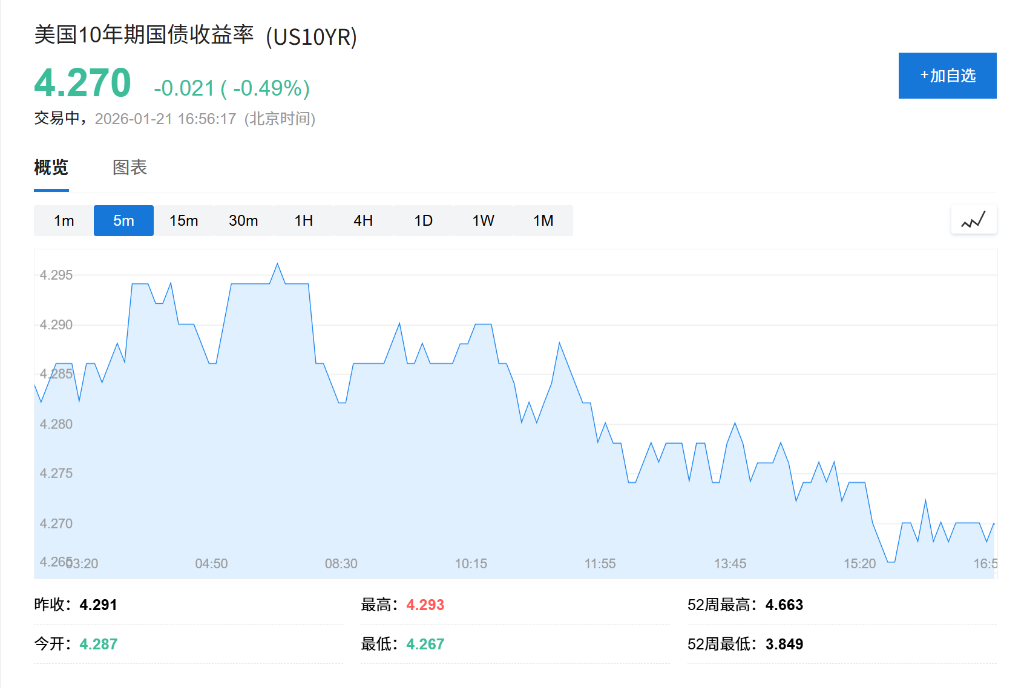
美国政府仍将贸易摩擦视为重要筹码,对金融市场的扰动可能重复上演。但 外部政策扰动背景客观上有利于国内保持流动性充裕。 相关研究报告 《房贷利率仍是长期利率焦点》20240225 《新旧动能与利率定价》20240407 《特朗普交易:预期与预期之外》20241124 《低通胀惯性仍是主要矛盾》20250105 《如何看待美国通胀形势》20250119 《美国的赤字、储蓄率与利率》20250216 《美国经济:失速还是滞胀?》20250330 《美债成为贸易摩擦焦点》20250413 《贸易摩擦将迎关键数据》20250427 《美国财政前景的变数》20250609 《财政、司法、货币、贸易纠缠中的关税摩擦》 20250701 固定收益 | 证券研究报告 — 周报 2026 年 1 月 25 日 外部政策扰动与国内流动性 高频数据扫描 固定收益 《从通胀形势看美联储"换帅"可能性》20250720 《美国就业数据爆冷、财政变数增加》20250908 《如何看长期收益率后续走势》20251013 《美联储的暗示与基本面的趋势》20251103 《关税辩论、就业降温、美债震荡》20251110 《AI 效益与美债》20 ...
德国央行行长挑唆:别天真,得给中国划红线
Guan Cha Zhe Wang· 2026-01-24 13:48
Group 1 - The President of the German Central Bank, Joachim Nagel, emphasizes the need for Europe to better protect its key industries from competition with China, suggesting the establishment of "red lines" regarding Chinese influence [1][3] - Nagel acknowledges the dual nature of China's economic power, recognizing it as an attractive market for many companies while also posing significant competitive pressure, particularly on the German automotive industry [1][3] - The German government has announced a €3 billion electric vehicle subsidy plan, which does not exclude Chinese manufacturers, contrasting with other European countries that have implemented stricter standards to limit Chinese electric vehicles [3][4] Group 2 - Despite the increasing market share of Chinese car manufacturers in Germany, their overall presence remains low, with BYD projected to sell approximately 23,000 units in 2025, representing less than 1% of the total German automotive market [6] - The end of Germany's electric vehicle subsidy program in 2023 has led to a significant decline in new registrations, with a projected drop of over 27% to 380,000 units in 2024 [6] - Recent negotiations between China and the EU regarding electric vehicle trade have shown positive progress, indicating a potential easing of trade tensions, with Chinese brands expected to capture a record 12.8% of the European electric vehicle market by November 2025 [7][8]


期货交易者对我国宏观经济持续保持乐观预期
Qi Huo Ri Bao Wang· 2026-01-23 01:20
Group 1 - The core viewpoint of the article highlights the positive outlook for China's economy and stock market, driven by effective macroeconomic policies and improved market confidence [1] - The manufacturing PMI in China rose to 50.1% in December, ending an eight-month contraction, indicating a recovery in both supply and demand [1] - The futures market traders maintain an optimistic outlook for the macro economy and stock market over the next three months, as indicated by the trader survey index [1] Group 2 - Global economic conditions remain weak, with the global manufacturing PMI fluctuating between 49% and 50% for ten consecutive months, indicating insufficient upward momentum [1] - In December, futures investors showed a slight increase in bullish sentiment towards black commodities, while sentiment for non-ferrous commodities remained stable, and there was a decline in bullish sentiment for agricultural and energy chemical sectors [1] - The ongoing release of policy dividends and the start of the "14th Five-Year Plan" are contributing to the accumulation of new economic momentum in China, enhancing domestic circulation and international competitiveness [1]
特朗普通告全球,将对法国加税200%,不到24小时,马克龙喊话中国
Sou Hu Cai Jing· 2026-01-22 10:33
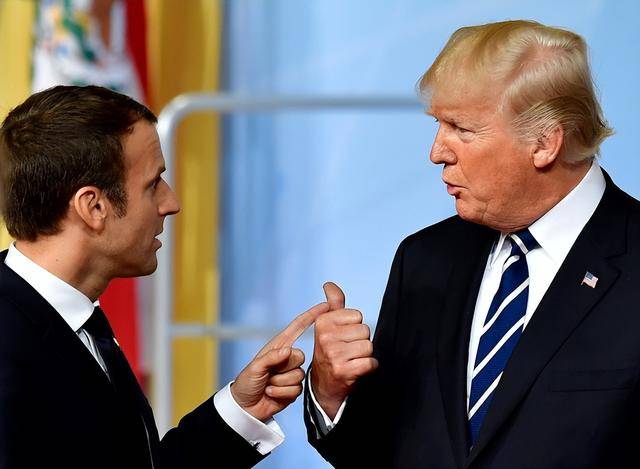
Group 1 - Trump threatened to impose a 200% tariff on French wine and champagne, which could significantly impact France's economy, as wine exports to the U.S. exceed €4.5 billion annually, affecting 600,000 jobs and a high-value industry chain [1][3][5] - If the tariff is implemented, the price of French wine in the U.S. could triple, making champagne a luxury item and potentially driving French wine merchants out of the market [5][7] - The tariff threat is rooted in France's refusal to join the U.S.-led Gaza Peace Committee, highlighting a broader political struggle between the U.S. and France, with France also opposing U.S. positions on issues like digital service taxes [5][7][8] Group 2 - At the Davos Forum, Macron did not directly confront Trump but emphasized that Europe needs respect rather than bullying, advocating for European strategic autonomy [8][10] - Macron expressed a desire for increased Chinese investment in green industries, indicating a shift towards China as a potential partner amid U.S. pressures, aiming for a balanced cooperation model [10][12] - The EU-China trade relationship is significant, with bilateral trade expected to approach $800 billion by 2025, indicating deep integration in supply chains and technology [12][14] Group 3 - The tariff situation serves as a warning from the U.S. to France and Europe, reflecting a transactional approach where compliance is rewarded, and dissent is punished [7][16] - France's response marks a significant moment in transatlantic relations, indicating a potential fracture in the alliance as it asserts its independence from U.S. influence [16] - China's role in this geopolitical landscape is evolving, as it becomes a sought-after partner for both France and Europe, emphasizing the need for stable and pragmatic cooperation [16]
中方表态后,美方宣布拟将部分关税提高至200%,法国受关注
Sou Hu Cai Jing· 2026-01-22 10:22
Group 1 - The core issue revolves around the 200% tariffs imposed by the U.S. on French wine and champagne, which is seen as a political maneuver rather than a mere trade dispute, affecting diplomatic relations and economic stability in Europe [1][3] - The French wine industry, which exports over 4.5 billion euros annually to the U.S., could face losses of up to 800 million euros if tariffs increase by 20%, indicating significant economic repercussions [1][7] - The tariffs are part of a broader strategy by the U.S. to pressure countries that do not align with its political stance, with France being the primary target in this instance [3][7] Group 2 - The impact of the tariffs extends beyond just wine exports, affecting the entire supply chain including grape cultivation, wineries, logistics, packaging, finance, and tourism, which are all interconnected [7] - The differing responses from Germany and France highlight the varying capacities of European nations to withstand economic pressure, with Germany opting for a more cautious approach while France emphasizes diplomatic autonomy [5][7] - The situation raises questions about the long-term implications of using economic measures as political tools, with potential consequences for ordinary citizens, including job security for French vineyard workers and increased costs for American consumers [9]

Oil Slips With Focus on Easing Greenland Tensions, Demand Outlook
Barrons· 2026-01-22 10:10
Core Viewpoint - Oil prices have decreased slightly due to easing geopolitical tensions, which has positively impacted broader markets [1] Oil Market Summary - Brent crude oil prices fell by 0.4% to $64.99 per barrel [1] - WTI crude oil prices decreased by 0.3% to $59.90 per barrel [1] Trade Relations Summary - U.S. President Donald Trump announced a delay in imposing tariffs on several European countries after reaching a preliminary deal [1] - This decision is expected to reduce the risks of trade frictions that could negatively impact global demand [1]
广发早知道:汇总版-20260122
Guang Fa Qi Huo· 2026-01-22 01:18
1. Report Industry Investment Rating There is no information about the industry investment rating in the provided reports. 2. Core Views of the Report - The overall market is influenced by multiple factors including macro - policies, supply - demand dynamics, and geopolitical events. Different sectors show various trends. Some sectors are expected to be volatile, while others may have specific upward or downward trends based on their unique fundamentals [2][4][5] - In the commodities market, factors such as raw material supply, inventory levels, and downstream demand play crucial roles in determining price movements. For example, in the metals market, the supply of raw materials like nickel and copper, and the demand from industries such as stainless - steel production and electronics, affect prices [20][23][40] - In the financial market, stock index futures and bond futures are affected by domestic and international news, economic data, and policy orientations. For instance, A - share market sentiment is influenced by domestic economic development and overseas trade policies [7][8][9] 3. Summary by Directory 3.1 Daily Selections - **Stainless Steel**: Affected by approaching delivery, the price rose at the end of the session. The cost is supported by raw material news, but supply is abundant and demand is weak. It is expected to be strongly volatile in the short - term, with the main contract reference range of 14,200 - 15,000 [2][46] - **Caustic Soda**: The supply - demand imbalance persists, and the spot price is under pressure. The industry operating rate has slightly increased, with high inventory and weak demand [3][111] - **Coking Coal**: The price of coal in Shanxi has mostly risen, while Mongolian coal has fallen from its high. The market has over - anticipated the rise. It is expected to be bearish and volatile, with the reference range of 1,000 - 1,200 [4][64] - **Palm Oil**: It leads the rise in the oil and fat sector, with the potential to break through the 9,000 mark. The production in Malaysia has decreased seasonally, and exports have increased [5][87] - **Gold**: Driven by geopolitical conflicts, the safe - haven sentiment boosts the gold price. It is recommended to buy on dips above the 20 - day moving average and sell out - of - the - money call options [6][17] 3.2 Financial Derivatives 3.2.1 Financial Futures - **Stock Index Futures**: The A - share market had a weak rebound with reduced trading volume. The semiconductor sector was hot. It is expected to enter a volatile trend, and investors are advised to control risks and reduce long positions [7][8][9] - **Bond Futures**: The money market is relatively loose, and long - term bond futures have strengthened. It is recommended to wait and see in the short - term and not to chase high prices [10][11][13] 3.2.2 Precious Metals - The prices of precious metals were affected by Trump's tariff suspension. Gold closed higher, while silver, platinum, and palladium had different trends. In the future, gold is expected to be strongly volatile, silver may be volatile at a high level, and platinum and palladium will follow gold and be volatile with a narrowing range [14][17][18] 3.3 Commodity Futures 3.3.1 Non - ferrous Metals - **Copper**: The price oscillated and adjusted, and the inventory continued to accumulate. The market speculation sentiment has eased, and the price may gradually return to fundamental pricing [19][23] - **Alumina**: The spot market is in surplus, and the price is expected to oscillate widely around the cash cost line, with the reference range of 2,600 - 2,900 [24][26] - **Aluminum**: The market is in a high - level volatile pattern. The macro and policy expectations are strong, but the fundamentals are under pressure. It is expected to be volatile at a high level, with the reference range of 23,000 - 25,000 [27][29] - **Zinc**: The price oscillated and adjusted. The shortage of zinc ore supports the price, but the demand is suppressed. It is expected to be volatile, and investors can hold long positions at low prices in the long - term [32][36] - **Tin**: The price fluctuated widely. The supply has increased, and the demand from the welding industry is under pressure. It is recommended to be cautious in the short - term and hold a long - term low - buying attitude [36][40] - **Nickel**: The impact of news has been digested, and the price oscillated and adjusted. It is expected to be widely volatile, with the reference range of 138,000 - 148,000 [40][43] - **Stainless Steel**: Similar to the daily selection, it is affected by delivery and cost - demand game, and is expected to be strongly volatile in the short - term [43][46] - **Lithium Carbonate**: The supply - side disturbance expectation has risen again, and the price is expected to be strong. It is recommended to wait and see in the short - term and buy on dips in the medium - term [47][50] - **Polysilicon**: The spot price has fallen, and the futures price is weakly volatile. It is recommended to wait and see [51][53] - **Industrial Silicon**: The spot price is stable, and the futures price oscillated. It is expected to be volatile, and investors should pay attention to the implementation of production cuts [54][56] 3.3.2 Ferrous Metals - **Steel**: The supply and demand are both weak, and the steel price is expected to oscillate within a range. The reference ranges for rebar and hot - rolled coil are 3,050 - 3,250 and 3,200 - 3,350 respectively [57][59] - **Iron Ore**: The supply is in the off - season, and the port inventory is accumulating. The price is under pressure, and investors can short at around 800 [60][61] - **Coking Coal**: Similar to the daily selection, the spot is strong before the Spring Festival, but the market has over - anticipated the rise. It is expected to be bearish and volatile [62][64] - **Coke**: The mainstream coke enterprises have started to raise prices, but the market has over - anticipated. It is expected to be bearish and volatile, with the reference range of 1,600 - 1,800 [65][67] - **Silicon Iron**: The supply - demand situation has marginally improved. It is expected to be widely volatile, with the reference range of 5,300 - 5,800 [68][69] - **Manganese Silicon**: The manganese ore supports the cost, and the supply - demand situation has improved. It is expected to be widely volatile, with the reference range of 5,600 - 6,000 [70][72] 3.3.3 Agricultural Products - **Meal**: The U.S. soybean market is volatile, and the bottom of soybean meal is strongly supported. The domestic supply is loose, but the downside space is limited. It is expected to be volatile [73][75] - **Live Pigs**: The slaughter pressure has increased, and it is difficult for the white - strip pork price to rise. The market is expected to oscillate at the bottom [76][77] - **Corn**: There are both support and pressure, and the price is expected to oscillate within a range. It is necessary to pay attention to the farmers' selling mentality and policy release [78][79] - **Sugar**: The raw sugar is oscillating, and the domestic sugar market is in the late stage of stockpiling. The sugar price is expected to be weakly volatile at a low level [80] - **Cotton**: The U.S. cotton is stable, and the domestic cotton price is adjusting. It is expected to continue to adjust, and attention should be paid to the support at around 14,400 - 14,500 [82][83] - **Eggs**: The egg price is stable, and the market is moving normally. The futures price is expected to oscillate within a range [85] - **Oils and Fats**: Palm oil leads the rise, with the potential to break through 9,000. Soybean oil may have a callback, and rapeseed oil is expected to be narrowly volatile [86][88] - **Jujubes**: The consumption drive is weak, and the futures price has rebounded at a low level. The market is expected to run at a low level [89][90] - **Apples**: Supported by low inventory, the price has stopped falling and stabilized. It is necessary to pay attention to the inventory situation after the Spring Festival [91][92] 3.3.4 Energy and Chemicals - **PX**: The short - term supply is high, and the demand is weak. It is expected to be volatile at a high level in the short - term and may be tight in the second quarter. It is recommended to buy on dips [93] - **PTA**: There is a seasonal inventory accumulation expectation, and the driving force before the Spring Festival is limited. It is expected to follow the raw material price and oscillate within the range of 4,900 - 5,300 [94][95] - **Short - fiber**: The supply - demand situation is weak, and it is expected to follow the raw material price and oscillate. The processing fee can be shorted at a high level [97] - **Bottle - grade PET**: Multiple devices are under maintenance, and the factory is reducing inventory. The price and processing fee are expected to follow the cost. It is recommended to take the same strategy as PTA [98][99] - **Ethylene Glycol**: There is a seasonal inventory accumulation, and the price is under pressure. It is recommended to short the 5 - 9 spread and sell call options [100][101] - **Pure Benzene**: The supply - demand situation has improved, but the high inventory restricts the driving force. It is recommended to short the BZ03 contract and narrow the EB - BZ spread [102][103] - **Styrene**: The supply - demand is temporarily tight, but the high valuation limits the rebound space. It is recommended to short the EB03 contract and narrow the processing fee [104][106] - **LLDPE**: The upstream has reduced the price to sell, and the transaction has improved. It is recommended to wait and see [107] - **PP**: The supply and demand are both weak, and the price is weakly volatile. It is recommended to hold the PDH profit expansion position [107][108] - **Methanol**: The basis has strengthened, and the price is narrowly volatile. It is recommended to wait and see [108] - **Caustic Soda**: Similar to the daily selection, the supply - demand imbalance persists, and the price is under pressure [109][111] - **PVC**: The demand is weak, and the price is under pressure. It is expected to be weakly volatile in the short - term, but the downside space is limited [112][113] - **Urea**: The inventory has fallen below one million tons, and the demand has recovered. The price is expected to be widely volatile, and the main contract reference range is 1,740 - 1,790 [114][115] - **Soda Ash**: The supply is high, and the demand is weak. It is expected to be weakly volatile in the short - term, and short positions can be held [116][119] - **Glass**: The supply and demand are both weak in the off - season. It is expected to be weakly volatile, and short positions can be held [116][120] - **Natural Rubber**: Thailand is entering the production - reduction period, and the raw material price has rebounded. The price is expected to oscillate within the range of 15,500 - 16,500. It is recommended to wait and see [120][122] - **Synthetic Rubber**: The cost is strong, and the BR is expected to oscillate in the short - term. It is recommended to pay attention to the spread expansion opportunity between BR2603 and NR2603 [124][125][126]
中信证券:美股市场短期波动率或将提升 上行动力仍将延续
Xin Lang Cai Jing· 2026-01-22 00:13
中信证券研报指出,美国政府将格陵兰岛地缘政治诉求与对欧洲国家贸易壁垒强行挂钩,若未来美国对 欧洲八国的关税威胁实质性落地,鉴于欧洲八国经济结构对出口存在显著依赖,不排除部分国家因经济 基本面压力而最终向美国妥协让步的可能性。此外,丹麦退休基金表示将抛售其持有的美国国债,但整 体规模仅约1亿美元,且在欧洲持仓美债占比较大的国家及全球其他地区未出现系统性跟风抛售的情形 下,预计不足以诱发美债市场的流动性风险。当前,美股估值水平相较于2025年的极值阶段已显著收 敛,估值中枢下行叠加盈利预期持续上修;结合ROE等多维度估值数据来看,非美发达市场权益资产难 以提供超越美股的配置性价比。展望后市,美股市场短期波动率或将提升,存在获利回吐压力的科技板 块以及受贸易摩擦升级影响的零售板块面临下行压力;但从中长期视角而言,在中期选举年美国财政与 货币双宽松的预期下,我们判断美股上行动力仍将延续,建议关注科技、制造业、资源品、能源基建 (核电)、军工、互联网医疗诊断、金融(银行)等板块。 ...

风险情绪恶化 澳元兑日元避险买盘成推手
Jin Tou Wang· 2026-01-21 13:20
Core Viewpoint - The Australian dollar against the Japanese yen continues to decline due to rising risk aversion, which strengthens the yen as a traditional safe-haven currency, while concerns over potential new tariffs from the U.S. on Europe put pressure on the Australian dollar [1] Group 1: Market Sentiment and Economic Indicators - The market is increasingly worried about the U.S. potentially imposing new tariffs on Europe, which could escalate into broader trade tensions, thereby increasing demand for the yen and pressuring the riskier Australian dollar [1] - Investors are focusing on upcoming Australian employment data, with expectations of job growth but a slight increase in the unemployment rate. Stronger-than-expected data could alleviate concerns about an economic slowdown in Australia, potentially limiting the downside for the Australian dollar [1] Group 2: Technical Analysis - The Australian dollar against the Japanese yen shows a clear downtrend, consistently trading below short-term moving averages, indicating a dominant bearish sentiment. Momentum indicators are overall negative, with no clear reversal signals present [1] - If selling pressure continues, the exchange rate may approach key support levels. Conversely, if the price finds support and rebounds, it will face resistance from short-term moving averages. A breakthrough of this dynamic resistance could ease short-term downward pressure and open up space for further rebounds [1]
格陵兰危机缓和?特朗普表态“软化”:将达成一个让北约“非常开心”的方案
Hua Er Jie Jian Wen· 2026-01-21 12:42
据《华尔街日报》21日报道,特朗普周二在白宫对记者表示,"我认为我们会达成一个让北约非常开心、也让我们非常开心的方案。"当被问及为 获取格陵兰愿意走多远时,他回答:"你们会看到的。"这一相对和解的表态反映出部分顾问希望与控制这个约80万平方英里岛屿的丹麦达成妥 协,缓和与欧洲领导人的紧张关系。 据央视报道,当地时间17日,美国总统特朗普在其社交平台"真实社交"上表示,自2026年2月1日起,丹麦、挪威、瑞典、法国、德国、英国、荷 兰和芬兰出口至美国的所有商品加征10%的关税。自2026年6月1日起,加征关税的税率将提高至25%。他表示,这一关税措施将持续实施,直至 就"完全、彻底购买格陵兰岛"达成协议。 欧洲领导人此前数月坚称格陵兰"非卖品",在特朗普威胁征税,这些领导人正安排与特朗普会面,讨论该地区的未来。特朗普将于周三抵达达沃 斯,与多国领导人举行预计将部分聚焦格陵兰问题的会议。 施压策略与欧洲的让步 据《华尔街日报》报道,特朗普在格陵兰岛问题上的策略沿用了其一贯的谈判剧本:提出大胆要求,威胁经济或军事后果,然后等待对手妥协。 这一策略已成为其贸易政策议程的核心。 此前,由于丹麦及欧洲盟友对特朗普购买格陵 ...