
资产多元化配置

Search documents
经济学家宋清辉:黄金与股票或不再此消彼长
Sou Hu Cai Jing· 2025-10-19 22:46
Core Viewpoint - Successful investment is not about chasing short-term fluctuations of a single asset, but about achieving long-term returns through diversified allocation. The rise of the Chinese stock market does not imply a decrease in gold investment demand; rather, gold's role in Chinese investors' asset portfolios may become more significant than ever due to the upgrading of wealth management concepts and increasing global economic cycle volatility [1][7]. Group 1: Gold Market Dynamics - During the National Day holiday, the international gold market attracted global investors, with gold prices briefly surpassing $4000 per ounce, reaching a historical high due to geopolitical uncertainties, expectations of a shift in Federal Reserve monetary policy, and continuous accumulation of gold by global central banks [4]. - The strong rise in gold prices reflects long-term macroeconomic changes rather than short-term speculative trading. The global economy has entered a "new normal" characterized by low growth, high inflation, and frequent geopolitical risks since 2024 [5]. - Central banks worldwide have been increasing their gold reserves, with emerging market countries accounting for nearly 70% of net gold purchases in 2024, indicating a shift towards diversifying reserve assets amid declining trust in the dollar system [5]. Group 2: Investment Logic and Asset Allocation - Gold, as a non-debt asset, does not rely on any sovereign credit, making it a preferred asset for hedging systemic risks during economic cycles' turning points and heightened financial market volatility [6]. - The traditional view of an inverse relationship between gold and stock markets is weakening, as global investors are increasingly adopting diversified asset allocation strategies that include stocks, bonds, and gold to balance returns and risks [6]. - The changing structure of Chinese investors, with a growing emphasis on wealth management, has led to a more stable demand for gold. There is a noticeable trend towards diversifying asset allocation, with gold becoming an essential component of stable asset allocation rather than merely a safe haven [7].


突破预期!黄金10月冲刺4000美元创新高,现在入场还来得及吗?
Sou Hu Cai Jing· 2025-10-11 08:47
Group 1: Gold Market - Gold prices have reached new highs, nearing $4000 per ounce as of October 6, 2025, significantly ahead of Goldman Sachs' forecast of reaching this price by 2026 [3][5] - The surge in gold prices is attributed to global instability and a shift in investment strategies, with central banks increasingly purchasing gold instead of U.S. Treasury bonds [5][7] - Gold is recommended as a stable asset in investment portfolios, with a suggested allocation of 40% to mitigate risks, emphasizing a long-term investment approach rather than chasing short-term gains [7][9] Group 2: Growth Assets - Metal sectors, including copper and rare metals, have shown strong performance this year, benefiting from the global industrial recovery and the expansion of the renewable energy sector [9] - The technology sector is experiencing overcrowding, making it difficult for further growth in the short term, suggesting a potential reallocation of investments from tech to metal sectors where valuations remain reasonable [9][11] Group 3: U.S. Stock Market and Cryptocurrency - The U.S. stock market, particularly the S&P index, is showing signs of bubble formation after surpassing 6800 points, indicating a need for caution among investors [11] - The cryptocurrency market has seen significant activity, with Bitcoin reaching historical highs, but it remains highly volatile, necessitating careful risk management and diversification in investment strategies [13]
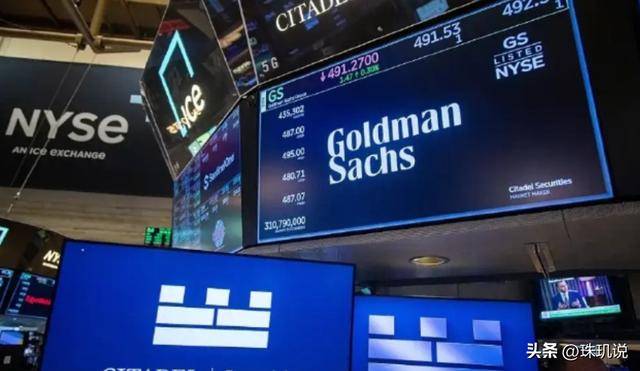
市场严重低估了南向资金,高盛:港交所被低估了
Hua Er Jie Jian Wen· 2025-09-19 01:09
Core Viewpoint - Goldman Sachs believes that the Hong Kong Stock Exchange (HKEX) stock price is significantly undervalued due to the structural boost from southbound capital, despite underperforming major indices in the past month [1][2]. Group 1: Southbound Capital Impact - Southbound capital is driving unprecedented growth in the average daily trading volume of cash stocks, which is a key profit driver for HKEX [2][3]. - The average daily trading volume has reached 318 billion HKD in September, surpassing 279 billion HKD in August and 254 billion HKD year-to-date [3]. - Southbound capital contributes approximately 30% to 40% of the year-on-year growth in total trading volume, accounting for about 25% of the total trading volume in the Hong Kong market [3]. Group 2: Earnings Forecast Adjustments - Goldman Sachs has raised its earnings per share (EPS) forecasts for HKEX for the years 2025-2027 by 3% to 4% [4][5]. - The updated EPS forecasts are as follows: 2025 from 12.63 HKD to 12.97 HKD, 2026 from 13.05 HKD to 13.61 HKD, and 2027 from 13.96 HKD to 14.45 HKD [5]. Group 3: Valuation and Price Target - The target price for HKEX has been increased from 524 HKD to 544 HKD, reflecting a 4% upward adjustment based on the revised earnings forecasts [2][4]. - Historical valuation comparisons indicate that the current stock price is slightly below the median level of historical cycles, while the earnings growth outlook remains strong [6][7]. - A 20-year regression model suggests that the theoretical stock price should be around 590 HKD based on current trading activity levels, indicating significant potential for price correction [7].

摩根资管的Kelly警告称:美联储降息恐损害股市和债市
Sou Hu Cai Jing· 2025-09-15 18:55
Core Viewpoint - The market widely anticipates that the Federal Reserve will lower interest rates this week, but if this action is perceived as politically motivated and inconsistent with the central bank's economic forecasts, it could increase risks for stocks, bonds, and the dollar [1] Group 1 - David Kelly, Chief Global Strategist at Morgan Asset Management, highlights that Wall Street investors have recently celebrated the expectation of the Fed restarting rate cuts after a nine-month pause [1] - Following the recent market rally, investors are advised to adopt a cautious stance and seek diversified allocations [1]
陈茂波:香港正在吸引更多全球资金汇聚 资产及财富管理领域的发展大有可为
Zhi Tong Cai Jing· 2025-09-11 06:17
Group 1 - The Hong Kong government is focusing on enhancing its asset and wealth management sector, with plans to expand the "Cross-Border Wealth Management Connect" program to increase the range of products and participants [1][3] - Global investors are increasingly recognizing the need for diversified asset allocation, particularly in the Chinese market, leading to a surge in investment activities in Hong Kong [1][2] - The Hong Kong stock market has shown significant growth, with the Hang Seng Index rising 18% last year and nearly 30% this year, alongside substantial increases in IPO fundraising and bank deposits [1][2] Group 2 - The total assets managed in Hong Kong increased by 13% year-on-year to over 35 trillion HKD, with net inflows reaching 705 billion HKD, reflecting a strong growth in asset management business [2] - The Greater Bay Area, with a population exceeding 87 million and a GDP over 14.5 trillion RMB, is expected to be a key growth driver for wealth management services [2] - The Hong Kong government is implementing various measures, including tax incentives, to attract family offices and enhance its position as an international hub for wealth management [3] Group 3 - The private equity and venture capital ecosystem in Hong Kong is robust, managing nearly 230 billion USD, making it the second-largest in Asia after mainland China [4] - Hong Kong is cautiously promoting the opening of more private funds to retail investors, which will diversify their investment options and support industry development [4]
今年以来外汇市场运行平稳韧性较强
Zhong Guo Zheng Quan Bao· 2025-08-08 07:04
Core Viewpoint - The foreign exchange situation in China has shown resilience amidst complex external challenges, with positive trends in foreign investment and a stable currency exchange rate [1][2][3]. Group 1: Foreign Investment Trends - From January to May, net inflows of foreign direct investment (FDI) in equity reached $31.1 billion, a year-on-year increase of 16% [1][3]. - Net inflows of foreign securities investment were approximately $33 billion, reversing the net outflow trend observed in the second half of the previous year [1][3]. - In the first half of the year, foreign investors increased their holdings of domestic stocks and funds by $10.1 billion, marking a turnaround from the net reduction seen over the past two years [4]. Group 2: Currency Exchange Rate Stability - The RMB appreciated by 1.9% against the USD in the first half of the year, with the exchange rate fluctuating between 7.15 and 7.35 [2]. - Market expectations for the RMB remain stable, with no significant unilateral appreciation or depreciation anticipated [2][6]. Group 3: International Balance of Payments - The current account surplus has shown steady growth, maintaining a reasonable balance, while the non-reserve financial account has recorded a deficit roughly equivalent to the current account surplus [3][6]. - In the first half of the year, net inflows of cross-border funds from non-bank sectors reached $127.3 billion, continuing the net inflow trend from the second half of the previous year [3]. Group 4: Foreign Asset Allocation - Foreign investment in RMB-denominated bonds has increased, with holdings exceeding $600 billion, reflecting a historically high level [4]. - The proportion of foreign investors holding domestic bonds and stocks is currently between 3% and 4%, indicating potential for stable and sustainable growth in foreign asset allocation [4]. Group 5: Policy Environment and Market Resilience - The financial market's high-quality development has created a favorable policy environment for foreign investment in China [5]. - The Chinese economy's robust fundamentals and ongoing high-level opening-up policies are expected to support the stable operation of the foreign exchange market [6][7]. - The RMB's market-oriented formation mechanism has improved, enhancing its ability to respond to external pressures and maintain supply-demand balance [7].
中信证券:预计长周期下境外机构将继续增持人民币债券资产
news flash· 2025-07-31 00:19
Core Viewpoint - Foreign institutions have reduced their holdings of RMB bonds for two consecutive months due to the narrowing basis of the one-year USD against the onshore RMB, which has compressed the overall yield of interbank certificates of deposit [1] Group 1: Market Trends - In May and June, foreign institutions decreased their investments in RMB bonds primarily because of the reduced yield from interbank certificates of deposit [1] - The upcoming maturity peak of interbank certificates of deposit, which were invested in by foreign institutions last year, has also contributed to this trend [1] Group 2: Future Outlook - Looking ahead, the "anti-involution" policy direction in July has reignited inflation expectations, leading to a shock in the interest rate bond market [1] - There may be investment opportunities in long-term bonds once the sentiment in the stock and commercial markets stabilizes [1] Group 3: Long-term Investment Logic - The ongoing process of RMB internationalization and the trend of "de-dollarization" are expected to drive foreign institutions' long-term demand for diversified asset allocation, leading to continued increases in RMB bond holdings over the long term [1] Group 4: Currency Stability - Despite fluctuations in foreign capital flows in the bond market, the increase in foreign investments in the equity market, stable expectations from China-US trade negotiations, and the central bank's balanced exchange rate policy suggest that the RMB exchange rate is likely to maintain resilience in the short term [1]

全球金融市场波动加大 人民币资产吸引力上升
Zhong Guo Qing Nian Bao· 2025-07-28 23:14
Group 1 - 30% of central banks surveyed plan to increase allocation to RMB assets, indicating a growing interest in diversifying investments into China [1] - The RMB has appreciated by 1.9% against the USD in the first half of the year, with a trading range between 7.15 and 7.35 [1] - Foreign investment in RMB-denominated bonds has exceeded $600 billion, reflecting a stable trend since 2025 [1] Group 2 - The RMB is experiencing structural changes, with a shift in expectations towards appreciation rather than depreciation [2] - The long-term low interest rate environment in China, with 10-year government bond yields below 2%, contrasts with the US yields above 4%, supporting RMB's internationalization [2] Group 3 - The credibility of US Treasury bonds is declining, as evidenced by increased volatility and a 5% drop in the USD index following tariff announcements [3][4] - The shift in trade dynamics due to tariffs may enhance the use of non-USD currencies, including RMB, in international trade settlements [5] Group 4 - The current low allocation of global stock assets to China (1.7%) compared to the US (54%) suggests a potential for systematic correction in the future [6] - China's manufacturing sector continues to lead globally, with a manufacturing value added of over 40.5 trillion yuan, accounting for approximately 30% of global manufacturing [7] Group 5 - The market position of the RMB is improving, with foreign investors increasingly holding RMB-denominated assets, which currently account for about 3%-4% of total market value [8] - Economic stability and the effectiveness of domestic demand policies are expected to further enhance the attractiveness of RMB assets to foreign investors [8] Group 6 - The RMB's exchange rate is expected to remain stable, supported by high-quality economic development and ongoing foreign exchange market resilience [9] - The need for the RMB to maintain appropriate elasticity in its exchange rate is emphasized to mitigate downward pressure [9] Group 7 - Recent measures to facilitate cross-border investment and financing are expected to enhance the attractiveness of RMB assets, with significant reductions in processing times for foreign investment [10] - Allowing for a moderate appreciation of the RMB could help alleviate concerns about currency depreciation among foreign investors, fostering a positive investment environment [10][11]
中方大手一挥,再抛9亿美债,美联储拒绝投降,最大债主国诞生
Sou Hu Cai Jing· 2025-07-23 03:07
Group 1 - China has reduced its holdings of US Treasury bonds by $900 million in May, marking the third consecutive month of reduction, bringing its total holdings down to $756.3 billion [1][3] - The reduction is not a result of a deliberate sell-off but rather a reflection of market fluctuations, as China actually increased its holdings of long-term bonds by nearly $5 billion during the same period [3][5] - The ongoing geopolitical tensions and the desire for asset safety are driving China to diversify its investments away from US Treasuries towards gold, euro assets, and projects related to the Belt and Road Initiative [3][5] Group 2 - The Federal Reserve's monetary policy, characterized by rising bond yields and a reluctance to lower interest rates, has created a mismatch in the bond market, affecting foreign investors' willingness to hold US debt [5][8] - President Trump’s push for lower interest rates aims to alleviate the government's debt burden, which has become a significant expenditure as the national debt exceeds $36 trillion [5][6] - The conflict between Trump and Fed Chairman Powell has escalated, with Powell emphasizing that monetary policy should not be influenced by political pressures, highlighting the importance of maintaining the integrity of the dollar [6][11] Group 3 - Japan has overtaken China as the largest holder of US Treasury bonds, with holdings reaching $1.14 trillion, while the shift in rankings reflects a broader global reassessment of the attractiveness of US debt [9][11] - Canada's aggressive purchase of over $65 billion in US Treasuries in May indicates a strategic move to support the US market amidst rising financial pressures, showcasing the intertwined political and economic relationship between the two countries [8][9]

分析师:美元短期反弹不会改变整体下行趋势
news flash· 2025-07-17 13:32
Core Viewpoint - Analysts suggest that the short-term rebound of the US dollar will not alter the overall downtrend, as investors are likely to continue withdrawing funds from US assets, leading to a long-term weakening of the dollar [1] Group 1: Market Trends - Investors are expected to diversify their asset allocations, reducing reliance on US assets due to policy uncertainty in the US [1] - Short-term demand for safe-haven assets may support a stronger dollar, but the overall selling trend is anticipated to persist [1] Group 2: Foreign Investment Behavior - Foreign investors are actively diversifying their investments away from US assets, indicating a shift in investment strategy [1] - The short-term rebound in the dollar is not expected to change the long-term downtrend in its value [1]