
以旧换新

Search documents
“每日限额发券”改为“集中发券”长沙以旧换新政策有调整
Chang Sha Wan Bao· 2025-08-22 04:41
Group 1 - The Changsha Municipal Bureau of Commerce announced an adjustment to the old-for-new policy for home appliances, 3C digital products, and home renovation from a "daily limited coupon issuance" model to a "centralized coupon issuance" model [1] - The centralized coupon issuance will occur from August 22 to August 26, and on September 1, October 1, November 1, and December 1, with increased subsidy funding to meet consumer demand [1] - Consumers can receive coupons from 11:00 to 24:00 on the issuance days, with a maximum of three times per month for each category after the policy adjustment [1] Group 2 - The policy aims to enhance market demand, improve the efficiency of subsidy fund usage, and stimulate consumption potential to promote the development of related industries [2] - As of August 14, over 6.37 million participants have engaged in the old-for-new program in Changsha, with government subsidies amounting to 4.347 billion yuan and directly driving sales of 36.039 billion yuan [2]
软装家纺鏖战“存量时代”:旧改这波红利怎么分
3 6 Ke· 2025-08-22 02:32
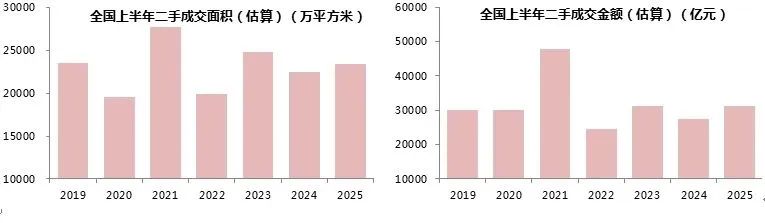
Core Insights - The home textile market is entering a traditional peak season, driven by the "light renovation" trend associated with existing housing transactions, as new home sales slow down and the second-hand housing market becomes dominant [1][4] Group 1: Market Dynamics - In the first half of 2025, new residential sales area decreased by 3.5% year-on-year, while the second-hand housing market maintained activity with an estimated transaction area increase of 4% [1] - The proportion of second-hand housing transactions in key cities rose from 38% in 2020 to 66% in the first half of this year, with some second-tier cities exceeding 70% [1][3] Group 2: Policy Impact - The comprehensive promotion of the "mortgage transfer" policy has significantly reduced the traditional transaction cycle for second-hand homes from one month to 3-7 working days, enhancing transaction efficiency [3] - Urban renewal policies are expected to create substantial demand, with over 60,000 urban renewal projects planned for 2024, potentially driving consumption in home textiles and related products [3][4] Group 3: Consumer Behavior - Over 90% of second-hand home buyers in Beijing express a need for new renovations after purchase, with high replacement rates for curtains, bedding, and sofas due to various factors [3][5] - The primary driver for updates in home textiles is aesthetic differences, particularly among younger buyers aged 20-40, who prioritize personalized home styles [6][9] Group 4: Product Trends - The demand for home textiles is shifting from durable goods to scenario-based iterative products, with a focus on enhancing living quality through soft furnishings [5][9] - The replacement cycle for curtains has shortened from 5-8 years to 2-3 years, while sofa covers are now often replaced every 1-2 years, reflecting changing health awareness and aesthetic preferences [9][10] Group 5: Business Strategies - Home textile companies are adapting by focusing on sustainable and eco-friendly products, with a significant percentage of young consumers prioritizing green products [10][12] - Customization services are becoming more prevalent, catering to diverse housing types and specific consumer needs [10][12] - Companies are increasingly establishing community-based service channels to enhance customer engagement and service efficiency [12][13] Group 6: Long-term Outlook - The ongoing urban renewal process will continue to release renovation demands, presenting long-term opportunities for home textile companies to build capabilities aligned with the "renewal era" [15]

箭牌家居: 2025年半年度报告
Zheng Quan Zhi Xing· 2025-08-21 16:36
Core Viewpoint - Arrow Home Group Co., Ltd. reported a decline in revenue and net profit for the first half of 2025, reflecting challenges in the ceramic sanitary ware industry amid a fluctuating real estate market and increased competition [1][3][4]. Financial Performance - The company's operating revenue for the first half of 2025 was approximately CNY 2.84 billion, a decrease of 8.12% compared to CNY 3.09 billion in the same period last year [3][15]. - The net profit attributable to shareholders decreased by 24.11%, with basic earnings per share dropping to CNY 0.0299 from CNY 0.0394 [3][15]. - The total assets at the end of the reporting period were approximately CNY 9.37 billion, down 6.95% from CNY 10.07 billion at the end of the previous year [3]. Industry Context - The ceramic sanitary ware industry is significantly influenced by the real estate market, which is currently experiencing fluctuations. In the first half of 2025, the sales area of new commercial housing decreased by 3.5% year-on-year, although the decline was less severe than in previous periods [4][5]. - The overall building materials and home furnishings market is undergoing a deep adjustment, with pressures from rising costs and intensified competition. However, the "old-for-new" policy has been a key driver of consumer activity [5][7]. Business Strategy - The company is focusing on enhancing retail channels and developing a comprehensive marketing system that includes retail, e-commerce, and home decoration, with retail and e-commerce channels accounting for 80.38% of total revenue [4][12]. - Arrow Home is actively responding to government policies promoting home renovation and upgrading, aiming to meet the needs of consumers looking to improve their living spaces [7][12]. Product Development - The company is committed to increasing research and development investments to drive product innovation, particularly in smart and environmentally friendly home solutions [12][14]. - The introduction of smart sanitary products, such as intelligent toilets, is gaining traction, with the market for these products expected to grow significantly as consumer demand for quality and convenience rises [10][11]. Market Trends - The demand for home improvement products is being stimulated by government incentives and changing consumer preferences, particularly in the context of the aging population and the need for accessible home modifications [8][9]. - The industry is witnessing a trend towards increased concentration, with leading brands capturing more market share while smaller companies face challenges due to rising costs and competition [5][9].
途虎2025中报:用户满意度超95%,工场店达7205家,300亿无限大促持续回馈用户
Yang Zi Wan Bao Wang· 2025-08-21 12:11
Core Insights - Tuhu Car Service reported a significant increase in user engagement and service offerings, indicating strong market demand and customer satisfaction [1][3] User Growth and Engagement - As of June 30, 2025, Tuhu Car Service registered over 150 million users, marking an 18.8% year-on-year growth - The total number of transaction users over the past 12 months reached 26.4 million, reflecting a 23.8% increase - The average monthly active users on the app reached 13.5 million, up by 17.5% - User repurchase rate improved to 64%, with service satisfaction exceeding 95%, maintaining industry leadership [1] Store Expansion and Coverage - By June 30, 2025, Tuhu Car Service operated 7,205 service centers across 320 prefecture-level and 1,855 county-level administrative regions, covering all provincial-level areas except for Macau and Taiwan - Tuhu has established the largest and most extensive offline automotive service network in China, allowing car owners nationwide to access professional services conveniently [3] Promotional Activities - Tuhu launched a "300 Billion Unlimited Promotion" to provide substantial discounts on various automotive services, including tires, maintenance, painting, and washing - Tire prices during the promotion can be as low as 50% off, with opportunities to win Huawei tablets for orders, while maintenance services from brands like Mobil, Castrol, and Shell start at 50% off with chances to win Huawei laptops - Additional promotions include quality touch-up paint starting at 148 yuan and quick washes at 0.1 yuan, enhancing customer value [3] Government Collaboration and Consumer Benefits - Tuhu has engaged in multiple government subsidy projects, enhancing its "trade-in" activities - The combination of government subsidies and platform discounts allows car owners to experience high-quality products and services at lower costs [3] Product Evaluation and Marketing Strategies - Tuhu collaborates with authoritative organizations like the China Automotive Center for "Super Gold Medal Evaluations" of tires, engine oils, and batteries, providing users with scientific and intuitive purchasing guidance - The company utilizes various marketing strategies, including social media live streams, in-store promotions, and local influencer partnerships, to enhance consumer engagement and offer additional benefits [4]

1-7月江苏省规模以上工业增加值同比增长 7.2%
Xin Hua Cai Jing· 2025-08-21 05:23
Group 1: Industrial Growth - In July, the added value of industrial enterprises above designated size in Jiangsu Province increased by 6.2% year-on-year, with a cumulative growth of 7.2% from January to July [1] - Among the 40 major industries, 27 achieved year-on-year growth, resulting in a growth coverage of 67.5%. Key sectors such as electronics, pharmaceuticals, general equipment, railways, shipping, aerospace, and electricity showed significant growth rates of 13.9%, 10.3%, 8.9%, 18.6%, and 8.9% respectively, contributing a total of 3.9 percentage points to overall industrial growth [1] Group 2: Investment Trends - From January to July, fixed asset investment in Jiangsu Province decreased by 6.1%, with the decline rate widening by 2.2 percentage points compared to the first half of the year. However, infrastructure investment maintained growth, increasing by 4.8% year-on-year, contributing 0.7 percentage points to total investment growth [1] - Investment in large infrastructure projects (over 1 billion) grew by 7.5%, significantly supporting infrastructure growth by 4.5 percentage points. Conversely, manufacturing investment saw a decline of 2.2% year-on-year [1] Group 3: Real Estate Market - The real estate market in Jiangsu Province experienced a downturn, with real estate development investment dropping by 17.6% from January to July. Additionally, the sales area of commercial housing decreased by 5.2%, with the decline rate increasing by 2.4 percentage points compared to the first half of the year [1] Group 4: Consumer Market - The consumer goods market in Jiangsu Province maintained growth in July, with total retail sales of social consumer goods reaching 349.2 billion yuan, a year-on-year increase of 0.6%. From January to July, the total retail sales grew by 4.4% [2] - The rural market showed increasing activity, with retail sales of consumer goods above designated size in rural areas growing by 7.0%, outpacing urban retail sales growth by 1.8 percentage points [2] - The "trade-in" program for certain products (home appliances, 3C digital products, and home goods) achieved retail sales of 15.96 billion yuan in July, a year-on-year increase of 11.2%, contributing 1.2 percentage points to the monthly growth of retail sales [2]
银行业:支持促消费政策落地 更好释放消费潜力
Jin Rong Shi Bao· 2025-08-21 02:23
Group 1 - Consumption is emphasized as a key driver for economic growth, with the People's Bank of China (PBOC) calling for stronger support to boost consumption in the second half of 2025 [1] - A series of policies aimed at promoting consumption and expanding domestic demand have been introduced, including a 500 billion yuan service consumption and pension relending program [1][4] - Experts believe that expanding domestic demand is crucial for maintaining stable economic growth in the coming months, with a clear policy direction favoring consumer spending [1] Group 2 - The government has allocated 300 billion yuan in special long-term bonds to support the "trade-in" program for consumer goods, which has positively impacted sales in key sectors like home appliances and communication devices [2] - The "trade-in" policy has led to improved profitability for related industries, while also stabilizing employment [2] - Banks are responding to the "trade-in" initiative by offering dedicated services to facilitate consumer participation and streamline the process [2][3] Group 3 - The PBOC's relending policy aims to enhance service consumption and improve the quality of services, which is expected to directly benefit the public and create more job opportunities [4][5] - Financial institutions are actively working to implement the service consumption and pension relending policies to support economic growth [4] Group 4 - The introduction of personal consumption loan interest subsidy policies is seen as an innovative approach to stimulate consumption by reducing financing costs for consumers and service industry operators [6] - Financial institutions are encouraged to tailor their offerings based on specific consumption scenarios to effectively meet the needs of consumers and businesses [7]

挑战100万销量,吉利、零跑如何化解“电池焦虑”?
高工锂电· 2025-08-20 10:46
Core Viewpoint - The Chinese electric vehicle (EV) market has seen significant growth in the first half of 2025, with Geely Automotive becoming the second-largest in new energy sales and Leap Motor achieving the highest sales among new forces. Both companies have surpassed one million units in cumulative sales, indicating a demand increase of approximately 100 GWh for battery supply [2][3]. Group 1: Market Dynamics - The growth in the EV market is largely driven by government policies promoting vehicle trade-ins, alongside a trend of "consumption downgrade," where lower-priced models are becoming the main sales drivers [2]. - Geely's new energy brand "Galaxy" has achieved over one million cumulative sales within 24 months, with a remarkable 232% year-on-year growth in the first half of 2025, selling 548,000 units [2]. - Leap Motor delivered over 220,000 units in the first half of 2025, surpassing competitors like Ideal and Xiaopeng, and has raised its delivery guidance for 2025 to between 580,000 and 650,000 units [2]. Group 2: Battery Supply Challenges - Geely is facing a battery supply shortage due to its rapid expansion, prompting the company to seek additional capacity from external suppliers [3]. - The establishment of the independent "Jiyao Tongxing" battery group aims to consolidate Geely's battery operations and enhance efficiency, with a target of achieving 70 GWh capacity by 2027 [3]. - Geely plans to adopt a "self-supply + external procurement" strategy, with an expected increase in self-supplied battery cells to 30% over the next two years [3]. Group 3: Leap Motor's Strategy - Leap Motor achieved a record gross margin of 14.1% in the first half of 2025, attributed to economies of scale and cost control [4]. - The company's strategy focuses on "full self-research" and decentralized procurement, allowing it to save costs and enhance bargaining power by sourcing battery cells from multiple suppliers [5]. - Leap Motor has begun supplying self-developed battery packs to over five new energy commercial vehicle clients, indicating a shift towards monetizing its battery technology [5]. Group 4: Opportunities for Battery Suppliers - The anticipated demand for 100 GWh of batteries presents both opportunities and challenges for battery suppliers, with CATL remaining a preferred choice but not the only option [5]. - Suppliers need to demonstrate stable performance, compatibility with vehicle models, and sufficient capacity to meet delivery timelines to secure orders [6].


7月实物商品网上零售额同比增长8.3% 环比加快3.6个百分点
智通财经网· 2025-08-20 07:38
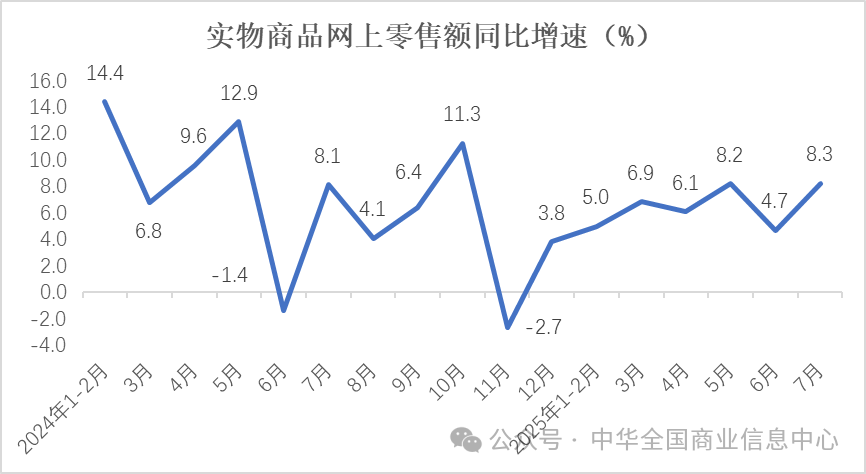
Group 1: Online Retail Performance - In July, the online retail sales of physical goods increased by 8.3% year-on-year, accelerating by 3.6 percentage points compared to June [1] - From January to July, the online retail sales of physical goods reached 707.9 billion yuan, growing by 6.3%, which is 0.3 percentage points faster than the first half of the year [1] - The proportion of online retail sales of physical goods accounted for 24.9% of total retail sales, remaining stable compared to the first half of the year [1] Group 2: Offline Retail Trends - In July, offline retail sales grew by 2.4% year-on-year, a decline of 3.2 percentage points from June [3] - From January to July, offline retail sales accumulated a growth of 4.4%, which is 0.4 percentage points slower than the first half of the year [3] - Retail sales in convenience stores, supermarkets, department stores, specialty stores, and brand stores grew by 7.0%, 5.2%, 1.1%, 5.8%, and 1.9% respectively from January to July [3] Group 3: Overall Retail Market - In July, the total retail sales of consumer goods reached 38.78 billion yuan, with a year-on-year growth of 3.7%, although the growth rate decreased by 1.1 percentage points from June [5] - The growth rate in July was still higher than the average growth rate for the same period over the past three years by 1.1 percentage points [5] Group 4: Urban and Rural Consumption - In July, urban retail sales amounted to 33.62 billion yuan, growing by 3.6% year-on-year, with a decrease of 1.2 percentage points from June [7] - Rural retail sales reached 5.16 billion yuan, with a growth of 3.9%, down by 0.6 percentage points from June [7] - From January to July, urban retail sales grew by 4.8%, while rural retail sales increased by 4.7%, both showing a slight decline compared to the first half of the year [7] Group 5: Retail Sales by Category - In July, total retail sales of goods were 34.276 billion yuan, with a year-on-year growth of 4.0%, down by 1.3 percentage points from June [9] - Retail sales of limited above units reached 13.905 billion yuan, growing by 3.1%, with a decrease of 2.4 percentage points from June [9] - From January to July, retail sales of goods totaled 252.254 billion yuan, with a year-on-year growth of 4.9%, slightly down by 0.2 percentage points from the first half of the year [9] Group 6: Growth in Specific Categories - The "trade-in" policy has positively impacted sales, with retail sales of home appliances, cultural and office supplies, furniture, and communication equipment growing by 28.7%, 13.8%, 20.6%, and 14.9% respectively in July [11] - Sales of basic living goods also saw an increase, with food and daily necessities growing by 6.9% and 8.2% respectively [11] Group 7: Service Sector Growth - From January to July, service retail sales increased by 5.2% year-on-year, outpacing the growth of goods retail sales by 0.3 percentage points [12] - The growth was driven by increased demand in cultural, sports, and tourism sectors during the summer travel season [12] Group 8: Consumer Price Index (CPI) Trends - In July, the CPI remained flat year-on-year, with a decrease of 0.1 percentage points from the previous month, primarily due to falling food prices [14] - Core CPI, excluding food and energy, rose by 0.8%, marking an expansion in growth for three consecutive months [14] Group 9: Restaurant Sector Performance - In July, restaurant revenue reached 450.4 billion yuan, with a year-on-year growth of 1.1%, slightly up by 0.2 percentage points from June [15] - From January to July, restaurant revenue totaled 31.984 billion yuan, growing by 3.8%, which is a decline of 0.5 percentage points compared to the first half of the year [15]
“全球品牌中国线上500强”:美的、海尔冲进前5 格力第18
Feng Huang Wang· 2025-08-20 05:15
Core Insights - The "Global Brand China Online 500 Strong (CBI500)" list for Q2 2025 was released, showing significant growth in air conditioning sales driven by high summer temperatures and national subsidy policies [1] - Midea ranked second globally, while Haier moved up to fourth place. Gree's ranking increased by 103 positions to eighteenth, with other brands like Aux, Hualing, and TCL also entering the top 100 [1] - The sales growth in air conditioning during Q2 was attributed to multiple factors, including sustained high temperatures, the implementation of the "old-for-new" subsidy policy, and promotional activities during the 618 shopping festival [1] - Nearly 200 appliance company presidents participated in live streaming on Tmall flagship stores, with Gree's sales increasing by 300% due to live streaming led by Dong Mingzhu [1]



超50家机构聚焦浙江华业 国产塑机核心零部件“小巨人”加速扩产,抢占高端市场与新兴赛道
Quan Jing Wang· 2025-08-20 03:17
Core Viewpoint - Zhejiang Huaye Plastic Machinery Co., Ltd. has shown strong performance and growth potential, driven by government subsidies and increasing demand in the automotive and 3C electronics sectors, with a notable focus on its core competencies in plastic forming equipment [1][2][3]. Group 1: Company Performance - In the first half of 2025, the company achieved operating revenue of 478 million yuan, a year-on-year increase of 10.56%, and a net profit attributable to shareholders of 47.67 million yuan, up 6.66% year-on-year [1]. - The company has a market share of 13.2% in the plastic machinery screw and barrel market from 2022 to 2024, maintaining the top position [6]. Group 2: Technological Strength - The company has developed 132 patents, including 17 invention patents, and has participated in drafting five industry standards, showcasing its strong technological capabilities [2]. - The company is one of the few domestic manufacturers capable of supplying core components for large-scale plastic forming equipment, contributing to the localization of key technologies in the industry [2]. Group 3: Market Trends and Opportunities - The "old-for-new" policy is expected to continue driving demand in the home appliance, 3C electronics, and automotive sectors, with no recent signs of demand decline [3]. - The company is positioned to benefit from the increasing demand for injection molding machine screws and barrels, with significant market potential remaining [3]. Group 4: Product Development and Innovation - The company is focusing on personalized demands in the plastic industry and is innovating in niche markets, including aerospace and new energy vehicles [5]. - The company has developed products that meet the requirements for new materials like PEEK, which have higher performance standards compared to traditional plastics [4]. Group 5: Future Growth and Capacity Expansion - The company plans to enhance its production capacity through new investment projects, aiming for a 50% increase in capacity after the completion of its new production base [5]. - The trend towards larger, fully electric injection molding machines is expected to drive revenue and gross margin growth, with the company adapting its product structure accordingly [6].