
全球化

Search documents
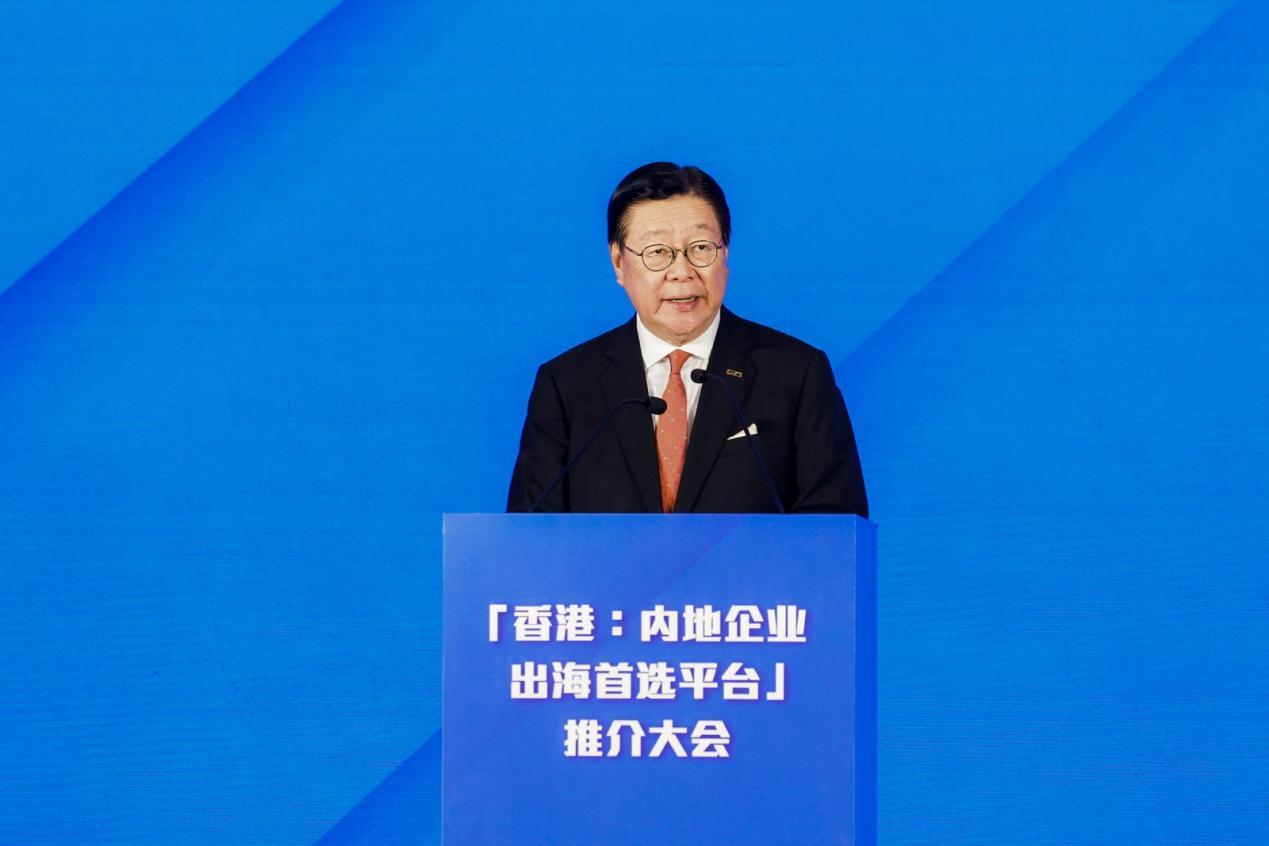
马时亨:内地企业可充分利用香港的创科生态及专业服务,进一步开拓国际市场
Feng Huang Wang Cai Jing· 2025-11-07 01:55
Core Insights - The 8th China International Import Expo (CIIE) opened on November 5 in Shanghai, highlighting Hong Kong's role as a "super connector" and "super value creator" for mainland enterprises looking to expand internationally [1][3] - The Hong Kong Trade Development Council (HKTDC) and the Hong Kong SAR government hosted a promotional event titled "Hong Kong: The Preferred Platform for Mainland Enterprises Going Global," emphasizing collaboration between Hong Kong and Shanghai [1][3] Group 1 - The CIIE has been held for eight years, demonstrating China's commitment to globalization and cooperative development, contributing to an open world economy [3] - Hong Kong maintains its position as the third global financial center and first in the Asia-Pacific region, showcasing its competitive edge in international finance [3] - The northern metropolitan area is identified as a key development engine for Hong Kong, focusing on innovation and high-end professional services, which will unlock significant growth potential [3][4] Group 2 - The event featured representatives from Hong Kong and Shanghai enterprises sharing successful international expansion experiences, aiming to explore cooperation opportunities in finance, innovation, and professional services [4] - The HKTDC set up the "Hong Kong Food Pavilion" and "Hong Kong Services Pavilion" at the expo, featuring over 50 Hong Kong companies to showcase quality products and services, encouraging collaboration with mainland enterprises [4]

大增60.58%,前10月销量超去年全年,长安新能源做对了什么?
36氪· 2025-11-06 13:45
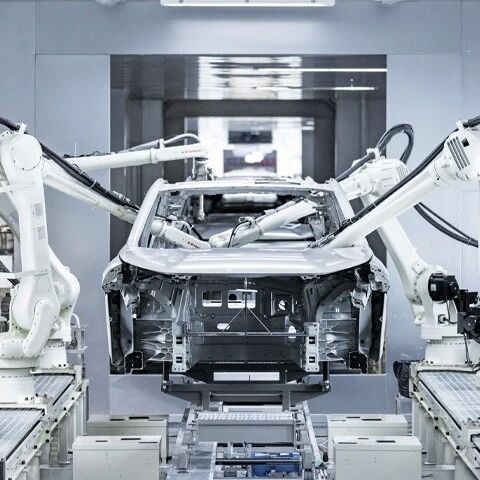
Core Viewpoint - Changan Automobile has demonstrated significant growth in the electric vehicle market, achieving a revenue increase of 23.36% year-on-year to 42.236 billion yuan in Q3 2025, driven primarily by a 36% increase in new energy vehicle sales [3][4]. Group 1: Financial Performance - In Q3 2025, Changan's revenue reached 42.236 billion yuan, marking a year-on-year growth of 23.36% [3]. - The company's new energy vehicle sales surged by 36% year-on-year to 119,000 units, contributing to an overall sales increase of 11% to 278,000 units [3]. - Cumulative new energy vehicle sales from January to October 2025 increased by 60.58%, surpassing the total sales for the entire year of 2024 [3]. Group 2: Strategic Planning - Changan's success is attributed to its clear strategic planning, focusing on three intelligent new energy brands and a global expansion strategy [4][16]. - The "Shangri-La" plan initiated in 2017 marked Changan's comprehensive strategic shift towards new energy vehicles, followed by the "Beidou Tianshu" plan in 2018, emphasizing smart technology [6][8]. - The establishment of three distinct brands—Avita, Deep Blue, and Changan Qiyuan—addresses diverse market needs and enhances competitive positioning [8][10]. Group 3: Brand Performance - Avita, positioned as a luxury brand, achieved sales of 13,506 units in October 2025, reflecting a 34% year-on-year increase [10][11]. - Deep Blue, targeting younger consumers, recorded sales of 36,792 units in October 2025, a 32.1% increase, with the Deep Blue S05 model becoming a bestseller [13]. - Changan Qiyuan, aimed at mainstream family users, sold 37,000 units in October 2025, an 8.5% increase, with its core model Q07 also performing well [15]. Group 4: Global Expansion - Changan's "Haina Baichuan" global strategy aims to transition from simple product exports to comprehensive global operations, including brand and ecosystem expansion [16][18]. - In January 2025, Changan's export volume surged by over 800%, entering the top three in China's automotive export brands [18]. - The company has established a presence in 103 countries and regions, with over 14,000 sales channels, enhancing its global footprint [18]. Group 5: Organizational Empowerment - The establishment of China Changan Automobile Group, with a registered capital of 20 billion yuan and total assets of 308.7 billion yuan, provides strategic support and resource integration for Changan [22][23]. - The group aims to enhance operational efficiency and core competitiveness through resource optimization and technological integration [22]. - Changan's focus on building a professional, youthful, and international talent pool is crucial for sustaining its global development momentum [18][22]. Group 6: Future Outlook - Changan is poised for future growth with a focus on intelligent safety technologies, as evidenced by the launch of the "Tianshu Intelligent" brand [25]. - The company's strategic initiatives in new energy and smart technology, along with its global expansion efforts, position it well for competition in the international automotive market [25].

中企加速度出海,海外投资已超5万家企业、10万亿美元资产
Di Yi Cai Jing· 2025-11-06 07:16
Group 1 - The core viewpoint is that Chinese companies are increasingly expanding their overseas revenue, with projections indicating that the share of overseas revenue for listed companies will rise to 20.6% by 2028 [1][2] - As of 2024, the share of overseas revenue for A-share listed companies has increased from 0.3% in 2000 to 16.7%, with leading sectors such as automotive, retail, and capital goods showing an average overseas revenue share of 34% among top companies [2][3] - China's outward direct investment (ODI) has surpassed foreign direct investment (FDI) for the first time, indicating a significant shift in the global investment landscape [2][3] Group 2 - The 2024 statistics show that China's net outward direct investment reached $192.2 billion, marking an 8.4% increase from the previous year, with Chinese companies establishing 52,000 overseas enterprises across 190 countries [3] - The diversification of Chinese companies' overseas expansion strategies includes product manufacturing exports, supply chain development, and various business models such as e-commerce and gaming [3][5] - The establishment of the Hongqiao International Open Hub is seen as a critical support base for companies going global, providing comprehensive services including legal, financial, and supply chain support [6][7] Group 3 - The Hongqiao International Central Business District aims to create a highland for overseas headquarters and comprehensive service platforms, facilitating the internationalization of enterprises [7][8] - The "Guidelines for Chinese Enterprises Going Global" and "Hongqiao Going Global Cases" provide strategic insights and practical solutions for companies navigating the complexities of global markets [8][9] - The Hongqiao Overseas Development Service Center 3.0 integrates various functions to offer a one-stop solution for enterprises' internationalization, enhancing their global competitiveness [9]
青瓷游戏(06633) - 有关与迪士尼订立游戏授权转让协议之自愿公告
2025-11-06 04:02
香港交易及結算所有限公司及香港聯合交易所有限公司對本公告之內容概不負責,對其準確性或完整性亦 不發表任何聲明,並明確表示概不對因本公告全部或任何部分內容而產生或因倚賴該等內容而引致的任何 損失承擔任何責任。 Qingci Games Inc. 青瓷游戲有限公司 (於開曼群島註冊成立的有限公司) (股份代號:6633) 有 關 與迪士尼訂立遊戲授權轉讓協議之 自願公告 1 華 特 迪 士 尼 公 司 連 同 其 附 屬 公 司 和 聯 營 公 司,是 領 先 的 多 元 化 國 際 家 庭 娛 樂 和 媒 體 企 業, 其 業 務 主 要 涉 及 三 個 範 疇:Disney Entertainment、ESPN及Disney Experiences。多 年 來,華 特 迪 士 尼 公 司 創 造 了 多 個 家 喻 戶 曉 的 經 典 角 色,在 全 球 各 地深受愛戴。 本 集 團 管 理 層 認 為,訂 立 遊 戲 授 權 轉 讓 協 議 不 僅 彰 顯 了 本 集 團 在 遊 戲 行 業 的 雄 厚 實 力,亦 體 現 了 本 集 團 強 大 的 發 行 能 力。此 次 獲 得 遊 戲 授 權 將 為 ...

破局全球化:香港为科创企业插上资本和技术的翅膀
2 1 Shi Ji Jing Ji Bao Dao· 2025-11-06 03:25
Group 1 - The core viewpoint emphasizes the unprecedented opportunities for technology innovation companies to expand internationally against the backdrop of globalization and the deep integration of the Greater Bay Area [1] - The roundtable discussion focuses on Hong Kong's unique role as a "global hub" in this process, aiming to facilitate the globalization journey of mainland enterprises [1] - The event gathers top investors, technology leaders, and senior scholars to collaboratively explore ways to leverage Hong Kong for capital and technological advancement [1]
解码赛力斯:迄今规模最大的中国车企IPO
阿尔法工场研究院· 2025-11-06 00:07
Core Viewpoint - The valuation logic of Seres is a result of multiple forces, including market trust, mature product profitability, and growth expectations from globalization and intelligence layout [1][5]. Capital Confidence - Seres' IPO on the Hong Kong Stock Exchange raised significant capital, with 49% of the total amount coming from cornerstone investors, indicating strong market confidence [8]. - The company attracted 22 cornerstone investors, with a total subscription amount of approximately $826 million (about 5.88 billion RMB), surpassing the average market level for Hong Kong IPOs [8]. - The funds raised will primarily be allocated to R&D (70%), new marketing channels and overseas market expansion (20%), and general corporate purposes (10%) [11]. Product Resilience - Seres has become the fourth global electric vehicle company to achieve profitability, with a net profit of 5.312 billion RMB in the first three quarters of 2025, a year-on-year increase of 31.56% [7]. - The company has a high gross margin of 29.9% in the high-end market, surpassing traditional luxury brands [7]. - The "big single product strategy" has proven effective, with the AITO brand contributing over 90% of Seres' revenue in 2024 [15][19]. Globalization Strategy - Seres is actively expanding its global presence, with nearly 30% of the IPO funds allocated for overseas markets [24]. - The company has established a dealer network in ASEAN and set up a subsidiary in the UAE, with plans to expand into Qatar and Saudi Arabia [25][26]. - The overseas revenue of Seres increased by 145% year-on-year in the first half of 2025, with overseas sales accounting for 11% of total revenue [26]. AI and Intelligent Technology - Seres is focusing on AI and embodied intelligence as key growth areas, collaborating with ByteDance's Volcano Engine to develop intelligent technologies [28][30]. - The company aims to build an independent intelligent platform technology capability, enhancing its competitive edge in the market [30].

新闻1+1丨从“产品出海” 到 “产业出海” 中国为全球贸易注入信心
Yang Shi Xin Wen Ke Hu Duan· 2025-11-05 23:30
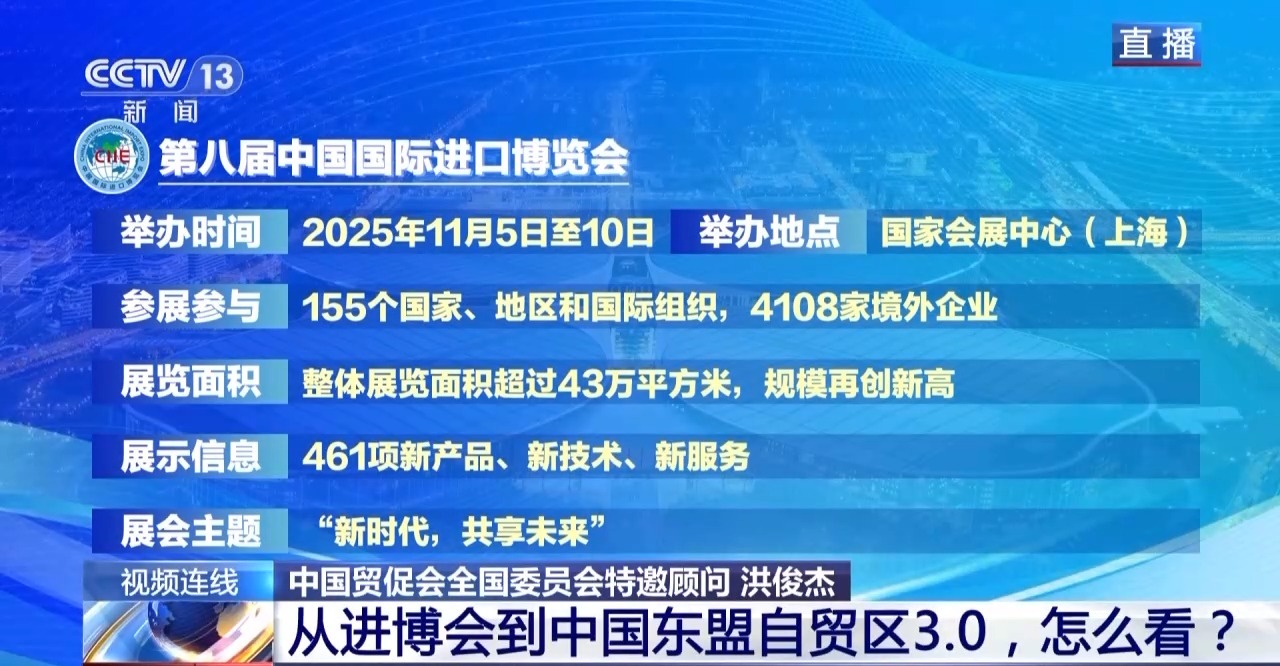
Core Viewpoint - China is actively promoting its openness to the world through initiatives like the upcoming China International Import Expo (CIIE) and the recent signing of the China-ASEAN Free Trade Area 3.0 upgrade protocol, aiming to instill confidence and stability in an uncertain global environment [1]. Group 1: Importance of CIIE - The CIIE is recognized as a significant event in global trade, being the only national-level expo focused on imports, symbolizing China's commitment to expanding its openness and supporting global trade [6]. - International observers increasingly view the CIIE as playing a crucial role in promoting globalization and free trade, especially in light of rising unilateralism and protectionism [5][6]. Group 2: New Trends in International Trade - The evolution of international trade has led to the emergence of new models and business formats, shifting focus from traditional border measures to institutional openness that includes rules, regulations, and management standards [9]. - The CIIE will showcase trends such as digital economy and green economy initiatives, reflecting the growing importance of institutional openness in trade [9]. Group 3: Regional Cooperation and Future Opportunities - The development of international trade necessitates the inclusion of new fields and business formats in negotiations, moving from traditional goods trade to services, digital, and green trade [12]. - China and ASEAN, as key components of the Asian manufacturing landscape, have high complementarity in trade, with 60% of their trade being intermediate goods, indicating strong potential for future collaboration in both trade and industry [15].
Ashland(ASH) - 2025 Q4 - Earnings Call Transcript
2025-11-05 16:00
Financial Data and Key Metrics Changes - Ashland's Q4 sales were $478 million, down 8% year over year, primarily due to portfolio optimization initiatives, with adjusted EBITDA at $119 million, down 4% year over year [4][10] - Adjusted EBITDA margin expanded to 24.9%, up 110 basis points from last year, marking the most profitable quarter of the year [10] - Adjusted earnings per share was $1.08, down 14% from the prior year, impacted by a higher effective tax rate [10] Business Line Data and Key Metrics Changes - Life Sciences sales were $173 million, down 10% year over year, primarily due to the divestiture of the nutraceuticals business, but adjusted EBITDA was $55 million, representing a 32% margin [12][14] - Personal Care sales were $151 million, down 7% year-over-year, but on a comparable basis, delivered 5% sales growth with strong volume gains [17] - Specialty Additives sales were $131 million, down 9% year-over-year, but adjusted EBITDA was $29 million, consistent with the prior year, achieving the strongest margin of the year at 22.1% [18][20] - Intermediates faced pricing and volume pressure, with sales at $33 million, down 8% year over year, and adjusted EBITDA of $5 million, representing a 15.2% margin [15][16] Market Data and Key Metrics Changes - Life Sciences showed resilience in pharma demand, achieving low single-digit sales growth year over year, while nutrition end markets were softer [12][13] - Personal Care experienced broad-based gains across end markets and regions, particularly in biofunctional actives and microbial protection [17] - Specialty Additives faced challenges in coatings, particularly in China, India, and the Middle East, but other markets improved [6][20] Company Strategy and Development Direction - Ashland's strategic focus includes portfolio optimization and restructuring, with approximately 85% of its portfolio serving consumer-facing end markets [7][8] - The company aims to deliver resilient long-term value through disciplined execution and clear focus on priorities, with a $60 million manufacturing optimization program underway [9][22] - Future growth is expected to come from globalized sales and innovation-driven growth, targeting $20 million and $15 million respectively for fiscal 2026 [25][29] Management's Comments on Operating Environment and Future Outlook - Management highlighted ongoing macroeconomic challenges but noted strong margins and consistent performance in Q4 [4][9] - The company expects full-year sales for fiscal 2026 to be between $1,835 million and $1,905 million, representing organic growth of 1%-5% [27][28] - Management remains cautious about macro factors like interest rates and housing turnover but believes in the potential for share gains and innovation to drive growth [28][29] Other Important Information - The company completed a $30 million restructuring program, realizing $20 million in savings this year, with another $12 million expected in fiscal 2026 [21] - Total liquidity stood at just over $800 million, with net leverage at 2.9 times, improving to mid-twos after a $103 million tax refund [11] Q&A Session Summary Question: What were volumes in Q4, and what are your volume assumptions for next year? - Management noted a nice pickup in volumes in Life Sciences and Personal Care, with mixed results in coatings, particularly in China [32] Question: Can you elaborate on the weakness in the nutrition side of Life Sciences? - The weakness was primarily in North America and Europe, but recent share gains are expected to support a return to growth [36] Question: How much of the $100 million CapEx is growth CapEx? - Approximately $55 million is for stay-in-business, with the remainder allocated to growth projects supporting globalized initiatives [36][38] Question: How is the competitive intensity from Chinese competitors affecting the business? - Competitive intensity remains a key factor, particularly in the coatings segment, with variations depending on the region [57] Question: What is the expected contribution from the innovation pipeline in 2026? - The company targets $15 million in innovation-driven growth for 2026, with a focus on core technologies [52][53]

赛力斯张兴海:在全球范围内打造高端车新赛道
Zheng Quan Shi Bao Wang· 2025-11-05 14:58
Core Insights - The article highlights the successful IPO of Seres Group, raising a net amount of 14.016 billion HKD, marking it as the largest IPO for a Chinese car company to date and the largest globally since 2025 [1][2] - Seres aims to establish itself as a leader in the luxury electric vehicle market, emphasizing its brand positioning of "redefining luxury through intelligence" [1] - The company has delivered over 800,000 units of its AITO brand, with the M9 model being the best-selling vehicle in its price segment in China for 19 consecutive months [1] Funding Allocation - Approximately 70% of the funds raised from the IPO will be allocated to research and development, while 20% will be used for diversifying new marketing channels, overseas sales, and charging network services [2] - The focus on "high-end" and "globalization" includes global product development, marketing services, and necessary production capacity [2] Global Expansion - Seres has expanded its global footprint to cover multiple countries across Europe, the Middle East, the Americas, and Africa, with significant presence in key European markets such as Norway, Germany, the UK, and Switzerland [2] - The company is exploring the integration of artificial intelligence in its products, aiming to transform into a technology-driven enterprise [2] Investor Support - The IPO saw overwhelming interest, with a subscription rate exceeding 133 times and total financing subscriptions surpassing 170 billion HKD, attracting 22 cornerstone investors [2] - The company expresses gratitude for investor support and aims to leverage Hong Kong's financial hub advantages to enhance its global competitiveness [3]

直击进博会|立信会计师事务所亮相第八届进博会
Zhong Guo Jing Ying Bao· 2025-11-05 14:17
Core Insights - The 8th China International Import Expo (CIIE) opened in Shanghai on November 5, 2025, showcasing the professional service capabilities of Lixin Accounting Firm in the fields of digital intelligence and internationalization [1] - Lixin's Chairman, Zhu Jiandi, emphasized the firm's commitment to national strategies and global integration, highlighting the maturity of their overseas service and cross-border collaboration capabilities [1] - A strategic cooperation framework agreement was signed between Frank Technology and Lixin Accounting Firm during the expo, aiming to support Frank's overseas business expansion [1] Group 1 - Lixin Accounting Firm participated in the CIIE with the theme "Bravely Standing at the Forefront of Digital Intelligence, Connecting Global Opportunities" [1] - The firm aims to leverage its experience in the Chinese market to assist enterprises in developing and optimizing strategies in diverse markets [1] - Lixin plans to enhance its professional services globally by upgrading technology, talent, standards, and resources through the BDO global integrated network [1] Group 2 - Frank Technology, a specialized company in metalworking fluids, has established overseas manufacturing and local sales [1] - The partnership with Lixin is intended to provide systematic support for Frank's globalization process [1] - Frank plans to further expand its manufacturing capacity and sales share in overseas markets [1]