智能化

Search documents
独家|赵长江履新智界,一场先锋硬仗怎么打?
Xin Lang Cai Jing· 2026-01-13 04:14
Core Viewpoint - The article discusses the strategic transformation of Zhijie under the leadership of Zhao Changjiang, emphasizing the integration of Huawei's technology and Chery's manufacturing capabilities to create a pioneering smart electric vehicle brand. Group 1: Strategic Transformation - Zhijie 2.0 is a strategic initiative that involves a significant investment of 10 billion yuan and the establishment of a 5,000-person R&D team to enhance brand positioning and organizational structure [1][12] - The brand aims to leverage Huawei's technological leadership and Chery's manufacturing expertise to create a unique identity in the competitive electric vehicle market [1][13] - Zhao Changjiang emphasizes the need for a complete embrace of Huawei's methodologies in management, culture, and business logic to ensure the brand's success [12][14] Group 2: Market Positioning and Product Strategy - The company plans to target high-income, highly educated consumers while emphasizing the application of cutting-edge smart technology in its products [22][24] - The 2026 product lineup includes a flagship MPV (V9) and a large SUV, with a focus on enhancing user experience through advanced AI capabilities [29][36] - The brand's differentiation lies in its commitment to creating a "pioneering" identity that resonates with consumers seeking innovative technology and design [22][23] Group 3: Operational Efficiency and Supply Chain - The integration of Huawei's digital thinking into the supply chain aims to transform production processes from passive to proactive, enhancing efficiency and quality control [5][26] - The company is restructuring its production and sales coordination to ensure a seamless flow of operations, which is critical for meeting market demands [25][31] - Zhao Changjiang highlights the importance of a collaborative culture between manufacturers and suppliers, moving away from traditional adversarial relationships [7][12] Group 4: Future Outlook and Challenges - The company anticipates that the smart vehicle market will experience significant growth, with a focus on creating user-centric products that exceed current expectations [11][36] - Zhao Changjiang acknowledges the challenges of fully implementing Huawei's capabilities within the brand, estimating current progress at 20-30% [28] - The long-term goal is to achieve annual sales of one million units by 2030, establishing Zhijie as a global leader in the smart electric vehicle sector [38]



血液透析机市场洞察,全球生产商排名及市场份额
QYResearch· 2026-01-13 02:44
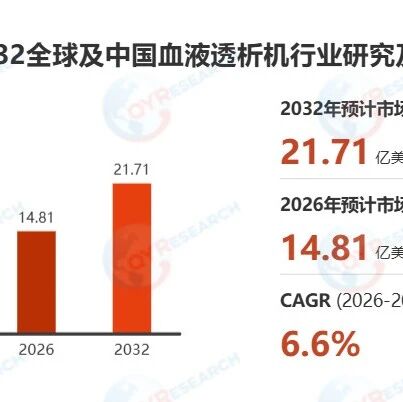
Core Insights - The article emphasizes the increasing demand for hemodialysis machines driven by the rising global burden of kidney diseases and the integration of advanced technologies in treatment [1][2][3] Group 1: Market Demand and Growth - The global market for hemodialysis machines is projected to reach USD 2.05 billion by 2031, with a compound annual growth rate (CAGR) of 6.6% [3] - Chronic kidney disease management is becoming a significant public health issue, leading to the expansion of both public and private dialysis centers [1][2] - The demand for hemodialysis machines is supported by improvements in healthcare policies, increased accessibility to dialysis, and infrastructure development in emerging markets [1][2] Group 2: Industry Challenges - The industry faces challenges such as cost pressures, stricter regulatory requirements, and supply chain security issues [2] - Key components like pump valves, sensors, and electronic systems are experiencing significant cost fluctuations, impacting profitability [2] - The shift towards centralized procurement policies in some regions is intensifying price competition, putting pressure on smaller companies [2] Group 3: Technological Advancements - Major manufacturers are focusing on the acceleration of automation and smart technology, enhancing treatment precision and reducing operational costs [1][2] - The demand for interconnected devices and digital management systems is increasing, shifting the focus from individual machine performance to overall treatment quality and efficiency [2] Group 4: Market Structure - The top five manufacturers hold approximately 82.0% of the global market share, indicating a highly concentrated market [6] - Single-pump hemodialysis machines dominate the product type segment, accounting for about 77.7% of the market [9] - Hospitals represent the largest downstream market for hemodialysis machines, making up approximately 57.6% of the demand [12]
苏企“出海”开辟价值新航道
Xin Hua Ri Bao· 2026-01-12 20:55
Group 1 - The core transformation of Jiangsu enterprises is shifting from a traditional single product export model to providing integrated solutions that combine products, technology, services, and business models in the global market [1][2] - Jiangsu Guanhai Medical Technology Co., Ltd. has achieved a significant breakthrough in 2024 by localizing the assembly of dialysis machines, thereby enhancing the accessibility of quality medical resources to more patients globally [2][6] - The export of packaging machinery from Jiangsu reached 5.08 billion yuan in the first eleven months of 2025, marking a year-on-year increase of 32.1% [3] Group 2 - The shift from "selling products" to "selling solutions" is driven by global supply chain restructuring, technological advancements, and evolving customer demands, particularly evident in Jiangsu [2][4] - Jiangsu enterprises are actively expanding into international markets, moving from simple equipment exports to high-tech, customized system solutions, showcasing strong resilience in development [3][4] - The collaboration between government and enterprises has formed a powerful synergy to overcome challenges such as cultural differences and technical barriers in the global market [4][5] Group 3 - Jiangsu enterprises are increasingly adopting a value co-creation approach in their international operations, which enhances customer loyalty and allows for higher profit margins compared to traditional product exports [7][8] - The future of solution exports is expected to exhibit three significant characteristics: intelligence, greenness, and ecological sustainability, with companies integrating advanced technologies like AI and IoT into their solutions [7][8] - Jiangsu enterprises are positioning themselves to navigate from "Made in China" to "China Solutions," contributing significantly to high-quality global economic development [8]
个人医保云为便捷看病插上智慧翅膀
Xin Lang Cai Jing· 2026-01-12 18:00
Core Insights - The National Healthcare Security Administration (NHSA) has initiated a pilot program for the "Personal Medical Insurance Cloud" from February to December this year, aiming to create a smart healthcare management model that covers the entire population and lifecycle [1][2] - The "Personal Medical Insurance Cloud" will integrate various medical data, including treatment information from designated medical institutions and health data from wearable devices, to build comprehensive personal health records for insured individuals [2][3] Group 1: Implementation and Features - The pilot program will be based on a unified national medical insurance information platform, focusing on gathering core data from regional medical institutions, including diagnosis, settlement, and usage of medical supplies [1] - The system will provide health risk alerts and real-time updates on health monitoring data, enabling proactive health management and better treatment options during medical care [2] Group 2: Challenges and Considerations - Data security and privacy protection are critical, necessitating strict management protocols and advanced encryption technologies to ensure data safety during transmission and storage [3] - There is a need for standardized data protocols across different regions and medical institutions to facilitate coordination and break down data silos [3] - Engaging older populations who may be less familiar with new technologies will require targeted outreach and training efforts [3] Group 3: Impact on Healthcare - The "Personal Medical Insurance Cloud" represents a significant advancement in the digital transformation of healthcare, enhancing service quality and ensuring better health protection for the public [3] - It aims to streamline the process of accessing medical care, ultimately providing patients with more convenient, efficient, and high-quality services [3]
红星发展(600367.SH)子公司拟6.23亿元投建天柱县钡盐精细化工产品项目
智通财经网· 2026-01-12 12:01
Core Viewpoint - Hongxing Development (600367.SH) is responding to national initiatives for the chemical industry to evolve towards high-end, intelligent, and green development, as well as the "dual carbon" strategy by enhancing its barium salt business strategy and developing various specifications and applications of barium salt products [1] Group 1: Project Overview - The company’s wholly-owned subsidiary, Guizhou Tianzhu Hongxing Development New Materials Co., Ltd., plans to initiate the "Tianzhu County Barium Salt Fine Chemical Products Project" with a total investment of approximately 623 million yuan [1] - The project will be located in the Tianzhu Chemical Park in Qiandongnan Prefecture, Guizhou Province [1] Group 2: Strategic Goals - The new barium salt production base aims to leverage the resource advantages of barite in Tianzhu County, Guizhou Province, through large-scale and intelligent production [1] - The project is designed to enhance the company's logistics cost advantages and meet downstream customers' diverse needs for stable supply and differentiated products, thereby continuously improving the company's product competitiveness and supply assurance capabilities [1]

比亚迪(002594):2025年12月销量点评:出海销量达13万辆再创新高,全年出海销量超100万辆
Changjiang Securities· 2026-01-12 11:12
Investment Rating - The investment rating for BYD is "Buy" and is maintained [7] Core Insights - In December, BYD's overseas sales reached a record high of 133,000 units, with total sales of 420,000 units, reflecting a year-on-year decline of 18.3% and a month-on-month decline of 12.5% [2][12] - The cumulative sales for 2025 reached 4.602 million units, a year-on-year increase of 7.7%, while cumulative overseas sales reached 1.05 million units, a year-on-year increase of 145% [12] - The company is focusing on expanding its overseas market presence and enhancing its high-end product offerings, with new factories established in Thailand, Uzbekistan, Brazil, and Hungary, and new entries into Vietnam, Pakistan, and Tunisia [12] Summary by Sections Sales Performance - December total sales were 420,000 units, with passenger vehicle sales at 415,000 units, showing a year-on-year decline of 18.6% and a month-on-month decline of 12.7% [5][12] - High-end brands performed well, with sales for Ocean King, Equation Leopard, and Tengshi at 344, 51, and 18 thousand units respectively, showing year-on-year changes of -29.5%, +345.5%, and +20.5% [12] Overseas Expansion - December export sales were 133,000 units, a year-on-year increase of 132.4% and a month-on-month increase of 0.9% [12] - The company aims to enhance its overseas sales through a diversified product matrix and the launch of plug-in hybrid models [12] Financial Projections - BYD's projected net profit for 2025 is 35 billion yuan, corresponding to a PE ratio of 25X [12] - The company is expected to benefit from economies of scale as overseas and high-end sales volumes increase, leading to improved profitability in the second half of the year [12]

长虹美菱(000521) - 000521长虹美菱投资者关系管理信息20260112
2026-01-12 10:38
Group 1: Domestic Refrigerator Strategy - The company is implementing a "marketing transformation and direct user access" strategy to enhance customer operations and product structure upgrades [1] - Focus on launching multiple fresh products emphasizing "best preservation and quality thawing" to strengthen brand identity [1] - Emphasis on high-quality channel operations and enhancing new media capabilities to improve user engagement [1] Group 2: Overseas Refrigerator Strategy - The company is reshaping product platforms in mainstream markets and increasing product investment based on differentiated strategies [2] - Focus on high-end, mid-range, and low-end product matrices to meet diverse consumer demands [2] - Accelerating market expansion in Asia, Africa, and Latin America to increase market share and develop a strong international brand image [2] Group 3: Washing Machine Strategy - The company is focusing on large-capacity product development and enhancing competitiveness through product upgrades [3] - Plans to improve manufacturing capabilities and establish a smart digital factory in Mianyang [3] - Strengthening marketing collaboration with key customers and enhancing brand integration through new media [3] Group 4: Domestic Air Conditioning Strategy - The company aims to optimize sales rhythm and enhance online and offline promotional strategies to drive traffic growth [4] - Product development is driven by user needs and innovation, with a focus on technology and intelligence [4] - Multi-channel collaboration is emphasized to create a win-win ecosystem [4] Group 5: Overseas Air Conditioning Strategy - The company is enhancing product matrices and adopting agile strategies to capture market opportunities [5] - Focus on core customers in Latin America, the Middle East, and Europe to build a comprehensive customer service system [5] - Prioritizing brand development and deepening market presence in key regions [5]

年终盘点2025汽车市场的“龙门一跃”:油退电进,全球登顶
3 6 Ke· 2026-01-12 10:37
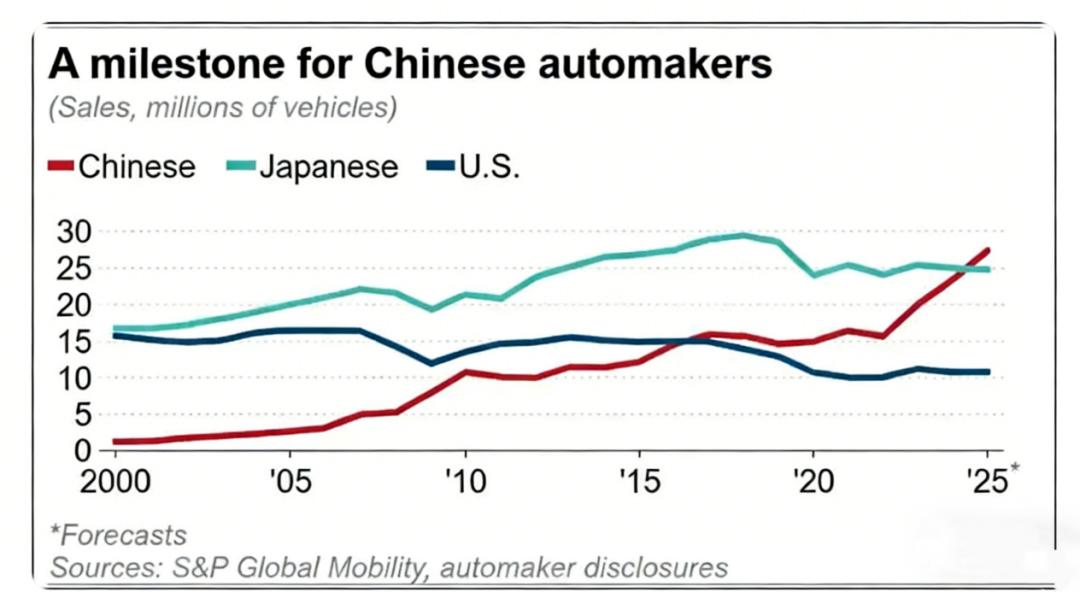
Core Insights - The penetration rate of new energy vehicles (NEVs) in China has surpassed 50%, marking a significant shift in the automotive market dynamics, transitioning from a "policy-driven" to a "product-driven" model [1][10] - The year 2025 is seen as a pivotal moment for the Chinese automotive industry, with the market experiencing a fundamental transformation akin to a "Nokia moment" [1] - The competition is evolving from price wars to value wars, emphasizing technology and product quality over mere volume [11] Industry Overview - In 2025, China's automotive manufacturers are projected to achieve global sales of 27 million vehicles, securing the top position in the global new car sales rankings for the first time [2] - China has overtaken Japan to become the world's largest automobile exporter, with NEVs accounting for a significant portion of this growth [4] - The domestic market's NEV sales are nearing 60%, reflecting a structural change in consumer preferences [4] Sales and Market Penetration - By November 2025, the retail penetration rate of NEVs reached 53.6%, with projections for the full year estimating a rate of 54.0% [6] - The rapid increase in NEV penetration is attributed to a combination of policy support, technological advancements, infrastructure development, and market demand [7] Policy and Technological Developments - The exit of purchase subsidies in 2023 has been offset by continued tax exemptions and various local incentives, which have helped maintain consumer interest in NEVs [7] - 2025 is expected to be a year of technological breakthroughs in NEVs, with advancements in high-voltage platforms, solid-state batteries, and smart driving technologies [8] Infrastructure and Consumer Experience - The expansion of charging infrastructure is crucial for alleviating consumer concerns about range anxiety, with projections of 20 million charging stations by the end of 2025 [9] - The cost advantages of NEVs are becoming increasingly apparent, with electric vehicles offering significantly lower operating costs compared to traditional fuel vehicles [9] Competitive Landscape - The shift from price competition to value competition is reshaping the industry, with companies focusing on technological innovation and profitability [11] - Some companies, like Leap Motor, have emerged as strong competitors, achieving significant sales growth and profitability [13] Global Expansion - In 2025, China's automotive exports are expected to exceed 7 million units, with NEV exports alone projected to reach 2.315 million units, marking a 102.9% increase [21] - Chinese automakers are transitioning to a "global + local" model, emphasizing localized production and R&D to better penetrate international markets [22] Challenges and Future Outlook - Despite rapid growth, challenges such as trade protectionism and compliance costs remain significant hurdles for Chinese automakers in global markets [24] - The automotive industry is expected to continue evolving, with a focus on sustainable growth and value creation as it navigates the transition from a subsidy-driven to a market-driven environment [25]




航天彩虹:公司认同装备无人化、智能化发展方向
Zheng Quan Ri Bao· 2026-01-12 09:35
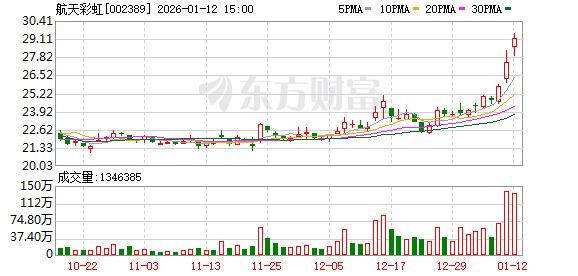
Core Viewpoint - The company recognizes the development direction of unmanned and intelligent equipment as its core strategy for the future [2] Group 1 - The company is committed to integrating existing advanced technologies and systematic manufacturing capabilities into manned/unmanned collaborative combat systems [2] - The company expresses confidence in embracing the opportunities in the unmanned technology sector and is actively laying out plans for this transition [2]

星火保:金融科技赋能,引领保险服务生态创新变革之路
Huan Qiu Wang· 2026-01-12 08:02
Core Insights - The insurance industry in China is undergoing a transformation phase characterized by strong regulation, a push for efficiency, and a shift towards high-quality development, necessitating a break from traditional operational models [1][2] - The emergence of consumer demands for personalized, scenario-based, and dynamic insurance services highlights the inadequacies of traditional insurance models, which often suffer from high customer acquisition costs and slow service response times [1][3] Group 1: Technological Innovations - The "Xinghuo Insurance" platform utilizes its information flow generation and deployment capabilities to reconstruct the entire insurance service chain through self-developed algorithm systems and AI platforms, establishing a user-centered service model [2][10] - The platform's "Dynamic Demand Diagnosis Algorithm System" creates multi-dimensional user profiles by analyzing over 100 data points, ensuring accurate and timely user tagging [3][5] - The AI-driven customer service system integrates information from over 800 insurance products, enhancing pre-sale consultations and reducing response times significantly [7][10] Group 2: Service Efficiency and Personalization - The platform offers personalized insurance solutions by automatically generating optimal combinations of products based on user profiles and needs, addressing the issue of product mismatch [6][9] - A "Family Protection Management Center" feature allows users to manage all family members' insurance policies in one place, providing timely reminders for renewals and policy adjustments [7][10] - The introduction of a "smart insurance steward" for families provides lifecycle services, including health reminders and claims assistance, enhancing user experience [9][10] Group 3: Knowledge and Accessibility - The development of a specialized large model for insurance knowledge aims to simplify complex insurance terms and improve consumer understanding, addressing high complaint rates due to misunderstanding of policy terms [8][10] - The model integrates a vast array of insurance product terms, regulatory policies, and medical knowledge, ensuring that users receive accurate and comprehensible information [8][10] - The platform's knowledge services are accessible across multiple channels, including web, mini-programs, and short videos, enhancing user engagement and education [8][10] Group 4: Industry Impact and Future Directions - The technological advancements of Xinghuo Insurance are expected to reduce operational costs by 32% by 2025 while simultaneously improving business scale and profitability [10][11] - The platform serves as a benchmark for digital transformation in the insurance industry, with other companies adopting its dynamic algorithm technology and intelligent claims systems [11][12] - Xinghuo Insurance aims to extend its services to underserved markets, promoting inclusive insurance solutions and contributing to the goal of universal coverage [11][12]