
生成式AI

Search documents
重磅!Meta数十亿美元收购Manus,肖弘将出任Meta副总裁;比亚迪辟谣将推出飞行汽车;微信回应安装包10多年膨胀数百倍丨邦早报
创业邦· 2025-12-30 00:09
Group 1 - Meta acquired Manus, a company developing AI applications, for several billion dollars, marking its third-largest acquisition since its inception, following WhatsApp and Scale AI [1] - Before the acquisition, Manus was valued at $2 billion during a new financing round [1] - After the acquisition, Manus will operate independently, with its founder, Xiao Hong, appointed as Vice President of Meta [1] Group 2 - WeChat's installation package has grown several hundred times over the past decade due to the increasing complexity and richness of features, but the company assures that it is optimizing the package size [3] - Users with over 40GB of space occupied by WeChat have an average of 70% of that space taken up by chat history [3] Group 3 - Leap Motor announced a partnership with China FAW Group, raising approximately 3.744 billion yuan (about 4.138 billion HKD) through a share issuance to enhance R&D and expand its sales network [11] - The company emphasized that the founding team will maintain control despite the investment from FAW [11] Group 4 - Coupang, a South Korean e-commerce platform, announced a compensation plan worth approximately $1.18 billion for users affected by a data breach involving 33.7 million accounts [19] - Each affected account will receive shopping vouchers totaling 50,000 won [19] Group 5 - Counterpoint predicts consumer spending on generative AI will grow from $225 billion in 2023 to $699 billion by 2030, with a compound annual growth rate (CAGR) of 21% [27] - The growth will be driven by both hardware and software segments, with generative AI smartphones expected to see a 26% CAGR in shipments [27]


2025中国人力资源数智化发展白皮书
Sou Hu Cai Jing· 2025-12-29 22:11
Core Insights - The report titled "2025 China Human Resources Digital Transformation White Paper" presents the current state, core trends, and practical outcomes of digital transformation in human resources in China, focusing on seven key themes: smart decision-making, generative AI, data value, organizational resilience, data compliance, HR large models, and employee experience platforms [1][18]. Group 1: Current State of HR Digital Transformation - Over 75% of medium and large enterprises have initiated HR digital transformation, with manufacturing, IT, and technology sectors leading the way [1][18]. - Private enterprises and large companies with over 10,000 employees are the main drivers of this transformation, showing significant maturity in digital capabilities [1][18]. - The maturity level has progressed from exploratory applications to widespread implementation, with core modules being widely digitized, although intelligent penetration remains uneven [1][18]. Group 2: Challenges in HR Digital Transformation - Major challenges include weak data governance, difficulties in system integration, and a shortage of professional talent [1][18]. - The demand from enterprises has shifted from system deployment to scenario-based tools and digital transformation training [1][18]. Group 3: Future Trends in HR Digital Transformation - The next five years will see five major trends: autonomous evolution of HR intelligent ecosystems, generative AI-driven organizational evolution, widespread adoption of embodied intelligent digital employees, hybrid intelligent decision-making systems, and metaverse HR laboratories [1][18]. - These trends will drive the transformation of human resource management from efficiency enhancement to value creation [1][18]. Group 4: Leading Practices in HR Digital Transformation - Leading companies such as China Mobile, Beike, and 360 Group demonstrate that building AI capabilities, deepening full-process application scenarios, and strengthening data governance and compliance can achieve intelligent upgrades in core HR functions like recruitment, training, and performance management [1][18]. - These practices illustrate the transition of HR functions from transactional processing to strategic empowerment, creating a new ecosystem of human resource management that is collaborative and data-driven [1][18].

腾讯研究院AI速递 20251230
腾讯研究院· 2025-12-29 16:05
Group 1 - Nvidia acquired Groq for $20 billion through an atypical "asset acquisition + talent recruitment" model, paying nearly 3 times the premium, with about 90% of employees joining Nvidia [1] - Groq employees are expected to receive an average of $4-6 million based on the employee option pool, with vested shares paid in cash and unvested shares converted to Nvidia stock [1] - This "reverse talent acquisition" model is becoming a new norm in the Silicon Valley AI ecosystem, as seen with previous acquisitions of Inflection AI and Character.AI [1] Group 2 - Step-DeepResearch by Jieyue Xingchen uses a 32B parameter model to achieve deep research capabilities comparable to OpenAI's o3-mini and Gemini 2.0 Flash, with a single call cost of less than 0.5 yuan [2] - It employs a three-stage training pipeline (intermediate training, supervised fine-tuning, reinforcement learning) to build data around four core capabilities: planning decomposition, deep search, reflective validation, and report writing [2] - In the ResearchRubrics benchmark test, it scored 61.42, surpassing OpenAI DeepResearch and being on par with Gemini DeepResearch, at only one-tenth the cost of the latter [2] Group 3 - Tencent's Yuanbao has launched a "task" feature, allowing users to assign scheduled tasks to the AI for proactive reminders and information push [3] - Users can customize task content and execution time, marking a shift from passive response to active service by the AI [3] - This feature enhances the AI assistant's role, making it more like a personal assistant that regularly tracks and pushes information of interest to users [3] Group 4 - JD.com has quietly launched an AI-native application "JD AI Purchase," integrating food delivery ordering, product recommendations, and AI fitting, based on JD's self-developed Yansai model [4] - The primary interaction method is dialogue, where users state their needs to receive recommendations, with the homepage "Inspiration Space" covering six major life scenarios [4] - The AI fitting feature allows users to upload photos to generate fitting effect images, and the product comparison function creates tables comparing products across six dimensions, transforming "searching for products" into "stating needs" [4] Group 5 - Domestic GPU company Muxi has released the MACA 3.3.0.X version, showing that 92.94% of 4,490 CUDA projects on GitHub can run directly, achieving near seamless migration [5] - It has completed deep adaptation for PyTorch 2.8, covering all 2,650 core operators, and is compatible with mainstream frameworks like TensorFlow, PaddlePaddle, DeepSpeed, and vLLM [5] - Based on a fully self-developed instruction set and GPU core IP, it achieves "computing power autonomy + ecological compatibility," with linearity stability in thousand-card cluster training above 95% [5] Group 6 - Insta360's research team, in collaboration with several universities, has introduced DAP, the first panoramic measurement deep foundational model trained on a dataset of 2 million [7] - It constructs a three-stage pseudo-label pipeline, refining high-quality supervision signals from 1.7 million internet panoramic images, using DINOv3-Large backbone and distance-adaptive branches [7] - In multiple zero-shot tests, it has set records in Stanford2D3D and Matterport3D, providing precise depth perception for robot navigation, autonomous driving, and VR/AR applications [7] Group 7 - Kuaikan Manhua's version 2.0 has launched AI interactive comics, allowing users to "soul travel" into the comic world and interact with characters in real-time, altering the story direction with each interaction [8] - Characters come with complete backstories and personalities, anchoring dialogues within the story world, establishing long-term companionship through shared experiences and narrative context [8] - It integrates AI capabilities from Tencent Cloud's DeepSeek API, Volcano Engine's Doubao, Alibaba's Tongyi Qianwen, and others, with a nearly threefold increase in weekly paid user rates during the testing phase [8] Group 8 - Nvidia's Jim Fan reviewed the robotics sector, stating it remains chaotic, with severe hardware reliability issues hindering iteration speed, facing daily challenges like overheating and motor failures [9] - The robotics field's benchmarks are a disaster, lacking unified hardware platforms, task definitions, and scoring standards, with teams claiming SOTA based on ad-hoc benchmarks [9] - The VLM-based VLA route feels incorrect, as VLM is optimized for visual question answering rather than the physical world, suggesting that video world models may be a better pre-training target [9] Group 9 - Andrew Ng highlighted that China has surpassed the US in releasing open-source weight models, with cumulative adoption about to exceed that of US open-source models [10] - Many users are incorrectly utilizing Agentic AI, suggesting that tasks should not be completed in one go but through an iterative workflow: outlining, researching, drafting, and revising [10] - The most important future skill will be accurately communicating needs to computers, with programming knowledge significantly enhancing efficiency, contrary to the advice of "no need to learn programming" [10] Group 10 - The Information's year-end analysis of the AI industry indicates that nearly all leading AI companies are now investing in humanoid robot technology development, shifting from competing on models to competing on ecosystems [11] - Overall, Google is seen as the strongest in comprehensive strength, with Anthropic signing a $20 billion TPU chip order, Meta seeking to adopt Google's TPU, and OpenAI signing a $38 billion server agreement with Amazon [11][12] - The alliances among the nine major AI giants are tighter than ever, as companies reduce reliance on one partner while becoming entangled with another, creating a complex interdependent network [12]


2025年终经济观察丨开放合作互利共赢,中国为世界带来新机遇
Xin Hua Wang· 2025-12-29 12:34
Group 1 - High-level openness is seen as a "driving force" for promoting mutually beneficial cooperation between China and the world, with a focus on aligning with international high-standard economic and trade rules by 2025 [1] - The Central Economic Work Conference has identified "maintaining openness and promoting multi-field cooperation for win-win outcomes" as a key task for China's economic work in the coming year [1] - There is a growing influx of foreign investment into China, with over 60,000 new foreign-invested enterprises established in the first 11 months of the year, marking a 16.9% year-on-year increase [3] Group 2 - Multinational companies are increasingly viewing China as a global innovation hub, with significant investments in research and development centers to cater to local market demands [2] - The actual use of foreign capital in high-tech industries reached 221.26 billion RMB, accounting for over 30% of the total foreign investment in the country [3] - China's foreign trade has shown resilience, with a total import and export value of 41.21 trillion RMB in the first 11 months of the year, reflecting a 3.6% year-on-year growth [5] Group 3 - The establishment of the Hainan Free Trade Port has led to a significant increase in foreign trade registration, with 1,972 new foreign trade registered enterprises in the first week of its operation, a 2.3-fold increase [8] - China is actively promoting institutional openness, with various measures aimed at stabilizing foreign investment and expanding service sector openness [8] - The signing of the upgraded version of the China-ASEAN Free Trade Area 3.0 agreement marks a shift towards "institutional openness," enhancing cooperation between the two regions [9]
为什么世界模型对行业产生了这么大的影响?
自动驾驶之心· 2025-12-29 09:17
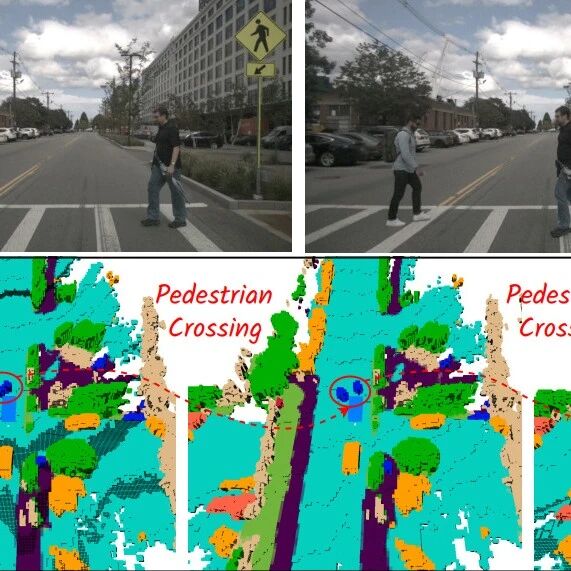
Core Insights - The article emphasizes the vision of world models in understanding and transforming the physical world, focusing on the continuous technological breakthroughs that lead to generative AI in autonomous driving [2] Group 1: World Model Exploration - Various companies are building their cloud and vehicle-based world models using open-source algorithms for long-tail data generation and closed-loop simulation/evaluation [4] - The exploration of world models in autonomous driving includes video generation, OCC generation, and LiDAR point cloud generation, with notable works from Wayve, OccWorld, and others [3][4] Group 2: Challenges in Understanding World Models - The definition of world models remains ambiguous, leading to confusion among newcomers in the field [5] - Many beginners struggle to grasp the concepts of data generation and closed-loop simulation, often feeling lost despite extensive efforts [6] Group 3: Course Offering - The article introduces a course on world models in autonomous driving, developed in collaboration with industry algorithm experts, aimed at helping learners understand the field from theory to practice [6][8] - The course covers various chapters, including an introduction to world models, background knowledge, discussions on general world models, and practical applications in video and OCC generation [11][12][13][14] Group 4: Course Structure and Content - The course is structured into six chapters, each focusing on different aspects of world models, including their historical development, technical stacks, and industry applications [11][12][13][14][15] - The course aims to equip participants with the necessary skills to understand and implement world models in autonomous driving, preparing them for job interviews and practical applications [16][19]
高盛维持商汤科技(00020)“买入”评级,目标价3.53港元,看好生成式AI布局
智通财经网· 2025-12-29 08:13
Core Viewpoint - Goldman Sachs maintains a "Buy" rating for SenseTime Technology (00020) based on its technological advantages in generative AI, product innovation, and broad market prospects, with a 12-month target price of HKD 3.53 [1] Group 1: Generative AI Product Innovations - SenseTime has launched several new generative AI products, including the multi-episode generative agent Seko 2.0, office AI agent "Xiao Huan Xiong 3.0," and "Ru Ying" marketing agent, showcasing significant improvements in content generation and cost advantages [2] - The Seko 2.0 agent features a proprietary real-time video generation architecture, LightX2V, which can reduce the production cycle of animated series by 80% to 90%, indicating a strong commercial outlook as AI video generation costs decrease [2] - The "Xiao Huan Xiong 3.0" office AI agent can generate high-quality PPTs with one click and process large-scale data in seconds, capitalizing on the expected growth of the office software market to USD 17 billion by 2030 [3] Group 2: Market Potential and Financial Projections - Goldman Sachs predicts that the revenue contribution from generative AI will rise from 77% in the first half of 2025 to 91% by 2030, highlighting the strong growth potential of this segment for SenseTime [4] - The company is expected to achieve positive EBITDA of RMB 205 million by 2026, with projections of further growth to RMB 1.119 billion by 2027, indicating a turnaround in profitability [4]
高盛看好商汤科技生成式AI布局,预测2026年扭亏为盈
Cai Jing Wang· 2025-12-29 08:04
Group 1 - Goldman Sachs maintains a "buy" rating for SenseTime, setting a 12-month target price of HKD 3.53, based on the company's technological advantages in generative AI, product innovation, and market potential [1] - Goldman Sachs predicts that the revenue contribution from generative AI will reach 91% by 2030, with an expected EBITDA of RMB 205 million turning positive by 2026 [1][4] Group 2 - SenseTime has launched several new generative AI products, including Seko 2.0, "Xiao Huan Xiong 3.0" office AI, and "Ru Ying" marketing AI, which enhance content generation capabilities and demonstrate significant cost advantages [2][3] - The Seko 2.0 product features a proprietary real-time video generation architecture, LightX2V, which can reduce production cycles for episodic content by 80%-90% compared to traditional methods [2] - The "Xiao Huan Xiong 3.0" office AI can generate high-quality PPTs and process large-scale data in seconds, with Goldman Sachs forecasting the office software market to reach USD 17 billion by 2030, driven by generative AI functionalities [3] - The "Ru Ying" marketing AI enhances operational efficiency in live e-commerce through a matrix of agents, automating backend processes and improving data analysis efficiency by six times [3] Group 3 - Goldman Sachs employs a two-stage DCF model and 2026 EV/Sales ratio to assess SenseTime's long-term growth potential, indicating a 73% upside from the current stock price [4] - By the first half of 2025, the revenue contribution from generative AI is expected to reach 77%, with a significant increase to 91% by 2030, highlighting the strong growth driver for SenseTime's future performance [4] - The EBITDA is projected to turn positive in 2026 at RMB 205 million, with further growth to RMB 1.119 billion by 2027 [4]
高盛维持商汤科技“买入”评级,目标价3.53港元,看好生成式AI布局
Jin Rong Jie· 2025-12-29 07:43
Core Viewpoint - Goldman Sachs maintains a "Buy" rating for SenseTime, setting a 12-month target price of HKD 3.53, citing the company's technological advantages in generative AI, product innovation, and broad market prospects [1] Group 1: Generative AI Product Innovations - SenseTime has launched several new generative AI products, including the multi-episode generative agent Seko 2.0, the office AI agent "Xiao Huan Xiong 3.0," and the marketing AI agent "Ru Ying," which significantly enhance content generation capabilities and demonstrate strong cost advantages in edge deployment solutions [2] - The Seko 2.0 agent features a proprietary real-time video generation architecture, LightX2V, which can reduce the production cycle of episodic dramas by 80% to 90% compared to traditional methods, indicating a promising commercial outlook as AI video generation costs decrease [2] - The "Xiao Huan Xiong 3.0" office AI agent can generate high-quality PPTs with one click and process large-scale data in seconds, while the market for office software is expected to reach USD 17 billion by 2030, with generative AI functionalities contributing to incremental revenue [3] Group 2: Market Expansion and Efficiency - The "Ru Ying" marketing AI agent enhances operational efficiency in live e-commerce through a matrix of five intelligent agents, automating backend management and significantly improving data review efficiency by six times [3] - The launch of these products marks SenseTime's expansion into specific scenarios, aiming to enhance client productivity and drive value realization [3] Group 3: Financial Projections and Growth Potential - Goldman Sachs predicts that SenseTime will achieve EBITDA profitability by 2026, with an expected amount of RMB 205 million, and further growth to RMB 1.119 billion by 2027 [4] - The revenue contribution from generative AI is projected to rise from 77% in the first half of 2025 to 91% by 2030, highlighting the strong growth driver of generative AI for SenseTime's future performance [4]
首届辽宁省高校建筑类(土木类)院长研讨会举办
Xin Lang Cai Jing· 2025-12-29 06:53
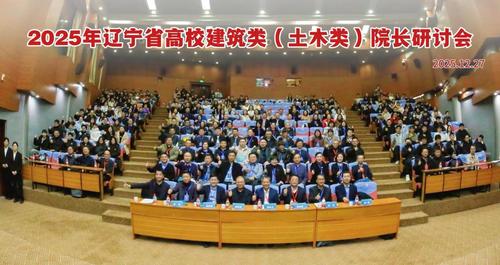
Group 1 - The first Liaoning Province Higher Education Architecture (Civil Engineering) Dean Seminar was successfully held, focusing on "Collaborative Innovation, Talent Cultivation, and Urban Renewal Leading High-Quality Development in the Construction Industry" [1] - The seminar gathered over 130 experts, industry elites, and government officials, achieving full coverage of 26 relevant universities in the province [1] - Xuanhua Intelligent participated deeply in the event, with its founder and CEO, Chai Qiaozi, and operating partner, Yang Shen, delivering keynote speeches on AI technology practices for the digital transformation of higher education [1][3] Group 2 - The seminar included keynote reports, thematic discussions, and roundtable dialogues, focusing on three core topics: discipline construction, talent cultivation, and industry-education integration [3] - Xuanhua Intelligent, as an innovator in AI education, provided technological empowerment for the conference, sharing insights on the integration of digital technology in education [3] - Chai Qiaozi's keynote report highlighted that AI technology will reshape the entire chain of teaching, research, and management in universities, enabling precise discipline construction, personalized talent cultivation, and efficient industry-education integration [3] Group 3 - Yang Shen's in-depth sharing on "Generative AI Empowering Educational Integration Practices" discussed specific application cases and proposed a three-in-one integration solution of "technical tools + teaching scenarios + industry needs," which resonated widely with university representatives [3] - Xuanhua Intelligent's participation in the seminar is a significant practice in deepening AI education and supporting high-quality development in regional higher education [4] - The company aims to continue focusing on technological innovation and deepen collaboration with universities and industries to promote the integration of AI technology with education and industry development [4]
20cm速递|科创芯片ETF国泰(589100)盘中涨超1%,先进工艺扩产将成为自主可控主线
Mei Ri Jing Ji Xin Wen· 2025-12-29 04:24
Group 1 - The core viewpoint is that memory prices are surging, with DDR4 8Gb DRAM spot prices increasing by 886% year-on-year and bulk contract prices rising by 80% month-on-month, indicating a recovery in upstream sectors such as storage devices, passive components, and packaging and testing [1] - The AI wave is driving a surge in computing power demand, with expected global spending on generative AI reaching $699 billion by 2030, reflecting a compound annual growth rate (CAGR) of 21% [1] - Significant progress in domestic semiconductor equipment is noted, with Shanghai Micro Electronics winning a 110 million yuan lithography machine project, and advanced process expansion becoming a key focus for self-control over the next three years [1] Group 2 - The CoWoS and HBM technologies are highlighted as crucial in advanced packaging under the AI trend, emphasizing their growing importance [1] - The Guotai ETF (589100) tracks the Sci-Tech Chip Index (000685), which has a daily fluctuation of 20%, selecting listed companies from the Sci-Tech board that are involved in the entire semiconductor industry chain, focusing on core technology areas such as semiconductor materials, equipment, and design [1]