牛市

Search documents
牛市最考验投资心态!如何避免追涨和踏空?
雪球· 2025-08-20 13:01
Core Viewpoint - The article discusses the current state of the A-share market, highlighting the recent bull market and the missed opportunities for many investors, emphasizing the importance of finding a suitable investment strategy that aligns with personal values and understanding [4][14][18]. Market Overview - The A-share market has recently surpassed 3700 points, reaching a nearly 10-year high and marking a historic market capitalization of over 100 trillion [4]. - The current bull market is characterized as a structural and rotational bull market, with sectors like innovative pharmaceuticals, military, and technology taking turns in leading the gains [7][15]. Investor Behavior - Many investors are experiencing anxiety from missing out on the bull market due to various reasons: - Not entering the market during the bull phase [5]. - Choosing the wrong stocks, leading to missed profits [8]. - Waiting for a market correction that never comes, resulting in missed entry points [9]. - Exiting positions too early, thus not benefiting from the bull market returns [10][11]. - The article notes that the feeling of missing out can be more distressing than actual losses [12]. Investment Strategy - The article suggests that opportunities in the market are abundant, and investors should focus on finding a strategy that allows them to capitalize on future bull markets [14][18]. - It emphasizes the importance of asset allocation as a comprehensive investment strategy that aligns with personal values, reducing anxiety and improving decision-making [24][26]. - The author mentions a three-part asset allocation strategy that has yielded a cumulative return of 12.48% year-to-date [22]. Asset Allocation Benefits - Asset allocation is presented as a way to mitigate risks associated with market timing and to ensure consistent returns regardless of market conditions [28][30]. - The strategy allows for rebalancing between different asset classes, which can help in achieving better risk-adjusted returns [28][32]. - The article concludes that a well-structured investment approach can lead to comfortable and sustainable profits, reducing the stress associated with market fluctuations [33].


杨德龙:本轮牛市行情愈演愈烈 赚钱效应明显提升 | 立方大家谈
Sou Hu Cai Jing· 2025-08-20 11:23
Core Viewpoint - The A-share market has experienced significant gains due to low domestic interest rates, ample liquidity, policy support, and a shift of household savings into the capital market, alongside increasing expectations for a rate cut by the Federal Reserve in September [1][2][3] Market Performance - The Shanghai Composite Index has risen over 1% and surpassed 3700 points, indicating a strong upward trend and increased profitability for investors, attracting more external capital, including foreign investments [1][3] - The total market capitalization of A-shares has exceeded 100 trillion yuan, marking a historical high, with trading volumes consistently above 2 trillion yuan [4] Economic Factors - The Federal Reserve is expected to cut interest rates by 25 basis points in September, with potential further cuts by the end of the year, which could lower the benchmark rate below 4% [2][3] - The U.S. government debt has surpassed 37 trillion dollars, increasing concerns about debt repayment pressures and prompting calls for monetary easing to stabilize the economy [2] Policy Support - The Chinese government has emphasized the importance of stabilizing the real estate and stock markets, with recent meetings highlighting the need for a more inclusive and attractive capital market [3][4] - Institutional investors, including insurance funds and pension funds, have increased their allocations to equity assets, contributing to market liquidity [4] Consumer Behavior - There is a noticeable trend of household savings being redirected to the capital market, driven by low interest rates on savings accounts, with one-year deposit rates falling below 1% [4] - The shift in consumer behavior is expected to support the ongoing bull market, which is anticipated to last for two to three years, characterized by a slow and steady growth rather than rapid fluctuations [4] Technological Advancements - The fourth industrial revolution, particularly the application of artificial intelligence, is gaining momentum, with significant developments in AI models for specialized fields such as aerospace [5][6] - The humanoid robot sector is emerging as a potential new industry, attracting global attention and investment opportunities [6] Monetary Policy - The People's Bank of China has indicated a commitment to a moderately loose monetary policy, aiming to promote reasonable price recovery and stimulate consumption [7][8] - The government has set a GDP growth target of around 5% and a CPI target of 2%, with measures in place to boost consumer spending and achieve these goals [8]
楼市牛市强势来袭,买房者迎来最佳时机,投资回报潜力巨大
Sou Hu Cai Jing· 2025-08-20 10:42
2025年的夏天,本应泾渭分明的楼市与股市,却意外地交汇碰撞,激荡起令人不安的复杂情绪。压抑、 沸腾、四散,空气中弥漫着刺鼻的焦灼,预示着一场风暴的来临,没有人敢言全身而退。 彼时,韩国股市年内涨幅已超30%,日经225指数更是突破了1989年的历史高点。全球资金流动加速, 贸易局势的缓和与美联储降息的预期,更助长了资金的冒险精神。外资7月净流入韩国股市超过30亿美 元,将中国市场视为第二大海外投资标的。国内方面,7月非银存款同比多增1.39万亿,居民存款开 始"搬家"。种种迹象表明,牛市的氛围日渐浓厚。 沪深两市在8月气势如虹,成交量连续突破2万亿大关。权重股一路高歌猛进,媒体和朋友圈充斥着"牛 市归来"的欢呼。然而,狂欢的背后,并非人人都能分享盛宴。不少投资者手中的股票纹丝不动,甚至 不涨反跌,委屈、焦虑、无奈写在他们的脸上。 数据显示,过去一年,6256只权益类基金(包括股票型、混合型)平均收益率高达34.06%,近乎99%的 产品实现盈利,一片欣欣向荣。然而,深入审视却发现,2021年买入的新基金中,仍有158只累计跌幅 超过30%。有人收益翻倍,有人却仍在原地挣扎。市场热情高涨,躁动不安的情绪也在暗 ...

想跑赢指数,究竟难在哪儿?
Xin Lang Ji Jin· 2025-08-20 10:07
Core Viewpoint - The A-share market is experiencing a significant rise, with the Shanghai Composite Index reaching a ten-year high and the total market capitalization exceeding 100 trillion yuan, leading to increased bullish sentiment among investors [1] Group 1: Market Performance and Investor Sentiment - Despite the overall market rally, many investors feel they are not profiting or even lagging behind the index, humorously referring to themselves as "missing the bull market" [1] - Since 2018, only four out of over 2000 equity mutual funds have consistently outperformed the CSI A500 index annually [1] Group 2: Challenges in Beating the Index - The acceleration of market rotation and increased volatility make it challenging for investors to consistently select winning sectors and stocks [2] - The structure of broad market indices, such as the CSI A500, is evolving towards greater balance, with traditional sectors like finance and real estate decreasing in weight, while emerging industries are gaining prominence [2] - Behavioral biases among retail investors, such as chasing trends and high-frequency trading, can negatively impact their returns [2] Group 3: Advantages of Broad Market Indices - Broad market indices provide a diversified investment approach, reducing risk by including a variety of quality stocks across different sectors [3] - The CSI A500 index covers a wide range of industries, ensuring representation of both traditional and emerging sectors, as well as different investment styles [4] - The balanced and diversified nature of broad market indices like the CSI A500 enhances their adaptability, performing well across different market conditions [5] Group 4: Comparison of Broad Market Indices - The CSI A500 index has a lower weight in traditional sectors compared to the CSI 300 index, incorporating more emerging industry leaders, which aligns better with the overall A-share market [7] - As of August 18, the CSI A500 index has increased by 9.32% year-to-date, outperforming the CSI 300 index, which rose by 7.74% [9] - Historically, the CSI A500 index has shown superior long-term performance, with a total increase of 363.05% since its inception, compared to 293.61% for the CSI 300 index [10] Group 5: Investment Products and Institutional Interest - The CSI A500 ETF (159338) closely tracks the CSI A500 index and has a competitive fee structure, making it suitable for long-term investment [13] - Institutional investors, particularly insurance companies, have significantly invested in the CSI A500 ETF, indicating confidence in its future performance [13][15]
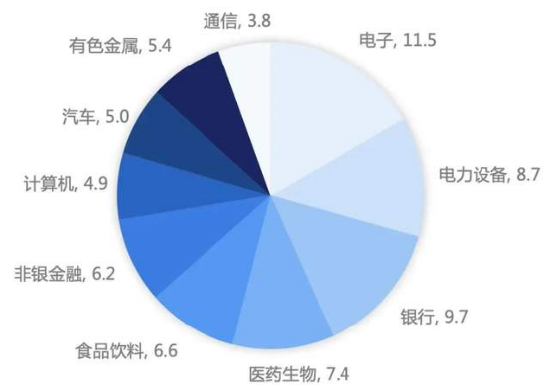
牛市来了,但要小心
3 6 Ke· 2025-08-20 09:40
Core Insights - The A-share market is experiencing a significant rally, with the Shanghai Composite Index reaching a nearly ten-year high of 3767 points, driven by increased trading volumes and investor confidence [1][3][9] - A notable shift in capital flows is observed, with a decrease of 1.1 trillion yuan in household deposits and a rise of 2.14 trillion yuan in non-bank deposits, indicating a movement of savings into the stock market [1][9] - The total market capitalization of A-shares has surpassed 100 trillion yuan for the first time, reflecting strong market sentiment and participation [3][9] Market Performance - On August 20, the A-share market saw a total trading volume of 2.41 trillion yuan, maintaining high activity levels despite a slight decrease from August 18 [1] - The market is characterized by a broad-based rally, with over 3600 stocks rising and 86 stocks hitting the daily limit-up [6][9] - The financial sector has been a standout performer, with significant gains in key stocks such as Zhongjin and Tonghuashun, indicating strong investor interest [7][9] Economic and Policy Factors - The current bull market is supported by multiple favorable factors, including a steady recovery in the Chinese economy, improved export data, and supportive monetary policies from the central bank [9] - The People's Bank of China has maintained liquidity through measures such as interest rate cuts, which have encouraged investment in the stock market [9] - Global monetary easing, particularly anticipated rate cuts by the Federal Reserve, has made A-shares attractive to international investors [9] Historical Context - The recent surge in margin trading balances, which have exceeded 2 trillion yuan, draws comparisons to the 2015 bull market, but experts note significant differences in market conditions and regulatory environments [10][15] - Unlike the rapid and speculative nature of the 2015 market, the current environment is described as a "slow bull" with stricter controls on leverage, contributing to greater market stability [10][15] Investor Sentiment and Behavior - The current market enthusiasm is reminiscent of previous bull markets, with widespread optimism among retail investors and increased marketing efforts from brokerage firms [4][6] - However, there are warnings about potential risks associated with high valuations and increased leverage, which could lead to market volatility if sentiment shifts [12][15] - Investors are advised to maintain a rational approach, focusing on quality stocks and avoiding excessive speculation or leverage [15]
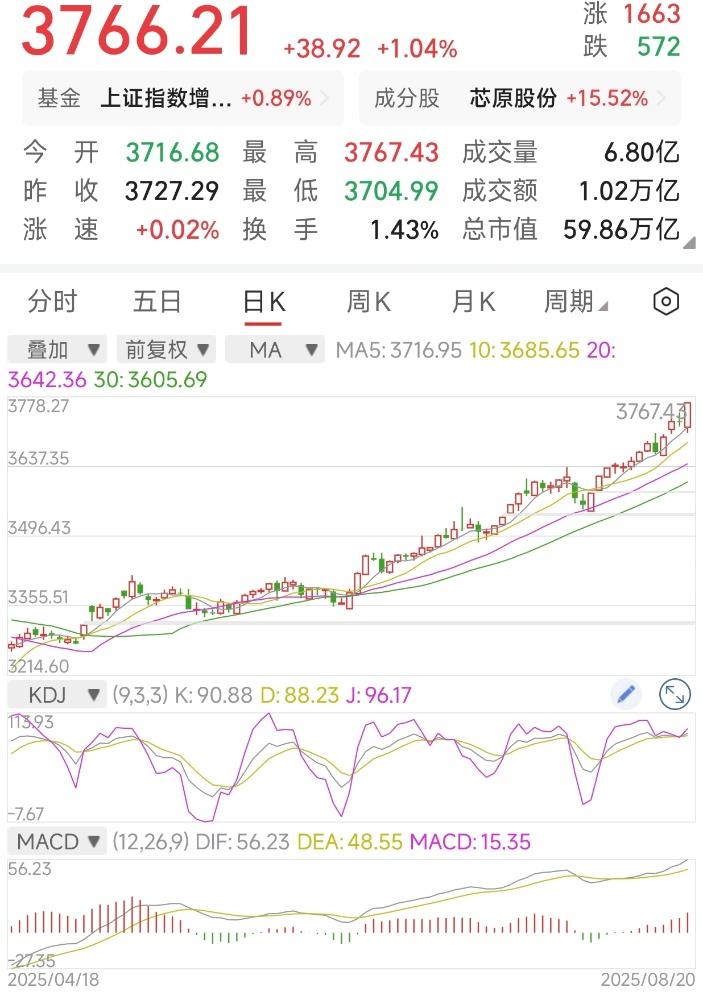
创十年新高 A股还能“上车”吗?
Xin Jing Bao· 2025-08-20 09:39
连日来,上证指数接连突破3600点、3700点,创下近十年新高;北证50指数更是刷新历史纪录。市场情 绪高涨,"牛市"讨论再度升温。下一步A股该何去何从?股债跷跷板将如何演绎?普通投资者面临如此 行情可以怎么做? ...
杨德龙:本轮牛市行情愈演愈烈赚钱效应明显提升
Xin Lang Ji Jin· 2025-08-20 09:08
Group 1 - The A-share market has experienced continuous breakthroughs and significant increases due to low domestic interest rates, ample liquidity, and policy support, alongside a growing expectation of a rate cut by the Federal Reserve in September [1][2] - The Shanghai Composite Index has risen over 1%, surpassing 3700 points, which has attracted more external capital, including foreign investment, as the China-US interest rate differential narrows and the pressure of RMB depreciation eases [1][2] - The Federal Reserve is expected to cut rates by 25 basis points in September, with potential further cuts by the end of the year, which could lower the benchmark interest rate from the current 4.25%-4.5% to below 4%, providing support for the US economic recovery [2] Group 2 - The current bull market trend is gradually establishing itself, with significant policy support being a crucial factor, as the Central Political Bureau has emphasized stabilizing the real estate and stock markets [3][4] - Institutional investors, including insurance funds, public funds, and pension funds, have increased their allocations to equity assets, contributing to a substantial influx of capital into the market [3][4] - The total market capitalization of A-shares has surpassed 100 trillion yuan, indicating a strong market sentiment and increased trading volume, with multiple trading days exceeding 2 trillion yuan [4] Group 3 - There is a noticeable trend of residents shifting savings to the capital market, with nearly 60 trillion yuan added to savings accounts over the past five years, driven by low interest rates on deposits [4] - The current bull market is expected to last two to three years, characterized by a slow and steady growth rather than a rapid surge, encouraging value investing and the allocation of quality stocks and funds [4] Group 4 - The fourth technological revolution is underway, particularly with the widespread application of artificial intelligence, as demonstrated by the progress of "Wukong AI" in the aerospace sector [5][6] - The humanoid robot sector is gaining attention, with significant events and IPOs attracting investor interest, positioning humanoid robots as a potential fourth major industry in China [6] Group 5 - The People's Bank of China has emphasized a moderately loose monetary policy, focusing on promoting reasonable price recovery and improving consumer demand through supply-side reforms [7] - The government has set a GDP growth target of around 5% and a CPI target of 2%, with measures to stimulate consumption and achieve the inflation target being crucial [7]
牛市来了,还适合买宽基指数吗?
雪球· 2025-08-20 08:36
Core Viewpoint - The article discusses the challenges and considerations of identifying "mainline sectors" during a bull market, suggesting that broad-based indices may be a more pragmatic choice for most investors [4][6][18]. Group 1: Mainline Investment Temptation and Identification Challenges - In bull markets, mainline sectors often yield significant excess returns, with data showing that in 2020, the top three industry indices had returns of 190.96%, 138.41%, and 135.19%, while the CSI 300 index only rose by about 27.21% [6][7]. - The difficulty of accurately identifying mainline sectors beforehand is highlighted, as many investors may only realize what the mainline was after the market has moved [8][10]. Group 2: Real Obstacles in Mainline Identification - Three main obstacles to identifying mainline sectors are discussed: 1. Extreme internal differentiation within industries complicates stock selection, as seen in the 2025 market where the ground equipment sector had a 103.73% annual increase, but individual stocks within the sector varied significantly in performance [10]. 2. The acceleration of valuation bubbles poses greater risks than broad indices, as high valuations can lead to significant corrections if industry progress does not meet expectations [10][11]. 3. Behavioral biases can interfere with investment discipline, leading to premature profit-taking or overconfidence, which can result in substantial losses [11]. Group 3: Unique Value of Broad-Based Indices - Broad-based indices offer unique advantages in risk diversification, stable returns, and operational convenience. They provide a better risk-return ratio through cross-industry and cross-market capitalization allocation [12][13]. - Historical data shows that broad-based indices like the CSI 300 had significantly lower maximum drawdowns compared to industry indices during bull and bear markets [13][15]. - The operational convenience of broad-based indices is enhanced by a well-established ecosystem of investment tools, such as ETFs, which lower the barriers for non-professional investors [16]. Group 4: Conclusion and Strategy - The article concludes that while broad-based indices may not outperform leading mainline sectors, they are often a better choice for ordinary investors due to their ability to mitigate emotional trading and provide stable returns [18][19]. - A suggested investment strategy for ordinary investors is the "core-satellite" approach, allocating 60%-80% of the portfolio to broad-based ETFs to capture market beta, while using 20%-40% for selective participation in mainline sectors to manage risk exposure [19].

熊市安居乐业,牛市倾家荡产,牛市开启和结束的信号是什么?
Hu Xiu· 2025-08-20 07:30
Core Viewpoint - The article discusses the contrasting impacts of bear and bull markets on investors, emphasizing the need to understand the underlying logic of current market conditions and potential signals indicating the end of a bull market [1] Group 1 - The article highlights that bear markets can provide stability for some investors, while bull markets can lead to significant losses for others [1] - It raises questions about the sustainability of the current market trends and the duration of the ongoing market conditions [1] - The article suggests that there are specific signals that investors should be aware of before the conclusion of a bull market [1]
“00后”勇闯牛市!辞职All in、跟风入场、同学一起炒……赚钱就是“股神”
中国基金报· 2025-08-20 06:54
Core Viewpoint - The article discusses the emergence of the "post-00s" generation as a significant force in the stock market, highlighting their unique experiences and challenges in navigating the current bull market [2][3]. Group 1: New Investors' Experiences - The "post-00s" generation has become the main force in opening stock trading accounts, surpassing other age groups for the first time in July [2]. - Many new investors, like Liu Chenyang, have transitioned from traditional jobs to full-time trading, often driven by initial successes and peer influences [5][7]. - Liu expresses that the pressure of full-time trading is greater than that of a regular job, with concerns about missing opportunities overshadowing financial losses [7]. Group 2: Investment Strategies and Mindsets - Experienced investors emphasize that successful full-time trading requires significant capital (at least 1 million yuan) and extensive experience (over 10 years) [8]. - Chen Er, a "post-00s" investor with five years of experience, reflects on the importance of developing a systematic investment strategy rather than relying on luck [10][11]. - The article notes that many new investors quickly jump into trading without thorough research, often influenced by short-term gains [12]. Group 3: Generational Perspectives on the Market - The article contrasts the perspectives of older investors, like Lao Li, who are cautious and skeptical, with younger investors, like Xiao Li, who are more optimistic and tech-savvy [13][14]. - Xiao Li believes that the current market offers opportunities that differ from those of previous generations, attributing this to the rapid information access and learning capabilities of the "post-00s" [14]. - The article concludes with a cautionary note about the potential pitfalls of the market, suggesting that new investors may underestimate the challenges ahead [14].