
两重建设

Search documents
引导更多民间资本参与“两重”建设
Jing Ji Ri Bao· 2025-11-21 22:41
Core Viewpoint - The participation of private capital in the "two重" construction is expected to support stable economic growth and promote the cultivation of new productive forces through the transmission effect of the industrial chain [1][4]. Group 1: Government Initiatives - The State Council has proposed to guide more private capital participation in "two重" construction, which is anticipated to expand development space for private investment and inject more market vitality into the projects [1]. - The government has allocated 800 billion yuan to support 1,459 "two重" projects, indicating a significant funding requirement that cannot be fully covered by government investment alone [1]. Group 2: Private Capital Dynamics - Private capital is showing strong investment demand, with a notable year-on-year growth in private investment, excluding the drag from real estate development [2]. - The introduction of private capital in projects, such as those funded by long-term special government bonds, can alleviate fiscal pressure and enhance capital utilization efficiency through market-oriented methods [2]. Group 3: Sectoral Focus and Economic Impact - Private investment is currently flowing into sectors like accommodation, catering, infrastructure, and cultural sports, which are directly related to expanding domestic demand and enhancing industrial capacity [3]. - The participation of private capital in "two重" construction is crucial for optimizing investment structure and fostering new economic growth drivers, particularly in emerging industries like big data and green materials [3]. Group 4: Regulatory and Environmental Support - The implementation of the Private Economy Promotion Law provides a legislative basis for supporting private enterprises' involvement in national strategic projects, enhancing their confidence to invest [3]. - The government is accelerating the introduction of attractive major projects in key areas such as railways and nuclear power, exploring innovative financing channels like PPP models and infrastructure REITs to offer diverse exit paths for private capital [3].
“软硬结合”筑牢根基 “两重”建设落子新棋局
Jin Rong Shi Bao· 2025-11-21 00:15
Core Insights - The "Two Heavy" construction is positioned as a crucial initiative for high-quality development during the "14th Five-Year Plan" period, focusing on strategic, forward-looking, and holistic requirements [3][4][5] - The initiative aims to enhance national strategic capabilities and address internal development imbalances, thereby reinforcing China's long-term economic growth [3][6] Group 1: Strategic Importance - The "Two Heavy" construction is seen as a key measure to solidify development foundations and seize competitive advantages during critical periods [2] - It is expected to play a central role in supporting China's modernization efforts and responding to complex international challenges [3][6] Group 2: Soft and Hard Integration - The initiative emphasizes the integration of "hard investments" in physical projects with "soft constructions" involving institutional reforms, creating a synergistic effect [5][6] - Key projects include major infrastructure developments such as high-speed railways and agricultural advancements, which are essential for strategic implementation [6] Group 3: Funding Mechanisms - The "Two Heavy" construction requires substantial financial support beyond central government funding, necessitating the involvement of private capital and financial institutions [7][8] - Strategies include issuing long-term special government bonds and leveraging policy-based financial tools to attract diverse funding sources [7][8]
建筑材料行业周报:前十月基建投资同比-0.1%,稳增长背景下看好战略重点工程推进-20251120
East Money Securities· 2025-11-20 08:57
Investment Rating - The report maintains an "Outperform" rating for the construction materials industry, indicating a positive outlook compared to the broader market [3][51]. Core Insights - The construction materials sector has shown resilience with a 1.50% increase last week, outperforming the CSI 300 index by 2.6 percentage points. Year-to-date, the sector has risen 17.3%, slightly underperforming the CSI 300 index by approximately 0.4 percentage points [6][14]. - Infrastructure investment in the first ten months of 2025 has decreased by 0.1% year-on-year, but there is optimism regarding the acceleration of strategic key projects, particularly in cement, explosives, pipes, and waterproof materials [6][26]. - The report highlights a shift towards consumption upgrades, which is expected to enhance the competitive landscape in the consumer building materials segment, leading to increased market share for leading companies [6][26]. Summary by Sections Market Overview - The construction materials sector has experienced a 1.50% increase last week, with cement, glass, and renovation materials showing varied performance [6][14]. - Cement prices have seen a slight increase, with the national average price at 358 RMB/ton, reflecting a week-on-week increase of 1.1 RMB/ton [20][30]. Infrastructure Investment - National fixed asset investment reached 408914 billion RMB in the first ten months of 2025, down 1.7% year-on-year, with infrastructure investment showing a minor decline of 0.1% [6][24]. - Key sectors such as pipeline transportation, water transportation, and railway transportation have shown growth rates of 13.8%, 9.4%, and 3.0% respectively, indicating relative strength in these areas [6][24]. Cement Market Dynamics - The national cement shipment rate was approximately 46% as of November 14, 2025, with a week-on-week increase of 0.3 percentage points [20][30]. - The report notes that the overall demand for cement is expected to stabilize, with prices likely to experience fluctuations as companies aim to enhance profitability [31][30]. Glass and Fiberglass Market - The average price of float glass has decreased to 1195 RMB/ton, with a week-on-week decline of 2 RMB/ton, while inventory levels have also decreased [39][40]. - Fiberglass prices remained stable, with the average price of non-alkali fiberglass yarn in East China at 3475 RMB/ton [43][44]. Cost Trends - The report indicates that most raw material prices have decreased year-on-year, which is expected to positively impact corporate profitability in the second half of 2025 [45][47].
宝城期货资讯早班车-20251119
Bao Cheng Qi Huo· 2025-11-19 01:41
投资咨询业务资格:证监许可【2011】1778 号 期货研究报告 资讯早班车-2025-11-19 一、 宏观数据速览 | 发布日期 | 指标日期 | 指标名称 | 单位 | 当期值 | 上期值 | 去年同期值 | | --- | --- | --- | --- | --- | --- | --- | | 20251020 | 2025/09 | GDP:不变价:当季同比 | % | 4.80 | 5.20 | 4.60 | | 20251031 | 2025/10 | 制造业 PMI | % | 49.00 | 49.80 | 50.10 | | 20251031 | 2025/10 | 非制造业 PMI:商务活 动 | % | 50.10 | 50.00 | 50.20 | | 20251113 | 2025/10 | 社会融资规模增量:当 | 亿元 | 8161.00 | 35299.00 | 14120.00 | | | | 月值 | | | | | | 20251113 | 2025/10 | M0(流通中的现金):同 比 | % | 10.60 | 11.50 | 12.80 | | 202511 ...
11.19犀牛财经早报:多家公募调整旗下产品风险等级 大疆“密会”百家投资机构
Xi Niu Cai Jing· 2025-11-19 01:37
Group 1 - Public funds are adjusting the risk levels of their products to better match investor suitability following the draft of the "Publicly Raised Securities Investment Fund Investor Suitability Management Guidelines" [1] - Over 90% of public funds have achieved net value growth this year, with 39 products exceeding 100% growth, particularly in the equity mixed fund category [1] - The A-share market's increased risk appetite has led to significant inflows into growth sectors, benefiting actively managed funds through sector rotation and stock selection [1] Group 2 - Several public institutions have warned about the premium risk associated with cross-border ETFs, particularly those tracking foreign indices amid a market correction [2] - The recent adjustments in deposit product structures by small and medium-sized banks indicate a trend away from long-term fixed deposits due to narrowing net interest margins [2] Group 3 - The international gold price has shown volatility, dropping below $4,000 per ounce after reaching a peak of $4,245.22, influenced by changing market sentiments and economic data uncertainties [3] - The "Two Heavy" construction projects are expected to boost infrastructure investment growth as they are prioritized in national strategic planning [4] Group 4 - The market for electrolyte additives is experiencing a recovery, with prices for key products like vinylene carbonate and fluoroethylene carbonate rising due to increased demand from energy storage and power batteries [4] - China's lithium battery shipments are projected to triple over the next decade, driven by strong demand in the power battery and energy storage markets [4] Group 5 - Executives from various local banks have been actively buying shares in their own institutions, indicating confidence in their companies' prospects [5] - DJI has held closed-door meetings with multiple investment institutions but has stated there are no current plans for financing or an IPO [8] Group 6 - The latest financial report from Yamafin Sports shows a 30% increase in revenue for Q3, with a significant 161% rise in net profit, particularly in the Greater China region [9] - China First Heavy Industries announced the arrest of its chairman for bribery, but the company's operations remain normal [9] - ST Lingda has been accepted for reorganization by the court, facing delisting risk while continuing to trade [9]
21社论丨发挥“两重”建设稳增长促创新的作用
21世纪经济报道· 2025-11-19 00:52
Core Viewpoint - The "Two Heavy" construction is positioned as a strategic tool for effective investment expansion, integrating national major strategy implementation with key area security capability enhancement, thereby supporting economic growth and innovation [1][2]. Group 1: Economic Impact - The "Two Heavy" construction is expected to have a significant economic driving effect, creating effective demand directly through major project investments and facilitating the coordinated development of upstream and downstream industries [2]. - The construction process will generate numerous job opportunities, while the operational phase will continue to produce economic benefits, achieving a balance between short-term growth and long-term efficiency [2]. Group 2: Funding Mechanism - Government investment plays a pivotal role in leveraging private capital, with a focus on optimizing project revenue models and risk-sharing mechanisms to attract substantial social capital [2][3]. - In 2025, 1.3 trillion yuan of ultra-long-term special bonds have been allocated, with 800 billion yuan specifically supporting "Two Heavy" construction projects, covering over 1,400 major projects [2]. Group 3: Financing System - Future "Two Heavy" construction will aim to establish a more diversified financing system, effectively leveraging ultra-long-term credit and policy finance to encourage private sector participation [3]. - A balanced relationship between government and market collaboration is essential, ensuring reasonable returns for social capital while safeguarding public interests [3]. Group 4: Innovation and Technology - The "Two Heavy" construction will serve as a vehicle for industrial upgrading, promoting technological innovation and encouraging research and development investments [3][4]. - Establishing a platform for integrating production, education, and research will facilitate joint efforts to tackle technical challenges and enhance overall industry technology levels [4].

四大证券报精华摘要:11月19日
Xin Hua Cai Jing· 2025-11-19 00:07
Group 1 - The "Two Heavy" construction projects are set to boost infrastructure investment growth, as they are positioned as key drivers for effective investment and new productivity cultivation [1] - The State Council emphasizes the strategic, forward-looking, and holistic requirements for the "Two Heavy" projects, aiming for enhanced collaboration among departments and a combination of soft and hard measures [1] Group 2 - Insurance capital is increasingly entering the real estate sector, with recent examples of significant property acquisitions, indicating a trend towards stable cash flow investments that align with insurance asset allocation needs [2] - The low correlation of real estate with stocks and bonds helps insurance companies optimize their investment portfolios [2] Group 3 - The offshore RMB bond market, known as "dim sum bonds," is experiencing significant growth, with issuance nearing 1 trillion yuan this year, driven by demand from major tech companies like Tencent and Alibaba [3] - The expansion of the dim sum bond market is supported by policy benefits, market demand, and improved asset quality, playing a crucial role in supporting the real economy and promoting RMB internationalization [3] Group 4 - Foreign investment institutions are increasing their allocations to Chinese assets, particularly in the tech sector, as evidenced by significant purchases of the China Overseas Internet ETF by major financial firms [4] - The perceived value of Chinese assets, especially in technology, is rising among investment institutions [4] Group 5 - The Chinese lithium battery market is projected to triple its shipment volume over the next decade, driven by growing demand in the power battery and energy storage markets [6] - The solid-state battery sector is expected to see significant capacity expansion between 2027 and 2030, marking a critical phase for the industry [6] Group 6 - A surge in AI application stocks has been observed, particularly among companies like Alibaba, following major investments from prominent firms like Berkshire Hathaway in tech giants [9] - The AI sector's rapid growth is contributing to a notable increase in stock prices for related companies [9] Group 7 - Several A-share listed companies are entering the robotics sector through various strategies, indicating a shift towards large-scale development in the industry [11] - The domestic robotics industry is moving from technology validation to a critical phase of large-scale development, supported by advancements in core components and favorable policies [11] Group 8 - The "Specialized, Refined, Unique, and Innovative" board has gathered 15,600 enterprises over three years, indicating a robust growth in specialized small and medium enterprises [12] - The board has successfully served a significant number of "little giant" enterprises, showcasing its impact on fostering innovation [12] Group 9 - The recent government initiative to promote scene cultivation and large-scale application is expected to reshape the technology, industry, and capital ecosystems, driving economic transformation [13] - The focus on new scenes is seen as a strategic pivot for future competition and innovation potential [13]
发挥“两重”建设稳增长促创新的作用
2 1 Shi Ji Jing Ji Bao Dao· 2025-11-18 23:05
Core Viewpoint - The "Two Heavy" construction is positioned as a strategic tool for expanding effective investment and fostering new productive forces, transcending traditional infrastructure investment during China's economic transformation and upgrade [1][2]. Group 1: Economic Impact - The "Two Heavy" construction is expected to significantly boost economic growth by creating effective demand through major project investments, which will also drive the development of upstream and downstream industries such as basic materials, equipment manufacturing, and engineering services, resulting in a notable investment multiplier effect [2]. - The construction process will generate numerous job opportunities, while the operational phase will continue to yield economic benefits, thereby achieving a balance between short-term growth stabilization and long-term efficiency in resource allocation [2]. Group 2: Funding Mechanism - Government investment plays a crucial role in leveraging private capital, with fiscal funds acting as a catalyst to attract multiple times the scale of social capital through optimized project revenue models and risk-sharing mechanisms [2][3]. - A total of 1.3 trillion yuan in ultra-long-term special bonds has been allocated for 2025, with 800 billion yuan specifically supporting "Two Heavy" construction projects, covering over 1,400 major projects focused on ecological restoration, new transportation corridors, and urban infrastructure [2]. Group 3: Financing System - Future "Two Heavy" construction will focus on building a more diversified financing system, effectively leveraging ultra-long-term credit and policy-based finance while actively guiding private capital participation [3]. - The initiative aims to enhance the investment multiplier effect and create broader market opportunities for private enterprises, aligning with reforms to optimize the business environment and stimulate market vitality [3]. Group 4: Industry Upgrade - The "Two Heavy" construction will serve as a key vehicle for promoting industrial upgrades by establishing technology innovation incentive mechanisms and encouraging research and development investments [4]. - An integrated platform for industry, academia, and research will be developed to tackle technical challenges through collaborative efforts, and new technology application demonstration zones will be established to elevate the overall technological standards in the industry [4].
“两重”项目持续加力 基建投资增速料提升
Zhong Guo Zheng Quan Bao· 2025-11-18 20:04
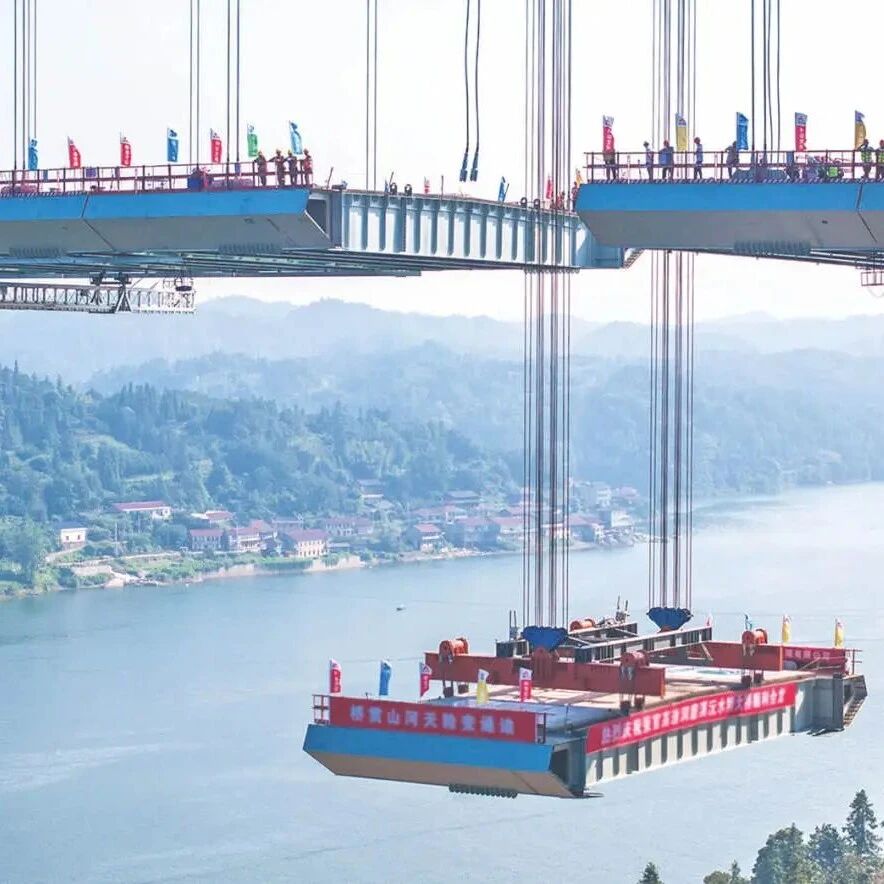
Core Insights - The "Two Major" construction projects are being prioritized as a key focus for effective investment and new productivity cultivation, aiming to stabilize economic growth [1][4][6] - The government plans to allocate 800 billion yuan to support 1,459 projects under the "Two Major" initiative, covering critical areas such as ecological restoration, transportation infrastructure, and water conservancy [2][3] - The construction of significant projects like the Fangxian to Wufeng Expressway and Shangqiu Airport is expected to enhance transportation efficiency and strengthen regional connectivity [1][2] Group 1: Project Developments - The Fangxian to Wufeng Expressway project spans approximately 31.6 kilometers with a construction period of 4.5 years, designed to significantly improve travel efficiency [1] - The Shangqiu Airport, with a total investment of around 800 million yuan, aims to enhance Shangqiu's position in the national transportation network [2] - The G248 highway project in Gansu and Sichuan is also underway, contributing to the national road network and tourism development [2] Group 2: Policy and Financial Support - The "Two Major" construction projects are seen as a vital part of the government's strategy to boost effective investment and foster new productivity [3][4] - The issuance of long-term special bonds is expected to increase, providing financial support for the "Two Major" projects over the next five years [3][4] - Experts emphasize the need for a precise matching mechanism between funding and projects to optimize resource allocation [5] Group 3: Economic Impact - The ongoing "Two Major" construction efforts are anticipated to accelerate infrastructure investment growth, acting as a stabilizer for the macro economy [6] - The introduction of new policy financial tools and special bond allocations is expected to enhance investment confidence and stabilize fixed asset investment growth by early 2026 [6] - The government aims to improve the investment environment and stimulate private investment to support high-quality economic development [7]
基建降幅进一步扩大,关注年底财政空间
Changjiang Securities· 2025-11-18 09:42
Investment Rating - The report maintains a "Positive" investment rating for the construction and engineering industry [9]. Core Insights - In October, narrow infrastructure investment decreased by 8.7%, with a month-on-month decline of 4.1 percentage points, while broad infrastructure investment fell by 8.1%, also with a month-on-month decline of 4.1 percentage points [2][6]. - The marginal weakening of infrastructure investment is evident, with the single-month growth rate for narrow infrastructure investment reaching its lowest since July 2021 [11]. - The report highlights that despite the current downturn, there remains fiscal space for potential growth in infrastructure investment by the end of the year [11]. Summary by Sections Economic Data - In October, narrow infrastructure investment saw a month-on-month decline of 8.7%, while broad infrastructure investment decreased by 8.1% [2][6]. - Year-to-date, narrow infrastructure investment has declined by 0.1%, while broad infrastructure investment has grown by 3.0%, with a month-on-month decrease of 1.6 percentage points [11]. Project Analysis - All project categories experienced year-on-year declines in investment for the month, with notable decreases in power (down 6.3%), transportation (down 10.1%), and water management (down 19.0%) [11]. - The report indicates that the construction industry’s PMI for October was 49.1%, reflecting a contraction for three consecutive months [11]. Fiscal Outlook - As of November 14, 2023, special bonds issued totaled 41,492 billion yuan, with a year-on-year increase of 2,476 billion yuan, indicating room for further issuance [11]. - The report emphasizes the government's focus on high-quality development and the need to optimize investment structures to stimulate private investment [11].