
供应链重构

Search documents
日系三巨头千亿押注印度,与深化中国布局双轨并行
3 6 Ke· 2025-11-18 08:53
Core Insights - Japanese automakers Toyota, Honda, and Suzuki are significantly increasing investments in India, exceeding $10 billion, to expand production capacity and establish India as a hub for global electric and hybrid vehicle manufacturing [1][2] Investment Strategies - Toyota plans to invest approximately $3 billion in India, adding a third production line in its southern factory to increase annual capacity by 100,000 units, with a goal to boost local production to over 1 million units by 2030 and launch 15 new or updated models [2] - Suzuki is investing around $8 billion to expand its annual production capacity from 2.5 million to 4 million units, aiming to enhance exports and establish India as its global production center [2] - Honda is positioning India as the global production and export base for its electric vehicle "zero series" models, with plans to start exports to Japan and other Asian markets by 2027 [2] Supply Chain Localization - Direct investment from Japan in India's transportation sector is projected to increase more than sevenfold from 2021 to 2024, indicating a shift towards local supply chain integration [3] - Japanese companies are adapting product standards from "global uniform" to "local specifications" to accelerate the development of India's domestic supply chain [3] Competitive Landscape - The strategic shift by Japanese automakers is driven by intensified competition from Chinese brands and rising supply chain risks, with local Indian brands also strengthening their market positions [4][5] - India's protective stance against Chinese electric vehicles and manufacturing investments provides a unique opportunity for Japanese brands to expand their presence [4] Market Potential - The Indian passenger vehicle market is expected to grow, with a reported 11% year-on-year increase in sales to 557,000 units by October 2025, indicating strong consumer demand [4] Challenges Ahead - Despite the potential, the competitive environment in India remains challenging, as evidenced by the exit of American automakers like Ford and General Motors due to market difficulties [5]


通用要求供应商“去中国化”
汽车商业评论· 2025-11-14 23:06
Core Viewpoint - General Motors (GM) is instructing thousands of suppliers to eliminate reliance on the Chinese supply chain by 2027, aiming to enhance supply chain resilience and reduce dependency on China for critical components [4][5][16]. Group 1: General Motors' Strategy - GM has been working on increasing supply chain resilience for years, focusing on local sourcing of components [5]. - The company has initiated efforts to secure domestic semiconductor supply chains, evidenced by a long-term agreement with GlobalFoundries to reserve capacity for critical chips [10]. - GM is investing in local resources for battery raw materials, including a nearly $950 million joint venture with Lithium Americas to develop a lithium mine in Nevada [11][13]. - The company is also establishing partnerships for cobalt and nickel supplies, aiming to build a reliable supply chain within North America and allied nations [11][13]. - GM's strategy includes reducing reliance on Chinese processed materials, particularly in rare earth elements, which are crucial for electric vehicles [13][14]. Group 2: Ford's Position - Ford's electric vehicle battery technology heavily relies on Chinese suppliers, including a partnership with CATL for LFP battery technology in Michigan [18][19]. - Regulatory scrutiny has arisen regarding Ford's collaboration with CATL, prompting the company to seek additional partnerships with North American lithium suppliers [24][25]. - Ford's sales in China have decreased, with 2024 projections showing a drop to 440,000 units, while still achieving $600 million in profit due to exports [36][37]. Group 3: Market Dynamics and Trends - Both GM and Ford have not increased investments in China like their Japanese and German counterparts, with GM's market share in China declining from 12-13% pre-pandemic to 8-9% in 2023 [30][32]. - The ongoing U.S.-China trade tensions are reshaping the automotive supply chain, pushing companies to localize production while still relying on Chinese components due to cost advantages [41][44]. - The evolving international landscape will have significant implications for global automotive supply chains and corporate strategies in the coming years [44].



山东港口:打开港口发展的无限可能
Da Zhong Ri Bao· 2025-11-14 02:36
Core Insights - Shandong Port is enhancing its global logistics capabilities through comprehensive services including terminal operations, logistics transportation, financial services, trade services, and shipping services, aiming to become a world-class maritime port cluster [1][2][4]. Group 1: Services Offered - Shandong Port provides extensive terminal handling services with over 380 productive berths across 21 major port areas, facilitating global reach to over 700 ports in more than 180 countries [1]. - The port offers "end-to-end" logistics services with over 80 logistics options, covering everything from warehousing to multimodal transport [1]. - Financial services include 15 types of financial licenses and 30 financial business entities, catering to diverse supply chain financial needs [1]. - Trade services encompass over 30 types of goods, with 10 goods achieving transaction volumes of over one million tons, supporting upstream procurement and downstream supply [1]. - Shipping services feature a fleet of over 70 vessels with a total capacity exceeding 1.1 million tons, including key routes to Japan and South Korea [1]. Group 2: Development Achievements - Since the start of the 14th Five-Year Plan, Shandong Port has added over 50 productive berths, increasing its annual throughput capacity by 180 million tons to nearly 1 billion tons [5]. - The port has expanded its container shipping routes by over 50, totaling more than 360 routes, maintaining the highest route density among northern Chinese ports [5]. - The port's inland logistics network includes 54 inland ports and 106 container rail-sea intermodal routes, achieving a rail-sea intermodal operation volume of over 4.2 million TEUs [5]. Group 3: International Expansion - Shandong Port has established four overseas regional companies and seven overseas representative offices, enhancing its global operational capacity with over 1 million tons of annual operations [6]. - The port has formed partnerships with over 50 friendly ports worldwide, strengthening its global supply chain service network [6]. Group 4: Supply Chain Services - The port has developed a comprehensive supply chain service system integrating port, finance, shipping, trade, logistics, and overseas services, with 80 logistics business types and 15 financial licenses [8][9]. - The trade volume of goods has increased to over 30 types, with significant contributions to domestic and international trade, including partnerships with major global companies [9][10]. Group 5: Technological and Environmental Advancements - Shandong Port has made significant strides in automation, with the first fully automated container terminal in Asia achieving record operational efficiency [12][13]. - The port has implemented a green port strategy, achieving a clean energy usage rate of 65% and enhancing its environmental quality [15]. - The port's digital transformation includes the establishment of a comprehensive supply chain service platform, significantly improving operational efficiency and service delivery [14].
“十五五”规划建议学习系列(一):跨越关口的五年,“十五五”发展动能与政策路径推演
Zhong Cheng Xin Guo Ji· 2025-11-13 09:02
1. Report Industry Investment Rating No relevant content provided. 2. Core Viewpoints of the Report - The "15th Five - Year Plan" period is a crucial five - year period that connects the past and the future, with special significance for high - quality development and achieving the 2035 visionary goals [10][11]. - China's economic development during the "15th Five - Year Plan" period faces a complex and uncertain internal and external environment. Externally, there are challenges such as global economic slowdown, intensified great - power competition, and supply - chain reconstruction; internally, there are issues like economic growth slowdown, effective demand shortage, and population aging [13]. - To promote high - quality development during the "15th Five - Year Plan" period, five major policy levers should be grasped, including developing new quality productive forces, expanding domestic demand, deepening income distribution reform, building a unified national market, and reshaping the incentive - restraint mechanism [67][68]. 3. Summary According to Relevant Catalogs 3.1 "15th Five - Year Plan" Historical Position - The "15th Five - Year Plan" is at the historical intersection of the "Two Centenary Goals" and is a foundational stage for the new journey of building a modern socialist country. It has a "connecting - the - past - and - future" role, with tasks of "attacking and implementing" and coincides with many major historical nodes [10][11]. 3.2 Ten Judgments on the Internal and External Environment of China's Economic Development during the "15th Five - Year Plan" Period 3.2.1 External Environment - Global economic uncertainty increases, and the global economy may enter a deep adjustment period of slow growth and declining potential output. The "15th Five - Year Plan" may face a "high - risk, high - volatility" global economic environment with weak growth momentum [14][16]. - A multi - polar trade system is taking shape. China's voice in global economic and trade is expected to further increase, but trade frictions with non - US countries may intensify [20][21]. - Sino - US competition remains the core variable affecting the global political and economic landscape, evolving towards "normalization" and "complexity." The competition for scientific and technological and industrial discourse power is crucial [31][32]. - Supply - chain reconstruction has entered the second half, with geopolitics and strategic security becoming the main lines of global supply - chain layout [35]. - China has many favorable factors to actively shape the external environment and is not completely passive in the face of external pressure [39][40]. 3.2.2 Internal Environment - The official "4.17%" may be the minimum growth target for the "15th Five - Year Plan," and the expected economic growth range is around 4.5% - 5% [41]. - The transformation of old and new driving forces will accelerate the adjustment of China's industrial structure. The real estate industry may be in the transition from the bottom to a new cycle, and the urgency of new quality productive forces playing a leading role has increased significantly [45][47]. - The population structure may gradually transition to deep aging, and the pressure of "getting old before getting rich" poses more severe challenges to the pension system, medical resources, and elderly care services [53]. - Reform has entered the "deep - water zone," and the implementation of some reform tasks faces significant resistance [57]. - "Debt reduction in development" should be implemented, focusing on structural optimization and efficiency improvement to enhance the sustainability of fiscal debt [61][63]. 3.3 Five Levers to Promote China's High - Quality Development during the "15th Five - Year Plan" Period - **Lever 1: Technological Innovation and Industrial Upgrading** "15th Five - Year Plan" suggestions prioritize building a modern industrial system. China's industrial structure has problems such as traditional industries in urgent need of transformation and modern manufacturing being "large but not strong." R & D investment is still relatively low, and there are "bottleneck" issues in key areas. "Full - chain" key core technology research in key areas is necessary, and industry "involution" should be avoided [69][70][71]. - **Lever 2: Expanding Domestic Demand and Boosting Consumption** The importance of "expanding domestic demand" has increased. Insufficient effective demand is the core obstacle to the domestic cycle. During the "15th Five - Year Plan" period, direct subsidies to residents may be increased, and investment growth is expected to be stable, especially ensuring that the proportion of private investment does not continue to decline [5][8]. - **Lever 3: Deepening Income Distribution Reform and Improving the Social Security System** "People's livelihood" is a key word in the "15th Five - Year Plan" suggestions. Income distribution reform, household registration system reform, and improvement of the social security system are expected to be key tasks [6]. - **Lever 4: Continuously Promoting Anti - involution and Building a Unified National Market** Building a unified national market is a systematic project. The implementation of the Third Plenary Session of the 20th CPC Central Committee's reform tasks is crucial, especially optimizing the local government assessment and incentive mechanism and solving the problem of China's economic growth path dependence [8]. - **Lever 5: Remodeling the Incentive - Restraint Mechanism and Releasing the Vitality of Micro - entities** The "15th Five - Year Plan" suggestions emphasize "combining strict management with kindness and balancing incentives and restraints." It is expected to optimize the local assessment and statistical system, promote fiscal and tax system reform, and improve the business environment for enterprises [8].
连获超30艘订单!国有船企订单井喷捷报频传
Sou Hu Cai Jing· 2025-11-13 06:39
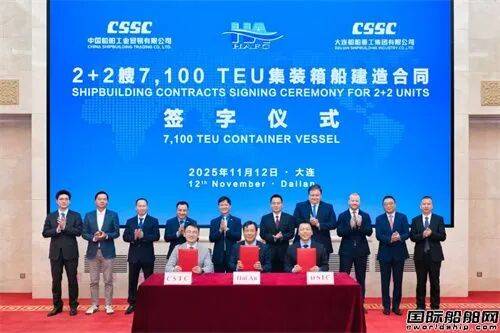
Core Insights - Dalian Shipbuilding has secured over 30 new ship orders from domestic and international shipowners, including container ships, oil tankers, and bulk carriers, indicating a strong operational performance [2][8]. Group 1: Container Ship Orders - Dalian Shipbuilding signed a contract with Vietnam's Hai An Green Shipping Company for 2+2 units of 7100 TEU container ships, marking a significant order in the container ship segment [3]. - The total order for 7100 TEU container ships has reached 14 units, showcasing Dalian Shipbuilding's capability for efficient mass production of medium to large container vessels [3]. - Notable shipowners such as Danoas from Greece and Asiatic Lloyd from Germany have placed orders for 7100 TEU container ships, with Danoas's vessels set for delivery in 2027 [3][4]. Group 2: LNG Dual-Fuel Container Ships - Dalian Shipbuilding has secured an order for 10 LNG dual-fuel 22000 TEU ultra-large container ships from French shipping giant CMA CGM, further solidifying its leadership in the clean energy vessel sector [6]. - The total value of this order is projected to reach $2.1 billion (approximately 14.94 billion RMB), with the first six vessels scheduled for delivery between 2027 and 2028 [6]. Group 3: Oil and Bulk Carrier Orders - Dalian Shipbuilding has also signed contracts for various oil and bulk carriers, including 2 units of 110,000-ton product oil/crude oil tankers and 6 units of 307,000-ton crude oil tankers, reflecting its traditional strengths in these markets [8][10]. - The total transaction value for the 6 VLCCs ordered by COSCO Shipping Development is approximately 5.0858 billion RMB, with the first vessel expected to be delivered in April 2027 [14]. Group 4: Domestic Market Developments - All recent contracts with domestic shipowners are denominated in RMB, indicating an increase in China's shipbuilding industry's bargaining power and promoting diversified settlement methods [15]. - Dalian Shipbuilding's production lines are fully booked until 2029-2030, demonstrating its robust order backlog and competitive strength in the global market [15].
2025年全球供应链及物流峰会在港成功举办
Feng Huang Wang Cai Jing· 2025-11-12 02:50
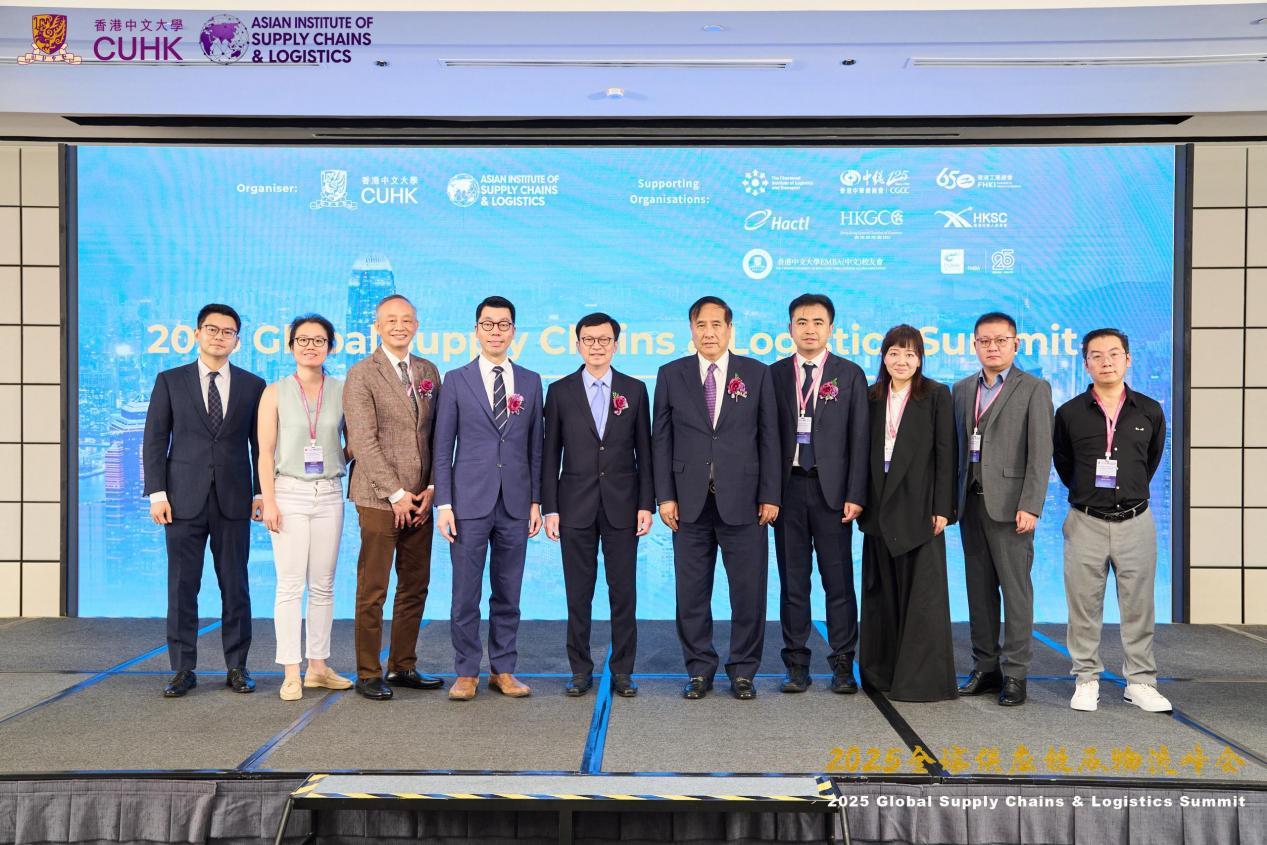
Core Insights - The summit focused on the theme of "Supply Chain Reconstruction Driven by AI and RWA," addressing challenges and innovative solutions in the global supply chain landscape [1][4][28] Group 1: Government and Institutional Support - The Deputy Secretary for Transport and Logistics emphasized the importance of the summit for promoting Hong Kong as an international logistics hub and highlighted the government's commitment to supporting innovation and cross-sector collaboration in the supply chain field [2] - The Hong Kong Chinese University (CUHK) plays a crucial role in logistics research, assisting the government in drafting strategies and actions for modern logistics development [2][4] - A new port community system developed by the government will launch next year, providing real-time cargo tracking and value-added services to enhance Hong Kong's competitiveness [2] Group 2: Challenges and Opportunities in Global Supply Chains - The global supply chain is facing multiple challenges, including trade route disruptions, demand fluctuations, and geopolitical uncertainties, necessitating the construction of smarter, more resilient, and transparent supply chains [4][6] - The summit highlighted the need for Chinese enterprises to leverage their advantages in digital infrastructure and platform economy to build globally competitive businesses amid geopolitical restructuring and the rise of the digital economy [6] Group 3: Technological Innovations - The summit featured discussions on the transition from passive to active supply chain management, emphasizing the role of AI and RWA in creating resilient supply chain solutions [7][9] - The GlobalChain.AI framework was introduced, enabling real-time risk response and alternative routing strategies through the integration of multidimensional data [9] - The integration of IoT, AI, and blockchain technologies is proposed as a solution to the $2.5 trillion financing gap faced by SMEs, focusing on creating verifiable process credentials to enhance trust and financing capabilities [15] Group 4: Regional Economic Integration - Hong Kong is positioned to capitalize on regional economic integration opportunities, particularly with the Greater Bay Area, by leveraging its unique advantages in higher education and financial services [12] - The summit underscored the importance of building localized production systems and compliance management for sustainable development in Southeast Asia, which is becoming a key area for Chinese enterprises [22] Group 5: Investment Strategies and Market Trends - The reversal of globalization trends and the impact of geopolitical tensions are reshaping investment strategies, with non-sovereign assets like cryptocurrencies and gold becoming preferred choices for investors [14] - The summit discussed the shift from "manufacturing overseas" to "branding and ecosystem overseas" for Chinese enterprises, marking a new phase in globalization [19] Group 6: Collaborative Efforts for Future Development - The roundtable forum emphasized the need for cross-sector collaboration and academic-industry partnerships to drive the development of intelligent and resilient supply chains [26] - The successful hosting of the summit is expected to inject new momentum into the supply chain and logistics sectors, fostering a collaborative and win-win environment [28]
美国地位转变,华尔街观点聚焦,中国战略重心调整
Sou Hu Cai Jing· 2025-11-11 19:52
Core Insights - The article discusses the shift in China's export strategies due to changing market dynamics, particularly the decline in exports to the U.S. and the rise of alternative markets [1][3][12] Group 1: Export Market Changes - From 2018 to 2024, China's export share to the U.S. decreased from 14% to 11%, indicating a significant shift in trade dynamics [3] - By 2023, the export volume of electric vehicles surged by over 70%, reflecting a strategic pivot towards new markets [5] - The trend of using local currencies for transactions has become more common, with many trade agreements now prioritizing RMB settlements [15] Group 2: Industry Adaptation - Companies are increasingly diversifying their markets and building new supply chains outside the U.S., a strategy referred to as "selective coupling" [12][19] - The semiconductor industry is experiencing a wave of mergers and acquisitions, with firms betting on future technologies through increased R&D spending [17] - The establishment of new manufacturing bases in Southeast Asia involves complex supply chain restructuring, requiring time and careful planning [14] Group 3: Financial and Regulatory Environment - Financial regulations are evolving, with a focus on maintaining systemic stability while allowing for cross-border capital flows [17] - Data from financial institutions and customs is guiding companies in their strategic adjustments, highlighting the importance of real-time information in decision-making [19] Group 4: Workforce and Operational Changes - The labor market is adapting, with increased demand for roles related to Southeast Asian business expansion, reflected in higher salaries compared to two years ago [10] - Workers and engineers are increasingly involved in standard-setting processes, indicating a shift towards more collaborative and strategic industry practices [10]

全球半导体产业,陷入材料资源困局
虎嗅APP· 2025-11-06 13:17
Core Viewpoint - The semiconductor industry is facing a critical shortage of essential raw materials, which poses a significant risk to the growth and stability of the trillion-dollar sector. This shortage is driven by geopolitical tensions, increased demand from AI and other technologies, and supply chain disruptions [4][5][24]. Group 1: Current Material Shortages - The semiconductor industry is experiencing a collective shortage of multiple raw materials, including gallium, indium phosphide, germanium, tungsten hexafluoride, and high-purity silicon, which are crucial for chip manufacturing [5][6]. - Gallium prices have surged over 40% in Europe due to export controls from China, leading to extended delivery times and reduced inventory at chip manufacturers [8][9]. - Indium phosphide is in severe shortage due to skyrocketing demand from AI applications, with some buyers willing to pay any price for available supplies [10][12]. Group 2: Price Increases and Supply Chain Impact - Germanium prices reached a 14-year high, with a price increase of over 350% since early 2023, driven by supply constraints and surging demand from low-orbit satellites and AI computing [13]. - Tungsten hexafluoride prices are expected to rise by 70% to 90% due to increased tungsten prices, which have doubled since early 2023, impacting chip manufacturing costs significantly [14][15]. - The shortage of high-end PCB materials, driven by a 50% year-on-year increase in demand for AI servers, is causing supply constraints for advanced chip packaging [16][17]. Group 3: Geopolitical and Policy Influences - The global semiconductor materials shortage is exacerbated by national security policies, with countries implementing export controls and strategic reserves to secure their supply chains [19][20]. - The U.S. is heavily reliant on China for gallium, with domestic production capabilities limited, leading to increased efforts to develop recycling technologies to mitigate shortages [8][9][19]. - China's export restrictions on key metals have led to a significant reduction in global supply, prompting other nations to seek self-sufficiency in critical materials [19][23]. Group 4: Long-term Industry Implications - The ongoing material shortages are likely to extend the technology iteration cycle in the semiconductor industry, delaying advancements in chip manufacturing and product releases [22]. - The shift towards regional self-sufficiency in semiconductor materials may lead to a bifurcation of the global supply chain, with a clear divide between China-led and U.S.-led technology ecosystems [23][24]. - The semiconductor industry's future will require a focus on resource management and innovation in recycling and alternative materials to address the challenges posed by limited raw materials [24][25].

掘金AI手机新蓝海:酷赛智能,本土品牌崛起的“隐形推手”
Ge Long Hui· 2025-11-05 09:30
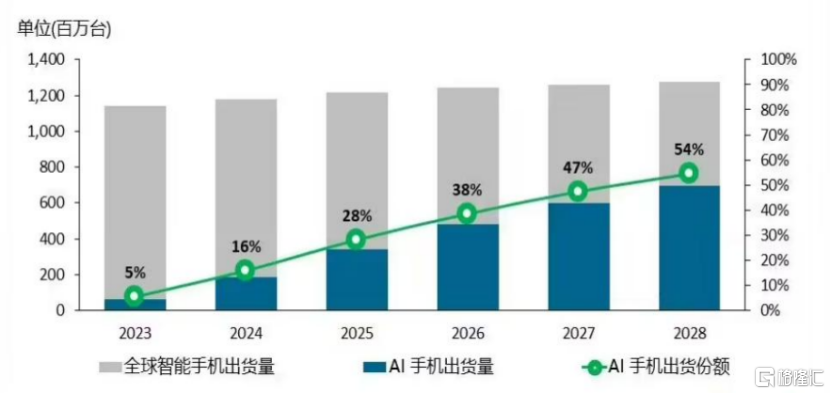
Core Insights - The penetration rate of AI in terminal devices, particularly smartphones, is increasing, with AI smartphones expected to account for 16% of global shipments in 2024 and potentially rise to 54% by 2028, reflecting a compound annual growth rate (CAGR) of 63% in the AI smartphone market [1][3] Group 1: Market Trends - The geopolitical environment is rapidly changing, leading to increased uncertainty in tariffs and logistics, creating a need for investors to identify resilient and technology-driven investment opportunities [3] - Local brands are gaining traction in regions such as South Asia, the Middle East, and Latin America, with global shipments of local smartphone brands projected to grow from 45.6 million units in 2020 to 58.1 million units in 2024, representing a CAGR of 6.3% [5] - The demand for local brands is driven by a focus on supply chain resilience and security, supported by government policies [5] Group 2: Company Positioning - KUSAI Intelligent positions itself as an "enabler" for local smartphone brands, providing a comprehensive solution that includes product definition, R&D, supply chain management, manufacturing execution, and after-sales service [8][9] - The company has developed a unique "full-process empowerment" capability, allowing local brands to focus on branding and distribution while KUSAI manages the rest [8][9] - KUSAI has accumulated valuable localized data on user preferences, which is difficult for global brands to access, creating a competitive advantage [9] Group 3: Financial Performance - KUSAI's revenue is expected to grow from 1.7135 billion yuan in 2022 to 2.7170 billion yuan in 2024, with a CAGR of 25.9%, while net profit is projected to increase from 110.1 million yuan to 206.6 million yuan during the same period [12] - The company's gross margin is expected to rise from 19.2% in 2022 to 22.3% in 2024, indicating an increase in high-value services and improved cost control [12] - Customer retention rates are high, with local brand retention at 92.9% and telecom operator retention at 100%, reflecting strong service engagement [12] Group 4: Future Outlook - KUSAI is well-positioned to benefit from the global supply chain restructuring and the rise of AI technologies, with plans to expand its global sales network and strengthen its "global localization" strategy [13] - The company is focusing on AI innovations, such as AI portrait analysis and meeting assistants, to enhance product competitiveness and create future revenue opportunities [13] - The combination of increasing AI smartphone penetration, supply chain restructuring, and the rise of local brands presents a significant opportunity for KUSAI [15]
美国谋划关键矿产交易俱乐部
Huan Qiu Shi Bao· 2025-11-05 00:55
Core Insights - The U.S. is forming a "Critical Minerals Trading Club" with multiple countries to restructure supply chains and reduce dependence on foreign sources, aiming to dominate the AI and green industries [1][2][3] Group 1: Formation and Objectives of the Trading Club - The "Critical Minerals Trading Club" aims to be a core platform for Western countries to engage in the refining and processing of critical minerals, with the ultimate goal of leading the AI competition [2] - The club has already begun formation with participation from Japan, South Korea, Malaysia, Australia, and Thailand [2] - The initiative reflects a broader strategy among Western nations to fill gaps in internal mineral trade systems and promote industry expansion [2][3] Group 2: Current Market Dynamics - There is a significant surge in interest and investment in critical minerals like rare earths and lithium, leading to what is being termed a "rare earth rush" [1][6] - The U.S. and Australia are expected to see substantial growth in rare earth trade, with a projected 67% increase in trade volume in 2024 [6] - The Biden administration's support for domestic clean energy projects has already led to a rise in lithium-related stock prices, indicating a favorable market environment for critical minerals [6][7] Group 3: Challenges and Risks - The restructuring of supply chains faces challenges such as technological limitations, cost issues, and differing interests among member countries [1][2] - The U.S. still relies on traditional methods for processing rare earths, which may not meet the high-end industry demands, indicating a need for external technological support [3] - There are warnings about potential investment overheating in the critical minerals sector, with historical parallels drawn to past resource booms [9][10] Group 4: Geopolitical Implications - The U.S. aims to establish a supply chain independent of China, which currently holds a dominant position in the rare earth market, controlling over 90% of global refining capacity [3][10] - The formation of the trading club is seen as a strategic move to weaken China's influence in global supply chains [10][11] - The differing objectives among member countries, such as resource pricing and environmental standards, may complicate the club's effectiveness [10][11]