双碳目标

Search documents
两会与-十五五-纲要解读|重磅专家小范围
2026-03-11 08:12
Summary of Key Points from the Conference Call Industry or Company Involved - The conference call primarily discusses the macroeconomic outlook and policy measures related to China's economy for 2026, including the "14th Five-Year Plan" and various sectors such as real estate, finance, and emerging industries. Core Points and Arguments 1. **Economic Growth Target for 2026**: The GDP growth target is set between 4.5% and 5%, allowing flexibility for structural adjustments and risk prevention [4][5][19]. 2. **Fiscal Policy Adjustments**: The fiscal deficit rate remains at 4%, with an increase in the deficit scale by 230 billion to support economic stability and risk mitigation [5][6]. 3. **Real Estate Market Adjustments**: The real estate market has undergone significant adjustments, with a 17.2% decline in real estate development investment in 2025, creating conditions for structural adjustments [2][3]. 4. **Consumer Price Index (CPI) and Producer Price Index (PPI)**: CPI showed a positive trend at 1.3% in February 2026, while PPI was at -0.9%, indicating potential for recovery in pricing [2]. 5. **Investment in Emerging Industries**: The focus is on new quality productivity, with significant investments planned in sectors like artificial intelligence, biotechnology, and green energy, aiming for a doubling of the scale from 6 trillion to over 10 trillion by 2030 [8][17]. 6. **Green Energy Initiatives**: The shift towards carbon emission control includes a target of reducing carbon emissions by 3.8% in 2026, with a total target of 17% during the "14th Five-Year Plan" [9][15]. 7. **Support for Consumption and Investment**: Measures include a 2,500 billion long-term bond for trade-in programs and a new 1,000 billion fund to stimulate consumption and small business loans [7][19]. 8. **Reform of Consumption Tax**: Plans to eliminate consumption tax on non-luxury items and shift tax collection from production to consumption, with a potential revenue-sharing model between central and local governments [19][20]. 9. **National Unified Market Construction**: Emphasis on building a unified national market to prevent local government competition and ensure fair market practices [10][19]. 10. **State-Owned Enterprise Reforms**: Increasing the proportion of state-owned capital revenue from 25% to 30%, with 80% of new investments directed towards strategic emerging industries [12]. Other Important but Possibly Overlooked Content 1. **Risk Management Focus**: The government is prioritizing risk management in four areas: small financial institutions, real estate, local government debt, and public safety [6][16]. 2. **Technological Innovation and Infrastructure**: Significant investments in digital and intelligent transformation of industries, with a focus on modern infrastructure development [8][10]. 3. **Encouragement of Local Government Initiatives**: Local governments are encouraged to utilize existing assets for affordable housing, though current enthusiasm is low due to a preference for new projects [15]. 4. **Long-term Energy Strategy**: The development of hydrogen energy and methanol as new fuel sources is highlighted, with a focus on creating a sustainable energy system [9][17]. 5. **Investment in Low-altitude Economy**: The low-altitude economy is recognized as an emerging industry with broad application scenarios, including military uses [9]. This summary encapsulates the key insights and strategic directions discussed in the conference call, reflecting the government's approach to navigating economic challenges and fostering growth in emerging sectors.
中信证券研究:电新|高层密集发声,绿色燃料量价迎利好
Xin Lang Cai Jing· 2026-03-11 01:55
Core Viewpoint - The Chinese government is intensifying its efforts to develop green fuels and hydrogen energy, establishing a national low-carbon transition fund to support these sectors as new economic growth points, while also enhancing the certainty of scale expansion in the green fuel industry through policy and financial support [1][3][9]. Group 1: Government Initiatives - The Ministry of Industry and Information Technology (MIIT) and the National Energy Administration (NEA) are actively promoting breakthroughs in hydrogen energy and green fuel sectors, emphasizing their strategic importance for national energy security and independence [2][8]. - The establishment of the national low-carbon transition fund aims to support the development of the green fuel industry, facilitating a comprehensive green energy transition [3][9]. Group 2: Financial Support and Market Dynamics - The low-carbon transition fund will provide industry-specific financial support and cost subsidies, addressing bottlenecks in development and aiding in key technology breakthroughs [3][9]. - The fund is expected to play a crucial role in accelerating the commercialization of green fuels by lowering the barriers to industrialization and enhancing acceptance in downstream applications [3][9]. Group 3: Market Trends and Comparisons - The development of green fuels can be compared to the trends in electrochemical energy storage, as both serve similar functions and are expected to experience growth driven by external demand followed by domestic policy support [4][10]. - The initial market demand for green fuels is anticipated to be driven by international decarbonization policies, with domestic demand expected to grow significantly as relevant policies are implemented [4][10]. Group 4: Investment Strategies - The cost of green electricity is a critical variable in the economic viability of green hydrogen and ammonia production, with wind power being identified as the most cost-effective source [6][11]. - Companies with strong wind power capabilities and favorable wind resource endowments are likely to benefit significantly from the industry's growth, as the transition of wind power companies to green fuel operators is seen as a high-certainty trend [6][11].



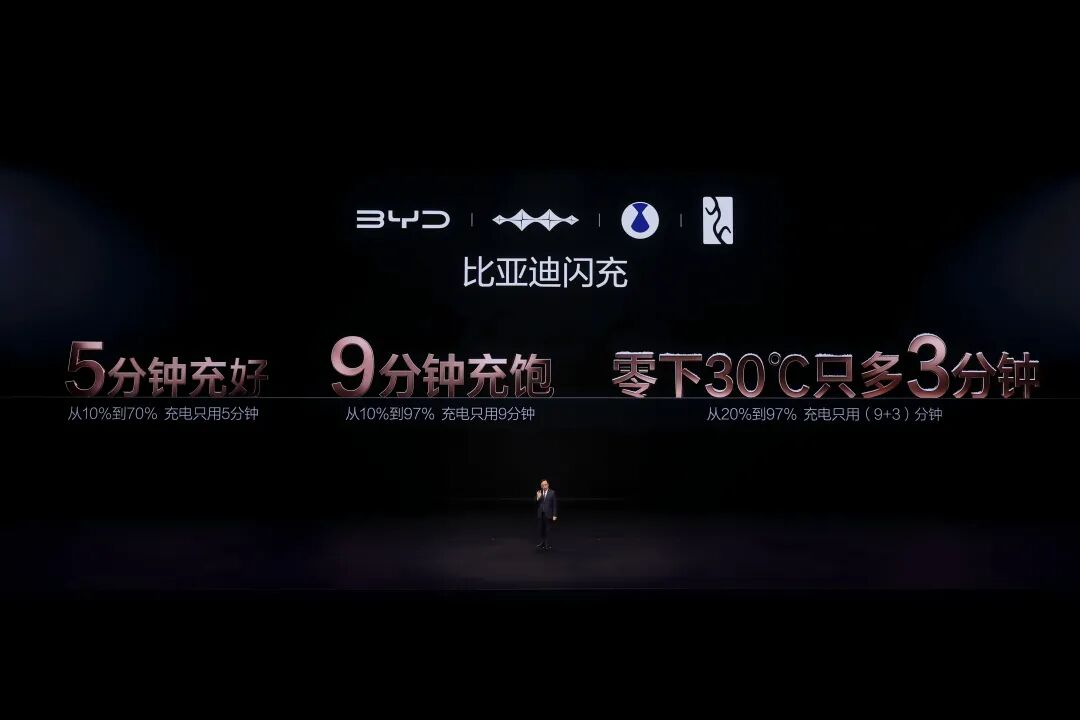
从油价狂飙到闪充破局:比亚迪用技术作答国家能源安全的“必答题”
Jing Ji Guan Cha Bao· 2026-03-10 11:58
Core Viewpoint - The geopolitical tensions in the Middle East, particularly the closure of the Strait of Hormuz, have led to a significant disruption in global oil supply, causing international oil prices to surge above $100 per barrel. In response, BYD has introduced its second-generation blade battery and fast-charging technology as part of a "light-storage-charging integration" solution to enhance national energy security and promote energy independence [1][2]. Group 1: Impact of Geopolitical Events - The closure of the Strait of Hormuz has interrupted over one-third of global maritime oil supply, leading to a spike in oil prices, with predictions suggesting prices could reach $150 per barrel if the closure persists [1]. - The energy supply shortage has triggered systemic risks in the global energy market, causing stock market declines in Asia-Pacific countries and prompting emergency measures in nations like Turkey and France to manage fuel costs [1]. Group 2: China's Energy Strategy - China relies on imports for over 70% of its oil, with more than 60% passing through critical maritime routes, highlighting the urgency for the country to develop its electric vehicle (EV) sector to achieve energy independence [2]. - The push for EV development in China is rooted in a long-term strategy aimed at securing energy autonomy, with significant historical milestones marking the commitment to this goal [2]. Group 3: Technological Advancements by BYD - BYD's new technology addresses key consumer pain points related to charging experiences, significantly reducing charging times even in extreme cold conditions, thus alleviating "range anxiety" among potential EV users [5]. - The introduction of a comprehensive "light-storage-charging integration" solution by BYD includes a super-fast energy storage system, creating a closed-loop from solar energy acquisition to vehicle application, aligning with China's carbon neutrality goals [5][6]. Group 4: Resource Efficiency and Infrastructure - BYD's fast-charging technology aims to enhance the efficiency of energy supply infrastructure, addressing the current low utilization rates of public charging stations and reducing resource wastage [6]. - The innovative "station-in-station" model allows for the rapid deployment of charging stations without the need for extensive new infrastructure, thereby minimizing investment in land and materials [6]. Group 5: BYD's Commitment and Vision - BYD's approach reflects a deep commitment to national interests, showcasing a history of rapid technological responses to crises and a long-term vision for sustainable energy solutions [7]. - Despite the high costs associated with building fast-charging stations, BYD remains resolute in its strategic direction, having previously faced skepticism regarding its ambitious goals, which are now becoming integral to China's economic growth [7][8].

张连起委员:优化二手消费电子税收,有望激发万亿消费潜力
第一财经· 2026-03-10 11:42
Core Viewpoint - The article emphasizes the urgent need to optimize tax policies for the second-hand consumer electronics market in China to stimulate the potential for "old-for-new" consumption and facilitate the industry's growth [2]. Group 1: Market Potential - The second-hand consumer electronics market in China is expected to reach a scale of 987.5 billion yuan by 2026, with a compound annual growth rate of 26.1%, approaching the 1.28 trillion yuan annual transaction scale of the second-hand car market [2]. - Currently, the recycling penetration rate for second-hand electronic devices in China is only about 4.4%, while mature markets in Europe and the U.S. have reached around 30% [2]. - Each second-hand mobile phone circulated can reduce carbon emissions by approximately 30 kilograms, highlighting the green economic value of a scaled and standardized second-hand market in achieving carbon neutrality goals [2]. Group 2: Taxation Issues - The existing tax collection system does not align with the industry's characteristics, particularly the challenges faced by businesses in confirming real costs when purchasing from individuals. Only transactions under 500 yuan can be deducted using internal vouchers, while the average price of second-hand electronic products is around 1,500 yuan [3]. - The tax burden on second-hand consumer electronics is significantly higher than that on second-hand vehicles, with the tax burden for second-hand mobile phones being approximately 3.9 times that of second-hand cars, placing second-hand electronics companies at a competitive disadvantage [3]. Group 3: Recommendations for Improvement - It is recommended that tax authorities develop tax collection guidelines suitable for the "Internet + recycling" model, recognizing traceable digital transaction information as valid tax deduction evidence [4]. - Optimizing value-added tax policies is suggested to create a fair tax environment, considering the tax burden balance across different sectors of the circular economy [4]. - Conducting pilot programs in key regions or representative compliant platform companies is advised to test and refine policies related to voucher recognition and tax rate optimization [4].

2026年两会中的“新能源”
高工锂电· 2026-03-10 11:16
Core Viewpoint - The article emphasizes the importance of lithium batteries in the global energy transition and their role in achieving carbon neutrality goals, while highlighting the challenges faced by China's lithium battery industry, including standardization issues and technological bottlenecks [4][5]. Lithium Battery Sector - The lithium battery industry in China has developed a complete supply chain from mining to recycling, but the key to further development lies in independent innovation [8]. - CATL has invested over 80 billion yuan in R&D over the past 20 years, employing over 21,000 researchers and holding more than 50,000 patents, enabling its products to be exported globally [10]. - Liu Jingyu emphasizes the potential applications of new energy in various fields beyond automobiles, such as shipping and low-altitude flight, which can enhance energy security [13]. - Hu Chengzhong identifies four major bottlenecks in the solid-state battery industry, including a lack of standardization and high costs, and proposes measures to address these issues [16][17]. - Zhang Tianren suggests establishing a digital identity system for batteries to comply with international regulations and improve industry standards [19]. New Energy Storage and Energy Sector - The new energy storage industry in China has a significant global market share, but it faces challenges that hinder high-quality development [25]. - Yao Jinjian proposes five strategies to enhance the new energy storage sector, focusing on technological innovation and market mechanisms [26]. - Li Baoxuan calls for a comprehensive recycling system for power batteries to ensure sustainable development [22]. Low Altitude Economy - The low-altitude economy in China is still in its infancy, requiring improved planning and regulatory frameworks to foster high-quality development [64]. - Li Liangbin suggests developing high-power batteries for flying vehicles and enhancing collaboration between industry and academia to address technical challenges [68]. - He Xiaopeng advocates for delegating low-altitude airspace management to local governments to stimulate the development of the flying car industry [72].
绿色金融赋能“一带一路”建设 工商银行上海市分行支持民营企业“走出去”
Di Yi Cai Jing· 2026-03-10 11:01
Core Viewpoint - Green finance has become a crucial link for low-carbon development under the "dual carbon" goals and high-level opening-up, with Industrial and Commercial Bank of China (ICBC) Shanghai Branch playing a significant role in supporting domestic and international green energy projects [1][2] Group 1: Project Financing and Support - ICBC Shanghai Branch has established a specialized service team to support the financing of a wind power project in Kazakhstan, which has a total investment of 423 million yuan [1] - The service team aims to facilitate cross-border financing, optimize financing plans, and ensure risk management throughout the project [1] - The project successfully met all withdrawal conditions and received timely funding support, enabling rapid progress in the construction of the wind farm [1] Group 2: Impact and Strategic Goals - Once completed, the wind power project is expected to generate 330 million kilowatt-hours annually, contributing to the optimization of Kazakhstan's energy supply structure and promoting low-carbon emissions [2] - Since the 14th Five-Year Plan, ICBC Shanghai Branch has implemented national green development strategies and established a robust green finance system, with green loans exceeding 250 billion yuan [2] - The bank continues to innovate in green finance, aiming to support enterprises in their low-carbon transitions and contribute to national carbon neutrality goals [2]

世界首台!单体调试完成
中国能源报· 2026-03-10 07:29
Core Viewpoint - The world's first 630℃ thermal power unit has completed single-unit debugging, marking a significant milestone for the project to connect to the grid on schedule [2]. Group 1: Project Overview - The project represents the forefront of domestic efficient and clean coal-fired power generation technology, achieving a thermal efficiency that exceeds 50% for the first time [4]. - The project has successfully overcome welding technology challenges associated with the new generation of domestic G115 steel, enabling its large-scale autonomous application in domestic power engineering [4]. Group 2: Environmental Impact - Upon commissioning, the project is expected to generate an annual electricity output of 9.6 billion kilowatt-hours, saving approximately 217,900 tons of standard coal each year and reducing carbon dioxide emissions by about 588,300 tons [6]. - This project not only integrates efficient power generation with environmental protection but also provides strong support and a demonstration for China's energy structure transformation and the achievement of "dual carbon" goals [6].
化工行业2月月报:中东局势升级-20260310
金融街证券· 2026-03-10 02:36
行业研究 | 基础化工 证券研究报告/行业研究/行业深度 2026 年 3 月 8 日 中东局势升级 化工行业 2 月月报 研报摘要 强于大市(维持) 行业指数与大盘走势对比 证券分析师 刘艳平 S0670512050002 liuyanping@jrjzq.com.cn 请仔细阅读报告末页声明 行业观点:(1)宏观行业数据看,2 月 PMI 为 49.0%,比上月降低 0.3 个百分点;主要原材料购进价格指数比上月降低 1.3 个百分点;1 月份 PPI 当月同比为-1.4%,比上月降幅收窄 0.5 个百分点;细分行业 PPI 看, 石油和天然气开采业﹑化学原料和化学制品制造业降幅扩大,化学纤维 制造业降幅收窄;(2)下游行业 2025 年全年当月同比平均增速数据看, 汽车产量增速提高,房地产新开工施工面积累计同比降幅收窄,纺织纱 线﹑织物及其制品出口金额﹑新能源汽车产量﹑集成电路产量﹑家用电 器出口金额增速下滑;(3)2 月上游原材料价格数据看,WTI 原油均价 比上月均价上涨 7.11%,NYMEX 天然气均价﹑秦皇岛 5500K 动力煤均价较 上月均价分别下跌 26.70%﹑0.44%;(4)估值看, ...
全国人大代表王立平:加快生物基材料产业布局
DT新材料· 2026-03-09 16:04
Core Viewpoint - The article emphasizes the importance of accelerating the development of the bio-based materials industry as a key strategy for reducing reliance on fossil resources and achieving carbon neutrality goals. It highlights the current transition of bio-based materials from technological maturity to large-scale application, indicating a need for enhanced support and innovation in this sector [4][5]. Group 1: Industry Background - Bio-based materials are defined as new materials synthesized from renewable biological resources through biological and chemical transformations. They are considered crucial for building future industrial systems [4]. - The Chinese government has outlined the development of bio-manufacturing and other future industries in its 14th Five-Year Plan, indicating a strategic direction for the bio-based materials industry [4]. Group 2: Current Challenges - The bio-based materials industry in China has a solid foundation but still lags behind in leading international innovation. Challenges include immature production technologies, high product costs, and an incomplete standard system compared to traditional plastics [4][5]. Group 3: Recommendations for Development - Establish a national bio-based materials industry special fund to coordinate industry layout and support key areas such as cellulose conversion, bio-based nylon, and biopolyurethane [5]. - Support the creation of national innovation platforms for bio-based materials to overcome key technological bottlenecks and encourage the development of various derivatives and polymers [5]. - Develop a standard system and green certification mechanism for bio-based materials, including product standards and safety evaluation standards, and integrate bio-based products into government green procurement lists [5]. Group 4: Upcoming Events - The 11th Bio-based Industry Conference & Exhibition will take place from May 20-22, 2026, in Shanghai, featuring 11 thematic forums and 7 concurrent activities aimed at fostering collaboration and innovation in the bio-based sector [7][8].
全国政协委员黎俊东:统筹绿色发展与电网安全,推动中国能源企业出海拓局
中国能源报· 2026-03-09 13:23
Core Viewpoint - The article emphasizes the importance of a diversified energy supply system in China, highlighting the roles of various energy sources, particularly solar, natural gas, and waste-to-energy, in achieving the country's carbon neutrality goals [1][2]. Group 1: Solar Industry Development - The solar power sector is identified as a key player in China's green low-carbon energy strategy, characterized by its low cost and environmental benefits, but it faces challenges in stability due to extreme weather conditions [1]. - To address the instability of solar power generation, it is crucial to enhance grid safety and develop a multi-energy complementary supply system, leveraging flexible power sources like natural gas [1]. Group 2: Industry Trends and Competition - The article discusses the trend of "anti-involution" in the domestic solar industry, urging companies to focus on technological upgrades and quality improvements rather than merely expanding scale, thus fostering differentiated competitiveness [2]. - Companies are encouraged to transition from homogeneous competition to value creation by leveraging core technological advantages, promoting a shift towards high-end and refined industry practices [2]. Group 3: Internationalization of Energy Enterprises - A number of Chinese energy and environmental companies, after establishing a strong domestic presence, are now pursuing international expansion, particularly in Southeast Asia, Central Asia, and Europe [2]. - The article notes that Chinese companies have made significant strides in power generation technology, especially in waste-to-energy, and now possess the capability to surpass international standards, enhancing their competitiveness in global markets [2].