
稳外贸

Search documents
稳外贸 促发展 交通银行全方位服务第138届广交会
2 1 Shi Ji Jing Ji Bao Dao· 2025-10-15 06:05
Core Viewpoint - The 138th China Import and Export Fair (Canton Fair) opened in Guangzhou, showcasing China's commitment to global trade and cooperation, with Bank of Communications actively supporting this initiative through comprehensive financial services [1] Group 1: Financial Services at the Canton Fair - Bank of Communications has set up technologically advanced exhibition areas at the Canton Fair, focusing on its regional financial service brand "Jiao Yin Wan Tong" to provide extensive financial support for domestic enterprises going abroad and foreign businesses coming to China [2] - The exhibition includes a "Service Display Area" highlighting the bank's history of reform and innovation, achievements in payment facilitation, and features of cross-border and offshore financial services [2] - The "Business Handling Area" offers specialized zones for technology finance, green finance, inclusive finance, and rural revitalization, ensuring comprehensive financial services for both domestic and international clients [2] Group 2: Payment Facilitation Initiatives - The bank has enhanced payment services for foreign visitors in China by optimizing the acceptance of foreign bank cards, improving cash service support, and increasing the convenience of mobile payments [4] - A "Payment Facilitation Zone" was established at the fair, featuring a "Digital RMB 1 Yuan Purchase Promotion" to encourage foreign visitors to experience the bank's services [4] - The bank promotes its "Easy Series" online service brand for international business, covering the entire process of cross-border payments, settlements, financing, and more, facilitating efficient operations for cross-border trade enterprises [4][6] Group 3: Cross-Border Financial Services - Bank of Communications is enhancing its support for foreign trade by leveraging its extensive overseas channels and comprehensive product offerings to provide integrated financial services for global clients [5] - The bank's cross-border account service system includes various account types, significantly improving the efficiency of enterprise account openings and supporting the growth of cross-border trade [5] - The bank utilizes blockchain technology to launch the "Jiao Yin Hang Trade Connect" platform, creating a comprehensive service matrix for cross-border payments and financing, thus better serving the dual circulation of domestic and international trade [6] Group 4: Focus on the Greater Bay Area - In response to the development strategy of the Guangdong-Hong Kong-Macao Greater Bay Area, the bank is optimizing its financial service brand "Jiao Yin Wan Tong" to provide diverse and efficient cross-border financial services [7] - The bank is set to showcase its overseas financing services and support for Chinese enterprises at the Canton Fair, aiming to help them expand into international markets [7]

上证报援引专家:四季度稳投资、稳消费、稳外贸等领域或将推出增量政策
Sou Hu Cai Jing· 2025-10-12 22:45
Core Viewpoint - The fourth quarter is crucial for the completion of annual economic work and planning for the next year's development, with a series of macro policies being implemented at both central and local levels, showing effectiveness [1] Investment and Consumption - It is estimated that a total investment of approximately 15 trillion yuan and consumption between 13 trillion to 14 trillion yuan will be needed in the fourth quarter [1] Policy Measures - Incremental policies may be introduced in areas such as stabilizing investment, consumption, and foreign trade, while existing policies will be reinforced through a combination of fiscal, monetary, and industry policies [1]
赵晋平 | 服务贸易政策创新:出口结构升级与进口优化
Sou Hu Cai Jing· 2025-10-04 03:13
Core Insights - China's service trade continues to maintain stable growth in 2025, with service import and export values reaching 3.2 trillion yuan, a year-on-year increase of 7.7% [3][4] - Service exports have shown a robust growth trend, with a 15.1% increase year-on-year, driven by significant growth in travel and cultural services [10][11] - The report highlights the need for policy adjustments to address uncertainties in service trade growth due to external factors such as U.S. tariffs and domestic consumption demand [3][4] Group 1: Service Trade Development Characteristics - The service trade development index for the first two quarters of 2025 reached 102.2%, indicating a steady improvement in overall service trade levels [4] - The service export development index for the same period was 107.9%, reflecting a sustained positive trend in service exports [5][10] - The report identifies challenges in the service export structure, particularly in the second industry-related services, which lagged with an index of 87.3% [5][14] Group 2: Service Export Trends - Service exports have shown a significant increase, with the industry development index reaching 115.1% and a market demand growth of 15.1% [10][11] - Notably, travel and personal cultural services saw growth rates of 74.2% and 59.1%, respectively, highlighting the impact of policy innovations like visa-free entry [10][11] - The report emphasizes the importance of human services exports, which contributed significantly to the overall service export growth [11] Group 3: Service Import Trends - The service import development index for the first two quarters of 2025 was 100.9%, indicating a slight increase but still facing downward pressure [15][16] - Service import values grew by only 2.7% year-on-year, reflecting a slowdown compared to service export growth [16] - The financial services sector showed signs of recovery, with the service import structure index rising to 122.4% [17] Group 4: Service Trade Balance - The service trade balance index for the first two quarters of 2025 was -20.3%, indicating a persistent trade deficit, although it has narrowed by 5.3 percentage points compared to the previous year [19][20] - The second industry-related services maintained a significant surplus, with a balance index of 36.1%, supporting the overall trade balance [20] - Knowledge-intensive services also saw an increase in surplus, with a trade balance index of 9.5%, reflecting improved competitiveness in emerging sectors [21] Group 5: Policy Recommendations - The report suggests expanding visa-free policies and enhancing support for service exports to stabilize and grow the sector [36][37] - It emphasizes the need for a robust policy environment to promote quality service imports, which can help balance trade and support domestic consumption [37][38] - Establishing a response mechanism for trade friction is recommended to mitigate the impacts of external pressures on service trade [38]

苏州市领导调研市稳外贸工作专班
Su Zhou Ri Bao· 2025-10-04 00:34
Core Insights - The article emphasizes the importance of foreign trade as a key driver for economic growth in Suzhou, highlighting the need for effective measures to navigate a complex external environment [2][3] - Suzhou's foreign trade performance from January to August 2023 shows an import and export value of 1.76 trillion yuan, reflecting a year-on-year growth of 5.4% [1] Group 1 - The city government is committed to implementing the decisions made by the provincial government regarding foreign trade stability and growth [1][2] - There is a focus on supporting production-oriented foreign trade enterprises to capture global market share and enhance the quality of foreign trade development [1][2] - Plans are in place to enhance the global market supply capacity of local enterprises by improving product competitiveness and brand influence [2] Group 2 - The government aims to diversify global market layouts and promote initiatives like the "Hundred Groups Thousand Enterprises" overseas action [2] - Collaboration with financial, tax, and customs departments is emphasized to optimize the business environment and address enterprise development needs [2] - The strategy includes deepening cooperation under the Belt and Road Initiative and expanding into emerging markets [2]
2025年9月PMI数据点评:9月PMI:两连升成色几何?
Minsheng Securities· 2025-09-30 06:49
Group 1: PMI Overview - In September 2025, China's Manufacturing Purchasing Managers' Index (PMI) was 49.8%, an increase of 0.4 percentage points from the previous month[1] - The September PMI marks a consecutive rise, indicating continued improvement in manufacturing sentiment despite pressures from "anti-involution" and "stabilizing foreign trade"[1] - The 0.4 percentage point increase in September's PMI is below the historical average seasonal increase of 0.86 percentage points since 2005, highlighting ongoing structural economic issues[1] Group 2: Factors Influencing PMI - The seasonal recovery in September was driven by two main factors: the reduction of short-term disruptions and the "catch-up production" effect before the long holiday[2] - The production index rose by 1.1 percentage points to 51.9%, indicating a positive response to increased labor demand ahead of the holiday[2] - The new export orders index increased by 0.6 percentage points to 47.8%, the highest since April, suggesting a marginal easing of export pressures[2] Group 3: Structural Economic Challenges - The new orders index only slightly increased by 0.2 percentage points to 49.7%, indicating persistent oversupply issues[3] - The disparity between the raw material purchase price index and the factory price index suggests that upstream price improvements are not effectively transmitted downstream due to insufficient demand[3] - Non-manufacturing sectors also face pressures, with construction PMI at 49.3% and services PMI at 50.1%, indicating limited recovery in these areas[3]
城市24小时 | 增速回正,“外贸第一城”继续守位
Mei Ri Jing Ji Xin Wen· 2025-09-19 16:22
Core Insights - Shenzhen has regained its position as the "foreign trade capital" of China, surpassing Shanghai for the first time in ten years, with a total import and export volume of 2.96 trillion yuan in the first eight months of the year, reflecting a year-on-year growth of 0.3% [1][2][6] - The export value reached 1.79 trillion yuan, while imports totaled 1.17 trillion yuan, showing a significant increase of 9% [1] - The trade structure indicates that general trade accounted for 54.6% of Shenzhen's total trade, with a notable growth in bonded logistics and processing trade [1][9] Trade Partners and Growth - Shenzhen's trade with its top ten partners amounted to 2.31 trillion yuan, marking a growth of 2.8% and increasing its share of total trade to 78.1% [1] - Significant growth was observed in trade with Hong Kong (8.1%), Taiwan (20.8%), and Japan (14.8%) [1] Trade Composition - Private enterprises played a crucial role in Shenzhen's foreign trade, accounting for 69.6% of the total import and export value, with a total of 2.06 trillion yuan [9] - Foreign-invested enterprises also showed robust performance, with imports and exports reaching 788 billion yuan, a year-on-year increase of 11.6% [9] Product Categories - Mechanical and electrical products remain the backbone of Shenzhen's exports, totaling 1.35 trillion yuan, which is 75% of the total export value [9] - Notable growth was seen in the export of integrated circuits (40.2%) and lithium batteries (35.9%) [9] Import Dynamics - The import of mechanical and electrical products reached 949.16 billion yuan, growing by 12.5% and constituting 81.4% of total imports [9] - The import of integrated circuits alone was 519.68 billion yuan, reflecting an 18.8% increase [9] Comparative Analysis - Both Shenzhen and Shanghai have shown resilience in their foreign trade, with Shanghai's imports and exports growing by 4.5% in the same period [10] - The competition for the title of "foreign trade capital" remains uncertain as both cities adapt to changing external environments [10]
上海市单月出口规模首超1800亿元 民营企业进出口占比首次突破四成
Xin Hua Cai Jing· 2025-09-19 13:49
Group 1 - In August, Shanghai's total import and export value reached 387.43 billion RMB, marking an 11.7% year-on-year increase, continuing a growth streak for seven consecutive months since February [1] - Exports amounted to 183.08 billion RMB, surpassing 180 billion RMB for the first time in a single month, with a year-on-year growth of 17.1%; imports were 204.35 billion RMB, up 7.3% [1] - For the first eight months of the year, Shanghai's cumulative import and export value reached 2.94 trillion RMB, reflecting a 4.5% year-on-year increase, with growth rate improving by 1 percentage point compared to the previous seven months [1] Group 2 - Private enterprises in Shanghai achieved an import and export value of 166.85 billion RMB in August, a significant year-on-year increase of 31.5%, contributing 11.5 percentage points to the city's overall trade growth [1] - Exports to emerging markets saw substantial growth, with a total of 53.74 billion RMB in August, representing a 45% year-on-year increase, which boosted the overall export growth rate by 10.7 percentage points [1] - Key export categories included ships and marine engineering equipment, and engineering machinery, with export values increasing by 10.6 times and 72.8% respectively [1][2] Group 3 - In August, Shanghai's export of electromechanical products reached 125.39 billion RMB, a 19% year-on-year increase, accounting for nearly 70% of total exports [2] - Notable growth was observed in the export of high-end machinery, electric vehicles, lithium batteries, and photovoltaic products, with year-on-year increases of 45.1%, 37.1%, 112.1%, and 39% respectively [2] - Import trends indicated stability and recovery in industrial and consumer demand, with significant increases in imports of metal ores, semiconductor manufacturing equipment, and various consumer goods [2]
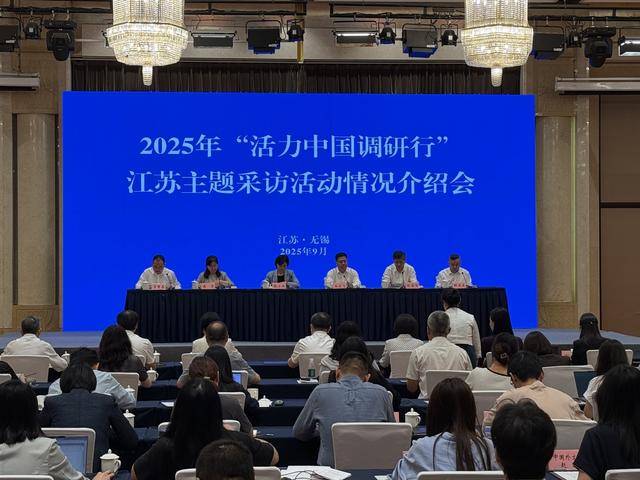
活力中国调研行|“活力中国调研行”走进江苏,探寻高水平对外开放新实践
Sou Hu Cai Jing· 2025-09-16 03:18
Core Insights - Jiangsu is positioned as a forefront of China's opening-up strategy, leveraging its advantages to stabilize foreign trade and investment while enhancing high-level openness [3][4] - The province's GDP reached 6.7 trillion yuan in the first half of the year, with a year-on-year growth of 5.7%, surpassing the national average by 0.4 percentage points [3] - Jiangsu's foreign trade and investment have shown resilience, with a total import and export value of 3.31 trillion yuan from January to July, marking a year-on-year increase of 5.2% [3] Group 1 - Jiangsu's foreign trade and investment strategies are guided by the "Belt and Road" initiative, aiming to build a world-class two-way open hub [3] - The province has maintained its position as the second-largest in import and export scale for 22 consecutive years and has ranked first in actual foreign investment for seven years [3] - The industrial sector in Jiangsu is focusing on the "1650" industrial system, promoting stable growth in foreign trade and investment [4] Group 2 - The province's industrial and information technology department emphasizes four key areas: innovation, digital empowerment, collaborative development, and creating a favorable business environment [4] - Jiangsu's actual foreign investment reached 12.41 billion USD, maintaining its leading position nationally [3] - The province's foreign trade and industrial sectors are characterized by strong resilience and vitality, with a notable improvement in the structure of industrial product exports [4]
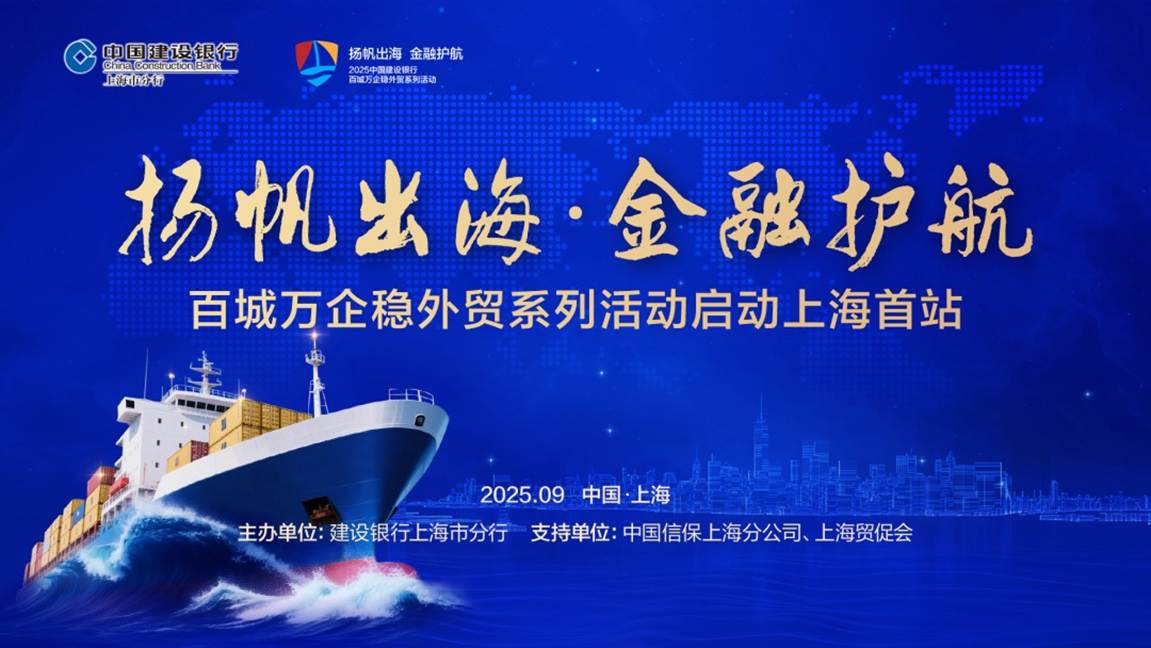
建行上海市分行举办“扬帆出海·金融护航 百城万企稳外贸”上海首站活动
Zhong Guo Jin Rong Xin Xi Wang· 2025-09-13 05:17
Core Viewpoint - The event organized by China Construction Bank's Shanghai branch aims to support foreign trade enterprises through a comprehensive financial service package, addressing the need for stability in foreign trade amidst economic challenges [1][3]. Group 1: Event Overview - The event titled "Sailing Overseas: Financial Support for Stabilizing Foreign Trade" was attended by over a hundred representatives from key foreign trade enterprises [1]. - The "Stabilizing Foreign Trade Support Package" was launched, which includes five core scenarios and ten precise services to help enterprises mitigate risks and expand into diverse markets [3]. Group 2: Economic Context - Shanghai's export value reached 952.7 billion yuan in the first half of the year, reflecting a year-on-year growth of 11.1%, indicating strong economic momentum [3]. Group 3: Financial Services Offered - The financial service package covers areas such as exchange rate risk management, payment settlement, credit financing, asset preservation and appreciation, and cross-border financial services [3]. - The event included discussions on the trends in the RMB exchange rate and hedging strategies to help enterprises effectively avoid exchange rate risks [3]. - China Export & Credit Insurance Corporation provided insights on export credit insurance policies and practical risk prevention suggestions for enterprises [3]. Group 4: Future Plans - China Construction Bank's Shanghai branch plans to continue a series of specialized presentations across the city, enhancing cross-border financial services and supporting the high-quality development of foreign trade [4].

黄坤明王伟中到首届广东优品展巡馆并调研把广东优品展办好办实办出成效 更好助力稳外贸扩内需促发展
Nan Fang Ri Bao Wang Luo Ban· 2025-09-13 01:27
Core Viewpoint - The Guangdong Quality Products Exhibition aims to enhance domestic and international trade integration, boost consumption, and support high-quality economic development through effective platform utilization and market engagement [1][3]. Group 1: Event Overview - The Guangdong Quality Products Exhibition features a theme of "Guangdong Quality Products, Beautiful Guangdong," focusing on consumer product displays and supply-demand matching [4]. - The exhibition includes five industry zones and will host 42 supply-demand matching activities, attracting 1,086 participating companies and 2,175 domestic and international professional buyers [4]. Group 2: Government Support and Expectations - Provincial leaders emphasize the importance of adhering to Xi Jinping's directives and taking responsibility for economic leadership, aiming to enhance trade integration and support economic recovery [3]. - Leaders encourage exhibitors to leverage the platform for expanding market reach and adapting to new consumer demands, while also enhancing product quality and innovation [1][3]. Group 3: Market Potential and Opportunities - Guangdong is recognized as a populous and consumer-rich province with vast market opportunities, encouraging buyers to engage with local enterprises and products [2]. - The government aims to create more cooperation opportunities for businesses through policy consultation, training, and promotional activities, particularly targeting upcoming consumer hotspots [3].