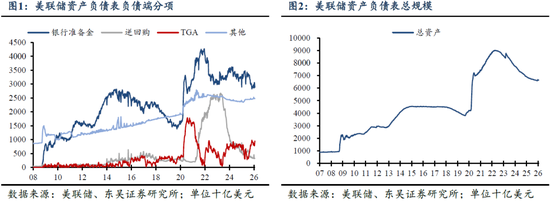
缩表

Search documents
贵FOMO贵贵贵
Zi Jin Tian Feng Qi Huo· 2026-02-03 07:58
贵FOMO 贵贵贵 贵贵贵贵贵 2026/02/02 作者:刘诗瑶 从业资格证号:F3041949 交易咨询证号:Z0019385 交易咨询证号:Z0015640 我公司依法已获取期货交易咨询业务资格 观点小结 ◼ 上周,受贝森特重申强美元立场及鹰派色彩明显的凯文·沃什获提名为美联储主席等消息影响,美元指数走强,市场担忧全球流动性 宽松的交易逻辑生变,引发贵金属在三个交易日内出现集中抛售。伦敦现货黄金下跌近20%,白银跌幅更高达40%,全球主要股市亦普 遍承压。 ◼ 我们认为,此次贵金属的剧烈回调,本质上源于此前快速上涨阶段积累的结构脆弱性——无论是价格短期涨幅与速度、看涨期权波动 率的高溢价,还是多项技术指标揭示的超买状态,均早已提示市场处于高波动、高风险的不稳定格局。暴涨与急跌实为一枚硬币的两 面,盈亏同源,市场在情绪推动下往往如履薄冰。 ◼ 然而,全球流动性宽松的逻辑未必就此逆转,"贬值交易"的宏观主题也难以轻易进入逆风期。一个重要原因在于:即便沃什在货币 政策上偏鹰,其在资产负债表层面的操作空间实际上受到财政现实的制约。若其推动缩表,私人部门将被迫吸收更多长期债券,从而 推高期限溢价、抬升长端收益率, ...
海外宏观周报:降息或先行,缩表存约束-20260203
China Post Securities· 2026-02-03 07:11
证券研究报告:宏观报告 研究所 分析师:李起 SAC 登记编号:S1340524110001 Email:liqi2@cnpsec.com 研究助理:高晓洁 SAC 登记编号:S1340124020001 Email:gaoxiaojie@cnpsec.com 近期研究报告 《假期消费温和增长,文旅消费多元扩 容》 - 2026.01.05 宏观观点 海外宏观周报:降息或先行,缩表存约束 ⚫ 核心观点: 上周五,美国总统特朗普提名凯文·沃什担任下一任美联储主 席。沃什曾于 2006-2011 年担任美联储理事,八年前曾接受特朗普总 统面试,与鲍威尔角逐美联储主席职位,但最终未能当选。任职美联 储理事期间,沃什整体立场偏鹰,并对美联储过度扩张资产负债表持 批评态度,但于近期转向支持特朗普的关税政策及加快降息立场。市 场将其政策倾向概括为"降息+缩表"。提名消息公布后,美元阶段性 走强,贵金属在多头获利了结下显著回落。 当前 FOMC 政策决议由 12 名成员投票形成。根据《联邦储备法》, FOMC 主席由委员会成员自行选举产生,理论上可以与美联储主席并非 同一人,尽管这一情形在历史上尚未出现。主席在决策机制中仅 ...
金银暴跌解密:非“沃什”之过
SINOLINK SECURITIES· 2026-02-03 05:25
Report's Investment Rating for the Industry - Not available in the provided content Core Viewpoints of the Report - The gold and silver market will become more volatile due to factors such as the frequency of global black - swan events, rising US re - inflation pressure, and the rapid transmission of AI's generalized cost [2][4] - The recent sharp decline in gold and silver is mainly due to large - scale profit - taking after long - term sharp rises, and their pricing is influenced by liquidity, AI narrative, and cryptocurrency funds [7][11] - Kevin Warsh's nomination as the next Fed Chair doesn't change the dovish policy expectation, and the Fed's decision on interest rates depends more on economic performance and Trump's political will [14] - The US stock market is under pressure of intensified K - shaped differentiation, facing risks from fiscal policy, price increases in production materials, and the sustainability of the AI narrative [29] Summary by Relevant Sections I. The Turbulent Gold and Silver Market - The recent sharp decline of gold and silver has no essential causal relationship with Warsh's nomination but is mainly due to profit - taking after sharp rises. In 2025 and 2026, the upward cycle of gold was compressed, leading to a subsequent sharp correction [7] - Gold and silver show obvious "MEME - like" features, with their prices driven by liquidity, AI narrative, and influenced by cryptocurrency funds. Silver is more volatile than gold [11] - The current market's upward momentum is related to the strength of the AI trend. Gold, silver, and the US stock market are boosted by the AI narrative, while cryptocurrencies are under pressure [13] II. Kevin Warsh's Nomination: A Two - way Attraction between Speculation and Pragmatism - Warsh's nomination doesn't change the dovish policy expectation. The Fed's interest - rate decision depends on economic performance and Trump's political will. Trump wants a controllable Fed Chair to address the "affordability problem" [14] - It's uncertain how much of Warsh's "interest - rate cut + balance - sheet reduction" is based on his true judgment of the macro - economy, considering his past inaccurate inflation and policy stances [21] - Warsh's balance - sheet reduction proposal faces "objective" constraints. From a quantitative and qualitative perspective, the current US dollar liquidity is only slightly above the sufficient level, and excessive balance - sheet reduction may lead to a repeat of the 2019 repo crisis [24] - For the Trump administration, an interest - rate cut is urgent, while balance - sheet reduction is an idealized long - term goal [28] III. The US Stock Market under Pressure of Intensified K - shaped Differentiation - The sharp decline in gold and silver warns assets relying on liquidity and the AI narrative. The US stock market is facing intensified K - shaped differentiation, with the lower end of the "K" being more vulnerable [29] - During the earnings season, the performance of US stocks varies. Investors' focus has shifted to liquidity. The Fed is likely to ensure stock - market stability and provide sufficient liquidity for the AI narrative [29] - Fiscal risks, such as the potential government shutdown due to political conflicts over immigration regulation, are destabilizing factors for the US stock market. Price increases in production materials like electricity and storage chips may lead to re - inflation and squeeze corporate profits [29][30] - The continuation of the AI narrative depends on continuous monetary and fiscal support and the absence of a significant economic recession. The economic "K - shaped" gap is widening, as shown by the profit growth of AI - related industries and the increasing corporate layoffs [31] - The future of the US stock market depends on Warsh's ability to balance inflation and political expansion needs after taking office in June. If fiscal risks and inflation rebound resonate, the current calm in the US stock market may be broken [35]
宋雪涛:金银巨震非“沃什”之过
雪涛宏观笔记· 2026-02-03 05:04
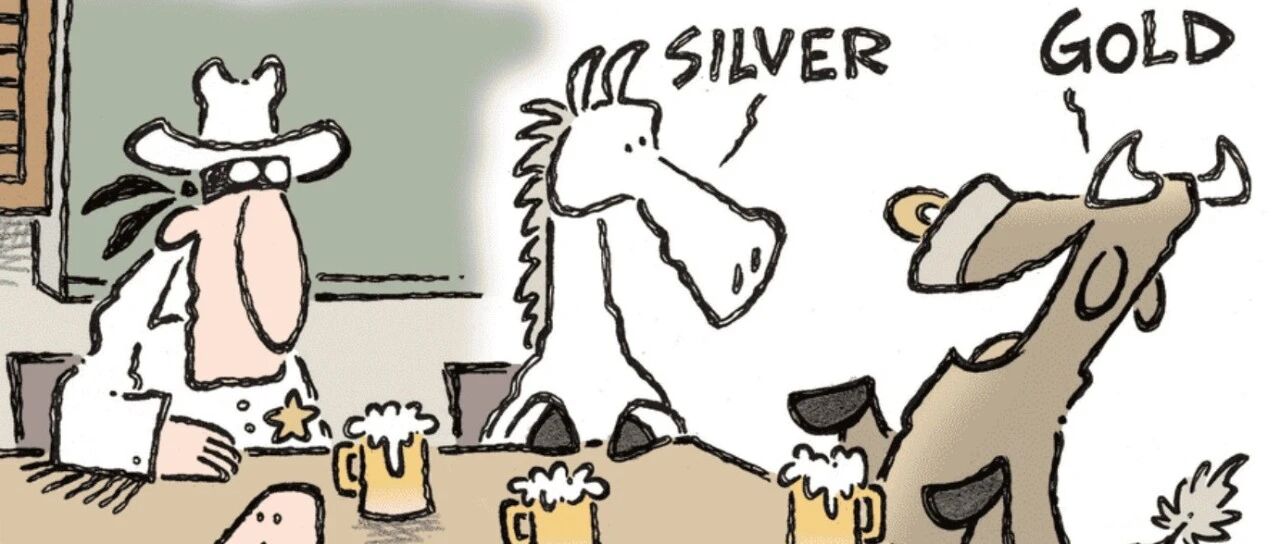
Core Viewpoint - The long-term logic of US dollar credit remains unchanged, but the underlying capital flows, asset preference shifts, and leveraged trading have never ceased. The frequent occurrence of global black swan events has led to a reduction in risk appetite, while rising inflationary pressures in the US have tightened interest rate cut expectations, potentially leading to a resonance of these factors at some point [2]. Group 1: Market Dynamics - The recent sharp decline in gold and silver prices is not fundamentally caused by the nomination of Kevin Warsh but is more of a coincidental catalyst that triggered emotional volatility. The core driving force behind the decline is large-scale profit-taking following significant price increases, leading to a chain reaction of deleveraging [5]. - Historically, significant price increases in gold (20%-30%) typically require about six months to digest, but the current cycle has been compressed to a monthly level. The rapid price increases have led to a situation where the market must undergo a severe correction to alleviate overbought pressures [5][6]. - The volatility in gold and silver prices exhibits clear "MEME" characteristics, with pricing no longer solely dependent on "de-dollarization" but driven by liquidity and AI narratives. The demand for hedging has caused gold prices to move in tandem with US stocks, while silver has seen even greater volatility due to its dual role as a financial asset and an industrial demand driven by AI [6]. Group 2: AI and Economic Interactions - The current market's upward momentum is primarily driven by the strength of the AI trend, with both US stocks and precious metals benefiting from this narrative. In contrast, cryptocurrencies have shown weakness due to their disconnection from the AI narrative and competition for resources with the AI industry [8]. - The extreme demand for electricity and computing power from the AI industry has directly impacted cryptocurrency mining costs, leading traditional mining companies to pivot towards investments in computing power centers, thereby increasing the operational costs of cryptocurrencies [8]. - Regardless of who becomes the Federal Reserve Chair, gold and silver may experience significant declines due to previous rapid price increases and the requirement for exchanges to raise reserve requirements, leading to profit-taking and deleveraging [8][9]. Group 3: Monetary Policy and Political Influences - Warsh's nomination as the next Federal Reserve Chair does not alter the dovish policy expectations. The market's insensitivity to his nomination is reflected in the stable interest rate cut expectations and the performance of long-term US Treasury bonds [8][9]. - The Federal Reserve's decisions on interest rate cuts will depend more on economic performance and political will rather than the change in leadership. Warsh's focus on inflation risks and previous opposition to quantitative easing may not align with current economic realities [9][12]. - The current liquidity levels in the dollar market are slightly above adequate levels, and excessive balance sheet reduction could lead to a repeat of the 2019 repo crisis, which the Federal Reserve aims to avoid [12]. Group 4: Fiscal Risks and Economic Outlook - Fiscal risks are emerging as significant instability factors, with political conflicts over immigration regulations complicating budget coordination, potentially leading to government shutdowns. This political maneuvering could create liquidity risks that are more damaging than monetary policy changes [16]. - Rising electricity prices driven by AI demand and significant price increases in key components like storage chips are beginning to affect consumer electronics and durable goods, posing new challenges to purchasing power and potentially reigniting inflation risks [16][17]. - The sustainability of the AI narrative relies on continuous monetary and fiscal support to counteract rising costs and the absence of a significant economic downturn. The profitability of AI-related sectors remains high, but many companies are resorting to layoffs as a cost-control measure, exacerbating economic disparities [17][20].

高盛如何看沃什?市场总“误判”新美联储主席,沃什“缩表”很难,而降息是获提名前提
Hua Er Jie Jian Wen· 2026-02-03 04:01
特朗普提名沃什出任下届美联储主席后,市场迅速押注更鹰派的资产负债表政策,但高盛认为市场可能 误判。 华尔街见闻提及,1月30日,特朗普提名前美联储理事凯文·沃什为下一任美联储主席。消息公布后,长 期债券收益率小幅上涨,美元反弹,贵金属重挫。市场似乎正为其"鹰派"的资产负债表观点定价。 但近期,高盛交易和研究团队纷纷就沃什进行深度分析,认为市场可能再次误判了新美联储主席的实际 立场。 高盛外汇策略师Mike Cahill提醒,仅凭沃什此前在美联储的言论判断其政策取向是错误的,他指出: 我们知道,至少表示愿意降息是他获得这份工作的先决条件。 高盛美债交易员BROWN表示,曲线陡峭化和互换利差收窄的交易已经充分计价,沃什关于资产负债表 的鹰派言论不太可能转化为重启量化紧缩政策。他说: 这对风险资产破坏性太大。 市场习惯性地误读新任美联储主席的初始立场,而每位近期前任都在上任第一年出现过显著的"误 导"。投资者正在经历又一次对新任美联储主席的"误判"周期,需要时间让市场适应新的沟通风格。 高盛经济学家Mericle:缩表难以推进,制度框架已成既定事实 高盛经济学家David Mericle梳理了沃什的核心政策立场。 ...

美联储官员首现2026年不降息论调,美国1月PMI达52.6!远超预期!
Sou Hu Cai Jing· 2026-02-03 02:07
美国现在最有优势的是什么?在我看来,除了守着贸易卡点的美军,就是美元及其体系下的交易所,因此其才可以像揉面团一样,不断的拉扯市场,导致无 论是品种、市场、预期、抑或定价逻辑,基本都要靠大家去了几年的"美元"去最后呈现,万一跟不上了,还得修改规则,从后往前算去对齐,因此,大家一 定要明白,2026年和2025年可能会有很大的不同,其中的关键就是美元的方向! 这种区别,在其实在前面的文章就已经详细解说了,比如BIS谈金银泡沫风险、特朗普谈房产价值、泰国抑制金银交易不得做空、水贝市场白银暴雷、最后 是沃什上任!无数的事情都是和大家在说:流动性方向要变,因为市场资产增值的方向逻辑要变! 而沃什的"缩表怎么同步降息"很多人看不懂,实际上,要抛开利率本身去看,特朗普的房地产就可以对冲,配方我们也熟悉,简单说就是靠炒房拉经济,靠 利率压投机! 并且,沃什认为扩表具有"等效降息"作用,每扩表一万亿美元相当于降息约50个基点,当前美联储资产负债表规模仍处于高位,缩表可剥离多余流动性,重 建货币政策可信度,进而锚定通胀预期,为后续降息铺路,说白了,就是要紧缩美元,但从房地产等地方去定向QE,做紧缩性宽松! 那么,这些假设能完成, ...
沃什接棒联储会改变周期逻辑吗
2026-02-03 02:05
沃什接棒联储会改变周期逻辑吗?20260202 摘要 Kevin Warsh 被提名为美联储主席后,市场普遍认为他是"缩表派", 可能推动美联储缩减资产负债表,给各类资产带来不确定性,投资者需 关注其具体实施细节。 Warsh 曾批评美联储的数据依赖路径,并多次强调通胀风险,市场认为 他可能更偏鹰派,更加关注通胀问题,投资者需警惕其政策对通胀的潜 在影响。 Warsh 与特朗普总统关系密切,可能减少美联储与白宫之间的摩擦,但 也可能导致政策冲突,如 Warsh 倾向于缩表与特朗普希望低利率刺激经 济的目标相悖。 当前金融系统面临流动性风险和波动性增加的挑战,美联储新主席人选 的不确定性加剧了市场波动,投资者应重新评估风险并调整投资策略。 全球主要经济体面临高通胀、货币贬值和财政不可持续性的债务管理挑 战,各国央行倾向于容忍较高通胀以降低实际债务负担,可能导致金融 抑制。 Q&A Kevin Warsh 被提名为下一届美联储主席后,市场对其政策方向有哪些解读? 市场对 Kevin Warsh 的政策方向有多方面的解读。首先,Warsh 曾公开表示 对 2008 年后的大规模量化宽松(QE)非常不满,并因此辞去上 ...
“沃什上任后将面临艰巨任务”
Di Yi Cai Jing Zi Xun· 2026-02-03 00:56
2026.02.03 本文字数:1864,阅读时长大约2分钟 作者 |第一财经 樊志菁 当地时间周一,亚特兰大联储主席拉斐尔・博斯蒂克在出席活动时表示,沃什若执掌美联储将面临一项 "艰巨任务",尤其是如果他想要说服政策制定委员会的成员在货币政策决策上与自己保持一致,这项挑 战会更为突出。 如何化解分歧 美联储上周以10票赞成、2票反对的结果,决定将美联储基准利率维持在当前3.50%至3.75%的区间,并 释放出暂不急于降息的信号。 目前美联储内部暗流涌动,坚定支持降息的只有美联储理事沃勒、米兰和鲍曼,三人均为特朗普提名, 而决定利率政策的联邦公开市场委员会(FOMC)中剩余的4位理事(包括现任美联储主席鲍威尔)和5 位地方联储主席均对进一步宽松持谨慎态度,其中不乏堪萨斯联储主席施密德、圣路易斯联储主席穆萨 勒姆这样的鹰派委员。 博斯蒂克表示,自己认为美联储今年完全不应降息,美联储多位同僚也持相同观点。而特朗普此前称, 提名沃什的部分原因,是沃什认同自己应当降低借贷成本的主张。 亚特兰大联储主席当天在出席一场活动中表示:"如果想要推行既定的政策,或是让货币政策朝着自己 期望的方向走,就必须说服委员会成员认同并支 ...
“沃什上任后将面临艰巨任务”
第一财经· 2026-02-03 00:54
2026.02. 03 本文字数:1864,阅读时长大约2分钟 作者 | 第一财经 樊志菁 当地时间周一,亚特兰大联储主席拉斐尔・博斯蒂克在出席活动时表示,沃什若执掌美联储将面临一项 "艰巨任务",尤其是如果他想要说服政策制定委 员会的成员在货币政策决策上与自己保持一致,这项挑战会更为突出。 联邦基金利率期货定价显示,市场预期美联储年内降息窗口在6月和7月摇摆,并未因沃什获得提名大幅提前,投资者普遍态度谨慎。富国银行投资研究 所全球固定收益策略主管雷林(Brian Rehling)表示,若想将利率降至中性水平以下,新任主席必须争取到足够的共识支持。"降息并非主席一人就能 决定的事,他需要获得更多美联储理事的投票支持。这将会是一种前所未有的特殊局面。" 推进缩表难度重重 在华尔街看来,沃什的另一潜在主张——缩表,即使最终能够实现,现实的金融环境也意味着其落地过程将充满阻碍、推进缓慢。 沃什曾在2006至2011年担任美联储理事,他一直认为,美联储庞大的资产持有规模扭曲了经济金融运行秩序,现有持仓应大幅削减。去年11月,他在评 论文章中写道,"美联储的资产负债表已过度膨胀,其设立初衷是在过往的危机时期扶持大型企业 ...
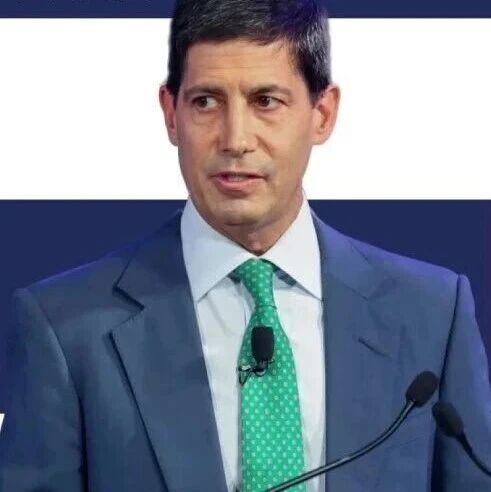
东吴证券:新美联储主席沃什真的鹰派吗?
Xin Lang Cai Jing· 2026-02-03 00:26
Core Viewpoint - The market's hawkish interpretation of Warsh's nomination is seen as a misconception, as he has shifted to a dovish stance on monetary policy. It is expected that he will implement more rate cuts than the market anticipates, with a forecast of 75-100 basis points of cuts throughout the year, starting in June [1][10]. Latest Perspective - Warsh's monetary policy stance has transitioned to dovish since 2025, believing that AI-driven productivity gains will not lead to inflation. He argues that the current large balance sheet of the Fed is outdated and can be significantly reduced, allowing for further rate cuts to support households and small businesses [3][12]. Nomination Reason - Trump's primary consideration in selecting a Fed chair is the ability to quickly lower interest rates. Warsh's close personal ties with Trump, including connections through significant financial support, suggest he will align closely with Trump's monetary policy goals [4][13]. Hawkish Feasibility - The current liquidity environment does not support the Fed's balance sheet reduction. Warsh's previous calls for balance sheet reduction are seen as opposition to past Fed policies. The recent implementation of a light balance sheet expansion indicates a need to avoid liquidity crises, making immediate balance sheet reduction risky [5][14]. Future Outlook - Warsh's nomination requires Senate approval, and there are concerns about Powell's potential influence post-tenure. Maintaining an image of independence will be crucial for Warsh to secure his position and ensure effective policy implementation. The market is expected to reassess Warsh's stance after his official appointment [6][15][16].