量化宽松政策

Search documents
陶冬:日本债市崩塌,但掀不起大浪
Di Yi Cai Jing· 2026-01-26 03:22
Group 1 - The article discusses the impact of political decisions on financial markets, particularly focusing on the recent turmoil in Japan's bond market and the implications of potential changes in the U.S. Federal Reserve leadership [1][2][5] - Japanese Prime Minister Kishi's announcement to dissolve parliament and propose tax cuts without clear funding sources has led to a collapse in Japanese government bonds, causing significant market reactions [1][4][5] - The article highlights the shift in market sentiment regarding potential candidates for the Federal Reserve chairmanship, with a notable increase in the odds for Reed, who is seen as a credible candidate for monetary policy [2][3] Group 2 - The article notes that the Japanese bond market is experiencing a significant outflow of funds, with domestic insurance companies selling a record $521 billion in long-term bonds, indicating a lack of confidence in the government's fiscal policies [5][6] - Comparisons are drawn between Kishi's situation and that of former UK Prime Minister Truss, suggesting that both leaders faced market backlash due to poorly supported fiscal measures [5][6] - The article suggests that while Japan's bond market is under pressure, its structure and the nature of its investors may provide some resilience against policy missteps, contrasting it with the UK bond market [6]
爱尔兰巴戈特投资谈美元下跌三个因素
Shang Wu Bu Wang Zhan· 2026-01-23 04:14
Core Viewpoint - The article discusses three key factors contributing to the decline of the US dollar, as articulated by Peter Brown, the manager of Baggot Investment in Ireland [1]. Group 1: Factors Leading to Dollar Decline - The first factor is the uncertainty stemming from President Donald Trump's interventions in the Federal Reserve [1]. - The second factor involves the US facing substantial debt repayment, necessitating the Federal Reserve to purchase its own debt, which negatively impacts the dollar. Additionally, the confiscation of Russian-held US bonds has raised concerns about the safe-haven status of US Treasuries [1]. - The third factor is the risk of over-concentration of investments in the US, with US stocks comprising 75% of the MSCI World Index and the US accounting for 26% of global growth. The overvaluation of tech stocks has led to a withdrawal of investments from the market, contributing to the dollar's decline [1].
美联储主席人选反复生变,特朗普最想要的还是贝森特?
Hua Er Jie Jian Wen· 2026-01-22 10:14
Core Viewpoint - The report from Bank of America highlights the critical phase in the selection of the Federal Reserve Chair, suggesting that while popular candidates like Rieder and Waller are in focus, Treasury Secretary Basant may be the "hidden candidate" who meets the three essential criteria for the position [1][2]. Candidate Analysis - The current landscape shows a shift in market attention towards Rieder and Waller as the shortcomings of popular candidates Hassett and Warsh become apparent [2]. - Rieder has gained significant support, being viewed as a respected market insider with potential bipartisan support in the Senate, while advocating for a loosening of monetary policy [4]. - Waller, as a traditionalist within the Federal Reserve, has demonstrated strong policy judgment and maintains a focus on labor market stability, but his commitment to central bank independence may conflict with Trump's desire to reshape the Fed [6]. Candidate Shortcomings - Hassett's loyalty to Trump raises concerns about his ability to maintain the Fed's independence and continue anti-inflation policies, leading to a decline in his betting market odds [3]. - Warsh, despite attempting to align with the White House, holds a traditional hawkish stance that contradicts Trump's expectations for significant rate cuts [3]. Political Dynamics - The selection process lacks urgency, with the Trump team potentially delaying the final decision until June to ensure the new chair can lead the subsequent rate-cutting cycle [2]. - The gap between current market expectations and political realities is becoming a key variable influencing monetary policy direction [2].
美日市场剧烈震荡揭示其货币信用风险
2 1 Shi Ji Jing Ji Bao Dao· 2026-01-21 23:01
Core Viewpoint - The recent market turmoil in the US and Japan is driven by Japan's fiscal policy changes and the US's aggressive stance on Greenland, leading to significant financial market volatility and concerns over credit risk in both countries [1][2][3] Group 1: Japan's Fiscal Policy and Market Reaction - Japan's Prime Minister announced the dissolution of the House of Representatives and proposed tax cuts, raising concerns about increasing fiscal risks as Japan's debt reaches 240% of GDP [1] - The announcement led to a sharp sell-off in Japanese long-term bonds, with the 30-year bond yield rising over 25 basis points in a single day [1] - The market's reaction is not a liquidity crisis but a reassessment of Japan's fiscal credit risk, as the government seeks to implement tax cuts while facing high debt levels [1][2] Group 2: Impact on Global Markets - The low-yield Japanese yen, a major currency for arbitrage trading, has weakened due to rising bond yields and declining fiscal credibility, which may lead to increased inflation and pressure on the Bank of Japan to raise interest rates [2] - The US financial market is also affected by concerns over the US's hardline stance on Greenland, which has raised fears of a rift in US-European relations, prompting potential retaliatory measures from European countries [2][3] - The possibility of the EU selling off its $10 trillion in US assets could lead to significant market turmoil, as both the US and Japan face systemic risks due to their reliance on quantitative easing and accumulated fiscal risks [3] Group 3: Shift in Investment Strategies - Investors are increasingly turning to gold and other precious metals as a hedge against systemic risks arising from the credit issues in the US and Japan [3] - Chinese assets are being viewed as a safe haven, prompting China to accelerate the opening of its capital account and the internationalization of the renminbi, while also focusing on domestic reforms to ensure stable economic growth [3]
穆迪首席经济学家称特朗普可负担性政策将推高房价:忽视了基本的经济学
Xin Lang Cai Jing· 2026-01-13 07:31
Core Viewpoint - Moody's Chief Economist Mark Zandi warns that President Trump's directive for Fannie Mae and Freddie Mac to purchase $200 billion in mortgage-backed securities may backfire, leading to increased home prices rather than addressing the severe housing affordability issue in the U.S. [1][5] Group 1: Economic Implications - Trump's claim that the directive will restore affordability and the "American Dream" by lowering monthly payments is criticized by Zandi as ignoring basic economics [1][5] - Following the directive, U.S. fixed mortgage rates fell by 10-20 basis points to just above 6%, but Zandi cautions that this relief is misleading [6] - Zandi believes that while lower rates may support housing demand, the severe housing shortage means that this stimulus will likely lead to rising home prices under unchanged conditions [6] Group 2: Federal Reserve Conflict - Zandi highlights a deeper institutional conflict related to the Federal Reserve, noting that despite the Fed's return to quantitative easing in December, it still allows for early payments and maturities of its mortgage-backed securities (MBS) [6][7] - The directive for government-sponsored enterprises (GSEs) to purchase these bonds effectively undermines the Fed's efforts to manage its mortgage portfolio [7] Group 3: Historical Context and Risks - Zandi questions the overreach of executive power in monetary policy, suggesting that it is more concerning than market mechanisms [3][7] - He warns that the re-expansion of Fannie Mae and Freddie Mac's balance sheets, which Trump touts as a great decision, poses a dangerous regression [3][7] - Zandi expresses concern that the principal limits imposed on these institutions after the 2008 financial crisis are gradually eroding, which could lead them back to their pre-crisis role as "giant hedge funds" [4][7]
货币政策如何扩大内需
Sou Hu Cai Jing· 2026-01-10 09:46
Group 1 - The core argument is that monetary policy can expand domestic demand by changing the interaction behaviors of countless micro-individuals, focusing on altering market expectations and ensuring that businesses and residents can calculate their benefits [2][9][16] - The effectiveness of monetary policy relies on the central bank's commitment to a clear inflation target and significantly lowering policy interest rates to stimulate investment and consumption [2][10][16] - Historical examples, such as the actions taken by the Federal Reserve during the 2008 financial crisis and the Bank of Japan under Kuroda, illustrate how aggressive monetary policies can lead to economic recovery and increased consumer confidence [4][6][7][16] Group 2 - In China, the economy faces challenges of insufficient demand, with private fixed asset investment experiencing negative growth for the first time since 2005, indicating a lack of confidence among businesses and consumers [13][14] - The low return on assets (ROA) for listed companies and the minimal difference between ROA and long-term financing rates suggest that investment attractiveness is currently very low, impacting private investment decisions [15] - The current housing market dynamics show that despite low mortgage rates, the negative growth in housing prices makes buying less attractive compared to renting, which puts downward pressure on property prices [15][16]


历史正在重演?复盘黄金两次“史诗级见顶”后,发现主力撤退的三大共同信号
Sou Hu Cai Jing· 2026-01-02 09:25
Core Insights - Despite a general decline in precious metals like gold and silver on the last trading day of 2025, their overall performance for the year was remarkable, with gold achieving its strongest annual gain in 46 years and silver and platinum both more than doubling in value, marking a record year [2][3] Group 1: Gold Performance - Gold surged approximately 65% in 2025, marking its best annual performance since 1979, driven by factors such as Federal Reserve interest rate cuts, ongoing geopolitical tensions, strong central bank purchases, and inflows into ETFs [2][3] - On December 29, 2025, gold prices broke through the $4,500 mark, reaching a historical high of $4,549 before experiencing a rapid decline [3] - The price of gold faced its most severe drop since 2013 on October 21, 2025, after hitting a historical high of $4,380, eventually stabilizing around $3,887 [3] Group 2: Silver and Platinum Performance - Silver's annual increase exceeded 147%, marking its strongest yearly performance ever, significantly outpacing gold [2] - Platinum saw an annual increase of over 122%, also the best on record, while palladium rose more than 75%, achieving its best performance in 15 years [3] Group 3: Market Dynamics and Investor Sentiment - As precious metal prices reached new highs and the new year approached, profit-taking pressure accumulated, leading to increased volatility in the market and a shift in investor sentiment from aggressive buying to caution [4] - The significant fluctuations in precious metal prices serve as a warning for a market typically based on stability and cautious optimism, indicating that accumulated gains could quickly evaporate [4] Group 4: Historical Context and Future Outlook - Historical patterns show that gold has often experienced significant corrections following rapid price increases, suggesting that investors should remain vigilant [5][6] - Analysts maintain a generally bullish outlook for gold and silver in 2026, supported by ongoing geopolitical tensions, inflation concerns, and strong industrial demand [17] - Predictions indicate that gold prices may range between $4,500 and $4,700 per ounce in 2026, with potential to reach $5,000 under certain conditions [18] - Silver is expected to outperform gold in percentage terms in 2026, with prices projected to reach between $85 and $95, driven by strong industrial demand and a tightening supply backdrop [20][21]

美债接盘侠现身,中国第二英国第三,这国狂卖4000亿,被日本吞下
Sou Hu Cai Jing· 2025-12-27 06:23
Core Viewpoint - The article discusses Japan's significant investment in U.S. Treasury bonds amidst a global trend of selling, highlighting the implications for Japan's economy and its relationship with the U.S. [2][4][8] Group 1: Japan's Investment in U.S. Treasuries - Japan has become the largest holder of U.S. Treasury bonds, currently holding $1.2 trillion, and has increased its holdings for ten consecutive months [4][8] - In contrast, other countries like China, Canada, and the UK are reducing their holdings, with China selling $11.8 billion in October, bringing its total to a 17-year low of $688.7 billion [2][4] - The total amount of U.S. Treasuries held by foreign investors is $9.24 trillion, which has increased by 6.3% compared to the previous year [4][6] Group 2: Implications of Japan's Strategy - Japan's purchase of U.S. Treasuries is seen as a political strategy to secure economic benefits and stability, acting as a "financial umbrella" [6][8] - The relationship between Japan and the U.S. is deepening, with Japan's investments potentially influencing U.S. policy and negotiations [8][11] - Japan's actions may lead to a shift in how other allies view their foreign exchange reserves, potentially redefining economic cooperation with the U.S. [11][13] Group 3: Broader Economic Context - The article suggests that Japan's strategy could lead to a reconfiguration of global supply chains, as financial ties may drive industrial collaboration [13] - The dependency on U.S. policies could pose risks for Japan, as it may limit its strategic autonomy [13][15] - The dynamics of U.S. Treasury holdings reflect broader geopolitical interests and the evolving global order [15]
达里奥拉响最高警报:美国“债务心脏病”或在2029年前发作 万亿利息将引爆系统性危机?
Zhi Tong Cai Jing· 2025-12-26 02:12
Core Insights - Ray Dalio, founder of Bridgewater Associates, expresses increasing concern over the sustainability of U.S. debt, predicting a potential debt crisis between 2027 and 2029 [1][17] Group 1: U.S. Economic Challenges - The primary issue facing the U.S. economy is its debt burden, with annual interest payments around $1 trillion, which could lead to an additional $1 trillion in spending if not accounted for [2] - The U.S. government needs to refinance approximately $9 trillion of existing debt this year, which complicates the situation as new funds will be required to cover this debt [2] - The financial crisis marked a turning point for debt sustainability, leading to unconventional monetary policies like quantitative easing, which have resulted in significant fiscal deficits [4] Group 2: Current Debt Situation - The U.S. debt has surged by approximately $600 billion over the past five years, with current interest payments exceeding $1.1 trillion, funds that could have been allocated to more productive uses [8] - Despite high debt-to-GDP ratios, U.S. households are in a better financial position compared to the 2008 crisis, with household debt as a percentage of GDP reduced from 100% to 70% [9][11] - The ongoing global debt issue is not unique to the U.S., as other major economies face similar challenges, with high debt levels and rising long-term interest rates [11] Group 3: Potential Solutions - Solutions to the debt issue include increasing cash inflows through tax hikes or reducing cash outflows by cutting fiscal spending, as long as expenditures exceed revenues, the debt-to-GDP ratio will not improve [14] - Dalio suggests a mixed approach of combining economic contraction measures with stimulus, termed "clever deleveraging," to balance the economy and reduce the debt-income ratio [14] - Historical precedents show that significant fiscal adjustments have been made post-World War II, indicating that it is possible to reduce the debt-to-GDP ratio over time [15] Group 4: Future Predictions - Dalio warns that if the U.S. does not address its fiscal deficit, it risks facing a debt crisis, with a threshold of 3% for fiscal deficits being crucial to avoid severe consequences [16] - The potential for a debt crisis is likened to a heart attack, where the exact timing is unpredictable, but the risks are increasing [17] - The Federal Reserve may respond to a debt crisis by purchasing large amounts of bonds, similar to past crises, which could lead to significant market reactions [22][24]
美联储宣布降息,特朗普吐槽鲍威尔“行事刻板”,降息幅度太小
Sou Hu Cai Jing· 2025-12-15 07:03
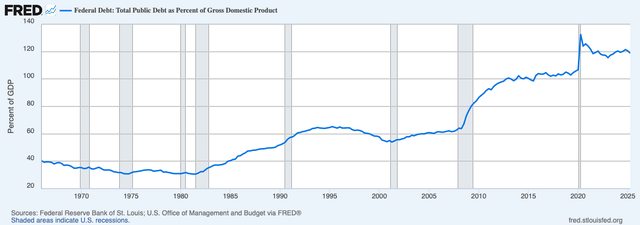
Group 1 - The Federal Reserve announced a 25 basis point interest rate cut on December 10, marking the third cut since 2025, aligning with market expectations [1] - Internal divisions within the Federal Reserve are increasing, with three members voting against the rate cut [1] - There are concerns regarding the potential appointment of Kevin Hassett as the next Fed Chair, which could lead to more aggressive rate cuts [2][4] Group 2 - President Trump criticized the Fed's cautious approach, stating that the rate cut should have been larger, suggesting a 50 basis point reduction instead [2][5] - Despite three rate cuts this year, the Fed has not met Trump's expectations, leading to ongoing public criticism of Fed Chair Powell [5][6] - The Fed's cautious stance on rate cuts is influenced by the need to manage inflation and the global impact of U.S. monetary policy [5]