预防性降息

Search documents
帮主郑重:美联储要放大招?降息50基点引爆市场,这三类资产要起飞!
Sou Hu Cai Jing· 2025-08-14 03:53
Core Viewpoint - The expectation of a significant interest rate cut by the Federal Reserve has surged, with Treasury Secretary Bessent suggesting a potential 50 basis point cut in September, leading to a rally in U.S. stock indices and a drop in 2-year Treasury yields [1][3]. Group 1: Economic Indicators - Recent employment data has shown a drastic revision, with job additions for May to July cut by half, equating to a loss of 258,000 jobs, and the unemployment rate rising to 4.2% [3]. - Bessent criticized the Federal Reserve's rigid interest rate policy, advocating for a reduction of 150-175 basis points to return rates to pre-pandemic levels [3]. Group 2: Market Reactions - The stock market, particularly the seven major tech companies, has seen a 37% increase in financing purchases over three days, indicating that investors are betting on a liquidity surge post-rate cut [3]. - Gold futures have surpassed $3,400 per ounce, with 30% attributed to "panic premium," suggesting potential profit-taking if the rate cut materializes [4]. Group 3: Currency and Capital Flows - The onshore RMB exchange rate has risen to 7.10, with northbound capital inflows exceeding 10 billion over three consecutive days, potentially benefiting the A-share technology growth sector [5]. Group 4: Investment Opportunities - The current rate cut is viewed as a means to "buy time" through monetary easing, with recommendations to focus on stable cash flow utility stocks and commodities benefiting from liquidity expansion, such as copper and crude oil [5]. - Morgan Stanley predicts copper prices could reach $9,500 per ton by year-end, highlighting the potential for investment in commodities [5].


深夜22:00,传闻突袭,美联储变天
Jin Rong Jie· 2025-08-07 23:53
Group 1 - The core viewpoint is that the Trump team favors Waller as the next Federal Reserve Chair due to his willingness to make policy decisions based on forecasts rather than current data, contrasting with the current Chair Powell's approach [1][2] - The market's reaction to the news was a slight decline, indicating that Waller may not be perceived as dovish enough compared to other candidates [2] - Trump personally dislikes Waller, fearing that choosing from within the Fed could lead to a repeat of the Powell situation, but is considering Waller due to advice suggesting his selection would be favorable for the market [2][3] Group 2 - White House spokesperson Kush Desai stated that any discussions about personnel changes should be considered speculation unless stated by the President himself [3] - The likelihood of Waller's selection may have decreased following the market's downturn, which is not the outcome Trump desires; however, a significant market drop closer to the announcement could lead to Waller's selection as Trump may not want to gamble on the best candidate [3]
高盛改口:美联储提前在9月启动降息,今年恐连砍3刀
Jin Shi Shu Ju· 2025-07-01 01:01
Group 1 - Goldman Sachs has adjusted its forecast for the Federal Reserve's interest rate cuts, now expecting a cut in September instead of December, citing weaker-than-expected inflation impacts from tariffs [1] - The Goldman Sachs economic research team, led by Chief Economist Jan Hatzius, believes the probability of a September rate cut is slightly above 50%, influenced by factors such as weaker tariff effects and a softening labor market [1] - Goldman Sachs predicts rate cuts of 25 basis points in September, October, and December, lowering the terminal rate expectation from 3.5%-3.75% to 3%-3.25% [1] Group 2 - Morgan Stanley disagrees with Goldman Sachs, stating that the likelihood of the Federal Reserve cutting rates in the near term remains low, despite market expectations increasing for a September cut [1] - Morgan Stanley analysts believe that most Federal Reserve officials support a cautious stance and are unlikely to quickly endorse rate cuts, anticipating a relatively stable upcoming employment report [1] - Chicago Fed President Goolsbee expressed skepticism about the possibility of a 1970s-style stagflation occurring in the current economic environment, given the current unemployment and inflation rates [2] Group 3 - Atlanta Fed President Bostic expects one rate cut in 2025 and three cuts in the following year, indicating a patient approach to maintaining current rates due to a stable labor market [3] - Bostic noted that the full impact of Trump's trade tariffs on the economy has yet to be felt, suggesting that price impacts are more a matter of timing than certainty [2]


等待进一步突破
Qi Huo Ri Bao· 2025-06-27 01:56
Market Performance - A-share market has seen continuous volume increase and has broken through March highs, reaching a new annual high [1] - The rise is primarily driven by the non-bank financial and defense industries, with the non-bank financial sector benefiting from sentiment in Hong Kong brokerage stocks [1][2] Non-Bank Financial Sector - The strong performance of the non-bank financial sector is influenced by the approval of Guotai Junan International to provide comprehensive virtual asset trading services in Hong Kong [1] - The upcoming implementation of the Hong Kong Stablecoin Regulation on August 1 has also contributed to the active sentiment in the financial sector [1] - The sector has seen a nearly 10% increase over the past three days, with institutions accelerating the replenishment of financial heavyweight stocks [2] Defense Industry - The defense and military industry has also contributed to the A-share market's upward movement, driven by several catalysts [3] - A significant event is the grand military parade scheduled for September 3, showcasing both traditional and new military capabilities [3] - The Shanghai Cooperation Organization defense ministers' meeting further enhances military cooperation among member states [3] Macroeconomic Factors - Current liquidity remains loose, with expectations of declining risk-free returns, providing ample potential liquidity for the equity market [4] - The market sentiment has improved, leading to a new price level for stock indices, although external factors like geopolitical issues may cause short-term disturbances [4] Future Market Outlook - The future performance of stock indices will depend on three key factors: US-China relations, incremental fiscal policies, and the technology sector's conditions [5] - The US-China trade relationship is characterized by short-term easing and long-term competition, with ongoing structural conflicts [5] - Fiscal policy remains focused on stabilizing the economy, with potential new policy windows if fiscal limits are reached in August [5] - The technology sector has seen a reduction in crowding, indicating conditions for a rebound, although global risk aversion may limit this [5][6]
经济前景不确定性增加 美联储面临艰难权衡
Qi Huo Ri Bao· 2025-05-30 02:55
Group 1 - The core viewpoint of the article is that the Federal Reserve is currently maintaining a cautious stance regarding interest rate cuts due to high levels of uncertainty surrounding economic conditions, particularly influenced by tariff policies [1][2][4] - The Federal Reserve's decision-making is heavily reliant on economic data, and any potential interest rate cuts will depend on clear evidence of the impact of tariffs on the economy, which may not be visible until late in the third quarter [3][4] - There is a significant focus on the balance between inflation and unemployment rates, with the Federal Reserve needing to make difficult trade-offs if both indicators rise simultaneously [4][5] Group 2 - The article emphasizes the importance of monitoring economic data, particularly the effects of tariffs on consumer spending and unemployment, as well as inflation indicators such as CPI and PCE [5][6] - Long-term inflation expectations are highlighted as a critical concern, with the potential for persistent inflation risks if expectations are not managed effectively [6]
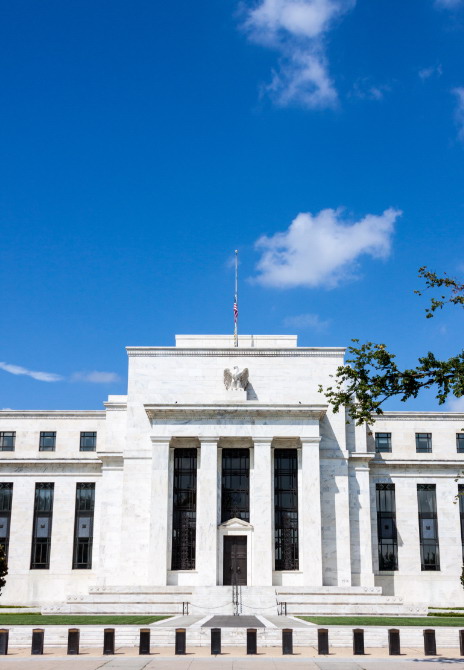
新加坡华侨投资基金管理有限公司:美联储对降息仍然表现出谨慎的态度
Sou Hu Cai Jing· 2025-05-11 14:29
Core Viewpoint - The Federal Reserve officials express a cautious stance regarding the current economic situation, emphasizing the complexity of monetary policy amid global uncertainties and trade policy fluctuations [1][3][7]. Group 1: Economic Conditions - Federal Reserve Governor Adriana Kugler highlights that despite global uncertainties, the real economy remains healthy, allowing for more time to address inflation issues and stabilize inflation expectations [3]. - Atlanta Fed President Raphael Bostic supports maintaining interest rates due to rising economic risks from ongoing trade policy uncertainties, advocating for a wait-and-see approach for more economic data clarity [3][5]. - New York Fed President John Williams stresses the importance of managing inflation expectations within target ranges to ensure economic stability, indicating that the current environment is not suitable for preventive rate cuts [5]. Group 2: Inflation and Consumer Behavior - Richmond Fed President Tom Barkin warns that businesses cannot easily pass on tariff costs to consumers, as consumer purchasing power and tolerance have been significantly impacted by years of high inflation [5]. - The series of speeches from Fed officials reflects a deep concern for the economic landscape, balancing inflation control and economic growth as a delicate choice for future monetary policy [7]. - The Fed is likely to maintain a patient and flexible approach, adjusting policies based on future economic data and global economic conditions rather than rushing into drastic measures [7].

美联储,突爆大消息!
券商中国· 2025-05-10 07:48
Core Viewpoint - The article discusses the defense of the Federal Reserve's independence amidst criticism from President Trump, highlighting the importance of maintaining stable inflation and economic policies [1][5]. Group 1: Defense of Federal Reserve Independence - Federal Reserve Governor Waller stated that the structure of the Federal Reserve Board has "withstood the test of time" and should be preserved, as it is likely to produce better policy outcomes such as lower inflation and reduced economic volatility [2][4]. - The Federal Reserve Board consists of seven members who cannot be dismissed for policy disagreements, ensuring a degree of independence from political pressures [2]. Group 2: Recent Policy Signals from Federal Reserve Officials - New York Fed President Williams emphasized that stabilizing inflation expectations is a cornerstone of the Federal Reserve's policy, asserting that maintaining price stability is their responsibility [5][6]. - Williams also indicated that discussions about "preventive rate cuts" are "untimely" given the current economic uncertainties, predicting that U.S. economic growth will be "significantly lower" in 2025 compared to 2024 [6]. - Fed Vice Chair Barr warned that U.S. trade policies could lead to sustained inflationary pressures and higher unemployment rates [6]. Group 3: Criticism from Potential Future Fed Chair - Kevin Warsh, a potential candidate for the next Federal Reserve Chair, criticized the Fed for not controlling inflation stemming from tariffs, suggesting that the Fed should take responsibility if it fails to prevent price increases from becoming persistent inflation [7][8]. - Warsh argued that public confidence in the central bank's ability to achieve price stability is a prerequisite for actual price stability [8].

高盛首席经济学:做空美元 做多黄金
Xin Lang Cai Jing· 2025-05-08 02:37
Group 1 - The Trump administration is softening its most aggressive tariff policies, including a 90-day suspension of retaliatory tariffs and exemptions for ICT products, while modifying auto parts tariffs to avoid overlap with steel and aluminum tariffs [1][2] - The expected reduction of US tariffs on China from approximately 160% to 60% is anticipated, with potential simultaneous reductions in Chinese tariffs on the US [1][2] Group 2 - Hard data shows resilience in the labor market, with initial unemployment claims indicating strength despite the distortion from early procurement in GDP data [1][2] - Financial conditions have significantly eased, with current levels suggesting a minimal drag on US GDP growth of only 0.2 percentage points in Q3 [1][2] Group 3 - The probability of recession remains at 45%, with risks from potential tax increases in sectors like pharmaceuticals, semiconductors, and film, and the delayed impact of previously announced tariffs [2][3] - Soft data has declined below typical levels seen in event-driven recessions, indicating potential economic challenges ahead [2][3] Group 4 - The Federal Reserve's policy outlook remains highly uncertain, with a delay in the first preventive rate cut from June to July, while concerns about the Fed's independence are rising due to potential political pressures [3][4] - A decrease in the Fed's independence could lead to worsening long-term inflation [4] Group 5 - Despite slight economic resilience, the investment environment is challenging, with risks of inflation spikes, supply chain disruptions, and rising unemployment [5] - The company maintains a strong stance on shorting the dollar and going long on gold, while also favoring UK rates, copper, and US natural gas, but is bearish on oil [5]

美联储按兵不动,鲍威尔:特朗普施压不影响工作
Sou Hu Cai Jing· 2025-05-08 01:18
Group 1 - The Federal Reserve maintained the federal funds rate target range at 4.25% to 4.50%, aligning with market expectations, marking the third consecutive pause since January and March [2] - The Fed noted that while the unemployment rate remains low and the labor market is strong, inflation is still at a relatively high level, indicating increased uncertainty in the economic outlook [2] - Fed Chairman Jerome Powell highlighted that significant tariff increases by the U.S. government could lead to rising inflation, slowing economic growth, and increasing unemployment, potentially delaying the achievement of the Fed's goals until next year [2][3] Group 2 - Powell stated that tariffs might have a short-term impact on inflation but could also lead to more persistent effects, emphasizing the appropriateness of the current policy stance and the need for patience [3] - He dismissed the idea of preemptive rate cuts before achieving inflation targets, indicating that the current situation does not warrant such actions until more data is available [3] - Recent economic data showed an increase of 177,000 in non-farm payrolls for April, with an unemployment rate steady at 4.2%, while the first quarter GDP contracted by 0.3% year-on-year due to increased imports to avoid tariffs [4]
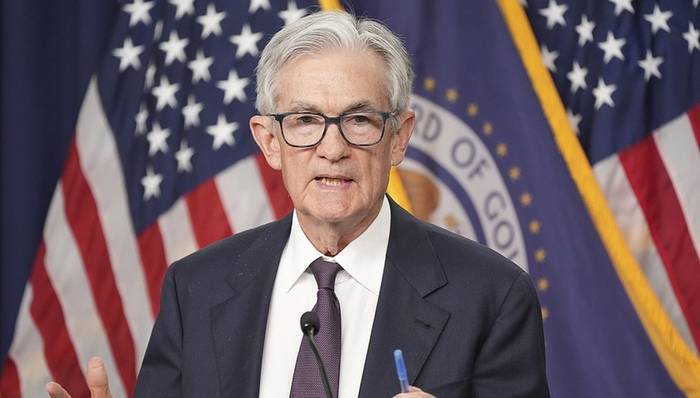
美联储降息预期下,黄金与比特币为何成“新避险之王”?
Sou Hu Cai Jing· 2025-05-06 07:09
Core Viewpoint - The article discusses the rising interest in gold and Bitcoin as potential "new safe-haven assets" amid expectations of interest rate cuts by the Federal Reserve, prompting investors to consider which asset may be more favorable for risk management [1][3]. Group 1: Federal Reserve Rate Cuts and Market Reactions - The expectation of interest rate cuts has triggered a chain reaction in global capital markets, with a consensus forming around the logic of "preventive rate cuts" due to various instability factors [3]. - The U.S. federal debt has surpassed $36 trillion, with interest payments consuming a historically high proportion of fiscal revenue, leading to concerns about long-term inflation despite short-term relief from rate cuts [4]. - The yield curve for U.S. Treasury bonds has inverted, with the 10-year bond yield dropping below 4%, prompting a shift of funds from dollar assets to safe-haven assets like gold and yen [4]. Group 2: Gold as a Safe-Haven Asset - Gold has demonstrated resilience during market turmoil, with COMEX gold prices reaching a historical high of over $2,500 per ounce in March 2025, and currently trading at $3,393.4 per ounce [4][6]. - The demand for gold is supported by its historical role as a value store during crises, with a notable increase in gold ETF holdings during the 2024 Israel-Palestine conflict [6]. - Central banks globally have increased their gold purchases, with a net purchase of 1,136 tons in 2024, and China has been increasing its gold reserves for 16 consecutive months [6]. Group 3: Bitcoin's Position and Challenges - Bitcoin has shown a dual nature in 2025, being included in some institutional portfolios while still facing regulatory scrutiny and volatility [11]. - Despite a temporary price surge due to a halving event in April 2024, Bitcoin's correlation with risk assets remains high, as evidenced by an 18% drop during the 2024 U.S. stock market crash [12]. - Bitcoin's market capitalization is significantly lower than gold's, at $1.2 trillion compared to gold's over $13 trillion, limiting its capacity to absorb large-scale safe-haven investments [14]. Group 4: Investment Strategies - The article emphasizes the importance of understanding the underlying logic of both assets rather than chasing trends, suggesting that gold serves as a "ballast" for systemic risk, while Bitcoin is viewed as an "experiment" with high volatility and regulatory uncertainties [15].