美元霸权

Search documents
美债找到终极接盘侠?一场全新的货币大战,正在颠覆全球金融格局
Sou Hu Cai Jing· 2025-05-23 10:49
比关税更要命,一场全新的货币大战,正在颠覆全球金融格局。 川普上任以来,不断地挥舞关税大棒,吸引了全球媒体的目光。 但在关税之外,川普还在干一件大事,却被媒体当成了花边,那就是推广虚拟货币。 虚拟货币大家都知道,比如像比特币、以太坊等等,但这东西因为它天然去中心化的属性,所以各国政府一般都比较排斥。 但川普不一样,他自己就发行了一种虚拟货币,叫作特朗普币,还以美国总统的身份亲自代言,那些持有特朗普币最多的人,甚至还会被邀请参观白宫,跟 川普一起共进晚餐。 对川普的这个行为,大多数人都以为,他这么做就是为了赚钱,确实,他的家族在短短两个月里,已经通过特朗普币捞了上10亿美元。 但川普的目的真的就这么简单吗? 直到最近,欧洲央行发出警报,我们才发现,虚拟货币是一个比关税更要命的大杀器,川普正在用它重塑全球金融格局,并试图彻底解决美债危机。 这次引起引起欧洲央行警觉的,是以美元为锚的稳定币,我先解释一下什么是稳定币。 打个比方,我们玩电子游戏,得先充值,比如把钱充进去兑换成欢乐豆,然后再用欢乐豆购买游戏里的道具。 稳定币其实就是一种欢乐豆,它最初是由一些虚拟货币交易平台推出的,比如你想购买比特币,就得先在某平台上充 ...

美国霸权往事:克林顿建立全球贸易剥削体系,遏制发展中国家经济
Sou Hu Cai Jing· 2025-05-23 06:32
1993年1月20日,美国举行了冷战结束后的第一次总统就职典礼。这次典礼上的演讲者是一位看似稳重且果断的中年男子,他的名字叫比尔·克林顿。 克林顿能够在1992年的总统选举中击败老布什并最终胜出,并非仅仅依靠其年轻的优势。他和他的妻子希拉里都是非常老练的政治人物,深谙权谋之道。克 林顿在美国总统宝座上的时机恰好与美国的"黄金时代"契合。 在当时,世界依然被苏联解体的巨大震动所影响,没有任何国家敢质疑和挑战美国的全球霸权。正是因为这样,克林顿试图为全球设定一种新的政治经济体 系,而这一计划几乎没有受到阻碍。因此,克林顿开始着手建立一个以美国为核心的全球剥削体系。 培养"经济白手套" 至今,这一体系仍然为美国带来丰厚的收益,甚至美国还试图运用这一框架来对中国进行打压。那么,克林顿为美国设计的这一剥削体系到底具备哪些独特 的优势呢?美国是否能够依靠过去的经验有效遏制中国的发展呢?接下来,我们将一一探讨。 在克林顿的战略布局中,俄罗斯作为廉价能源的供应国,而欧洲国家则承担了大部分的工业生产任务。美国则通过掌控高科技产业,赚取巨额财富。而冷战 后的俄罗斯在美国专家的建议下,几乎完全顺从美国的战略,直至今日,俄罗斯的经济 ...


美国疯狂加息之后,怎么就是收割不动中国人?
Sou Hu Cai Jing· 2025-05-23 06:22
Group 1 - The article discusses the impact of the Federal Reserve's interest rate hikes on global markets and how China manages to remain stable amidst these fluctuations [1][3][19] - It explains the mechanisms of monetary policy, including expansionary and contractionary policies, and their role in managing economic cycles [3][15] - The historical context of the Bretton Woods system and the transition to the current global financial system is outlined, emphasizing the flexibility needed for economic intervention [4][6] Group 2 - The concept of seigniorage is introduced, illustrating how excessive money printing can lead to inflation and wealth transfer from citizens to the government [8][10] - The article highlights the benefits of dollar hegemony for the U.S., allowing it to print money without immediate consequences, while other nations face inflation risks if they attempt the same [10][11] - It notes that the U.S. economy is not immune to the consequences of its monetary policies, facing challenges that are exacerbated by global capital flows [11][13] Group 3 - The Federal Reserve's interest rate hikes are described as a tool for controlling inflation and managing the economy, with significant increases noted since 2021 [15][17] - The article discusses the capital flight from Europe to the U.S. due to geopolitical tensions, particularly the Russia-Ukraine war, and how this affects global investment patterns [17][19] - China's proactive measures during the pandemic, including maintaining production and supply chains, are credited with its ability to weather external economic shocks [23][25] Group 4 - China's fiscal policies, including maintaining a reasonable level of external debt and ensuring sufficient capital reserves, are highlighted as key factors in its economic resilience [25][29] - The article emphasizes China's commitment to independent economic policies and its management of the yuan, contrasting it with other nations that have adopted more liberal currency policies [26][28] - The dual security advantages of military strength and economic independence are presented as reasons for China's stability in the face of external pressures [28][29] Group 5 - The article concludes with a cautionary note about the need for China to remain vigilant against potential challenges from the U.S., as it is increasingly viewed as a competitor [31]

日债崩了,这是给美元捅刀子啊!
Jin Shi Shu Ju· 2025-05-22 13:04
Group 1 - The article discusses the changing dynamics of U.S.-Japan relations, highlighting Japan's resilience in trade negotiations and its refusal to compromise national interests despite U.S. pressure [4][15][19] - It emphasizes the historical context of U.S. trade wars, particularly the impact on Japan's economy in the past, and draws parallels to current events [3][6][19] - The article notes the significant role of Japanese households, referred to as "Watanabe-san," in cross-border arbitrage and their recent struggles due to rising borrowing costs and currency fluctuations [9][10][11] Group 2 - The article points out the decline in U.S. Treasury bond ratings and its implications for liquidity in the banking sector, leading to increased selling pressure on bonds [6][7][8] - It highlights the interconnectedness of U.S. and Japanese financial markets, particularly in the context of currency exchange rates and the potential for significant volatility [22][23][24] - The article suggests that the Federal Reserve's actions and policies are in direct opposition to the current U.S. administration's trade strategies, indicating a potential internal conflict within U.S. economic policy [19][25]
FT中文网精选:海湖庄园协议:想说“伟大”不容易
日经中文网· 2025-05-22 03:32
斯蒂芬•米兰认为美元储备地位、美元高估和贸易逆差面临取舍,高估的美元让制造业 竞争力下降,但也维系"美元霸权"。如何改革逆差过大和制造业衰落? 文丨陈稻田 特朗普的经济顾问委员会主席斯蒂芬•米兰(Stephen Miran)在经济学博士毕业后立刻进入 华尔街做外汇交易,在今年2月份参议院的任职听证会上,他表示这段市场考验让他不再"书 生气",而是开始"接地气"。在解释为什么他可以胜任总统经济顾问一职时,米兰表示他的普 通家庭背景让他会更关注普通人;而导师费尔德斯坦(曾经是里根的经济顾问)和米兰讨论 论文的时候总是要求说:"假想我是参议员,你说的东西要让我能听懂",米兰表示这个训练 也让他做好了和职业政治家交流的准备。2024年11月大选之前不久,还在一家投资基金担任 策略师的米兰写下了一篇策论文章,讨论特朗普胜选后可能以及应该的各种经济策略、取 舍、以及风险考量,其中详细讨论了名为"海湖庄园协议"的新国际金融体系。很自然,在他 获得重用后"海湖庄园协议"在美国内外都获得了相当的关注。 阅读更多内容请点击下方"阅读原文" (本文由FT中文网提供) 编者荐语: 日本经济新闻社与金融时报2015年11月合并为同一家 ...
美国万万没料到,中国大幅抛售美债,特朗普想亲自来中国一趟?
Sou Hu Cai Jing· 2025-05-21 10:50
Group 1 - The core point of the news is that as of March 2025, Japan and the UK have increased their holdings of US Treasury bonds, while China has reduced its holdings, causing China to drop from the second-largest to the third-largest holder of US debt [1][3] - China's holdings of US Treasury bonds have decreased to $765.4 billion, which is a significant reduction that has allowed the UK to surpass China in bond holdings [3][6] - The reduction in China's US Treasury holdings is seen as a strategic move that could impact the US financial system, especially amid ongoing trade tensions [3][6][8] Group 2 - The trade war has led to a large-scale sell-off of US Treasury bonds, resulting in a spike in bond yields and raising concerns about the US federal government's debt situation [3][6] - China has been strategically positioning itself in the international economic landscape, including building gold reserves and a cross-border payment system, which indicates a long-term strategy rather than a reactive measure [8] - The geopolitical implications of China's actions, including the reduction of US Treasury holdings and export controls on rare earth elements, suggest a broader challenge to US financial and trade dominance [8]
中美对抗是假,美联储收割是真!逼卖矿山、电网?这在中国行不通
Sou Hu Cai Jing· 2025-05-21 09:02
Group 1 - The essence of the US-China conflict is a struggle for control over manufacturing industry chains and financial assets, rather than just a trade or technology war [1][3] - The core interests of the people in both countries are complementary, with the US relying on affordable Chinese goods and China needing US technology and markets [3][24] - The real issue arises from financial dynamics, particularly as China accumulates foreign exchange reserves and seeks to use the yuan for strategic resource transactions, challenging the foundation of US dollar hegemony [3][16] Group 2 - The Federal Reserve, while appearing to be a central bank, has deep connections with Wall Street, indicating a complex relationship that influences global financial dynamics [5][6] - The Fed's actions, such as dollar appreciation and interest rate adjustments, can lead to significant wealth transfers globally, often benefiting those with substantial cash reserves [8][10] - Historical patterns show that during financial crises, international capital often acquires undervalued assets, leading to a systematic "wealth transfer" [10][12] Group 3 - The Federal Reserve's primary goal is to maintain the purchasing power of the dollar and control inflation, which reveals the tool-like nature of the dollar in global finance [16][18] - The US capital groups aim to control global production resources and acquire high-quality assets that generate sustainable wealth, ensuring their dominance [16][18] - China's stronghold on critical national assets, such as energy and infrastructure, creates barriers for foreign capital, making it difficult for them to exert control [18][21] Group 4 - The resilience of China's industrial chain and advancements in high-tech sectors, such as new energy vehicles and 5G technology, have made it a formidable competitor [23][24] - The increasing prominence of the yuan in international markets has raised concerns among global capital players, who fear losing access to China's economic opportunities [24][26] - The ongoing global financial dynamics suggest that while challenges exist, there are also opportunities for value creation, emphasizing the importance of understanding tangible assets [26]
新的美债“接盘侠”现身?日本第一,中方抛售美债退居全球第三!
Sou Hu Cai Jing· 2025-05-20 17:26
据环球时报援引美国财政部当地时间5月16日发布的最新数据,截至3月底,中国持有的美国国债已经较上个月减少了约189亿美元,减少至7654亿美元。而 英国在增持289亿美国国债之后,已经超过中国成为了美国国债的第二大持有国,总持有量达到了7793亿美元。 除此之外,日本目前仍然是美国国债的最大持有国。在3月增持49亿美元国债后,日本目前总计持有11308亿美元美国国债。 当地时间5月16日,美国财政部公布的数据显示,2025年3月,美债前三大海外债主中,日本、英国增持美国国债,中国减持。中国由美国第二大债主变为第 三大债主,英国变为第二大债主。3月正值本轮美债市场动荡前夕。美国财政部2025年3月国际资本流动报告(TIC)显示,日本3月增持49亿美元美国国 债,持仓规模为11308亿美元,依然是美国第一大债主。中国3月减持189亿美元美国国债至7654亿美元,为今年首次减持。 一直以来,美国凭借美元霸权,肆意挥舞金融大棒,特朗普政府上台后,贸易保护主义抬头,频繁加征关税,搅乱全球经济秩序,中美贸易摩擦不断升级。 中国减持美债,正是基于对美国金融风险的审慎判断和对自身经济安全的战略考量。美国债务规模如滚雪球般膨胀 ...
中方大手一挥,抛售189亿美债,美国大动脉被切,特朗普寻求访华
Sou Hu Cai Jing· 2025-05-20 14:28
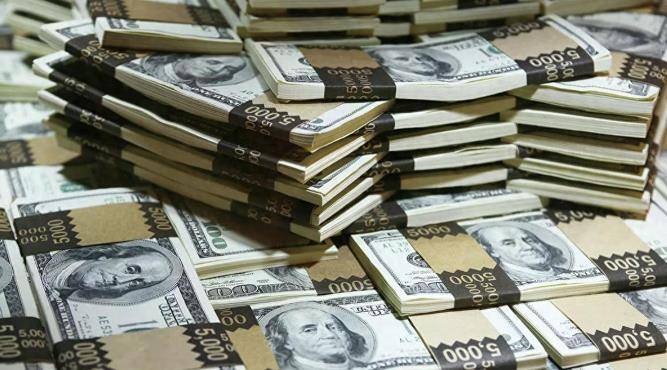
据和讯网报道,美国财政部公布数据显示,2025年3月,美债前三大海外债主中,日本、英国增持美国 国债,中国减持。中国由美国第二大债主变为第三大债主,英国变为第二大债主。3月正值本轮美债市 场动荡前夕。美国财政部2025年3月国际资本流动报告(TIC)显示,日本3月增持49亿美元美国国债,持 仓规模为11308亿美元,是美国第一大债主。中国3月减持189亿美元美国国债至7654亿美元,今年首次 减持。减持后,中国对美国国债的持仓规模由第二下降至第三。 美元(资料图) 长期以来,中国都是美债重要持有国,曾一度排名全球第一。自从2019年被日本超越之后,近年来中国 在逐步减持美债,整体趋势非常明显,不过,这一次是自2023年2月以来最大规模单月长期美债抛售, 这已经不是简单的投资行为。事实上,其原因也不难理解,总结起来就是四个字——风险规避。国际评 级机构穆迪将美国主权信用评级从Aaa下调至Aa1,这是继标普2011年、惠誉2023年之后,第三家主要 评级机构对美国信用评级的调整。三大评级机构,已经没人再给美国"满分"信用。 美债是美元资产压舱石,一旦美债崩盘,美元霸权也就崩盘了。美债也是中美关系压舱石。只要中美不 ...
中方大举抛售美债,特朗普付出代价,美国走向破产,日本被逼接盘
Sou Hu Cai Jing· 2025-05-19 23:11
Core Viewpoint - The article discusses the declining confidence in U.S. Treasury bonds, highlighting China's recent sale of $18.9 billion in U.S. debt, reducing its holdings to $765.4 billion, and the implications of this financial maneuvering in the context of global economic stability [1][3][18]. Group 1: U.S. Economic Challenges - The U.S. economy has not fully recovered since the 2008 financial crisis, with GDP growth remaining weak and manufacturing shrinking [5][7]. - The U.S. government faces escalating fiscal deficits, with national debt approaching astronomical figures, raising concerns about potential bankruptcy [7][9]. - U.S. policies, including sanctions and the weaponization of the dollar, have led to a loss of trust in the stability of the U.S. financial system, causing global investors to reconsider the value of U.S. Treasury bonds [9][10]. Group 2: China's Strategic Moves - China has been gradually reducing its holdings of U.S. Treasury bonds, with a recent sale of $18.9 billion reflecting a strategic shift to mitigate risk [18][20]. - The reduction in U.S. debt holdings is part of a broader strategy to diversify investments and avoid over-reliance on U.S. assets, as the global financial landscape evolves [22][24]. - China's approach indicates a keen awareness of global market trends, focusing on investments in emerging sectors rather than solely on U.S. debt [22][24]. Group 3: Japan's Dilemma - Japan holds a significant amount of U.S. Treasury bonds, but its economic position limits its ability to reduce these holdings without facing repercussions from the U.S. [16][26]. - Despite recognizing the risks associated with U.S. debt, Japan's dependence on the U.S. for military and economic support complicates its financial decisions [16][26]. - Japan's situation illustrates the challenges faced by countries caught between the need for economic security and the risks of holding U.S. debt [26][28].