
服务消费

Search documents
商务部:将从六方面发力培育服务消费新增长点
Qi Huo Ri Bao Wang· 2025-09-17 11:37
期货日报网讯(记者 杨美 见习记者 肖佳煊)9月17日,国新办举行新闻发布会,介绍扩大服务消费有 关政策措施。商务部服务贸易和商贸服务业司司长孔德军在会上表示,服务消费一头连着经济、一头连 着民生,具有消费频次高、乘数效应强、增长可持续等方面特点,是推动经济高质量发展的重要内生动 力,下一步,商务部将从六个方面发力,促进服务消费高质量发展。 第二,抓场景。将支持地方创新多元化服务消费场景,培育"旅游+""美食+""体育+"、"演艺+"等融合消 费场景,推动商旅文体健融合发展。 第六,抓机制。将发挥好促进服务消费发展工作协调机制的作用,开展服务消费提质惠民行动,解决服 务消费发展的堵点卡点,培育新增长点,促进服务消费高质量发展。 第一,抓政策。接下来会出台住宿业高质量发展、铁路与旅游融合发展等一系列的政策文件,形成政 策"组合拳"。 第四,抓平台。将加力推进城市一刻钟便民生活圈建设,增加多元服务,打造宜居宜业、宜游宜购、宜 老宜小的品质生活圈;加快国际消费中心城市培育建设,打造具有全球吸引力的消费环境。 第五,抓环境。将着眼于让广大老百姓放心消费,结合开展优化消费环境三年行动,强化跨部门联合监 管,引导诚信合规 ...
九部门发布扩大服务消费“19条” 促消费政策有望进一步加码(附概念股)
Zhi Tong Cai Jing· 2025-09-17 11:33
Group 1 - The government has introduced 19 specific measures to boost service consumption, focusing on enhancing service supply and attracting foreign consumers [1][3] - The measures cover a wide range of industries, including internet, culture, telecommunications, sports events, education, and high-end healthcare, indicating a favorable policy environment for these sectors [1][3] - The emphasis is on addressing the supply-side shortage of quality services through financial support and policy adjustments, which is expected to invigorate the service consumption market [1][2] Group 2 - In August, the total retail sales of consumer goods reached 39,668 billion yuan, showing a year-on-year growth of 3.4%, with service retail sales growing by 5.1% [2] - The overall consumption trend remains positive, with expectations for further policy support to boost consumption, potentially increasing the annual growth rate of retail sales to around 4.5% [2][4] - Analysts suggest a shift in policy focus from physical investments to experience-based service consumption, highlighting the importance of government support for service supply [4] Group 3 - Companies like Huazhu Group and Trip.com are expected to benefit from the recovery in tourism consumption, with Huazhu's EBITDA projected to grow by 5% to 1.5 billion yuan [5] - Trip.com anticipates a revenue growth of 12%-17% in 2025, benefiting from policies aimed at attracting foreign consumers [5] - Hong Kong Travel and China Duty Free are positioned to gain from inbound tourism and enhanced duty-free shopping opportunities, with potential increases in visitor numbers and sales [6]



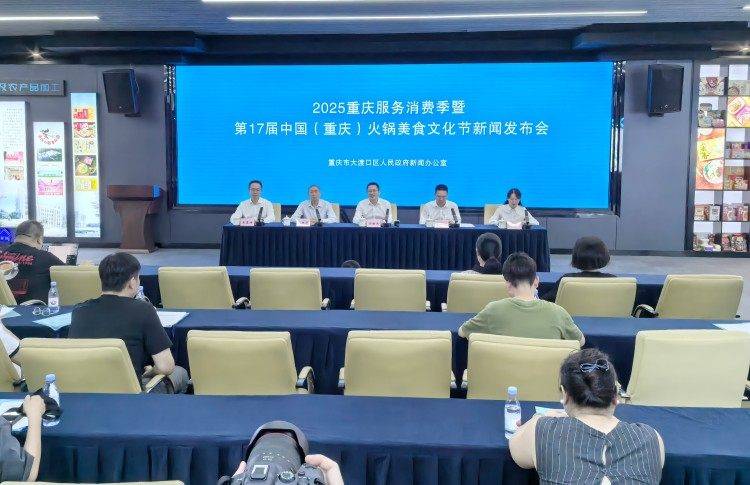
超500场主题惠民消费活动,“2025重庆服务消费季”来了!
Sou Hu Cai Jing· 2025-09-17 10:46
Core Viewpoint - The 2025 Chongqing Service Consumption Season and the 17th China (Chongqing) Hot Pot Food Culture Festival will be held from September 29 to December, aiming to boost local consumption by over 5 billion yuan through various service consumption activities [4][7]. Group 1: Event Overview - The event is organized by the Chongqing Municipal Commission of Commerce in collaboration with various departments and over 1,000 service consumption enterprises and financial institutions across 38 districts [3][6]. - The theme focuses on "service consumption," with over 500 themed activities planned across 11 key service consumption sectors, including dining, accommodation, and tourism [7][8]. Group 2: Key Highlights - The event will feature diverse consumption scenarios, integrating food, tourism, sports, and entertainment, with the Hot Pot Food Culture Festival being a major highlight [8][9]. - A rich array of cultural and entertainment activities will be offered, including over 200 artistic events and various tourism services to attract a wide audience [9]. - The initiative will leverage online and offline collaboration, utilizing internet platforms for convenient booking and payment, while also promoting on-site activities in commercial areas [9].

商务部:将出台涉及住宿业、铁路与旅游融合发展等系列政策文件
2 1 Shi Ji Jing Ji Bao Dao· 2025-09-17 10:43
Core Insights - The Chinese government is implementing a series of policies to expand service consumption, focusing on both domestic and international markets [1][2] Group 1: Policy Measures - The policy measures aim to enhance foreign investment in service sectors such as telecommunications, healthcare, and education while also reducing restrictions in high-end medical and leisure sectors to attract more private and foreign capital [1] - A total of over 30 policy documents have been released to establish a "1+N" policy system for service consumption [2] Group 2: Development Strategies - The Ministry of Commerce plans to promote high-quality service consumption through six key strategies, including policy formulation, creating diverse consumption scenarios, and organizing significant consumption activities [2][3] - The government emphasizes the importance of creating engaging consumption environments and platforms to enhance consumer experiences and satisfaction [3]
商务部:将在50个左右城市试点开展服务消费“新探索”
Xin Jing Bao· 2025-09-17 10:30
Core Viewpoint - The Ministry of Commerce and nine other departments have issued a set of policy measures aimed at expanding service consumption, which includes 19 tasks across five areas, benefiting the general public [1] Group 1: Policy Measures - The policy measures support kindergartens to enroll children aged 2-3, explore spring and autumn breaks for primary and secondary schools, and extend operating hours for popular cultural and tourist venues [1] - The measures also encourage local governments to host public sports events and facilitate the issuance of five-year multiple-entry visas for eligible foreign visitors [1] - The Ministry of Commerce plans to select around 50 pilot cities with large populations and strong development potential to explore new consumption models through competitive evaluation [2] Group 2: Cultural and Tourism Consumption - Cultural and tourism consumption is highlighted as a significant component of service consumption, with initiatives to extend operating hours for popular venues and promote "no reservation" policies [3] - The Ministry of Culture and Tourism aims to enhance tourism service quality and consumer experience, focusing on industrial, red, and rural tourism, as well as developing new consumption hotspots [3] - The promotion of international tourism includes initiatives like "Hello! China" and "Happy Spring Festival" to attract more foreign tourists, along with the establishment of tax refund stores in tourist areas [4] Group 3: National Consumption Month - During the National Day and Mid-Autumn Festival, over 3.3 billion yuan in consumption subsidies will be distributed across various regions to stimulate cultural and tourism consumption [5] - The "Cultural and Tourism Consumption Month" will feature over 25,000 events, including concerts, music festivals, and exhibitions, to enhance consumer engagement [6] - Local governments will implement unique cultural and tourism activities, with initiatives like "Follow the Performance to Travel" and "Museum Night" to promote regional tourism [6]
央行:截至7月末全国服务消费重点领域贷款余额2.79万亿元
Sou Hu Cai Jing· 2025-09-17 10:09
杨虹表示,今年以来,人民银行出台多项政策,指导金融机构完善内部业务流程,创新支持消费的产品 和服务,聚焦食、住、行、游、购、娱等重点消费领域,从供需两端特别是从供给端发力,扩大高质量 信贷供给,加大对消费行业经营主体的首贷、续贷、信用贷、中长期贷款支持力度,强化金融支持提振 和扩大消费的促进作用。 人民网北京9月17日电 (记者罗知之)国务院新闻办公室于今日举行新闻发布会,介绍扩大服务消费有关 政策措施。 中国人民银行信贷市场司负责人杨虹在会上介绍,截至7月末,全国服务消费重点领域贷款 余额2.79万亿元,同比增长5.3%,比年初新增1642亿元,前7个月的新增贷款比去年全年新增贷款还要 多630亿元。 ...
瑞达期货股指期货全景日报-20250917
Rui Da Qi Huo· 2025-09-17 09:28
Report Summary 1. Report Industry Investment Rating No investment rating information is provided in the report. 2. Core View The A - share major indices closed generally higher. The market is in the macro - data verification stage during the performance and policy vacuum period. Although the economic data in August was still under pressure, the previous financial data showed that residents were shifting from excess savings to increased consumption. With the expected reflection of this in subsequent economic data and the Fed's potential interest - rate cut providing room for domestic policy easing, stock indices still have long - term upward potential. It is recommended to buy on dips with a light position [2]. 3. Summary by Relevant Catalogs 3.1 Futures Quotes - **Contract Prices**: IF (2509) closed at 4553.2, up 36.2; IH (2509) at 2956.2, up 5.8; IC (2509) at 7252.4, up 90.4; IM (2509) at 7547.0, up 93.0. The prices of the corresponding next - main contracts also showed increases or decreases [2]. - **Contract Spreads**: The spreads between different contracts such as IF - IH, IC - IF, etc. showed various changes, with some increasing and some decreasing [2]. - **Seasonal - to - Current Spreads**: The spreads between current - season and current - month contracts, and next - season and current - month contracts also had different trends [2]. - **Futures Positions**: The net positions of the top 20 in IF, IH, IC, and IM showed different changes, with some increasing and some decreasing [2]. 3.2 Spot Prices - The spot prices of the Shanghai - Shenzhen 300, Shanghai Composite 50, CSI 500, and CSI 1000 all increased, and the basis of the corresponding futures contracts also changed [2]. 3.3 Market Sentiment - **Trading Volume and Balance**: A - share trading volume was 24,029.24 billion yuan, up 358.55 billion yuan; margin trading balance was 23,926.52 billion yuan, up 226.53 billion yuan; north - bound trading volume was 2876.22 billion yuan, up 3.16 billion yuan [2]. - **Other Indicators**: The proportion of rising stocks decreased, Shibor increased, and the closing prices and implied volatilities of call and put options of the Shanghai - Shenzhen 300 index showed different trends [2]. 3.4 Market Strength - Weakness Analysis - The overall strength - weakness analysis of the A - share market showed that the technical aspect weakened, while the capital aspect strengthened [2]. 3.5 Industry News - The nine - department policy on expanding service consumption proposed 19 measures in five aspects, including promoting service - consumption seasons and expanding opening - up in certain fields [2]. - US retail sales in August increased by 0.6% month - on - month, with real retail sales growing by 2.1% year - on - year after inflation adjustment [2]. 3.6 Key Events - The Fed, Bank of England, and Bank of Japan will announce their interest - rate decisions on September 18 and 19 [3].
东兴证券晨报-20250917
Dongxing Securities· 2025-09-17 09:28
Core Insights - The report highlights the impact of price competition on the profitability of the company, with a significant decline in net profit in Q2 2025 compared to the previous year [6][7] - The company has adjusted its annual business volume guidance downwards due to a new economic and competitive landscape, indicating a focus on quality over quantity [6][9] - The report projects a gradual recovery in profitability in the second half of 2025 as the competitive environment stabilizes [8][9] Company Performance - In Q2 2025, the company achieved a business volume of 9.847 billion pieces, a year-on-year increase of 16.5%, but its market share decreased by 0.1 percentage points to 19.5% [6] - The adjusted net profit for Q2 2025 was 2.053 billion yuan, reflecting a year-on-year decline of 26.8% [6] - The average revenue per package decreased from 1.24 yuan to 1.18 yuan, primarily due to increased competitive pricing pressures [7][8] Cost Structure - The company's core cost per package increased by 8.6% year-on-year to 0.89 yuan, with transportation costs decreasing slightly while other costs rose significantly [7][8] - The report notes that the increase in costs is largely attributed to a higher proportion of key account (KA) customers, which also contributed to a slight increase in revenue per package [8] Future Outlook - The company expects a recovery in profitability in the second half of 2025 as it shifts its strategic focus to quality and adjusts its incentive structures [8][9] - Profit forecasts for 2025-2027 are projected at 8.85 billion, 10.22 billion, and 11.53 billion yuan, with corresponding price-to-earnings ratios of 13.0X, 11.2X, and 10.0X [9]
近年来我国服务消费表现亮眼 成为推动消费市场增长的重要力量
Xin Hua Wang· 2025-09-17 08:00
Group 1 - The core viewpoint of the article highlights the expansion of service consumption policies in China, emphasizing the steady growth of the consumer market and the optimization of consumption structure [1] - The Vice Minister of Commerce, Sheng Qiuping, noted that service consumption has become a significant driving force for the growth of the consumer market in recent years [1]
宏观日报:关注下游扩大服务消费政策-20250917
Hua Tai Qi Huo· 2025-09-17 07:56
宏观日报 | 2025-09-17 关注下游扩大服务消费政策 中观事件总览 生产行业: 1)9月16日,2025腾讯全球数字生态大会在深圳举行,会上公布多项AI技术和产品最新进展,并宣布 全面开放腾讯AI落地能力及优势场景。面对各界关注的算力问题,腾讯集团副总裁、腾讯云总裁邱跃鹏宣布,目 前腾讯已经全面适配主流的国产芯片,并积极参与和回馈开源社区。与此同时,软硬件协同全栈优化是腾讯云的 长期战略投入,通过异构计算平台的软件能力,整合不同类型的芯片对外提供高性价比的AI算力。 服务行业: 1)商务部等9部门9月16日对外发布《关于扩大服务消费的若干政策措施》,提出五方面19条举措,包 括开展"服务消费季"系列促消费活动;支持优质消费资源与知名IP跨界合作;因地制宜延长热门文博场馆、景区营 业时间,优化预约方式,鼓励推行免预约;优化学生假期安排,完善配套政策等。增加优质服务供给,更好满足 人民群众多样化服务消费需求。 数据来源:iFind,华泰期货研究院 行业总览 上游:1)黑色:玻璃价格回落,煤炭库存升高。2)农业:鸡蛋价格回升超10%。 中游:1)化工:PX、PTA开工率近期回升。 下游:1)地产:一、二、三 ...
