大模型

Search documents
杨植麟为何亲自为Kimi站台?
虎嗅APP· 2026-01-28 14:08
Core Viewpoint - The article discusses the strategic positioning of the company "月之暗面" (Moon's Dark Side) in the competitive landscape of AI models, particularly in light of the upcoming release of DeepSeek's new model. The release of K2.5 is seen as a defensive move rather than an offensive one, aimed at stabilizing the company's position before potential disruptions from competitors [5][9]. Group 1: K2.5 Model Release - The K2.5 model was released on January 27, 2026, with founder 杨植麟 (Yang Zhilin) personally promoting it, which is unusual in the industry and signals a strategic shift [5][7]. - K2.5 is viewed as an upgrade rather than a groundbreaking model, focusing on enhancing coding capabilities and the Agent system, especially for overseas markets [11][12]. - The release is interpreted as a necessary step to maintain relevance and presence in the market, especially before DeepSeek's anticipated new model launch [8][14]. Group 2: Industry Context and Competition - The AI model industry is undergoing a significant reshuffle, with several companies transitioning away from being solely "base model" providers, leaving 月之暗面 as one of the few remaining in this category [16][17]. - The narrative in the industry is shifting from "who can create the strongest model" to "who can effectively utilize the model," indicating a higher risk for companies that continue to focus solely on base models [18][22]. - 月之暗面 is attempting to pivot towards coding and Agent capabilities, but it still heavily relies on model performance for revenue, particularly from overseas markets [21][22]. Group 3: Strategic Concerns and Anxiety - The company faces anxiety regarding its dependency on model capabilities, especially with competitors like DeepSeek potentially outpacing it in model advancements [23][24]. - The transition to focusing on coding and Agent systems presents long validation cycles, making it challenging for 月之暗面 to demonstrate its strategic shift compared to competitors who can quickly showcase model improvements [25]. - The memory of the impact from DeepSeek's previous model release in 2025 creates pressure for 月之暗面 to avoid being caught off guard again, prompting the early release of K2.5 as a preemptive measure [26][27].


智能眼镜行业跟踪报告:智能眼镜产品力系列二:大模型催化,AI眼镜异军突起
GUOTAI HAITONG SECURITIES· 2026-01-28 14:00
Investment Rating - The report assigns an "Accumulate" rating for the smart glasses industry, indicating a positive outlook for investment opportunities in this sector [6][75]. Core Insights - The smart glasses industry is expected to enter a rapid growth phase, with related companies poised to benefit from an upturn in market conditions [6][75]. - The report highlights that AI glasses without display functions are likely to meet the underlying demand logic of traditional eyewear, potentially leading to quicker market penetration [2][6]. Summary by Sections Product Development and Market Penetration - Continuous improvement in product capabilities is anticipated, with sales expected to increase. Key factors affecting rapid market penetration include reliance on traditional offline channels for final delivery, the need for lightweight materials for comfort, battery capacity constraints, and the performance of SoC chips [4][24][32][33][38]. Market Trends and Projections - The report draws parallels with the smart watch market, predicting that AI glasses will have a penetration rate of only 0.1% in 2024, similar to the early stages of smart watches. It forecasts that global AI glasses shipments will reach 291 million units by 2034, with a CAGR of 55.16% from 2025 to 2034 [21][23][75]. Key Product Launches - The report discusses the launch of Ray-Ban Meta, which features significant improvements in audio and video quality, and integrates with Meta's social platforms, enhancing user experience and application scenarios [10][11][15][71]. Investment Recommendations - The report recommends investing in leading domestic lens brand Mingyue Lens and company Inpai, which are expected to benefit from the industry's growth. Mingyue Lens is actively collaborating with top brands in the industry, while Inpai is expanding into the smart sports equipment sector [6][75][76].

广东宏大:公司“悟空爆破大模型”系基于通用大模型架构
Zheng Quan Ri Bao Wang· 2026-01-28 13:10
Core Viewpoint - Guangdong Hongda's "Wukong Blasting Model" utilizes a general model architecture to enhance safety and efficiency in the mining industry through advanced data processing capabilities [1] Group 1: Technology and Innovation - The "Wukong Blasting Model" integrates over a billion data points from journals, videos, images, and professional reports in the blasting and mining sectors [1] - The model includes sub-models focused on explosive energy, borehole design, fragmentation energy consumption, and safety management [1] - The company continuously trains and optimizes the model in internal mining scenarios to improve its functionality [1] Group 2: Industry Impact - The implementation of the "Wukong Blasting Model" accelerates the smart transformation of mining operations [1] - The model aims to enhance the fundamental safety production levels in mining construction [1]

找钢网集团创始人王东:中国是全球最大的AI应用市场
Xin Lang Cai Jing· 2026-01-28 11:36
Core Insights - The ultimate version of AI Agents in the steel circulation industry is expected to be highly standardized, capable of recognizing various documents in procurement and logistics, but currently, AI is primarily used to enhance efficiency [1] - The application of AI in China is anticipated to follow a ToC (Business to Consumer) first, then ToB (Business to Business) approach, with the latter being slower due to the nature of B2B e-commerce [1] - The competition in large models is seen as a competition between China and the US, with a focus on application in China, which is expected to be the largest AI application market globally, especially in the ToB sector [2] Industry Application and Efficiency - The AI capabilities of the company have been embedded in key scenarios such as trading, logistics, finance, and internal management, aiming to systematically enhance industry efficiency and collaboration [2] - The company has developed 12 AI Agents that form four products, focusing on core business scenarios like AI procurement and sales assistants, as well as digital employees that enhance internal knowledge [3] - The company’s AI-related products currently generate a few hundred million yuan annually, with projections indicating that AI Agent transaction facilitation could account for 10% of total revenue by 2025, with a gross margin of 5% [3] Precision and Depth of Application - The current accuracy of the company's AI in document recognition is 95%, with goals to improve this to a higher level, particularly in recognizing industry-specific terminology [5] - Future iterations of AI products will focus on enhancing dialogue capabilities, allowing AI to handle inquiries and negotiations that currently require human intervention [5] - The company aims to expand its AI applications beyond steel and electronic components to include logistics, thereby increasing the depth of AI application across various scenarios [5]
国产大模型密集发布
第一财经· 2026-01-28 10:08
Core Viewpoint - The article discusses the recent advancements in domestic AI models in China, highlighting the competitive landscape and the shift towards engineering maturity in the industry, with a focus on multi-modal capabilities and inference efficiency [5][11][16]. Group 1: Model Updates and Industry Trends - Several domestic model manufacturers have recently updated their models, including DeepSeek's new OCR 2 model and Kimi's K2.5 model, indicating a competitive environment in the AI model sector [5][8]. - The release of these models has generated significant attention, with predictions of a competitive landscape for AI models leading up to the 2026 Spring Festival [5][8]. - Industry experts view the recent model updates as a sign of the industry's transition towards engineering maturity, moving from parameter competition to engineering optimization and from experimental demos to scalable services [5][11]. Group 2: Multi-Modal and Inference Engineering - DeepSeek's OCR 2 model utilizes an innovative DeepEncoder V2 method, allowing for dynamic rearrangement of image components based on their meaning, which enhances performance in complex layouts [8][10]. - Kimi's K2.5 model is described as the company's most intelligent model to date, supporting a wide range of tasks including visual and text input, indicating a strong focus on multi-modal architecture [8][9]. - The trend towards improving inference efficiency and reducing costs is evident, with companies like Alibaba releasing models aimed at enhancing multi-modal information retrieval and cross-modal understanding [11][16]. Group 3: Competitive Landscape and Cost Efficiency - The competition among leading companies in the AI model sector is intensifying, with firms striving to position themselves advantageously [13][14]. - Cost efficiency is becoming increasingly important, with companies prioritizing models that offer high performance at lower costs, as demonstrated by the significant price reductions in model API usage [14][15]. - The industry is witnessing a shift from a focus on scale to a focus on efficiency and practical application, marking a new phase in the development of AI models [15][22]. Group 4: Technical Challenges and Future Directions - Key technical challenges include improving inference capabilities, addressing model hallucinations, and enhancing interpretability, which are critical for broader application in various industries [16][21]. - The need for dynamic optimization of inference capabilities is highlighted, as current models lack flexibility in decision-making based on information completeness [16][17]. - The article emphasizes the importance of multi-modal technology optimization, as current models often require extensive adjustments to achieve desired outputs, indicating a need for more user-friendly solutions [17][18].


老牌输入法20周年宣布“归零”,成为腾讯AI落地“排头兵”
2 1 Shi Ji Jing Ji Bao Dao· 2026-01-28 10:04
Core Insights - Sogou Input Method is undergoing a "comprehensive AI transformation," reflecting the broader changes in the tech industry as traditional internet platforms adapt to the AI revolution [1][2] Group 1: Product Development and AI Integration - Tencent announced that Sogou Input Method has surpassed 100 million AI users, with daily voice usage approaching 2 billion times, showcasing significant growth in AI capabilities [1] - The latest version 20.0 integrates Tencent's mixed Yuan translation model, enabling real-time translation across over 30 languages, and enhances both voice and typing input accuracy and speed [1][2] - The team emphasizes that the current AI features are just the beginning, with plans to further explore the potential of large models and expand services to niche markets [2][3] Group 2: Market Position and Future Strategy - The shift from keyboard and mouse to natural language interaction is noted, with new voice-based input products emerging, yet typing remains essential for the foreseeable future [3] - Tencent aims to capture the AI market by restructuring existing products like Sogou Input Method and QQ Browser while promoting native AI applications [3] - Tencent's CEO highlighted a cautious approach to AI strategy, focusing on long-term competitiveness and user experience, with AI being the primary area for investment [4][5]

普联软件:公司研发的智能体开发平台支持接入DeepSeek等大模型
Zheng Quan Ri Bao Zhi Sheng· 2026-01-28 09:09
Group 1 - The core viewpoint of the article is that the company, Puli Software, has developed an intelligent agent development platform that supports various AI capabilities and enterprise-level applications [1] - The platform includes functionalities such as knowledge Q&A, data Q&A, and document parsing, showcasing its versatility in general intelligence [1] - The intelligent applications developed on this platform include smart financial sharing, intelligent treasury, smart equipment operation and maintenance, and intelligent investment asset management [1] Group 2 - The platform supports integration with several large models, including DeepSeek, GLM, Tongyi Qianwen, Xinghuo, Wuyawen, Jiutian, Doubao, and Wenxin Yiyan, indicating a broad compatibility with existing AI technologies [1]
港股复盘 | 港股大涨 个股再现日内翻倍行情 谁在狂买?
Mei Ri Jing Ji Xin Wen· 2026-01-28 09:04
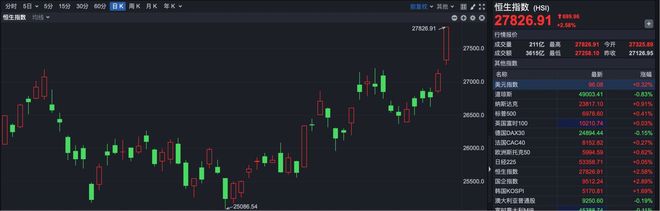
Market Performance - The Hong Kong stock market experienced a strong rally on January 28, with the Hang Seng Index rising over 2%, reaching a nearly four-and-a-half-year high at 27,826.91 points, an increase of 699.96 points or 2.58% [1] - The Hang Seng Technology Index closed at 5,900.16 points, up 145.44 points, reflecting a gain of 2.53% [2] Trading Volume and Capital Flows - The total trading volume for the day was 365.1 billion HKD, an increase of over 100 billion HKD compared to the previous day [4] - Despite the market's rise, southbound capital recorded a net outflow of over 3.4 billion HKD, marking four consecutive days of net selling in Hong Kong stocks [4][6] Analyst Insights - Analysts suggest that the continuous net selling by southbound funds, alongside the rising volume in Hong Kong stocks, may indicate foreign institutional investors are taking long positions in the market [6] - Goldman Sachs' chief China equity strategist noted that earnings growth is the primary driver for the rise in Chinese stocks this year, with an expected inflow of 3.6 trillion CNY into the Chinese stock market, partly through the "Shanghai-Hong Kong Stock Connect" [6] Company Highlights - CloudWalk Technology (HK09678) saw a significant intraday surge of 99%, closing up over 73%, although it remains far from its historical high of 879 HKD set last year [6] - CloudWalk announced that it expects revenue from its large model-related business to reach 600 to 620 million CNY by 2025, representing a year-on-year growth of approximately 1,057% to 1,095% [7] Sector Performance - The non-ferrous metals sector saw a notable increase, with China Aluminum (HK02600) rising over 12% [8] - Citigroup indicated that gold prices may rise to 6,000 USD in a bull market scenario, while copper and aluminum are seen as key components in AI and energy transitions, with bullish targets of 15,000 USD/ton for copper and approaching 4,000 USD/ton for aluminum [9] Market Outlook - Dongwu Securities highlighted that the Hong Kong market is in a long-term upward trend but faces short-term challenges, particularly regarding overseas factors and the potential impact of U.S. tech earnings on Hong Kong stocks [10] - The report suggests maintaining a "barbell strategy" for overall portfolio allocation, focusing on value dividends as a base while dynamically monitoring sectors like AI technology and non-ferrous metals [10]
盈利压力未减,汽车行业如何走出利润率低位区间?
Xin Hua Cai Jing· 2026-01-28 08:13
Core Insights - The automotive industry in China is experiencing significant profit pressure, with profit margins at historical lows despite overall industrial profits showing growth in 2025 [1][2]. Group 1: Industry Performance - In 2025, the automotive sector generated revenues of 1,117.96 billion yuan, a year-on-year increase of 7.1%, while costs rose to 984.98 billion yuan, up 8.1% [2]. - The total profit for the automotive industry was 46.1 billion yuan, reflecting a modest year-on-year growth of only 0.6%, resulting in an industry profit margin of 4.1%, which is significantly lower than the average profit margin of 5.9% for downstream industrial enterprises [2][3]. - December 2025 saw a decline in automotive revenue to 115.73 billion yuan, a year-on-year decrease of 0.8%, with profits plummeting by 57.4% to just 2.07 billion yuan, leading to a profit margin drop to 1.8% [2]. Group 2: Cost Pressures - The automotive industry is facing substantial cost pressures, particularly from rising raw material prices, including a doubling of lithium prices and high commodity prices impacting downstream industries [3][4]. - The average revenue per vehicle in the automotive industry decreased by 1.6 million yuan to 321,000 yuan, while the average gross profit per vehicle was 13,000 yuan, indicating that cost reductions did not keep pace with revenue declines [3]. - The price of battery-grade lithium has been on a steep rise, with recent data showing prices reaching 182,200 yuan per ton, up from 169,000 yuan per ton, indicating a significant upward trend [4]. Group 3: Future Strategies - The automotive industry is urged to transition towards high-tech attributes and service-oriented business models to address the ongoing low-profit challenges [7]. - The market for automotive services is projected to reach approximately 5 trillion yuan by 2030, which could provide a substantial new profit pool for the industry, supporting profit margin recovery [7].
云知声股价日内翻倍!2025年大模型收入预增1057%-1095%
Ge Long Hui· 2026-01-28 07:22
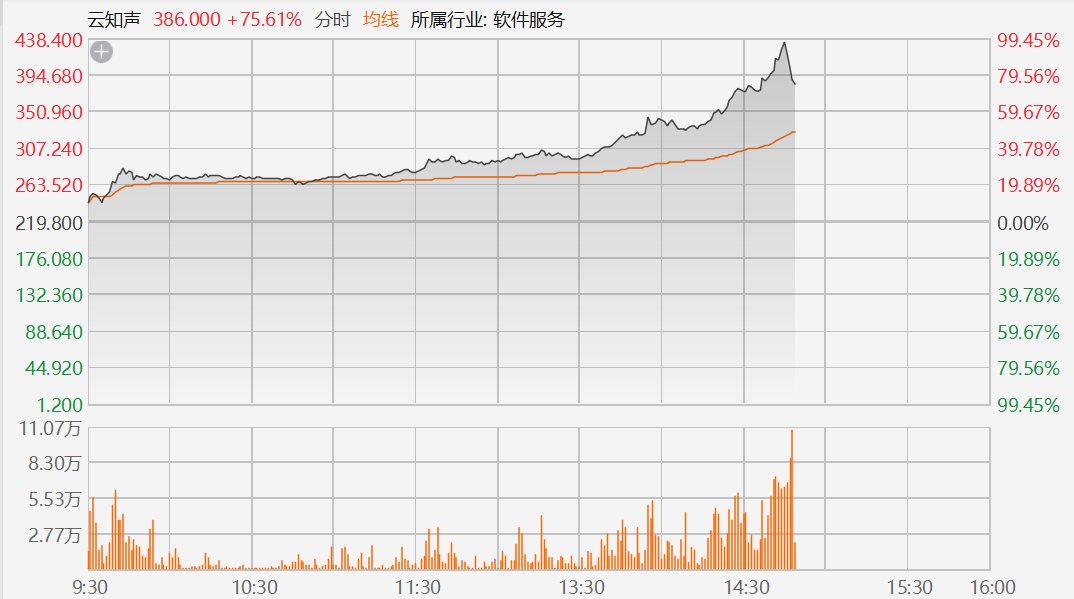
Core Viewpoint - The company, Yunzhisheng (9678.HK), has seen a significant increase in its stock price, rising by 99.45% to 438.44 HKD, with a trading volume exceeding 1.6 billion HKD. This surge is attributed to the company's announcement of expected revenue from large model-related businesses reaching approximately 600 million to 620 million RMB by 2025, representing a year-on-year growth of about 1057% to 1095% [1] Group 1 - The company anticipates substantial growth in large model-related business revenue, driven by its leading core technology capabilities and accelerated commercialization processes [1] - The company has developed a comprehensive model matrix, including the "Shan Hai" series of large models, which encompasses general and industry-specific applications [1] - The company has established sustainable systemic advantages in key dimensions such as model architecture design, underlying algorithm capabilities, engineering delivery, and industry adaptability [1] Group 2 - The company has created various intelligent agents based on a unified intelligent platform, covering typical business scenarios such as smart customer service, smart marketing, and document review [1] - The company's large model products are being successfully implemented and replicated in complex and specialized application scenarios, including healthcare, medical insurance, and transportation [1] - The increasing customer recognition and accelerated commercialization process are driving rapid growth in the company's large model-related business revenue during the current period [1]