
智能网联汽车

Search documents
萝卜快跑24小时不打烊!AI“老司机”真能碾压人类?
Sou Hu Cai Jing· 2025-08-07 22:07
Core Insights - The rise of Baidu's "Roborock" has transformed the concept of "unmanned ride-hailing" from a sci-fi idea into an accessible service, with over 1.4 million rides provided globally in Q1 2025, marking a 75% year-on-year growth [1] - Despite impressive growth, Roborock faces fierce competition from established players like Didi, which has a daily order peak exceeding 60 million, and other tech newcomers like Pony.ai and AutoX [3][6] - Roborock's success is attributed to its elimination of safety drivers, leveraging Baidu's Apollo AI technology, which has been honed over years of data collection and testing in complex urban environments [4][5] Company Performance - Roborock has provided over 11 million rides globally, showcasing its operational scale and the effectiveness of its AI-driven approach [1][5] - The company addresses key pain points in the ride-hailing industry, including safety, cost, and efficiency, by utilizing AI to mitigate human error and reduce operational costs associated with human drivers [4][5] - The AI fleet operates continuously and efficiently, responding to market demands for reliable transportation, as evidenced by the explosive growth in ride numbers [5] Competitive Landscape - The competitive environment includes both domestic and international players, with Waymo and Tesla making significant strides in autonomous driving, while domestic competitors like Pony.ai and Hello also ramp up their efforts [8][9] - Roborock's unique selling proposition lies in its cost structure, which allows it to potentially engage in price wars against competitors still reliant on human drivers [4][10] - The industry is characterized by rapid advancements and a race to establish dominance, with various companies vying for market share in the autonomous vehicle space [6][10] Future Outlook - The future of autonomous driving appears promising, but challenges remain, particularly regarding network reliability and the need for low-latency communication for safe operation [11] - Roborock's ability to navigate regulatory landscapes and technological hurdles will be crucial in determining its long-term success and market position [10][11] - The company is positioned as a test case for China's technological capabilities in the next generation of transportation, with the potential to convert its growing order volume into substantial financial success [10]


四维破局:东风汽车的“V型”转型样本
2 1 Shi Ji Jing Ji Bao Dao· 2025-08-07 10:17
Core Insights - Dongfeng Motor Corporation faced its first loss since going public in 2023, attributed to a shrinking joint venture market and increased investment in new energy vehicles, marking a critical turning point for the company [1][2] - In 2024, Dongfeng reported a significant recovery with a 35% year-on-year increase in sales of its own brands and a 64.4% rise in new energy vehicle sales, indicating a successful financial turnaround [1][7] - The transformation involved a comprehensive strategy focusing on brand restructuring, technological advancements, global expansion, and ecosystem reconstruction, aiming to enhance core competitiveness [1][3] Financial Performance - In 2024, Dongfeng sold 1.37 million self-owned vehicles, a 35% increase compared to the previous year, with new energy vehicle sales reaching 860,000 units, up 64.4% [7] - The company's operational efficiency improved by over 7.2 billion yuan, and the average gross profit per unit for self-owned new energy passenger vehicles turned positive, with a 75% year-on-year improvement [7] Strategic Initiatives - Dongfeng initiated a "three-year action plan for transformation and upgrading" in 2023, focusing on resource integration and enhancing production and sales capabilities [3] - The company adopted a "three columns and two layers" brand strategy, with high-end brands like Lantu and Warrior leading the market, while the main brand focuses on a wide range of consumer needs [3][4] Organizational Restructuring - To address internal resource fragmentation, Dongfeng implemented significant organizational changes, consolidating 27 direct management units into a more efficient "4+2" business structure [4][5] - The establishment of Dongfeng Yipai Technology Co., Ltd. in June 2025 marked a pivotal moment in resource integration, reducing brand overlap and optimizing the value chain [5][6] Technological Advancements - Dongfeng has made substantial investments in R&D, with a 40% increase in funding since 2023, resulting in over 24,418 effective patents, including more than 5,000 related to new energy and intelligent networking [11] - The company is advancing in multiple energy technologies, including pure electric, hybrid, and hydrogen energy, positioning itself as a leader in the domestic automotive industry [9][10] Global Expansion - Dongfeng's overseas sales surpassed 115,000 units in the first half of 2025, with a remarkable 229% increase in exports of self-owned new energy vehicles [12][13] - The company is actively establishing a global presence, with Lantu leading the charge in high-end markets across over 40 countries [12] Regional Development - Dongfeng is committed to enhancing the automotive industry in Hubei province, focusing on collaborative regional development and optimizing the industrial layout [14][15] - The company has established a robust automotive industrial corridor in Hubei, integrating various manufacturing and R&D capabilities to strengthen the local economy [15][16]

上半年新能源车渗透率刷新记录,智能网联汽车ETF(159872)涨超1%冲击4连涨
Xin Lang Cai Jing· 2025-08-06 06:47
Group 1 - The core viewpoint is that the penetration rate of new energy vehicles in China reached a record 44.3% in the first half of 2025, indicating a strong position in the domestic automotive market [1] - Monthly penetration rates for new energy vehicles have shown a consistent upward trend, with rates exceeding 50% for four consecutive months from January to June 2025, and further increasing to 54.6% in July [1] - The retail sales volume of narrow passenger vehicles reached 1.85 million units in July 2025, representing a year-on-year increase of 7.6% [1] Group 2 - The 2025 World Artificial Intelligence Conference saw the issuance of new operating licenses for intelligent connected vehicles, with eight companies, including Xiaoma Zhixing, being granted approval [2] - There is an expectation that the commercialization scale of Robotaxi may reach a turning point, particularly for companies with advantages in technology, ecosystem, and operational qualifications [2] - The CSI Internet of Vehicles Theme Index includes various related companies, with the top ten weighted stocks accounting for 49.41% of the index as of July 31, 2025 [2]
政策端巩固“反内卷”效果,行业持续高质量发展 | 投研报告
Zhong Guo Neng Yuan Wang· 2025-08-06 02:54
新能源汽车:乘联会数据,7月1-27日新能源乘用车零售78.9万辆,同比增长15%,环比 下降17%,今年以来累计零售625.8万辆,同比增长31%;7月1-27日新能源乘用车批发81.6万 辆,同比增长17%,环比下降20%,今年以来累计批发726.4万辆,同比增长35%。截至6月 底我国电动汽车充电设施(充电枪)总数已达到1610万个。其中,公共充电设施(充电枪) 409.6万个,私人充电设施(充电枪)1200.4万个;充电设施县域覆盖率达到97.08%,乡镇 覆盖率达到80.02%,县域/乡镇区域用车环境的优化将极大利好新能源渗透率提升。相关标 的:比亚迪(002594)、吉利汽车(0175.HK)、新泉股份(603179)、星宇股份 (601799)、多利科技(001311)、川环科技(300547)、无锡振华(605319)。 智能汽车:目前,我国乘用车L2及以上辅助驾驶功能装车率已突破50%,全球第一;随 着中高端车型日渐标配泊车功能,泊车辅助渗透率也已超20%,居全球前列。近期,内蒙古 提出将进一步规范智能网联汽车道路测试、示范应用和商业化试点工作,我们认为在各地有 力推动下国内智能化将加速发展 ...

成都:2025年上半年新能源汽车产量同比增长352%
Zheng Quan Shi Bao Wang· 2025-08-05 12:44
Core Insights - Chengdu's automotive industry continues to experience rapid growth, with an output of 80,000 vehicles in June 2025, representing a year-on-year increase of 21% and a month-on-month increase of 25% [1] - From January to June, the city's automotive production and output value grew by 27.4% and 23.9% year-on-year, respectively [1] - The production and output value of new energy vehicles surged by 352% and 129% year-on-year, indicating a strong shift towards electric and smart connected vehicles [1] Industry Developments - Chengdu's government is actively promoting the transformation and upgrading of the automotive industry, focusing on the development of new energy and smart connected vehicles [1] - The city is encouraging enterprises to introduce and develop popular models such as the Toyota New Prado, new XC60, and Geely Xingyuan, contributing to the stabilization and recovery of the automotive sector [1]
【新能源周报】新能源汽车行业信息周报(2025年7月28日-8月3日)
乘联分会· 2025-08-05 08:34
Industry Information - CATL's subsidiary, Times Intelligent, has initiated its first round of external financing with a target of 2 billion yuan and a pre-financing valuation of approximately 9 billion yuan, indicating a strong push in the chassis business [9] - Data shows that sales revenue of private enterprises in China's new energy vehicle sector has grown at an average annual rate of 50.1% over the past four years [10] - In June, the automotive industry saw a profit increase of 96.8%, driven by promotional activities and investment gains from key enterprises [12] - The first manganese-based new energy material production line in Hubei has been launched, with an expected annual production capacity of 280,000 tons [13] - The 2025 World Energy Storage Conference will be held in Ningde, Fujian, from September 16-18, 2025, focusing on zero-carbon technology [14] - Lithium carbonate futures prices have surged back to 80,520 yuan per ton, marking a recent high [14] - The Ministry of Industry and Information Technology aims to consolidate the results of comprehensive rectification of "involution" competition in the new energy vehicle industry [14] - Huawei's QianKun intelligent automotive solution has introduced a forward AEB function that can trigger braking at speeds between 4-150 km/h [15] - The delivery volume of laser radar as standard equipment in China's passenger car market has increased by 83.14% year-on-year in the first half of 2025 [15] - By the end of 2024, the loan balance for new energy vehicles is expected to grow by 23.44% year-on-year [16] Policy Information - Nanchang aims to achieve an annual production of 250,000 new energy vehicles by 2027, with a focus on various technological routes [27][28] - Shanghai is working towards the full opening of autonomous driving testing roads in the Pudong area by the end of this year [12] - The National Energy Administration is set to develop policies to enhance the quality of charging operation services [38] - The government of Guizhou is promoting the replacement and recycling of old vehicles and appliances to stimulate consumption [41] Company Information - CATL reported a net profit of 30.5 billion yuan for the first half of 2025, a year-on-year increase of 33.02% [21] - The battery company XINWANDA has submitted an application for a dual listing on the Hong Kong Stock Exchange [22] - NIO has announced a donation of 2 million yuan to support areas affected by heavy rainfall [6] - Xiaomi's automotive division has opened 18 new stores in July and plans to open another 18 in August [6] - The first 10,000 units of the Firefly electric vehicle have been officially delivered [6]



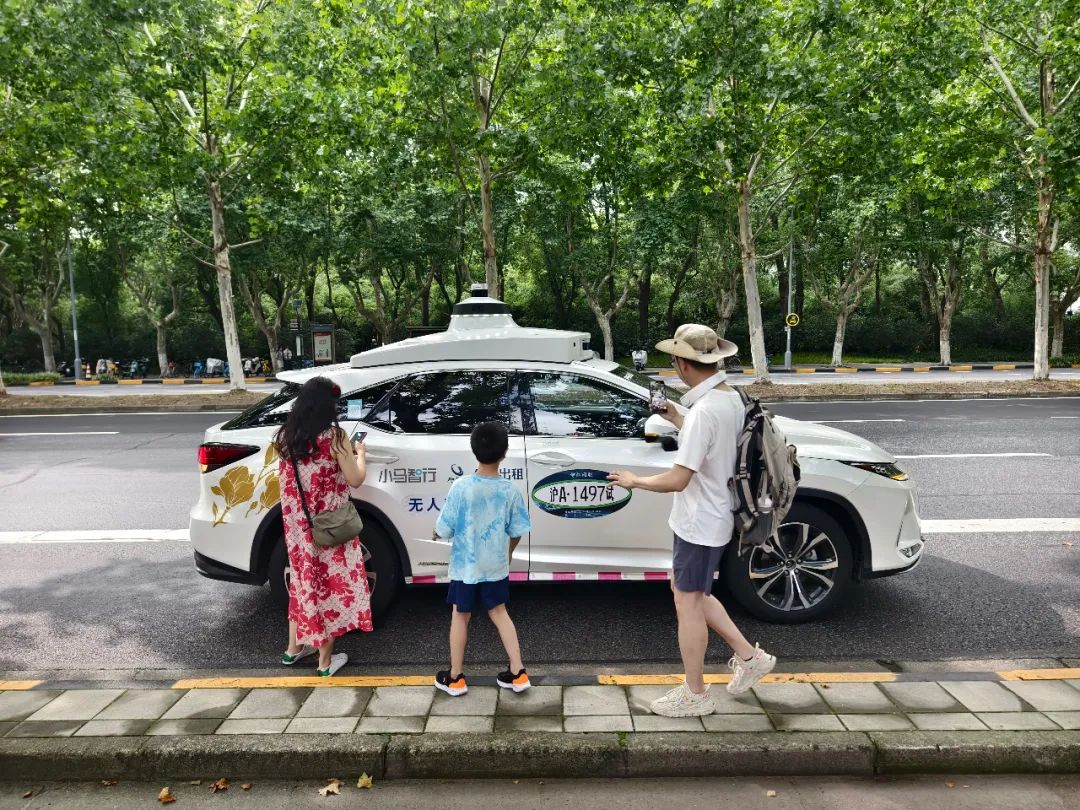
完全无人驾驶出租车开进了上海市区!记者实探
Zheng Quan Shi Bao Wang· 2025-08-04 13:01
Core Viewpoint - Shanghai has initiated a new phase of normalized and scaled operation for intelligent connected vehicles, marked by the launch of fully autonomous Robotaxi services in urban areas [1][15]. Group 1: Company Developments - Pony.ai has partnered with Jinjiang Taxi to launch fully autonomous Robotaxi services in Shanghai's Pudong New District, operating from 7:30 AM to 9:30 PM on weekdays [3][13]. - The Robotaxi service utilizes a Lexus RX equipped with Pony.ai's fifth-generation autonomous driving system, featuring 7 cameras, 4 LiDARs, and 4 millimeter-wave radars for a 200-meter safety perimeter [11]. - The service has already accumulated over 50,000 hours of fully autonomous operation across various scenarios, demonstrating a safety performance exceeding human drivers by tenfold [11]. Group 2: Market Potential - The Chinese Robotaxi market is projected to grow from $54 million in 2025 to $47 billion by 2035, with a compound annual growth rate exceeding 60% [17]. - The recent issuance of over 16,000 testing licenses and the opening of 32,000 kilometers of testing roads are critical for the commercial rollout of Robotaxi services [17]. - Shanghai aims to establish itself as a leading area for high-level autonomous driving, with plans to achieve 600 million passenger trips by 2027 and open over 5,000 kilometers of roads for autonomous vehicles [18]. Group 3: Industry Trends - The launch of fully autonomous Robotaxi services signifies a significant step towards the large-scale commercialization of Level 4 autonomous driving technology in China [17]. - Industry experts predict that autonomous driving and intelligent logistics will enter a large-scale implementation phase within the next 5 to 10 years, potentially disrupting the industry [17]. - The Shanghai government is actively expanding its regulatory framework to support the development of autonomous driving, aiming to create a favorable environment for innovation and growth in this sector [18].
【行业政策】一周要闻回顾(2025年7月28日-8月3日)
乘联分会· 2025-08-04 09:20
Core Viewpoint - The article discusses the recent announcements from the Ministry of Transport regarding the public disclosure of the 78th batch of compliant road transport vehicle models and the solicitation of opinions on several mandatory national standards related to automotive technology and safety. Group 1: Road Transport Vehicle Compliance - On July 28, the Ministry of Transport published the "Road Transport Vehicle Compliant Model List (78th Batch)" which includes 1,821 compliant vehicle models [5][7] - The compliant models consist of 59 passenger vehicles, 41 passenger cars, 852 cargo vehicles, 291 tractors, and 578 trailers [7] - The public disclosure period for the compliant models is set for five working days [5] Group 2: National Standards Solicitation - On July 31, the Ministry of Industry and Information Technology announced the solicitation of opinions on three mandatory national standards, including "Basic Requirements for Automotive Steering Systems" [11] - The "Basic Requirements for Automotive Steering Systems" includes seven chapters and several appendices detailing technical requirements and testing methods [12] - The revision of the steering system standard is necessary to adapt to the latest technological advancements in electric and intelligent vehicles [13] Group 3: Safety Regulations and Standards - The draft for "Regulations to Prevent Driver Injury from Automotive Steering Mechanisms" outlines technical requirements and testing methods to enhance driver safety during frontal collisions [14] - The existing standard for preventing driver injury has undergone multiple revisions since its first release in 1989, with the latest being GB 11557-2011 [14][15] - The need for revising the current standards is emphasized due to the increasing complexity of the automotive environment and the rise of new vehicle technologies [15] Group 4: Hydrogen Fuel and Engine Standards - The draft for "Hydrogen Fuel Engine Spray Nozzles" aims to establish standards for hydrogen fuel systems, which are crucial for the development of fuel cell vehicles [19][20] - The lack of existing standards for hydrogen fuel components is seen as a barrier to technological advancement in this area [20] - The "High-Pressure Fuel Pump Installation Technical Requirements for Direct Injection Gasoline Engines" is also being proposed to guide manufacturers in developing fuel-efficient products [20][21] Group 5: Intelligent Connected Vehicles - The draft for "Technical Specifications for Autonomous Driving Systems in Ports" outlines general and functional requirements for autonomous vehicles used in container transport [26] - This standard aims to support the development of new industries and technologies in the automotive sector [26]
上半年汽车召回超528万辆;违规轿运车将全面清退;我国形成三大央企汽车集团|7月车事月报
Zhong Guo Qi Che Bao Wang· 2025-08-04 09:03
Policy and Regulation - The Ministry of Transport, Ministry of Public Security, and Ministry of Industry and Information Technology jointly launched a special governance action for vehicle transport vehicles, effective from July 2025 to December 2025, focusing on strict market access management for new vehicles [2] - The action aims to increase the cost of violations, pushing the industry towards transformation and upgrading, with a strategy of "source blockage + process control + severe punishment" to eliminate illegal vehicle transport practices [3] - The Ministry of Industry and Information Technology, National Development and Reform Commission, and State Administration for Market Regulation held a meeting to further regulate the competitive order in the new energy vehicle industry, emphasizing price monitoring and shortening supplier payment terms [4][5] Industry Developments - The Ministry of Industry and Information Technology will issue an implementation plan for the digital transformation of the automotive industry, aimed at enhancing supply capacity and optimizing the development environment [6][7] - The adjustment of the "China Prohibited Export and Restricted Export Technology Catalog" includes the addition of battery cathode material preparation technology, reflecting a precise control approach to maintain national security [8][9] - China has made significant progress in establishing international standards for intelligent connected vehicles, with the release of standards for electromagnetic interference resistance and autonomous driving system testing [10][11] Domestic News - The China Insurance Industry Association issued a risk warning regarding illegal "traffic safety pooling," clarifying that it is not insurance and any external sales are illegal [12] - In the first half of the year, over 5.28 million vehicles were recalled in China, indicating a robust regulatory environment and a potential shift towards a comprehensive regulatory system for defect prevention and rapid response [13] - The Ministry of Public Security stated that current "smart driving" systems in vehicles do not achieve full autonomous driving, emphasizing the need for regulatory management to prevent safety risks [14] Corporate Movements - China Changan Automobile Group was established in Chongqing, marking a new phase in the central enterprise automotive group landscape in China [29][30] - Li Auto's i8 crash test video sparked public controversy regarding vehicle safety and testing authenticity, highlighting the scrutiny faced by new energy vehicle companies [31][32] - SAIC received a demonstration operation license for intelligent connected vehicles, promoting the commercialization of L4-level autonomous driving technology [33][34] - BYD announced a significant profit distribution plan, reflecting confidence in future growth [35][36] - NIO completed the construction of a nationwide battery swap network, enhancing convenience for electric vehicle users [37][38] - Huawei's newly published patent for an auxiliary driving method aims to improve driver awareness and reduce blind spots [39][40]

广州正编制无人驾驶装备工作指引
Guang Zhou Ri Bao· 2025-08-03 01:25
Core Viewpoint - Guangzhou is making significant progress in the development of the intelligent connected vehicle industry, with substantial achievements in autonomous driving technology testing and infrastructure development [1][2][3]. Group 1: Industry Development - Guangzhou has achieved over 1.3 million hours of autonomous driving technology testing and a total mileage of 24.41 million kilometers by 17 companies [1][3]. - The city plans to issue a work guideline for unmanned driving equipment to promote various types and scenarios of autonomous driving applications across the city [1][4]. - In 2024, the proportion of autonomous driving mileage from testing vehicles is expected to reach 93.17%, an increase of 3.67 percentage points compared to 2023 [3]. Group 2: Infrastructure and Policy Support - The city has opened 1,340 general testing roads with a total one-way mileage of 2,601 kilometers, along with 10 high-speed testing roads covering 263.27 kilometers [3]. - Guangzhou has implemented supportive policies for the intelligent sensor industry and is working on a development plan for the autonomous driving industry by 2025 [2]. - The city has installed 897 sensing devices and 419 computing units, modified 205 traffic lights, and established a CA certification system, becoming the first city in China to have over 10,000 vehicle-mounted terminals for vehicle networking [5]. Group 3: Commercial Application and Testing - A total of 508 vehicles are engaged in road testing and demonstration operations, covering various models for services such as transportation, sanitation, and logistics [4]. - Guangzhou has initiated regular autonomous driving demonstration lines in the city center, allowing companies to charge market rates for their services [4]. - Companies like GAC Group and Pony.ai are actively developing autonomous driving models, with GAC's vehicles averaging nearly 30,000 kilometers of autonomous driving distance [3].